The Second Life of a Nearly Forgotten Art History Icon
It seemed like an ordinary assignment to redesign an office. But as designer Edgar Jayet discovered, the Paris address was a legend of art history.

This article is featured in our Fall 2026 print issue, available soon.
There are many storied houses of design in Italy, but one in particular is able to claim a unique blend of technical expertise and creative virtuosity that has been passed down, generation by generation, for more than a century. What’s more, in a feat that is hard to ignore, the name Buccellati is equally respected in the realms of jewelry and the home.
At this year’s Milan Design Week, which today is as much a playground for fashion houses to flex their creative muscles, what Buccellati debuted was squarely a part of their wheelhouse with an installation titled “Aquae Mirabiles”—done in collaboration with onetime podcast guest, artist and designer Luke Edward Hall—to debut a caviar-themed line of objects for the table. It was a unique blend of contemporary culture and technical know-how (most notably with silver) and a mix of ancient motifs and timeless appeal.
Buccellati’s next impressive feat, in this case to dress the body, is the new high jewelry collection called Serenissima. The metalworking techniques for the line were inspired by traditions in textiles, namely Venetian lace. Translating these ideas from another aesthetic universe into precious metals and stones has become one of Buccellati’s trademarks, and it’s one that they do remarkably well. In the hands of their artisans, necklaces can fall on the skin almost as softly as fabric, with handworked details that only become more impressive the closer you look.
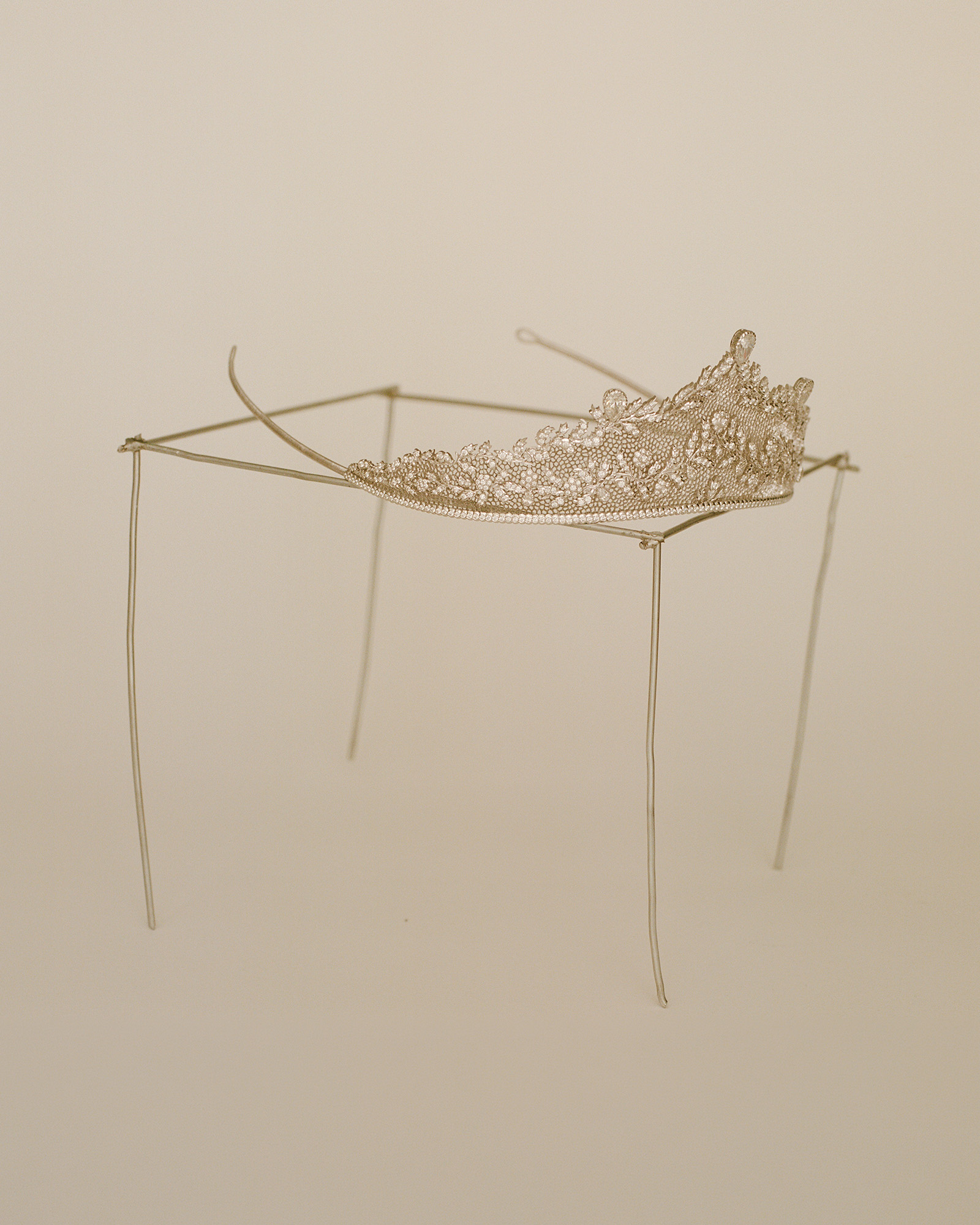
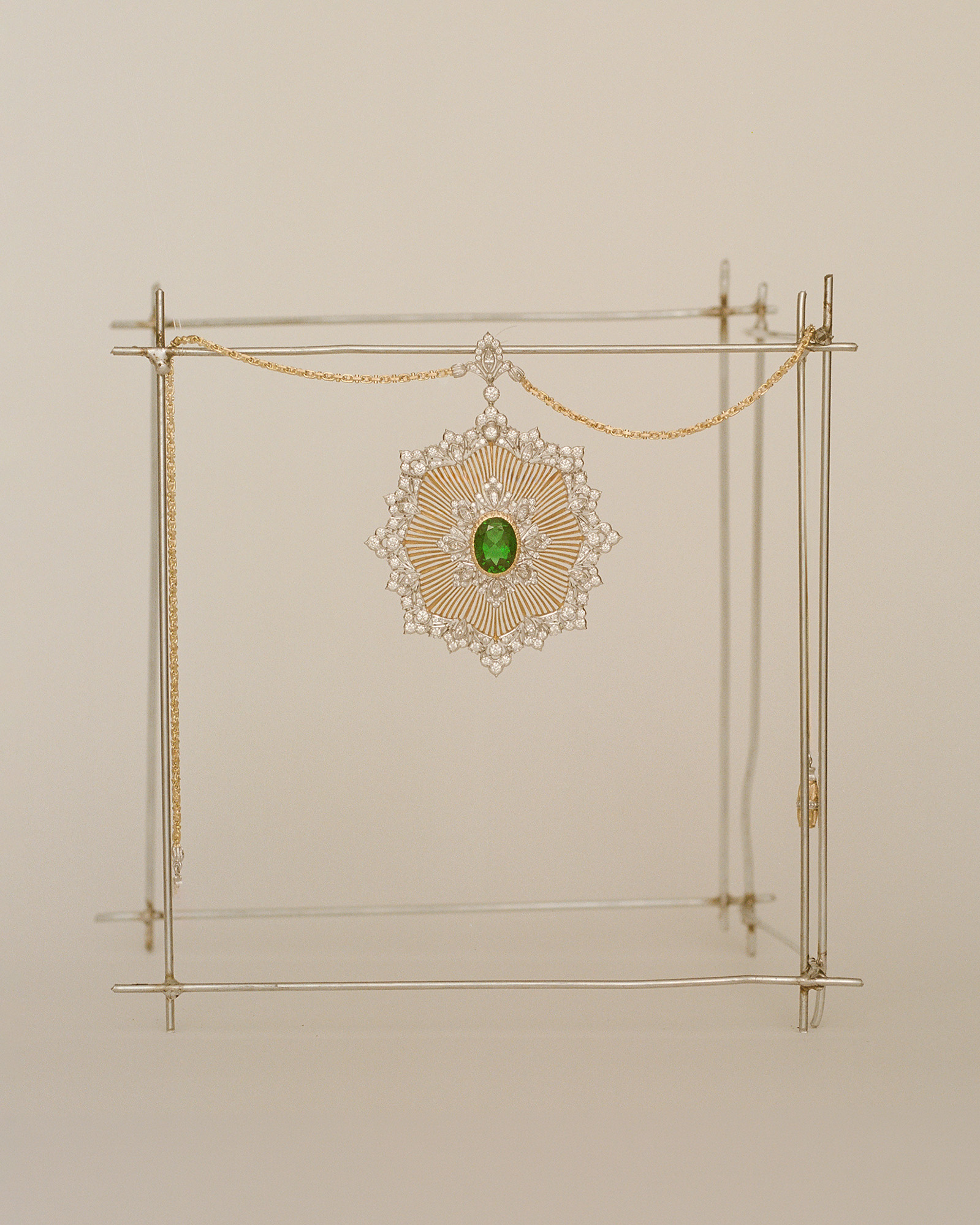
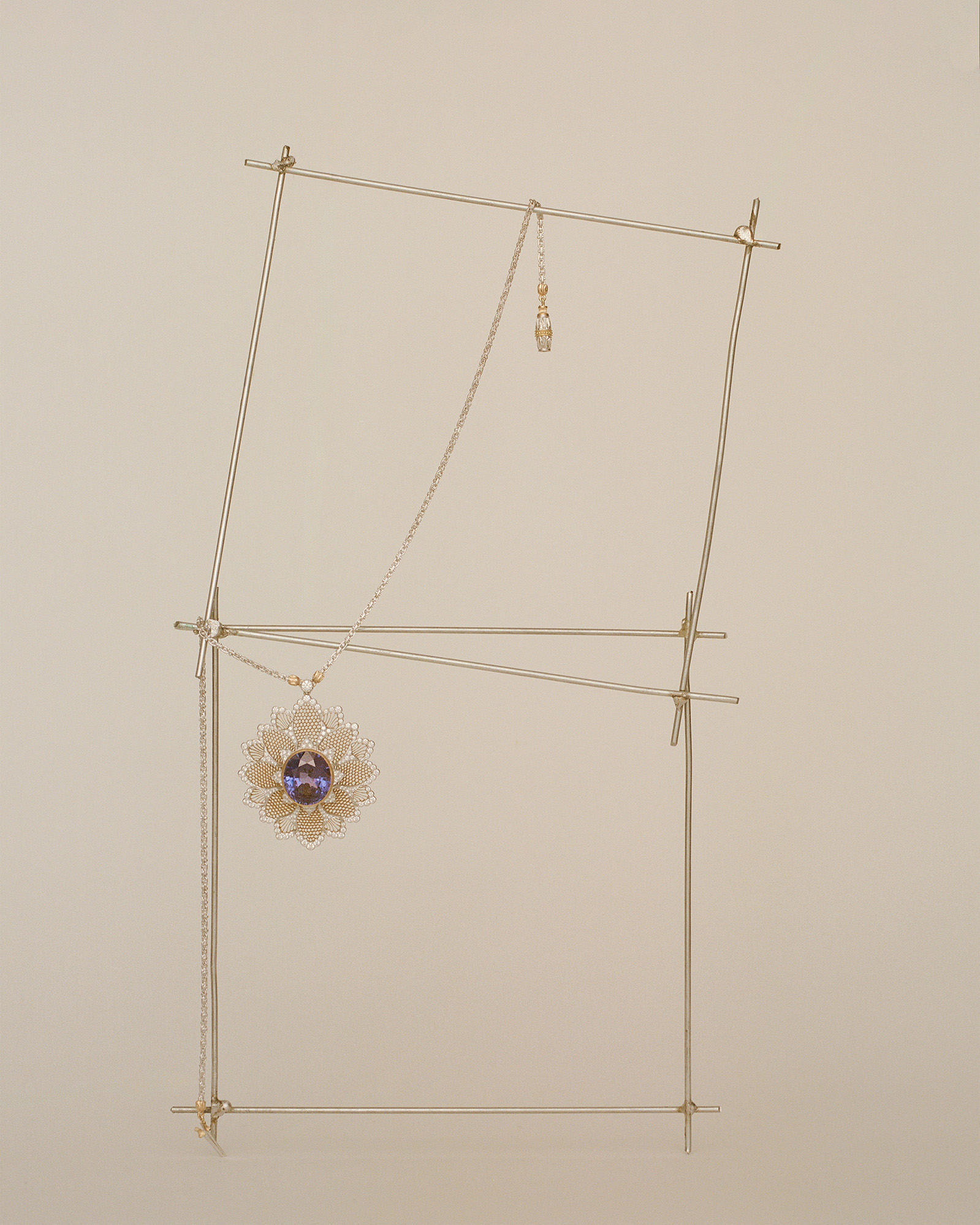
To explore this legacy—which is still operated under the watchful eye of the family that founded it—I spoke with two generations of Buccellatis, Lucrezia and her father, Andrea. Lucrezia lives in Miami and manages the American frontier of things for the house while also serving on the brand’s creative team. Andrea, for his part, is based in Milan and is the creative hand for the brand, a third-generation member of the family who has a knack for draftsmanship and is credited with ushering the maison into the 21st century. From a tiara in white gold to a pendant with 153 brilliant-cut diamonds and a gleaming tanzanite at its center, the past is always present with Buccellati, and has never shone brighter.
I wanted to first go back in time to Buccellati’s inception in 1919. Is there an early jewelry collection that you feel is emblematic of the Buccellati look today?
Andrea Buccellati: Well, beyond one collection, I would like to speak about style. The unique Buccellati style that we know today was a creation of my grandfather, Mario Buccellati, who was inspired by Art Deco. In the 30s, Art Deco was very important and a big influence in the arts. So the pieces are interpretations of that period, but in Buccellati’s style. And this has happened over generations. It means that each of us interprets our time through our designs. My father loved the Baroque style, inspired by nature, leaves, flowers, and so on. But for me, I’m more geometric in a certain way, because I am more essential. I lived through the 70s, 80s, 90s. It was a minimalist time. So, we can say each collection is a result of the period it was created in, inspired by the times.
Meaning that the style evolves while remaining true to the Buccellati name?
Lucrezia Buccellati: I believe it’s important to go back to the basics. What really identifies the Buccellati style is my great-grandfather Mario’s desire to recreate the lightness and the delicacy of these very luxurious fabrics, embroideries, and lacework in jewelry. Throughout each generation we maintain our craft but reflect our times.
Is there a particular archival piece that exemplifies Buccellati for you?
LB: I knew my grandfather when I was young but never worked with him, so the archive is a way for me to see how he interpreted Buccellati’s style and then make my own version of it. I look through the archives to seek inspiration. For example, one of the necklaces that we made for 2026 was inspired by a necklace created by my grandfather. The butterfly we showed in our 2024 Venice exhibition, “The Prince of Goldsmiths,” was also inspired by designs that I found in our archive.
How have you seen the way people wear their Buccellati pieces evolve over the years?
AB: In the past 15 or 20 years, I’ve noticed that people are looking more for everyday pieces. In the beginning, we designed jewelry for very important occasions, big parties or going to the opera. People didn’t wear jewelry during the day, to go shopping. Today, we see the opposite. People of course buy jewelry for big events, but even more so to be worn every single moment of the day. So, it’s really a different way of wearing jewelry. We try to adapt to this concept in our design and produce jewelry that’s more simple and easy to wear. So in a certain way you don’t have to worry about wearing a big piece of jewelry just to go out to the supermarket. The concept has changed, but I want to underline that it is always done with the touch of Buccellati’s style.
LB: In the past 10 years especially, I have noticed that all of a sudden women are buying jewelry for themselves, not just in celebration of a birthday, but a promotion, a special moment, a friendship. There are so many more occasions that are bringing clients to buy jewelry—because it becomes a moment, a memory that they keep with themselves. It’s made a huge difference in what our clients want.
The maison creates jewelry as well as home objects and tableware, all of which require different expertise. Can that be a challenge creatively?
AB: I see it to be quite natural. For me, it’s easy to design a piece of jewelry, a piece of silverware, or a home object. This is part of my nature. I don’t have a special explanation. What I can say, on the other side, is that the artisans’ skills make the biggest difference. We have artisans who have worked with us for generations and who pass down their experience and techniques from father to son. It’s quite simple, because when we design, I have to speak with people. It’s a give and take relationship between the artisans and the family. They have a strong expertise in fabricating pieces of jewelry, or perhaps working with silver. Sometimes I explain to them how to make a piece, and sometimes they explain to me that it is better to do it another way. So, it’s not a one-way relationship. I learn, they learn. It’s an exchange of experience. They make the pieces different and beautiful. So, it’s not a big deal for me to design and execute these kinds of pieces with the help of all these people that work for us.
Lucrezia, can you take us into the creative process of a high jewelry collection at Buccellati?
LB: Well, planning is essential, especially for the high jewelry collections because most of them take about two, sometimes three years. So, we have to really take that into account. Usually, it starts with an idea, an inspiration. In the past 10, 15 years it’s definitely evolved. Now, we’re a much bigger company than we were 15 years ago. It used to be just me, my dad, and my grandfather, but when my grandfather stepped away, it was me and my dad. And then, slowly, it started becoming a bigger team. So today, it’s a decision among all of us.
We decide the inspiration first, and we start designing. Usually, we draw up about 30 to 40 designs. We’ve done a collection called the Garden of Buccellati, inspired by the paintings of Claude Monet, or the Art Collection, which tried to recreate, using our workmanship, the effect of a painting and the movement that you see in Impressionist and Post-Impressionist paintings. Then we had Mosaico, a collection that was inspired by the Byzantine mosaics, which was much more of a geometric collection.
Serenissima is a tour de force of the maison’s abilities. Can you speak to where that inspiration came from?
LB: This collection is be incredibly beautiful because it has all the DNA and the philosophy of the Buccellati style. Serenissima represents the start of the maison. It showcases how we create the look of lacework using our techniques. It was something we chatted a little bit about after the Mosaico Collection, that we should create something more specific with lace. Lacework was something that was very close to my grandfather when he was designing pieces in his day. We haven’t done it in a long time. So we called it Serenissima to remember the inspiration of Venetian lace. The inspiration behind the honeycomb technique—what we call the tulle technique—comes from the lace of Burano.
AB: I want to get across one fundamental point. Serenissima will be the collection that is most identified with our style. I think that I really interpreted the Buccellati design in this collection.
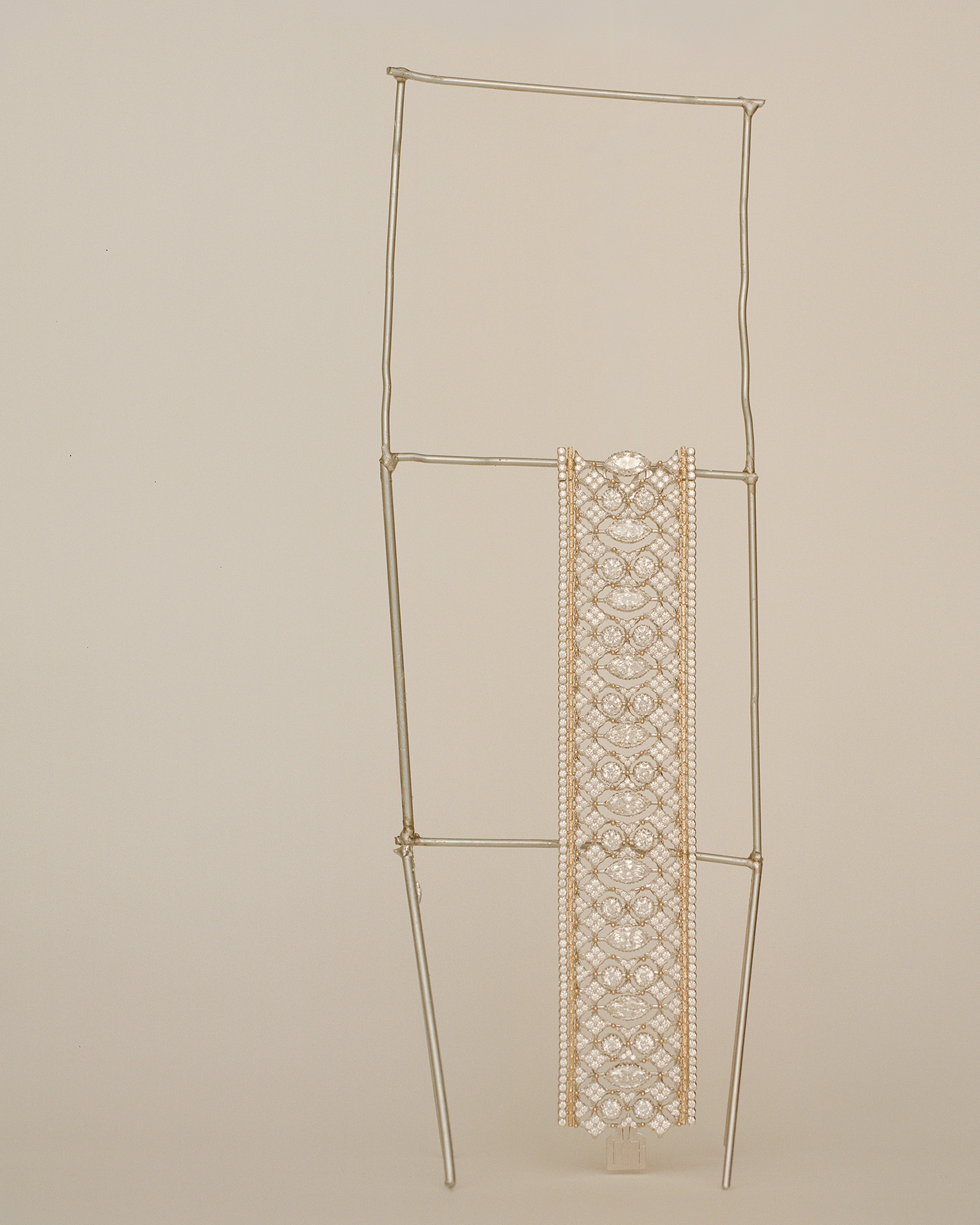
Serenissima uses five of the big techniques that you are known for. Is there a particular technique, Andrea, that is the most challenging?
AB: The spirit of this collection is not only in the look, but in creating the look of lace so that the lace is soft, and it can move a lot. To create this feeling and texture with metal was quite difficult. There are some pieces with thousands and thousands of enchainments, just in a single necklace, for example. This is incredible work, very precise, but the idea is to give the pieces softness. There was enchaining and a lot of honeycomb work. The different techniques made it quite difficult to put together this collection.
LB: Especially because between the enchaining, the honeycomb, the engraving, everything, you don’t see it. Everything kind of all blends together. And to hide all of these techniques, the enchaining, with the transparency of lacework, is one of the most challenging things, especially for the artisans. That’s why we usually have our most experienced artisans working on certain pieces, especially for the larger ones.
The collection uses modellato, one of Buccellati’s distinct engraving techniques. Can you explain what it is?
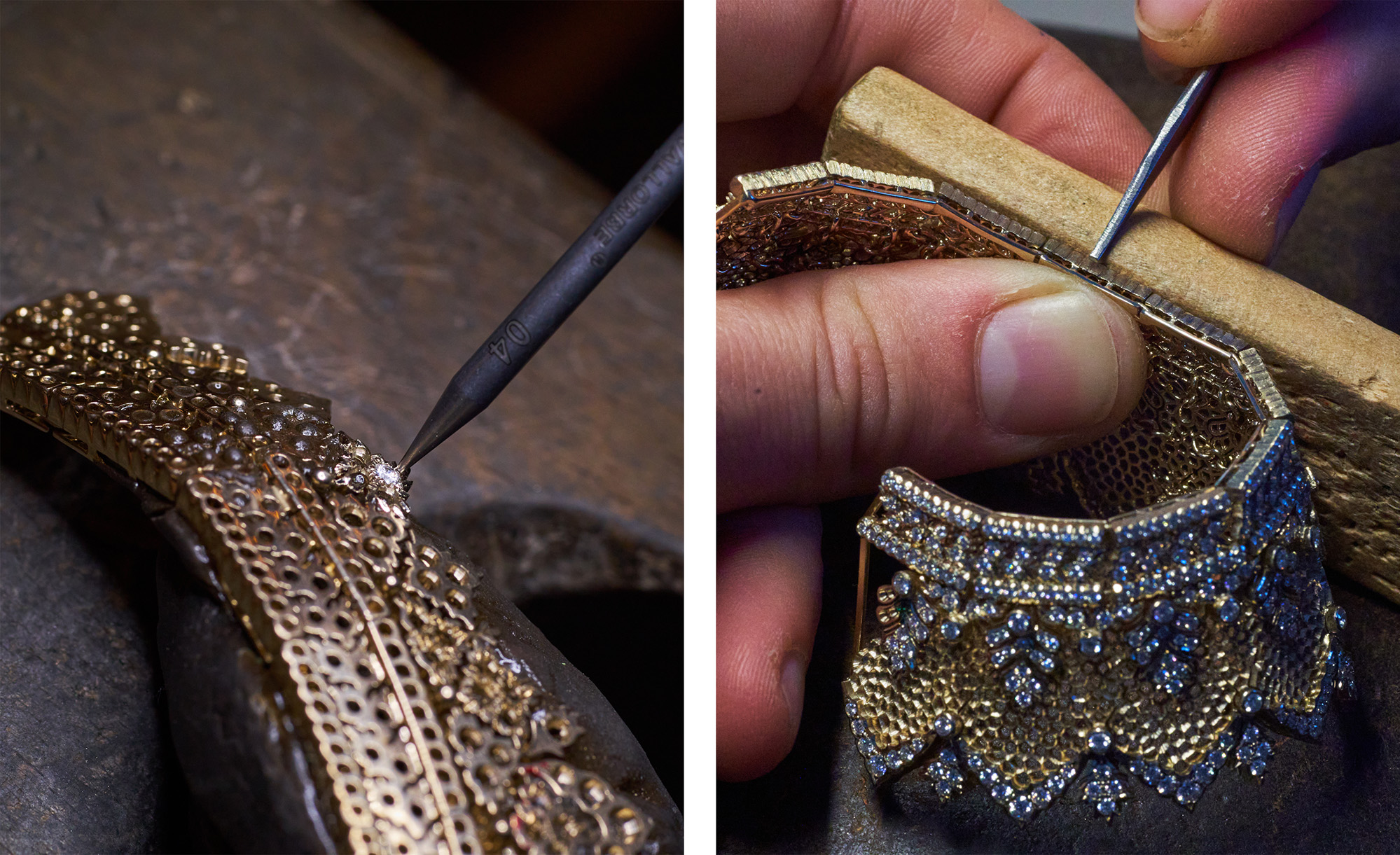
AB: Modellato is an engraving technique where you sculpt the gold. You don’t just work on the surface. You cut the gold with the bulino tool to create a different kind of form. For example, leaves or geometric designs, which are very, very important.
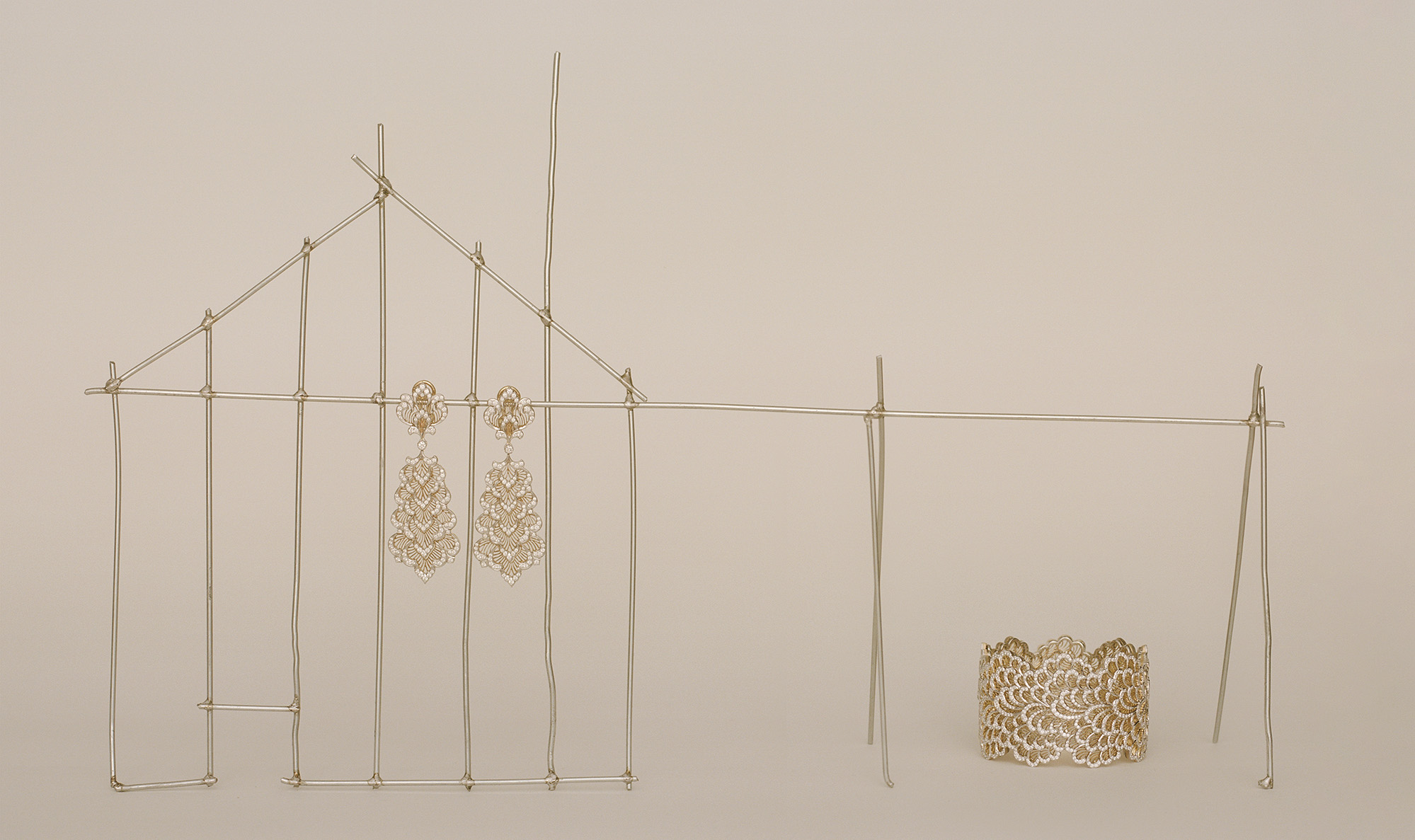
I read that it’s one of the most difficult techniques to execute.
AB: Modellato is the most challenging out of the engraving techniques, but you need tremendous experience because the moment that you cut and sculpt the gold, you can’t repeat it. The moment that it’s done, it’s done. If you make a mistake, you have to redo the entire piece.
How does this work in the atelier?
LB: In the atelier, we have an area where all the engravers work. The engravers are then usually divided into who specifically works on the rigato, modellato, and ornato engraving techniques. Usually all our engravers will have knowledge of all of the techniques, but there are more experienced artisans and newer artisans. And that’s kind of how the process works, because we practically have our own school inside our atelier. That’s how we’re able to train artisans and transmit the know-how behind this craftsmanship.
Then, you have a section with the artisans who are more specialized in the honeycomb. In fact, each piece really goes through a few different hands. I would say at least four or five hands. I just wanted to add that because I find it very interesting. A lot of people may think that a piece is made by only one artisan, but actually it goes through different artisans that have certain specialized knowledge on specific aspects of each piece’s craftsmanship.
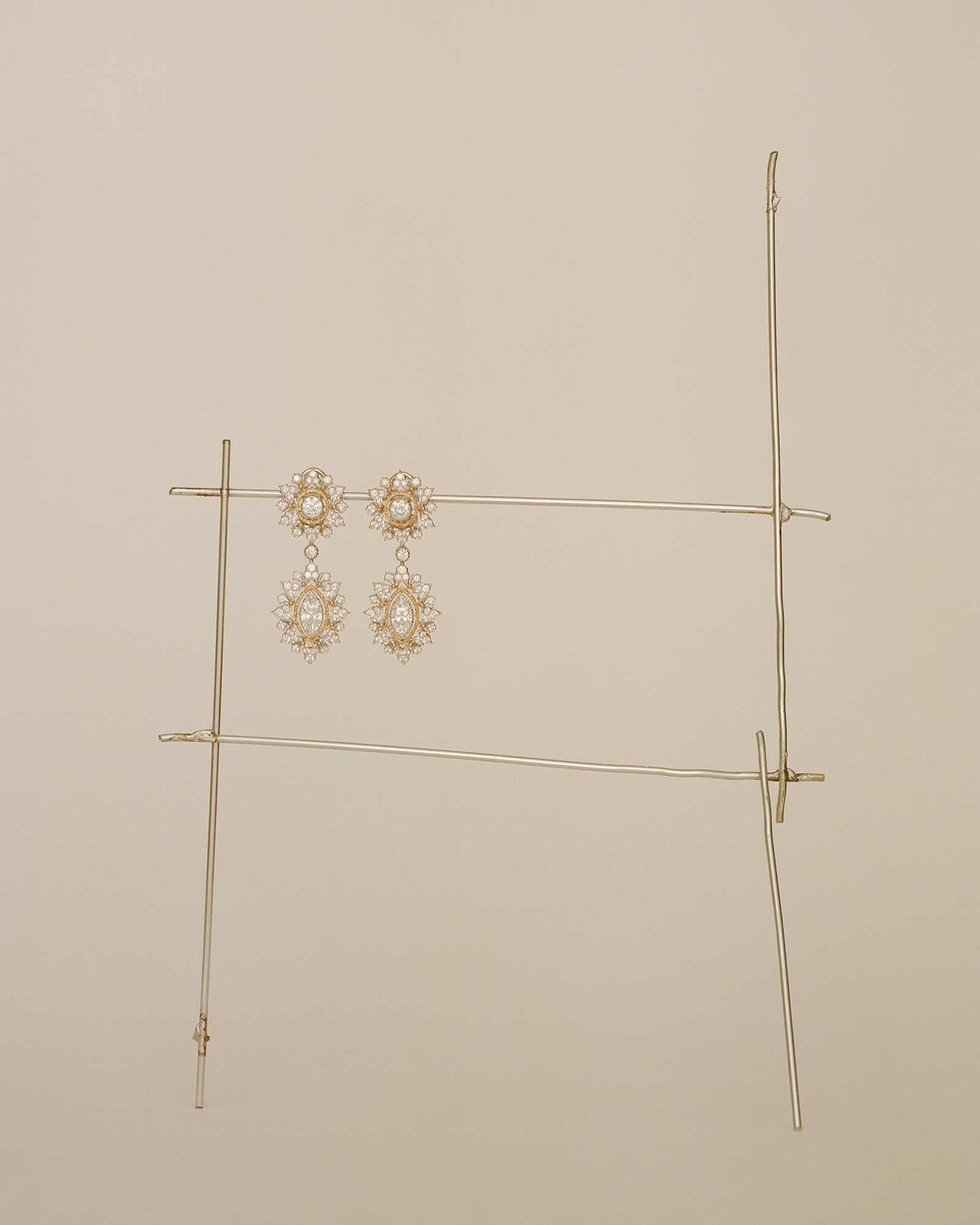
How many hours have gone into some of the bigger pieces in Serenissima?
AB: I can estimate around 1,500. The most important necklace is probably within 1,000 or 1,100 hours of work.
Serenissima feels classical and contemporary at the same time, quite eternal in terms of its appeal. Why do you think now is the right time for a collection like this?
LB: Serenissima reflects the identity of the style of Buccellati. Like all of our one-of-a-kind releases, it’s timeless. This is important for us because we don’t follow certain trends. We want to create pieces that will last forever and can be passed on for generations. We felt it was the right moment to create this collection, especially because it represents the contemporary moment as well as history. We’re going back to the beginning.
What feedback do you get from your clients?
LB: I can tell you, these one-of-a-kind collections that we launch every two years, we sell them all. There’s so much desire for something so unique, so personal—because it’s a creation that will never be made again. You’re the only person that will have it. Especially today when there’s so much around us and so many people can have the same thing. The very high-end clientele want to be different from all the rest. They want to have something that nobody else has, and that’s one of the most important things that Buccellati provides, is this uniqueness.
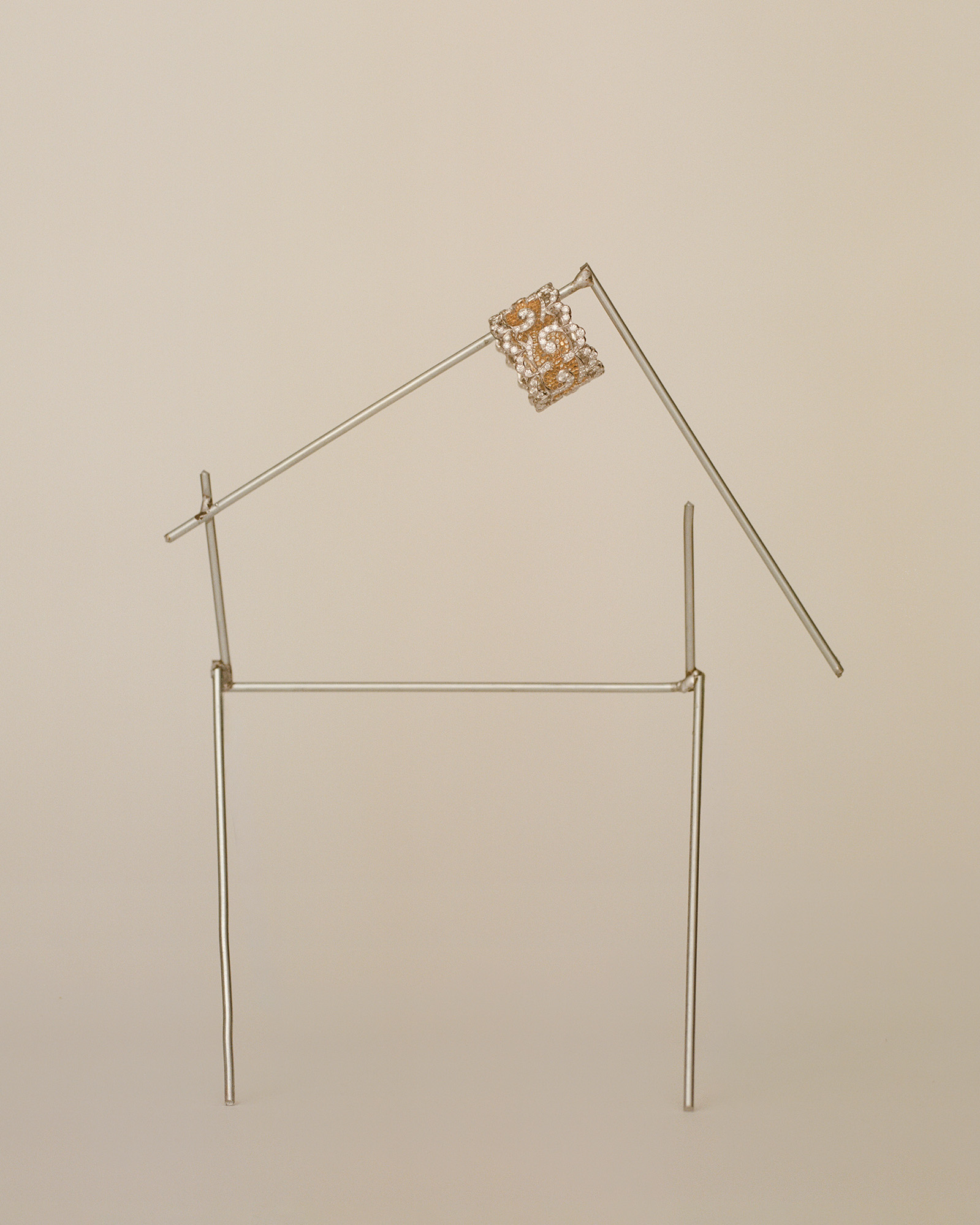
Since it takes so much time to work on these pieces, you must be working on the next high jewelry collection.
AB: Yes, we’re already working on the collection of 2029. It’s already in production. Imagine, some products need two years to prepare. If we want to be ready for 2028 or 29, we have to start now.
As two generations of the Buccellati family, is there something that the two of you disagree on or see differently, where you can learn from each other?
LB: What I can say is that as my great-grandfather did, my grandfather did, my father did, and we did together when I started working with him, I definitely want to challenge our artisans to exceed and find new ways of using our techniques, in different ways than we have done in the past.
So, for example, where there was a lot of back and forth—what we can do, what we can’t do—was during the Art Collection. That’s where we really were using our techniques, but with very irregular forms. It was a challenge for the both of us because I saw it in a certain way and he maybe didn’t see it in the same way, and then we really challenged each other to find a way to make it happen so that I can get a little bit of what I wanted and he gets what he wanted. It’s always a conversation, right? That’s where most of the most beautiful pieces that we’ve worked on together came alive.
It’s a constant conversation. There are disagreements, but we always find the solution within an agreement that pleases both of us. That’s part of working together. That’s part of working with a family member. It’s not always the easiest, right? You have a family relationship and you have a work relationship, but this is always how our business has been since my great-grandfather worked with his four kids—because only four stayed in the business and the four kids had to all work together. So, it’s a way of being able to converse and continue the style through different eyes.
Andrea, I’m sure you trained Lucrezia very well in the family business. Is there a particular skill she has that impresses you?
AB: I think that she is good at design, and she is very good at interpreting the feeling of younger people today. She gives us this advantage to really understand and interpret the new generation in jewelry design. This is very important because I’m older than her, of course, and I have my own style. It’s difficult sometimes to understand new concepts. Lucrezia helps a lot on this side. It’s very important, the collaboration that we have together.
And Lucrezia, is there any praise you’d like to give your dad?
AB: Be good…
LB: Since I was a kid, I really grew up in this world, and being the oldest one, I was the one most exposed to it. I was very close to my dad. I was often going to the office and seeing him design. Since we started working together, he has taught me a lot. He taught me a lot of discipline. I’m more of a free-flow type of designer and he’s very much about precision. So I’ve been focusing and working a lot more on my precision in my designs. But I mean, he’s my mentor. So I can only say everything I’ve learned up until today is thanks to what he’s taught me.
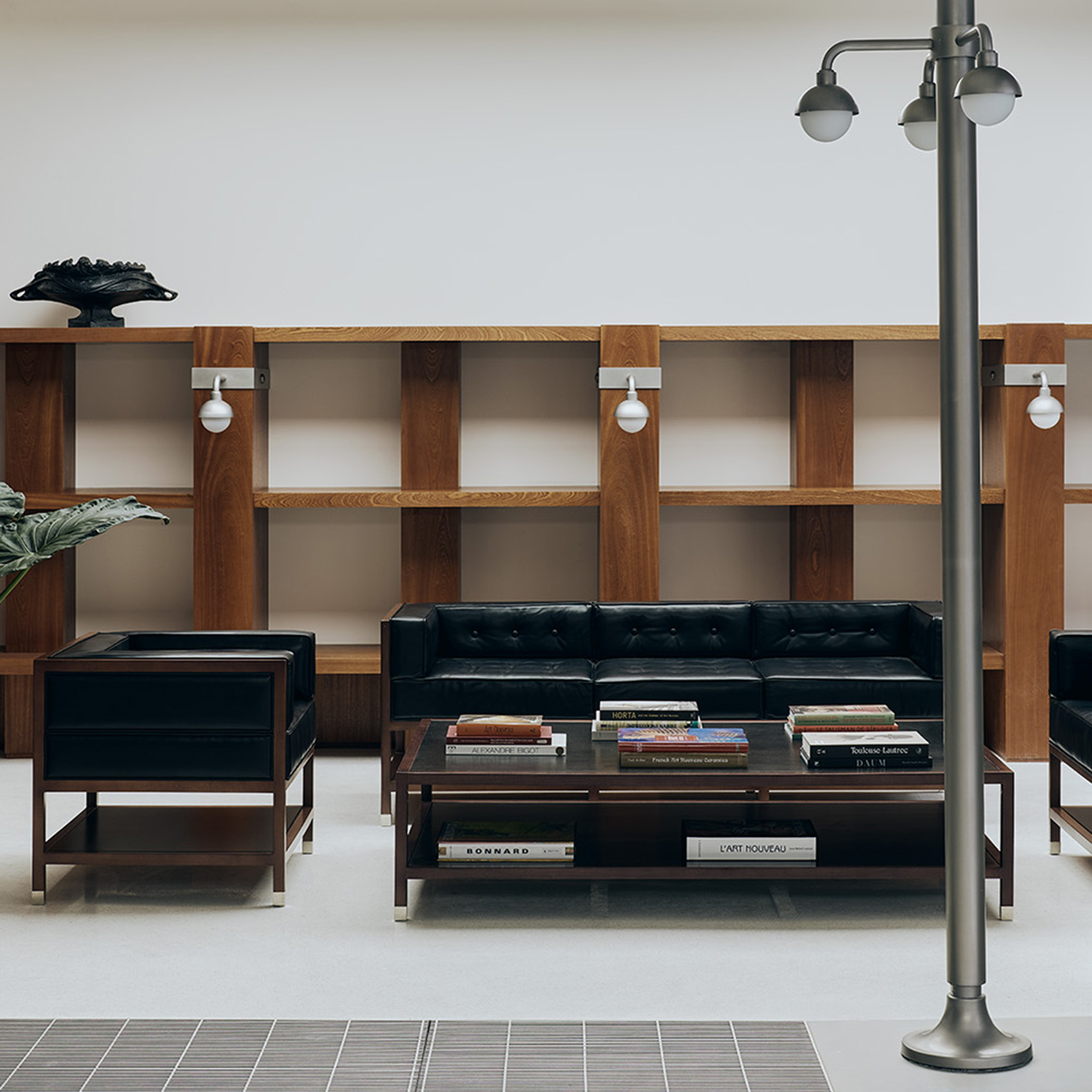
It seemed like an ordinary assignment to redesign an office. But as designer Edgar Jayet discovered, the Paris address was a legend of art history.
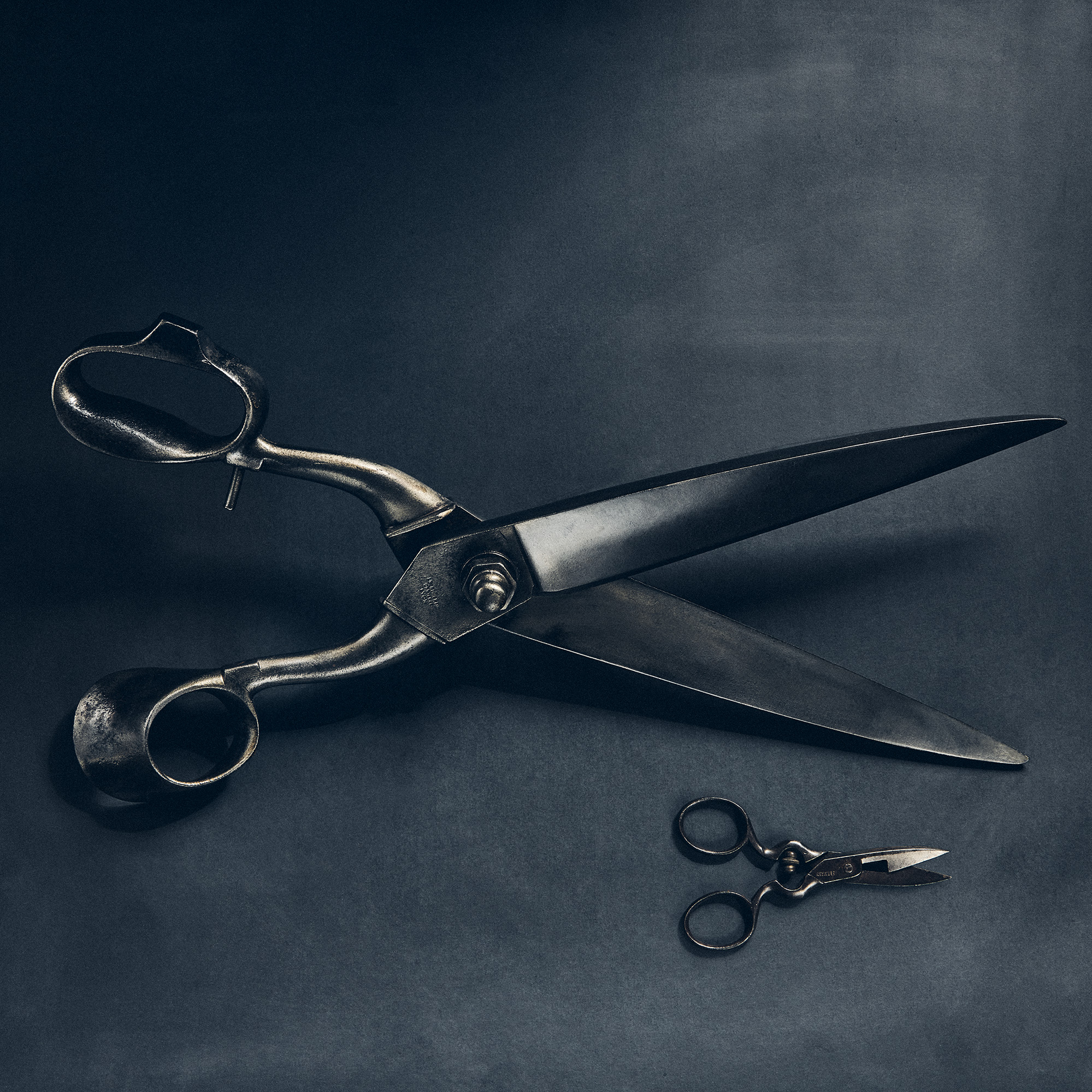
Artist Daniel Brush’s talent was sharper than most. The elusive mind left behind a staggering and oft-misunderstood collections of vintage objects.
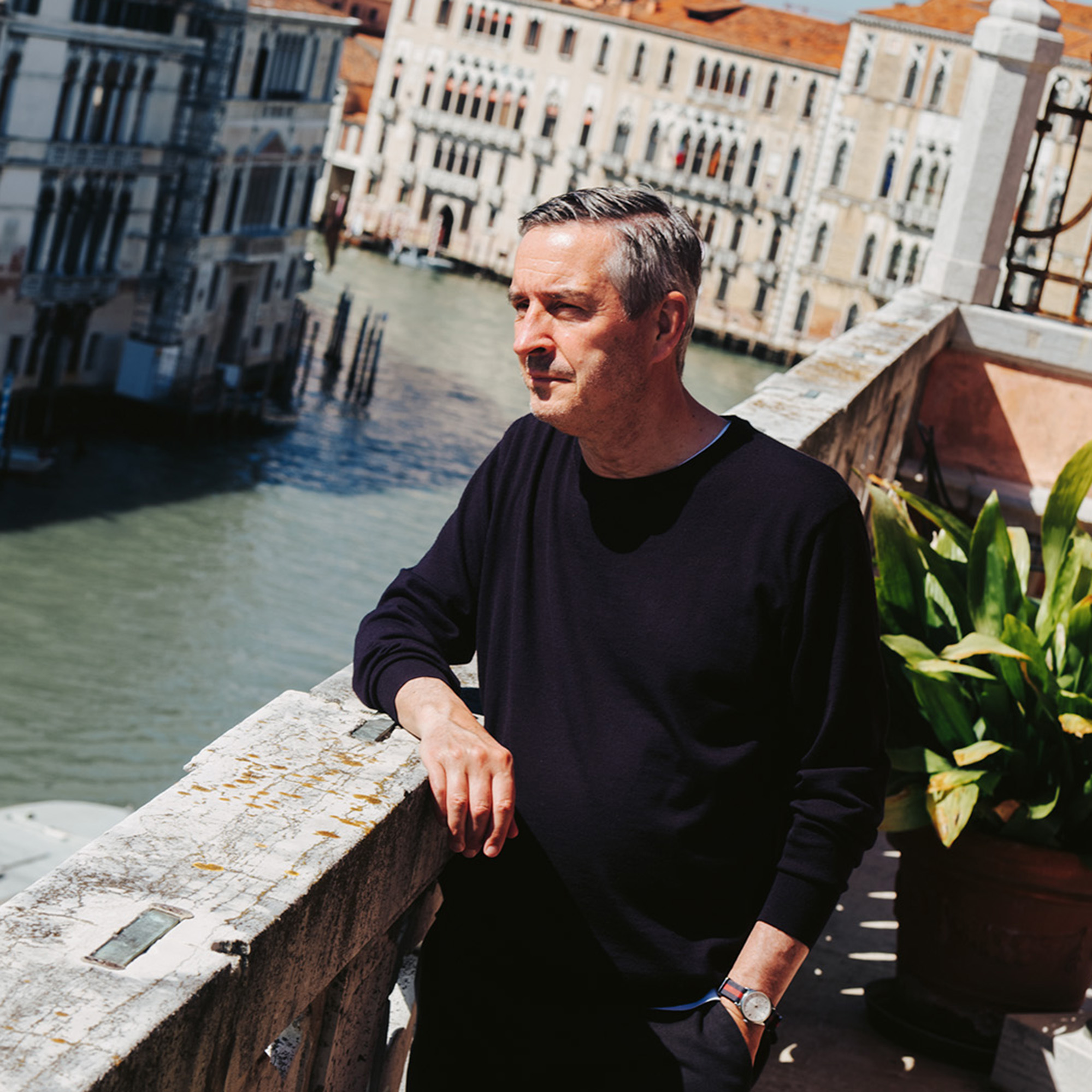
On the 16th season premiere, Dan speaks with legendary fashion designer about the future of his second act, the Fondazione Dries Van Noten in Venice. On this episode, the pair speak about why education is important to his mission, the institution's first show, and much more.