The Grand Tourist Celebrates Its Third Issue With a Glamorous Party in New York
Designers and tastemakers gathered to toast our most ambitious issue yet at The Fifth Avenue Hotel.

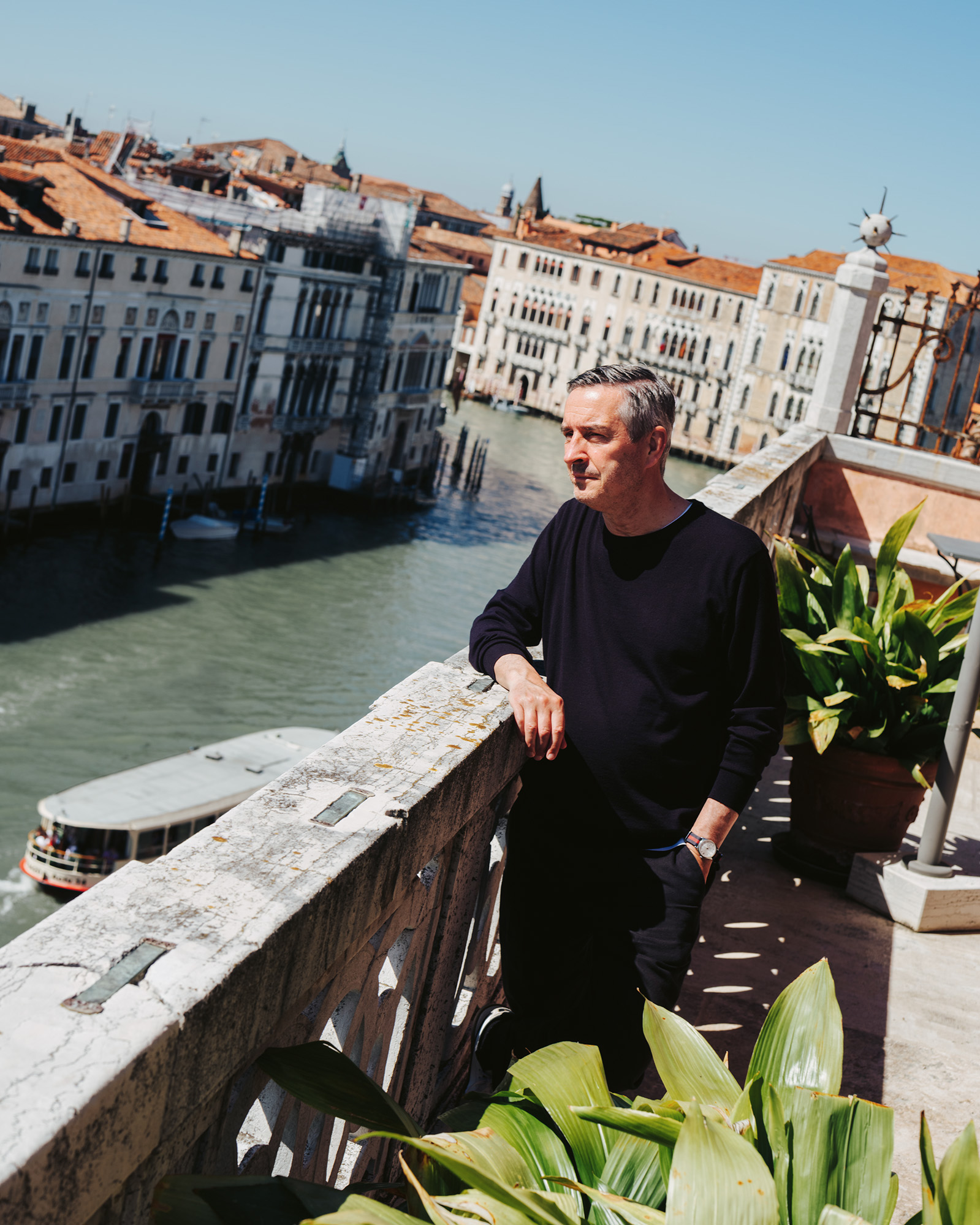
On the 16th season premier, Dan speaks with the beloved designer Dries Van Noten. After presenting his last fashion collection in 2024, the Belgian impresario has begun a thrilling new adventure with his Fondazione Dries Van Noten in Venice. The pair discuss how this new chapter in his life came to pass, why he titled his first show “The Only True Protest is Beauty,” why teaching appreciation for craft is so important across generations, and more.
This article is featured in our Fall 2026 print issue, available soon.
When Dries Van Noten, the celebrated Belgian fashion designer and one of the original “Antwerp Six” announced his retirement in 2024, there was a collective whimper heard around the industry. Fans of his colorful yet subtle pieces, which frequently defied expectations and industry-accepted tropes, made plans to snatch up his final collection (Spring/Summer 2025 menswear) no matter the cost. For many industry observers, there was a kind of unspoken acceptance of the move, despite his being a youthful man in his 60s who could probably continue to design for decades longer if he wished. Given the state of fashion today, many seemed to think it fitting that the designer, known for his cerebral approach, would choose this moment to simply get up and walk away in this moment of volatility and excess
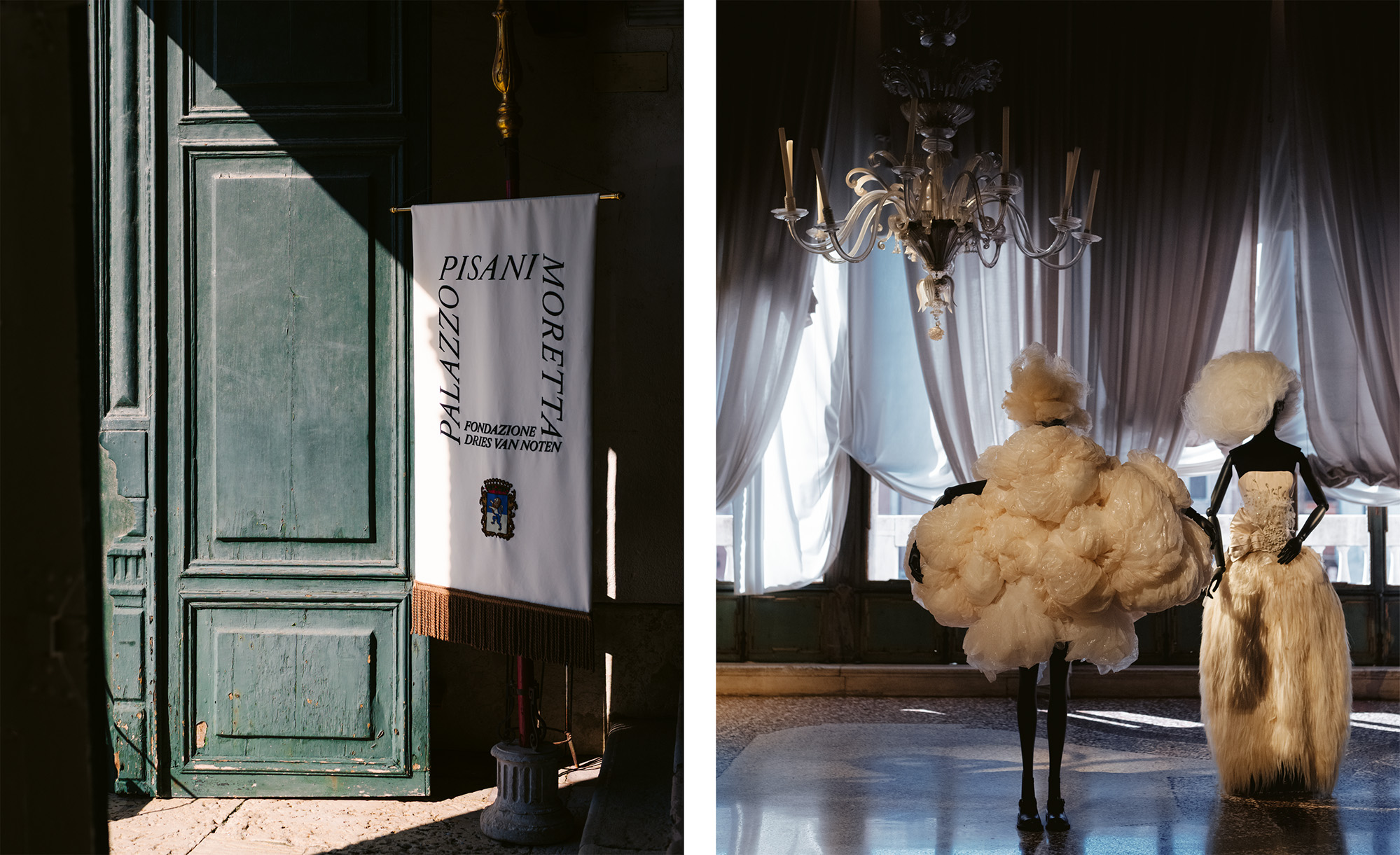
While he may have stopped designing runway collections, as it turns out, he’s been anything but idle. This spring he flung open the doors to the Fondazione Dries Van Noten, a nonprofit institution and destination where he can use his curatorial eye to make statements about the world without any commercial constraints. Its first exhibition, “The Only Protest Is Beauty,” housed in the historic Palazzo Pisani Moretta, sets the tone for what the future has in store for the endeavor Van Noten launched with his longtime partner Patrick Vangheluwe. It takes various modes of art and design and puts them on the same level playing field: a dress, a chair, a sculpture. Instead of making a decision about what beauty is, it asks questions about its value in society today and highlights the importance of making as “a process of discovery,” as its curatorial statement says. “A dialogue that carries the traces of intention and imagination.” As with any great designer, it never ends with just one collection, and the confident Van Noten has many plans in store for his new platform, a metaphorical runway on the lagoon.
I wanted to begin at the end of one phase of your life and the start of a new one. It’s been about two years since you announced your retirement of sorts from the fashion business. So can you take me back to the day that you officially maybe sat down at home, plopped on the sofa, and said, okay, it’s all done now. Like, what do I do next? Do you remember that day?
There was not really a day like that because it was already in preparation for quite a long time before. I decided when I turned 59 that I wanted to sell my company, because I still desired to do something else in life than fashion. I started to work in fashion when I was 14. So I thought like, when I’m 65, I’ll still be young enough maybe to start something else. And I know that when you sell your company, you still need to work a few years as a transition period. So that decision was already well prepared, kind of for a few years. But then, of course, Covid happened. So instead of just five years, Patrick and I, we continued to work for one extra year. So that’s why it happened two years ago.
How do you feel now?
Very happy. It’s a crazy adventure, what we started. Much bigger and much more complicated than we imagined. Because, of course, you always think like, okay, we’re going to start a small foundation. Then it became something bigger, much bigger. And the reactions have been so overwhelming. So, of course, we were not prepared for that. But it’s very exciting.
And you’ve mentioned in the press that your idea for the foundation was brewing for a very long time. How did that idea first come into your mind?
Originally, Patrick and I really wanted to start a foundation. We were focused mostly on craftsmanship. Because I think craft gave us so much. In fact, everything in fashion is closely related to craft. Pattern making, printing, fabrics, embroidery, all those things. And we were also quite worried, with what’s happening in the world, that craftsmanship is disappearing so fast. And also that some young people are not seeing the importance or the beauty of making something with their hands anymore. So in that way, we said maybe it would be a nice thing for us to do.
It was also kind of selfish, maybe. Because I have always worked with a lot of young people around me. My studio was always known as being very young. I think the average age in our studio was 28 or 29. And I was really afraid that I was going to miss that. So many people told me, “Oh, when you’re retired, it’s going to be great. And you have so much time for your plants and your garden and everything.” And I said to Patrick, “Don’t do that to me.” I don’t want to talk only to 70-year-old gardeners about fertilizing and pruning and things like that. No thank you. So voilà, here we are.
Have you seen younger designers in the last 10 years that are the product of a younger generation that is more disconnected from craft and from the actual know-how of these things? Did you witness that at all?
I don’t think young people are disconnected from craft. Maybe not so much. It’s more about the possibility of doing so. So recently, I had a talk with an Indian organization that works with craft and everything. And they said “Yeah, everybody wants to work on a computer and nobody still wants to take yarn and a needle and do some embroidery.” So I think we really have to see. Of course we need computers. But on the other hand, we also need the other side. We need the human aspect, and we have to keep that. We have to keep that alive. We don’t have to keep that existing, in a fake kind of way that it’s sponsored or something like that. No, it has to be something that is alive and really has a reason for being.
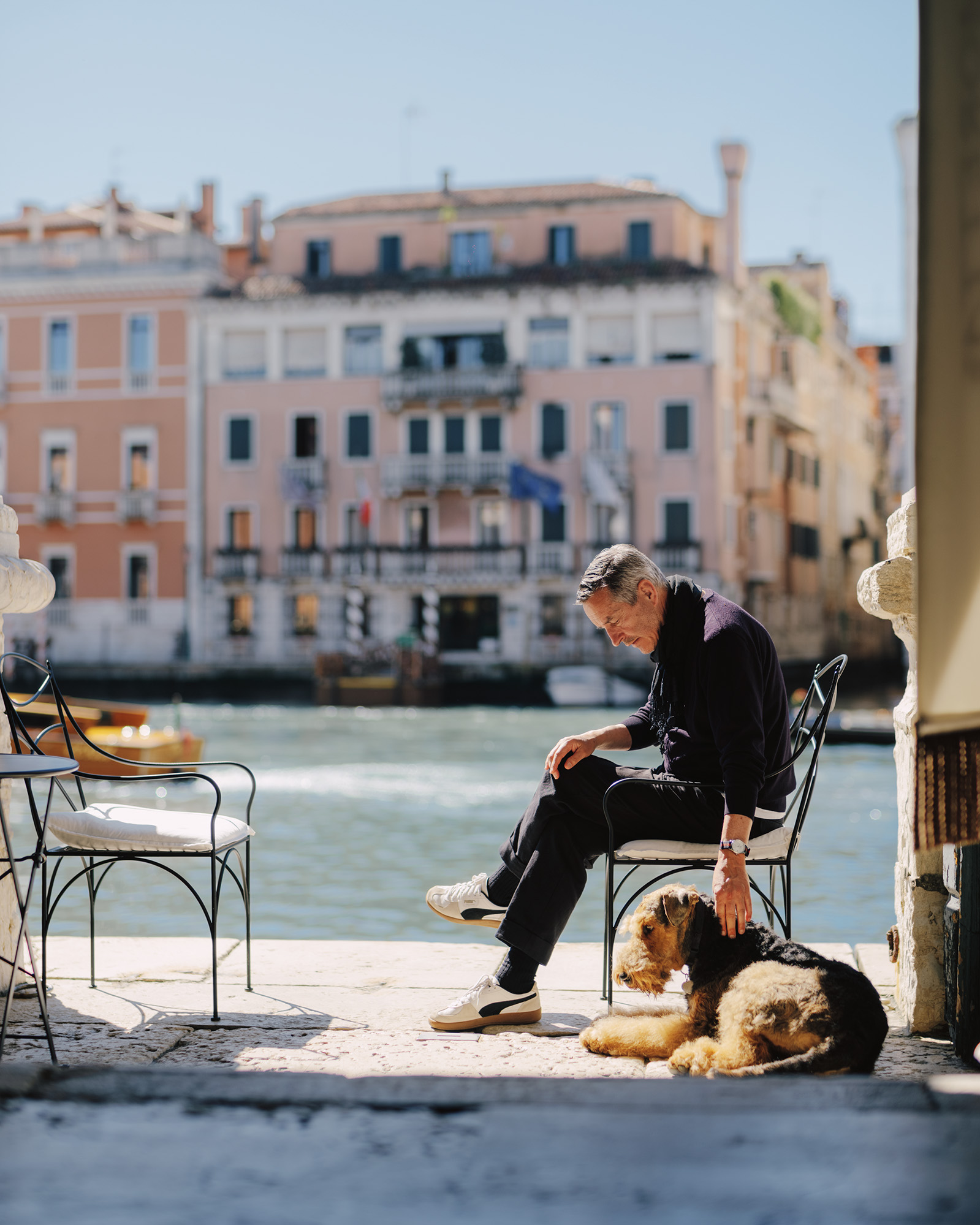
You are one of Belgium’s favorite sons for creativity. So why Venice? Venice sounds like truly the most challenging but most beautiful choice at the same time.
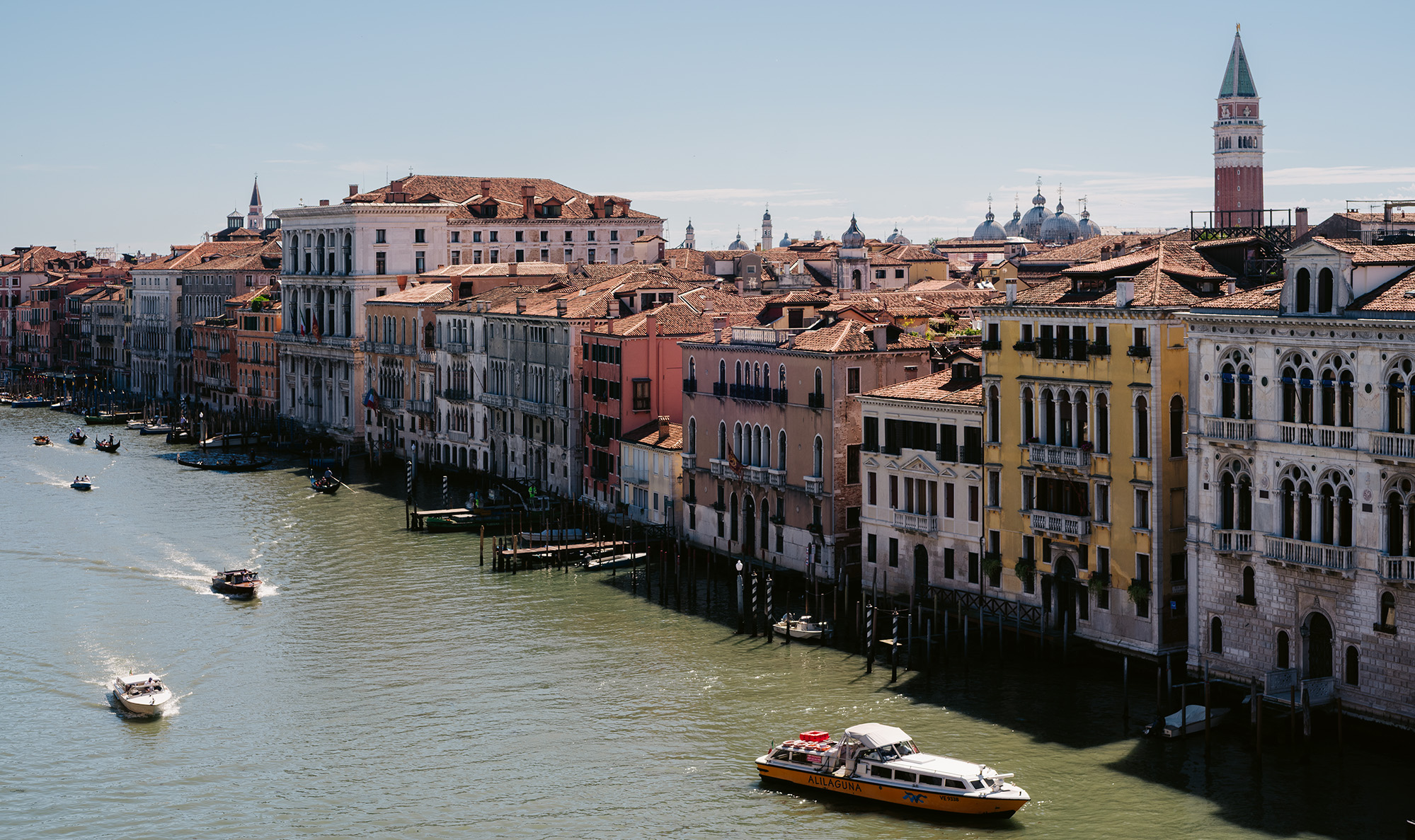
First, we thought of starting our foundation in Belgium. And then it would be a foundation, not a fondazione. But then very quickly, we said, we always loved Italy. We’d lived our whole life in Belgium. So we said, if we still want to move, we have to do it now. And then we first thought of Rome or Florence. We visited there. And it was a fluke that we ended up in Venice, because Venice was not our first choice. We thought there was already too much art and too many fondaziones in Venice, so we’re going to be just one of the many. But then through a friend, we stayed in an apartment for a while. And staying in an apartment, we discovered a completely different city: one that’s alive, with incredible shops where you can buy the best food and everything. Very proud Venetians. A lot of young people, very good schools, all different creative directions, a lot of young people who are now also deciding to stay in Venice. So there’s clearly something bubbling. You have new co-working spaces. You have a lot of creativity. You have small galleries—all those things, in fact—happening. And it was really a city where we felt very good.
The Palazzo Pisani Moretta, which is right on the Grand Canal, dates back to the late 1400s. Purchasing these kinds of spaces can be quite challenging. But how did this particular palazzo come into your sights?
Coincidence, like a lot of things in my career. And I’m always very attentive to seeking coincidence and things that just happen, and grabbing it at the right moment. Originally, we were looking for a space that was not too big, not too complicated, and especially not too decorated.
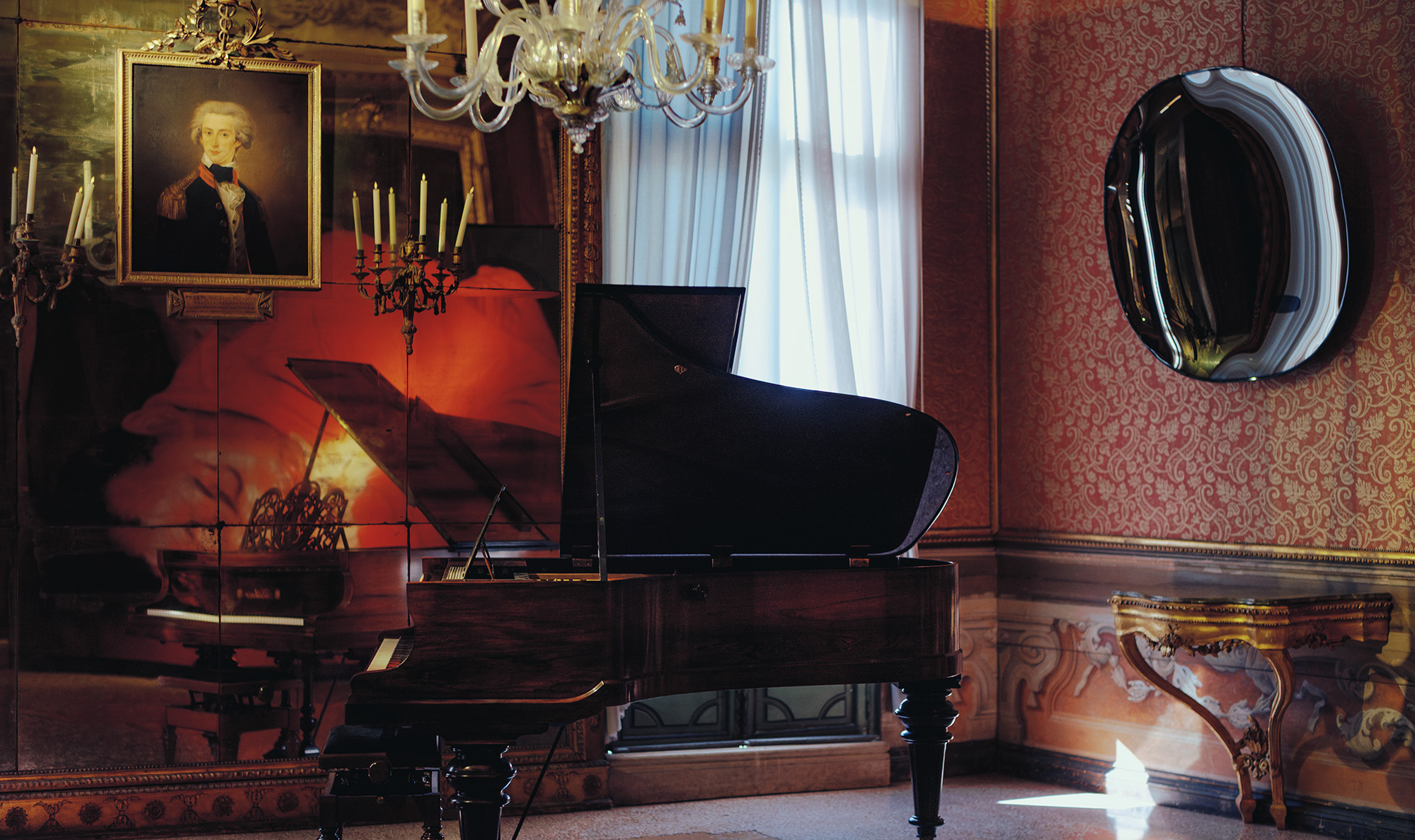
We’d been looking around for a few months, visiting a lot of spaces, more industrial spaces in Castello or Cannaregio, where there are larger spaces and places like that. Then one of the brokers said, Why don’t you go to visit Pisani Moretta? And we knew the Pisani Moretta because it was used really as a venue for parties and events. We attended two parties there, I think. But we thought, no, it’s far too big, far too decorated. You can’t do anything there. It’s something completely different than what we’re looking for. But then we went there, and we discovered, in fact, that it’s a temple of craftsmanship. It was decorated in 1730 by the best craftsmen of Venice, and everything is still intact. It’s really a very special place in that way. And we also said, like, maybe it’s a nice challenge for us, but also for future exhibitions and things like that, and for future artists we want to work with. You have to work with it. You can’t work against it. So more and more, we had the idea that this could be very exciting. The first exhibition that we’ve put on now is kind of a general exercise.
So you’re glad you didn’t get a white cube, essentially.
I’m very happy that we didn’t get a white cube. I have to say that we still have a second space, because the negotiation for Pisani Moretta went on for 14 months, something like that. And after six months, we nearly gave up. And another space just around the corner went up for sale. And we jumped on it. We said, “Okay, we’ll buy it.” And the day that we signed, the lawyer of the family who owned Pisani Moretta contacted us again to say, “Hey, we want to talk again.” So we ended up with two spaces. Of course, Pisani Moretta is huge. The other one is also a generous space, but not as big and not as complicated. And that will be much more like the white cube, but still with beautiful Byzantine columns and a beautiful view of the canal.
Can you explain the foundation, the true goal as you see it? Is it more of a Kunsthalle space for exhibitions? Or do you intend to also be a collecting institution?
We have absolutely no wish to collect. I think we really want to connect people. We want to create a platform where we’re going to do a lot of different things. The exhibition that we are doing now, everything happened quite fast because we bought the palazzo at the end of July last year. So we started to work on the exhibition in September. And so everything was really fast.
But for us, it was good because before we get into the renovations of the space, which will take about a year, it feels a little bit like a general rehearsal first. Also, we didn’t really have time to create our network and try to figure out what would be the most efficient way to use the resources we have. Is it with long-term exhibitions? Is it shorter, smaller exhibitions? Is it working with students? Is it working with artists-in-residence? All those different things, in fact. So we are building our network now.
The reactions to the exhibition have been great and we are overwhelmed with people who want to connect; schools, and all those things. So that’s going to be the work of the coming months. But it’s a very interesting thing, what we can do, because I really don’t want to find a system or a formula where an exhibition stays up for five months every time, or something like that. That’s already too static for me.
We’re already going to do smaller projects in between, doing things with wine with young winemakers from the Veneto, presented in glasses made by young artists in Murano, things like that. With music, with spoken words, all different things.
Speaking of schools, how important is education in terms of the greater mission?
Education is of course going to be important, but I think it’s not for us to really educate. I think we have to open people’s eyes and prepare people to be educated. I think our role is also going to be not to talk only to young people, but also to parents and grandparents. My vision is to give young kids the permission to make a daring choice, like not going to school to become a lawyer or a computer nerd but to do a creative job.
Most of the time you have to be prepared like that by your parents. So, I think we not only have to talk to the kids but we also have to talk to the parents and the grandparents so that they really see that there is a future for those professions.
Obviously, your name is on the door but you founded this with your partner Patrick. Tell me a little bit about how the two of you might see things slightly differently, or what his vision is versus yours, and how you divide the labor between the two of you, because it’s like a labor of love, as we say. How do the two of you like to work together?
It’s not really that we divide the work. I think Patrick has always been on my side to design the collection so it’s not really “Okay, this is your job, this is my job.” A lot of those things we do together, and Patrick always has been and still now is the perfect sounding board because my ideas sometimes are quite wild and then he has to put me on the ground again and sometimes by explaining things to Patrick, things get more clear or sometimes I see also that they’re completely stupid, things like that. Sometimes it’s tough but most of the time it’s a very healthy situation.
When’s the last time you said “hey, let’s do this” and it was some wild idea that he had to talk you down from?
I don’t want to tell you all the things that I’m thinking about, but anyway, we’re going to do a music festival now at the end of October and it’s my new toy. It’s three days. So, it’s exciting and of course there are different opinions about it.
It sounds like you won that argument about the music festival. The first exhibition is obviously important for setting the tone of any institution. So why title the first show “The Only True Protest Is Beauty?”
“The only true protest is beauty” is a lyric by Phil Ochs. The full lyric is in fact, “In such ugly times, the only true protest is beauty,” and it was kind of the working title. Before we even signed for the palazzo, I was already working on the idea of doing an exhibition like we did in 2014 at the Musée des Arts Décoratifs in Paris and in 2015 at the MoMu Fashion Museum Antwerp, called “Inspirations,” where I mixed art and objects with fashion and all different things. So it was really just the working title for me and the team. Because when I started to work on it, I couldn’t imagine that the world would be an even worse place now than it was then. So I thought by then we’re going to choose another title. But for me, it was kind of something healthy and quite clear as a message. Then of course, when I had to make the decision on what title to give to the exhibition, I said I think it’s really even more relevant now than a while ago.
What is it about? How would you describe this exhibition?
It’s really a lot of different disciplines. It’s a mixture of art and craft, as I’ve never made a distinction between what is art and what is craft. For me, it’s really a mixture. There are very established names. There are young names. There are people who passed away, old people from around the corner, and young kids straight out of school.
Of these people, young and old, living and dead, experienced and inexperienced, American and European, what is the thing that ties them all together?
For me, it’s things that create an emotion. Things that are an emotion. Some things are really more challenging. Some things are of traditional beauty, merely prettiness. On the other hand there is a lot of vanitas, of memento mori, in the exhibition.
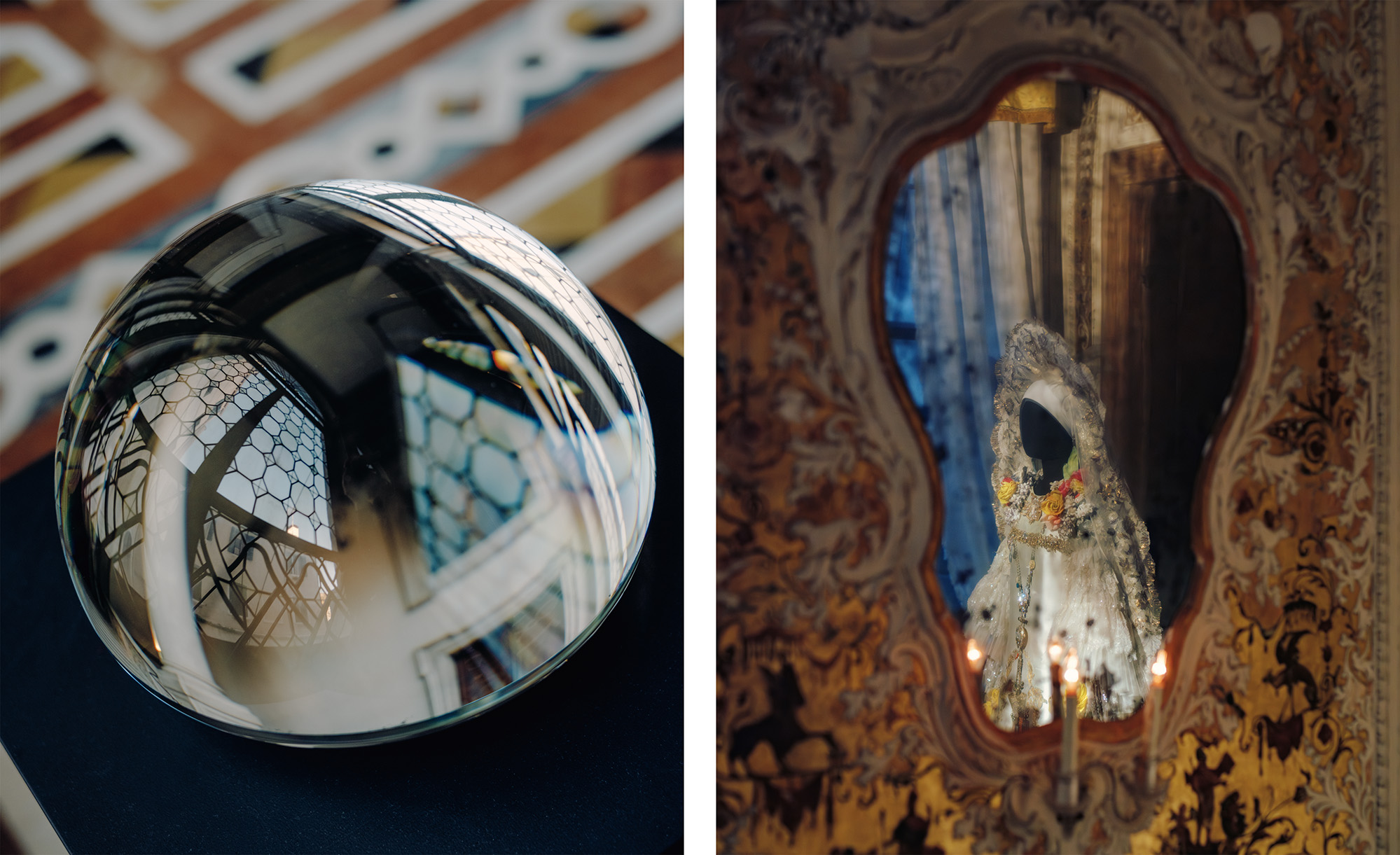
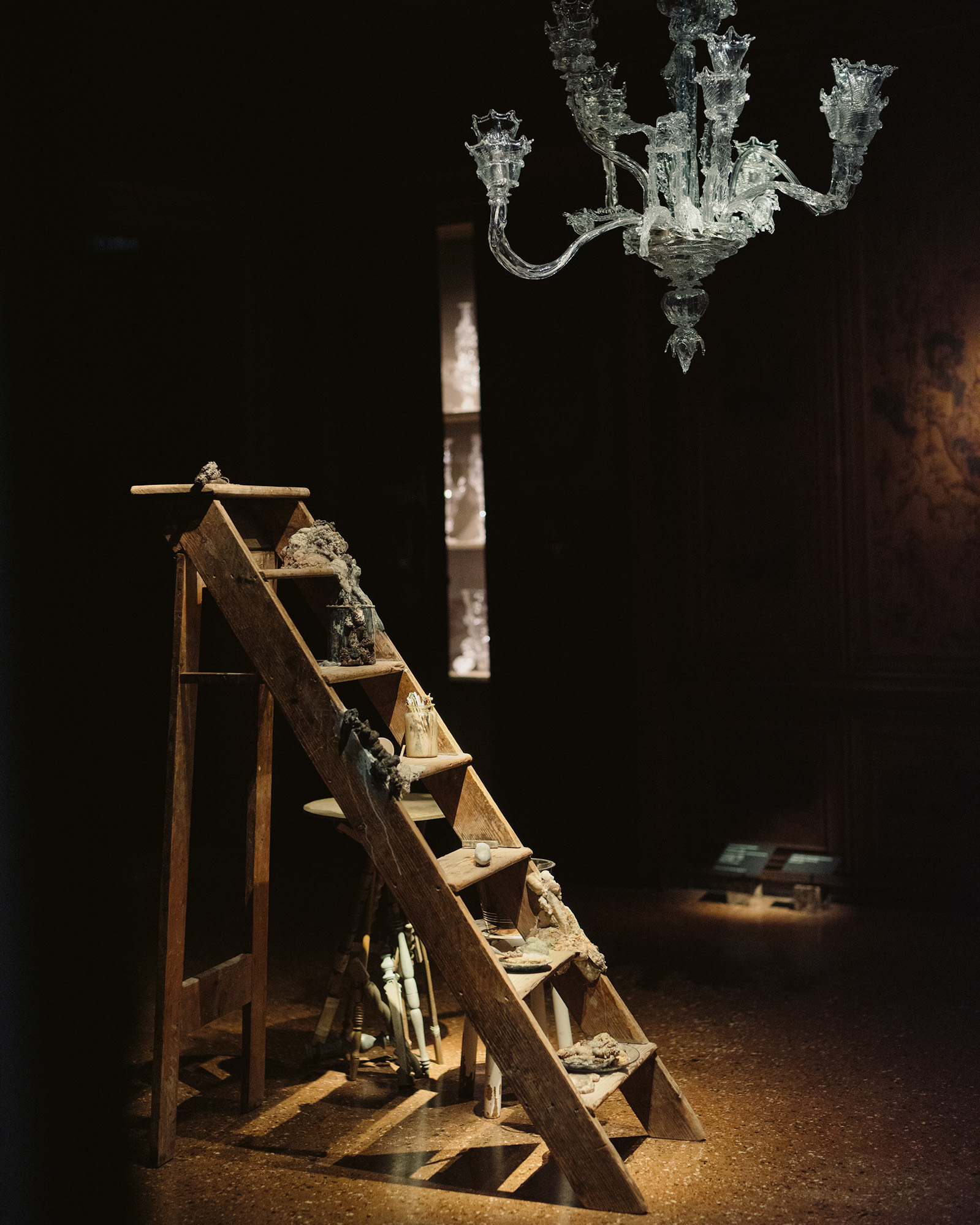
A lot of: we are only living here on earth; afterward we will rot away, but our spirit will fly away after eternal life. So it’s quite dense and it’s quite challenging. We selected the pieces sometimes for the tension between them. And we also chose a lot of pieces for the tension it created with the palazzo. Some things are really at home there, and other things are very disturbing. So it’s really playing with that narrative and the complexity of the narrative that we try to build in every room, which creates that search for beauty.
Is there a didactic idea between each room and a concept for a room? Or is everything more equal?
We really tried to give every room its own soul and narrative. The first room you enter, it’s like the big salone on the first floor. It’s a huge space with nine very big chandeliers. The ceiling was painted by Jacopo Guarana in 1740, titled The Victory of Light Over Darkness.
So it’s the victory of day over night. There, we have the first quiet photo by Stephen Shearer of a sleeping person with a black hood. You don’t know if the girl in the photo is alive or if she passed away. You don’t know if she gave permission to take the picture. It’s quite loaded. She looks a bit like a Pietà. And it’s a beauty that hurts. For me, it’s a very emotional image. The photograph is like three meters by four meters. It’s a huge object in the room, together with all those pretty chandeliers. Beside that we placed the silhouette of Comme des Garçons. A very dark silhouette with a big plexi headpiece that refers again to chandeliers, and feels a bit like the mourning mother. So because the black silhouette is beside the photograph, you automatically suppose that the person passed away rather than she’s just innocently sleeping.
It’s those things that on first view you don’t notice immediately. And then further on, you see two white silhouettes. One by Comme des Garçons and one by Christian Lacroix. Which are standing there. Which are clearly light and happiness.
There are a lot of pieces in the show. How did you go about selecting them? Were these people you’d been keeping tabs on previously?
It was a very instinctive selection, in fact. Some are my old loves, things that I’d already loved for a long time. Things I’d seen, took pictures of, which are still on my phone. Things like that. Then there are other things from when I looked into galleries that I thought are very good ones, to see like, okay, what can I see there? What is happening? Newspapers, magazines, Instagram. All different sources in fact. But it was a quite spontaneous selection that we made. I think 40 to 50% of the selection was made quite early. Then I started to create a narrative for every room. And then I started to look in a more specific way to tell the more complete story: to not only have known names but also young people coming straight from school. That we don’t only have a kind of collectible design, but that we also have more functional pieces. That we also have jewelry. That we have all different disciplines. We have some people from Venice. We have works of a wood-carver and a glassmaker from just around the corner. Both in their 80s. That you really have those different makers. That you can see that nearly all different people can make incredible things.
Did this start after you had acquired the palazzo?
Well at first when I started to work on an exhibition, I didn’t know if it would be for the foundation or if I would look for a museum who wanted to produce it. But then quite quickly, when we fell in love here in Venice and saw the possibility of our fondazione here—the moment of course that we started to negotiate about the palazzo everything became clear for me.
Ideas about craft have become such a big topic now on so many different levels for different industries: fashion, design, art, and so on. What do you hope to add to the conversation?
For me, I don’t want to add things. I think enough has been said already. I think we have to move forward and see what we can do. We also have to show young people the mercantile aspect of craftsmanship. Because it’s very nice to talk about all the beauty of craft, and how we need it. But if you want to convince young people to make it their profession, they will have to earn a living from it. So we also have to show them how they can do it. We have the magazzino beside the fondazione here, which is our shop where we also sell items made by young craftspeople: mask makers, a glassmaker from Murano, a ceramist from Barcelona. All different things.
After creating this show and everything that it entails: What is beauty to you?
I think beauty is something completely personal. For me, it makes me as a human being survive the ugly world. All the greed, everything that is happening. I need my daily dose of beauty. It can just be waking up and having the sun, one beam in the room. And you see the light. And you’re ready. It gives you the strength and the force to get out of your bed.
It’s a lot of different things. I think you have beauty that pampers you, beauty that shocks you, disturbs you, awakens you. I’m so nervous that people will lose the notion of beauty. And that beauty will become more dictated by your phone, by influencers, by things that you see. Everything. While for me the strength of beauty, there’s something deeply and completely personal.
What shocks you?
A lot of different things. The state of the world.
What about the state of the world shocks you the most?
I think it’s manipulation. How strongly you’re manipulated now. Your eyes. Your vision as an individual. You can’t really escape it anymore and that for me is really scary.
The goal of the exhibition is to make people stand still. There is silence in the exhibition. The light is low. People don’t understand why in such a sunny city, we covered all the windows and everything with film to take nearly all the daylight away. But it’s because we show fashion, and fashion needs to be shown in low light. So everything is quite dark. And people start to whisper automatically. So there is an atmosphere. You start to see two objects that are different, things that might make you say, “I really don’t like it. I don’t understand it.” But there is kind of a natural acceptance when people see it, and a surprise. That for me is really the most beautiful, that when people come out they say we really learned something. We learned to look at things again. And that for me is the biggest compliment.
Today people have a second act, a third act in life. And you’ve begun this second act so beautifully. What advice would you give to people looking to create their own second act? Whether it be in art or literally anything in life.
Knowing now our new life, I would have preferred to have done this when I was 60 instead of 66—to step out of fashion. Because it’s really fantastic that you can do something else. That you can still do it with the energy that you have. It’s an incredible feeling, that you can use your experience. Because of course I’ve done a lot of things in my life, a lot of crazy things, and I have certain experiences. And I’m very happy that I can share that with people.
There are a lot of fashion elements in the show. Lacroix, Comme des Garçons. When you were first putting this idea together, did that give you pause? Were you sure you wanted to include fashion?
Fashion for me is a discipline that belongs in the gray zone between art and craft. I don’t want to start a discussion if fashion is art or craft. That’s not really my thing, but for me it felt like a transition. It would be fake not to include fashion in this whole exhibition. I definitely didn’t want to use my own because I want to be seen now as more of a curator and not so much as a fashion designer who wants to glorify his own product.
You mentioned in an interview with Vogue that there are some elements of Lacroix’s
archive that had a personal dimension to you. Can you elaborate on that?
Christian and I, we did a collection together. So I always admired the creative freedom enormously, what Christian created for his own house, making couture, having references to the 18th and 19th centuries. Incredible choice of fabrics and colors. Daring, really. Where other designers would say “Oh stop, this is too much,” he still would add five things on top of that. So that freedom, abundance, and extravagance but playfulness, and still keeping it light and tasteful. For me it’s an incredible thing what he can do. And only he can do that with such delicacy. I learned a lot from working with him when we made that collection in 2020, which unfortunately never really came into the stores because it was the first season of Covid so everything stayed in boxes and at the borders, in the warehouses. He is an incredible designer and also the most beautiful person.
Are there similar craft or design pieces in the show that you have a personal connection to?
There are pieces by people I’ve always admired. So there are chairs from Max Lamb, who I think I’ve followed for six or seven years now, who I think is doing incredible things. Misha Kahn. Incredible designer. Every technique he uses, he uses in a masterly way. There is a gold-plated chalice with semiprecious stones. And there’s like an aluminium room divider, it’s kind of a woven piece. It’s all different techniques—I think it’s fantastic that in every piece the techniques and materials can change completely. For me, it’s a surprise. But in fact, what I like most is that most of the designers came for the opening and spent time together in Venice, and the energy that was there, for me, was pure satisfaction. That was incredible. The bonds that were created. The experiences that were shared between the designers. One who has a gallery, the other one not. Advice was given. It was really a beautiful moment.
In terms of the future of your curatorial lens, are there any ideas or concepts that you want to continue? Do you want to continue down the road of craft and beauty? Or would you take a totally different tack?
No. The basic idea will stay the same, the space between craft and art and the mixing of as many disciplines as possible. We also see the role of working together with existing organizations here in Venice. You have the Venice Glass Week, Homo Faber, so many incredible things. So it would be a pity not to work with them and see how we can reinforce the things they already do. Also, we are talking with schools. First in Venice, in Italy, but also internationally. What can be done? We want to organize talks with designers and students. We want to do all those different things. So we’re going to be busy.
How are you dividing your year now? Between Venice and Antwerp? Are you spending most of your time in Italy now?
We are in Venice a lot. Of course we also have to be in Antwerp because in one way or another I’m still connected to the brand. Patrick and I still work on the perfumes, the beauty products, we design the stores, and some consulting. And I’m very happy to be there, that I know what’s happening and that it’s in good hands.
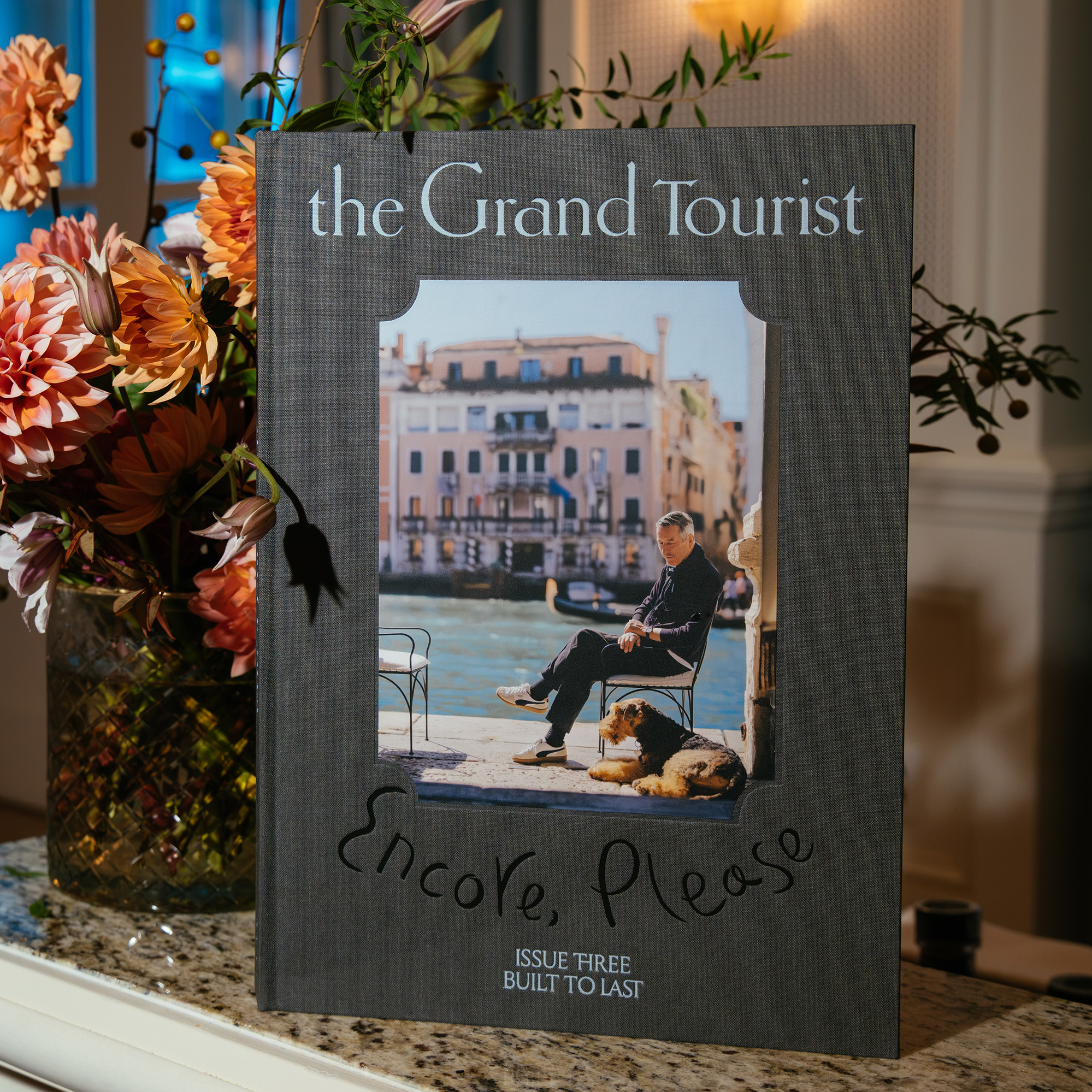
Designers and tastemakers gathered to toast our most ambitious issue yet at The Fifth Avenue Hotel.
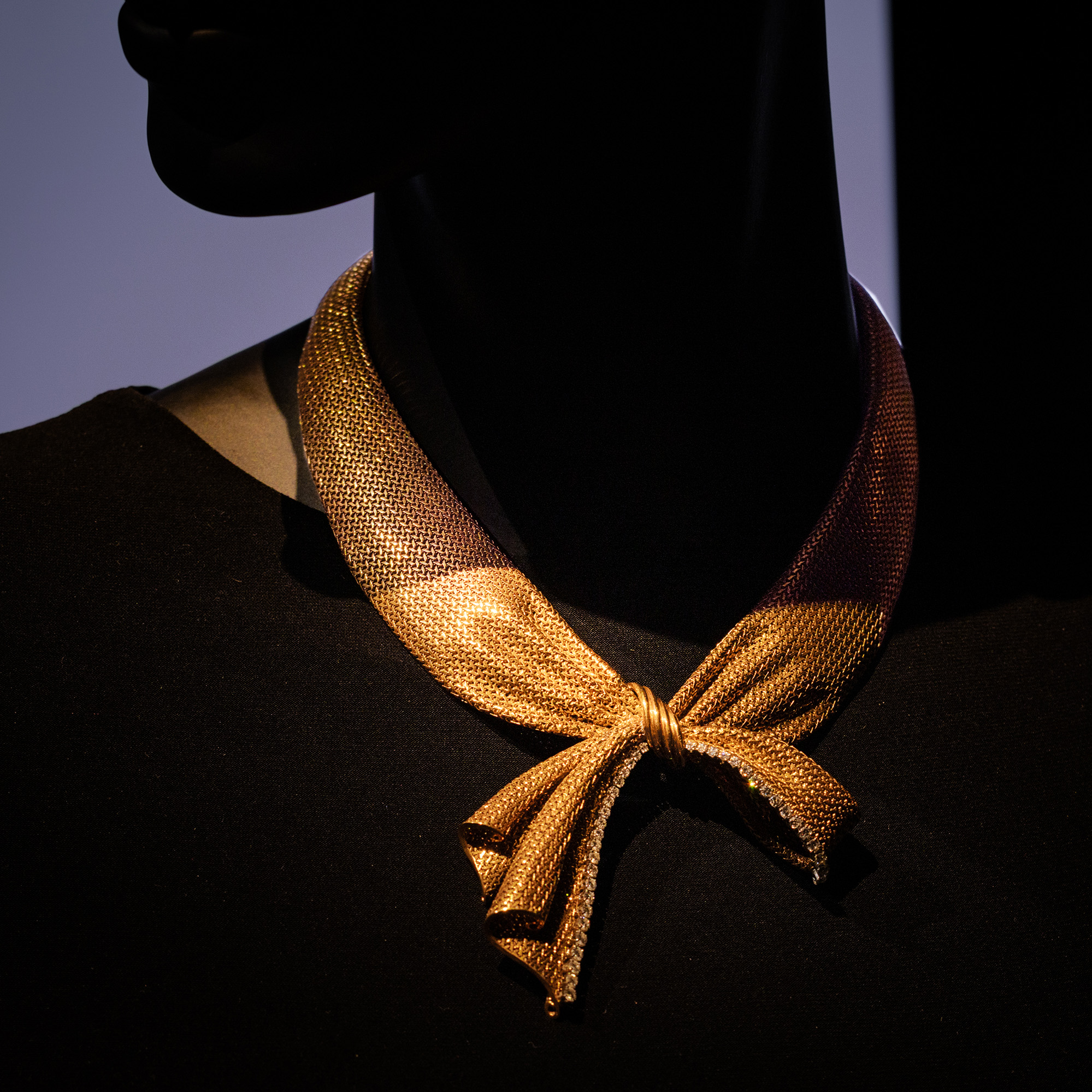
The renowned house looks back on its vibrant history and its incredible pieces that have pushed the boundaries of craftsmanship.
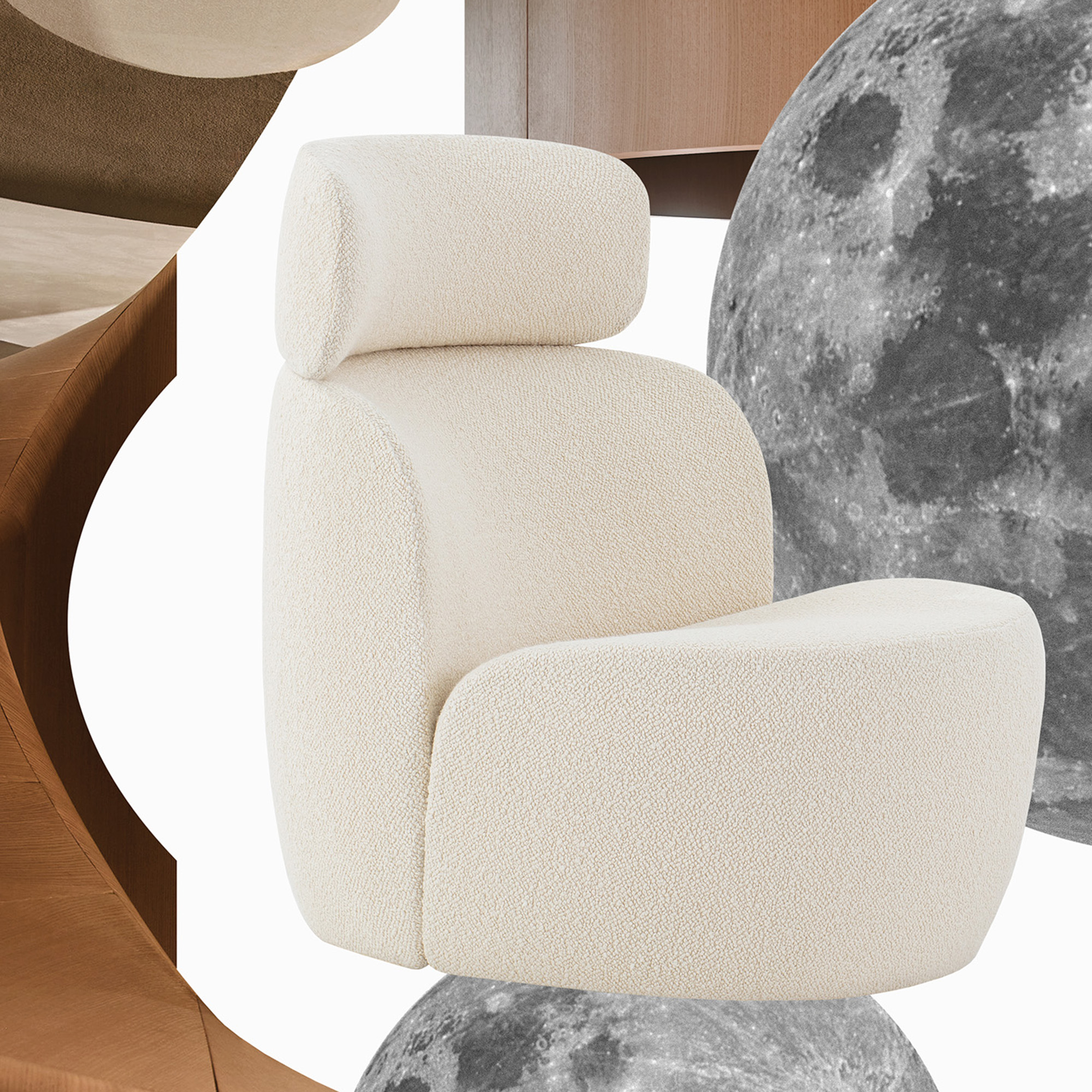
In Milan, we sat down with the brand's Laura Anzani to discuss the family business over coffee, and what it has planned for New York and beyond.