The Surprisingly Sharp Collection of an Artistic Genius
Artist Daniel Brush’s talent was sharper than most. The elusive mind left behind a
staggering and oft-misunderstood collections of vintage objects.
September 23, 2026By
VASILISA IOUKHNOVETS
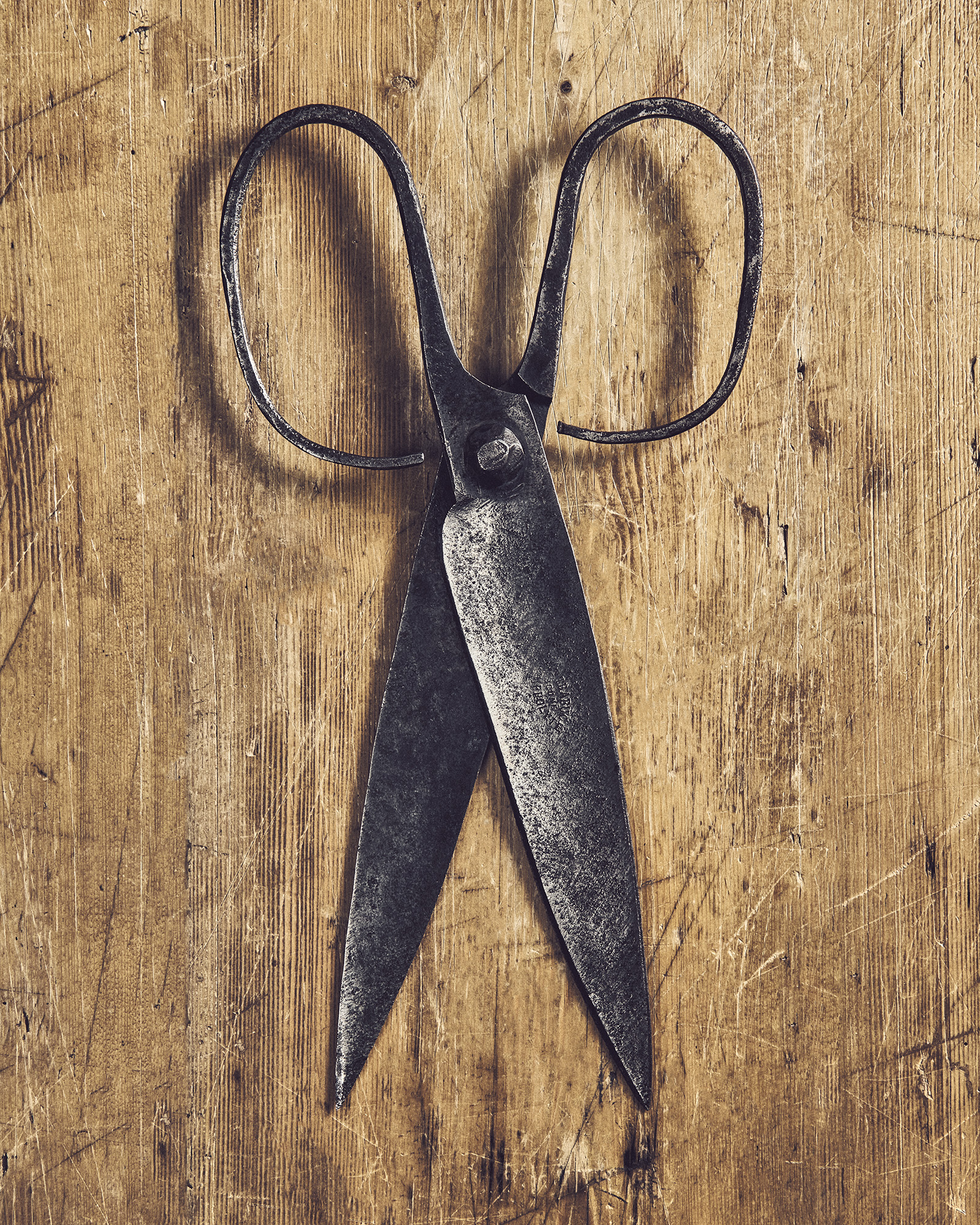
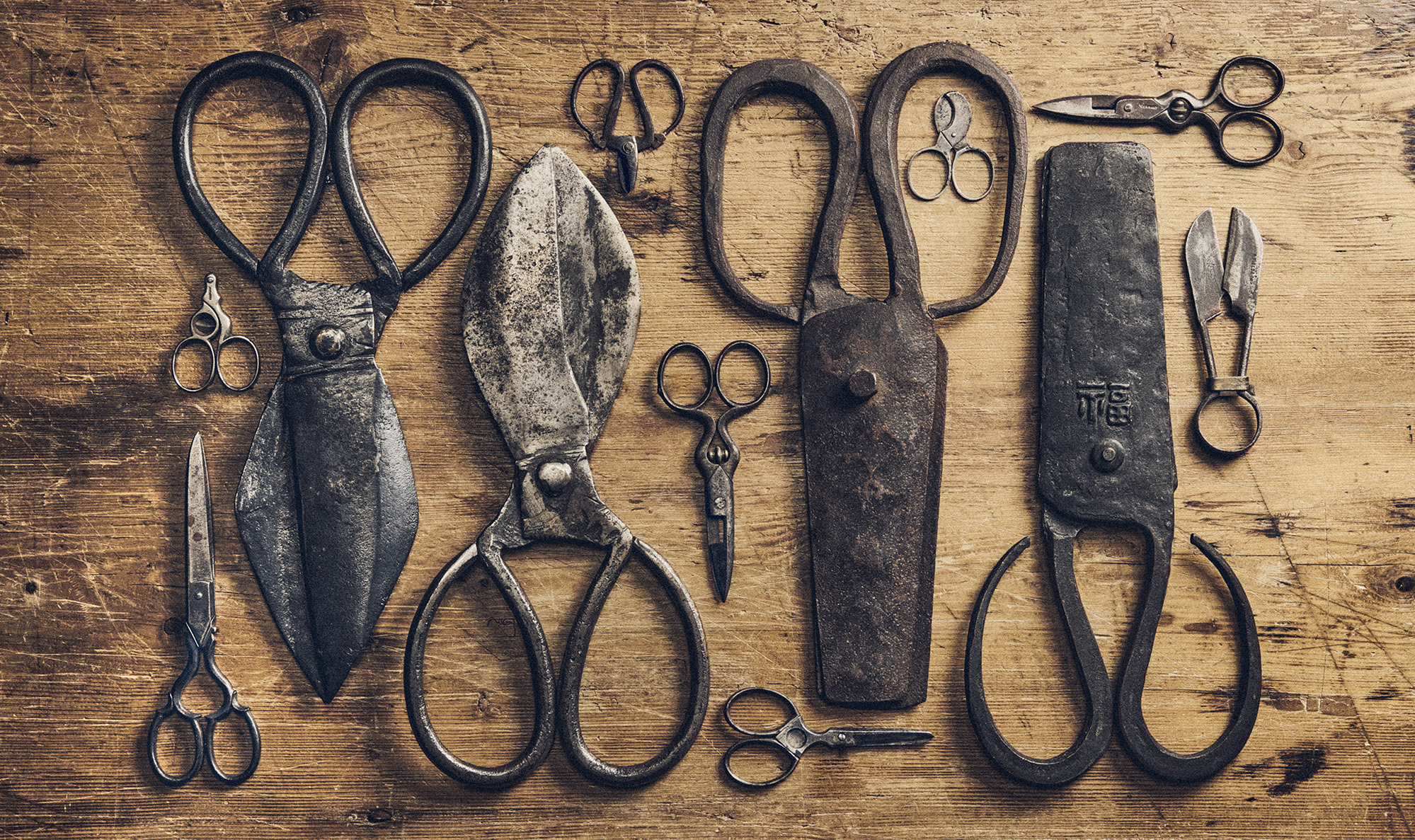
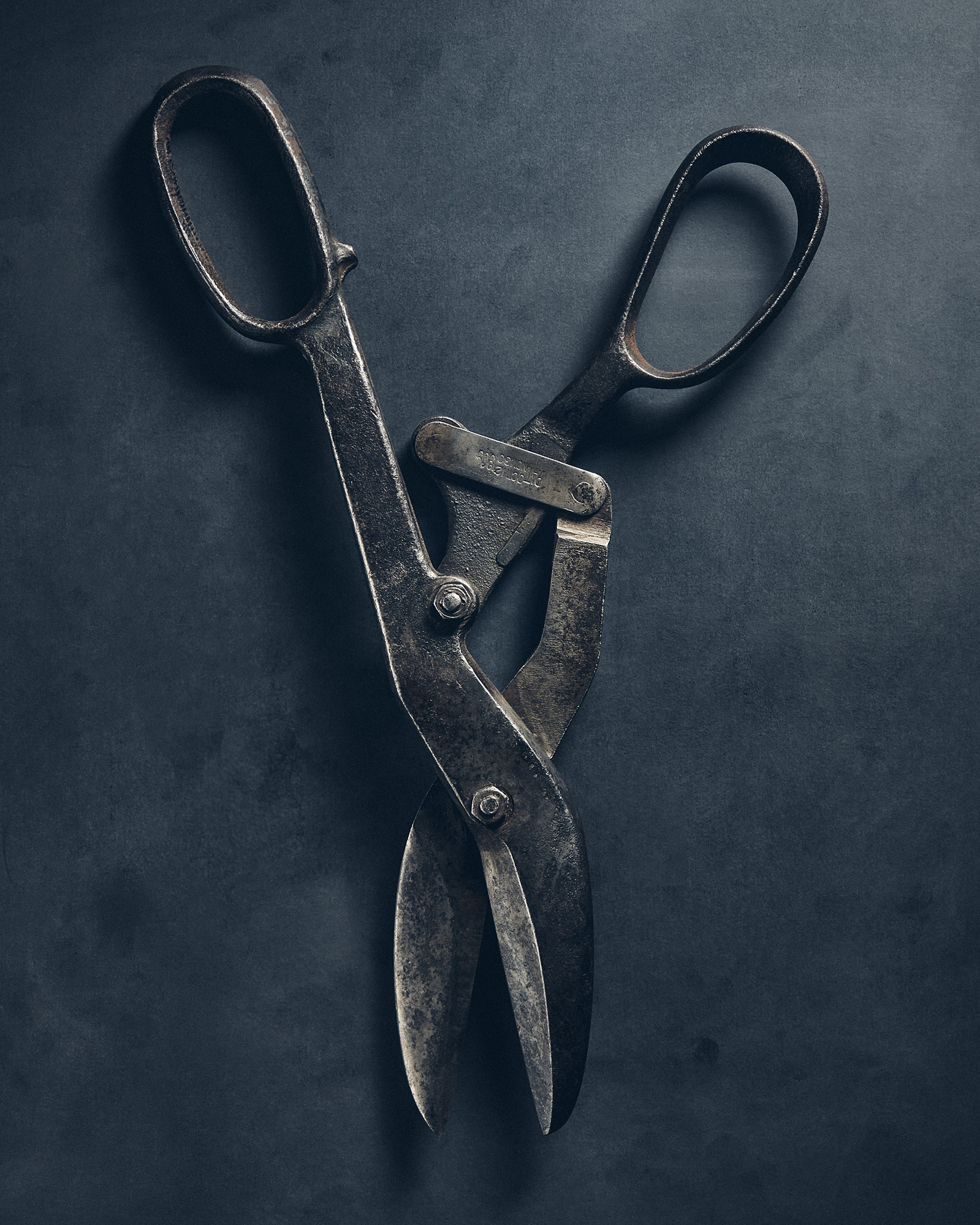
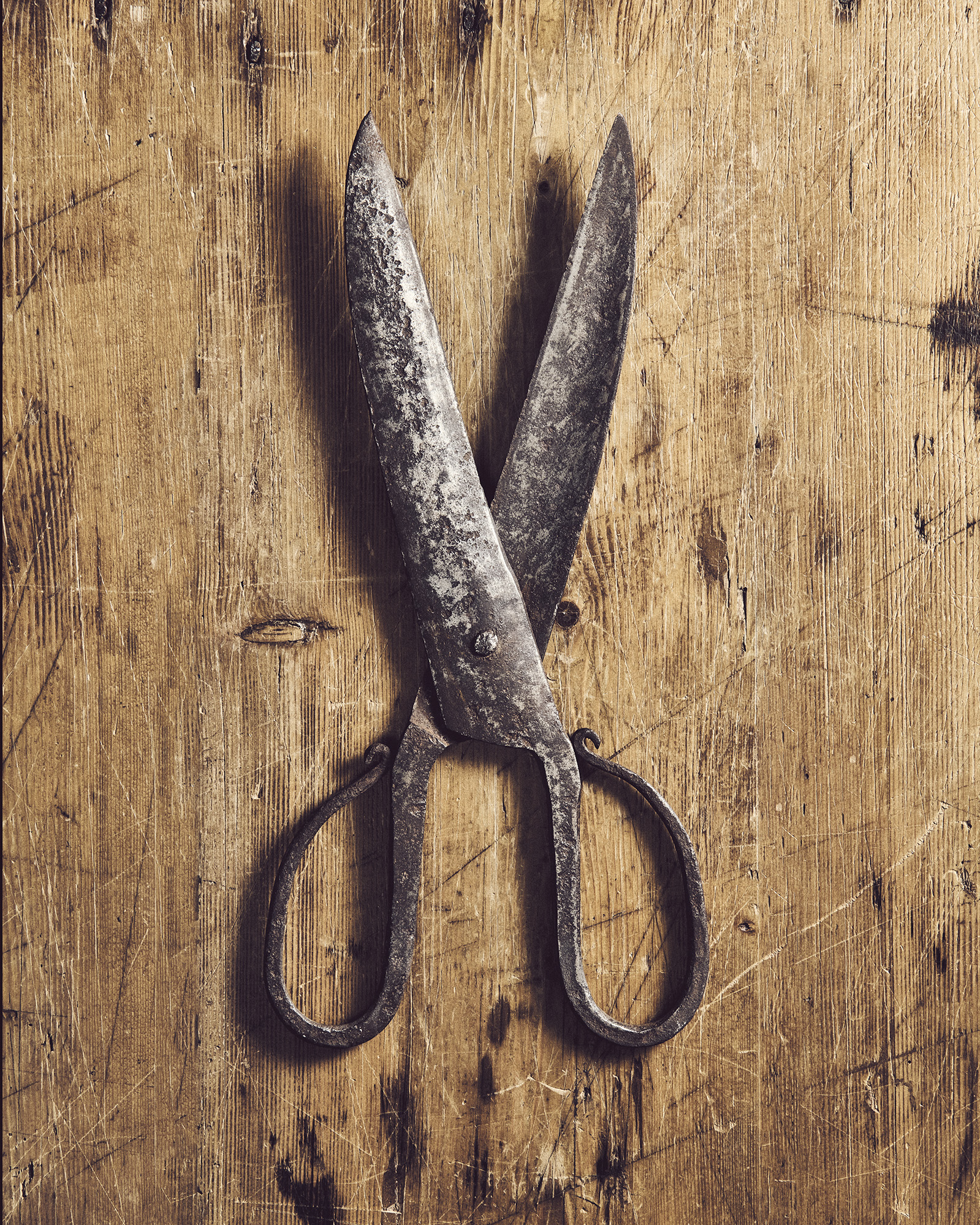
Daniel Brush began in the 80s amassing a collection of hundreds of shears in every shape and size. Photo: Gary Petersen
This article is featured in our Fall 2026 print issue, available soon.
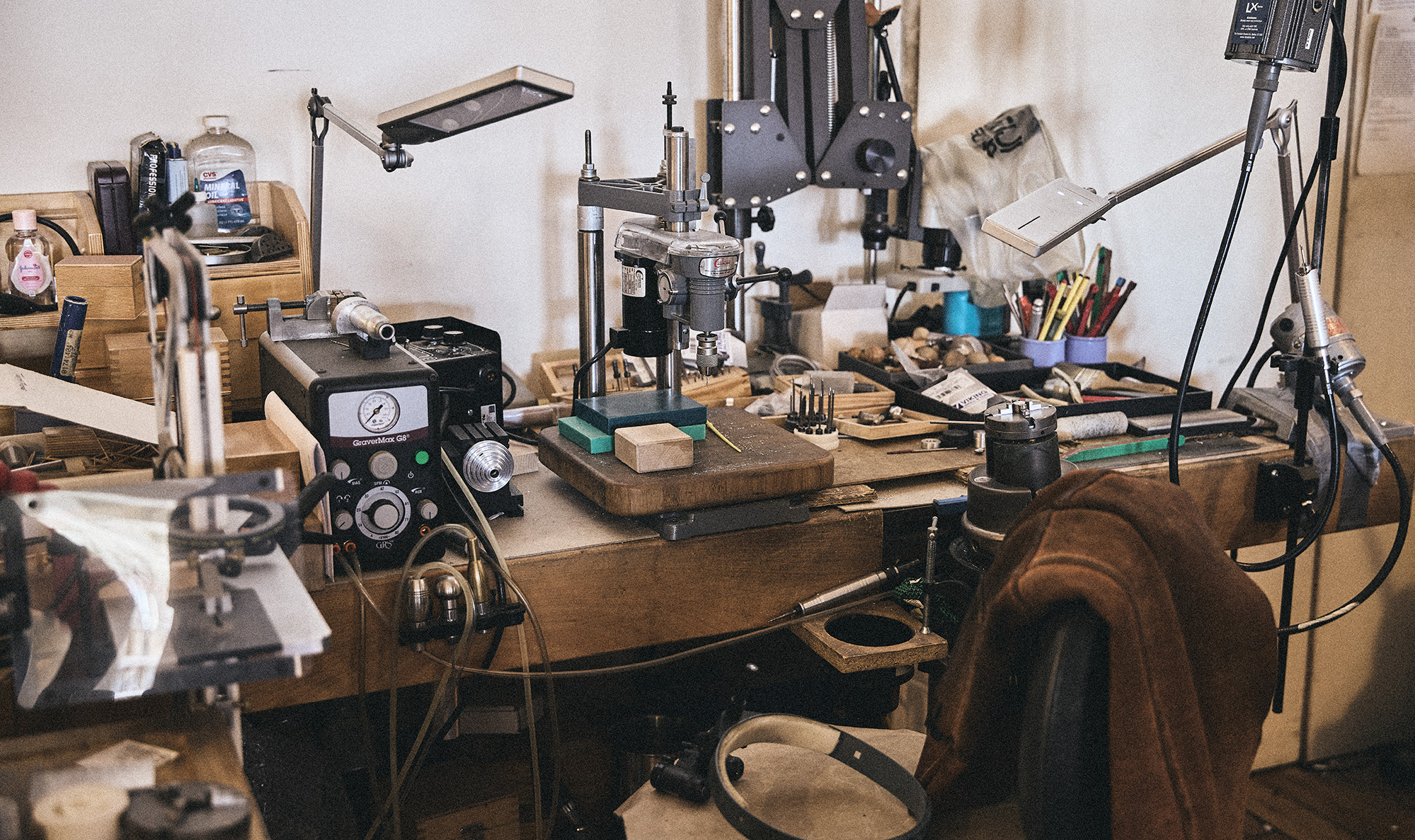
In the heart of New York’s busy Flatiron District lies a 5,000-square-foot space that was once the monastic atelier of a globally recognized artist. Today the studio remains carefully preserved as he left it, that is, filled with a staggering amount of machinery, antique tools, and industrial knickknacks—not to mention hundreds of vintage shears.
While Daniel Brush, who died in 2022, amassed various mechanical contraptions, his practice existed worlds away from them: all of his work was made strictly and exhaustively by hand. His dizzying output of jewelry, paintings, and objets de vertu (the description he favored for his uncategorizable creations) employed laborious methods like gold granulation—one of the most complicated techniques in metalworking—and painstaking exercises like hand-engraving steel until it shone like a pool of oil or painting a brushstroke one fine line at a time. Vanity Fair wrote of his first major survey at the Smithsonian American Art Museum in 1998 that “the museum was obliged to employ a dedicated cleaner to remove the nose prints from the glass cabinets.”
Despite his talent, Brush was hard to pin down as an artist, owing in large part to the fact that he never accepted a commission and only reluctantly sold his work. While a 2012 retrospective at New York’s Museum of Arts & Design drew the largest crowd it had ever seen, he never became a household name. L’École, the School of Jewelry Arts in Paris (which is supported by Van Cleef & Arpels), has been instrumental in bringing his work to global audiences.
Closing in October, their fifth exhibition, “The Art of Line and Light,” showcases 75 of Brush’s pieces, many of which had never left the loft before. While the scissors weren’t employed in practice, they reflect the bedrock of Brush’s artistic pursuit—the beauty he saw in industrial metals, his obsession with technique, and his deep sentimentality. I visited Olivia Brush—Daniel’s wife and biggest inspiration—at the loft to ask her why Daniel collected, how his elusive practice was so often misunderstood, and what his legacy is today.
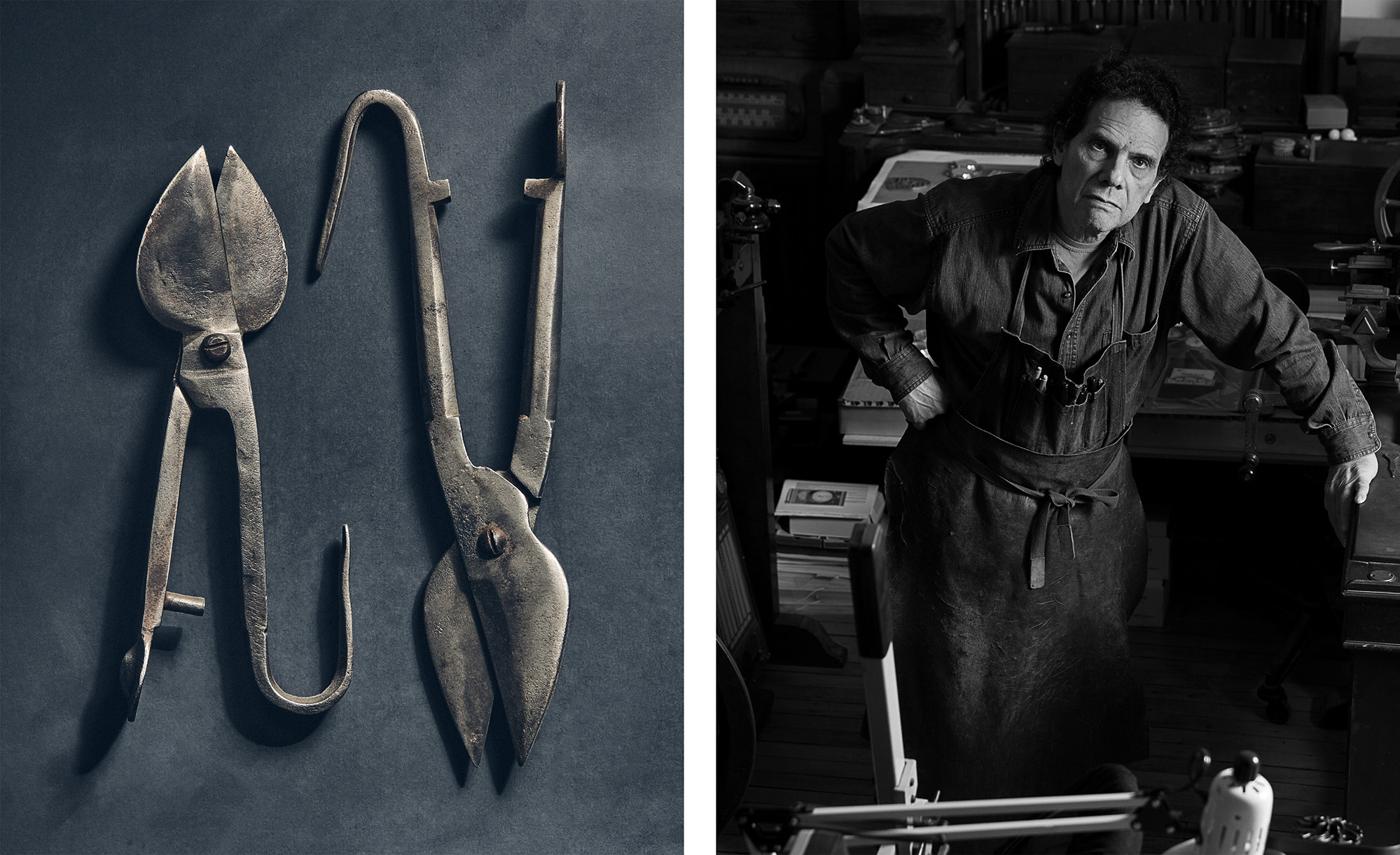
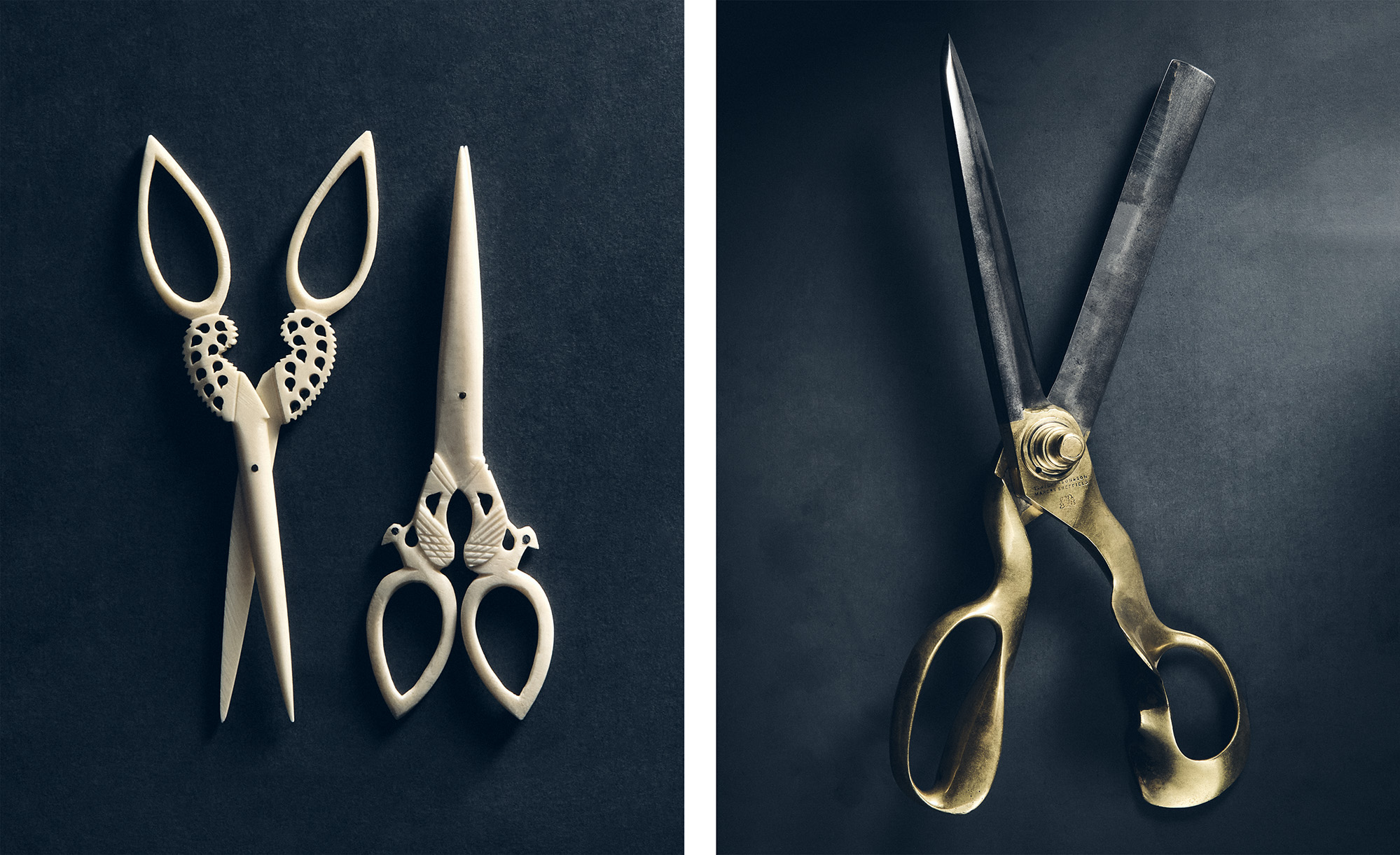
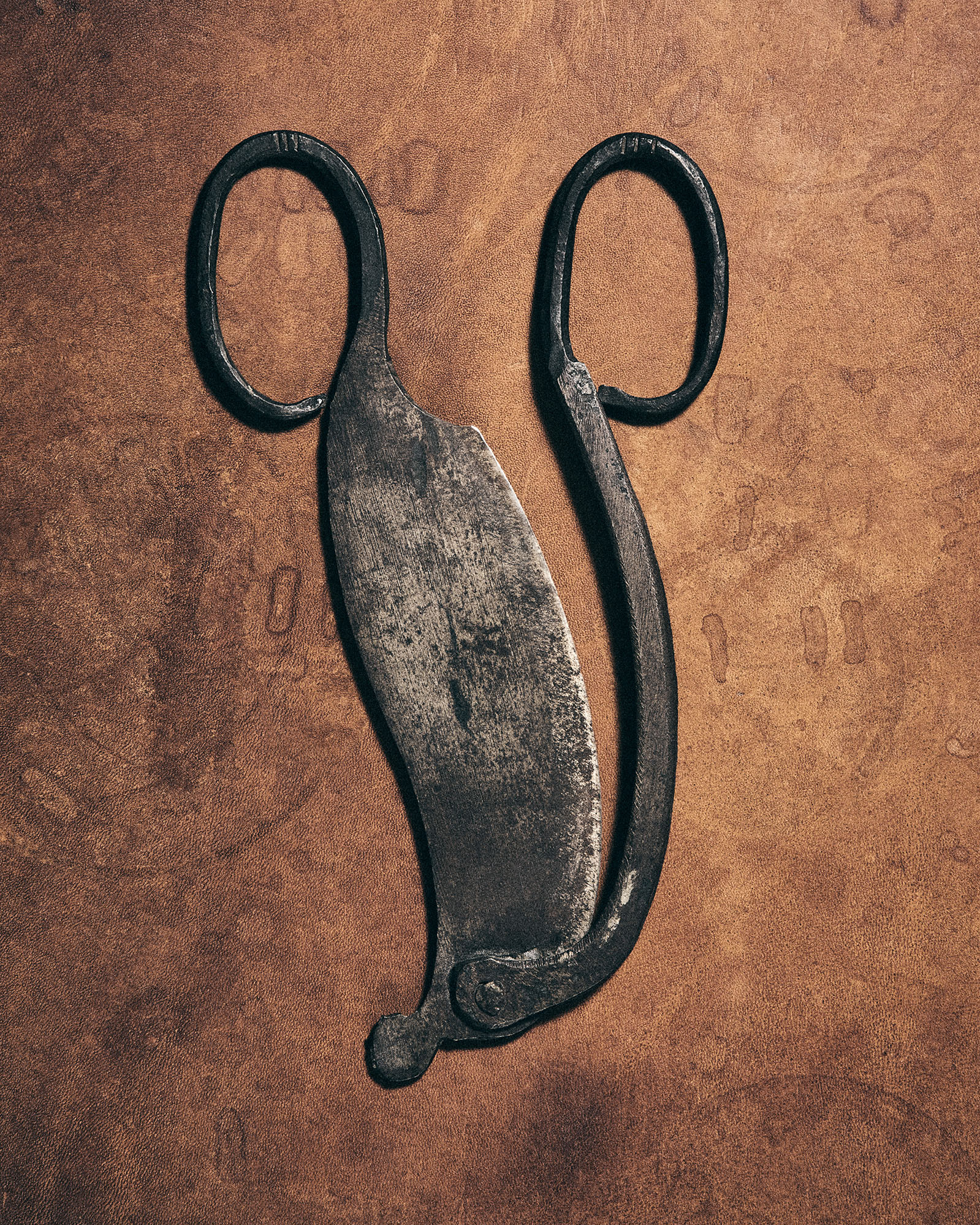
From left: One reason Daniel collected vintage shears and tools was that he found comfort in the idea that their previous owners had used them in their own craft. Photo: Gary Petersen; Brush with his collection of vintage lathes. Photo: Nathan Crooker, courtesy L’École, School of Jewelry Arts
The loft itself was a special place for you and Daniel, where workand life were one. When did you move here?
We moved here in 1978. At that point in time, this neighborhood was very different. It was a manufacturing area for sewing machines and things like that. There were photographers who used some of these buildings as their studios but nobody lived here.
When we bought this place we were living in Washington, D.C. Daniel was teaching at Georgetown University. I was teaching at the Maryland Institute College of Art in Baltimore. We would drive up periodically to see what was possible. The loft was not livable when we found it, they hadn’t done the legal papers necessary, so we literally put $100 down and waited until they did. Initially it was an Artist in Residence, or A.I.R., building, which meant that you could live and work in the same space.
We were the first people to move in. Over the years, of course, the lofts in this city became big apartments. But for the better part of 20, 30 years, almost everybody in this building was an artist, choreographer, musician, dancer, visual artist, or photographer, before the neighborhood began to change.
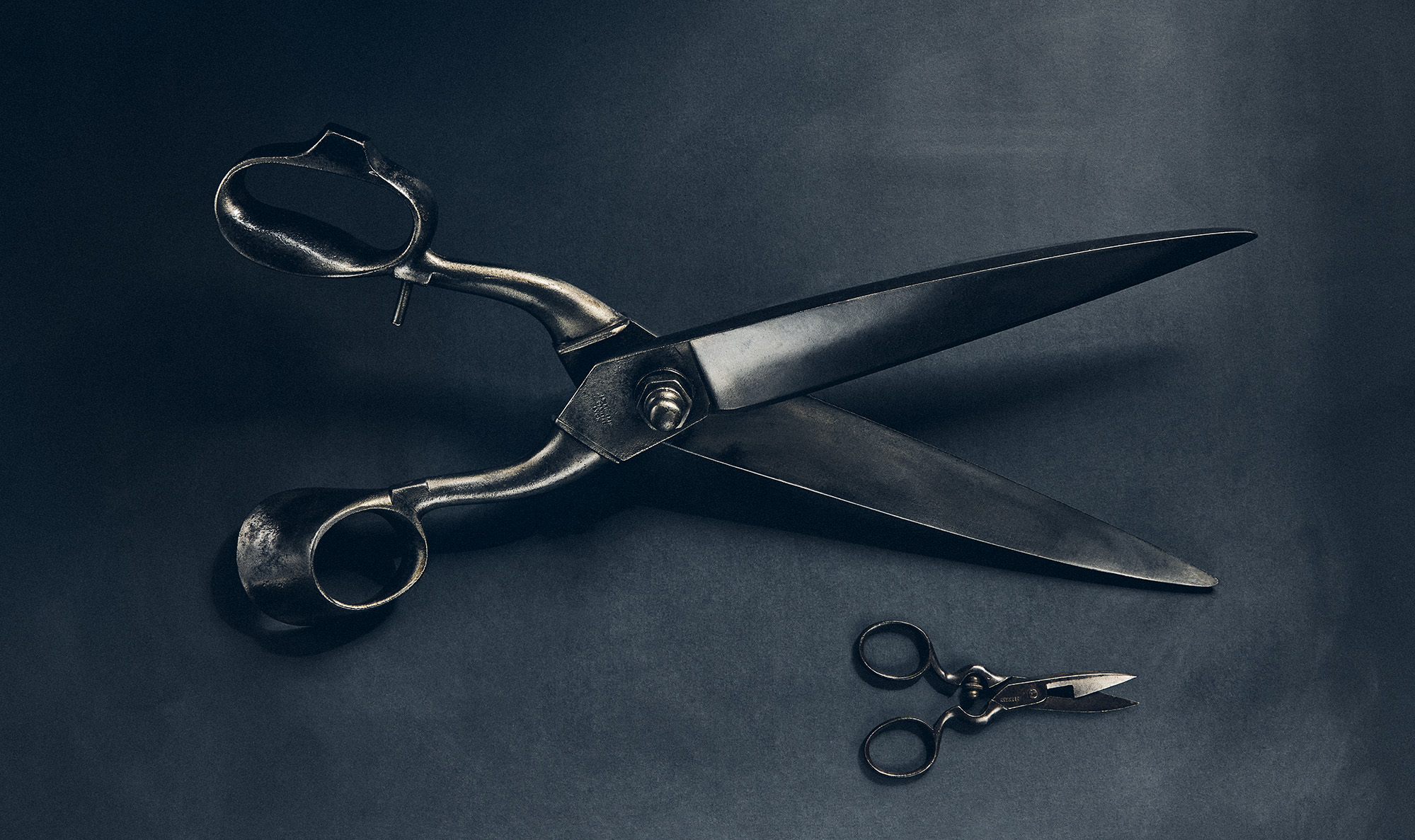
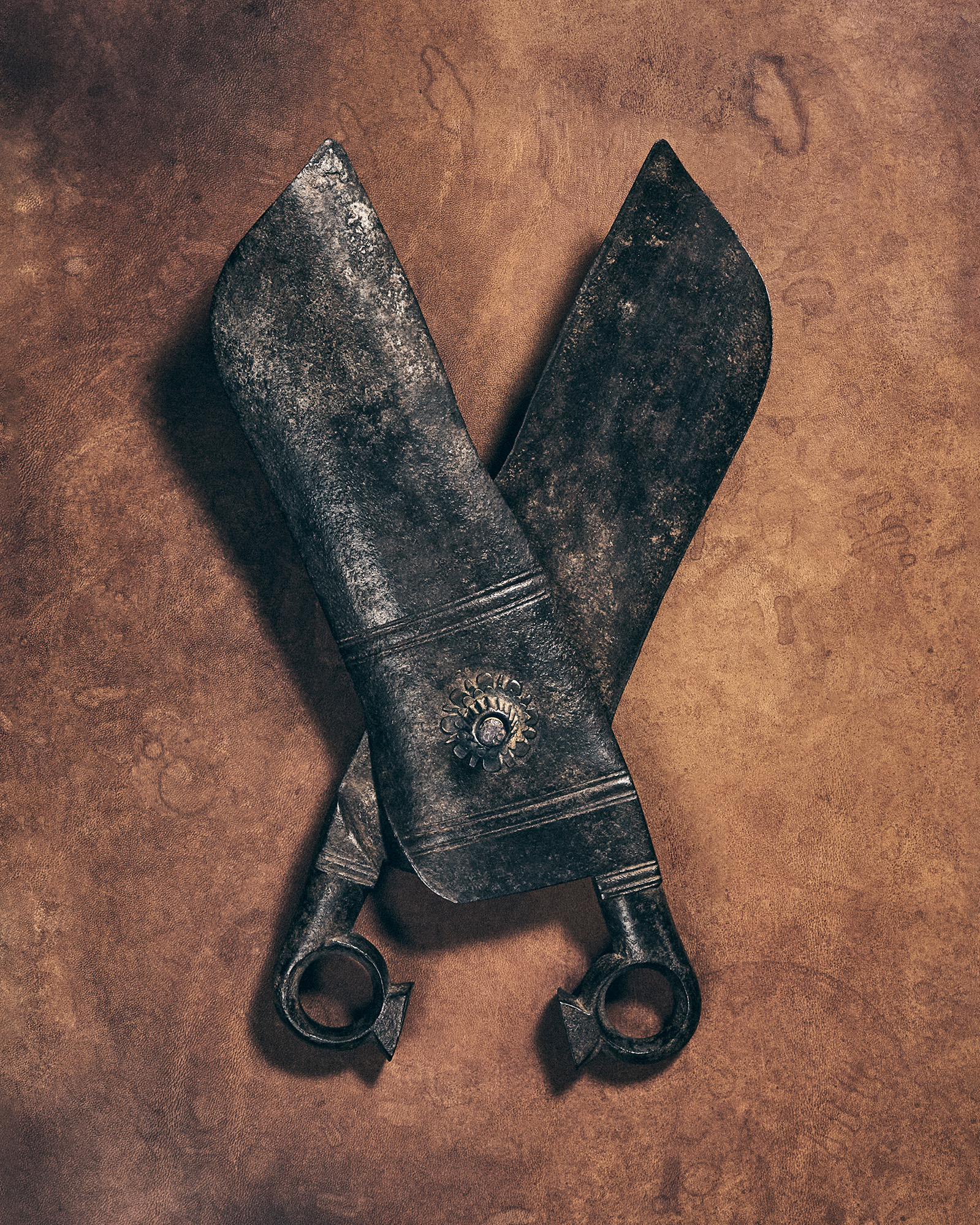
His collection of shears became such an obsession that Daniel sought out dealers and markets wherever he and Olivia traveled. Photo: Gary Petersen
I read that Daniel proposed to you the day you met at the Carnegie Institute of Technology. Why did you say yes?
I was 17 and he was 19. You could say I didn’t think about it. I had just arrived at art school. Daniel was a junior and did the orientation for students who were just entering. My experience meeting him and listening to him was a very unusual one in the sense that he was extraordinarily intense, even at that young age, radically intense. I had never met anybody like that before. He had that intensity about everything that he spoke about. And it’s not that I grew up in a sort of naïve existence. My mother was an artist. My father was a scientist. But they didn’t pursue their work in the way that I saw Daniel talk about his pursuit, his life—with that passion, obsession, and intensity. I didn’t think about it much. We were together from that point forward.
Photo: Gary Petersen
Daniel was known not to leave the loft for long periods of time. Didhe prefer the company of his work and collections rather than that of other people?
He loved to work. It was always what he needed to do in his life. Work and life were one for him. It wasn’t that he was avoiding or preferred not interacting with people, but that this is what he needed to be doing. The thing that people generalize about Daniel is that he was a hermit, he was remote, removed, didn’t like to talk with people. It’s really not true. When he did interact with people, and if he felt that they could speak one-to-one, it was like a dam broke. He could talk about everything for hours and hours and move from one thing to the next. He was very intense and knew a lot about a lot of things, but he was also hysterically funny.
People would sit here for hours with him. I remember our first interaction with the person who published his first Abrams book, Gold Without Boundaries. He was here for six hours the first time he came, and he barely said anything. Daniel talked about just about everything in his life. Not because anybody wanted him to, but just because here was somebody who was interested and they could communicate well with each other.
Was the outside noise a distraction to him?
He actually felt companionship with the idea that on Monday morning, trucks, deliveries, and people were out. He liked that they were working and he was working. He didn’t find it a distraction at all. As a matter of fact, when they weren’t working on the weekends, it bothered him.
Photo: Gary Petersen
When did Daniel begin to collect vintage objects and machinery? Do you remember what the first collection was?
When he started collecting the very early English machinery, the Holtzapffel lathes, it was 1982, the year our son Silla was born. Daniel saw an article about a man who had these ornamental turning lathes in New York City, over by the United Nations. Daniel contacted him and we became friends and visited all the time. Dan watched him use the lathes, not for any purpose but just because he was fascinated by it. He loved that they’re operated the way an old sewing machine is, with a foot treadle, and involve human interaction, unlike most machines now. They’re not digital or programmed so that your own being doesn’t affect what happens. If your heartbeat is very erratic one day, let’s say, and you’re using that machine, treadling it, you can see the pattern shift.
Through that person, there was someone in New York whose brother was from an aristocratic family in England. The name was Bathurst. They were selling one of their Holtzapffel lathes, so Daniel went over there. This is still 1982, I couldn’t go because our son was just born. He stayed in the castle, talked with the man who operated the machine for Sir Hervey-Bathurst, and decided he needed to have it. That was the first one. The brother of Sir Hervey-Bathurst came here every single Friday at lunchtime for entertainment, for fun, and they played on the lathes. He brought his own can of soup because he didn’t want to bother me. That’s pretty much how all the collections happened—he started with one thing.
Photos: Gary Petersen
Do you remember when Daniel started collecting shears?
I want to say it was the 80s. We were in Paris when he bought the first pair of scissors. We were walking on one of the main boulevards, on our way up toward Montmartre. There was an area there that had some tailor shops and in one of the windows, there was a pair of large tailor’s shears.
Why scissors? They reminded him of his family history. Dan’s family sold children’s clothing and would come to visit the manufacturers in New York two to four times a year, to buy. Daniel saw them using the big tailor’s shears in the showroom to make clothing. He loved the idea that people made things by hand—they were there with the scissors, using them. We weren’t in the digital age. We were human.
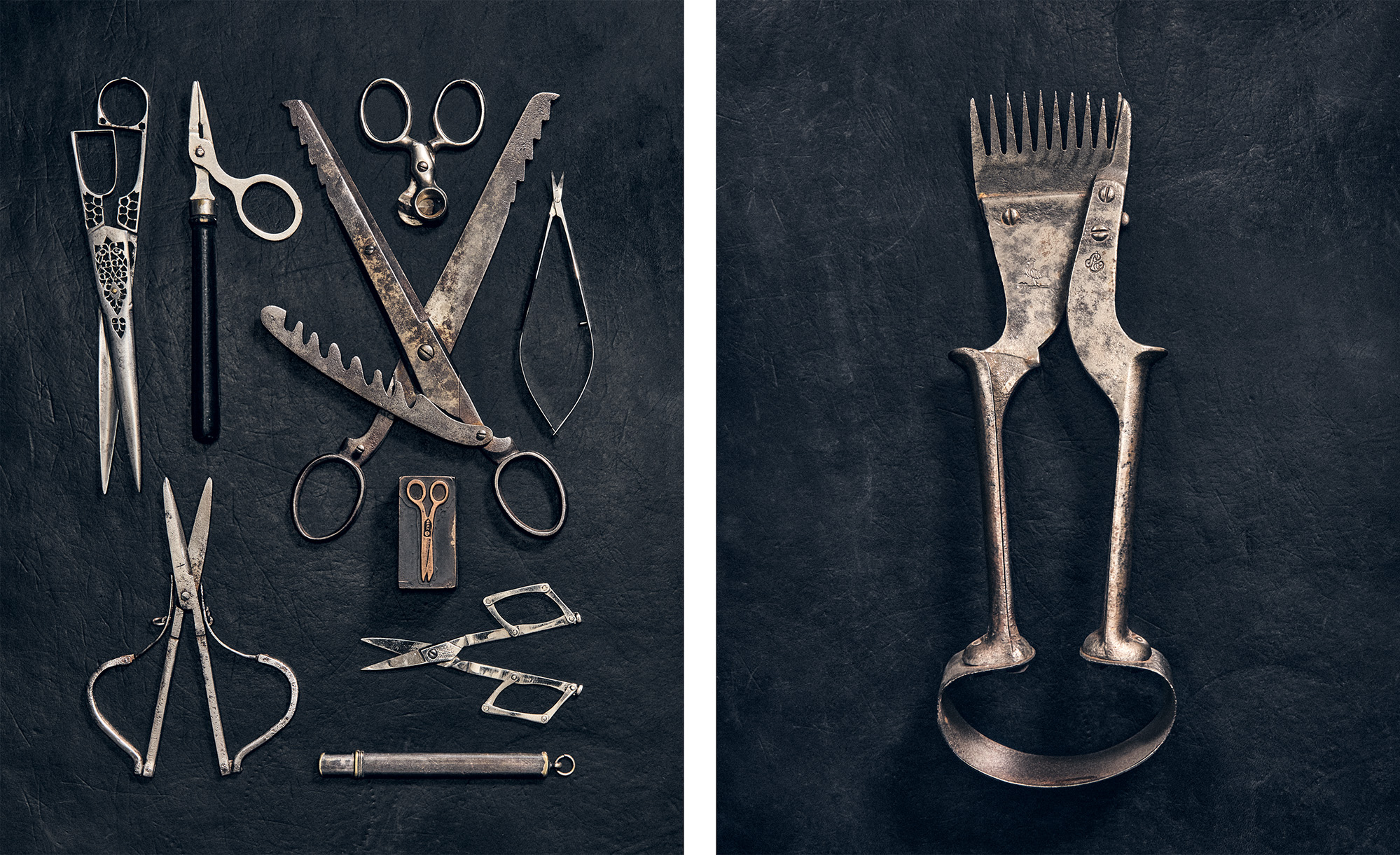
That was just before the Internet took off, which provided a trove of material. Before that, we would go to flea markets, in Paris to the Marché aux Puces, in London to Portobello Road, where there were dealers that specialized in old scissors and shears for different purposes.
Photos: Gary Petersen
Have youever documented this collection before? Can you point out a particularly interesting pair?
We have not. Years and years ago, we had talked with the person who designed and did the early Steidl book with us, who had always wanted to do a book on the scissors, but it just never happened. I wish we had.
He loved the Korean taffy-pulling scissors. It’s the idea that they didn’t cut anything, right? They weren’t meant to cut at all. They pulled taffy.
Did he collect art or other objects besides machinery?
It depends on how you define art. Other things, but not art, I would say. He collected knives, corkscrews, and early toys from when he was a kid. He loved model cars. He collected objects from various cultures, like Chinese scholar’s table rocks and coco-de-mer—in tantric spiritual and religious beliefs, the coco-de-mer plant symbolizes female fertility. He loved watches, too. Behind you are some Casios, but he collected a lot of different watches.
Photo: Gary Petersen
Did he ever use the machinery in his work?
The only reason he used some of the modern ones, in the back of the studio, was to make the tools that he used to engrave and carve the sculptures. His hand tools needed to be constantly remade and sharpened. So he used the machines to make hand tools, but not to make the work.
Most artists might be distracted by all these objects in their workspace. Were they somehow an inspiration to him?
He felt comfort and inspiration from them, in a strange way. They were what he wanted to surround himself with, because they gave him the feeling that other people in history worked one-on-one to make something. It represented the engagement of the mind, the heart, and the hand for him. In most artists’ studios, machinery is not something that you would find in them at all.
Photo: Gary Petersen
Some of the jewelry Daniel made was untraditional in the sense that it wasn’t intended to be worn. Why?
What was important to him was never its function, it was always the piece itself. If somebody was going to wear it, okay. But that wasn’t where he began. He never ever designed anything ahead of time. That’s very different from how most people make jewelry; you can’t do that because you’re always thinking about its end use.
He was always painting, always making sculptures. It never stopped. But because it was so emotionally, intellectually, and physically difficult, there would be a point when he needed a break. Let’s call it a diversion—I’m not saying it was lesser. One could go play golf or have a drink. But for Daniel, it always needed to be work. So, he worked in another medium. That would be the area that you could call jewelry or objets de vertu.
It was important for him to do everything by hand in every aspect of his work. He never cast anything. He never had any assistants ever. Early on, he did explorations in granulation. That takes an inordinate amount of time. People would say, “You have so much patience.” That was irrelevant to him. In fact, the time allowed him to have a break from the other work. He relished putting each granule on one by one. It was a meditative experience for him.
How would you describe his practice?
The editor-in-chief of Abrams Books, after sitting here in the loft for six hours, used the phrase “sui generis.” Not able to be categorized or pigeonholed. That is how I would describe it. It is in and of itself.
Photo: Gary Petersen
What was the throughline?
It was the pursuit of light, bringing light out of the work, that ran through all of his work. When we were students in the early to mid 70s, we went to Ravenna, Italy. If you look in the mausoleums, on the domes, the mosaic tiles are otherworldly. They stop you in your tracks, make you slow down, and embody all of humanity, all of spirit.
For Daniel, it was through how he wrote his work, like the lines in the group of work “Thinking About Monet,” that he pursued light. He referred to it as having written his work. We were close friends with a number of poets. He would liken his own pursuit to a visual poem.
He couldhave worked with inherently light materials. Why was he attracted to heavier mediums?
The first metal that he interacted with was gold. He bought the first ounce for $35 to make my wedding ring. It was its ancient history, archaeological significance, and sociopolitical relationship with jewelry and precious metals in early cultures. He absolutely loved melting the gold from a nugget into liquid. It turned incredible colors when it melted and gave off a light that was almost a spiritual experience for him.
Not long after, steel cropped up. Why? I’m not really sure I could say. He just loved all metals, they were industrial materials that he could transform.
The work area where Daniel did much of his hand engraving and carving, with hand tools and a magnification device against the wall. Photo: Gary Petersen
How did you inspire him, and how did he inspire you?
We grew up together, that’s how young we were when we met. So, one example might be in my own work. I was heavily involved with fibers and textiles, so you could say that when he saw all this linear fabric, thread, and silk around him, it was an inspiration. But I think that’s saying too much. I think it was really our interaction—talking about things that were important to us, what we were reading, what we were thinking, what somebody brought to us in terms of their mind and heart.
Most artist couples keep their working lives separate. Over the years, ours became more and more one pursuit. I never physically made any of the work that is signed by Daniel, but he always referred to his work as “as much Olivia’s as it is mine,” because it wouldn’t have happened without the intense exchange over all the years about whatever it might be that we were thinking, feeling, etc. My son uses the phrase “mind meld.” I guess that’s probably a good description of what it was like over all the years.
What drove him? What was he searching for?
As much as he cherished the idea of things being made by hand, he wanted to achieve the level of skill that when you looked at what he’d created, you didn’t think about how it was made anymore. It had reached a level beyond the word virtuosity.He hated that word, actually, because virtuosity requires you to ask how something was made. If you get beyond that, then you think about why but no longer ask how.
He would always say that if he could give the viewer anything, it would be that they knew that he was there in the work and they could relate to that. Some people have mistakenly used the word minimalism to describe his work because it’s often very stark. It’s quite the opposite. Minimalism requires removal of human interaction, spirit, personality. His work was really maximalist.
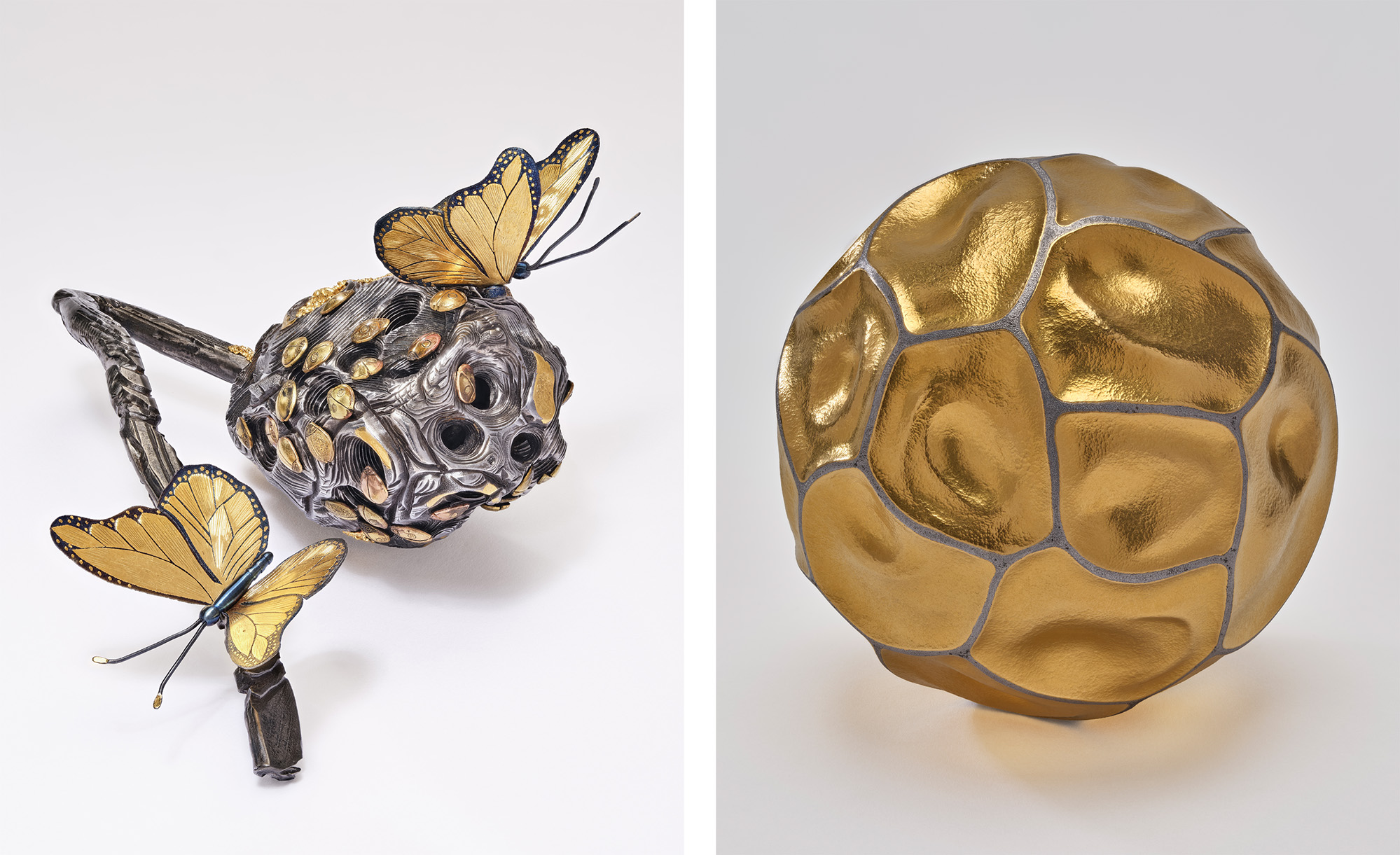
From left: Nest: Butterflies, Ladybugs (1990-92) in gold and steel; Orb (1992-95) in gold and steel. Photos: B. Chelly, courtesy L’École, School of Jewelry Arts
What inspired your selection in the new exhibition at L’École, “Daniel Brush, the Art of Line and Light”?
We’ve done four shows with L’École and it’s been almost 15 years since the exhibition at the Museum of Arts & Design in New York, so I wanted to show some work that had never been seen in Europe before, like one of the “Thinking About Monet” works. It’s a new exhibition space in Paris that’s bigger and more expansive than the original one where we showed in 2017, so it could accommodate more work.
In the show, the painting that will be on view is called Remembrance of Things Present, Seven Days, one work made up of seven drawings—the last time that was shown was 2012 here in New York. It has never been seen outside of New York.
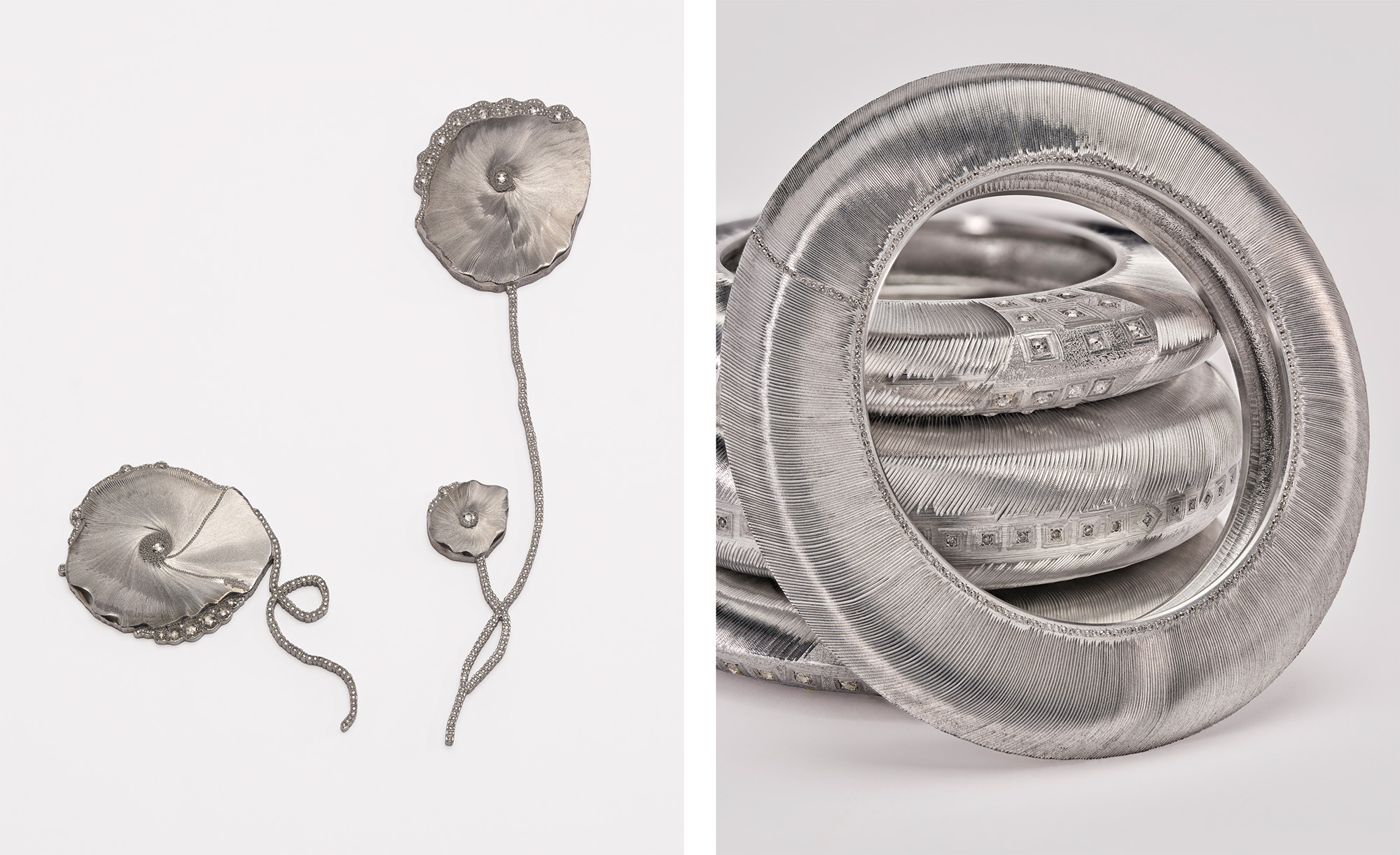
From left: Poppy Set #2 (2010) in stainless steel and diamonds; Rings of Infinity (2009-10) in aluminum and diamonds. Photos: B. Chelly, courtesy L’École, School of Jewelry Arts
Which pieces have never been shown before?
There are two. One is called Nest, and it’s a sculpture, steel inlaid with gold with two butterflies magnetized to it. That piece has never been shown or photographed before. The other piece you could loosely call Brooch.
This show is a chance for his work to be known by a wider audience. How do you want him to be remembered?
To be an artist in the very real sense, you don’t think about boundaries. It’s not necessary to fit into one kind of thinking or one way of doing something.
He was singular. He allowed himself the freedom to think and be and make work that did not fit anywhere. That’s something that he would hope a wider audience could see—that you don’t have to set out to be a certain way and keep those boundaries around you. I hope that people see that this was one person with their own hands, mind, and way of thinking, and that they could interact in some way with that person by feeling companionship with the work.