The Met Brings Louis C. Tiffany’s Rare Studio Drawings Into the Light
Over 120 original watercolor sketches are on display at the museum, giving visitors a glimpse at the behind-the-scenes work that went into the renowned studio’s mosaics, lamps, and interiors.
October 27, 2026By
HELENA MADDEN
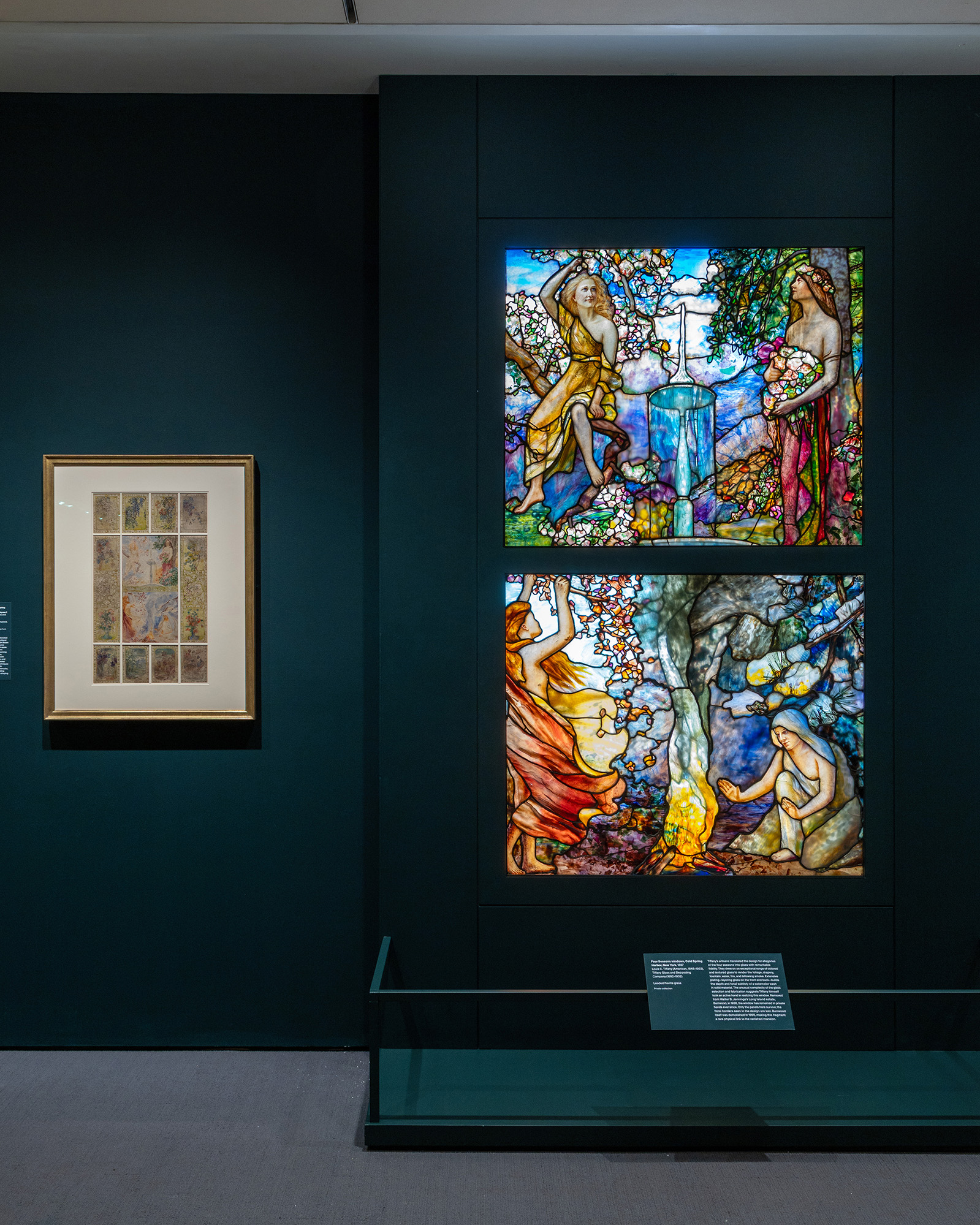
A new show at The Met puts drawings from Louis C. Tiffany Studios side-by-side with the final piece. Photo: Courtesy of the Met
Nowadays, the name Louis Comfort Tiffany is most closely associated with stained-glass lamps. The pieces have become catnip for collectors, with rare examples fetching millions at auction—in 2018, a Pond Lily Lamp sold for $3.3 million at Christie’s. The younger generation has taken a shine to the perennial style as well, incorporating Tiffany lamps into their Pinterest mood boards, and scouring the thrift store shelves for worthy replicas to add to their home offices.
But Tiffany Studios was more than just its lamps. Between the mid-1880s and 1920s, its designers produced mosaics, stained-glass windows, and interiors that later became synonymous with the extravagance of America’s Gilded Age. The initial sketches for these defining pieces remain; these early remnants are the subject of a new show at the Metropolitan Museum of Art in New York, “Designing the Gilded Age: Drawings from the Studios of Louis C. Tiffany.”
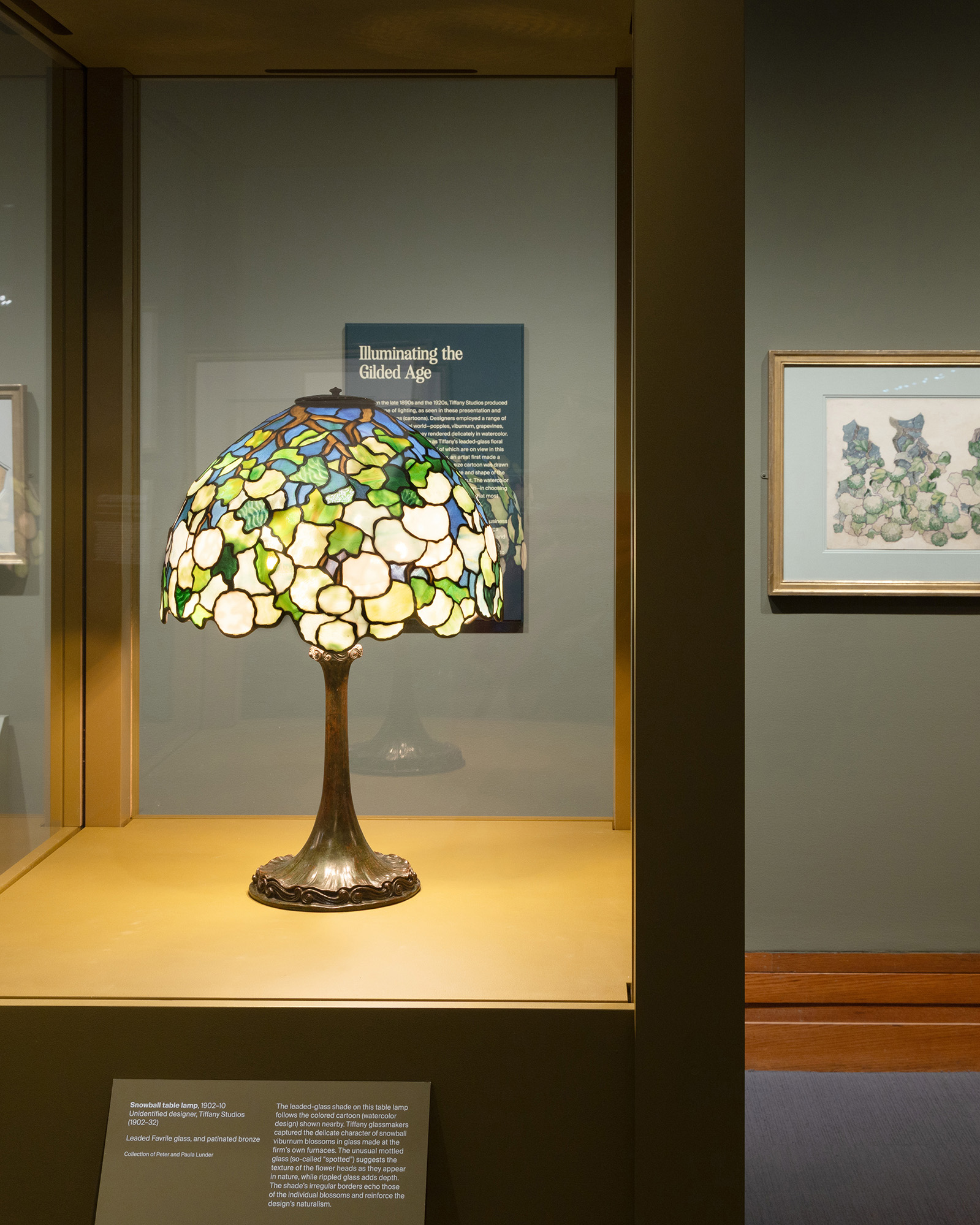
The exhibit showcases Louis C. Tiffany’s sought-after stained-glass lamps. Photo: Courtesy of the Met
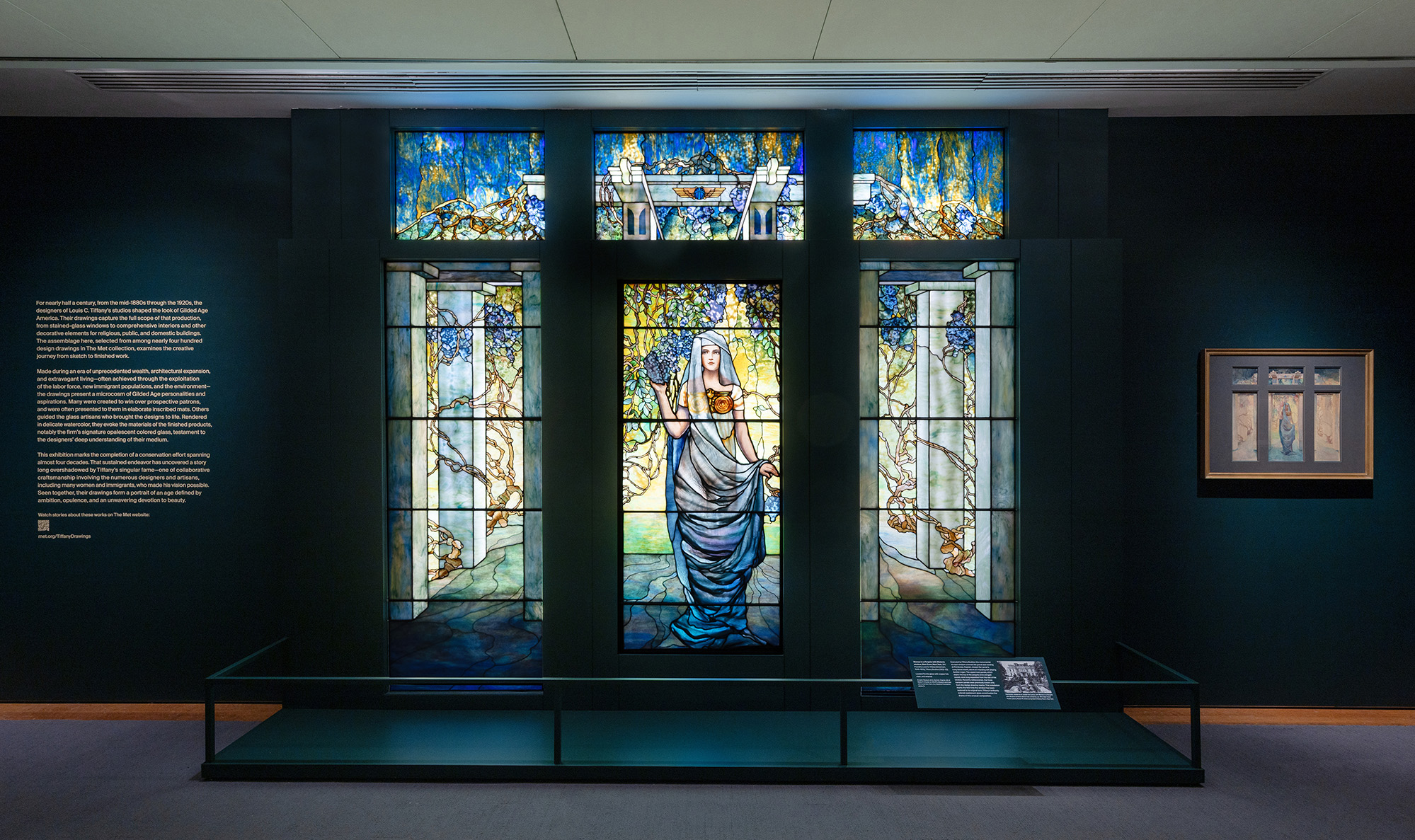
The exhibit presents almost 120 watercolor drawings selected from 400 in the Met’s larger collection. Many document works that have been lost, damaged, or destroyed, or that were never fully realized, and so these early sketches are all that remains. Some were completed, however—in these cases, the show presents the finished lamp or mosaic side-by-side with the original design. Perhaps the best example is the sprawling Woman in Pergola with Wisteria, a six-panel, stained-glass window that was once a part of the grand staircase at Captain Joseph De Lamar’s Long Island estate. Until recently, the three transom panels were known only by a drawing, which hangs adjacent to the window in the exhibit. The show marks the first time that all of the rediscovered pieces have been presented in full.
The show also sheds light on Tiffany’s enamelwork, such as the Plum bowl, which is accompanied by its early watercolor sketch. Its designer, Julia Munson, who joined the studio in the late 1890s, scribbled the enamel formulas directly onto the paper, as well as a tally of how long she spent on the design: 50 hours in total. And of course, there are lamps on display. Enthusiasts can see how these extraordinary pieces were made via a display case that depicts the process of sketching, glass cutting, and soldering the pieces all together. An accompanying video shows a demonstration from the Met’s glass conservators.
One of the most significant pieces in the exhibit is Woman in Pergola with Wisteria, which has never before been shown in full. Photo: Courtesy of the Met
Yet for all the excitement surrounding Tiffany’s storied work, none of the drawings presented have ever been studied before in depth. The show is part of a decades-long conservation effort to restore these early examples, and is made possible by Tiffany & Co. Visitors can catch a glimpse of these rare sketches through February 7, 2027.