“It’s Like Family Here”: How a Designer Found Creative Community in Chinatown
Peter B. Staples, founder of lighting studio Blue Green Works, discovered the New York he dreamed of in Chinatown, along with a close-knit circle of tattoo artists, jewelers, painters, and furniture makers whose perspectives have shaped his practice.
October 26, 2026By
JULIE BAUMGARDNER
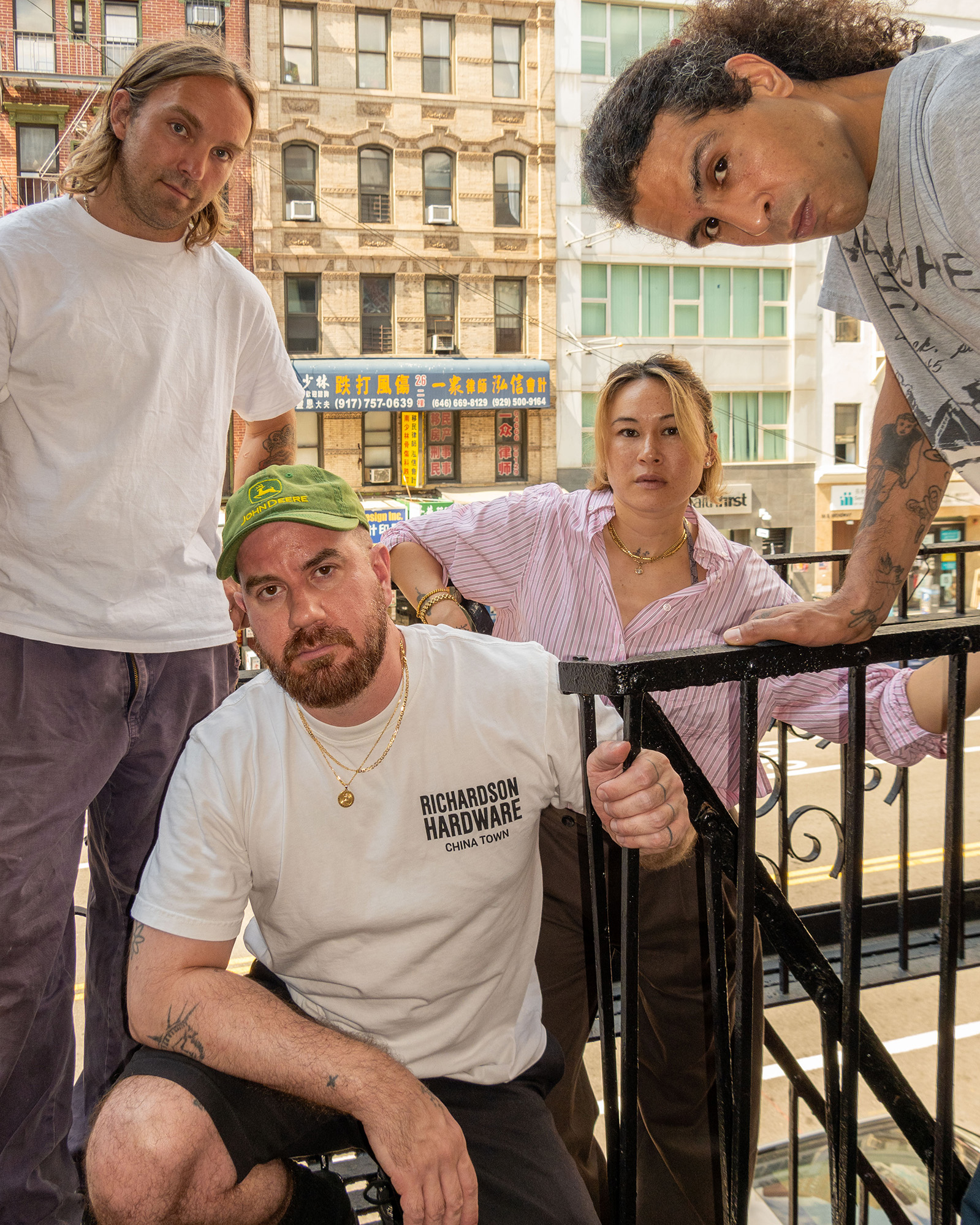
Peter B. Staples (center) outside his Chinatown studio Blue Green Works, with close friends (from left) woodworker Luke Malaney, jewelry designer Erin Kelly Meuchner, and artist Armando Nin. Photo: Jack Pierson
This article is featured in our Fall 2026 print issue, available now.
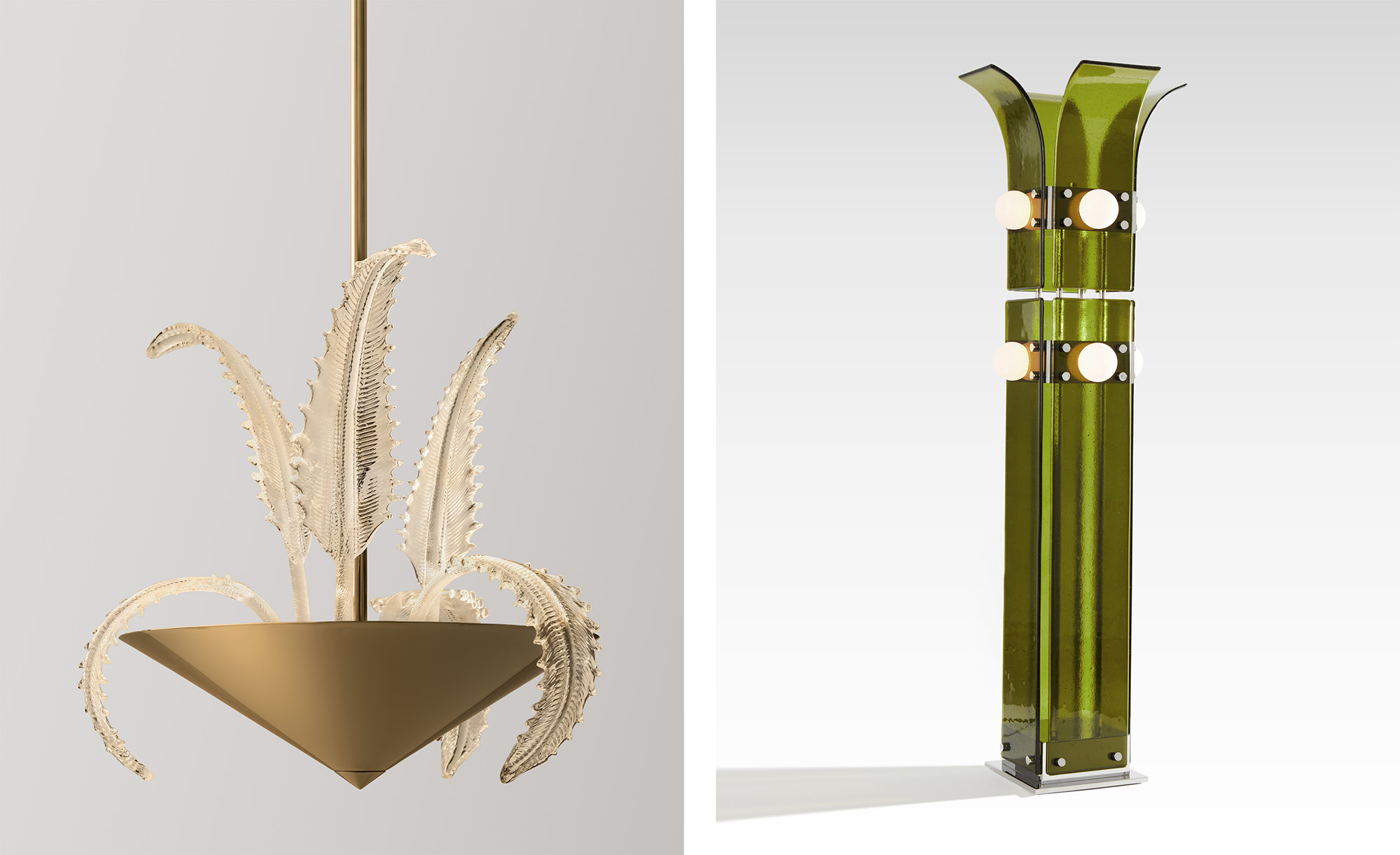
“There are a lot of things in life that don’t end up feeling like you think they’re gonna feel,” says Peter B. Staples, who was raised in a small town in Illinois on the Mississippi River. “But Chinatown really feels like the New York that I dreamed of as a kid.” Staples, a cinephile who studied film and learned the design trade from stints at the gallery The Future Perfect and the lighting brand Apparatus, conceived of his own lighting company Blue Green Works as a way to materialize the cinematic spaces he creates in his head. “I studied cinematography, which is about shaping light, so I try to put that into my pieces somehow,” he says. Since the brand’s founding in 2020 he has created at least 10 collections, which often use materials in unexpected and elegant ways and blur obvious period references. He’s made pendants mixing raw-looking fiberglass with polished brass and floor lamps that look like medieval candelabras. In Staples’s hands, the humble sconce and pendant are transformed by a simple switch in materials to oak or walnut, as a tribute to his love of skateboarding. His latest collection, Garden, is his most delicate to date. Made in Italy, the line uses ornate and detailed Murano-made glass leaves that are combined with polished metals.
His journey to the neighborhood began when his close confidant, Liutas MvH, who runs the avant-garde art project OCDChinatown, lured him down to the East Broadway corridor on the promise that something unique was happening there. Manhattan’s Chinatown over the last 25 years has expanded out toward the East River and up past Delancey Street. More recently, the center of the action has been around Dimes Square, a triangle at the eastern terminus of Canal Street, where hangout spots like its namesake restaurant/deli/market Dimes, as well as Forgtmenot, Clandestino, and the movie theater Metrograph, have turned it into a code word for cool. All of this activity spurred a migration of cultural tastemakers just a few blocks east. Up sprouted edgy gallery and curatorial platforms like OCD, Reena Spaulings, and 56Henry, who led the way for a new crop of younger galleries/concepts now known as the Henry Street cluster, followed inevitably by sidewalk cafés and bars to serve the budding artistic community. Staples found just the spot, a live-work studio right in the heart of this tract where he nestled into a near-instant community.
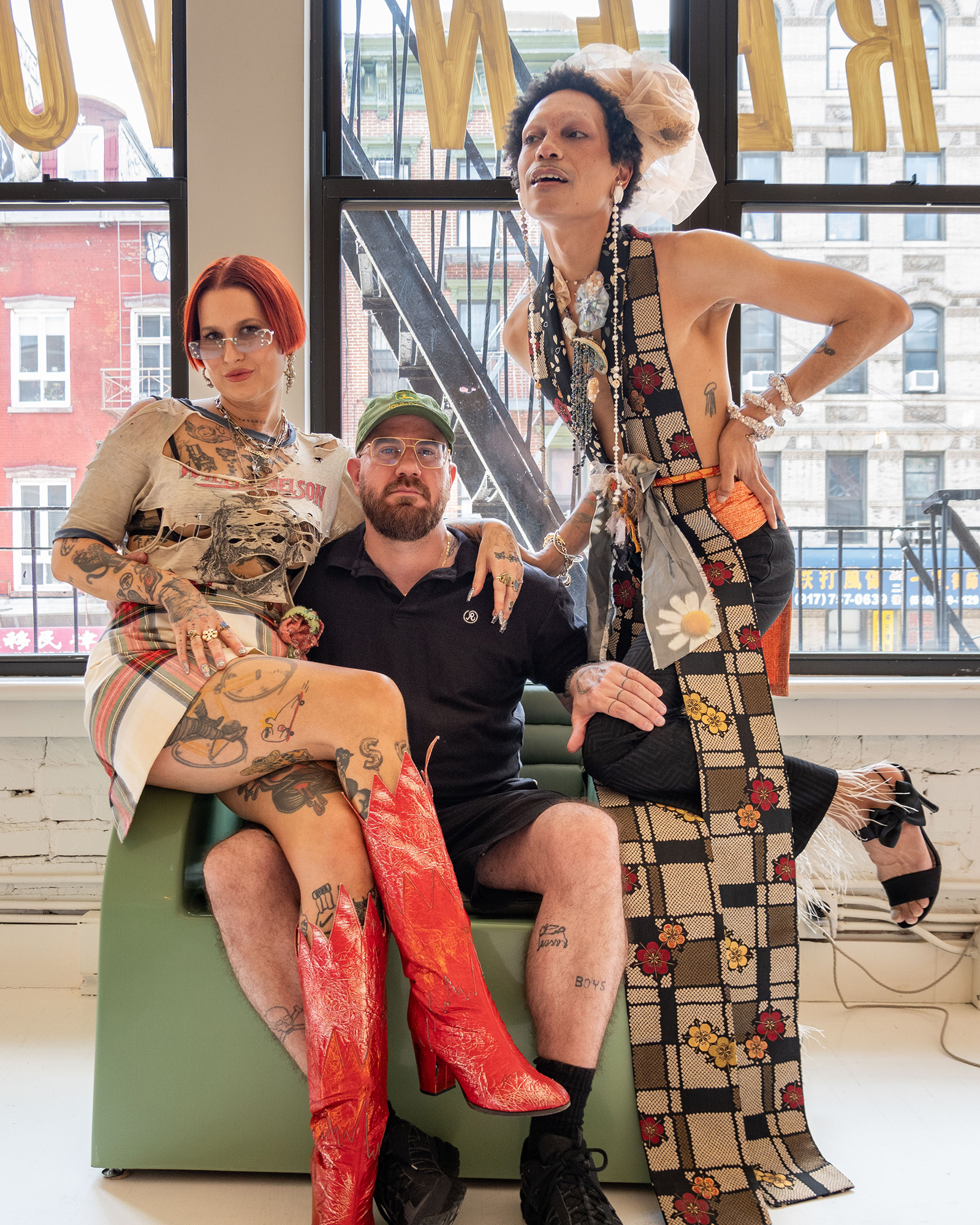
Tattoo artist Kee Kee James (left), Staples, and jewelry designer Rolly Robinson. Photo: Jack Pierson
Now firmly established, Staples believes Blue Green Works wouldn’t have been as successful anywhere else. Whether it’s the latest happening from Tony Cox’s roaming gallery Club Rhubarb (“I feel like I’m standing in the center of the world in there,” Staples says) or the Billy Cotton–designed, Michelin-awarded restaurant Bridges (“It was crowdfunded by friends and family, and now? A huge success.”), the vanguard of culture is active and alive here. “Chinatown feels like a place where if you have a really great idea and you’re serious about it, you can make it happen,” Staples says. “It’s like the last uncharted Manhattan, there’s so much newness against the backdrop of an older version of New York.” Other friends are nearby, like Kee Kee James of Vacation Forever Tattoos on East Broadway and Rolly Robinson, the maestro behind the six-year-old jewelry line isshī New York, who can often be found sipping a San Sebastián martini in the Swan Room at the hotel Nine Orchard.
From left: The Terrace, from the Garden collection, features six handmade glass leaves; a Palm floor lamp from the studio’s debut collection, in lily pad green; bluegreenworks.com
But it could all distill down to “the chaos!” says Andrew Zebulon, one half of an artist-designer duo with Kristen Wentrcek, who Staples met when the pair delivered some of their sculptural furniture to his apartment. “Here, weird people are doing the weird things that they want to do, and you’re always running into people at random on the street and finding different overlapping connections between your circles.”
As Staples’s close friend Armando Nin says, “Walk around, be surprised. It’s an endless source of characters, conversations, and unexpected encounters.” In fact, the painter, who uses soot on canvas and grew up in New York’s Alphabet City, sees the neighborhood not as a creative club but rather “a constellation: artists, designers, musicians, technologists, and entrepreneurs crossing paths. The common thread isn’t what people do—it’s how they express themselves and engage with the world.”
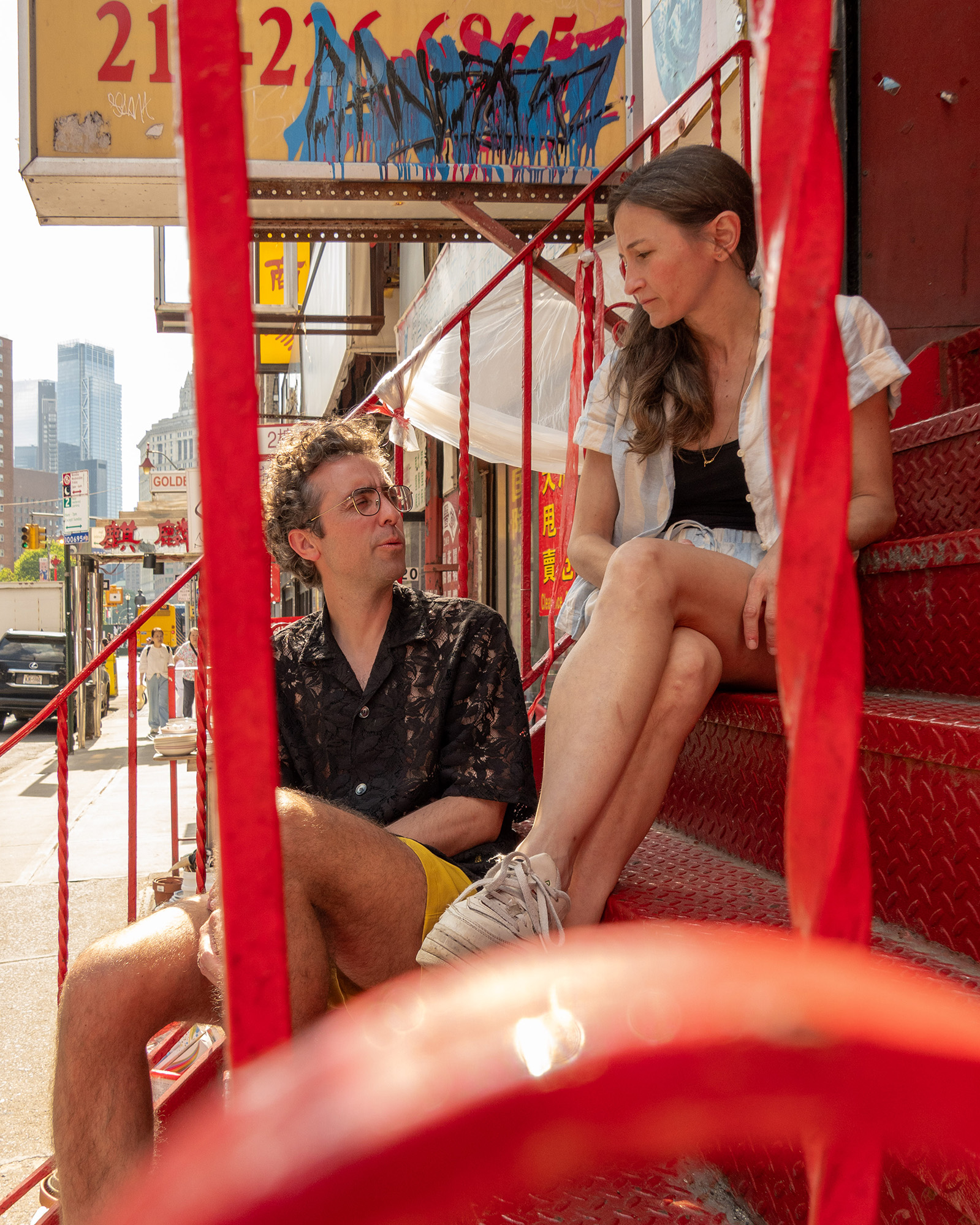
Artist-designer duo Andrew Zebulon (left) and Kristen Wentrcek. Photo: Jack Pierson
As his company grows, Staples is thinking of a new and larger space. “My current dream is to commission a lot of my friends to contribute to it in a real way,” he says. He sees Robinson making hardware, or Nin designing a curtain system. “I have so much to learn from other people, from living and being around other people and their work.”
With Chinatown bursting at the seams with creative explorations, Staples never has to go far to find something new to look at, or someone else to collaborate with. As Robinson puts it, “The common thread is community. It’s like family here, and that is especially important for artists to have.”