Inside the Meditative Universe of Pierre Bonnefille
In the hands of this French artist and designer, the most elemental experimentations with watercolors and shapes give rise to the most elegant results.

This article is from our Spring 2026 print issue, available online now.
I didn’t know what to expect on my first safari, and I certainly wasn’t prepared. Just a week before my family and I headed to Botswana with Wilderness for a six-day safari, staying at three different camps, I still hadn’t decided whether we really needed to take malaria pills. I had traveled to enough developing countries by myself to know what the risks were, but this time my nine-year-old son was in tow. I texted my most well-traveled friend about the danger level of catching yellow fever. Within minutes, she pinged back a reassuring message: “You’ll be fine in Botswana. Even the lions have blowouts.”
I also knew I was in good hands with Wilderness, which has been operating in Africa since 1983 and is known for both their thoughtful conservation efforts as well as their deep knowledge of the region. Full disclosure: As a travel journalist, I had never been drawn to the idea of a safari. It always felt like a cliché, with unsettling colonial undertones: white tourists photographing wildlife in jeeps all day, capped off with G&Ts at sunset. I always saw myself as a city mouse, opting for urban landscapes. My time in Africa has been spent in Cairo, Dakar, Marrakech, and Addis Ababa, all more exotic to me than a safari. But now with my son, who has been dragged along on trips filled with too many museum visits and late-night dinners, it was time for a new adventure. My bucket list had shifted, and oh how grateful I am now that it did.
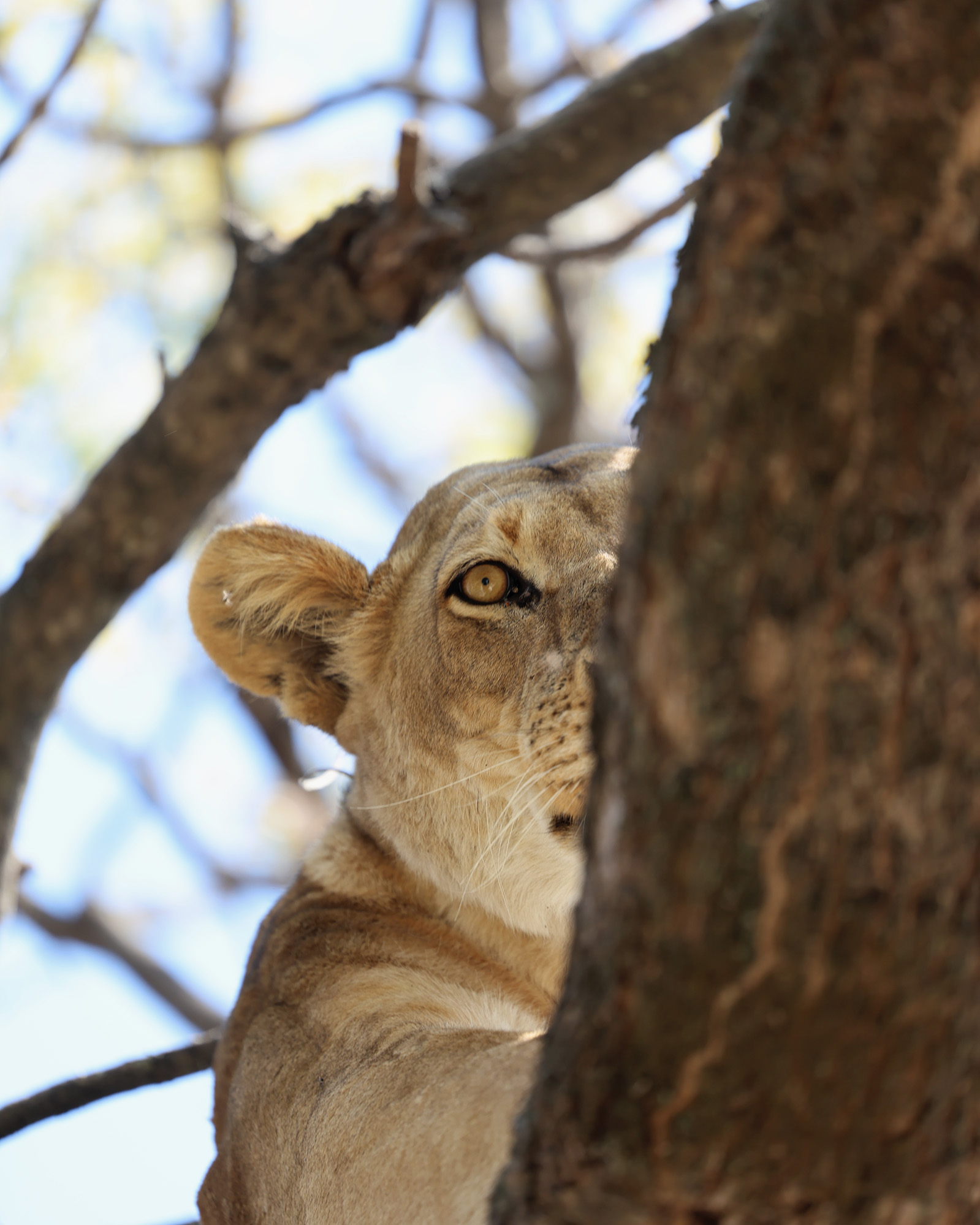
The first lion I spotted from our Toyota Land Cruiser in the Okavango Delta was a female, and what she lacked in fabulous mane hair, she made up for in sheer brawn. She gingerly loped toward our SUV. “Is she going to get any closer?” I sheepishly asked our guide Gift, an elegant man with a gentle but stern voice when necessary. (His name was fitting.) We were on the first leg of our trip at Jao Camp, one of Wilderness’s flagship properties, in late August. It was the end of winter here, and the days were heating up, but the nights were still cool and dry. It was an ideal time to see much of the wildlife, as so many animals were in search of water before the summer months. The Jao property sits in the heart of the Okavango Delta. Our “tent” was sprawling, with a luxurious bed cloaked in a mosquito net and an oversize bathtub overlooking the landscape. I immediately thought of Robert Redford gently washing Meryl Streep’s hair in Out of Africa. The public spaces of the camp were just as stunning: The thatched hut where the restaurant was located looked like an opulent tree house, the main pool was covered by a dramatic lattice dome, and the two-story library featured a giraffe skeleton standing prominently in the center. It felt like an appropriate introduction to safari life. Our first drive the next morning started at 6:30. With hot water bottles and blankets to stave off the morning chill, we set off to watch the animals wake up. Within minutes our guide’s walkie-talkie crackled, and we sped off—there were rumors of leopard paw prints nearby. How would we find them? There was no GPS, no signs. I soon learned that guides instinctively know these thousands of acres of savanna—many of them have honed these skills since childhood and can spot signs of wildlife from the most minor disruptions, like animal droppings (who knew the ripeness of elephant feces could be so telling?), a broken branch, or an alarming cry from an animal, signaling the presence of a predator.
Soon our SUV came upon two other Wilderness vehicles parked near a tangle of brush. We pulled up slowly to join them. (At Wilderness, there will never be more than three cars tracking an area at the same time, giving a wider berth to the animals.) This, we learned, was where the leopard was hiding, and for the next 20 minutes, she would prove elusive. We could make out her jewel-like fur shimmering against the dry grass here and there, but she remained still. Solitary and mysterious, the leopard is a fan favorite on the safari tour, and rightfully so. Finally, she emerged, revealing a pile of cubs behind her. We squealed with delight after seeing her babies. Leopards are known to be slightly skittish, and she trotted off, sprang up, and scaled a tree. “This is where she will stay for a bit. She’s looking for prey to bring home for lunch to her family,” someone told us.
If Gift was like a patriarchal figure, our game drive guide at Wilderness Vumbura Plains, Sono, was like a rebellious teenager. He handled the Land Cruiser like a Formula One car, backing up through the brush at rapid speed, or wading through rivers, the water sloshing about on the car’s floor, much to the delight of my son. Still, Sono was an excellent driver. So when he told us all to “hold on” when there was a rare sighting of wild dogs, I knew we were in for a ride. I didn’t learn until later that there are fewer than 6,000 wild dogs left on the continent, so seeing them is very rare. We came upon a pack of about 15 dogs who were nuzzling one another and letting out high-pitched howls. We sat quietly as Sono explained they were rallying to go hunt for dinner. For the next 45 minutes we watched in silence: They played, they fought, they let out more strange squeals. We were entranced. We didn’t speak or move—even my son, who typically has a hard time sitting still, remained quiet as a church mouse. This was the moment I craved: no cell phones, no screens, no distractions.
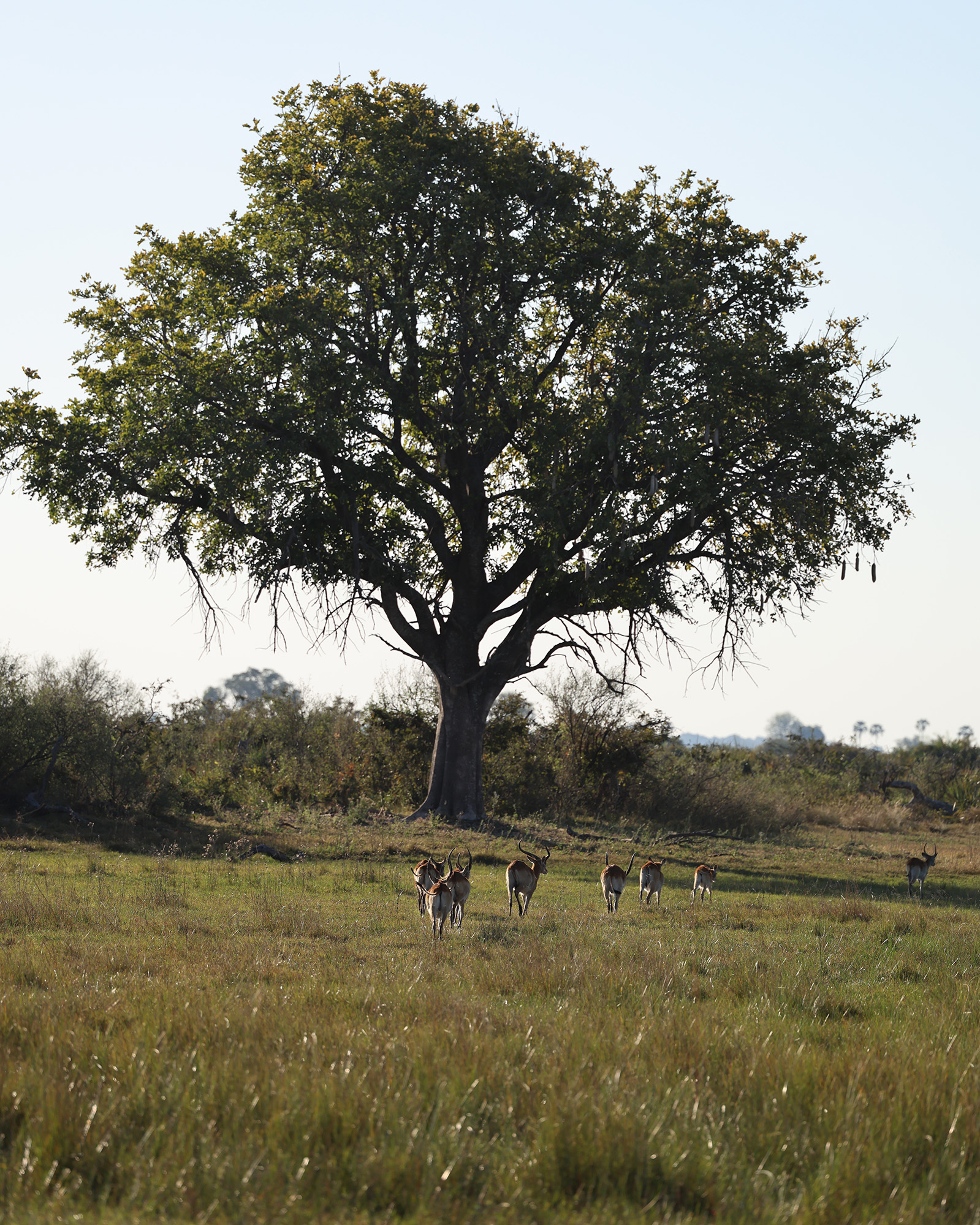
Soon the dogs were off, having spotted a herd of impalas nearby. We spent the next 30 minutes driving furiously, following the pack as they fanned out across the area looking for their prey. “Did you see a kill?” a couple in another SUV asked, the husband brandishing a camera with a lens the size of the Hubble telescope. The dogs eventually tired out, and I for one was grateful we didn’t see a kill.
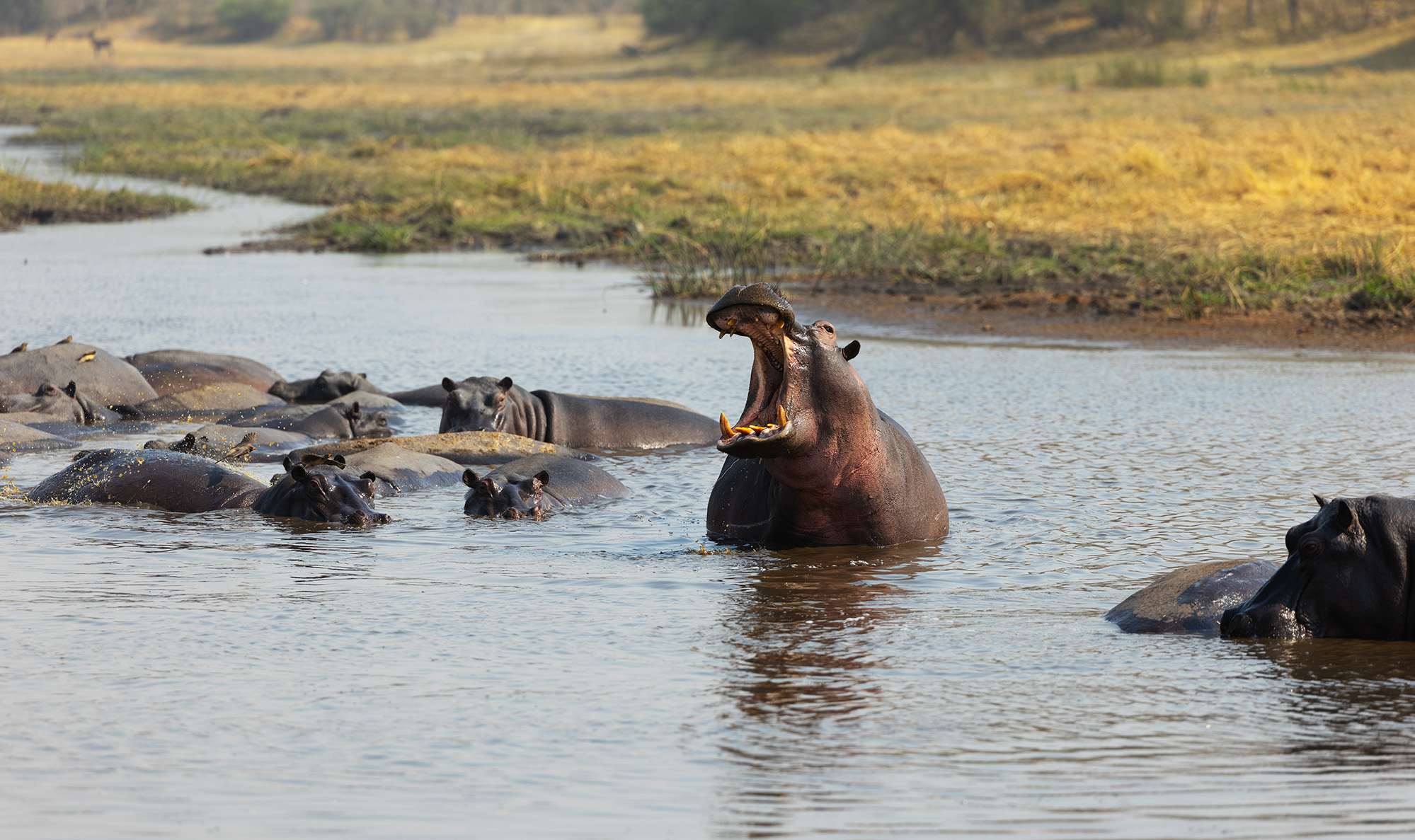
These moments of quietude, when we silently waited for the leopard to come out of the brush, or watched a trio of giraffes glide along like supermodels, their heads poking out of the treetops, were often punctuated with loud whoops of joy. Joy when we watched a herd of mama elephants and their babies cross the river and safely escape the jaws of a large crocodile, or when what I thought was a cluster of rocks in the water turned out to be a bloat of hippos, one male opening up his ferocious jaws.
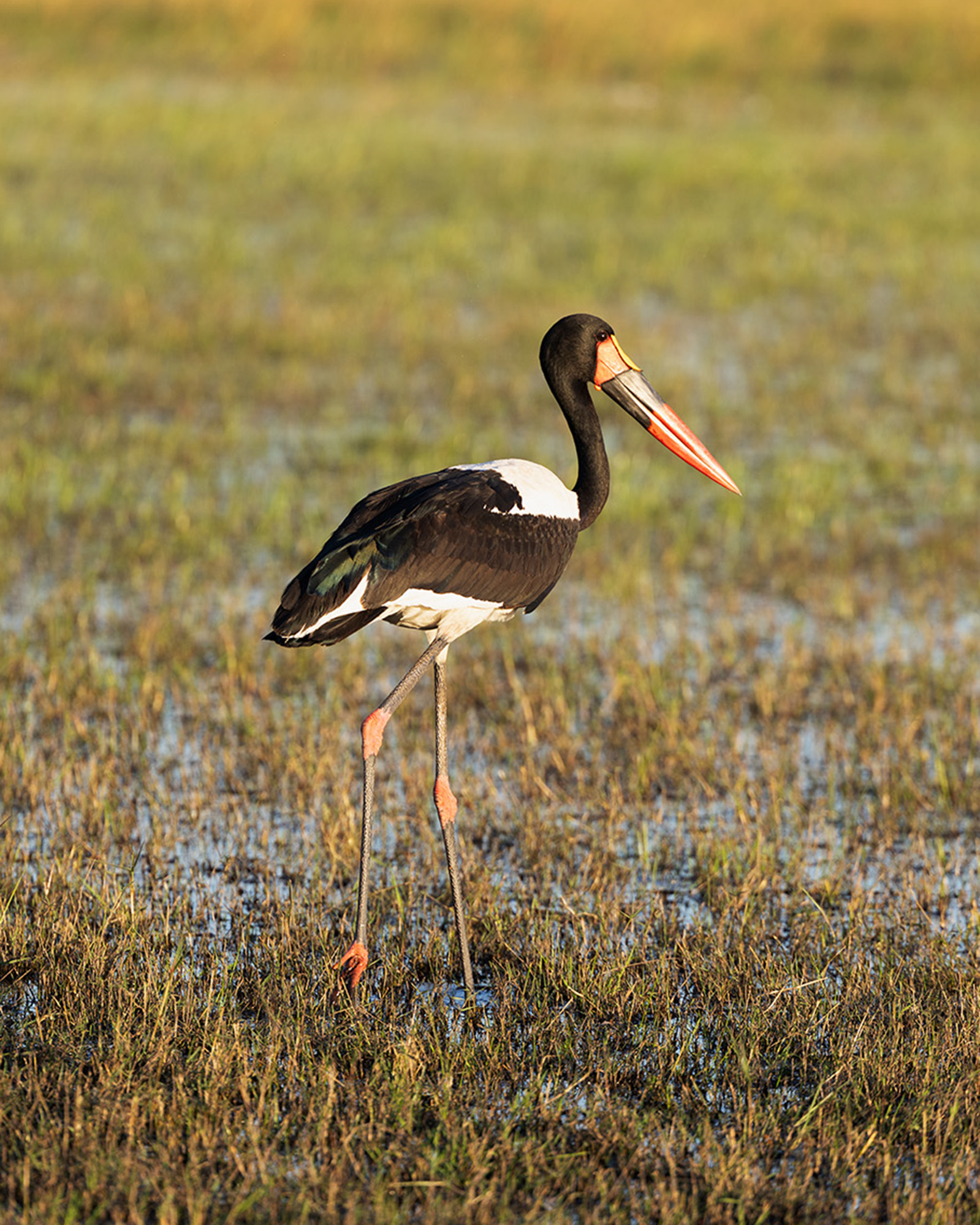
It became sort of a running joke in our group that I wasn’t very good at spotting wildlife, but eventually my eyes became more adept, particularly with the birds: saddle-billed storks, lilac-breasted rollers, malachite kingfishers. Botswana alone has 934 species of birds, and each one was more glorious than the last. Birds are sometimes seen as bit players compared to the main attractions like the Big Five, but the way they swooped down in bold flashes of color, with their brilliant Mardi Gras–style plumages, to snatch in-sects or fish was nothing short of spectacular.
On the last morning, before our flight to Capetown, I asked my guide, Tom, if he could take me out on one more early drive. I had only a few hours, but the thought of heading back to New York made me desperate for one more ride in the wild. We had only driven a few yards from our camp when Tom spotted large paw prints. He drove slowly, and out of the corner of my eye I saw a beige blur pass through the thicket. “I think I saw something move,” I whispered. Indeed, it was a young lion pacing slowly. I was so proud of my spotting.
We followed alongside, and within minutes there were five of them: two females, two teen males, and, as Tom explained, “an older male hanger-on.” We spent the next hour riding alongside them as they moved in and out of the bushes, spreading out and huddling together, then posing in a U-shaped formation. “It looks like their boy-band album cover,” I joked. “No, they’re preparing to circle their prey,” Tom whispered. We stared at them, and they stared back. Minutes passed. Finally, the two females sat down, and the males followed. There were no animals to hunt right now.

In the hands of this French artist and designer, the most elemental experimentations with watercolors and shapes give rise to the most elegant results.
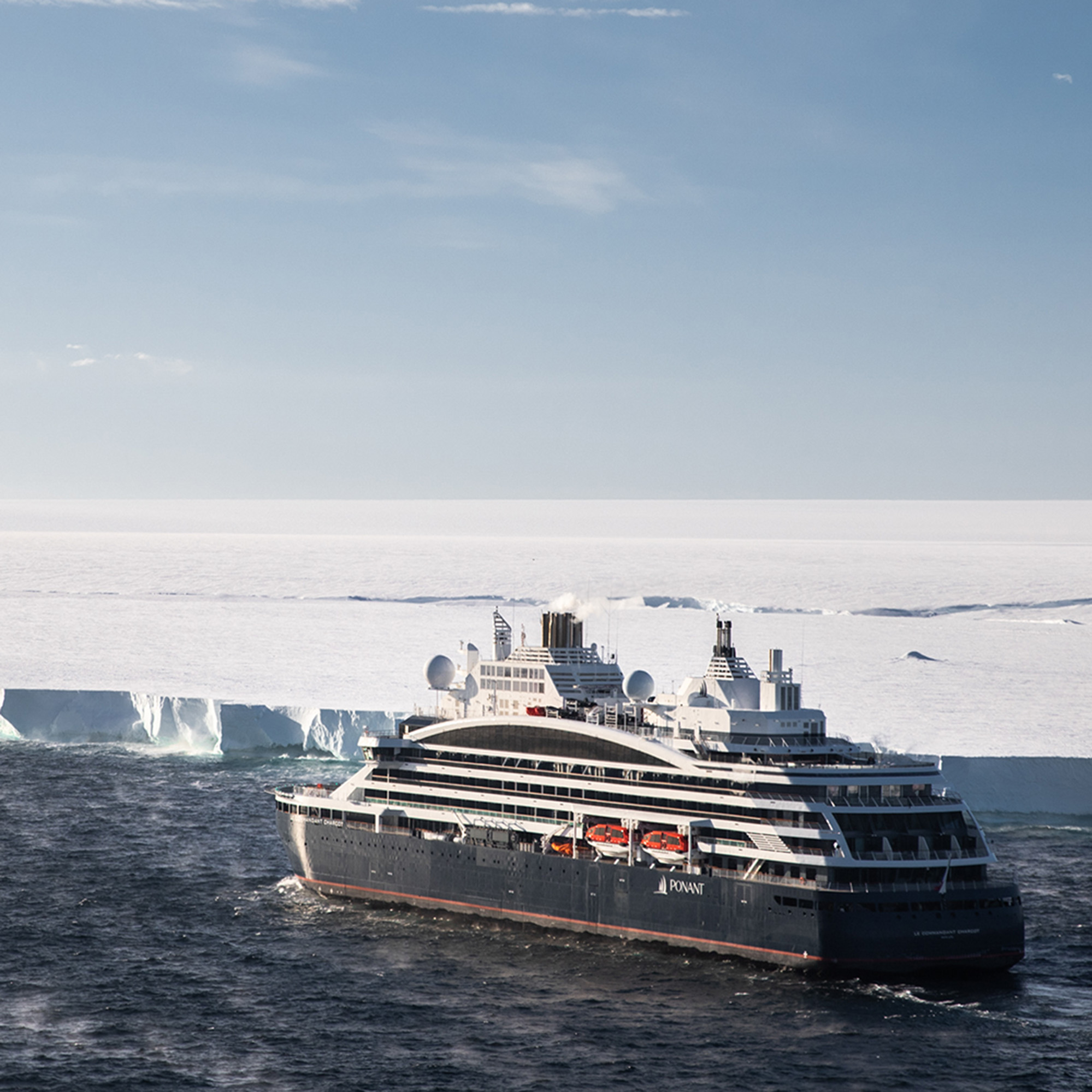
Once a far-fetched destination, the Frozen Continent has seen tourism more than double over the last decade. The storied cruise line Ponant Explorations is leading the charge with new itineraries that feel out of this world.

Wearstler does it all: interior designer, product guru, hotel mastermind, book author. Now the L.A. maven adds curator to her résumé. For our spring issue, she shares some of her favorite independent talents in Amsterdam with us.