Inside the Meditative Universe of Pierre Bonnefille
In the hands of this French artist and designer, the most elemental experimentations with watercolors and shapes give rise to the most elegant results.
September 2, 2026By
RICKY LEE
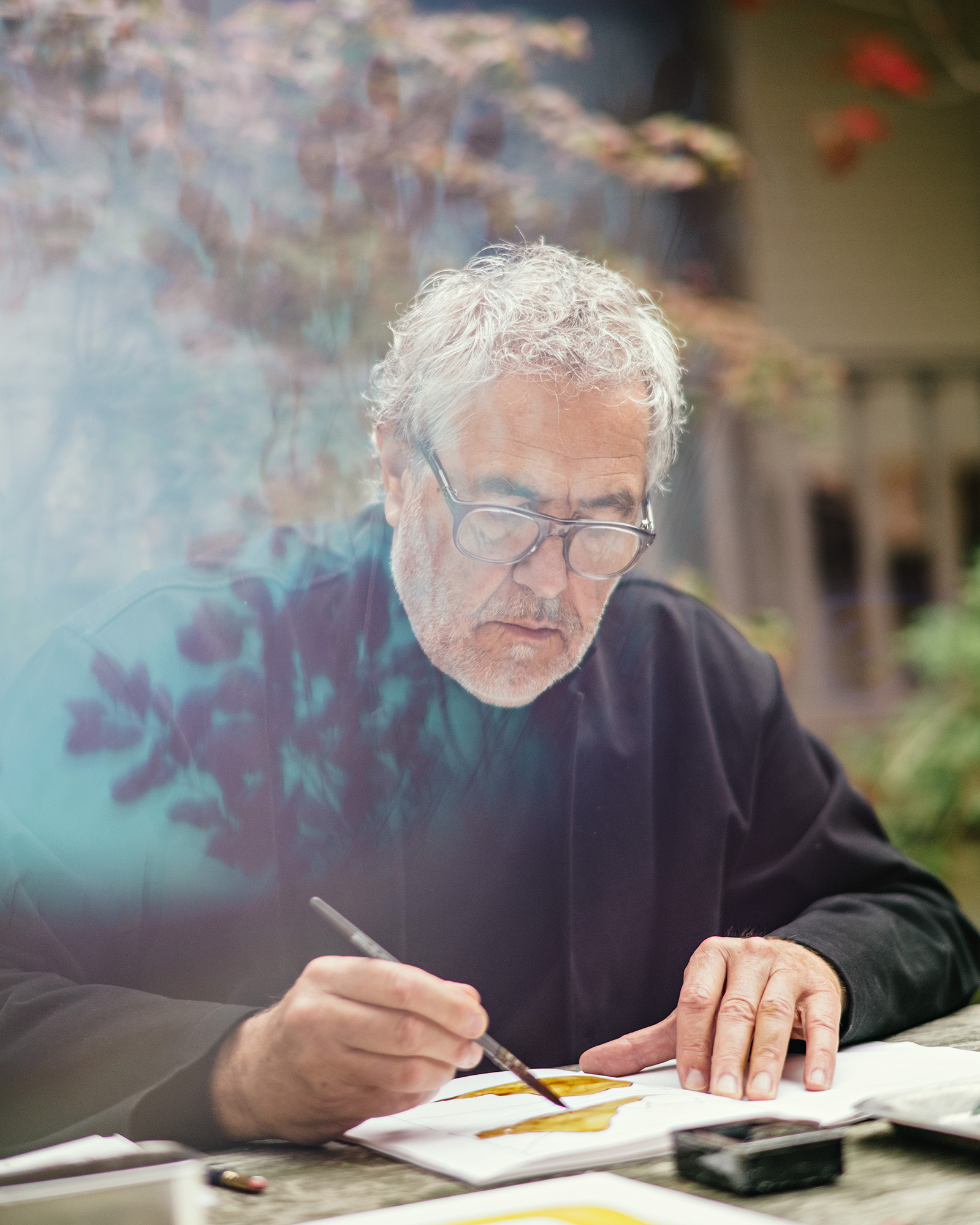
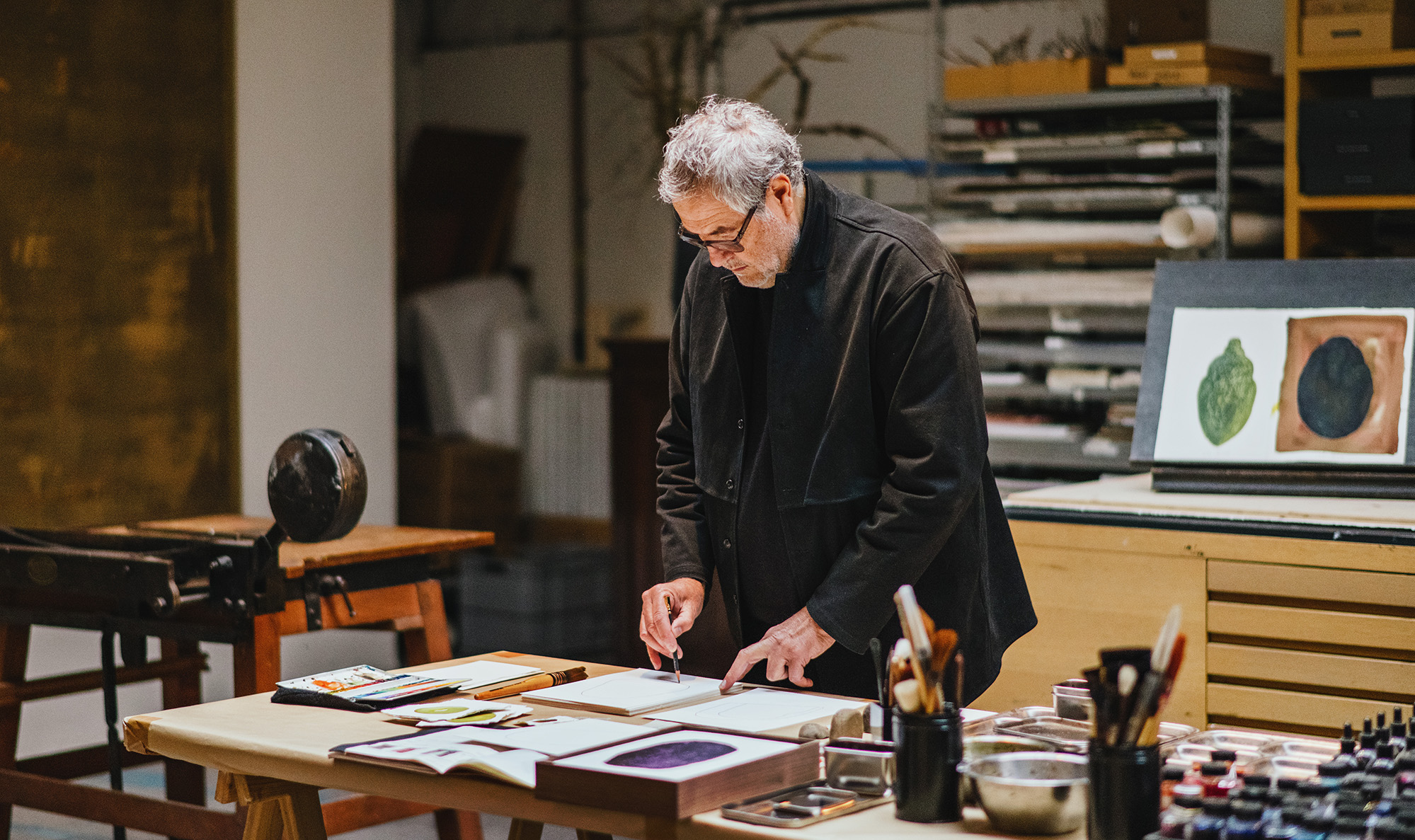
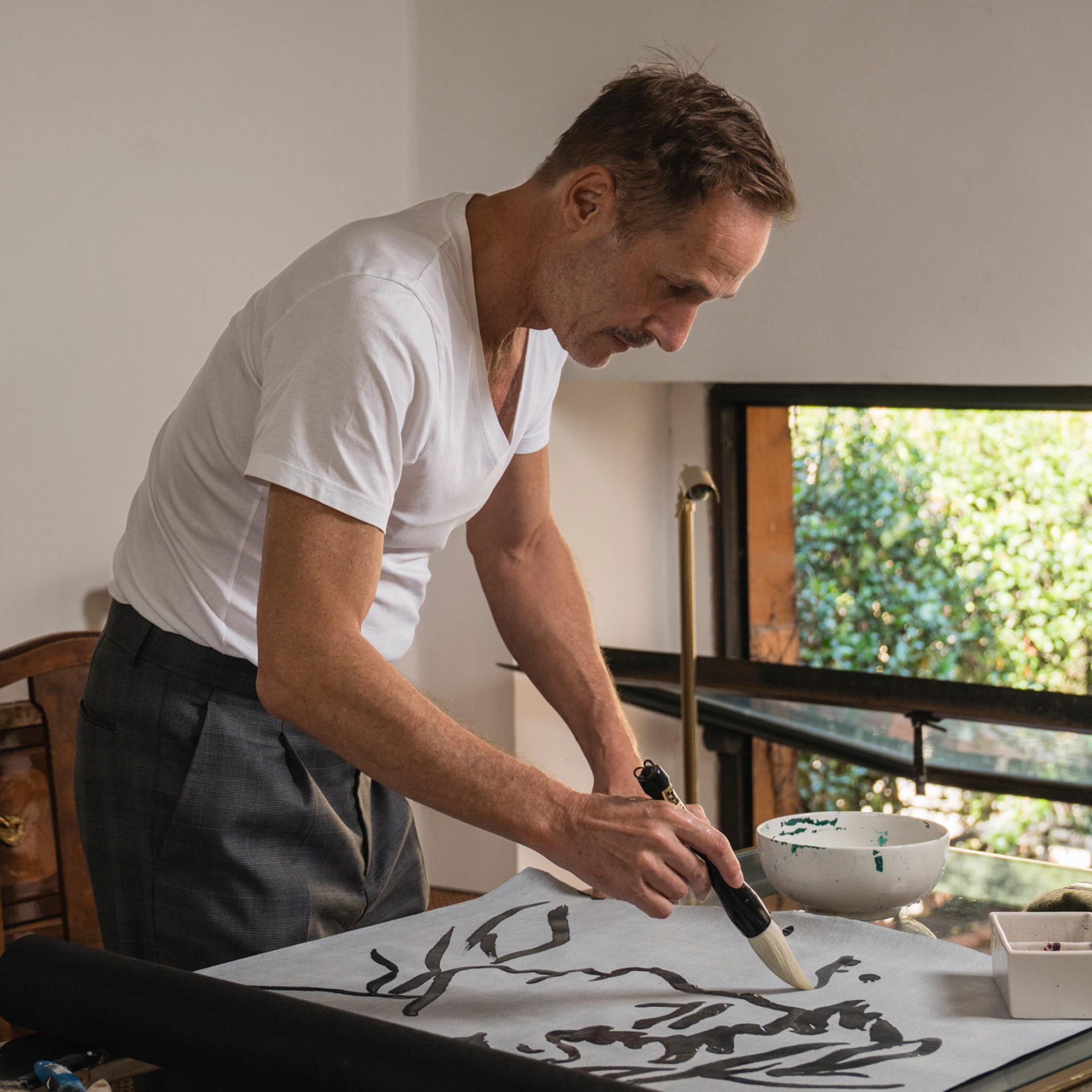
Pierre Bonnefille in his workshop in Paris. Photo: Franck Juery
In the hushed calm of Pierre Bonnefille’s Paris atelier, sunlight falls across walls flecked with bronze and mineral dust, glinting off pigments that seem to breathe. Here, art and design dissolve into one another. Tables ripple like water, walls shimmer with the texture of ancient stone, and color becomes a living presence. For Bonnefille—one of France’s most quietly influential artist-makers—creation is less invention than revelation. “I try to unveil what is already there,” he says, “to bring to light the life hidden within material.”
Bonnefille’s practice resists easy classification. Trained in both fine arts and furniture design, he moves fluidly between painting, sculpture, and architecture, crafting what he calls “second natures,” environments and objects that echo the rhythms of the earth. His materials are elemental: earth, sand, metallic powders, pigments he mixes by hand into alchemical surfaces. The results are not decorative but meditative, meant to be lived with and contemplated over time. Light, he insists, is his truest collaborator, animating his layered textures into shifting fields of vibration and depth.
A recipient of the rare title Maître d’Art from France’s Ministry of Culture, Bonnefille carries forward the lineage of the artist-craftsman: a maker who works by hand and imbues each piece with the intimacy of touch. Recent exhibitions have highlighted the sculptural dimension of his work, including his Rhizome series at New York’s Ateliers Courbet. As founder Mélanie Courbet observes, “I find Pierre’s work, and his Rhizome series particularly, magnetic, for it speaks to something ancient in our ecosystems—the ones within and around us both. The name of the collection, Rhizome, refers to roots that expand horizontally, forming an interconnected mycelium beneath the surface: a symbol in Buddhist philosophy of the intertwined connections that bind all things.”
Travel remains one of Bonnefille’s deepest sources of inspiration. His sensibility has been shaped by the stones of Kyoto, the cliffs of the American West, and now, travels in China for a commission with The Grand Tourist, seen in the following pages. “My work begins with silence—observing the emotion of a moment. A piece must feel alive first. The function comes after.”
Your work often blurs the line between painting, sculpture, and design. How do you define your practice today?
I have always been an artist. From the beginning, art was part of my life—it wasn’t a decision, it was my nature. My studies in Paris combined two directions that still define everything I do: art and furniture design. At École Boulle, I learned the craft and discipline of furniture making; at École des Arts Décoratifs, I explored painting, color, and space. Those worlds have never separated in me. My work is not industrial or functional design—it is a language of materials, light, and emotion. Function is secondary. What matters most is the spirit of the piece, the sense that it contains life.
You spent time as a child in your aunt’s art studio in the south of France, in Provence. How did that shape your early relationship with creating?
Being surrounded by pigments, brushes, and canvases gave me a natural way of understanding art—something lived, not taught. That early intimacy with material remains at the heart of everything I do.
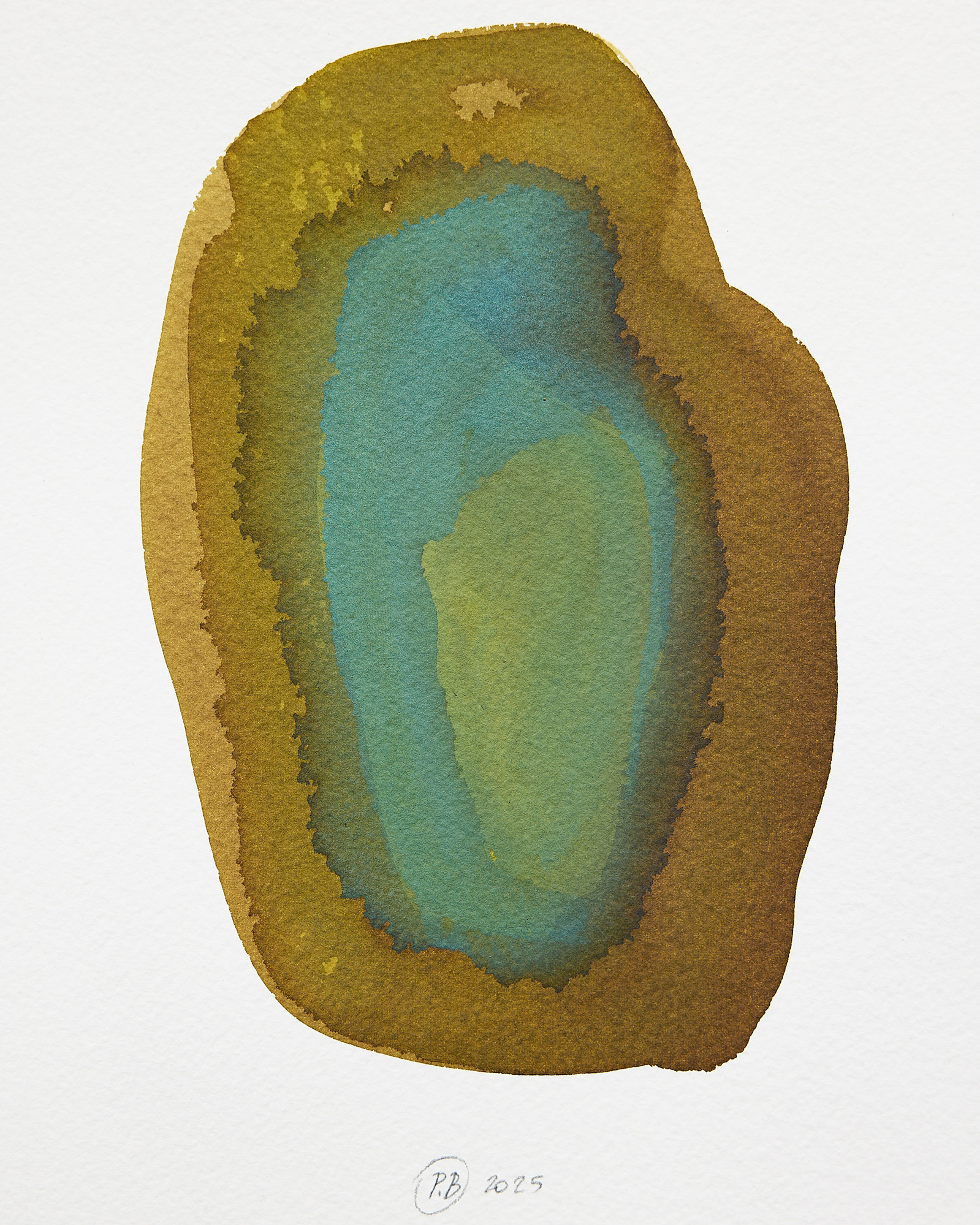
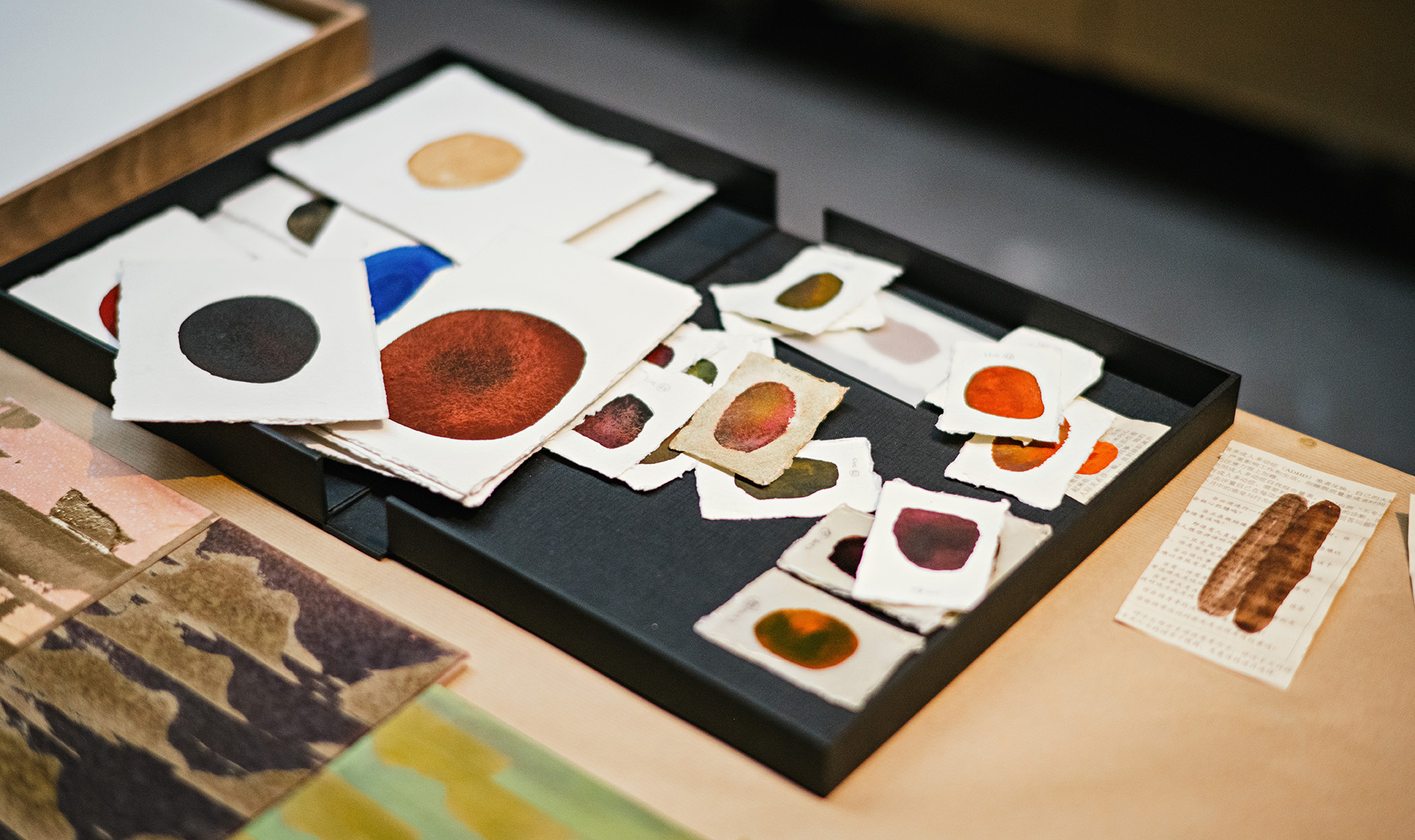
One of the watercolors Bonnefille painted that was inspired by a visit to China last year.
You studied furniture design, which is quite a tactile discipline. What drew you to it?
I’ve always loved shaping things with my hands. Wood fascinated me—the grain, the scent, the way it responds to touch. Through furniture design, I learned how matter behaves, how it can be transformed. But what truly interested me was not the structure, it was the surface—the skin. I began to understand how a finish could change everything: The same piece of wood could appear raw or luminous, heavy or weightless. That exploration of the surface became the beginning of my artistic language.
Your sculptural furniture inspired by roots has become quite distinctive. What draws you to that form?
Roots are invisible architecture—memory, energy, life beneath the surface. When I reinterpret them in a sculptural object, I reveal something normally hidden.
Bonnefille begins a watercolor in his workshop, sketching stones beside him. Photo: Franck Juery
You create your own pigments and materials from minerals and metallic powders. It must be laborious. Why?
It’s about invention—about giving matter a new life. I mix earth, sand, metallic powders, and pigments to build my own textures. Each surface becomes a small story, a memory written in color. I like that these materials come from nature; they already have their own history. My role is to reveal it—to make that hidden life visible.
So it’s more than technique—it’s transformation.
Yes, exactly. Each layer is a transformation, like a breath. The texture itself begins to live.
You’ve spoken about translating emotional memory into texture. What does that process look like?
Memory is a material. A moment—light on water, shadow on stone—stays in me. In the studio, I do not reproduce it; I reactivate the emotion, layer by layer, until it becomes something new.
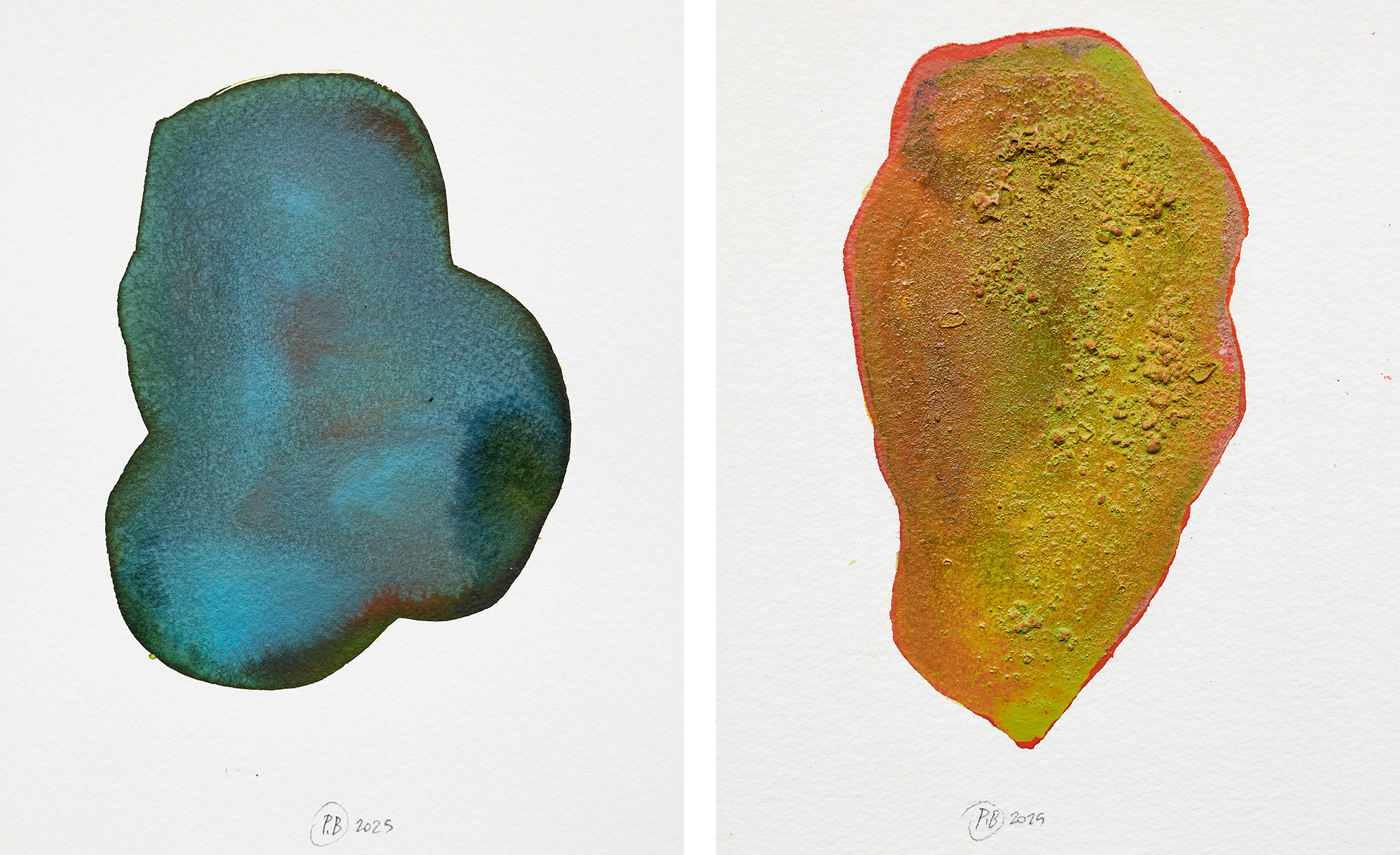
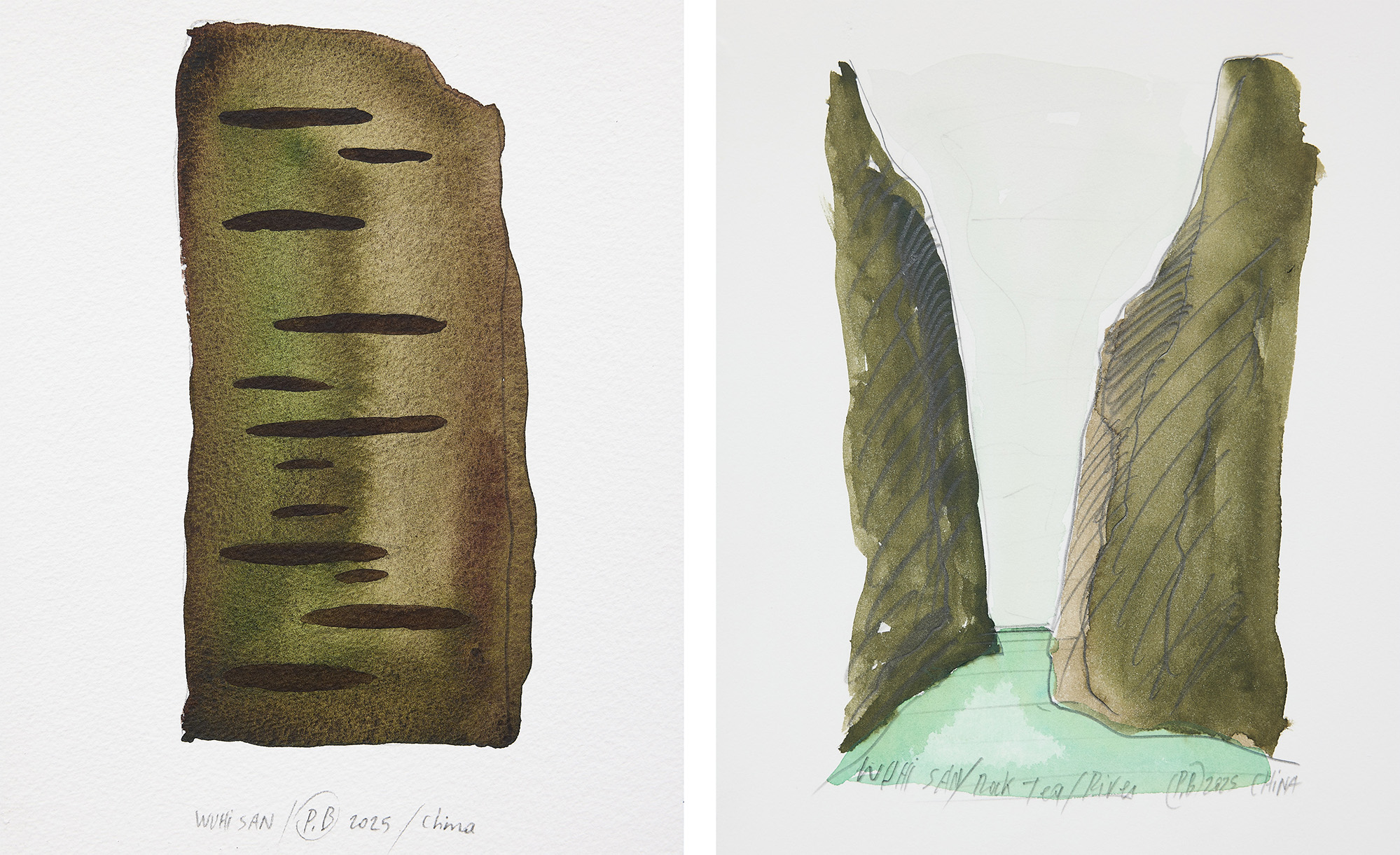
Both Study on the Stones (2025).
Light seems to be a vital part of your process.
Light is essential; it is the final material. In my studio, I have large skylights, so daylight can move freely. I build the surface in many layers—some thick, some thin—so that light travels through them differently. The vibration you see on the surface comes from those layers interacting with the light. For me, color, texture, and light form a trinity; together they create movement and life.
Nature and architecture—from Venice to Kyoto—are constant references in your work. Can you describe a place or experience that has shaped your visual language?
Travel is central to my work. In Asia—Japan, China, Thailand—I found a philosophy that sees nature as sacred, as something alive. That attitude changed me. When I travel, I collect impressions: a branch, a stone, a rhythm of water. Later, in the studio, those memories return—not as literal reproductions but as emotional translations. A certain blue may recall Venice at dusk; a texture may echo the rock formations of a canyon. Each piece is born from a moment of contemplation.
Bonnefille’s watercolors reflect the colors and textures of his travels. Photo: Franck Juery
You mentioned your journey through the Grand Canyon. What stayed with you?
Crossing the canyons was a moment of pure contemplation. The depth of space, the silence, the immensity. These places give you another scale of time. The strata of stone and the shifting light are like a living history of color. They stay with me as sensations more than images.
You’ve said that you “reveal” color and texture rather than create them. What do you mean by that?
Revelation is about allowing what already exists to appear. Nature offers infinite forms and colors; I try to make them visible in a new way. Once, I watched moss on stones in a river—the water, the light, the green vibration—and that experience inspired an entire series of tables. I wasn’t copying the moss; I was translating the feeling of that encounter. My work often begins with silence, observation, and the wish to capture the emotion of a moment.
How do you decide whether an idea becomes a painting, a piece of furniture, or an installation?
It depends on the energy of the idea. I keep many sketches and small models from my travels. When a project or exhibition comes, I look through them, and something calls to me. Some ideas ask to become paintings; others want to exist in three dimensions. When I created a mural for a home in Los Angeles, the idea came from driving along the Pacific coast—the layers of sea and cliffs. I wanted the wall itself to hold that rhythm. Each work is a transformation of memory into space.
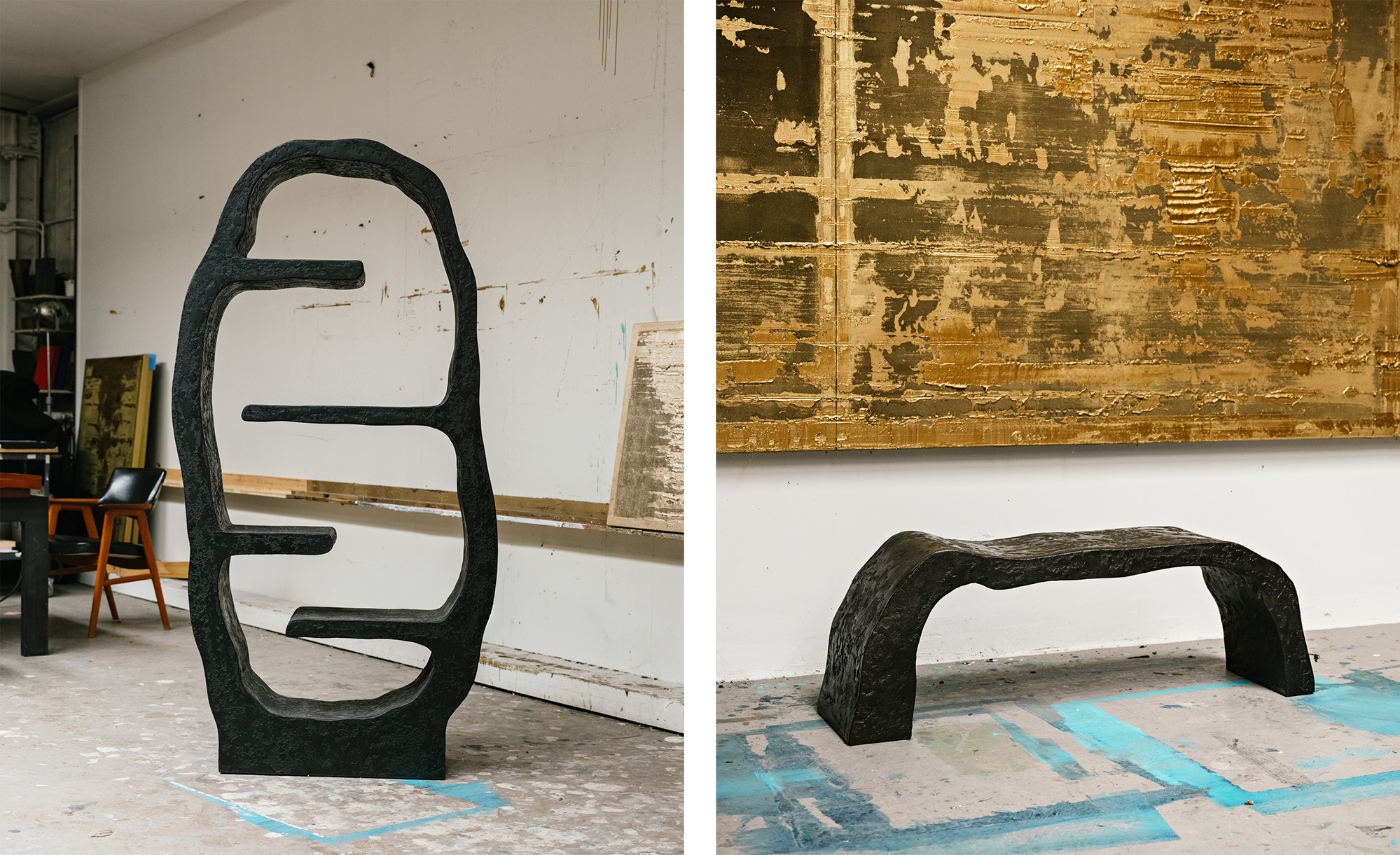
From left: Bibliothèque Rhizome A (2021), a bookshelf made of layered charcoal powders on wood; Banc Rhizome A (2024), a bronze stool made using lost-wax casting, influenced by the bamboo handles on Japanese ikebana baskets. Photos: Franck Juery
Do you consider your work sensory as much as visual?
Yes, absolutely. Texture, vibration, depth—these elements are meant to be felt with the body as much as the eyes.
What did being named Maître d’Art by the French Ministry of Culture mean to you personally and professionally?
It was a great honor. The title acknowledges artists who unite creation and craftsmanship and who pass that knowledge to others. Frédéric Mitterrand, then minister of culture, gave me the title, and his words moved me deeply. It affirmed that what I do—working with my hands, inventing materials, guiding a team—is part of a living tradition. It made me more conscious of my role as both artist and maker.
Your “Deep Waters” series feels meditative, almost spiritual. What were you exploring in those paintings?
The idea came from watching how color behaves in water—the transparency, the depth, the way light enters and transforms it. Water is the meeting point of earth and sky. The “Deep Waters” series explored that intersection, while the later “Copper Lake” series studied oxidation—the transformation of copper in nature. I’m fascinated by materials that carry time within them. These paintings are about perception, about looking into stillness and discovering movement.
Both Study on the Cliff, Wuyishan, China, 2025.
You recently collaborated with The Grand Tourist magazine. Can you tell me about that commission?
Yes, Dan Rubinstein, founder and editor of The Grand Tourist magazine and podcast, visited my studio and was very inspired by my watercolors. He commissioned me to create a series of seven new works—each one an imaginary journey through stone and landscape. The idea was to explore the inner life of stone: its reflections, its hidden worlds, the layers of color that lie within. These watercolors are meditations on stone as geological memory, on the way time and matter shape the world we inhabit.
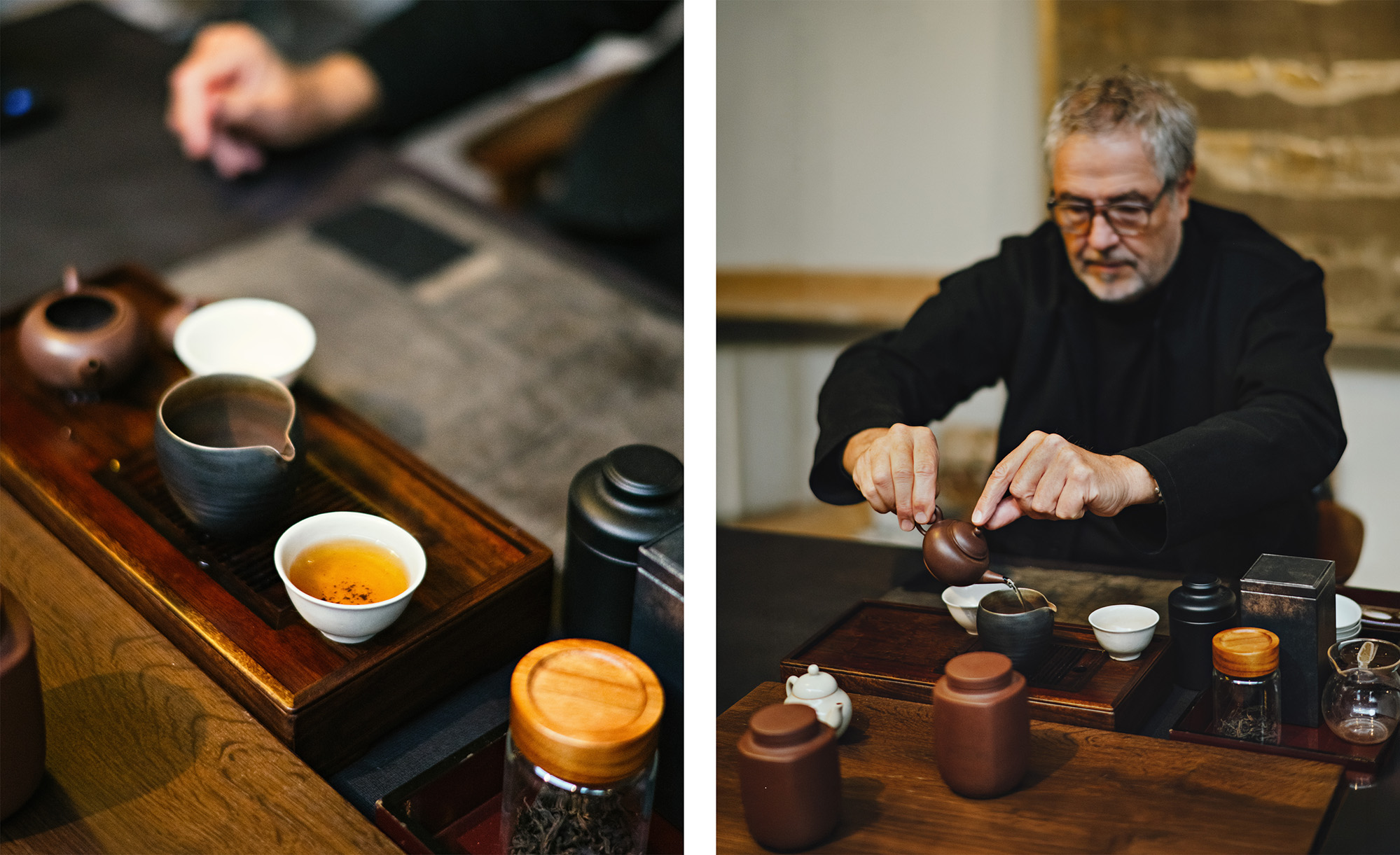
During my most recent trip to China, in early spring 2025, I discovered Wuyishan. In this region, tea gardens grow directly from the rock, along torrents of pure water. Seated on the rocks by the river, we tasted Wuyi rock tea with one of my friends, a Chinese musician. The tea was prepared by a young woman, a tea master, owner of the plantations and of a tea-making workshop where the tea is crafted according to ancestral principles. It was a moment of rare intensity, deeply conducive to inspiration. At the conclusion of this open-air ceremony, I began a series of watercolors, carried by the flow of energy from the elements present.
That’s a fascinating concept—so it’s almost like painting what can’t be seen.
Exactly. I wanted to suggest what lies beneath the surface—the invisible architecture of nature. Each watercolor is a small window into that unseen interior, both physical and emotional. They are quiet works, but they hold vibration and energy, much like my larger paintings.
Bonnefille practices the Chinese tea ceremony, gongfu cha, in his workshop. Photos: Franck Juery
You’ve said that the function of furniture is not your main concern. What’s most important then?
Emotion. My pieces must have emotion and presence. The shape and texture are everything—the way a root might emerge from the ground or a stone might balance on another. The function comes after. A bench can be useful, yes, but I want it to be alive first. Collectors often tell me that my pieces change the atmosphere of a room, that they feel energy in them. That is what I hope for—to bring a fragment of nature’s vibration into daily life.
Collectors often describe a strong energy in your work.
It means the emotion has been transmitted. When a piece changes a room’s atmosphere, it continues its life beyond my hands.
So each piece becomes a living companion?
Yes, exactly—a fragment of silence, of memory, of life. Each work is a transformation of memory into space.