Inside the Meditative Universe of Pierre Bonnefille
In the hands of this French artist and designer, the most elemental experimentations with watercolors and shapes give rise to the most elegant results.

This article is from our Spring 2026 print issue, available online now.
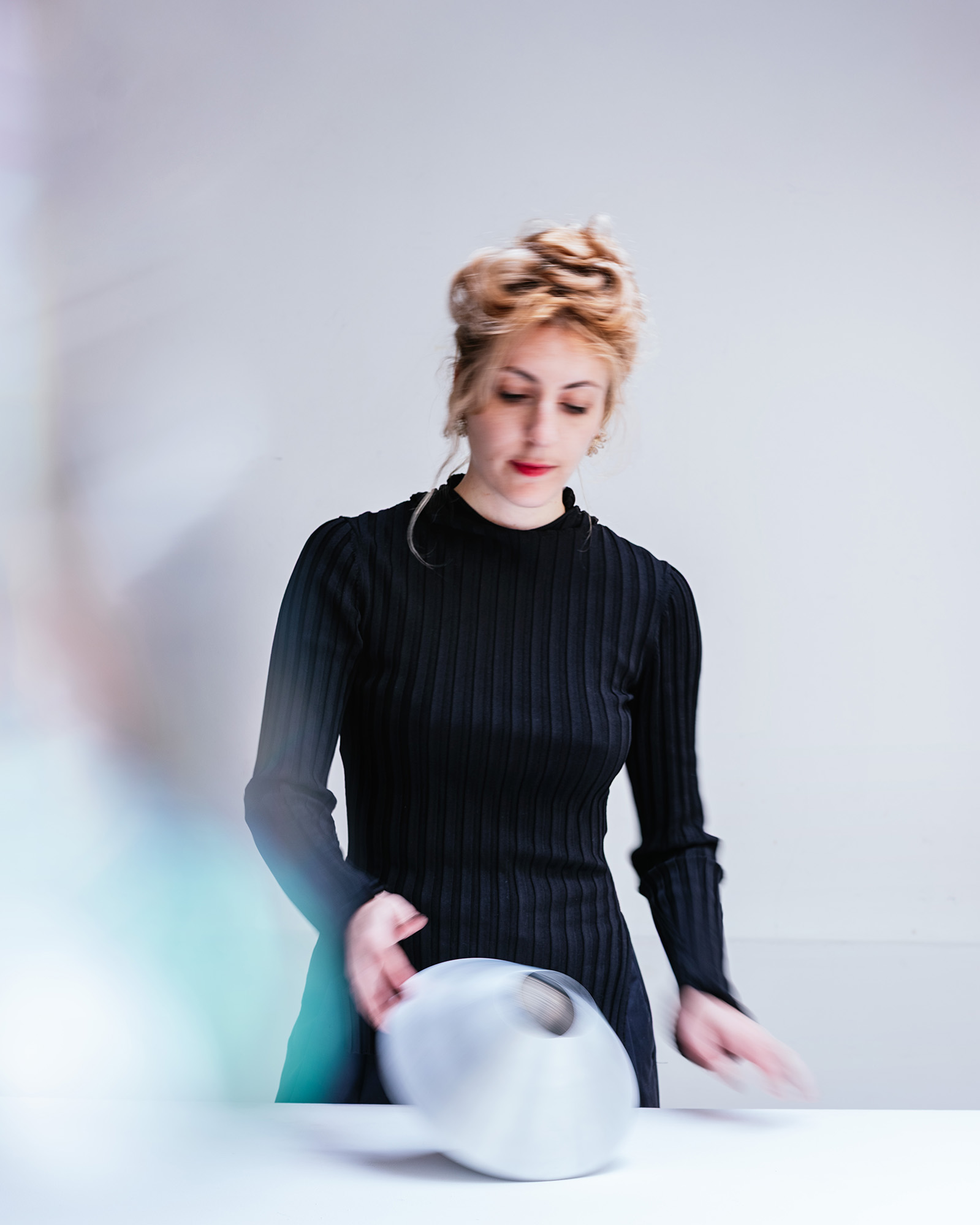
When the French designer Sophia Taillet was developing new work on a grant, she was preoccupied with the way design could act as an intervention. Instead of thinking like a product designer, taking as her North Star one metric of performance or another, she let herself be guided by play rather than purpose. The resulting project, “Spinning Around,” is less an exhibition of objects than a choreographed environment. Presented at Musée de la Chasse et de la Nature during Paris Design Week last September, the piece included nine identical mirrors activated by the dancer François Malbranque. As they spun, the mirrors captured and distorted everything around them: bodies, architecture, light. The movement turned each onlooker’s reflection into a catalyst for curiosity. “I’m interested in moments where things don’t have a productive function,” says Taillet. “Just moments where you stop and watch.”
Accompanied by a soundscape composed by longtime collaborator Matthieu Gasnier, who worked on the Academy Award–winning film The Substance, the installation unfolded as performance, blurring the boundaries between disciplines. “Being physically present in the space gives direction to the music,” Gasnier says. “Every performance contains subtle human variations, both in the dance, through François, and in the sound, as we were adjusting elements live. This sense of immediacy requires constant adaptation and creates a unique experience each time.”
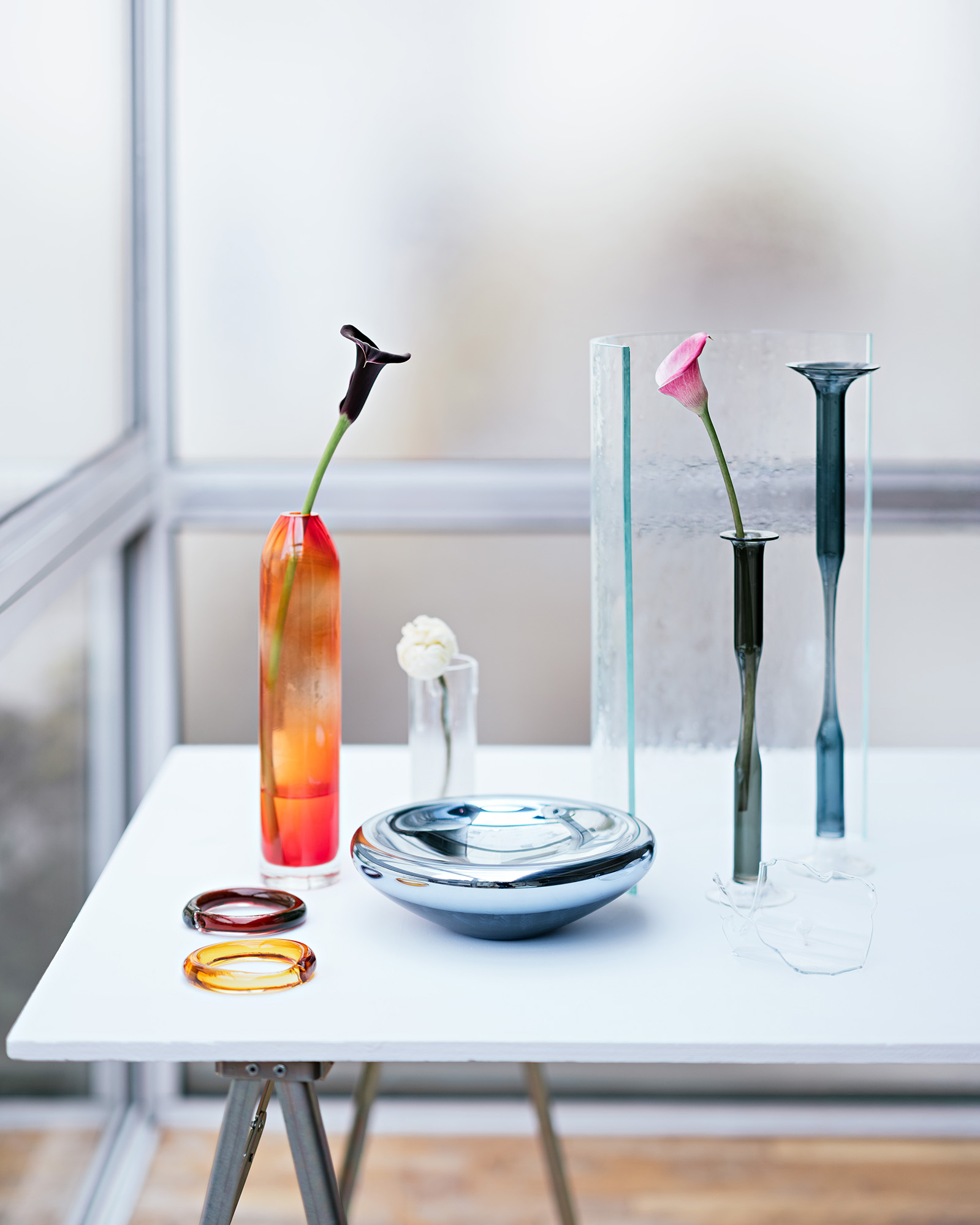
In a world overrun by optimization, Taillet’s work and its insistence on childlike wonder is quietly radical. Her willingness to understand pleasure as a crucial value in and of itself, rather than as a by-product of consumption, disrupts much of what we’ve come to accept about how design works now.
That sense of mutability, and the lack of a commercial “takeaway,” is essential to Taillet’s practice. It’s also refreshing to find in the industry right now, when much of product design is gadget-pilled thanks to the ubiquity of social oversharing and the hyper-specificity of online shopping; wants become needs become a Prime order half-remembered. At the other extreme is collectible design, humble objects—chairs, tables, lamps, and, yes, mirrors—elevated to the status of artworks. Taillet’s pieces manage to eschew novelty precisely because of her multidisciplinary approach. A graduate of the École Nationale Supérieure des Arts Décoratifs in Paris, her work has been exhibited internationally at institutions and events including the Palais de Tokyo, Milan Design Week, and Maison & Objet; her Vénus light fixture is now part of France’s Mobilier National collection.
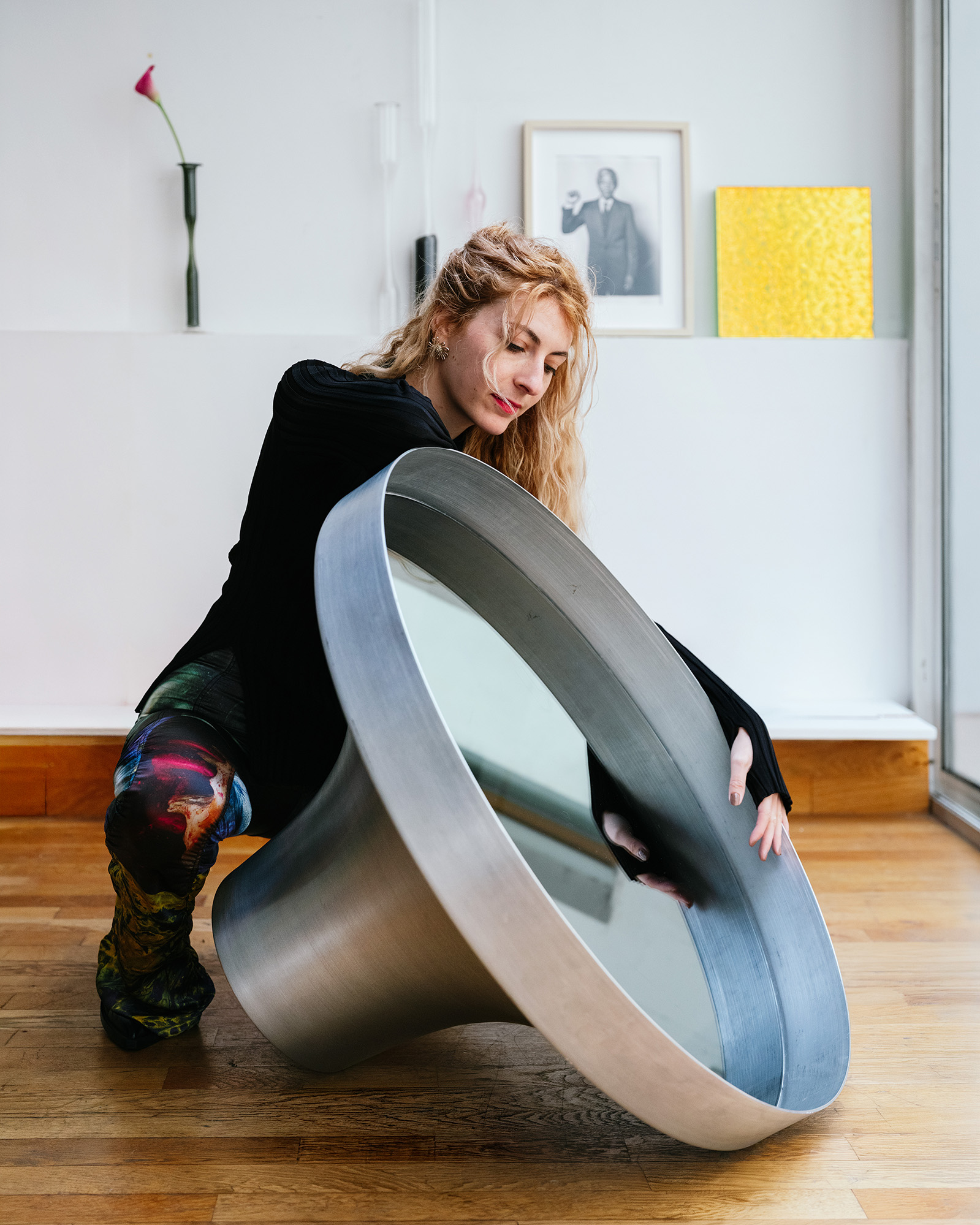
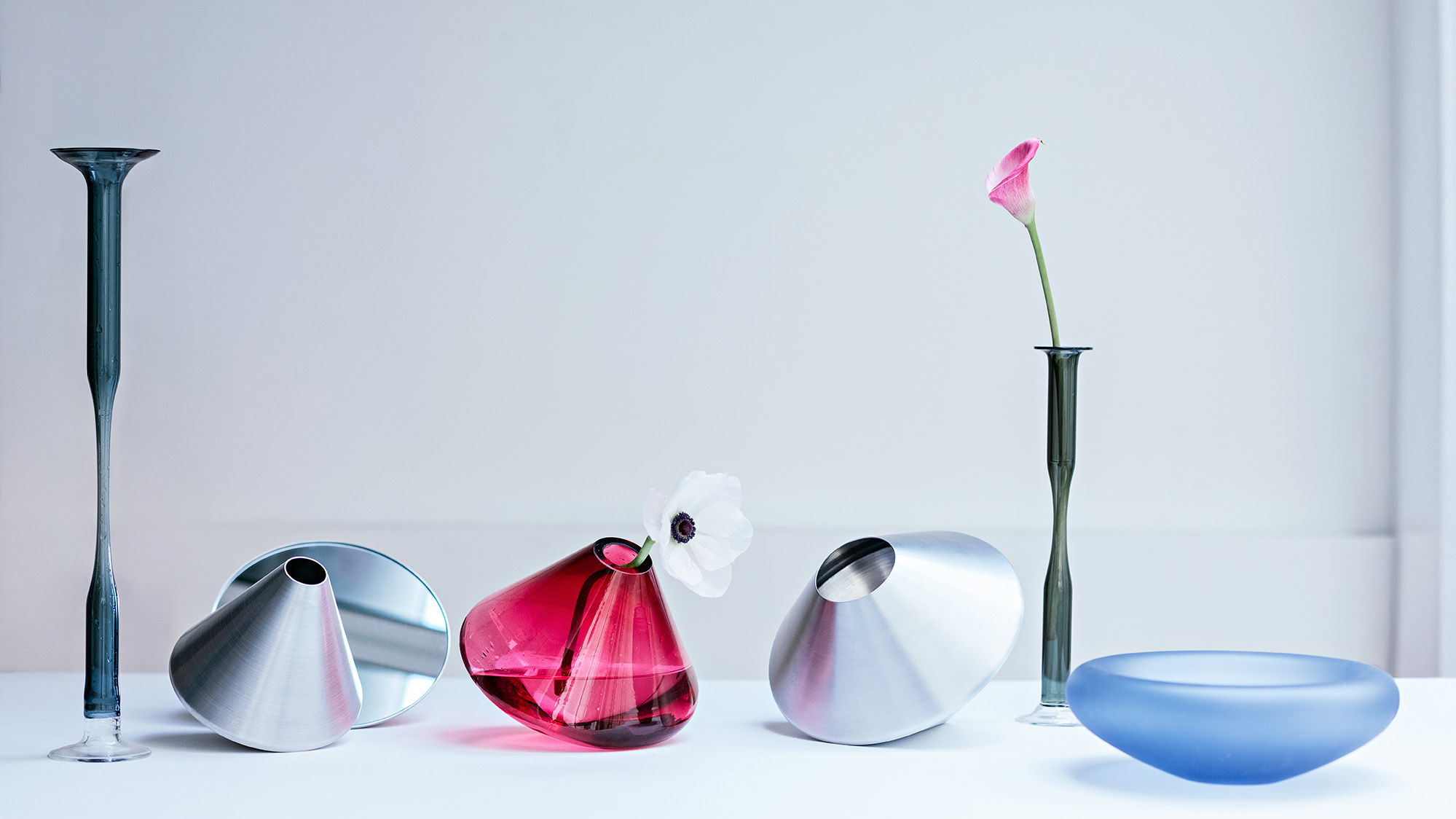
She begins projects with material exploration. Working across a wide range of savoir faire—from traditional glassblowing to experimental industrial techniques—Taillet transforms mechanical and technical processes into poetic, expressive forms. For “Spinning Around,” she worked with industrial metal-shaping techniques typically used in the automotive and aeronautics industries. Rather than sketching ideas on paper, she experimented physically: handling parts herself, dropping them, and observing how they moved. “I think this is so important right now,” says Taillet. “To feel okay with losing control, not knowing when the object is going to stop.”
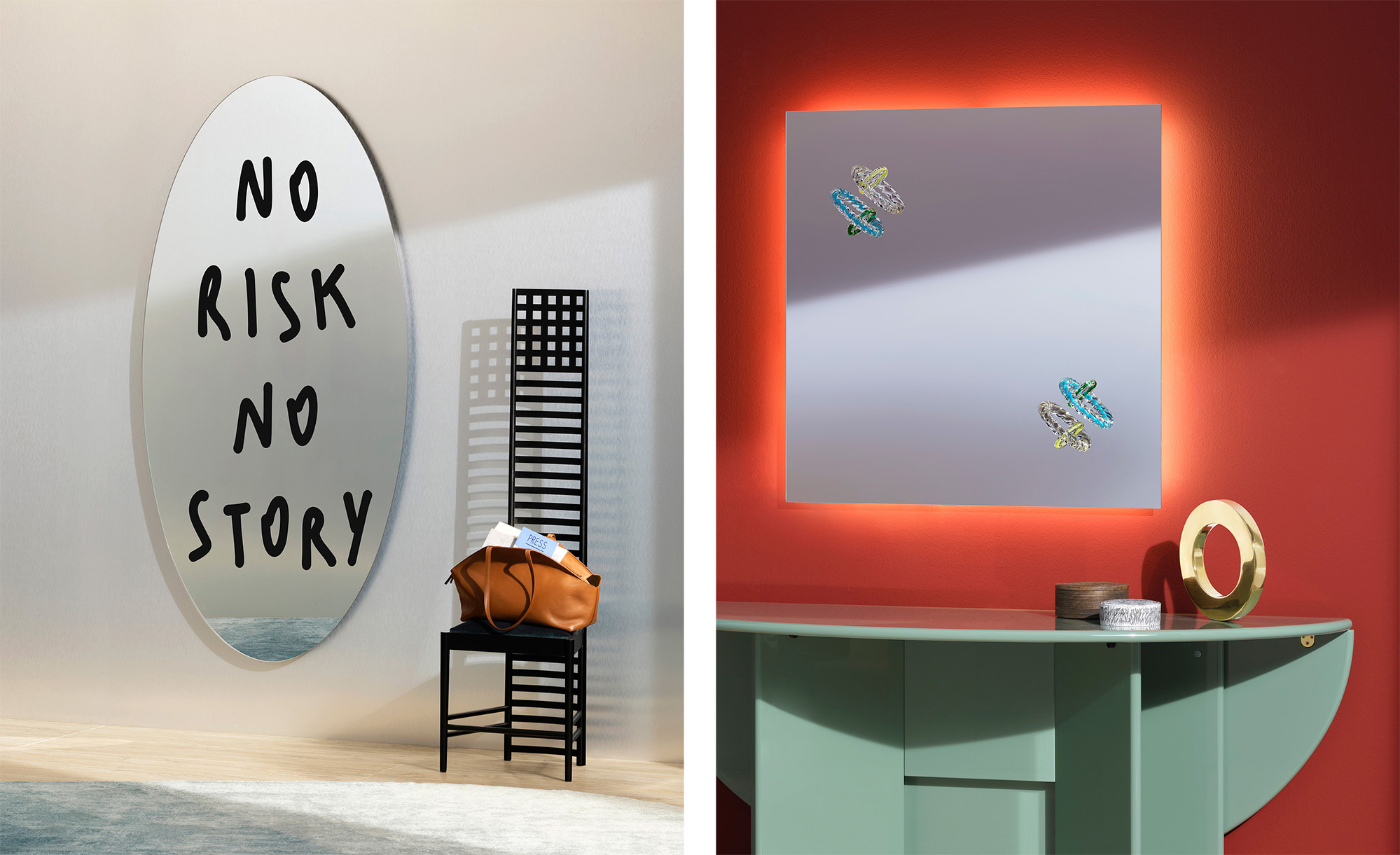
While fun has never left the conversation, its significance at this moment can’t be overstated. Other artists are similarly deploying playfulness in their work to spark joy, but also to call into question our sense of control over the ways we move through the world. Pietro Terzini’s Me from Outside collection for Cassina includes mirrors with handwritten phrases etched onto their fronts, using language to interrupt complacency (and to co-opt the impulse to selfie). Bethan Laura Wood’s Hooptical mirrors, also by Cassina, take a similar playful view. Viewers of Terzini’s works take from the text what they will, calling into question the viability of our bifurcated selves: who we are in physical space and the myriad identities we cultivate online.
In this way, Terzini’s work is akin to Yayoi Kusama’s Infinity Mirror Rooms, spaces that, when introduced in 1965, engaged with the novel concept of infinite repetition. In Infinity Mirrored Room—Love Forever, shown at Castellane Gallery in New York in 1966, Kusama distributed buttons that said “Love Forever,” assuming the human capacity for love shouldn’t need resource management—seeing hope in iteration rather than diminishing returns. But as large language models rewire our understanding of the infinite (and threaten the existence of limits, period), what goes on in perpetuity, and what can contain it, is called into question.
These ideas aren’t generated in a vacuum. Collaboration plays a crucial role in how Taillet evolves her practice. She has worked with Malbranque and Gasnier on multiple projects, including an earlier performance piece involving fragile glass pieces. That project, she admits, was far more stressful: the glass frequently broke, rehearsals were tightly controlled, and uncertainty loomed over the final outcome. By contrast, “Spinning Around” reflects a growing confidence—not only in her collaborators, but in her own instincts. “Now, there’s trust,” she says. “We don’t need to convince each other. We just follow what makes sense.”
That trust extends beyond the studio. To fund “Spinning Around,” Taillet sold all nine mirrors before the exhibition opened, securing buyers across creative industries. The decision was pragmatic, but also symbolic: She no longer needed to wait for institutional validation.
Taillet, for her part, will continue exploring the ways design can limit, harness, and diffuse our attention as part of a research residency with Villa Albertine, the French Institute for Culture and Education in the U.S. There, she plans to observe the city as a kind of choreography—studying its rhythms, sounds, and architectural details as raw material for City in Motion, a project that echoes the intent of Steve Reich’s 1995 composition, City Life. Like Reich, Taillet hopes to transform the experience of the city into objects and installations that further her understanding of the relationship between people and the built environment. “I don’t find ideas on a white page,” she says. “I find them by playing with shape.”

In the hands of this French artist and designer, the most elemental experimentations with watercolors and shapes give rise to the most elegant results.

Once a far-fetched destination, the Frozen Continent has seen tourism more than double over the last decade. The storied cruise line Ponant Explorations is leading the charge with new itineraries that feel out of this world.

Wearstler does it all: interior designer, product guru, hotel mastermind, book author. Now the L.A. maven adds curator to her résumé. For our spring issue, she shares some of her favorite independent talents in Amsterdam with us.