The Second Life of a Nearly Forgotten Art History Icon
It seemed like an ordinary assignment to redesign an office. But as designer Edgar Jayet discovered, the Paris address was a legend of art history.

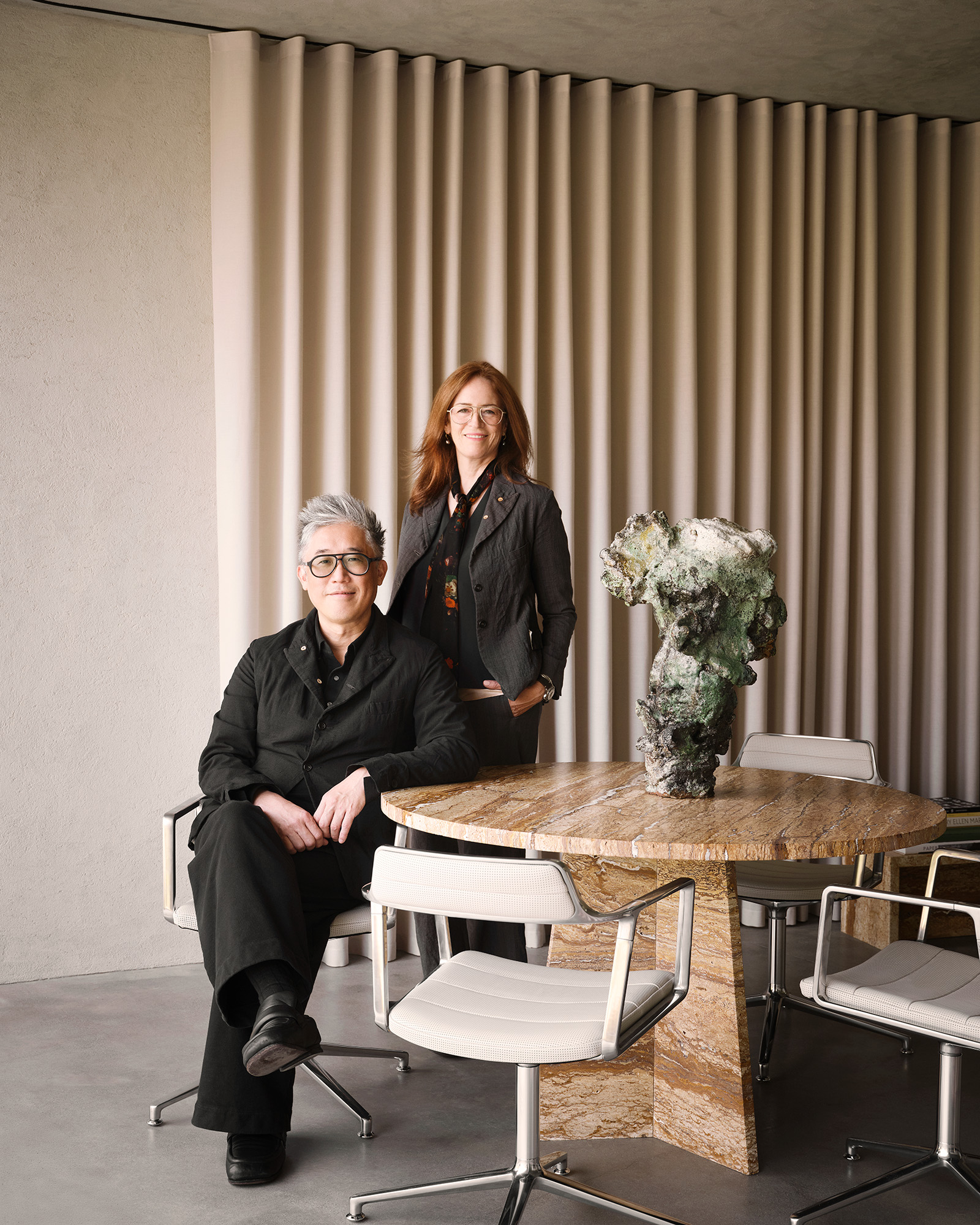
In upstate New York, the latest guesthouse from the sought-after Danish brand Vipp perfectly blends nature and design. On this episode, Dan speaks to its designers, Sharon Johnston and Mark Lee of the award winning LA-based firm Johnston Marklee, about their cutting-edge practice, how they approach Modernism, designing the guesthouse, and much more.
This article is featured in our Spring 2026 print issue, available now.
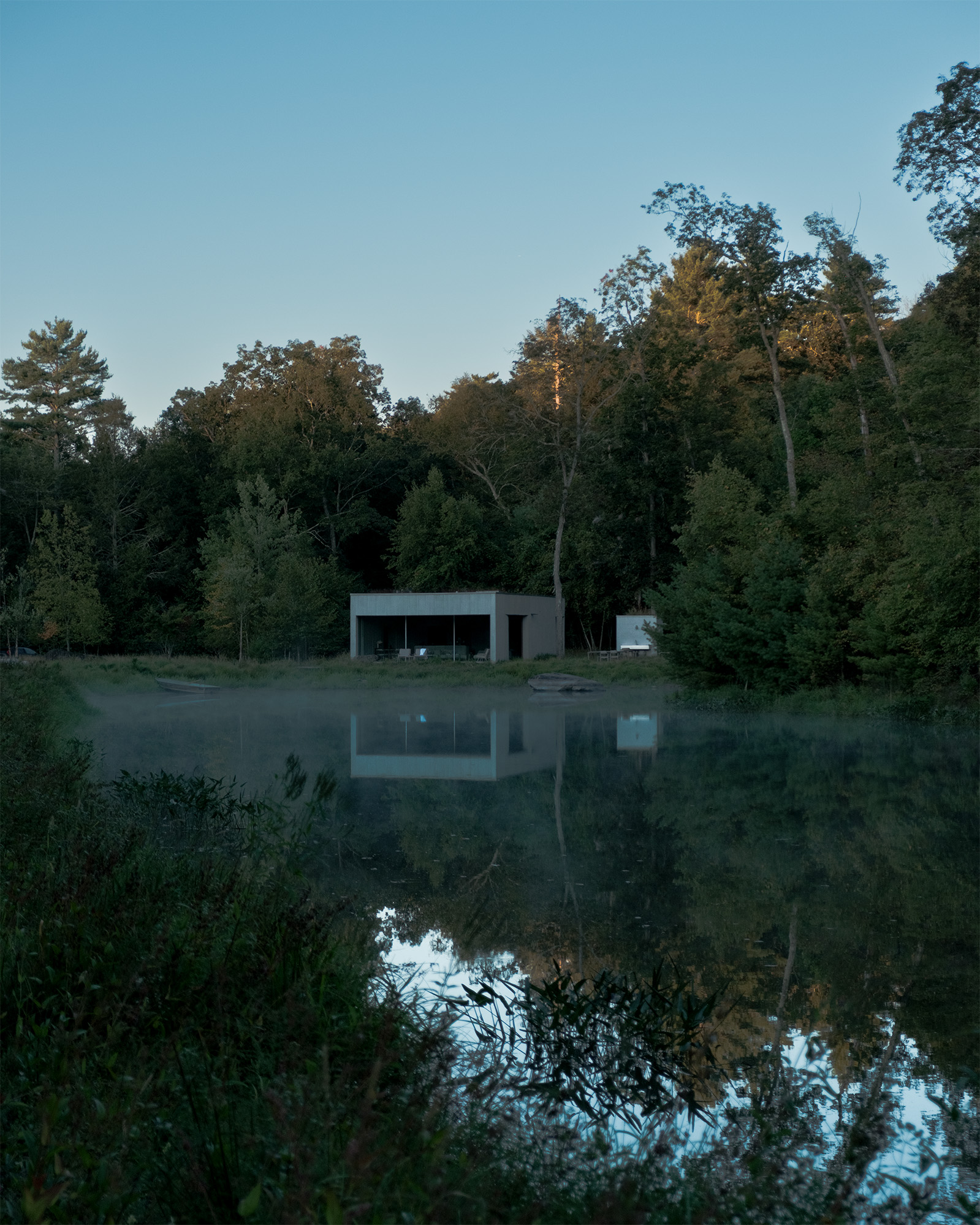
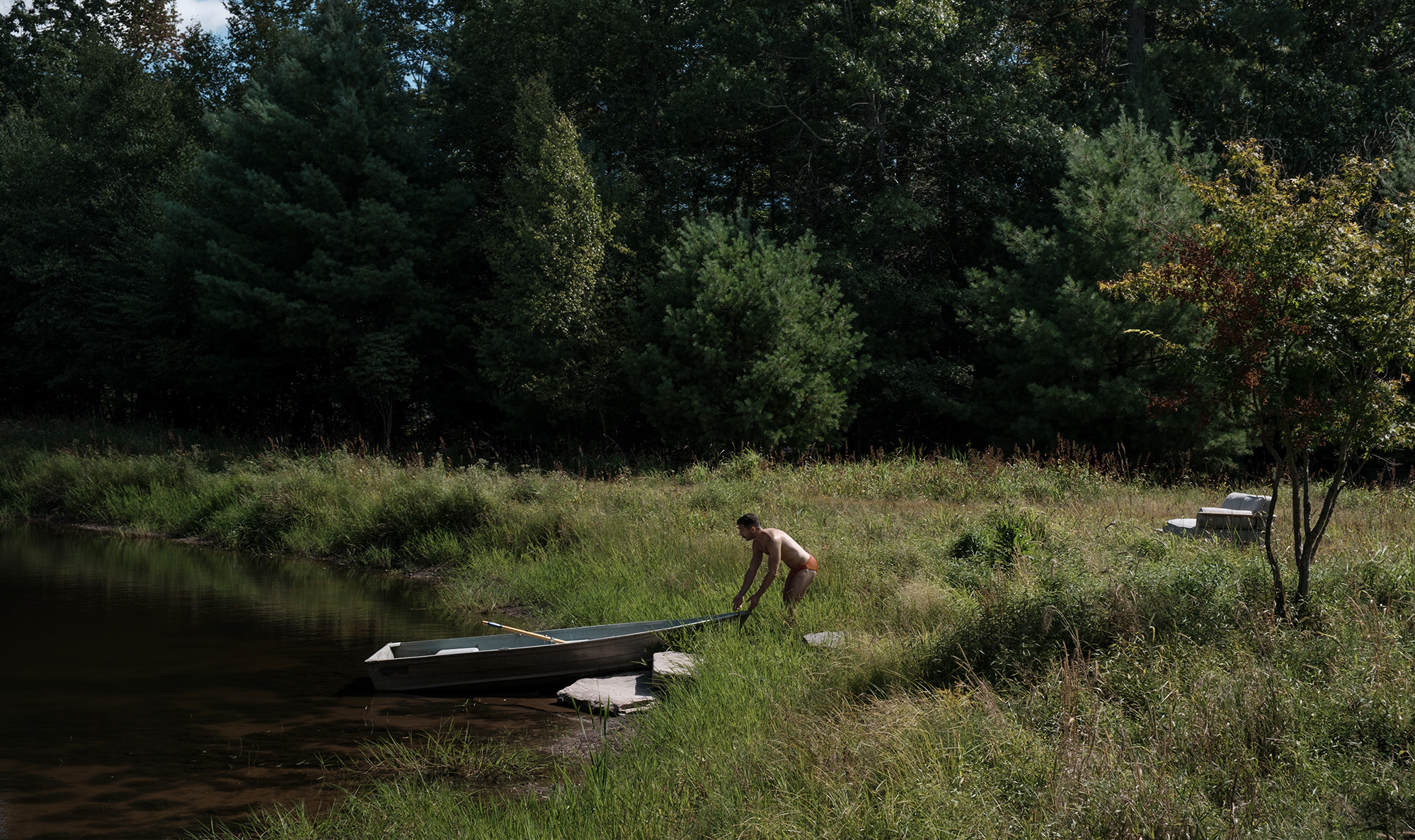
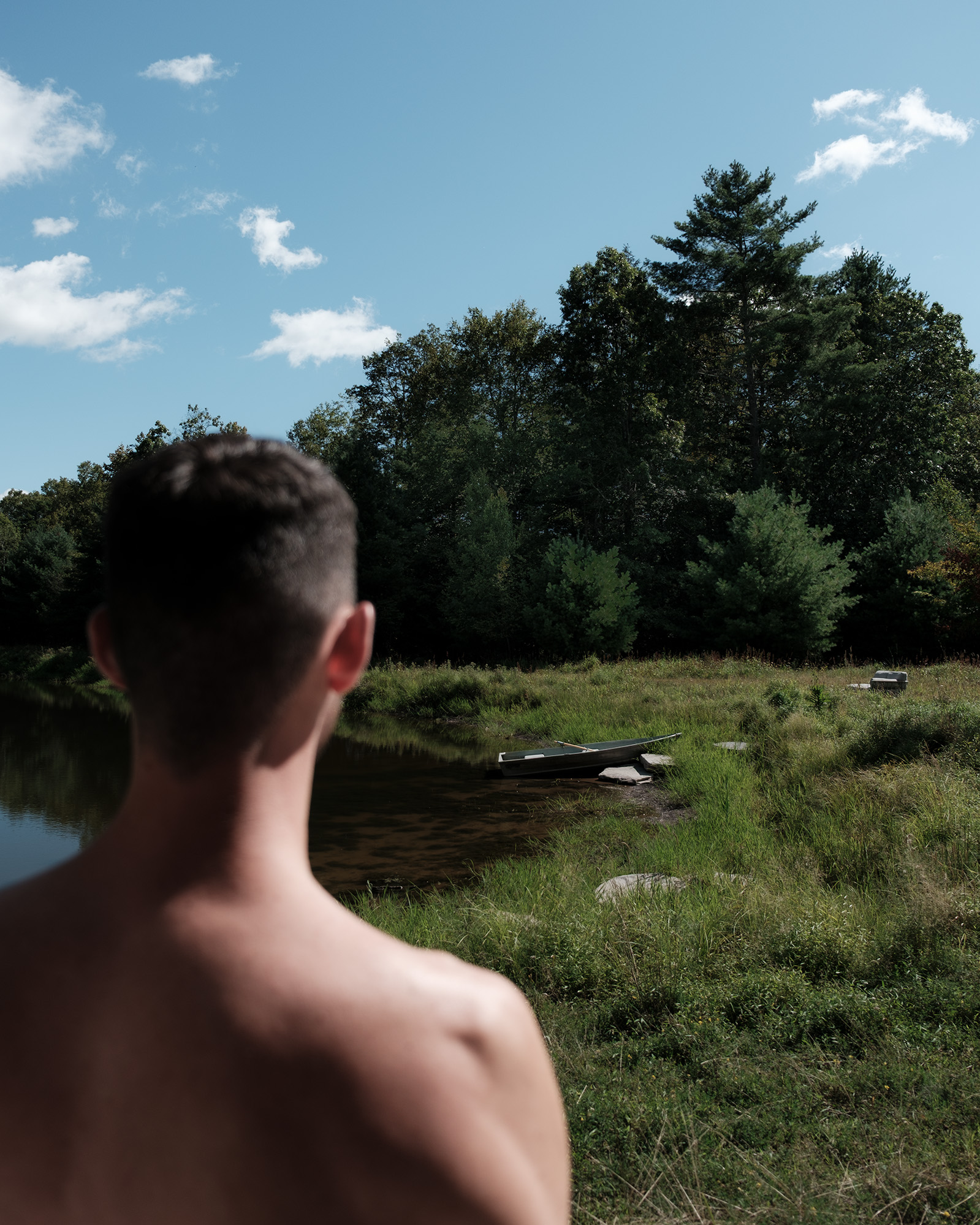
As a city slicker, I’m unaccustomed to untamed nature sometimes. One of the most potent memories I have of staying at the Vipp Pavilion in upstate New York is the muddy pond that sits right in front of the modern house’s pristine patio. When you gingerly walk through tall grasses to approach the water, dozens of little critters scurry into the water. It’s like the world around you is saying “hello,” or perhaps, “keep your distance.”
The beautifully designed two-bedroom pavilion is truly purpose-built to create the ultimate weekend house for today’s overstimulated urbanite. The living room is framed by a large glass wall that opens up to the aforementioned patio; most spaces have their own skylight; the shower in the large bathroom floats in the middle of the room surrounded by tall, chocolate-brown walls that give you the sensation of bathing in some kind of primordial cave.
Designed by L.A.-based architects Sharon Johnston and Mark Lee of firm Johnston Marklee, the newly completed 1,200-square-foot project is just another in a growing list of incredibly serene guesthouses from Vipp, the Danish furniture and housewares brand. During my 72-hour stay—along with my design-loving, driver’s-license-having companion Lane Raffaldini Rubin—I was able to completely unplug, enjoy meals in the dreamy Vipp kitchen, navigate the pond’s waters with a rowboat, and simply rest in the silence.
I spoke with Johnston and Lee to learn more about this yearslong endeavor that perfectly combines nature, great design, and the space to immerse yourself in nothing at all.
I feel like I’ve known your work for so long and have always admired it from afar but have never had a chance to meet you guys. Tell me a little bit about your firm. How did you two meet? Sharon, why don’t you go ahead?
Sharon Johnston: Mark and I actually met in graduate school. We shared a studio with Herzog & de Meuron. It’s called an option studio at the GSD at Harvard. And we met then and just became friends, and after graduation, we came back to L.A. That was not the beginning of our firm, but we started exploring the city together and just talking about architecture. Our shared love of L.A. was the beginning of our friendship, before we got together and started our firm.
Mark, what do you remember about the day you met Sharon?
Mark Lee: Well, we were both students. I think we bonded because we were both from L.A. Sharon was born and raised in L.A., and I was born and raised in Hong Kong, but I lived in L.A. for 10-odd years before going over to the East Coast. I think we shared this Southern California background.
SJ: I think the years in Boston were like some of the hundred-year storms of the Northeast. So it was terribly cold during our Boston tenure. We mourned L.A. a lot together.
And what made you both want to become architects?
ML: I’ve wanted to be an architect since I was around eight or nine years old. Growing up in Hong Kong, such a dense city, the presence of buildings was really felt. And I also grew up during a time when Hong Kong was booming. There are these great masterpieces like the HSBC building being built. So for me, architecture is always something that bridges between the arts and the sciences and economics.
SJ: I came to architecture a bit later than Mark. I grew up on the beach in Southern California, so I was outside all the time, but not in the city. And then in college, I had the chance to start traveling a little bit. It was my first time in Europe. And I was studying history as my major. I traveled around Italy and found myself, and I began to understand history through drawing. And then I put the pieces together that maybe architecture could be a discipline for study in graduate school.
And when did you guys set out on your own as a team?
ML: We started in 1998. It was a few years after we graduated from graduate school. And both Sharon and I worked for different people. I was also teaching in Switzerland and then decided to move back to L.A. And that’s when we started our practice.
I see you both as stewards for Modernism in the 21st century, in the best way possible. I don’t really want to oversimplify things because I feel like what you do is so unique. How do you see your own work?
SJ: Starting with beginnings, I remember Mark and I had had some experience, but we were quite young as architects when we started Johnston Marklee. And I remember we made a pact that no project was too small as long as the client that had come to us wanted to go on a journey together, that they didn’t come to us and say, “I want this, deliver it”—that we would actually explore something together. And I think that was really important because it gave us confidence to be open to people who maybe were incredibly creative but didn’t have a big budget or even a very complex project, but wanted to do something important that was meaningful to them.
I don’t think people come to Johnston Marklee like, “I’ve seen this, I want that. You did this before, I want that again.” I think it goes back to the people connection and the idea of it being a process of discovery, that where we end up is not where we imagined at the beginning.
It’s a very open process. We’re incredibly rigorous with how we do our analysis of the site, how we think about the program and the technical requirements. And our frame of reference is quite broad, from art and culture and people’s lives. Now that we have a body of work over 20 years, I think people understand that what we’re going to make is completely special and personal and specific to each project.
ML: We believe architecture is a slow art, so it doesn’t really succumb to many trends or fashion or things that go in a much quicker life cycle. Because of that, I think we also stand on the shoulders of history. We really believe there’s a lot of wisdom, a lot of knowledge that’s embedded in history.
When it comes to the Vipp guesthouse in upstate New York, how did you connect with the brand?
SJ: I think the brand’s owner, Sofie Christensen Egelund, found us. Of course, we knew Vipp well; we have had their products in our house for many, many years. We love them, and she reached out to us and came to visit, and I think that’s a classic Johnston Marklee beginning. It’s just meeting people, having a meal. She explained how she was building out the company to have this hospitality dimension, and she wanted to start a conversation with us. We started slowly and just talked about ideas and learned about the work that they’d been doing.
A lot of the guesthouses are super serene, very special places all over the world. So did the site come first?
ML: I believe they had that piece of land already. When they first spoke with us, maybe they hadn’t shared the site yet. We were trying to get an understanding of each other and also the importance of Vipp’s presence within the house, and the scale, the size of the house, and then I think the site came.
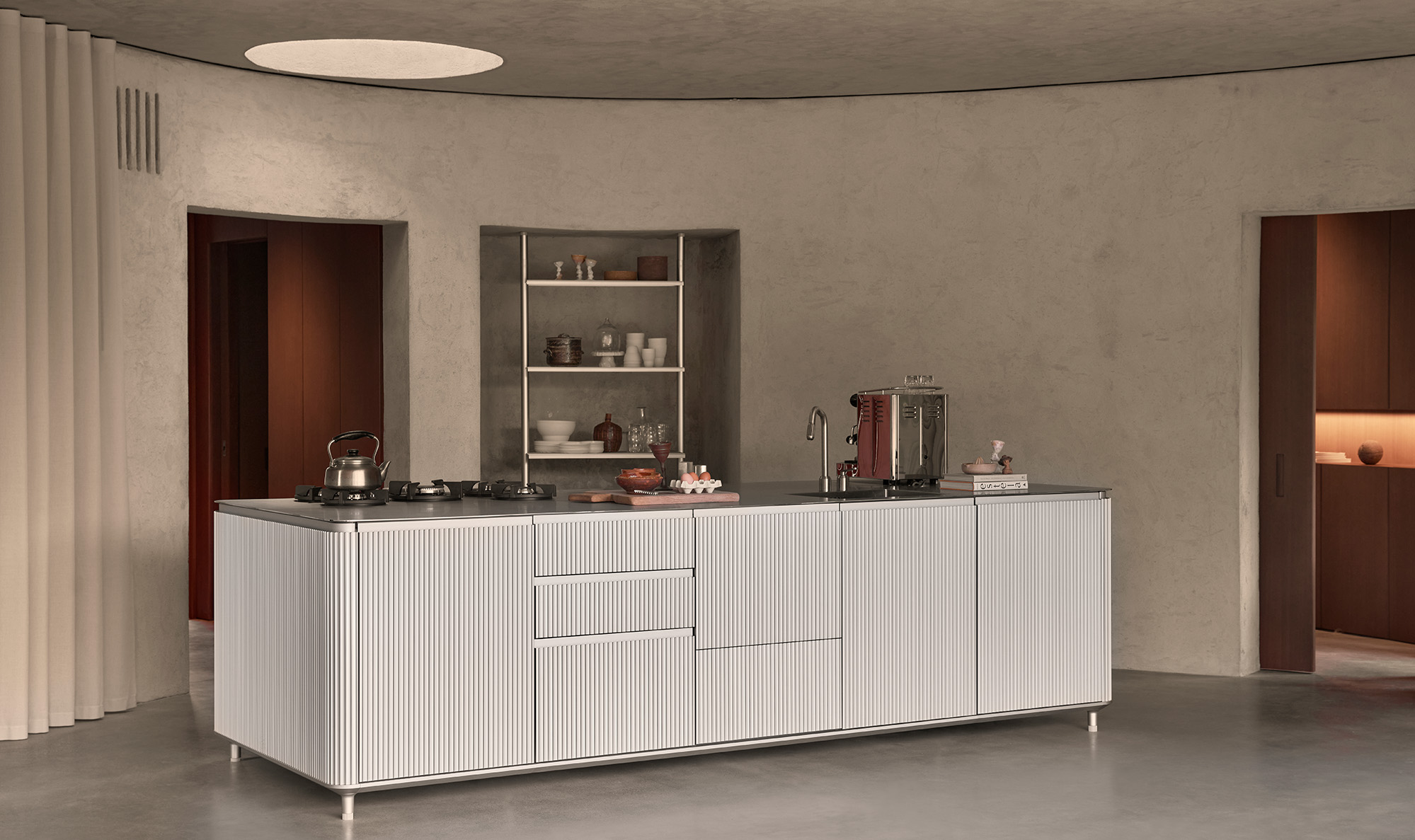
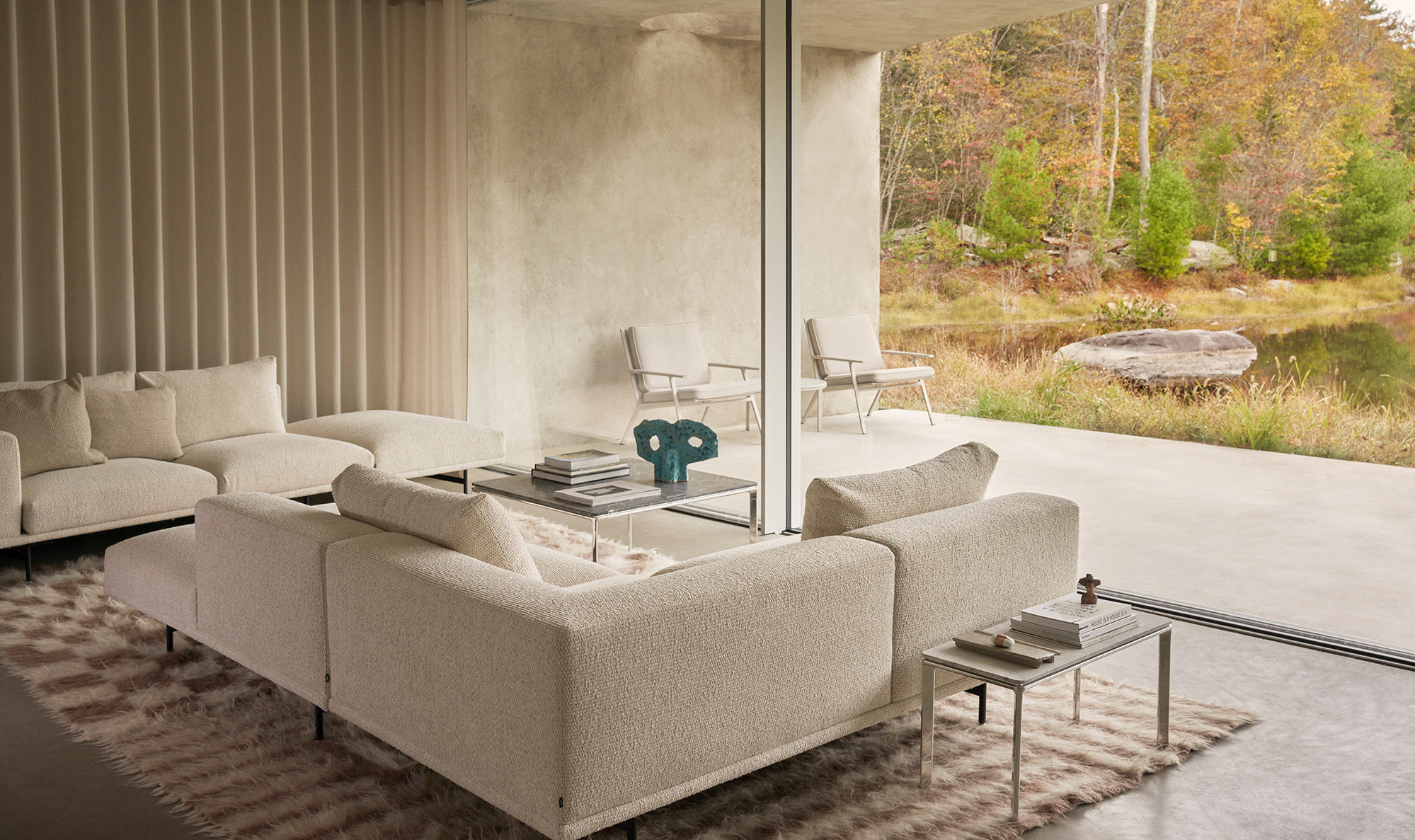
Was there a specific brief for this? Because I was there, and it’s this amazing house that has a living room with one giant sliding glass wall and a little patio, and it looks directly out on this pond. It’s very picturesque. Was the pond there?
ML: I would say definitely the design was completely informed by the site. I think the pond was really the magic part for us. It was so hidden, and also it’s very clear also with the site where the house should be sited.
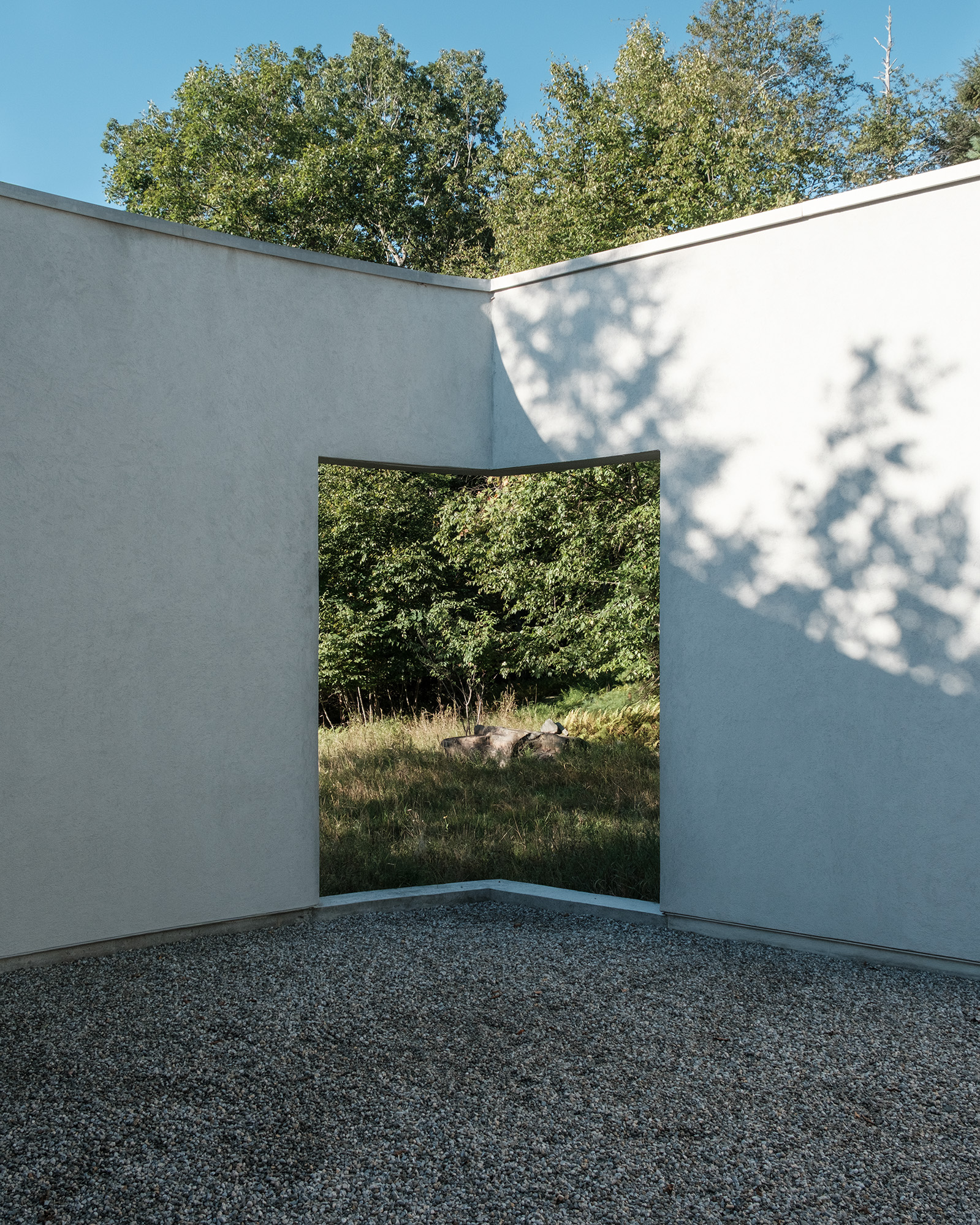
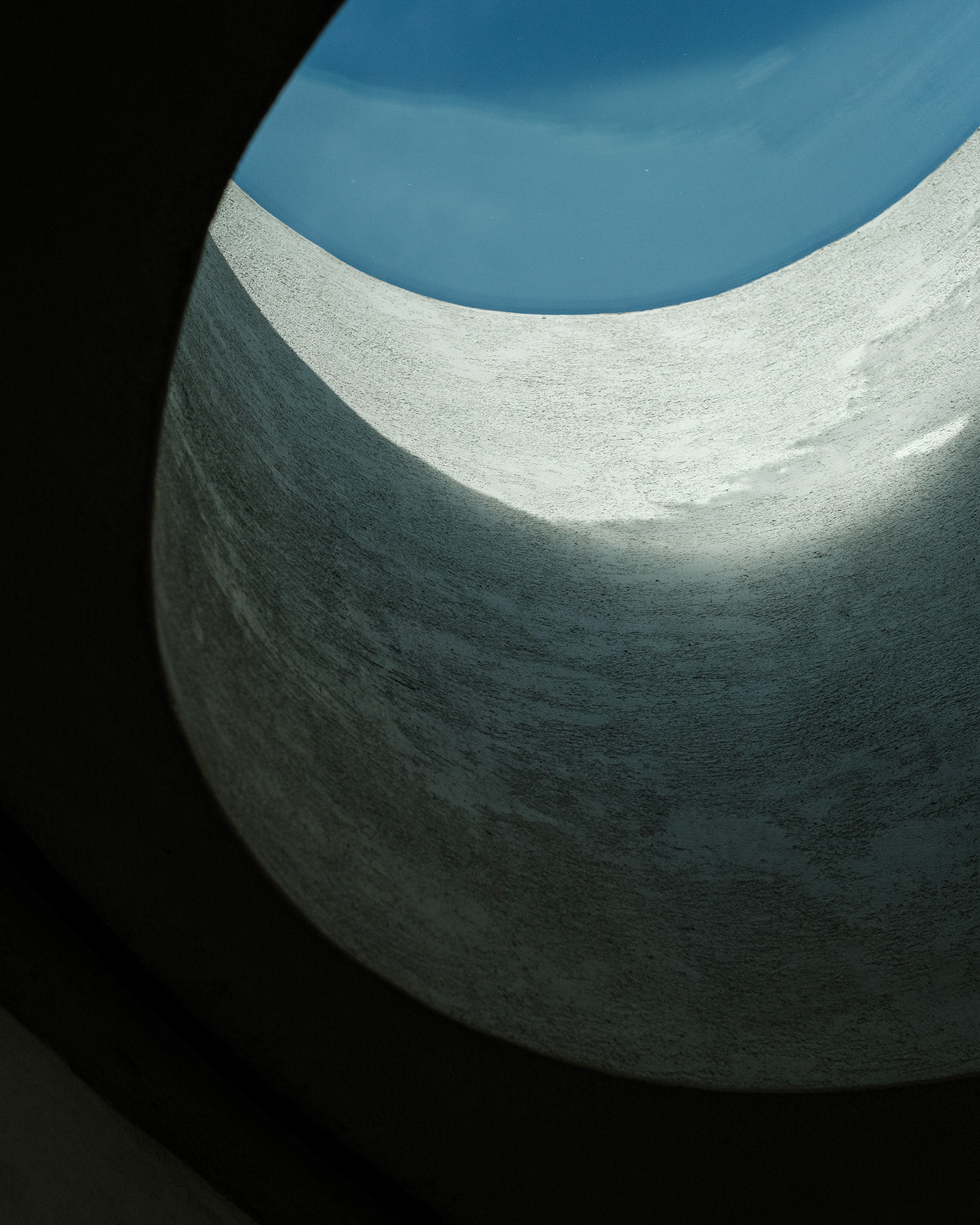
There are not a lot of flat areas where you can build, and we thought that was the crux that could really channel the energy of the pond into the house. So I think the siting was important, and then also the view of the pond from the siting to see this natural curve that turns around. These two half-ellipse shapes come together, placed like an hourglass formation, but then you put a rubber band around it, so you kind of cinch it together.
So there’s one ellipse shape or half-ellipse shape that really opens to the sky—that’s the entry courtyard—and one that is directed toward the pond. We always like to repeat certain elements to show the differences, like in the windows of the our other project, a house in Japan: All of them are the same, but they frame different things, both inside and outside. I think in the Vipp Pavilion, it’s the same case, where we use two identical forms, but the courtyard is the one that shields you from nature, and just only opens to the sky.
For us, that acts as a preface: You can hide the view before the view is shown to you again. And when you’re in a space and look out, oftentimes the view just sucks you in. You’re not aware. Being aware of the curvature of the house in relation to the curvature of the horizon and the pond was important—that interaction between the curvatures.
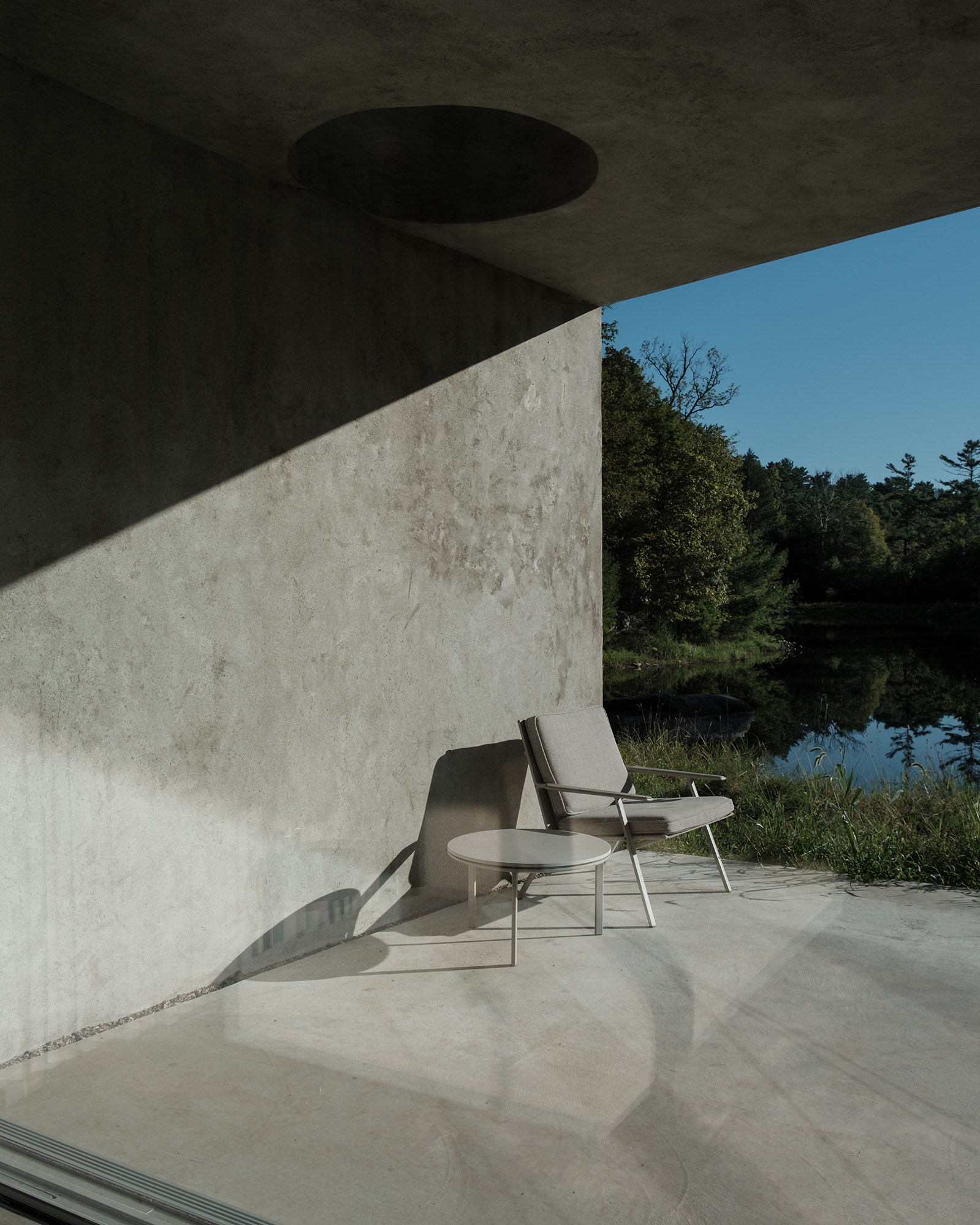
Before you guys started designing, all of that was already in place: the pond, the giant rock, and everything?
SJ: It looks almost perfect. We thought a lot about how close the building could be to the pond. We wanted it to have a kind of tension, and because it’s a man-made pond we could put it closer than if it were a tidal body of water. But to get that reflection when you’re approaching, and you see the building reflected in the pond—or vice versa when you’re inside looking out—proximity was really important.
And because there are a lot of homes in that area with ponds and little lakes, everyone’s got a little waterfront. Did you guys speak with Vipp about their other guesthouses in terms of what they had done before, what worked, and what didn’t?
ML: Not in depth. Sofie and Frank showed us some of the things they were thinking about, but they pretty much gave us carte blanche. Besides the importance of the kitchen or some other way to test out their products or interior pieces, they’re pretty open. They were definitively looking at different solutions for different sites as opposed to having the same identity for all their houses.
SJ: And building on what Mark said, in many instances, Sofie and Frank encouraged us to be more conceptual with fewer signs of domestic living. Look at the texture of things: That’s not common, to see such rough stucco inside a house.
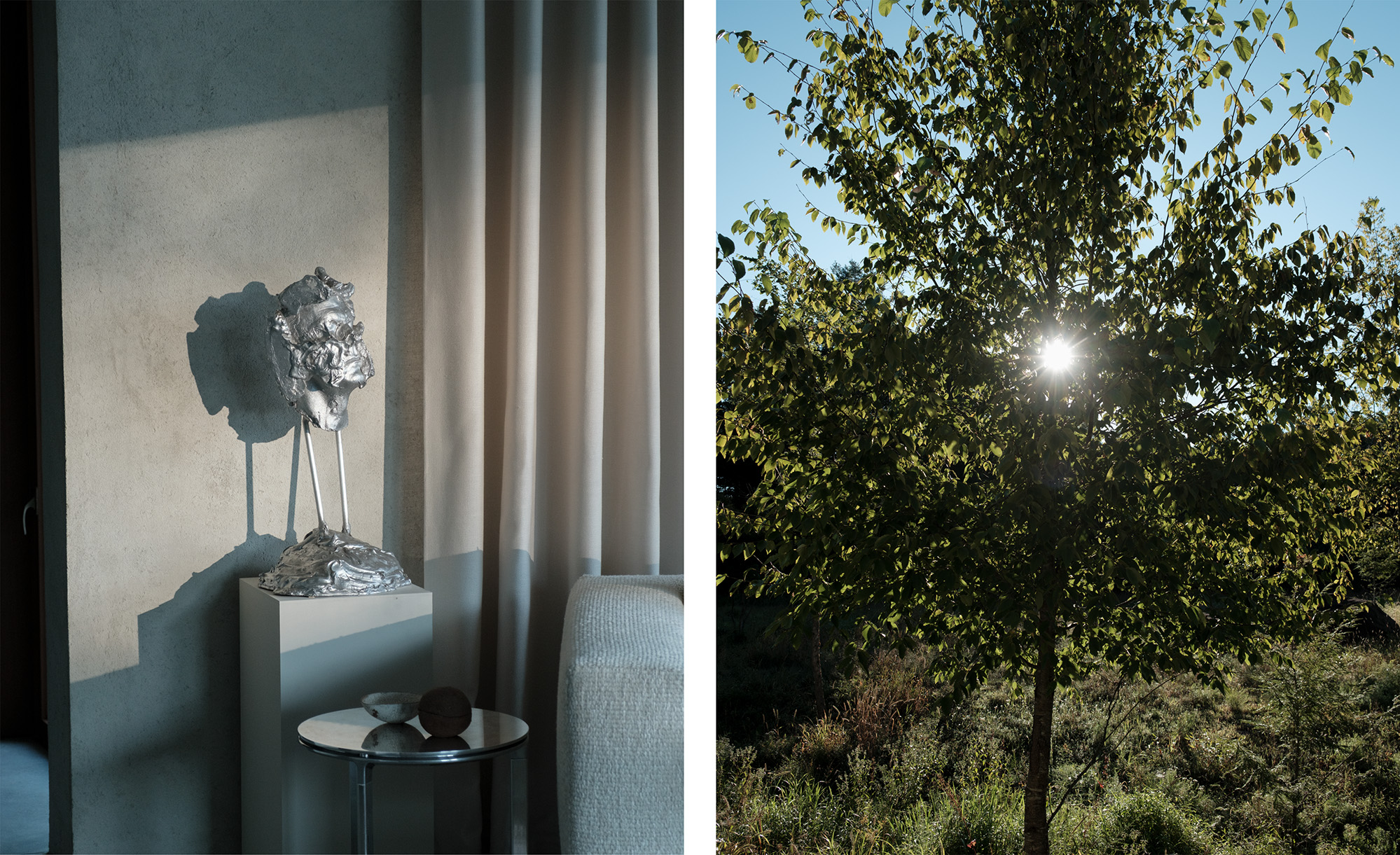
Sofie pushed and was comfortable with that because she felt like it made almost a primitive setting that contrasted with the engineering of the Vipp design. And I think for us, when you’re sitting in the living room looking out, and you’re surrounded by the elliptical curve that’s rough and matte—not reflecting any light—you feel almost like you’re outside. The boundaries of inside and outside are very interesting in the house.
And their willingness to push not only the formal architecture, but how the finishes worked and the roughness of things, really amplified that feeling of it being like a piece of stone or a rock: not a traditional domestic setting.
Did you guys get to explore the area in doing your research for the project?
SJ: We did a lot of walking and driving around the region. We would often come from Boston or sometimes New York. So we would get different orientations on approaching Pond Eddy and the site.
ML: In many ways, it’s very similar to our first experiences in Moffett, Texas, and how Judd chose a place that is so remote; depending on where you come from, you still have to drive another three hours to get there. That whole process of driving purges you from the everyday. When you get there, you have a different mindset.
How do you strike the balance when designing something like this guesthouse? Because it does function as a home, but you wouldn’t necessarily live there full-time; it has something of a special character to it.
ML: Well, sometimes we ask ourselves, what is architecture? How is architecture different from any building? I think for us, it’s like what art does. It takes you away from the everyday. It takes you away from what you experience 90% of the time, so you can have a different perspective. And for us, I think a vacation home is similar to that. Certainly, one can build a huge house with storage for everything that you have there. TVs in every room. But I think being away is also just being away from that.
When Sofie and Frank asked us for a quite modest program, it’s not like having a bathroom in every bedroom or having to think of the provision of having a third bedroom in case someone else comes or having a lot of storage. I was just thinking about building something quite essential. I think that type of modesty in terms of scale really makes it a very different experience from where we would live 90% of the time.
SJ: Just to add to that, there’s the sense of time: how you arrive there, the time it takes to do that. And then when you arrive and you don’t have to deal with all those other kinds of ancillary spaces and storage and all these bathrooms and lots of doors, you’re more quiet in your mind. And I think that allows you to, even with a short stay of a couple of days, feel really connected to the place because you’re without all the stuff that you tend to live with and encounter in your daily life.
ML: When we first started our practice, we were really busy. So we really didn’t have time to take vacations. So once in a while, we’ll take these short vacations. We’ll stay in L.A., but we’ll go to Pasadena or the Beverly Hills Hotel and then stay for a weekend. I remember one time we stayed at a Bel Air hotel, just a stone’s throw from where we live, and we didn’t leave the hotel at all and just pretended we were someplace else. And then we went to the restaurant at night, but the restaurant required gentlemen to wear a jacket. I didn’t have a jacket, so I drove home to get one. Just that convenience that I can go home into my closet and get a jacket and come back. I feel this distance and being different from everyday life is a positive thing.
And how will you unwind in 2026? Sharon, where would you want to go for a long weekend?
SJ: Well, we tend to find ourselves in cities, whether it’s Hong Kong or Paris or London. But I think one place I’ve always been fascinated to go and haven’t had the chance yet is the Engadine in the mountains of Switzerland.
That sounds like a good remote option. There’s so much talk about the omnipresence of technology today. Do you two think at all about the concept of unplugging and how to integrate that idea into a space?
ML: You know, I think unplugging is healthy, but we tend to think in a more positive way, as opposed to being anti-something. So as opposed to being anti-digital, anti-technology, we’re thinking: Could we have more of an analog presence? Could we have more physical books?
If a physical book is there, something haptic that you can touch, you can turn the page, which can be a very positive option to take a break away from your phone or tablet. We’re old-school; we still believe in books. We still think that even the time it takes to flip a page gets to a different part of your brain that you pay more attention to. And the presence of those materials, of slow consumption, is important for us.
I’m going to ask a question a little bit out of order: How would you describe Vipp as a company? Because it is quite unique.
SJ: Well, what we love is that Vipp starts with pragmatic artifacts: the trash can, hardware. And they’ve built, over the years, a family company; we love that, too, that there’s a humanness about how this industrial production has evolved. We haven’t traveled to any of the other Vipp guesthouses, but seeing Sofie and Frank’s home in New York and working with them, I feel like it’s a company that grows with people.
And that is tangible when you talk to them. They want to hear from you, they want to collaborate with us as architects. They’ve grown in really interesting ways that are driven by human interests and not just the corporate bottom line.
There’s a spark and surprise about the initiatives that they have inaugurated. And I think that is really compelling. At the same time, the foundation of what they do is based on solid engineering and timeless design.
And we ourselves as architects often reach out and include artists or other architects in our work. It takes a kind of confidence and willingness to let go a little bit, to see where a new collaborator might lead you. I really value that about the company, that they have both the heritage and a future-oriented idea of how to grow with other folks outside of the company.
If you had to spend two or three days at the Vipp Pavilion in New York, what would you bring with you? Is there a book or a movie or an activity?
ML: We’d like coffee.
Absolutely required. Sharon, what about you?
SJ: We were there last week, too, and all of a sudden there was space in my mind to sit down and read. That was really incredible. And I also walked a lot. With a lot of visits, you get to find shortcuts and pathways that I think are really telling, that help you understand the landscape more deeply. So I would say walking shoes and some books.
ML: For me, on the last trip there, I really got to enjoy our building, which we seldom get to do. Sometimes we get to visit our buildings for a short period of time, but just staying there for an extended time, you get to notice the small details. You get to notice the acoustical qualities, how light changes. I really appreciate that.
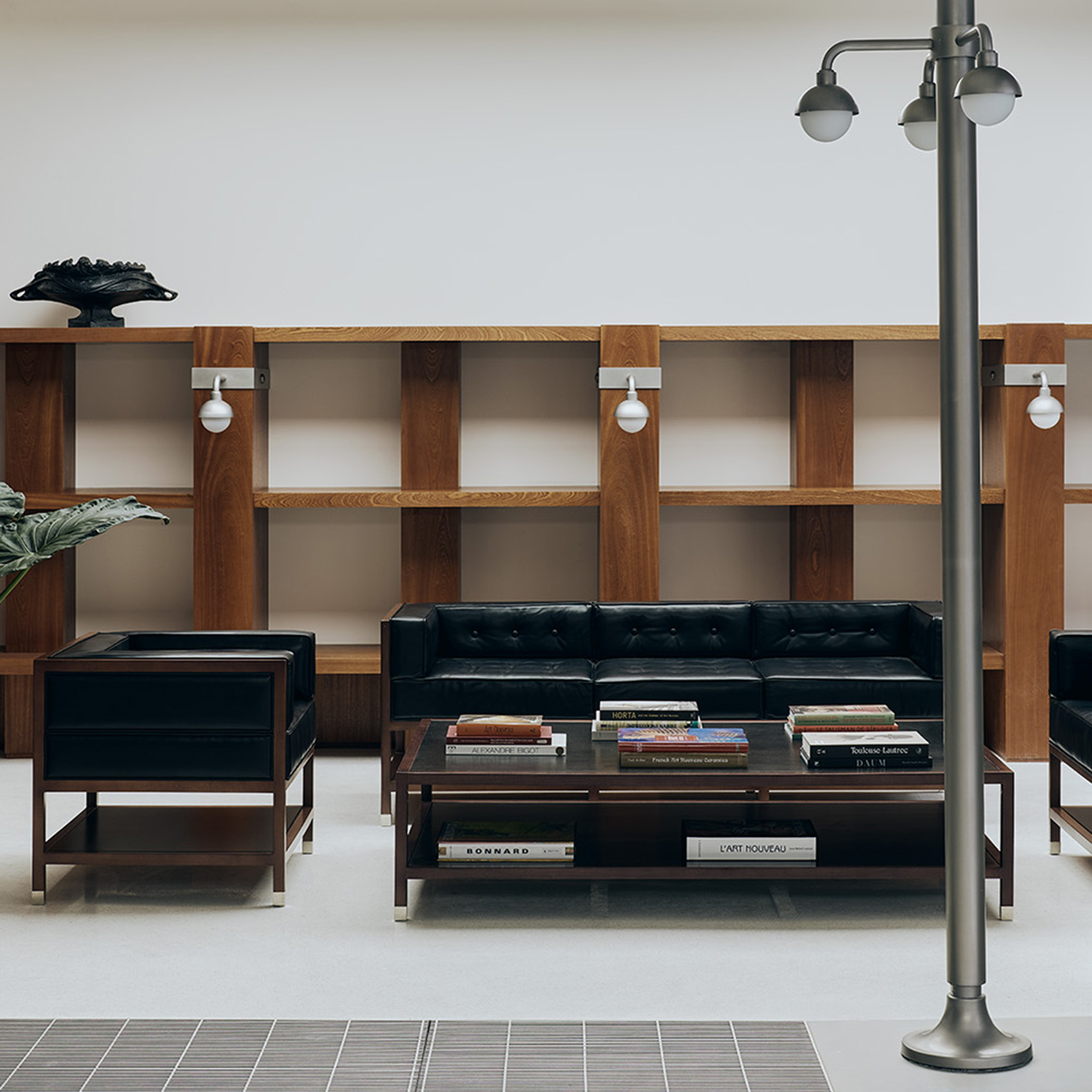
It seemed like an ordinary assignment to redesign an office. But as designer Edgar Jayet discovered, the Paris address was a legend of art history.

Artist Daniel Brush’s talent was sharper than most. The elusive mind left behind a staggering and oft-misunderstood collections of vintage objects.
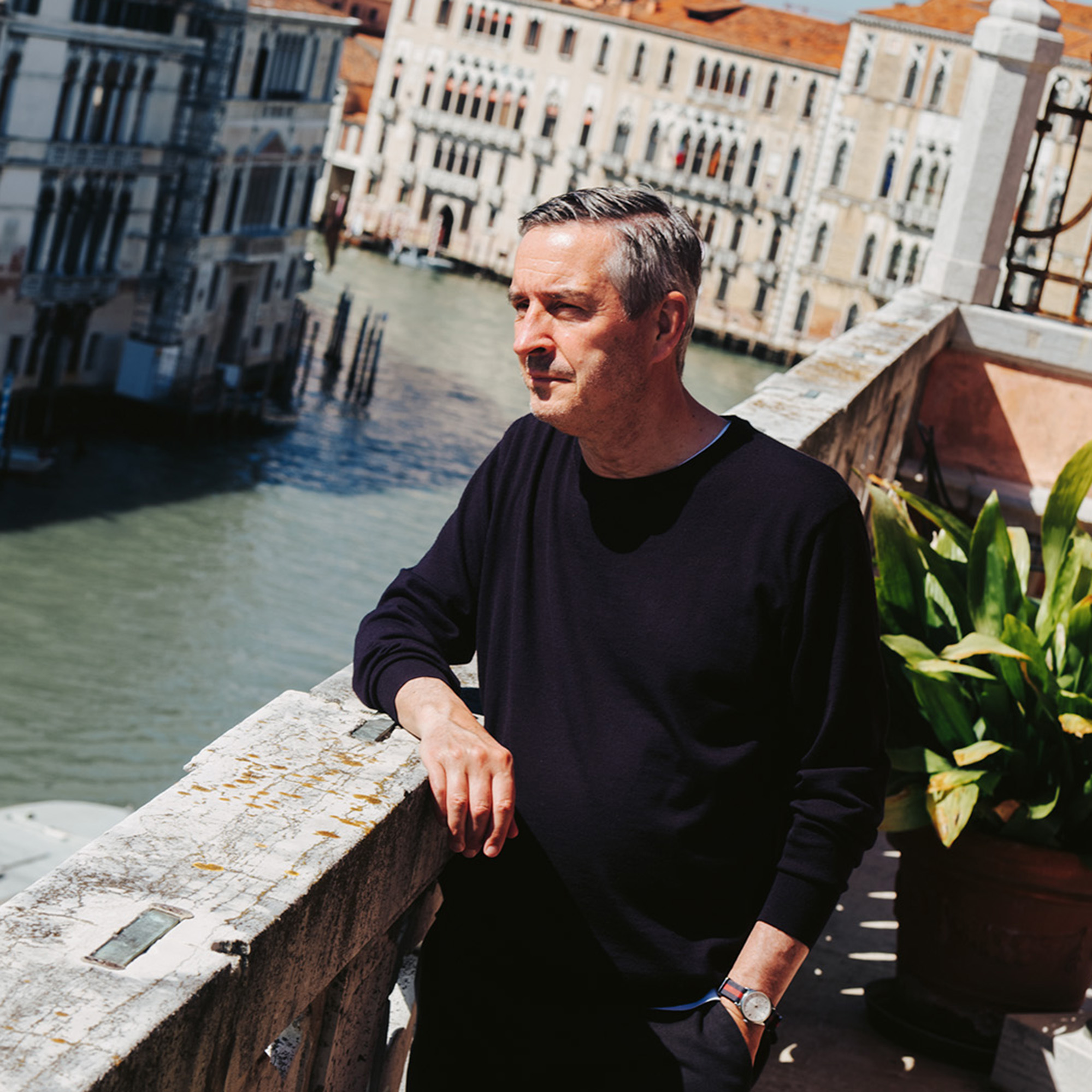
On the 16th season premiere, Dan speaks with legendary fashion designer about the future of his second act, the Fondazione Dries Van Noten in Venice. On this episode, the pair speak about why education is important to his mission, the institution's first show, and much more.