Inside the Meditative Universe of Pierre Bonnefille
In the hands of this French artist and designer, the most elemental experimentations with watercolors and shapes give rise to the most elegant results.

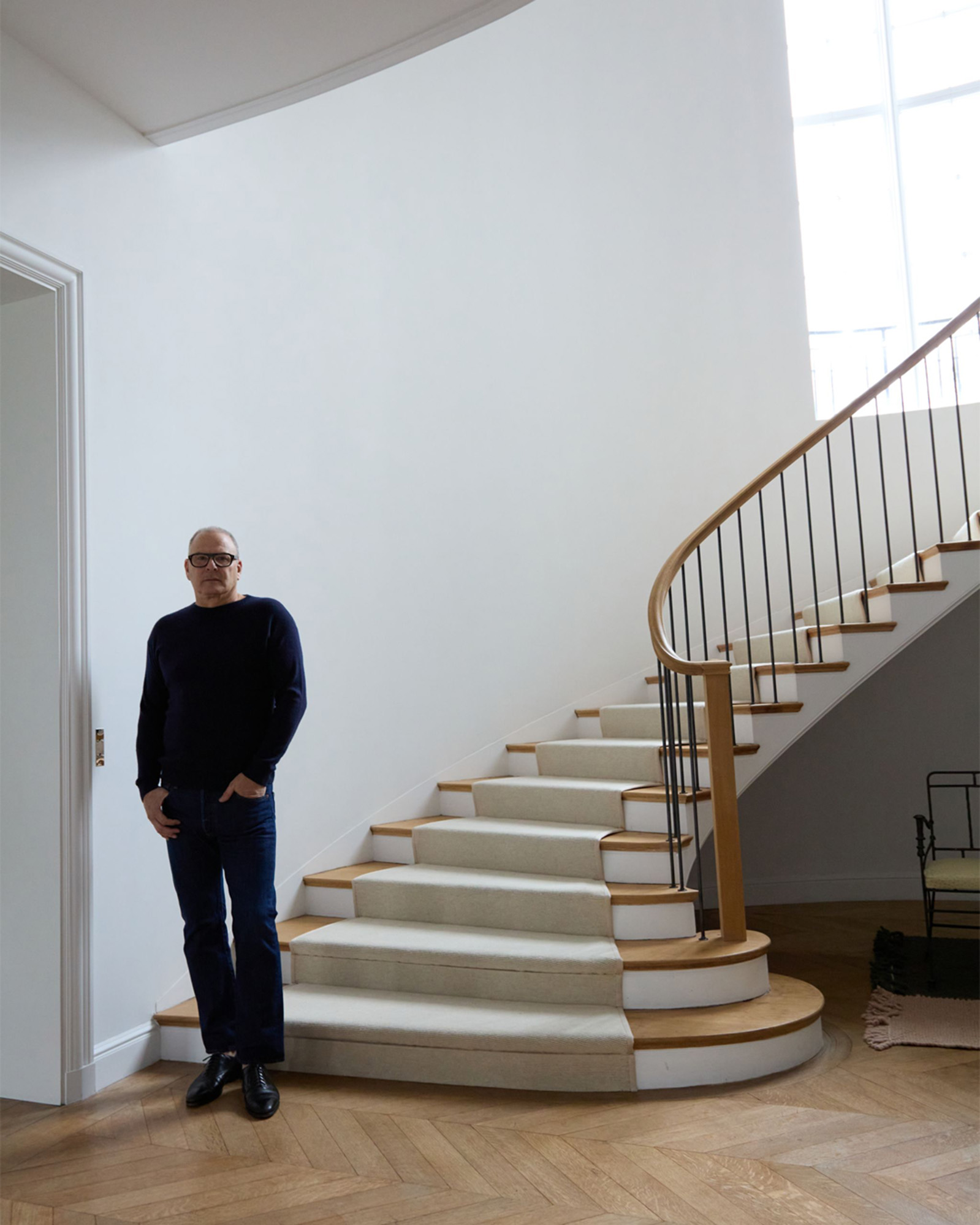
Few designers have the résumé of brand building, product elevating, and balance sheet rejuvenating that American designer, creative director, and collecting connoisseur Reed Krakoff does. On this episode, Dan speaks with the creative leader on his groundbreaking career—from his roles at Coach and Tiffany & Co. to now John Hardy and Gap—what he’s collecting now, and much more.
This article is featured in our Spring 2026 print issue, available now.
Most highly successful designers are virtuosos in a particular aesthetic or get lucky and tap into something at the right time, propelling them to stardom. But when that moment fades, or the look gets tired, they fade away from the public eye and cultural consciousness. Some, if they’re lucky, can resurface and find their second act.
But when it comes to fashion designer, creative director, collector, and entrepreneur Reed Krakoff, one stops believing his humble asides that in each position he’s held, he’s merely been lucky. Taking one look at his résumé and his considerable successes, it’s clear he understands something about design and the modern concept of luxury better than most, and he knows how to apply it in the real world.
After cutting his teeth at Ralph Lauren (much like Todd Snyder elsewhere in this issue), he had a successful run as a creative director at Tommy Hilfiger, helping bring the brand to new heights. In the mid 90s, he went to Coach and started an era there of unprecedented growth, taking it into a new echelon of American style that nearly everyone could identify with. His later tenure at Tiffany & Co. transformed a sleepy heritage brand into a powerhouse luxury maison.
Like many great designers—Karl Lagerfeld and Peter Marino both come to mind—Krakoff has been known for his personal taste in art, design, and interiors, too. He’s created many desirable homes alongside his wife, Delphine. And when not tailoring his surroundings with simple good taste (and helping to define what that even means during this period of meteoric growth in the collecting world), he’s photographed stories for magazines and books, continuing to absorb new skills along the way. Ceramics is his latest passion.
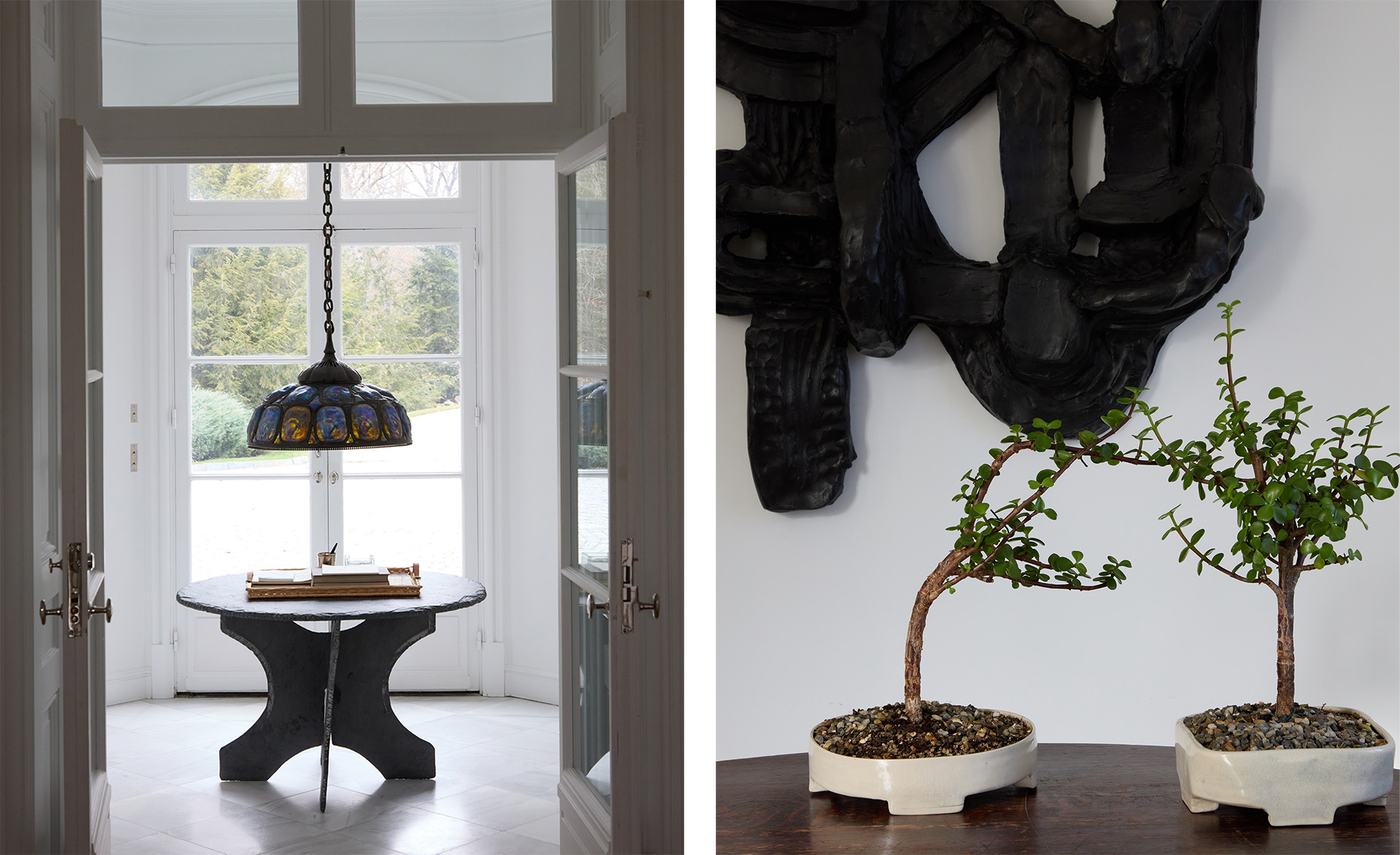
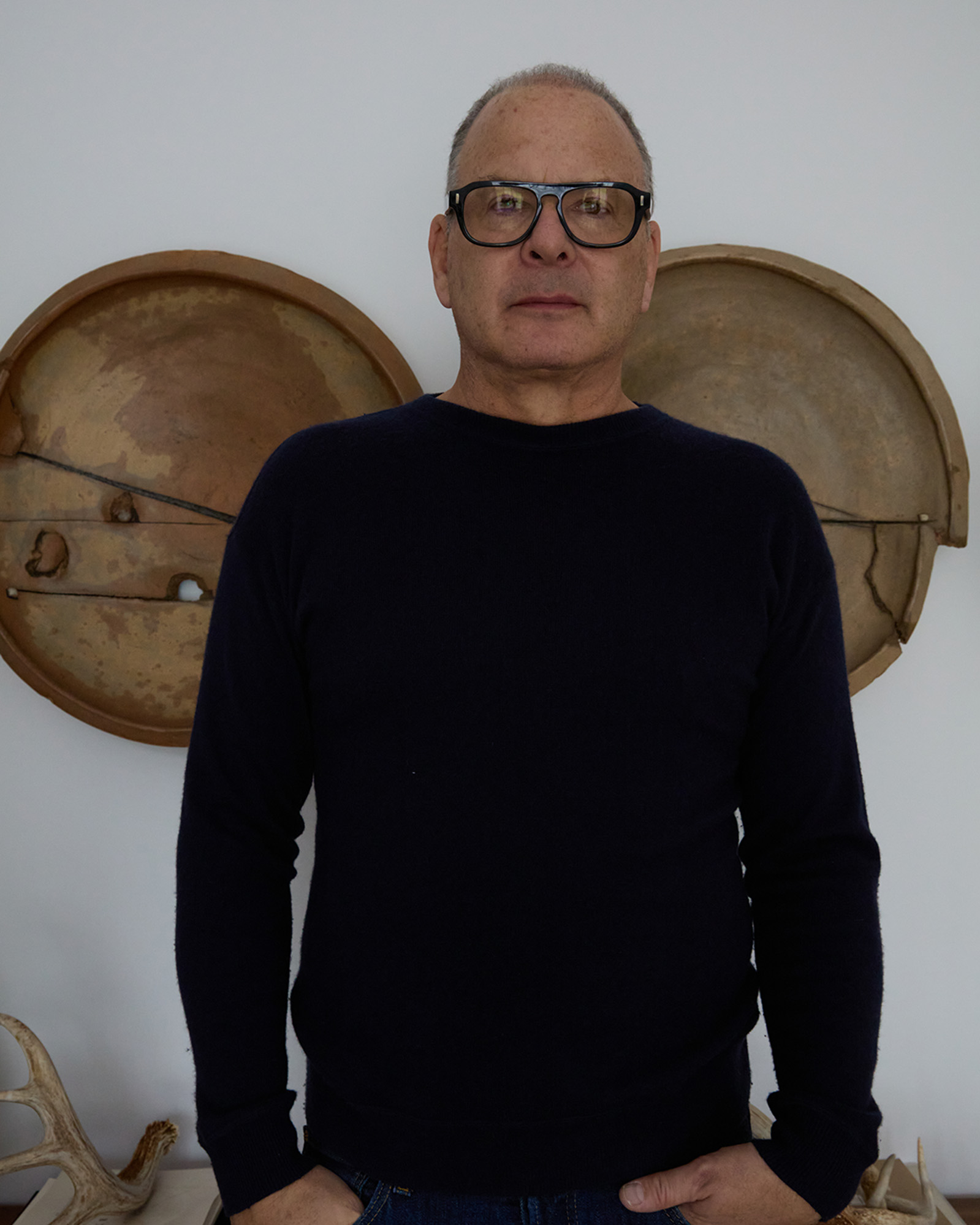
For this issue, we sat down to discuss his career and thoughts on collecting, and asked the experienced lensman to document his own home and the spaces and objects that surround and inspire him.
I’d love to start at the beginning. I read that you were born in Connecticut, and you had a few siblings. How would you characterize your early life and upbringing?
I was born in Greenwich, Connecticut, in Fairfield County. It’s funny, the movie The Ice Storm pretty perfectly encapsulates my growing up. It’s essentially about life in the 1970s in Fairfield County. So it takes place right there, actually. I grew up in a very small but chic Modernist house.
I was about to say that area is known for its Modernist residences.
Exactly. There are more Modernist houses in New Canaan, I think, than anywhere else—certainly on the East Coast. Frank Lloyd Wright did houses here. Philip Johnson did four houses here. Noyes did a couple of houses here. It’s quite amazing. I actually spent most of my time in Westport and Weston growing up, but it was very much that period reflected in The Ice Storm. But like I said, the house I grew up in was very chic, small, and Modernist. We had a Barcelona table in the living room and Knoll couches. My mother worked with a local architect. It was an asymmetrical, cedar-sided, contemporary home, typical for the time. The furnishings were mostly Modernist and unusual for the time. I grew up in that world of clean, minimal, tailored spaces. It definitely informed my aesthetic a lot.
And why fashion? How did that come about? Were you always interested in fashion?
For sure. Always interested in art and design. For whatever reason, it was always something that appealed to me, and fashion was just one of the things I was interested in. As I got to my early twenties, I decided I wanted to go to Parsons to see if it was something I was actually any good at. I felt like I needed to try it.
Do you remember an aha moment or anything?
Yeah, I think it was early on in my days at Parsons, and I was at home sitting on the floor, working on some project, when I realized that, one, I loved it, and two, I might be successful at it. I tried so many things. I studied music at Berklee College of Music. I had been super involved in sports. I was involved in classical art. I studied at the School of the Museum of Fine Arts in Boston. I took a few classes. I wasn’t a full-time student there, and honestly, I wasn’t great at any of those things.
I remember going to Berklee, and it’s probably the most competitive place to study jazz. Out of 600 jazz guitar majors, I was probably number 601. I just never experienced that level of talent. The people there would sit in a practice room for a day, two days, leave, get food, study more, practice scales. I just didn’t have that dedication.
For the first decade of your career, you worked at different places like Ralph Lauren and Tommy Hilfiger. What was that first decade of work like? You were living in the city, I’m assuming.
Yes. It was amazing, and I’ve been really fortunate that I’ve been working and moved around during a period where I could experience the peaks of different segments of the industry, and I had my own business for a while. My first paying job was at Ralph Lauren, and it was just an amazing place to be. I was lucky to be there. I was an illustrator when I started. I was sitting up in this little room. The offices used to be at 40 West 55th Street, and those offices were literally in a co-op. So you had the neighbor walking their dog, and you’d be walking to a meeting with a bunch of boards. You’d walk into what you would call a conference room, but it probably used to be a living room. That’s where Ralph started. There are amazing pictures of him doing his first presentation in what looks like—and in fact is—an apartment.
They bought all the different apartments that became available, and it started to look like an office. But I remember one friend hung her samples on a shower rod. There was a bathtub still there. So it was an amazing place. It was really at the peak of Ralph’s popularity: 1988, 89, 90. I was there for four or five years, and it was perfect for me because it wasn’t pure design. And again, I was fortunate that I landed at a place where it wasn’t about classical design. It wasn’t about a traditional designer role.
It was much more about creating a mood, creating an identity, a world to live in. Today it feels like, “Well, of course that’s what it’s about,” but at the time, there really wasn’t anything similar to it.
I mean, Calvin was there at the time, but design was really about fashion design. The designer was in a studio, the executives were in an office, and it was years before Tom Ford went to Gucci. There was no such thing as a designer on the board of a company. There was no such thing as the creative director, believe it or not. You were the designer if it was your own brand, but maybe not even then. Designers designed, marketing people were ad agencies, and executives were executives. So it was a great place for me to be because I wasn’t pure in any of those ways. I wasn’t a pure designer. I certainly wasn’t a pure marketing person.
I really learned what it is to build a brand. I learned what it was to add licensing categories, to add shoes, home, eyewear, and jewelry. And it was such an amazing education on how these brands become a world that people dream about being a part of, which to me, is the essence of American luxury.
Were you just an illustrator during your time at Ralph Lauren, or did you change jobs?
Good question. I actually moved to sportswear, and by the time I left, I was acting design director. There was a sportswear area, though it was more activewear. It was sort of casual: tennis, golf, ski, swim, all these different things, including outerwear. And then my boss came back from maternity leave and got her job back. I realized that I was back to being a designer, and that’s when I got a call from Tommy.
And with Tommy, what did you learn there?
I was incredibly fortunate to land when I did and to have a broader skill set. At Ralph, the designers had to set up the showrooms, put together the looks for the mannequins, and basically help tell the story of what the collection was about. That was really what gave me the ability later to think about what a creative director might become: marketing and, of course, design.
But basically, it was storytelling in its purest form. What elements come together to inform how a customer feels about a brand? What are those different touchpoints? It was amazing. It was really lucky that, as I said, Tom Ford went to Gucci.
There was this desire to have a creative person who understood the broad nature of talking to customers and who got the business a little bit at the beginning. So when Tommy asked me to be the creative director, I thought, why not? Of course, I’d never done most of those things before.
One of the surprising things in my career is that I’ve never done any job before I got it, and I’ll explain that. I’d never been a creative director before. There wasn’t one when I started at Ralph, not even an idea of one. I was essentially given an opportunity to be that person. And I fumbled my way through it for a year or so, and by that time—I would say a year, 18 months—I figured it out. I was styling the ad campaigns, setting up the showrooms, and working with Tommy as the design director on everything. It all flowed pretty naturally.
Before I knew it, I could say, “I think I understand how to do this.” I was at Tommy during a really amazing time. The shows were a mix of music, pop culture, and, of course, clothing.
Tommy was always leveraging people around him who could help with the overall success. So he was an amazing person to work for. I’ve had the fortune, or the luck, to work with so many different people who have been supportive and pushed me to do as much as I could, even when I frankly didn’t think I was able to do those things.
At a certain point, there was an overlap of your time at Coach with having your own line, correct? What made you sit back and say, “Hey, I’m not busy enough”?
I had been at Coach for 12 or 13 years. And the brand had grown close to $5 billion from $500 million, maybe less. We had introduced a zillion new categories: fragrances, watches, shoes, and so on. We were running out of room. The industry had entered a different time. It was more about the designer.
And this was a period where most brands had one. Even the European brands—Narciso Rodriguez for Loewe, Michael Kors for Celine, Tom Ford for Gucci. It was part of the language. And we were not getting our share of that customer because we just didn’t have that layer to the brand of a credible design talent, a person that people wouldn’t just associate with the brand, but who would imbue it with a more personal narrative than Coach had.
Coach was sort of this monolithic brand, and in addition to that, we felt that we needed to sell bags that were on another price tier, in another world. We wanted bags that competed more directly with the European luxury brands, even though we had definitely taken a big bite out of their businesses.
So we agreed that this is what would happen: I would start a business. I would maintain my role as creative director. The halo from my business would drive Coach sales, and we would grow a business that over the years would be big enough to be accretive to the overall Coach business.
I think the concept was perfect. It looked great on paper. The reality was quite different. No one had done this at the time, and I tried to build a luxury brand almost overnight. We had amazing stores in Tokyo, Las Vegas, New York, and Chicago.
And we had concession in-store shops, and then nine Saks where the bag sat next to Gucci, Prada, and Fendi. It did quite well. The issue was that the amount of money you have to invest to stay in that space is just astronomical, and the time to profitability is something like 10 years.
We just couldn’t go fast enough. We were up to about $35 million, a little less, in three years, which is an enormous amount of business to do in that short of time. We dressed Michelle Obama for the cover of Vogue. We won the CFDA award. We had every celebrity carrying our bags: Julianne Moore, Beyoncé, and so on.
Then Coach hit a wall, for no reason other than things can only go up for so long. The business had double-digit growth for more than a decade, which is insane. The stock was trading at 12 times opening, something crazy like that. The market cap was the size of Nike. Things don’t go on forever.
It was the combination of that, needing to focus on Coach, and, as I said, needing another 10 years and an enormous amount of money, which the board was more than willing to do. I never wanted my own brand. Actually, I never felt comfortable with my own brand. I never enjoyed it. I much prefer being in the background. Someone like Tommy loves being Tommy Hilfiger. For me, the work is always what’s inspired me and made me happy.
Then comes Tiffany. I feel like at that point you’d become so good at tapping into a sense of luxury and what people were desiring and how to get there. How did that happen?
I’d say Tiffany was the perfect job for me. I grew up loving the brand. It sounds maybe a bit cinematic to say, but I remember being there as a young kid, five or six years old, and being on the fourth floor. I remember it like it was yesterday. It’s funny, the things that stick in your mind. I remember going to the fourth floor, where the home collections were, and they had these installations from some of the great designers of the day—Ward Bennett, Mario Buatta, John Dickinson, Angelo Donghia.
And they would each do a section and use Tiffany’s products. And Tiffany at the time was a multi-brand, in-home store: They sold Baccarat and things like that. I just remember being like, “This is an incredibly magical place,” and I don’t know why it stuck in my brain, but it did.
Growing up on the East Coast, it was so much a part of my life, my friends’ lives. I knew the aesthetic and felt connected to it. It’s funny, when I went there, I went down a path of creating things without knowing I was connected to the past.
I’ll give you an example of that. The very first thing I did was go to the store. I had a walk-through just to look at the flagship and talk about what I’d want to do with it. They gave me a paper cup that was Tiffany blue, and it had the Tiffany logo on it. I don’t know why, but I was like, “This is the perfect Tiffany object. It’s utilitarian. It’s desirable.”
Were there pearl-clutchers at Tiffany that may have been like, “Oh my God”?
A zillion. The gift of being older is that—and this might sound strange—it doesn’t really matter what you do in these situations. It matters how you do it, and anything can work. I think that sometimes you can get paralyzed by, “I need the perfect idea.” And often it really doesn’t matter. I mean, I’m very comfortable starting anywhere on these projects.
I don’t get stuck on the exact material I hoped was coming in, or the exact color, or the exact way of making something, the exact technique or craft. I just focus on the whole and knowing that there’s a lot of space and a lot of time between success and failure in these endeavors. There’s just so much that can go right or wrong. So I think the thing that age has given me is that I never get stressed. I just don’t. I know that I will figure it out, and it may not happen today or tomorrow, but it will happen. And if it doesn’t, it wasn’t meant to be. But I know, most likely, I can figure it out.
And again, how do I do that? I’ve always had a great team. I have people working with me today who I’ve worked with for 20 or 25 years. It’s a whole group of maybe 20 or 30 people, and we’ve worked on different brands together. So we all know each other. We all trust each other. I know what I do.
And Tiffany was by far the most natural for me. It was basically everyday luxury. And the first collection I did, which was a collaboration called Everyday Objects, was this idea that the mundane or the everyday can be elevated in a way that combined craft, luxury, and something that is utilitarian.
So the paper cup was the center of that. But we did, not hundreds, but many, many, many pieces. We did a tin can. We did a paper clip. We did a clothespin. We did a Sharpie.
And today you’re working with both John Hardy and Gap, which I believe is new. What is this period of life in design like for you?
John Hardy came about through my relationship with L Catterton, the investment group. I had been talking to them for a while about working together. And I’m a really big admirer of the founder.
They’ve done amazing things in that space, helping to grow companies. I was talking with him, and he said, “We have these brands; we need to fix them.” Obviously, they’re in the business to sell businesses and make money.
But some of them had gone sideways. I think that’s a better way to say it than backward. Hardy was one of them, a 50-year-old business with beautiful quality and craftsmanship. I would say they didn’t have much on the design front. They were a bit too literal in terms of the interpretation of Bali and Southeast Asia. And it was one of the most fun projects I’ve done.
I brought in six or seven people from my past work: one or two designers from Tiffany, a person I’ve worked with forever in marketing, a chief merchant, and a store design person. And in a year, we were able to do most everything that needed to be done, which would normally have taken five years at a big company. At a smaller one there’s much less at stake, to be fair.
But we created new branding, new packaging, replatformed the site, and designed new stores. I would say today, 80% of sales come from new collections. The first collection I introduced was Spear, which is the number one collection now. The business is really successful now: We’ve expanded distribution, and we’ve grown the business enormously in a meaningfully profitable way.
Gap happened entirely, I wouldn’t say by accident, but very, very organically. I met Richard, the CEO, through an investment banker friend, and we started talking, and you just connect with certain people you meet.
We talked and said, “Let’s continue the conversation.” At the onset, there was no game plan. Like most people in the design world, I have a love and affinity for Gap, and I felt there were things I could do that would be helpful. And that grew into, “Why don’t we start an accessories division for Gap Inc., across all the brands?” That’s what we’re working on now.
Like most people, I’m a big fan of the brand. I think the work we’re doing is going to be exciting and different. There’s a beautiful sort of conceptual nature to Gap since it’s part of the American landscape.
Photography has also been a big part of your life. And you had a book called Women in Art that you did with Assouline, which you can find on Amazon at a very high price. When did you first pick up a camera?
It was really through work. It’s a funny story. I remember we were doing a story with one of the shelter magazines.
I think it was Town & Country. And a well-known photographer shot our home in the Hamptons. This was a good 20 years ago. And I was so unhappy with the pictures because he just wasn’t into it. He was more interested in driving our car—we had a vintage Jaguar XK, E-Type. And the pictures were poor. I was really disappointed. And I thought, Delphine and I spent years making this beautiful place that we’re really proud of. And he really didn’t give it the time I thought it deserved. So I said, “I’m never going to do that again.” And I literally committed to learning how to take a picture. I got in touch with the head of the photography department at Parsons. And I spent the next two years studying photography with him. We would do interiors, portraits, landscapes. Everything was film, no digital. Learning to load a camera, meter a picture, understanding focus and lighting. It was as if I got my graduate degree in photography. And I did it until I could do it myself.
With the things I do for myself, I always think that if I have to think about it, or if I have to force myself to make time for it, I shouldn’t do it. Take ceramics, which I’ve been really intensely studying for about five years.
Have you been doing that with an academic like you did with Parsons?
Exactly the same. There’s an artist named Eric, but @tortus is his Instagram handle. He’s a brilliant guy, and I’ve studied with him in Copenhagen, Paris, and London. I’ve studied at an artist community in Connecticut called Silvermine. I studied at a workshop in Florence that’s very precise. You study just glazing for two weeks, or you study a certain type of throwing or hand building. It was the same as with photography: I just like the process, and I like understanding how things are made. For me, most of creative expression comes out of the doing. It doesn’t come out of decoration.
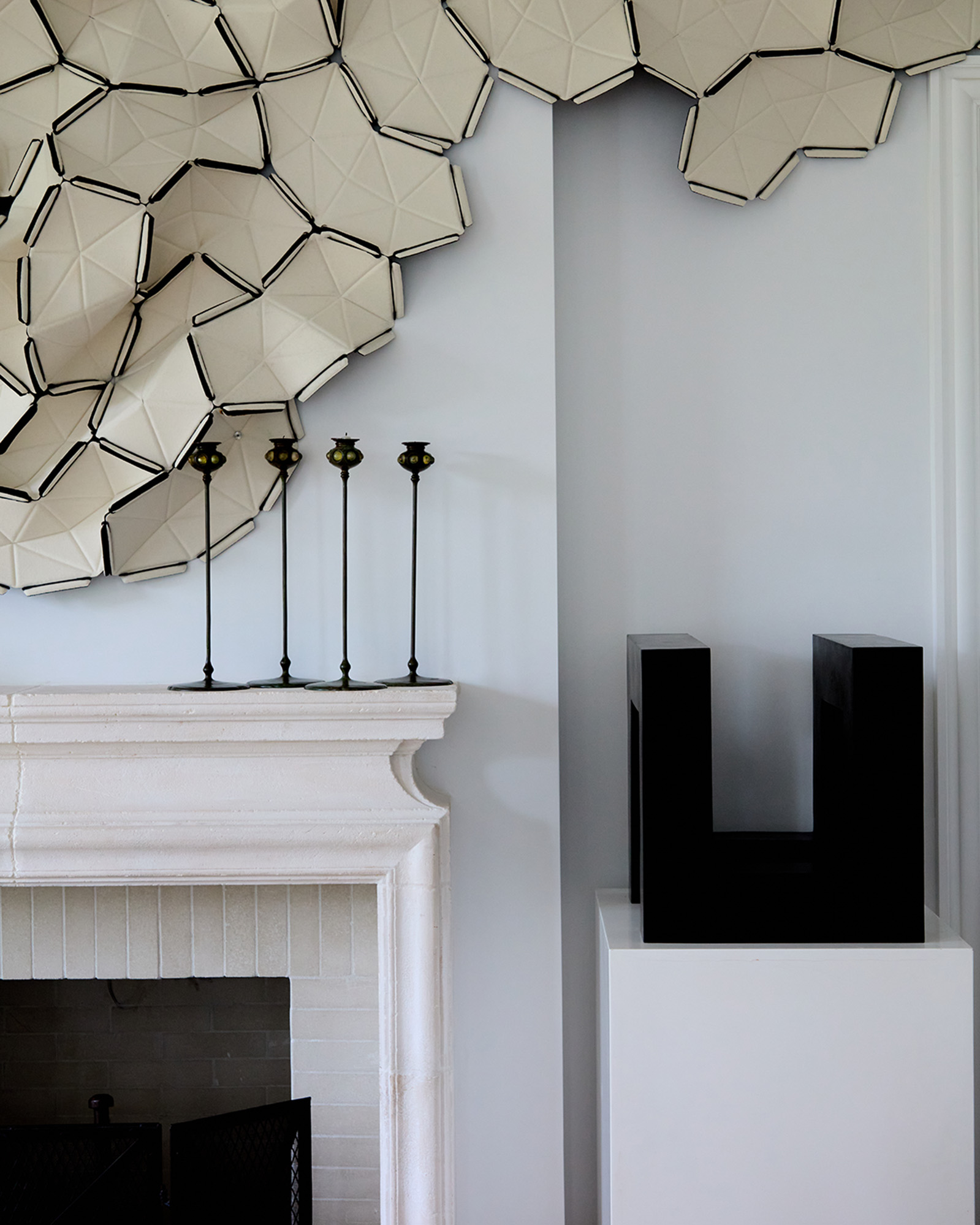
You’re not just a maker-designer; I’d consider you a connoisseur and collector. What’s your take on the collecting world today, maybe compared to 10 years ago?
That’s a good question. In some ways, it’s the same as it’s always been. Andy Warhol said something about writing a check for whatever it was—a quarter-million dollars—and pinning it to the wall instead of buying a painting for $250,000.
Because you’re saying to someone, “Look at what I have.” And maybe it sounds crass and a bit cynical, but I think design was always the place where I felt protected from that because I’ve bought many, many things that look like nothing. People wouldn’t like the first pair of Prouvé director chairs I had.
Someone thought they were from a bus station. I remember someone saying that. I always felt collectors of design were more about the object itself and not about status. Today, especially with the Lalanne, it’s entirely about status. And to me, that isn’t great.
You have so many billionaires collecting Les Lalanne these days without naming them. I happen to know a bunch of them who are just buying anything and everything that comes on the market—good, bad, and in the middle. So I think to some extent, the design market is unfortunately a true market: I’m willing to pay X for this.
The good thing, though, is that there are lots of things. And I’ve always tried to collect against the grain. There’s too much out there today for people to collect. So there are amazing things nobody wants that were incredibly desirable 10 years ago. It makes no sense. And I always say the same thing: “What’s expensive is not good, and what’s good is not expensive.”
Are you collecting anything today that goes against the grain?
French furniture, crafts, Louis XV.
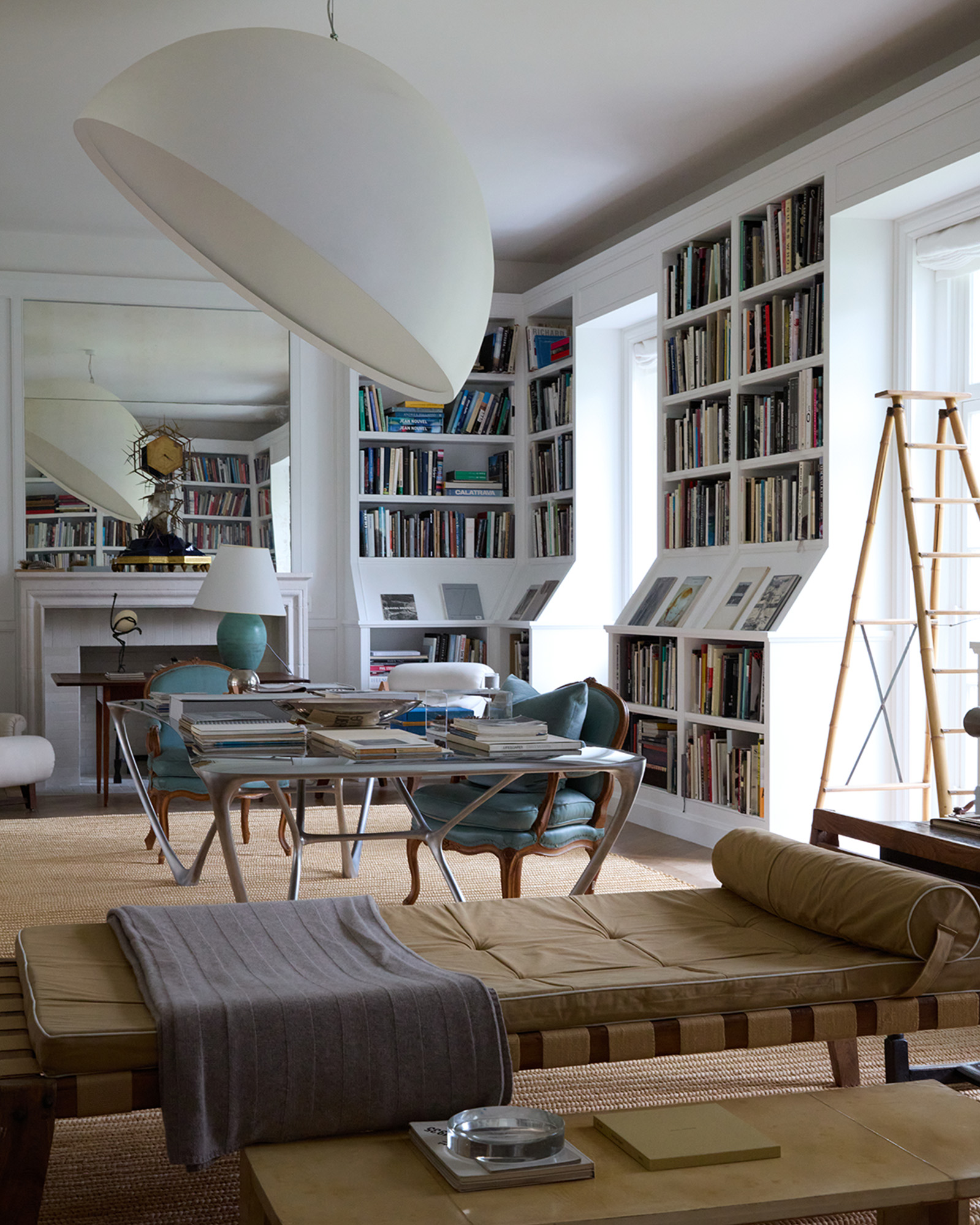
I’ve heard that from a lot of people, that nobody wants pre-modern French furniture.
Yeah, because there’s an issue with scale. It’s small. It’s a strong look. You have to know how to work with it or work it into another interior. And it’s not what people are buying to show other people they have taste. Now I’m going to sound a bit cynical: There just aren’t that many people who have the ability to collect in a meaningful way and understand what they’re collecting. I know that world very well, and there are very few people who can. It becomes, “I have this. You need to believe this about me. I have taste. I get it. I’m part of the zeitgeist of creativity and design these days.” You just have to look across those collections.
It’s funny because Giacometti used to make what I called the Park Avenue coffee table. All of the wealthy Park Avenue people who owned apartments and worked with designers like Henri Samuel—the king of French interior design—they always had very classic apartments, but there were always a few Giacometti pieces mixed in. It was a way of disrupting this notion of, “I’m classic, I’m traditional, I’m old-fashioned.”
Our home in Paris was done by Henri Samuel before we bought it, and it was funny. It was exactly that. I remember it very well: comparing images of the interior when we did it versus when it was done by the former owner. It’s a really good example of “old-fashioned with a little bit of contemporary mixed in,” versus integrating it in a meaningful, convincing way. We had a lot of Louis XVI furniture. We had Prouvé, Perriand, Bonetti, Dupré-Lafon. We had many periods mixed together. And to me, that’s the interesting part. That’s what’s hard. There are only a few people who are great at it.
You’ve got things cut out for you. You’re working on two major brands creatively, and you’ve got this ceramic show coming up at some point. What’s next for you beyond all of that, which is already a lot?
Good question. I don’t think about it too much. I probably got it from my dad. He always said to me, “This is what you need to know about working: Don’t be a jerk, and do a good job.” It’s simple and good advice. I feel the same way about what you just mentioned. If you’re doing good work, and you’re doing things that are interesting and engaging for you, it will lead to more opportunities, and that’s been my whole career.
I’ve never had a job that existed before. There was never a creative director at Coach. There was never a creative director at Tommy. There was never, believe it or not, a creative director at Tiffany in the history of the company. I’m the only person who was ever a true creative director, who sat on the board, ran the front of the business, and partnered with the CEO. It just doesn’t happen if you’re focused and uptight about, “Oh my God, what’s going to happen?” I’ve been super lucky. I landed in these industries at the perfect time.
I landed in menswear before it became a big thing. I landed in handbags. If you were to go to Bergdorf today and look at all those handbag companies, they didn’t exist when I went to Coach. None of them. There was Gucci, Prada, Fendi, Chanel, those big brands. There were very few American brands, and there was no such thing as designer handbags. There was no Balenciaga, Valentino, Celine. They didn’t exist. Those brands existed, of course, but in terms of a meaningful accessories business that was desirable and people looked for, it didn’t exist. So it was a perfect time. The jewelry business is very similar.
I could bring a lot to an industry that wasn’t far along in terms of excitement and integration in the bigger picture, popular culture. I dragged things from different industries into the next one. And often it was something that was surprising and disruptive in that new space.

In the hands of this French artist and designer, the most elemental experimentations with watercolors and shapes give rise to the most elegant results.

Once a far-fetched destination, the Frozen Continent has seen tourism more than double over the last decade. The storied cruise line Ponant Explorations is leading the charge with new itineraries that feel out of this world.

Wearstler does it all: interior designer, product guru, hotel mastermind, book author. Now the L.A. maven adds curator to her résumé. For our spring issue, she shares some of her favorite independent talents in Amsterdam with us.