How Buccellati’s Latest Collection Keeps Remarkable Craftsmanship Alive
The legendary house's new high jewelry collection, Serenissima, was made using intricate techniques that only the brand's renowned workshops can execute.

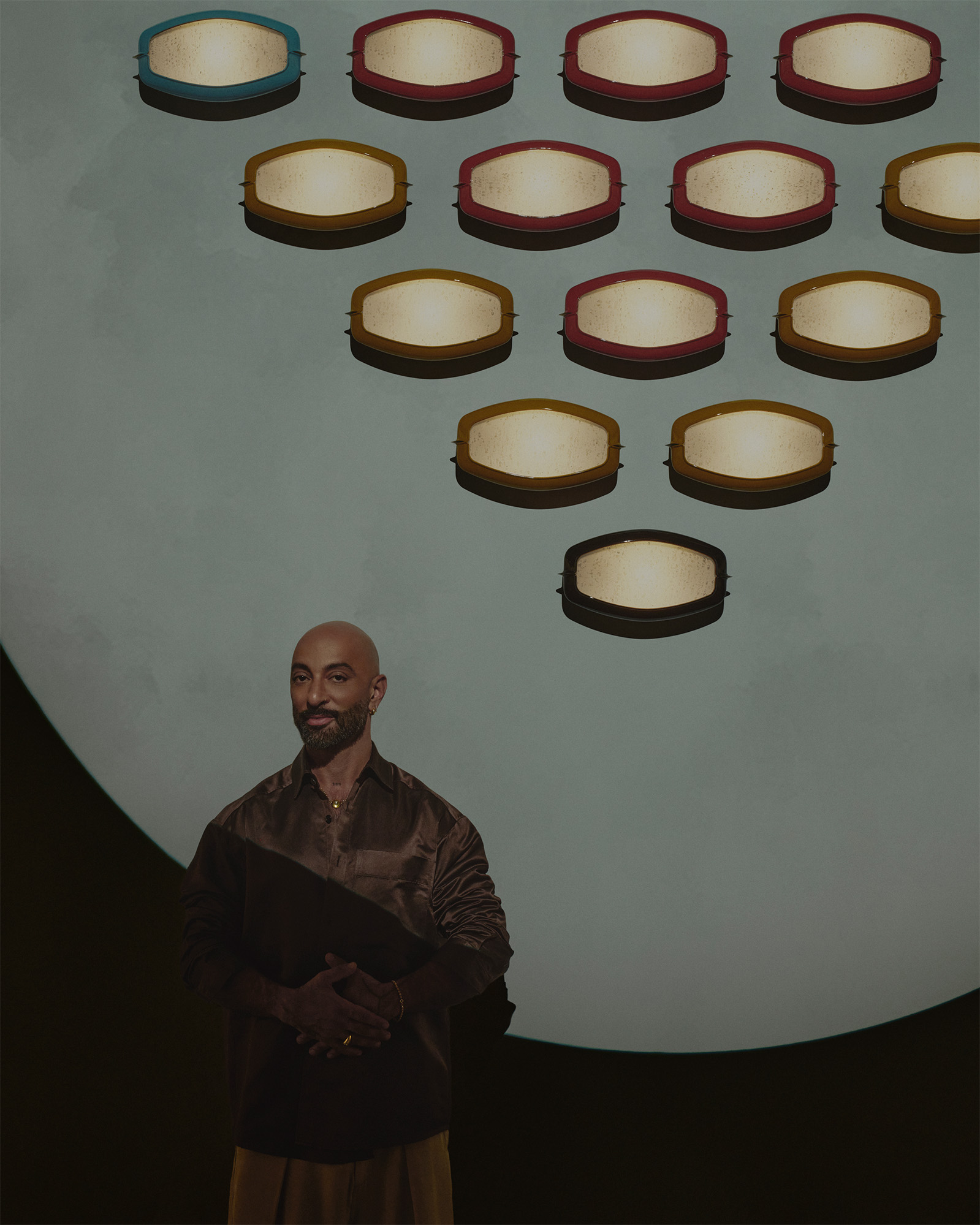
The new Apparatus collection started from a place of uncertainty. “I didn’t know what we were making… it’s one of the things that’s so out of the ordinary,” says artistic director and CEO Gabriel Hendifar. “It was emerging as we were going through it.” The New York-based design studio has steadily debuted its new “Acts,” or collections, over the years—often accompanied by extravagant installations and lavish parties. This time around, the brand’s journey into uncharted territory led to Act V, its first new collection in five years.
The new work broke from the brand’s creative traditions in other ways, too. Most Apparatus collections begin with a reference to history: Act IV found its soul in a ’60s-esque sense of optimism; 10 years ago, Act I drew upon the revolutionary attitudes of the 1970s. By contrast, Act V takes an ahistorical approach. It’s both more abstract and more personal: The name of the collection, Afsaneh, is the name of Hendifar’s mother, who immigrated from Iran to Los Angeles before he was born along with his father. “We all kind of learned how to be American together,” he told The Grand Tourist in an episode. “I was growing up in this new culture at the same time that they were understanding what it felt like to move around in a world where they didn’t really speak the language, where they had not had experience growing up.” Afsaneh is also the Persian word for “fable,” a reference to the creative threads that he drew from Persian mythologies—but also how the new collection serves as its own modern myth.
Hendifar’s fable is told through cycles, and begins with a seed. The seed becomes the flower, the flower attracts seekers of knowledge, and that knowledge is then shared with the larger world. The seed is Esfand, a series of lacquer sconces, as well as incense burners and ikebana flower vessels. Perhaps the most subtle moment in the collection, it symbolizes the starting point—where knowledge begins, and eventually blooms.
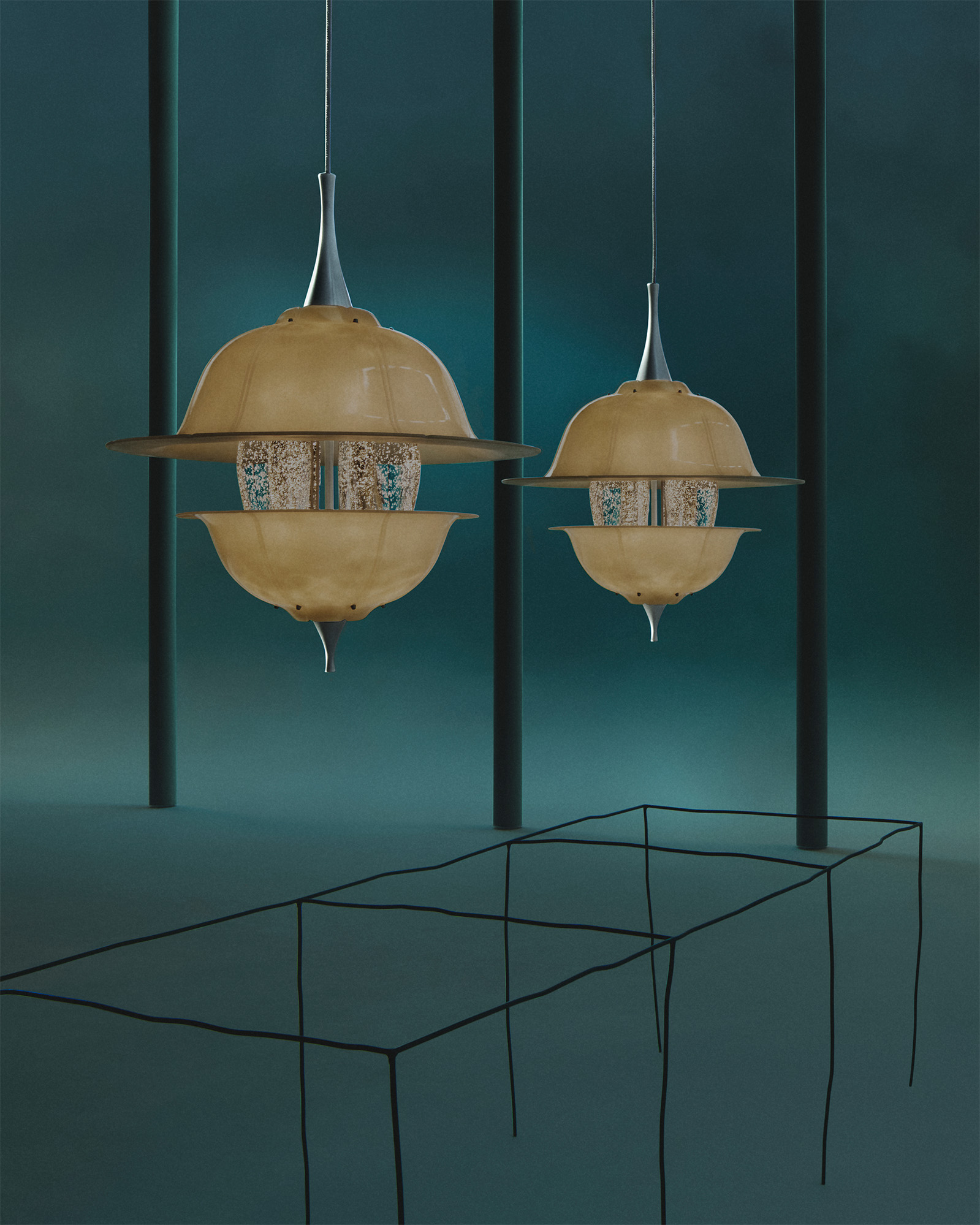
That blossoming happens in Gol. Choosing the right materials for these pendants was key. Hendifar eventually settled on a seeded-glass core: “It looks like the entirety of the cosmos is moving through it,” he says. “It’s mesmerizing… like stars, galaxies, or bubbling water.” These intergalactic interiors are wrapped in a fiberglass shell—another example of material experimentation. Hendifar wanted an exterior element that would express the waxiness and permeability of a flower petal, bringing an organic element to the pendant’s solid center.
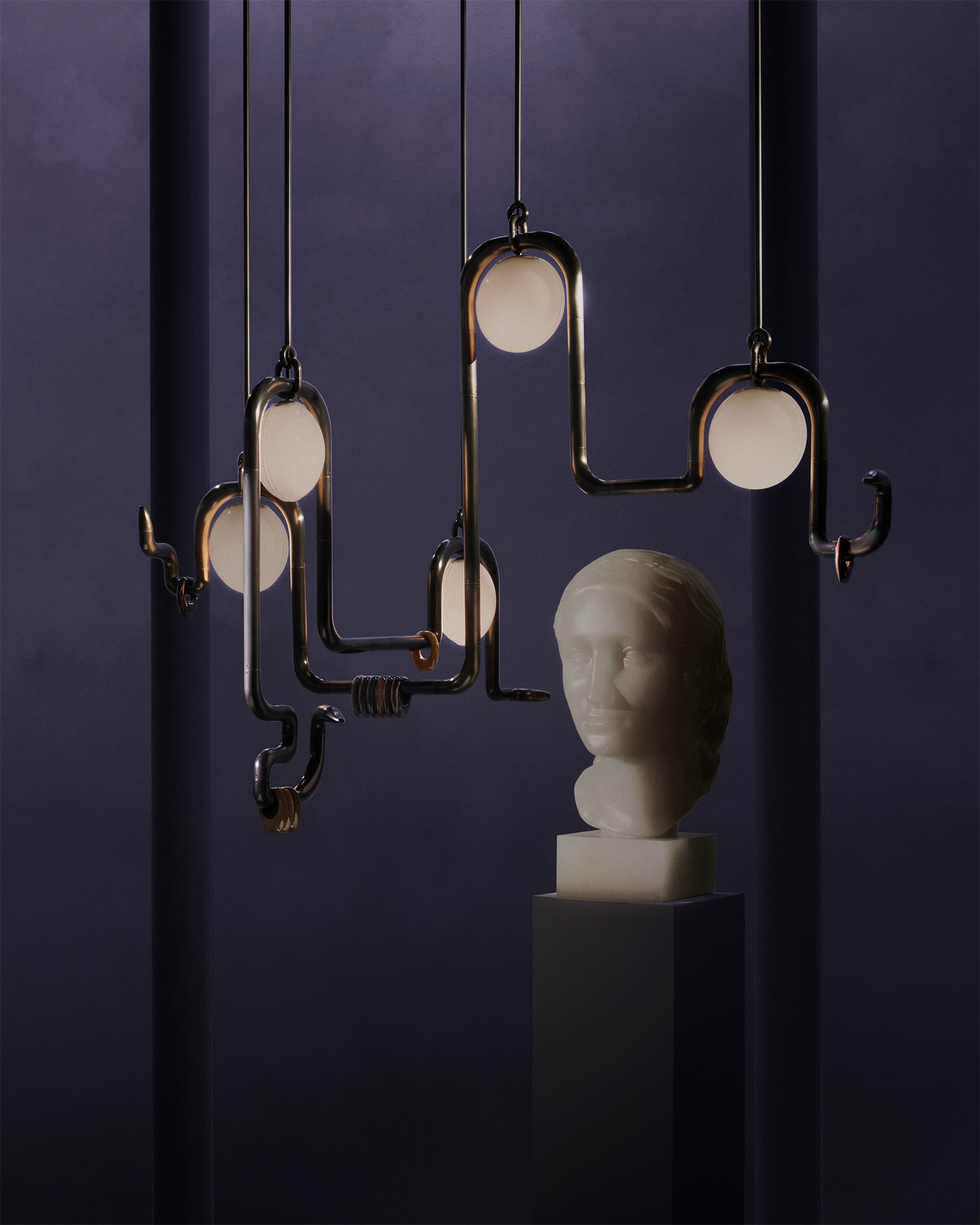
His story then moves to Rahvi, a standout moment in the collection, and perhaps its biggest statement piece. The series of pendants, sconces, and table lamps is modeled after the serpent, here portrayed as it’s often depicted in Eastern traditions. “Knowledge is represented as an animal that sheds its skin, so it’s something that’s evolving, and that requires a certain hygiene almost,” he says. Not only that, but the slithering figures are adorned with “amulets,” as he calls them. These semiprecious stones include lapis lazuli and aventurine, and are layered like necklaces around each snake’s neck. The stones represent a more ancient form of knowledge—they take millennia to form within the earth, and many cultures and traditions assign them personal and spiritual meanings.
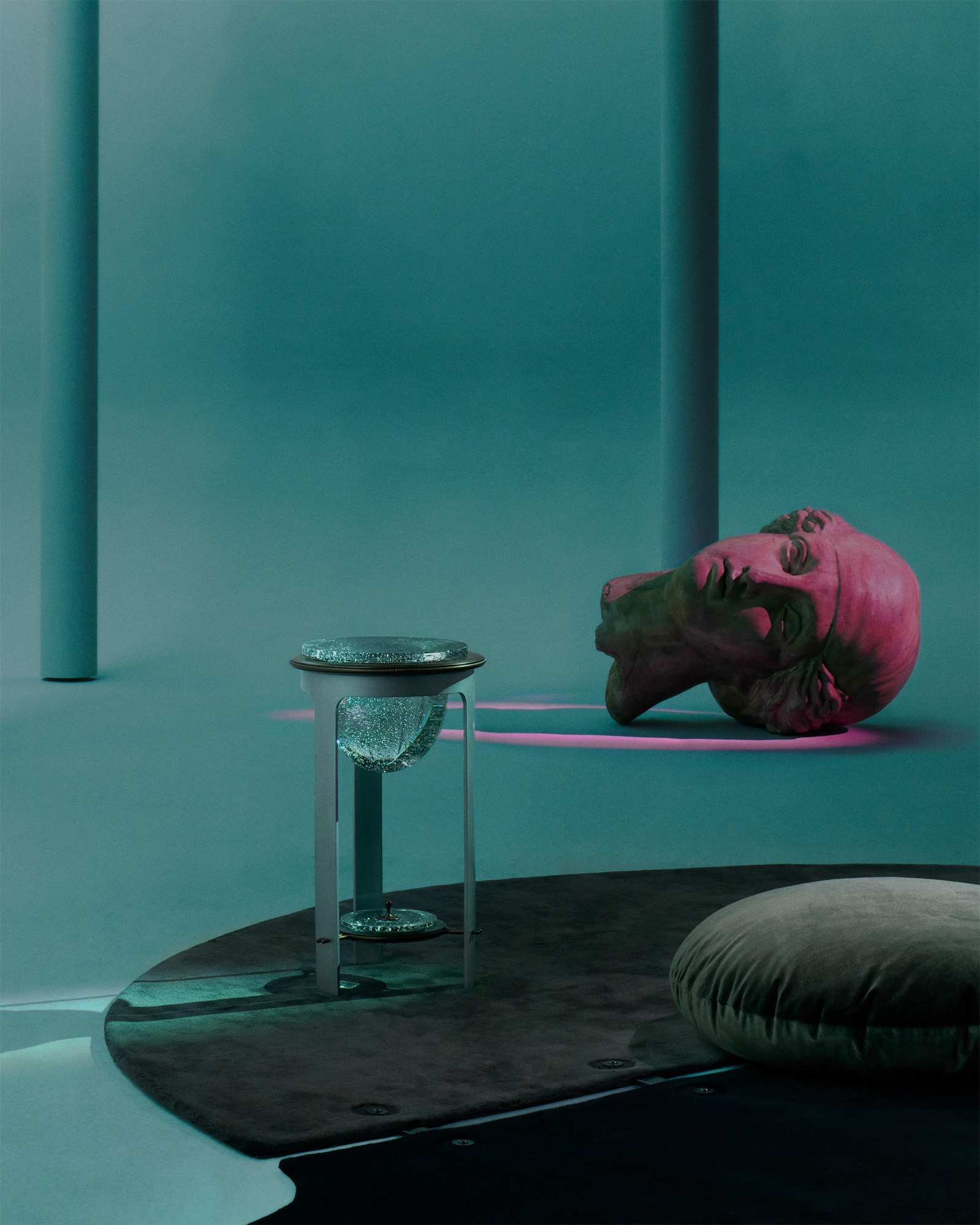
Finally, Hendifar’s fable ends with Jahaan. It’s the part of the story when the knowledge seeker shares what they have learned with the broader world; from a design perspective, it’s a series of circular tables and a standing incense vessel. Hendifar selected cast bronze and aluminum, weaving together elements of the ancient world and futurism—a look back to where the myth began, and to where it will go next.
Hendifar considers the divine feminine to be the center of this narrative cycle and collection. “I use that term in a very non-gendered way,” he says. “It’s an opportunity for me to acknowledge and honor all the incredible female energy in my life, and that’s taught me many of the things that are the underpinnings of myself as an artist.”
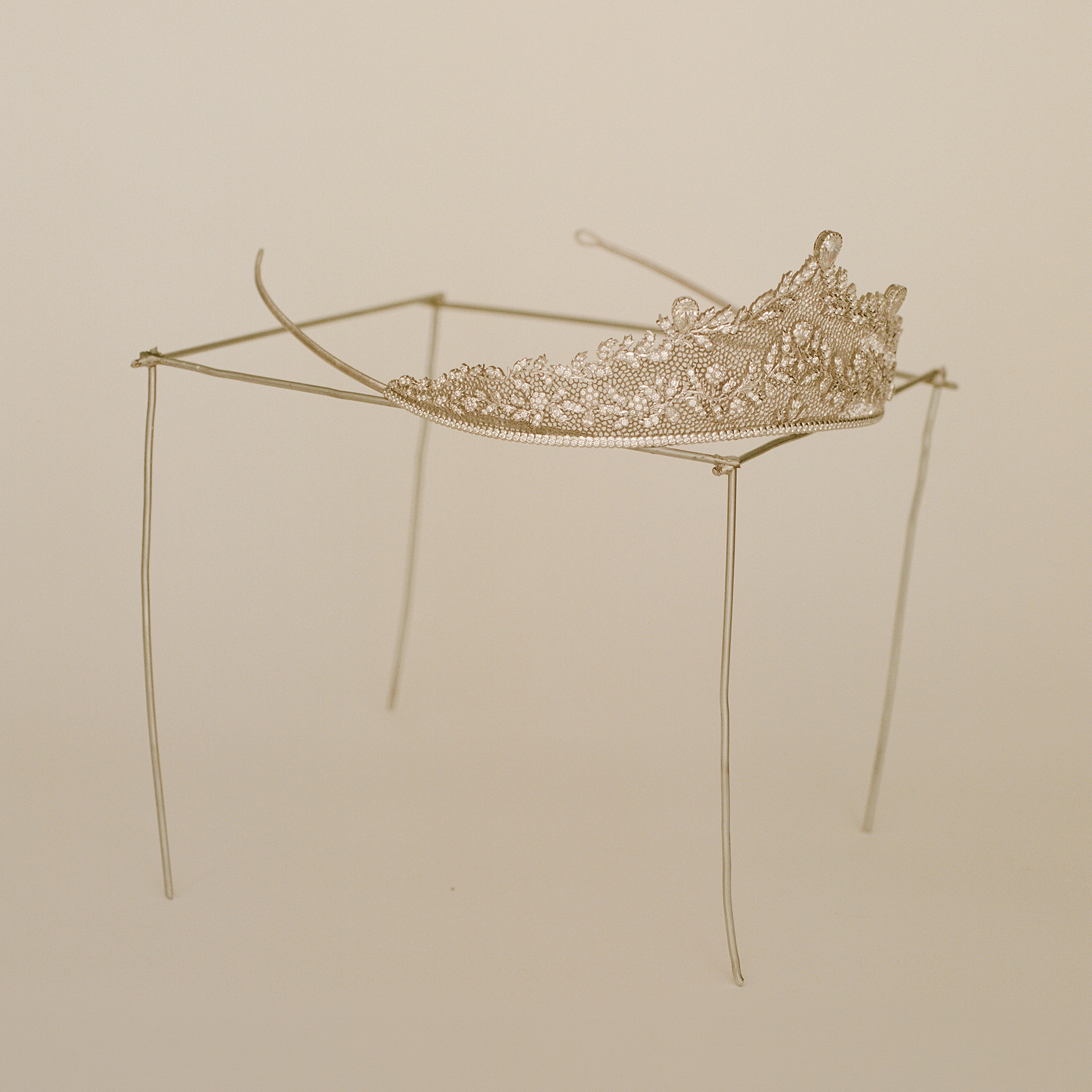
The legendary house's new high jewelry collection, Serenissima, was made using intricate techniques that only the brand's renowned workshops can execute.
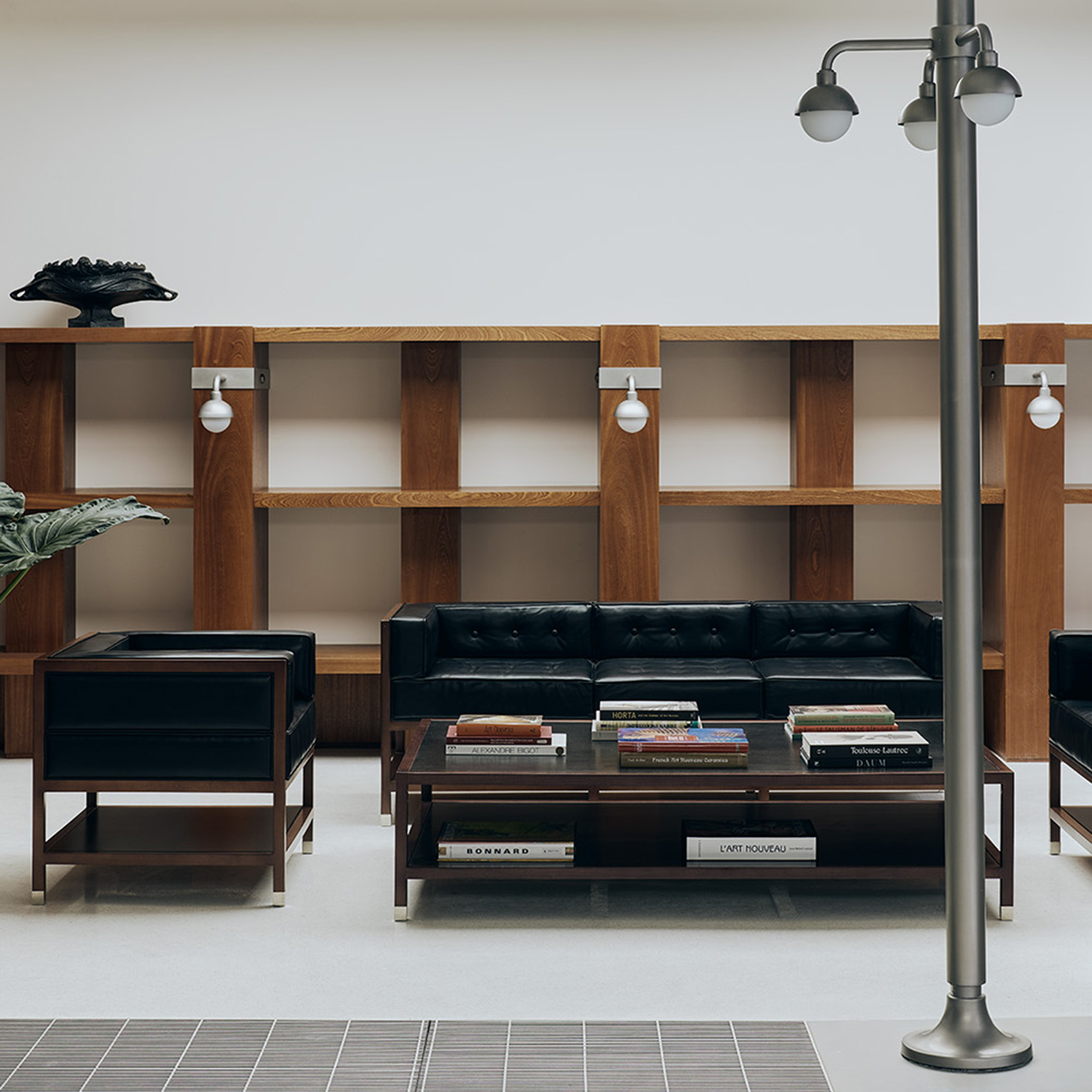
It seemed like an ordinary assignment to redesign an office. But as designer Edgar Jayet discovered, the Paris address was a legend of art history.
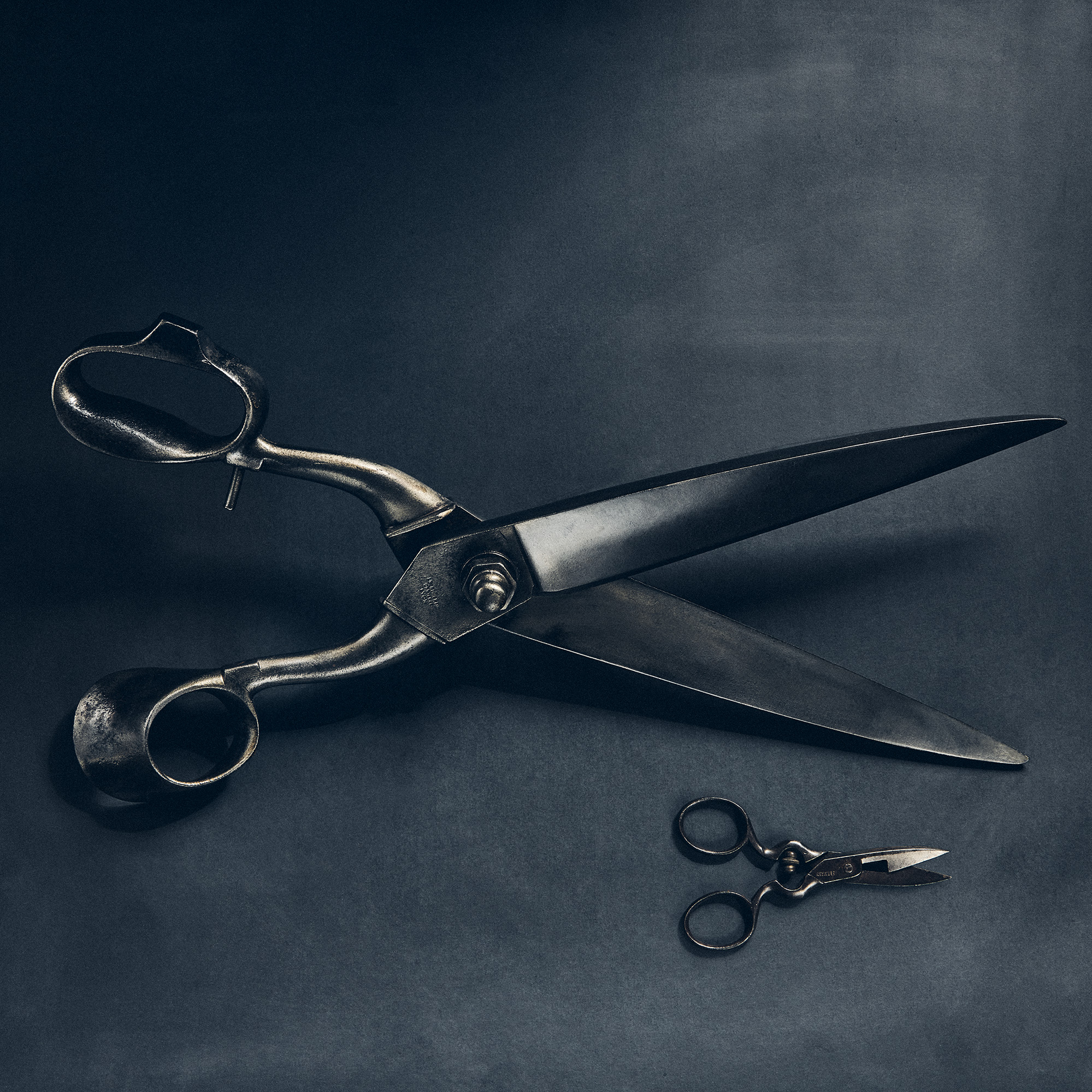
Artist Daniel Brush’s talent was sharper than most. The elusive mind left behind a staggering and oft-misunderstood collections of vintage objects.