A Pet Lion, a Speedboat Countess, and Scotland’s Last Witch: Inside the New Loch Lomond Arms
Russell Sage helped redefine Scottish hospitality with the Fife Arms and Ardbeg House. At Loch Lomond, he mined 800 years of Colquhoun clan history, weaving the family’s most colorful characters into the inn’s design.
November 2, 2026By
BECKY SUNSHINE
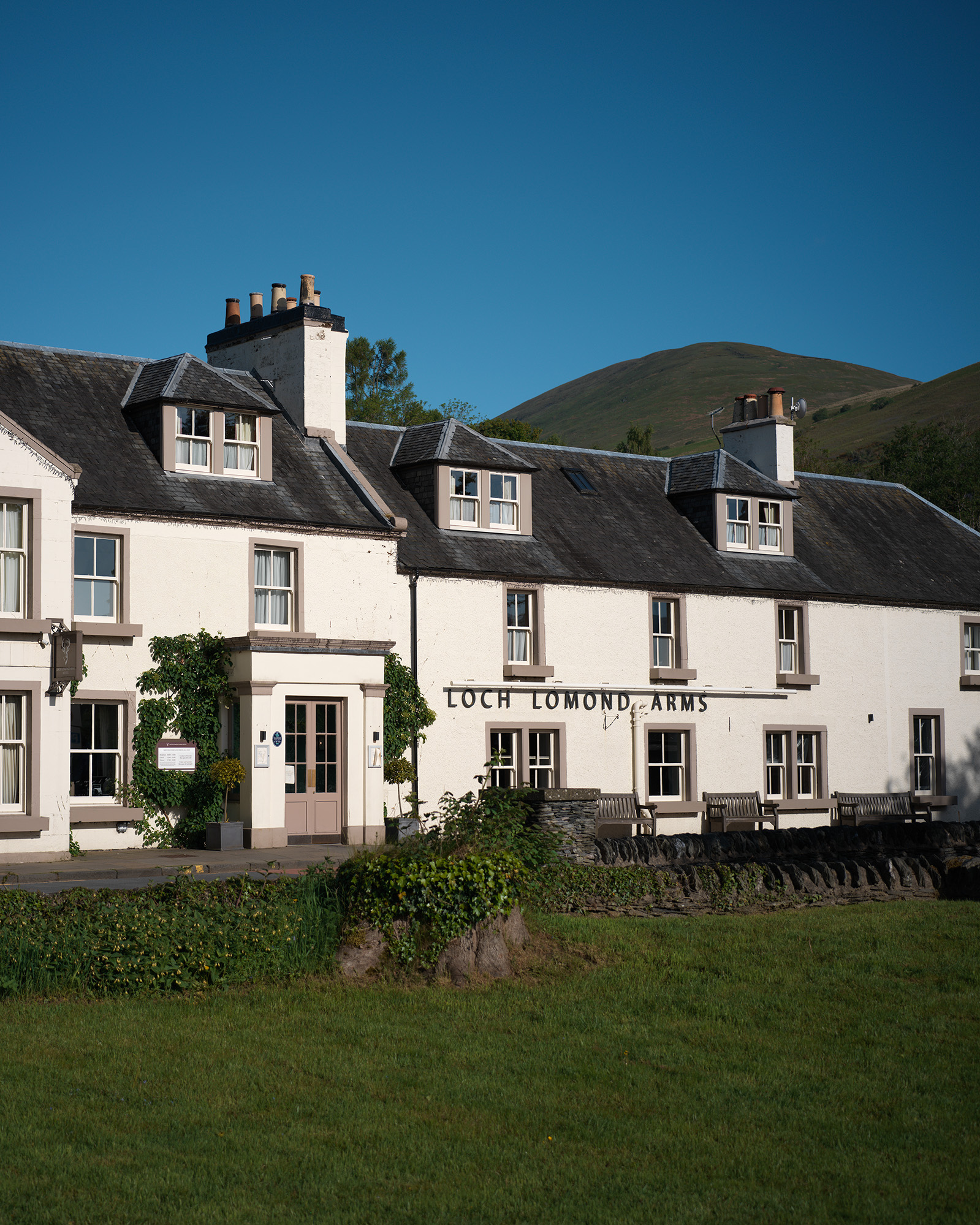
The Loch Lomond Arms, set on the Luss Estate in the village of Luss, Scotland. The 17th-century coaching inn has been redesigned by Russell Sage Studio. Photo: Giles Price
This article is featured in our Fall 2026 print issue, available now.
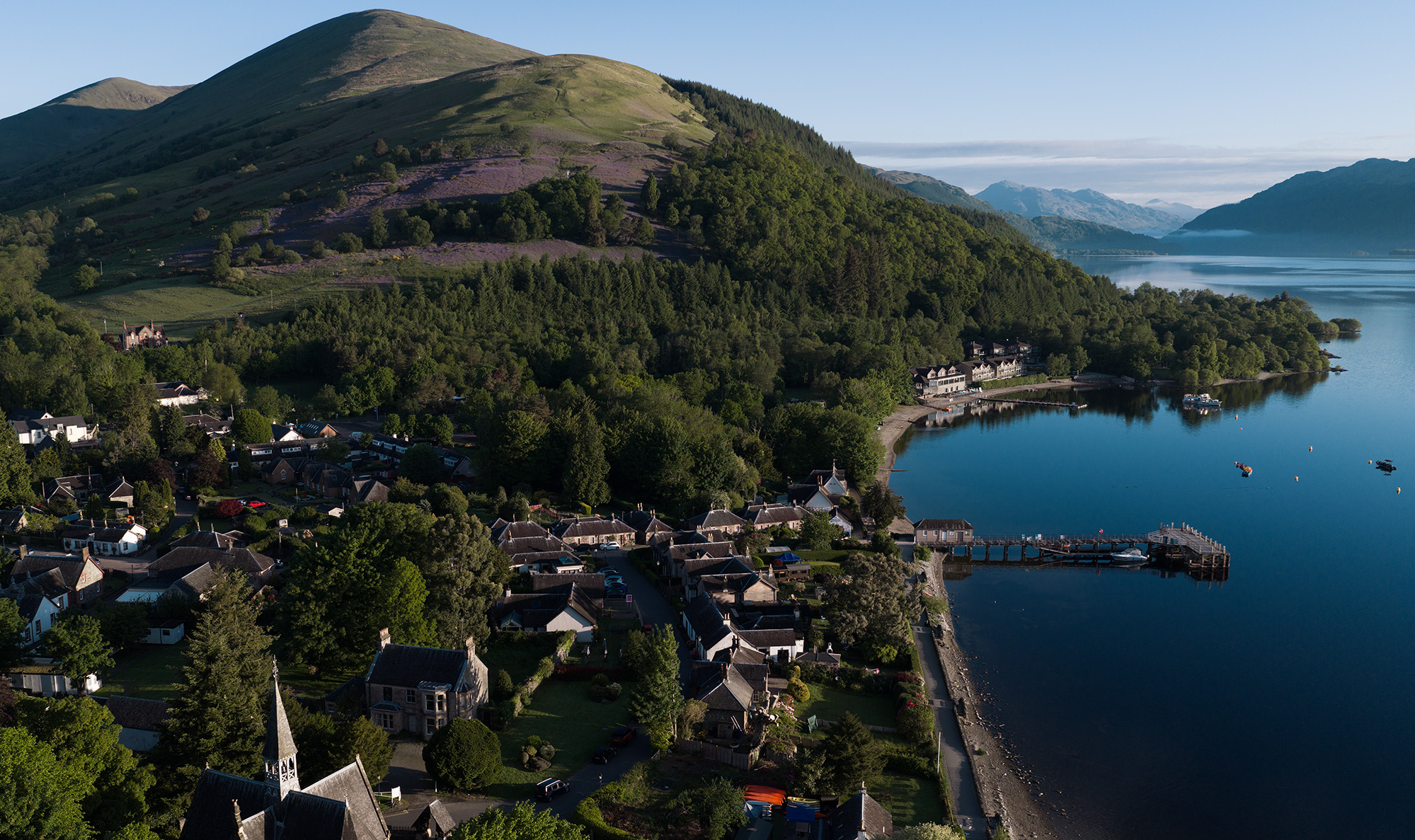
On certain mornings, Loch Lomond seems improbably still, its cool water mirroring the sky so perfectly that its small, wooded islands appear almost suspended between land and clouds. Beyond them, the slopes of Beinn Eich rise toward the Highlands. It’s a landscape that invites movement; a slow movement, or as the Scots would say, stravaiging. It’s a word that sits at the heart of the newly reimagined Loch Lomond Arms, a 17th-century Georgian coaching inn in the village of Luss, less than an hour from Glasgow. Loosely translated, stravaig means to wander without urgency, following curiosity rather than a fixed route. It is a fitting philosophy for this corner of western Scotland, where the Colquhoun clan has lived for more than 800 years and where the family’s 45,000 acres of mountains, islands, woodland, and shoreline lie beyond the inn’s front door.
For Patrick Colquhoun, son of Sir Malcolm Colquhoun, current Chief of Clan Colquhoun, the challenge was never simply to refurbish a 16-room inn but rather to uncover what had been there all along. The family estate has evolved over the centuries, but its future, like that of many Scottish estates, depends on new ways of engaging visitors with the land, its stories, and the people who have shaped it.
To help tell those stories, Colquhoun turned to the designer Russell Sage. Over the past quarter-century, Sage has become one of Britain’s most influential hospitality designers, creating rich interiors for celebrated restaurants, members’ clubs, and hotels, including the Goring in London, the hot Mayfair restaurant Lilibet’s, and three locations of the table-tennis club Bounce, while also helping redefine Scottish hospitality through projects such as the Fife Arms, in Braemar, and Ardbeg House, on the island of Islay. Yet unlike many projects, where narrative must be invented, at Loch Lomond Arms it already existed in abundance.
During a speedy renovation that began in November last year and was completed this June, family archives were opened and forgotten artifacts brought out of storage; diaries resurfaced and portraits found new life. Family lore once confined to memory has now become part of the guest experience. Bedrooms draw inspiration from remarkable characters from the family’s past: a surrealist artist who exhibited alongside Dalí, a wartime hero who allegedly kept a pet lion, a pioneering police reformer, a speedboat-racing countess known as “the fastest granny on water,” and a laird later remembered as Scotland’s last witch.
Decoratively, Sage has approached the inn—bedrooms, dining room, and whisky bar—with the eye of an author rather than a decorator. Handpainted furniture, heirlooms, and archival objects subtly reference the surrounding landscape and history. The result is not a hotel that occupies a landscape but a gateway into it. Guests can board boats to hidden islands, picnic on remote shores, or climb into the hills by 4 x 4 with a guide. They can trace clan stories with a gillie or simply settle beside the loch and watch the light move across the water. Like the very best stravaig, the journey often proves more rewarding than the destination.
Russell, this was a quick turnaround project, and carried so much potential. When Patrick first approached you, what immediately interested you?
Russell Sage: The thing that grabbed me straight away was the fact that the family’s been here for 800 years. Everybody talks about authenticity in hospitality, and often we’re having to create it. We bring things in, find stories, try to establish connections. Here, it was all already there. Seventy percent of the work was done for us—it was about reconnecting it and retelling it.
Patrick Colquhoun: That’s exactly what appealed to us about Russell. We’d looked at the Fife Arms and admired what he’d done there, but we didn’t want to copy it. We wanted somebody who understood that this place already had a story. The challenge wasn’t inventing one; it was finding a way to tell it.
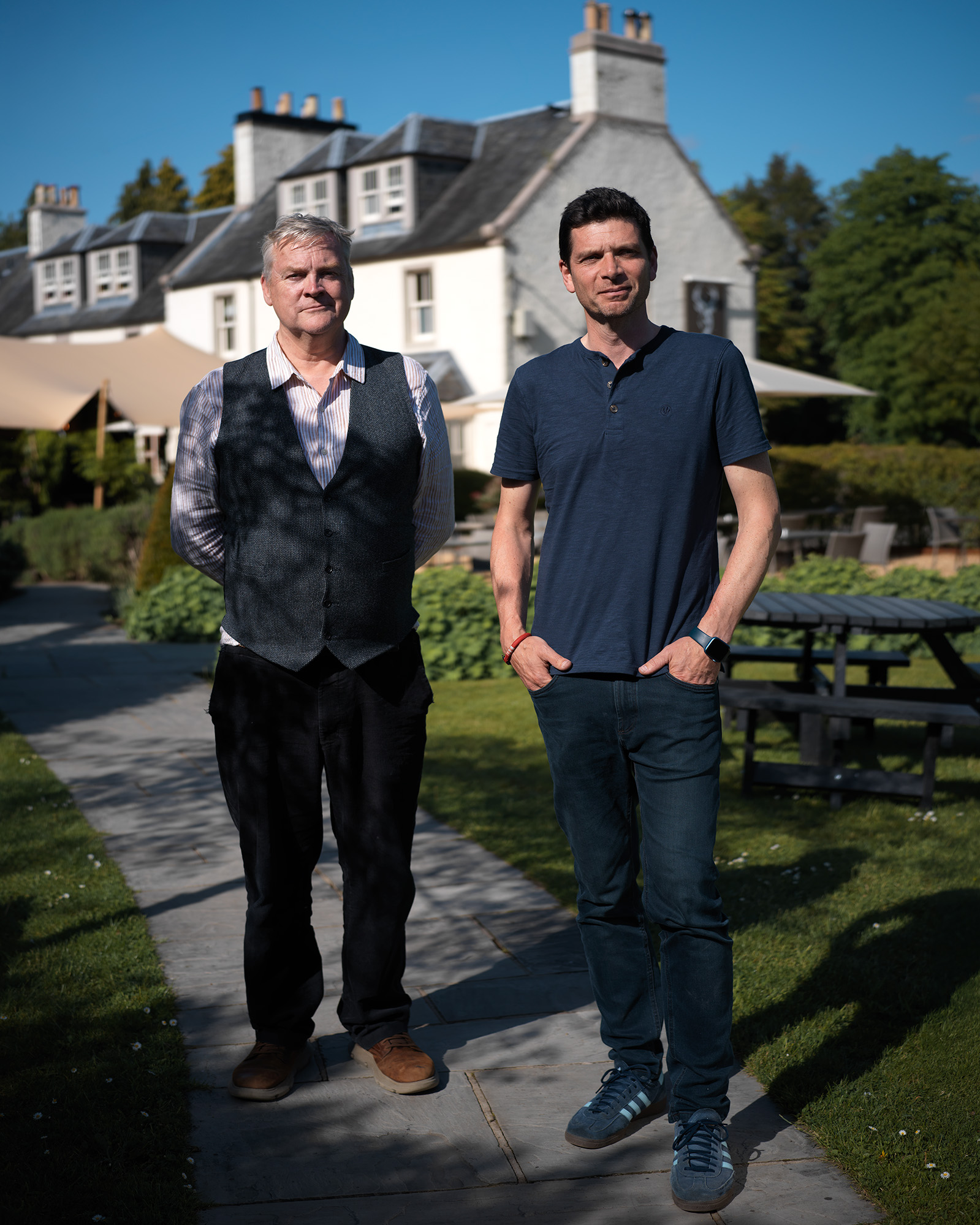
Designer Russell Sage (left) worked in partnership with Patrick Colquhoun (right), of Clan Colquhoun, owners of the Luss Estate. Photo: Giles Price
Patrick, was there a moment when you realized this was going to become more than just a refurbishment?
PC: Almost immediately. My original brief was probably something embarrassingly simple like, “Can you make the hotel look good?” But Russell’s team started talking about archives, researchers, and storytelling. Suddenly, the conversation wasn’t about fabrics and paint colors, it was about identity. Russell was interested in stories like Mary Queen of Scots visiting Luss in the 1550s on a tour of Scotland. She stayed at my family home, Rossdhu Castle, for several days, which was the start of tourism in Scotland. Also, I do believe you need to commit to total creative freedom with your project lead. Well, up to a point. But ultimately, I was up for anything challenging. To me, challenging means interesting. And interesting means more people coming here. You just need to lean into the design process and see what comes out.
RS: Design follows narrative. If you understand the heritage, the interiors become much easier, because they have somewhere to come from. Otherwise, you’re decorating. We know that Scotland has 4 million visitors each year, but they’re starved of a certain type of product. People want something different. If you look at some of the other Scottish places I’ve designed—Ardbeg House, the Fife Arms, Glenmorangie House—we’re storytelling, we’re leaning in to finding those great tales that people visiting want to know about.
The Wallabies and The Jaguar suite, named after a story about Fiona Gore, the Countess of Arran. Photo: Giles Price
Both of you seem a little resistant to the language of luxury hospitality.
PC: I think because we’re very clear about what this place is. We aren’t Gleneagles and we’re not trying to be. We’re an inn. A very good inn, hopefully, but still an inn. The building dictates a lot of that. The rooms aren’t enormous. The walls are six feet thick. It’s a coaching inn that has evolved over centuries.
RS: And that’s precisely what makes it interesting. One of my big concerns was that we shouldn’t try to turn it into something it isn’t. There’s a tendency in hospitality to chase luxury as a visual language, but that’s not what creates emotional connection. It’s got to be more than an Instagram moment. Right from the start, my conversation with Patrick was about not trying to sell this place like a premium hotel—that’s missing the point. It’s a coaching inn with fantastic, human service and adventurous stories to tell.
PC: I have a strong belief that hospitality works best when you’re either brilliantly simple or genuinely special. The middle ground is difficult. We wanted people to arrive here and feel that they were somewhere distinctive, somewhere memorable.
RS: That’s why I’ve always said, don’t make it look good. Make it feel good. Make it memorable. I’m excited that guests can go on a treasure hunt around the village of Luss and discover these tales. I really believe that a building like this should give you something beyond a beautiful guest suite. I want people to take tiny gems away with them when they leave.
The village of Luss, on the banks of Loch Lomond, with the hills of Beinn Dubh behind. Photo: Giles Price
Russell, your projects often begin with historical research rather than interiors.
RS: Absolutely. At the Fife Arms, we had Highland culture, folklore, and contemporary art. At the Goring, it’s this wonderfully eccentric Englishness. At Ardbeg House, it’s the mythology of Islay and whisky. Here we had 800 years of family history. That’s more than enough to work with.
How does that translate into actual design?
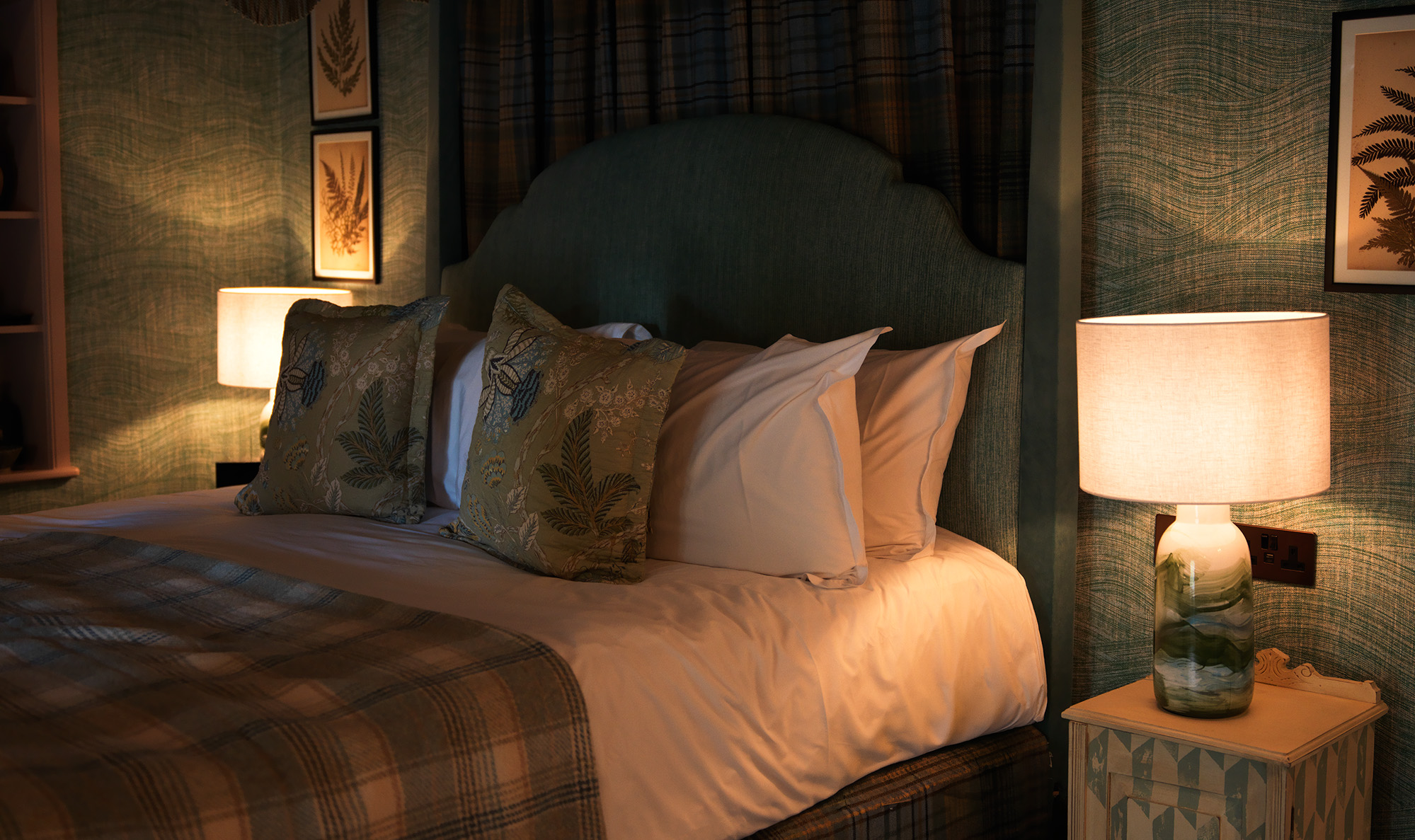
RS: Through layers and details. Things that reveal themselves slowly. We worked with decorative artists and created hand-painted tartans running through the restaurant. We used hand-printed fern motifs inspired by the estate landscape. We repurposed existing furniture because continuity matters. We brought archival pieces back into circulation. We also lined the hallways with these beautiful vintage Scottish postcards, with thank-you notes and drawings that former guests had left at the inn.
PC: That’s one thing Russell is brilliant at. He uncovers the quirks. Everything has a story.
RS: The Map Room—which is the whisky bar and the reception desk—is probably the clearest example. It brings together family portraits, taxidermy, and artifacts from the archive. I wanted it to feel as though you’d stumbled into a fascinating private room that’s evolved over generations.
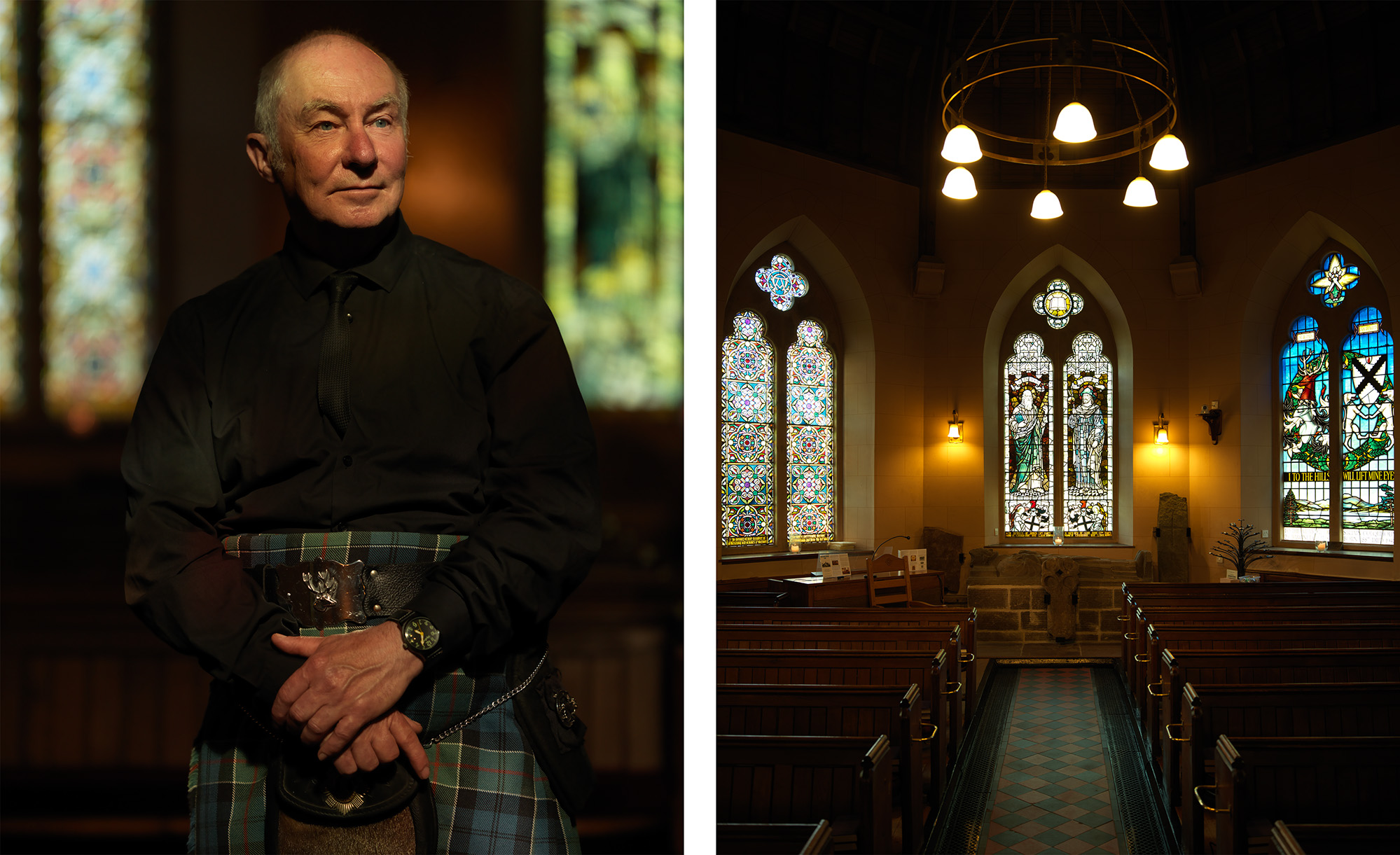
From left: John Taylor, the beadle at the Luss Parish Church; inside the church, the ceiling is shaped like the hull of a boat in honor of a laird who died on the loch. Photos: Giles Price
It sounds more like curation than decoration.
RS: That’s precisely what it is.
One of the most striking things about the project is that you’ve chosen to reimagine the bedrooms around people rather than periods. Almost as character studies.
RS: Exactly. We didn’t want to create a heritage hotel where every room feels like a lesson in history. We wanted people to encounter personalities. Once you start digging into this family, you realize they’re extraordinary. You couldn’t make them up.
PC: That’s certainly true. And what’s wonderful is that they’re all completely different. There’s no single type of Colquhoun. We’ve had explorers, artists, soldiers, politicians, writers, sailors, naturalists, and people who probably defy categorization entirely.
Were there any stories that particularly captured your imagination?
RS: So many. Sir Iain Colquhoun was one. Here was a man who became laird at 23 years old, fought through the First World War, allegedly kept a pet lion, traveled to the North Pole, and later became known for swimming in Loch Lomond before strolling through the village in nothing but a kilt. Then there’s the extraordinary Christmas Day diary entry from 1915, when he recorded an unofficial ceasefire and described German trenches illuminated with fairy lights. You read that and immediately there’s humanity there. Complexity. Contradiction. Some of the anecdotes are also quite funny in their eccentricities.
Such as?
RS: Fiona Gore immediately springs to mind. She secretly climbed aboard a racing hydroplane as a young woman, went on to become the fastest woman on water, and later imported wallabies to an island on Loch Lomond in her E-Type Jaguar. You simply couldn’t invent a better story. She also, apparently, used to walk a pet badger around the estate on a lead. Every time I thought we’d found the most extraordinary anecdote, another one appeared.
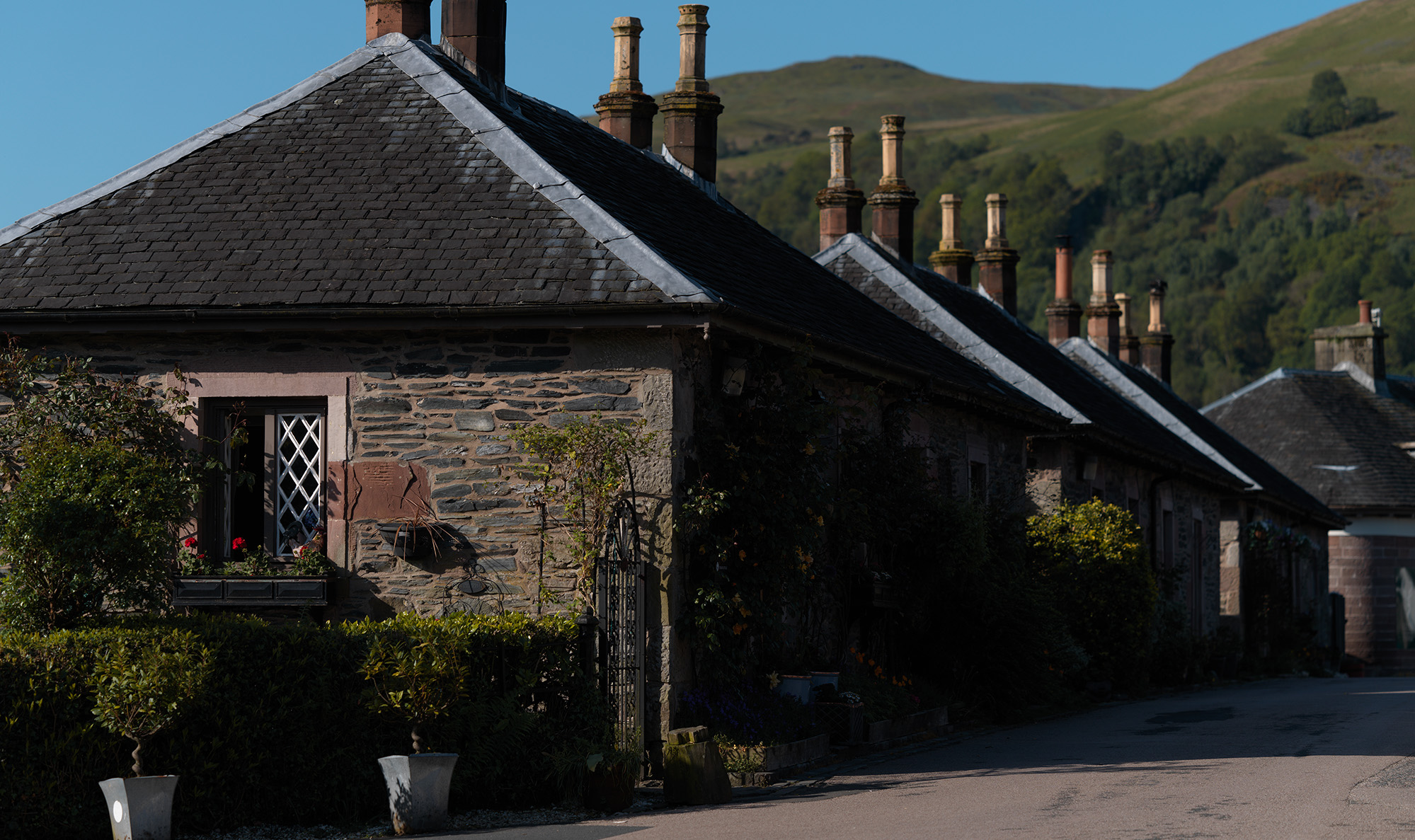
The 19th-century cottages of Pier Road, in the village of Luss. Photo: Giles Price
There seems to be a recurring thread of adventure running through many of your ancestors.
PC: That’s possibly the landscape—it encourages it. When you grow up surrounded by mountains, islands, and open water, adventure becomes normal.
RS: That’s a really important point. The landscape doesn’t just provide a backdrop, it creates the characters. When you look across the stories we’ve chosen, they’re all connected to the land in some way. The surrealist artist Ithell Colquhoun had this extraordinary, imaginative life. John Colquhoun wrote passionately about rivers, dogs, and wilderness. Sir Robert David Colquhoun found himself collecting botanical specimens in the Himalayas. Iona Colquhoun was a competitive shot, stalker, and diver. Again and again, you see people engaging physically with the world around them.
And those personalities have informed the interiors?
RS: Very much so. The rooms aren’t reproductions of their lives—they’re more like emotional responses. We wanted each one to have a distinct atmosphere. Guests may not know every detail of a person’s story when they arrive, but hopefully they’ll feel something of their character.
PC: That’s where Russell’s approach differs from traditional heritage interpretation. It’s not about reading a plaque. It’s about creating a sense of connection, and we want our guests to be curious.
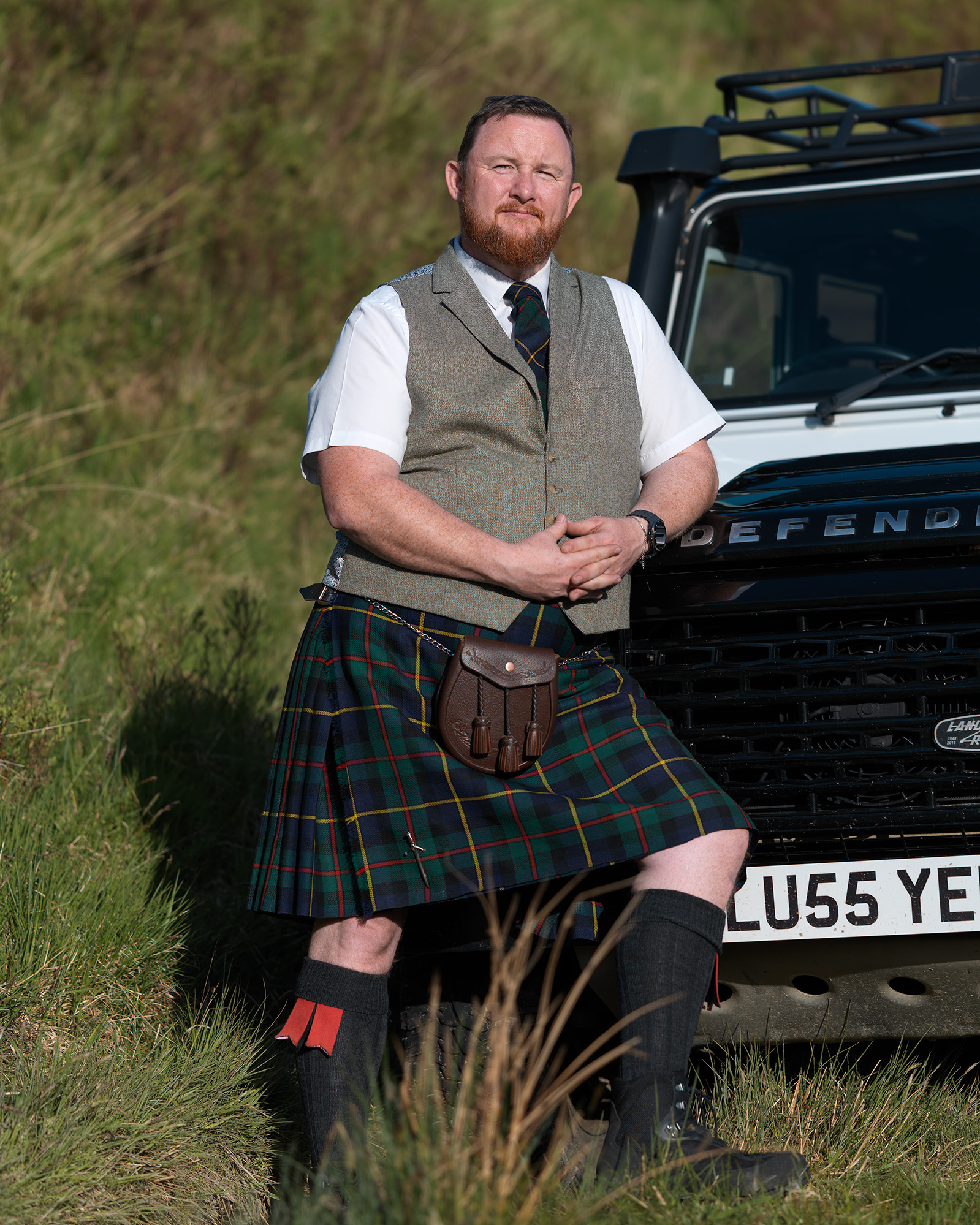
Off-roading in a Defender with Ali from 4 × 4 Adventures Scotland, one of the activities available to guests. Photo: Giles Price
Curiosity seems to sit at the heart of the project.
RS: Absolutely. Hospitality often works the same way: you walk into a room and every design gesture announces itself. I wanted the opposite. I wanted layers. It means details revealing themselves gradually. The hand-painted tartan in the restaurant. The fern motifs printed onto handmade papers. Objects from the archive sitting quietly in corners. Portraits that prompt questions. Pieces that encourage conversation rather than demanding attention. We’ve created a ceiling of Tunnock’s Tea Cake wrappers in one of the public areas. Things that will make you smile when you spot them.
PC: There’s a great sense of discovery. We’re also telling stories digitally. Guests might discover a portrait downstairs and later find themselves listening to a recording connected to that person in their room. There are little narrative threads running through the building.
RS: In some respects, yes. But a very gentle one. We’re not trying to create a museum. We’re simply offering people opportunities to engage more deeply if they wish.
PC: We find this very important, because everybody consumes stories differently. Some guests will become fascinated by the history. Others will simply enjoy the atmosphere. Both responses are valid.
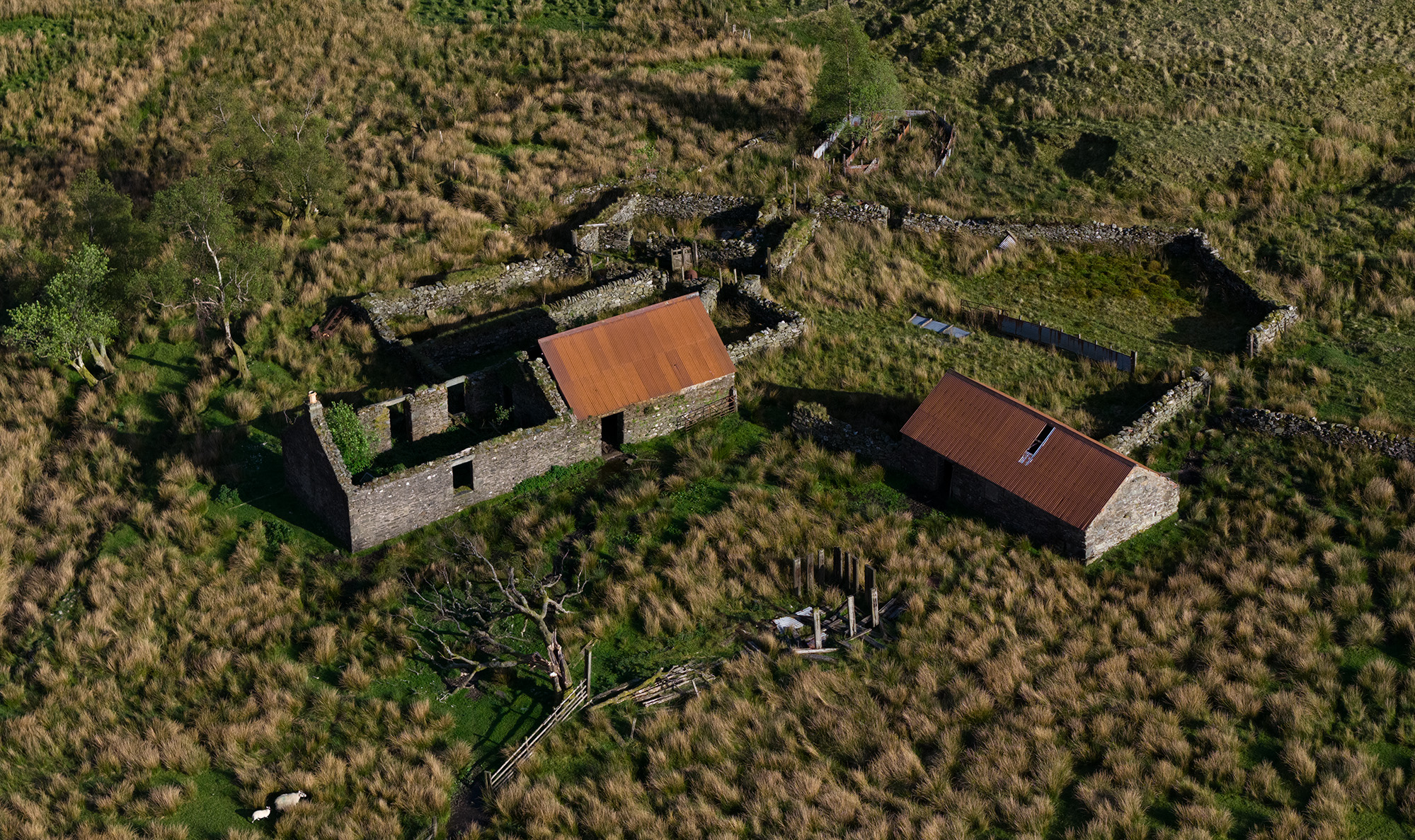
The Gleann na Caorainn bothy, an abandoned farmstead, in the valley of Glen Luss on the Luss Estate. Photo: Giles Price
The decorative details also connect to the idea of “handcrafted in Scotland.”
RS: That’s something we care deeply about as a studio—the hand of the maker matters. We commissioned artists and decorative painters to create and adapt. Existing furniture was reworked rather than discarded; we kept tartan carpeting but repainted walls, used wonderful Fermoie wallpapers, had a local foundry create sculptures. The aim was making it feel accumulated over time rather than installed.
Let’s talk about stravaiging. Why is it so important?
PC: It’s how we want people to experience the estate. Scotland has traditionally been a touring destination. People arrive, spend a night somewhere, and move on. We wanted to challenge that. We wanted to create reasons to stay. The village of Luss has often been a place where people stop on their way to somewhere else. We think it deserves more than that. By giving our guests access to things they simply can’t experience elsewhere, the people, the stories, the landscape—our 45,000 acres—that’s a remarkable resource.
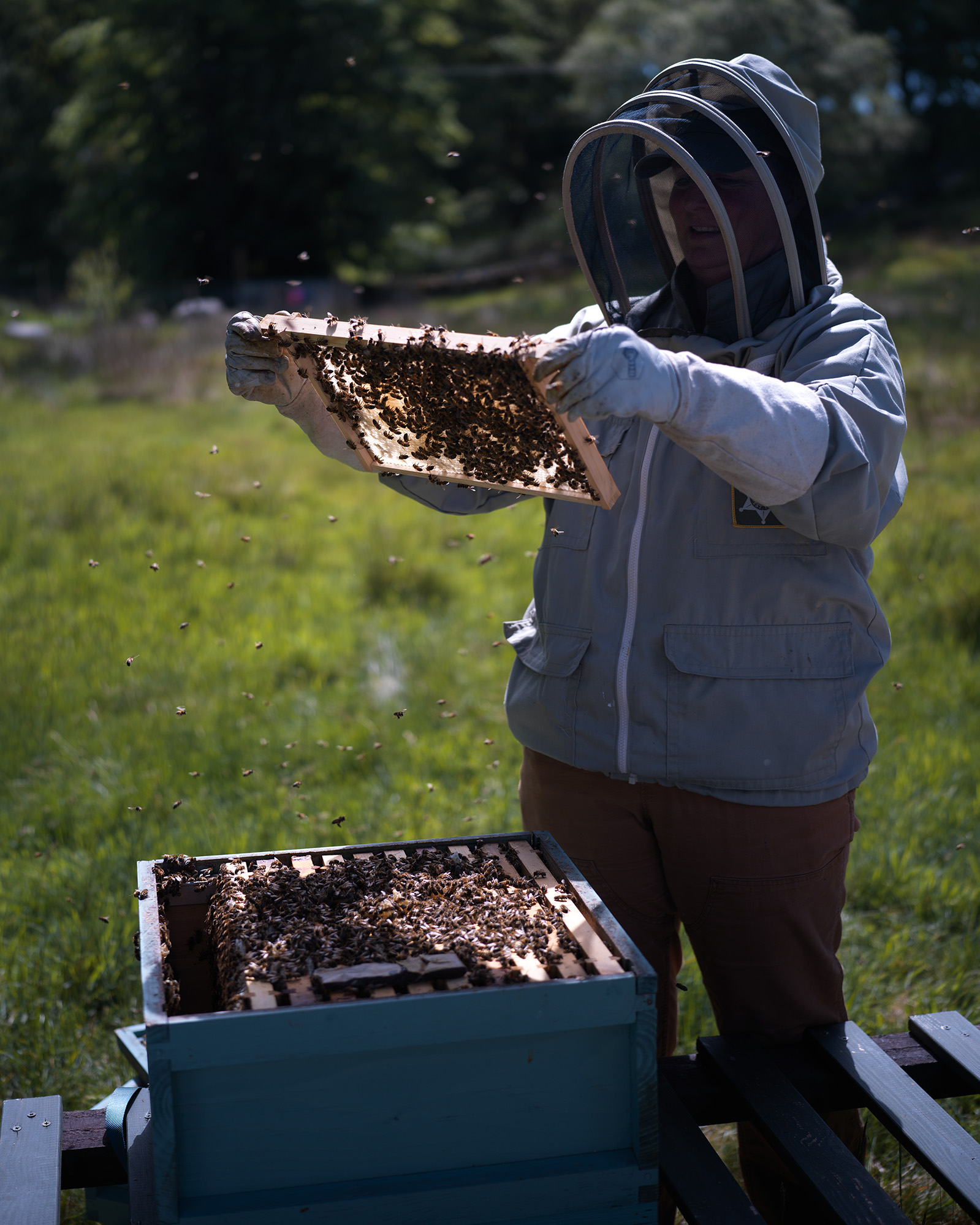
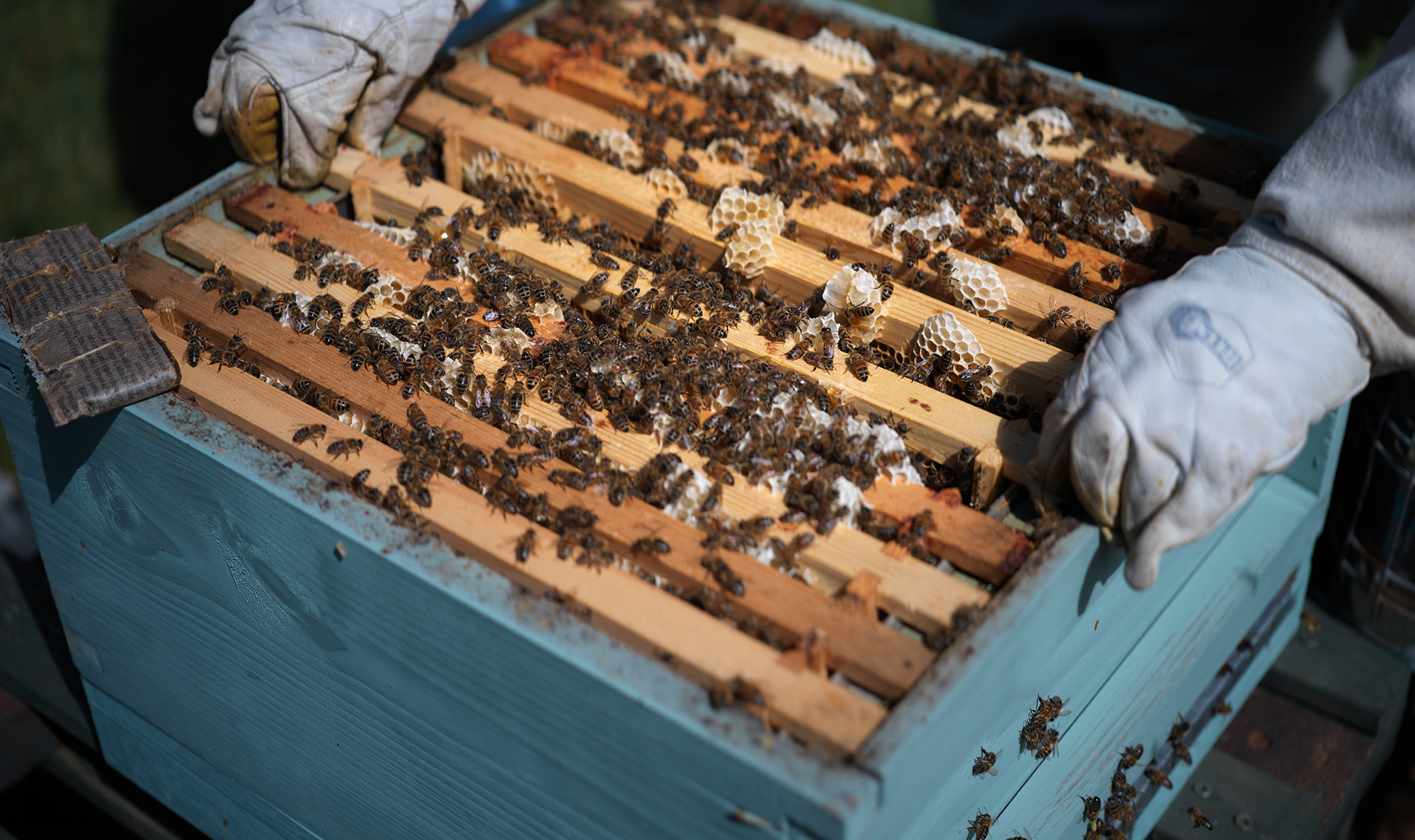
The Bee School’ founder, Heather Jackson, guides visitors through the basics of beekeeping and honey tasting. Photo: Giles Price
What might a stay here look like?
PC: That’s the beauty of it. We don’t necessarily want guests showing up with a rigid itinerary. They arrive, then sit with one of our team members and tell them what interests them. With just 16 rooms, we can be spontaneous and flexible. If somebody loves photography, we’ll create something around that. If they’re interested in wildlife, we’ll take them to places where they’ll encounter it—there’s a wonderful bee school with active hives in the woods that you can reach by following our magical Fairie Trail—it’s great for families. The local parish church has a brilliant warden who will guide people through its incredible history, and if you’re lucky, he’ll let you ring the bells. If guests want to explore the mountains, they can head into the hills in a 4 x 4. If they want to spend a day on the water, we’ll organize that. A boat trip on the loch becomes an opportunity to encounter islands connected to people and stories from the estate’s past. A drive into the mountains isn’t simply about scenery. It’s about understanding the landscape that shaped generations of the family. We can arrange a visit to Shemore Farm, run by the 11th generation of the Lennox family, who’ve farmed there since the 1750s. Nobody else can replicate those experiences because they’re rooted here. The estate becomes a giant playground, our playground.
The Bee School is situated in the woods of the Luss Estate. Photo: Giles Price
Scotland feels as though it’s enjoying a fascinating hospitality moment, no? Russell, I wonder if that’s your fault—the Fife Arms, which you completed in 2019, has been a game changer.
RS: I genuinely think we’re at the beginning of something. Travelers increasingly want authenticity. They want a sense of place. They want stories. They don’t simply want a beautiful bedroom. I see the Loch Lomond Arms as part of that movement, one that reflects a broader shift. The most successful hospitality projects today are rooted in their location. And Scotland has so much character.
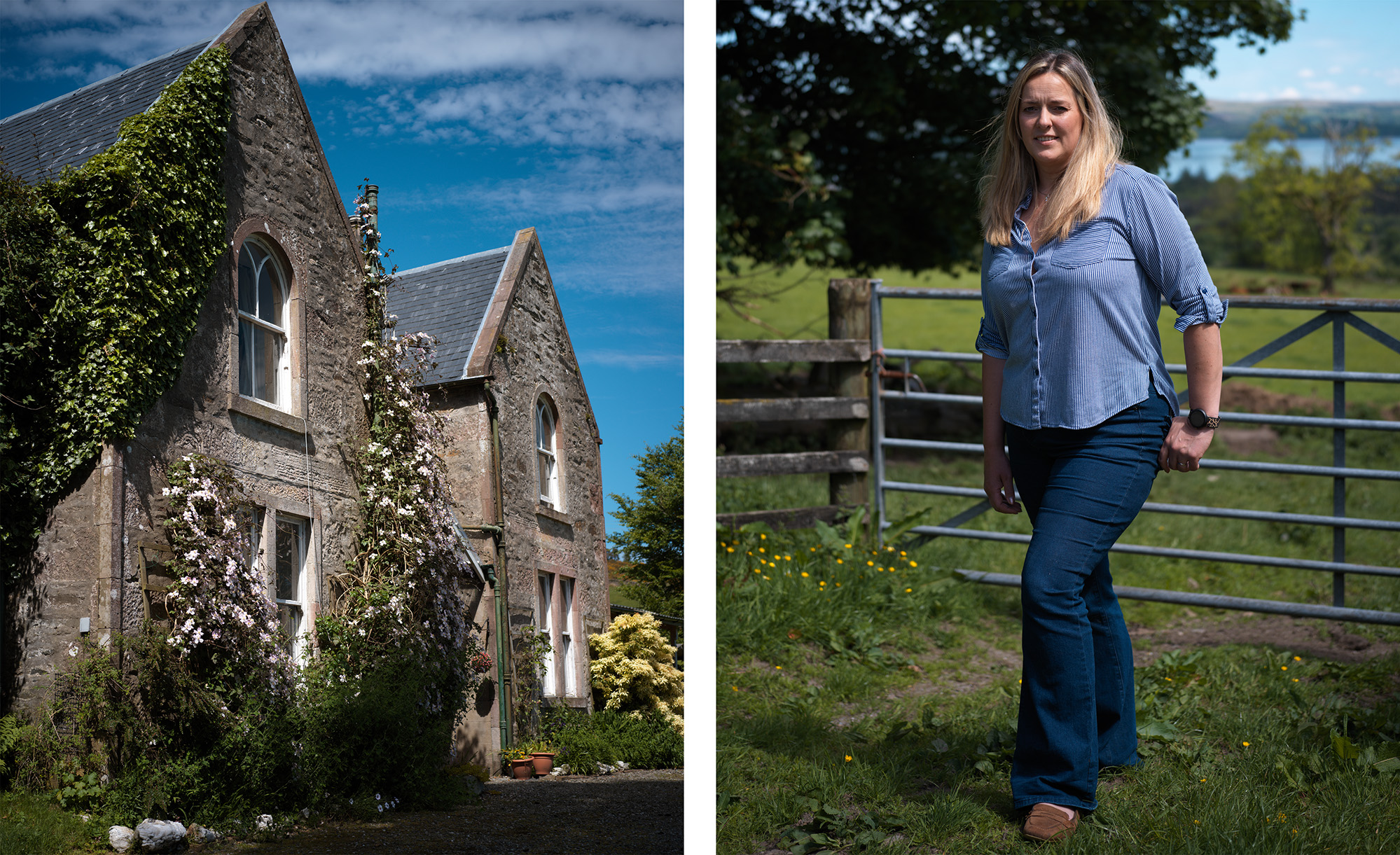
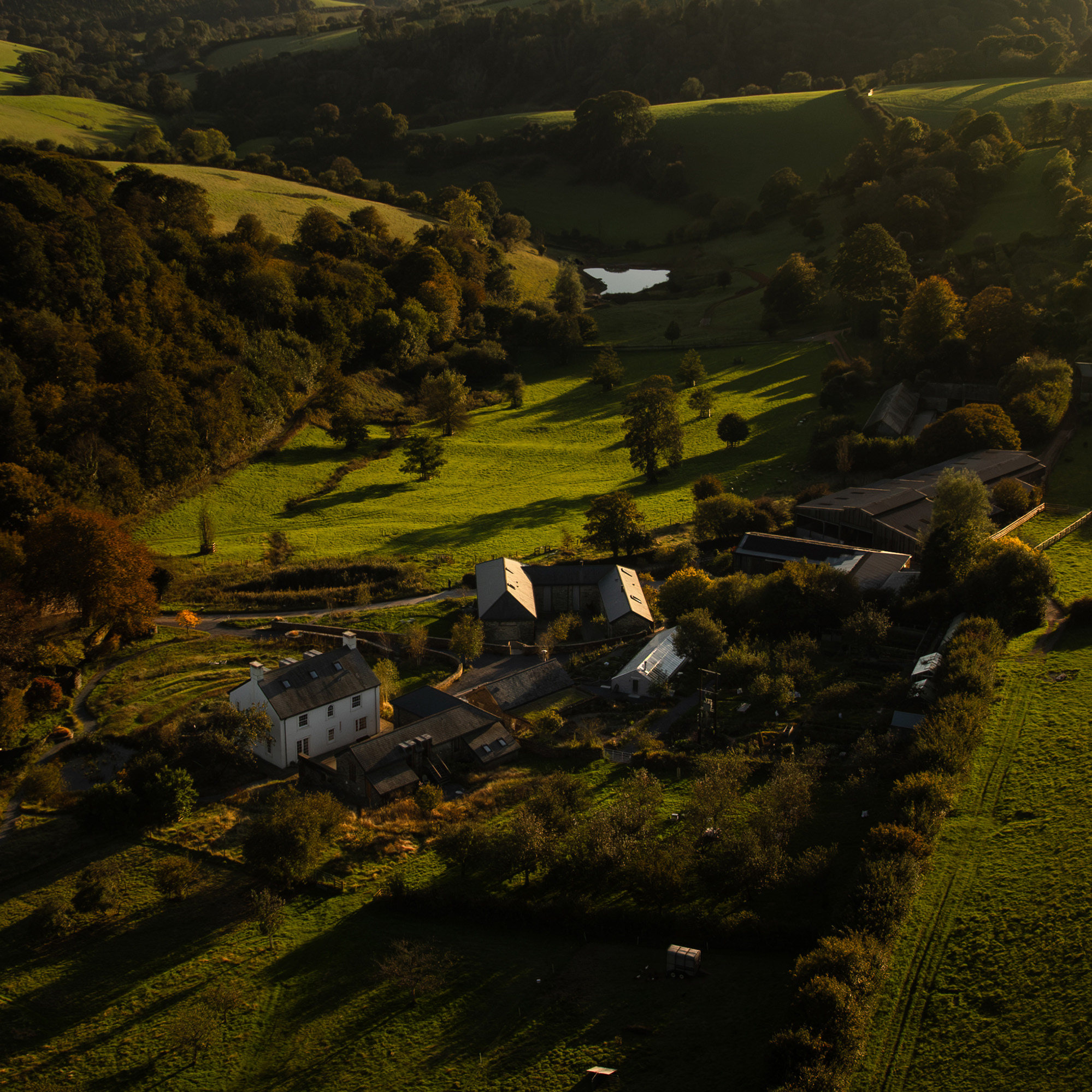
From left: Shemore Farmhouse on the Luss Estate has been farmed by the Lennox family for 11 generations; Kay Lennox runs the 5,000-acre tenanted hill farm. Photos: Giles Price
Looking ahead, is this just the beginning?
PC: I think so. The inn is the focal point, but we’re thinking much more broadly about the future of Luss. How do we support craft? How do we encourage local makers? How do we create more reasons for people to spend time here?
RS: We’ve seen what can happen in places like Braemar after the Fife Arms opened. A great hospitality project can act as a catalyst. It can bring energy, creativity, and confidence to a wider community.
PC: That’s certainly the ambition. Not in a grandiose way. We simply wanted to create something we’re proud of.