Everyone wants to live in a castle—that is, until you realize how much you miss modern conveniences. But in the deft hands of architect Massimiliano Locatelli, an ancient abode is reimagined into
a comfortable family compound fit for a king.
June 24, 2026By
BECKY SUNSHINE
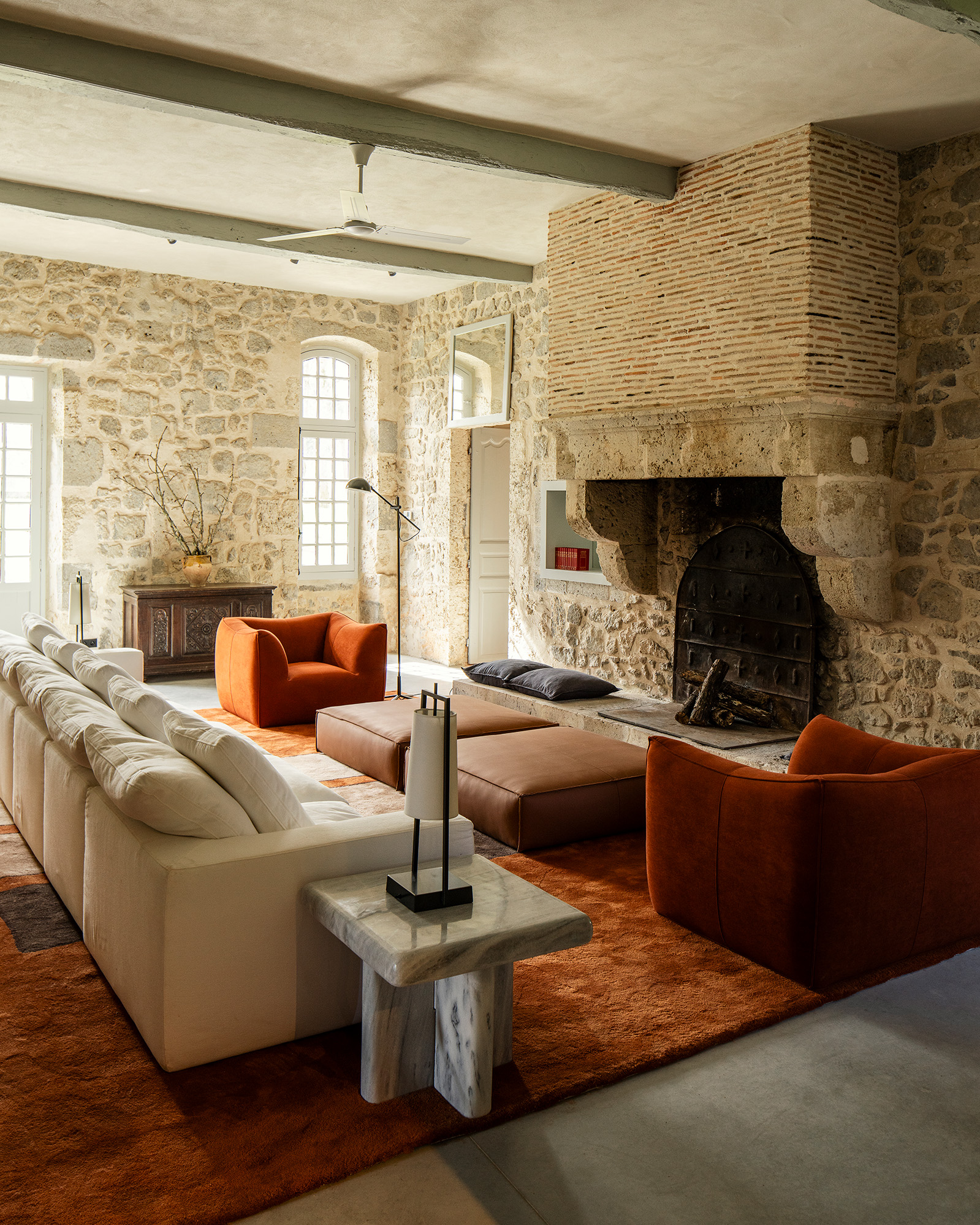
The living room in the owners’ suite features Le Bambole armchairs by Mario Bellini for B&B Italia and a vintage Jieldé Signal floor lamp. Photo: Luca Rotondo
For Milanese architect Massimiliano Locatelli, transforming a centuries-old château in the south of France into a contemporary family retreat wasn’t just another restoration; it was an exercise in dialogue, between past and present, France and Vietnam, material and luxury. Known for his thoughtful approach to renovation and material integrity, Locatelli leads his Milan-based studio, Locatelli Partners, whose projects span residences, cultural institutions, and commercial spaces across Europe, the U.S., and Asia. His work often reinterprets historical structures through a contemporary lens, maintaining a respect for craftsmanship and context.
Commissioned by an entrepreneurial French-Vietnamese couple, the vast 13th-century property, set among vineyards and ancient woodland, has been reimagined by Locatelli into a home that balances medieval solidity with contemporary ease. The château’s new life began with a radical but deeply sensitive renovation. Several interior walls that once compartmentalized the ground floor of the 30,000-square-foot building were demolished to create open, light-filled volumes. Locatelli introduced a restrained palette—cast-in-place concrete, handmade terra-cotta from a nearby village, pine timber from local forests, and warm lime plaster—to engage in a modern conversation with the building’s original stone. Underfloor heating, air-conditioning, and solar panels were integrated into the heritage shell.
Each material choice in Locatelli’s hands carries intention: Vietnamese tiles crafted by artisans in Bát Tràng, marble sourced from the same region, and antique furnishings balanced with modern Italian pieces. For Locatelli, whose global portfolio ranges from Milan to New York to Ho Chi Minh City, the project encapsulates his lifelong pursuit of beauty that lasts. “My hope,” he says, “is that in a thousand years it’s going to be even better than it is now.” Here, Locatelli reflects on the château’s transformation, the cultures and histories it bridges, and what it means to design for longevity in an age of impermanence.
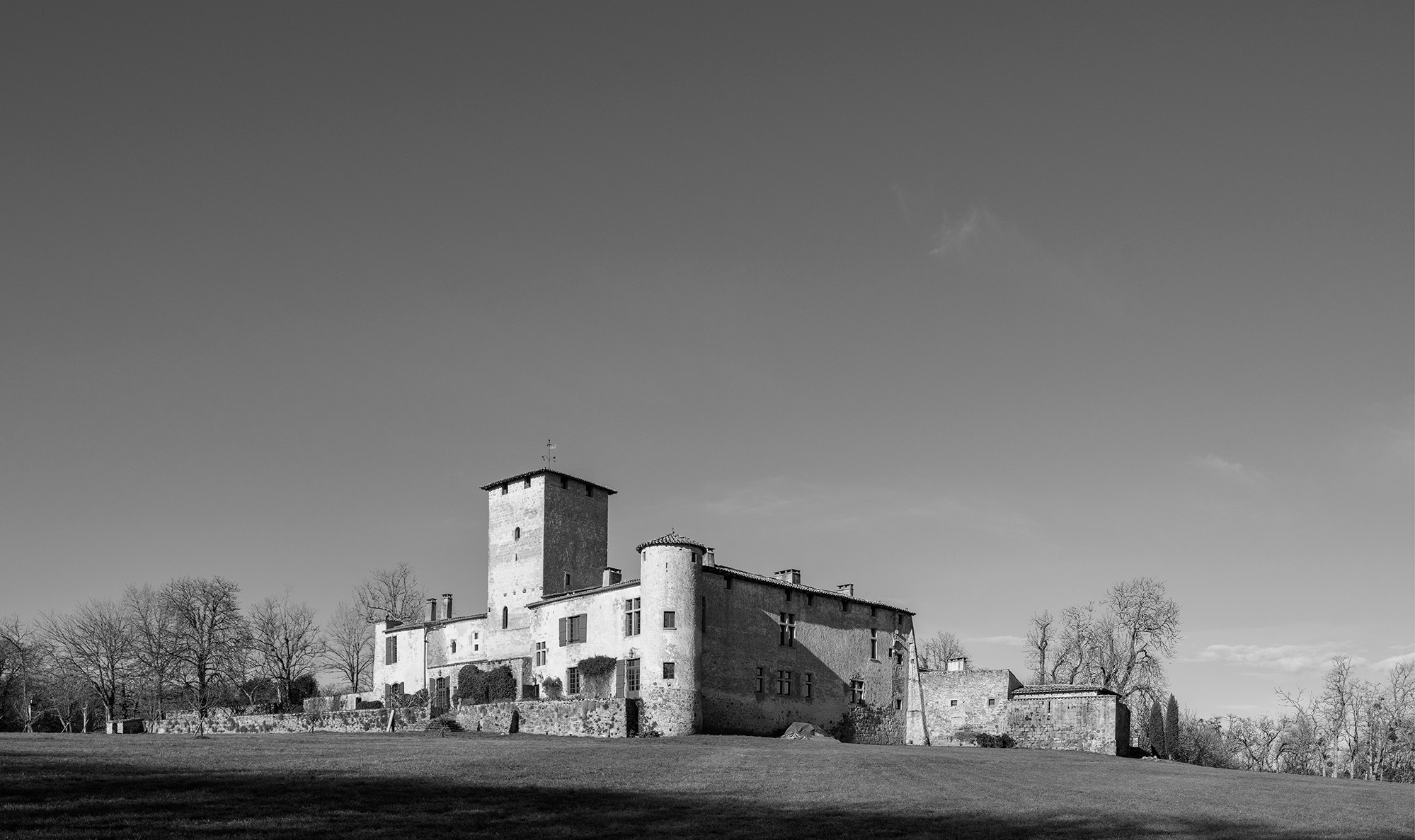
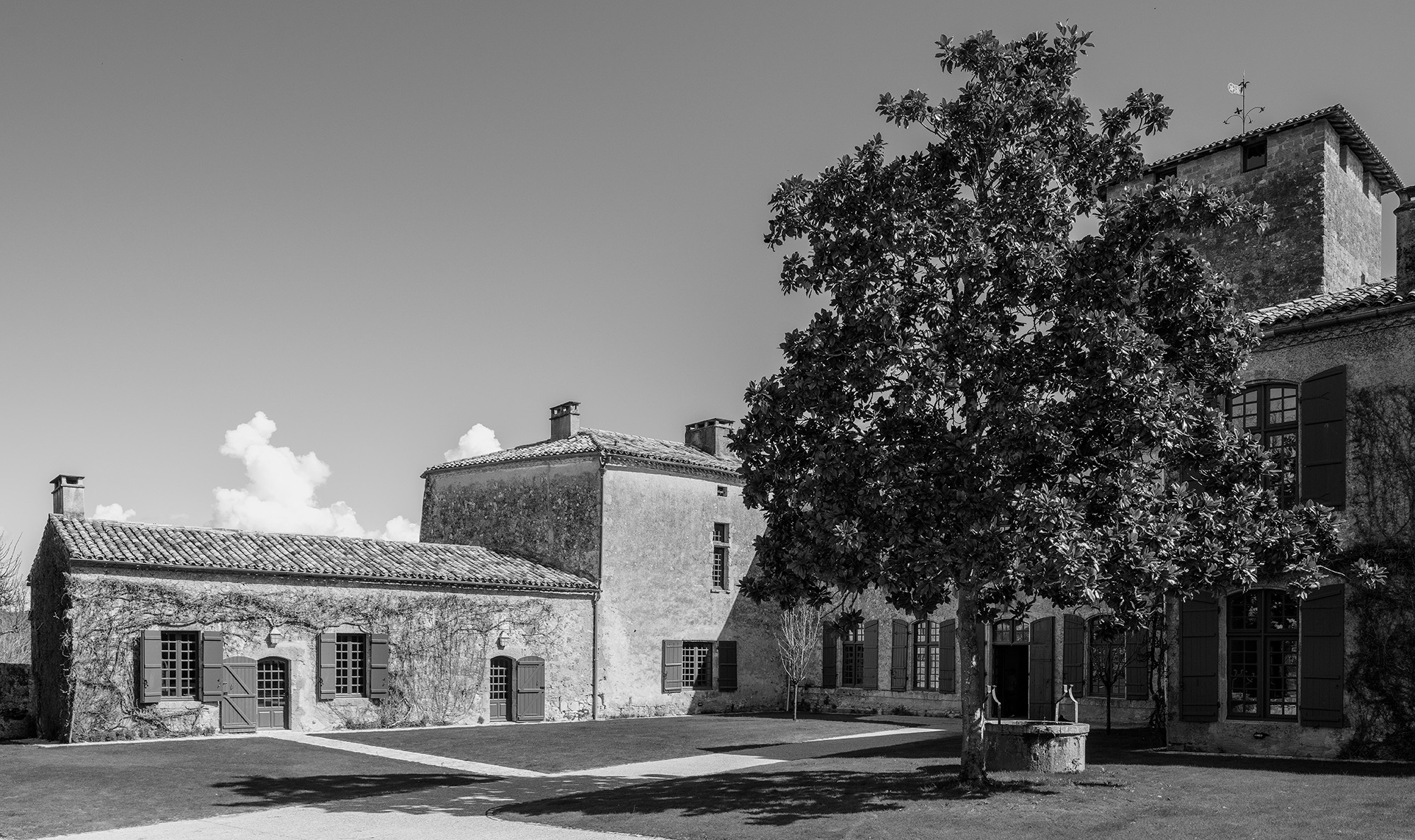
A view of the 30,000-square-foot Château d’Ambrus in the south of France. Photo: Luca Rotondo
So, when did you complete this project in the south of France?
It was ready for the summer of 2025, but final touches—the gym, storage areas, and the doorman’s house outside—were completed in late October. The family had already been using the house, even before those spaces were ready.
Take me back to when you first saw the château. What was your impression, and what kind of state was it in?
We first visited around two and a half years ago, and my first impression was that it was stunning—romantic, surrounded by vineyards, farmland, and ancient forests. It’s in the middle of nowhere; if you love the countryside, it’s fantastic. If you like foie gras, it’s great; they breed the canards there. Also, it’s part of a long tradition of making Sauternes dessert wine. I personally don’t love French food. It’s too heavy for me—after all, you cannot eat foie gras every day, but sometimes it’s good. The previous owners, a baroness from Paris and her late husband, had used it as a vacation home. She was very French, aristocratic, but the building had been somewhat neglected. The whole château, 30,000 square feet, was full of dry flowers, dust, and decades of patched-up repairs. There was always something leaking or breaking, and no proper heating or insulation. It was the definition of charming chaos. There were something like 72 windows, all in old oak, shaking in the wind—and just three bathrooms for 30,000 square feet.
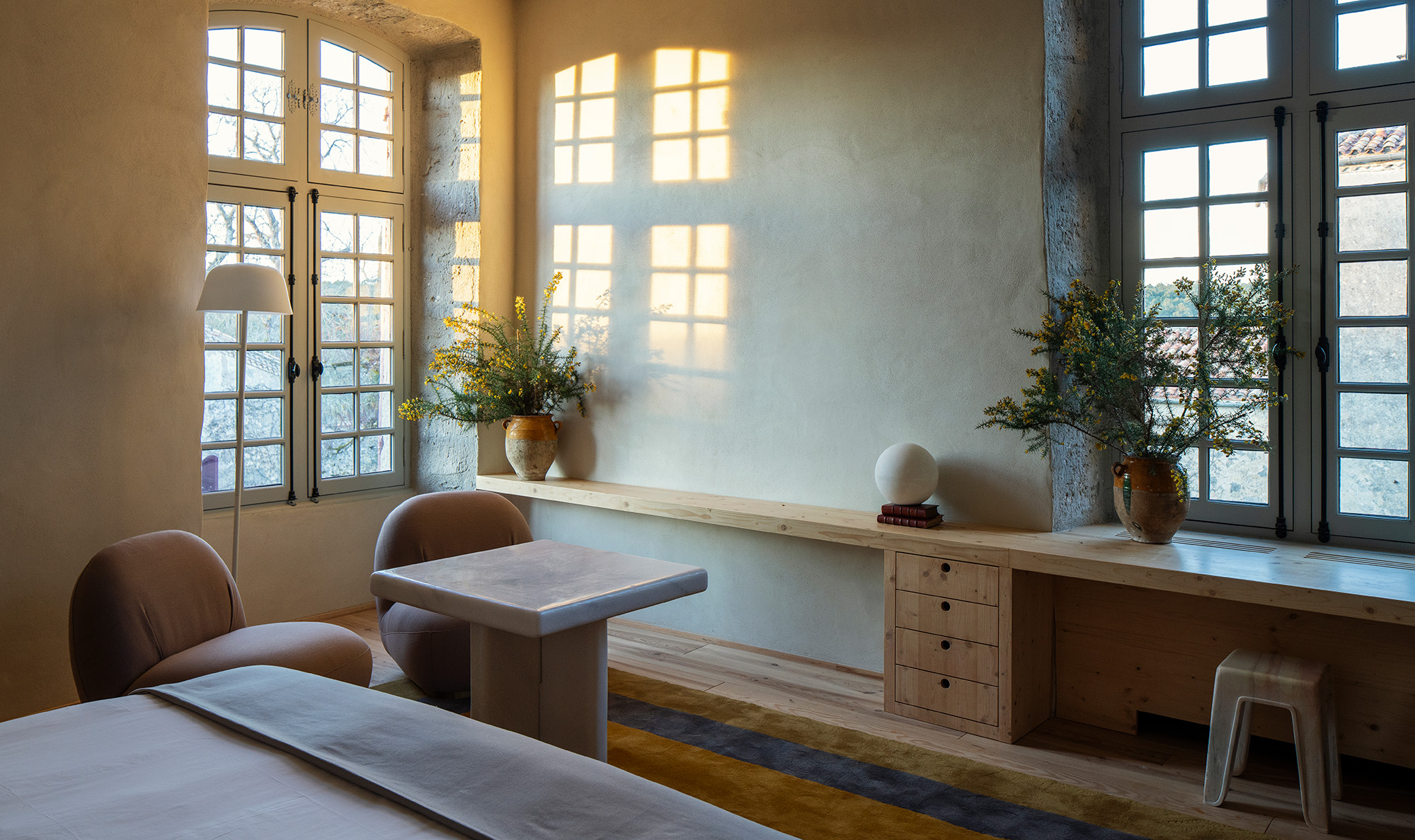
One of the château’s 13 bedrooms features custom-made furniture, including a hand-carved marble stool, a signature piece of Locatelli. Photo: Luca Rotondo
And your first encounter with the baroness sounds like quite the scene.
Yes, it was. She invited us for lunch, served a salad, and then served grapes from her vineyard as dessert. I thought, this is so French, it’s poetic. That was the entire meal. That wouldn’t happen in Italy. My clients, a very hardworking, entrepreneurial French-Vietnamese couple, were the buyers; they had recently sold their business. I told my client—the wife is Vietnamese, he’s French—before we went, “You’ll be viewed as the Vietnamese bitch anyway, so prepare yourself.” She’s glamorous and confident and arrived in Chanel and pearls. The baroness was this tiny lady in her eighties, full of pride.
What followed was a long and messy process of emptying out their many belongings. Her children fought over candleholders and plates—Meissen saucers with the cups missing—so it took a few months longer than expected, but in the end, they cleared it, so we could finally begin.
Once you got inside, what did you find?
It had never been truly renovated—just patched over. The windows were drafty, and the plumbing barely worked. There was no central heating, no air-conditioning. It was very bohemian in that slightly pretentious French way—charming, but unlivable. We had to dig below the ground floor because it was built directly on the earth, but we installed ventilation, underfloor heating, and air-conditioning. Now it’s dry, comfortable, and efficient. It’s basically a medieval structure with modern infrastructure.
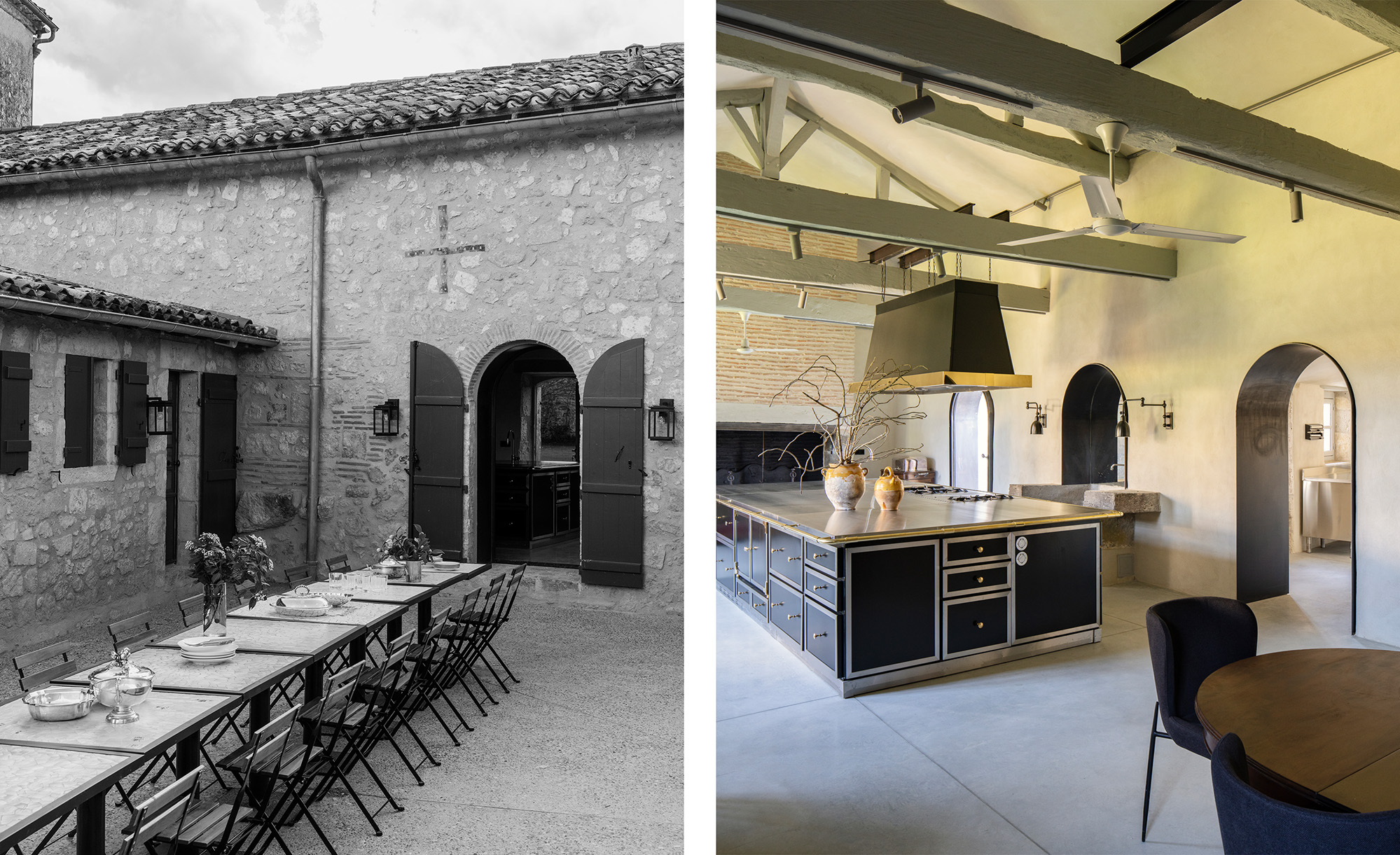
From left: The small courtyard linked to the kitchen features a terra-cotta table made by Vietnamese craftsmen; the 1,800-square-foot kitchen features a La Cornue range and hood and Tess chairs by Westwing. Photos: Luca Rotondo
With it being a landmark, how much freedom did you have to change it?
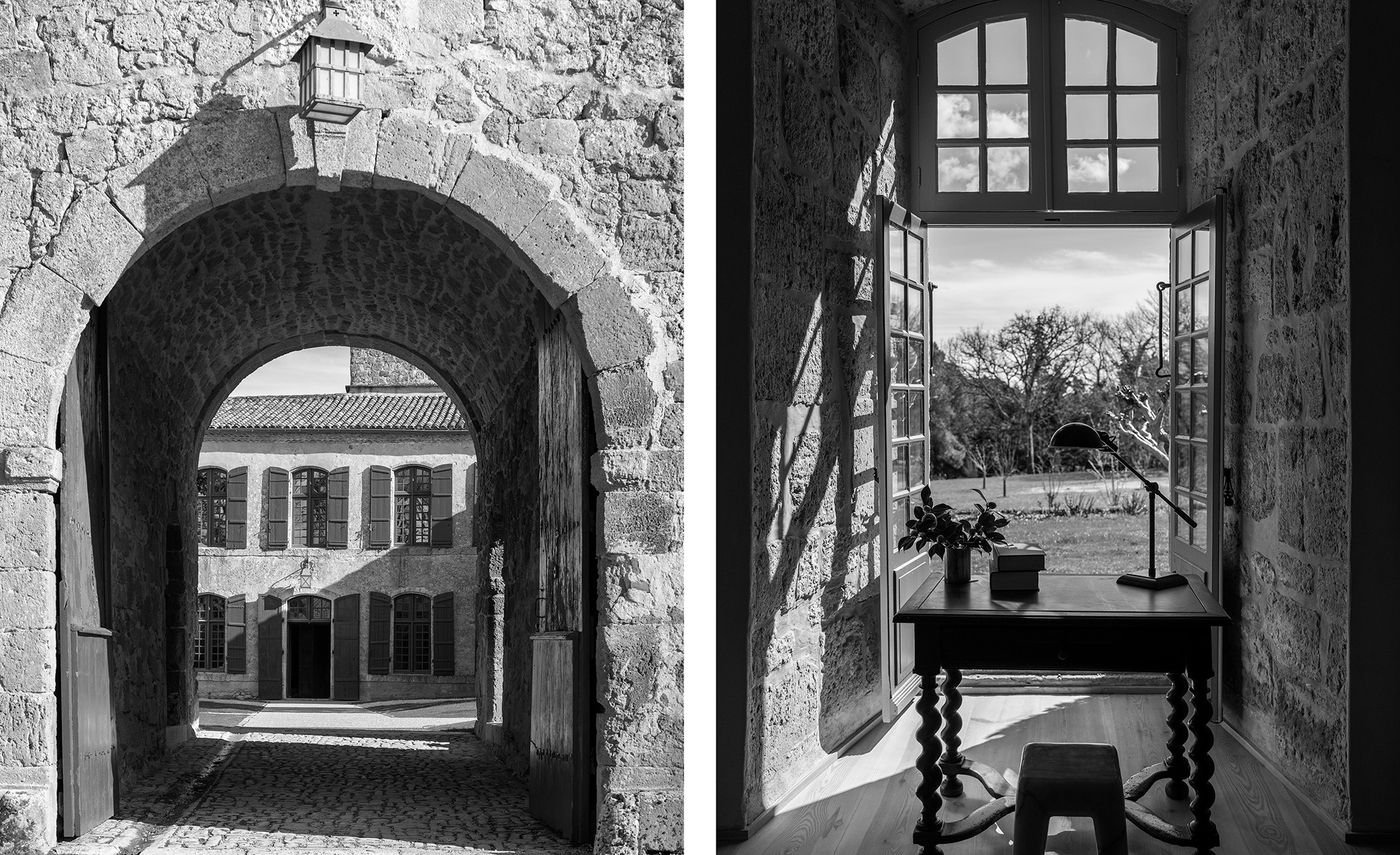
Luckily, it was protected only on the exterior, so inside we had freedom. We kept the original stone walls, the oak windows, but we rebuilt a lot of what was behind them. The landmark body asked us to restore, not replace, and they were right—it was a painful process and very expensive, but the soul of the building stayed intact. These houses must breathe a little. If you block everything, humidity destroys the interiors. It taught us patience.
What was your first architectural move?
To open it up. The interiors downstairs were divided and too dark, so we demolished some interior walls to create a sense of flow and light. I wanted the eye to travel through the house so you could stand at one end and see the light from the other. These medieval buildings can feel a little claustrophobic. Now the sun travels through from morning to evening. You feel the rhythm of the day inside the house.
A view of the château’s northeast wing, with an original well still supplying water to the garden. Photo: Luca Rotondo
The property is massive. How did you approach the layout for a multigenerational family?
The château is about family and autonomy. We started the project from the idea of this energetic couple, who are around 70, wanting to retire, but not really retiring because they wanted a new project. They have six adult children between them and one child together, so it’s like seven families in total. But they wanted a place for everyone to come together that was going to be big enough, as they’d never had that before, especially since they are spread out across the world. So, let’s say they wanted a space where everyone could be together but also apart. We created distinct zones: private suites for each family, with shared salons and dining areas. Every one of the 13 bedrooms has its own bathroom, and the top floor has been made into a dormitory for the children, like Snow White with nine beds in a row. Downstairs, there’s the owners’ suite, with two bathrooms and a spa, a big living room, their bedroom, a closet, their studio, and their office. There’s also a vast kitchen—about 1,800 square feet—with a La Cornue range and a huge fireplace. The owners adore food; they used to import delicacies between France and Vietnam, so they love to cook at home. They’re planning to make their own foie gras in that kitchen.
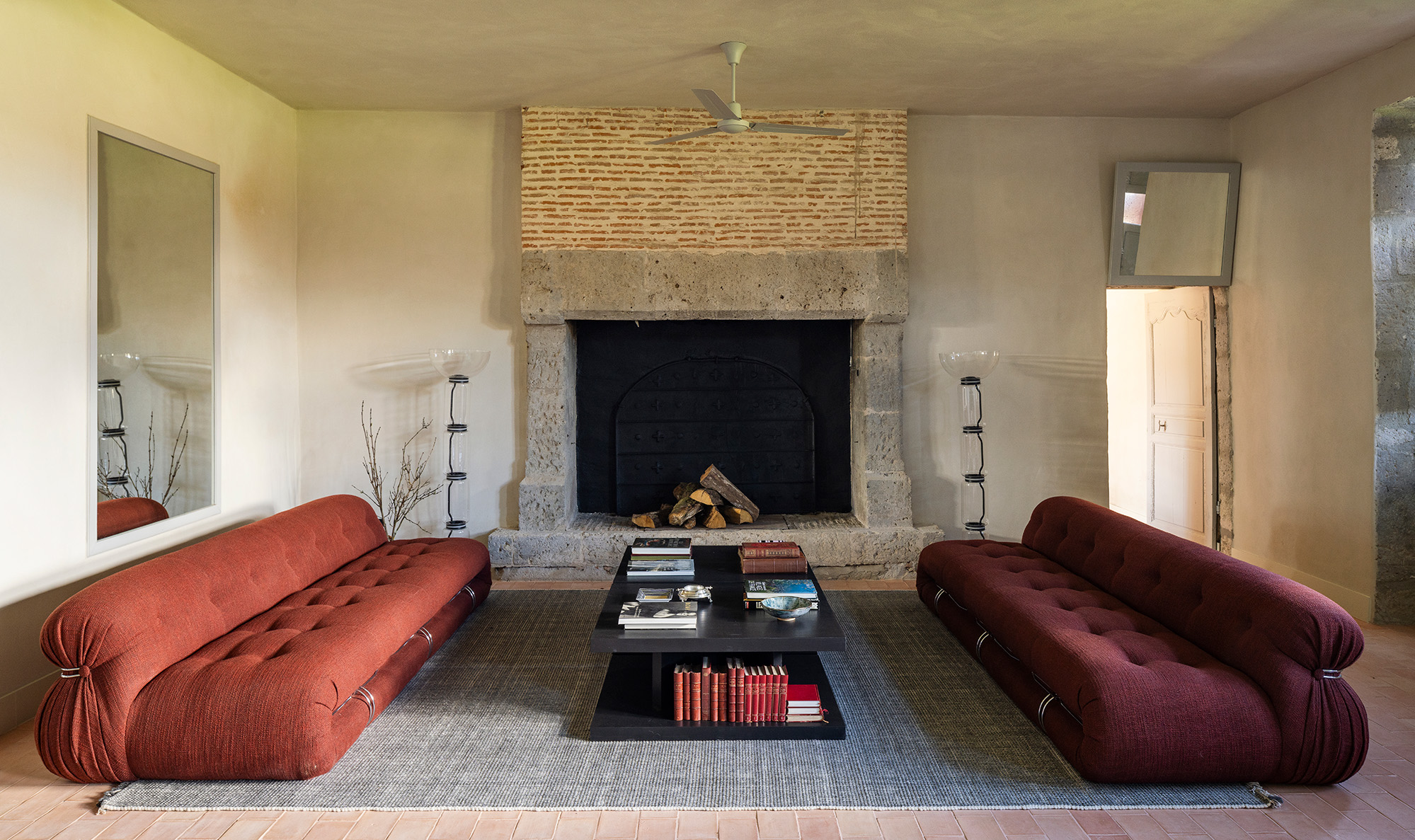
The family living room is furnished with two reupholstered Cassina Soriana sofas and Flos Noctambule floor lamps. Photo: Luca Rotondo
What were your other considerations in the design process?
The owners made an intelligent point when we were planning. Because they said, “At some point we are going to die, and then maybe our sons are going to hate each other,” so they wanted us to design the space to enable it to be easily converted into a hotel. So that’s what we did. There’s hot water in every room. You can control temperature and air-conditioning in each suite. There’s Wi-Fi everywhere. It’s contemporary and very maintainable, basically like a modern building in New York in its efficiency—but it’s an antique château. It was expensive to do because all the veins of the building had to be taken out and redone, but it was worth it.
How does their cultural mix come through in the design?
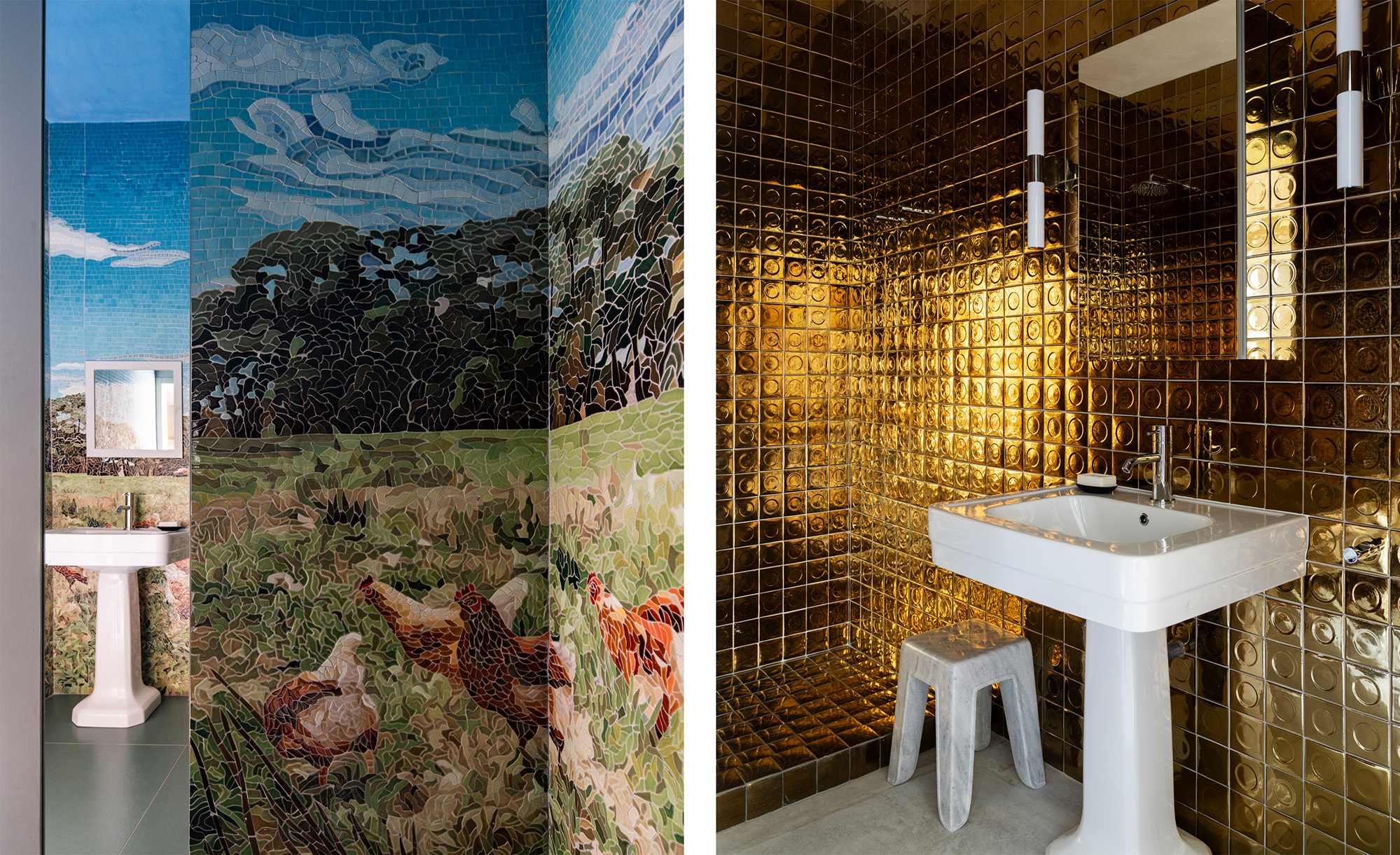
In many ways. She has a Chinese background—she grew up during the Communist period, six people in one room. So even though they now live very well, she’s simple in her habits. She loves cooking, organizing, hanging laundry in the courtyard, even though I designed a laundry room. Her Vietnamese roots show in the details: all the bathroom tiles are handmade in Vietnam, from a village near Hanoi called Bát Tràng. We worked with a family-run ceramics workshop I’ve known for years. They made every tile by hand—each bathroom is unique, some with craquelé glazes, others with gold leaf melted into the surface. One bathroom is covered in mosaic tiles painted with images of the local countryside—chickens, trees, vineyards. It took five people six months to make, and it’s like bathing inside a landscape.
From left: In the annex bathroom, Locatelli created a custom mosaic of the local countryside; all the bathroom tiles, including these gold-enameled tiles in a bedroom-adjacent bathroom, were handmade in Vietnam. The sink and faucet are by Margot. Photos: Luca Rotondo
Your use of local materials feels deeply intentional.
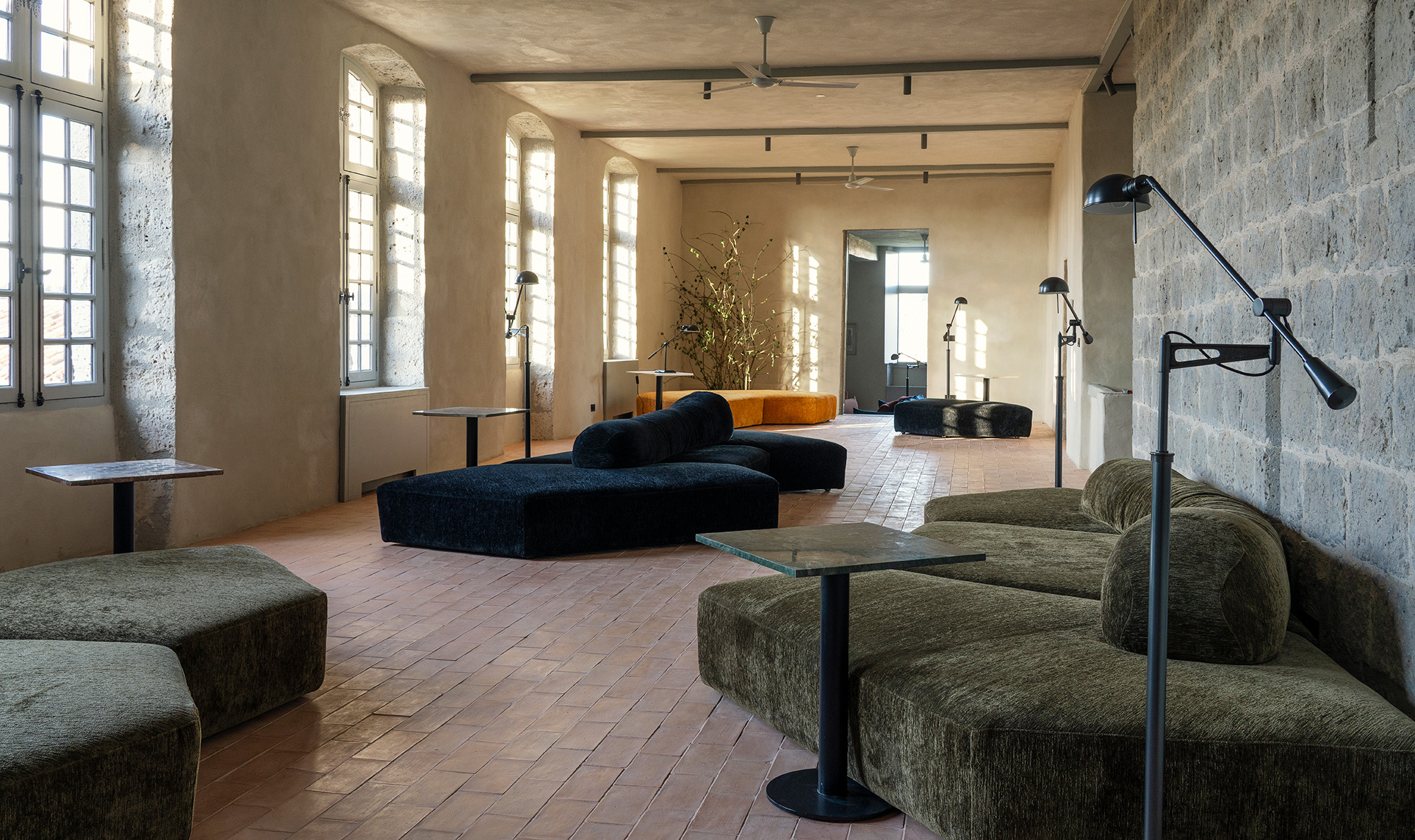
Exactly. We decided on three main materials: concrete, terra-cotta (because it was typical), and wood. Because the first part of the château was built in the 13th century, it’s not Versailles. The external walls were about security: a safe space for the original landowners. So from the beginning, I wanted it to be, not minimalistic, but restrained. It was down to basics: Everything relates back to place. We worked only with real materials: cast-in-place concrete for the floors, terra-cotta, and pine from local forests. Solid, tactile, honest. You touch it, and it stays itself. We matched the concrete to the original stone, which is a gray-beige. And then having a heated concrete floor is so nice to walk on. I was imagining all the kids running around with bare feet in the winter.
For summer, they can run cold water through the floor to keep it cool. I wanted to convey the freshness or the warmth of the floor. We found some antique terra-cotta flooring originally in the château, but when we lifted them, they cracked, so we found a village 30 miles away where they’ve made terra-cotta for generations. We had handmade terra-cotta tiles customized to the same size that they had before, so we did entire big rooms in terra-cotta. We then worked with this wonderful thick pine typical of the local forest. It was a bit like Donald Judd furniture. We added those materials to the stone and plaster walls. Then we picked up one of the colors of the plaster—the original color, which is this kind of natural, beige, earthy color—to paint all the windows on the inside. On the outside, the wood is painted the color of Bordeaux wine. The bureau insisted we keep it, so outside you have this stone château with these wine-colored shutters and windows. The external material is stone, and the plaster is a natural one and is incredibly thick on the walls, so it became a conversation between the château and the landscape.
How about the furniture and interiors?
The clients already owned many beautiful pieces. We reused what they had—Cassina sofas, vintage Italian chairs—and reupholstered them in new fabrics from Dedar. They had a lot of furniture in storage from their other homes, so we reimagined those pieces here, mixing them with new custom designs. The marble tables and bedside tables were made in Vietnam, using the same color of marble as the bathroom tiles, built by local artisans I’ve worked with for years. For the bedrooms, we designed soft carpets that were then handmade in Nepal, all in natural tones.
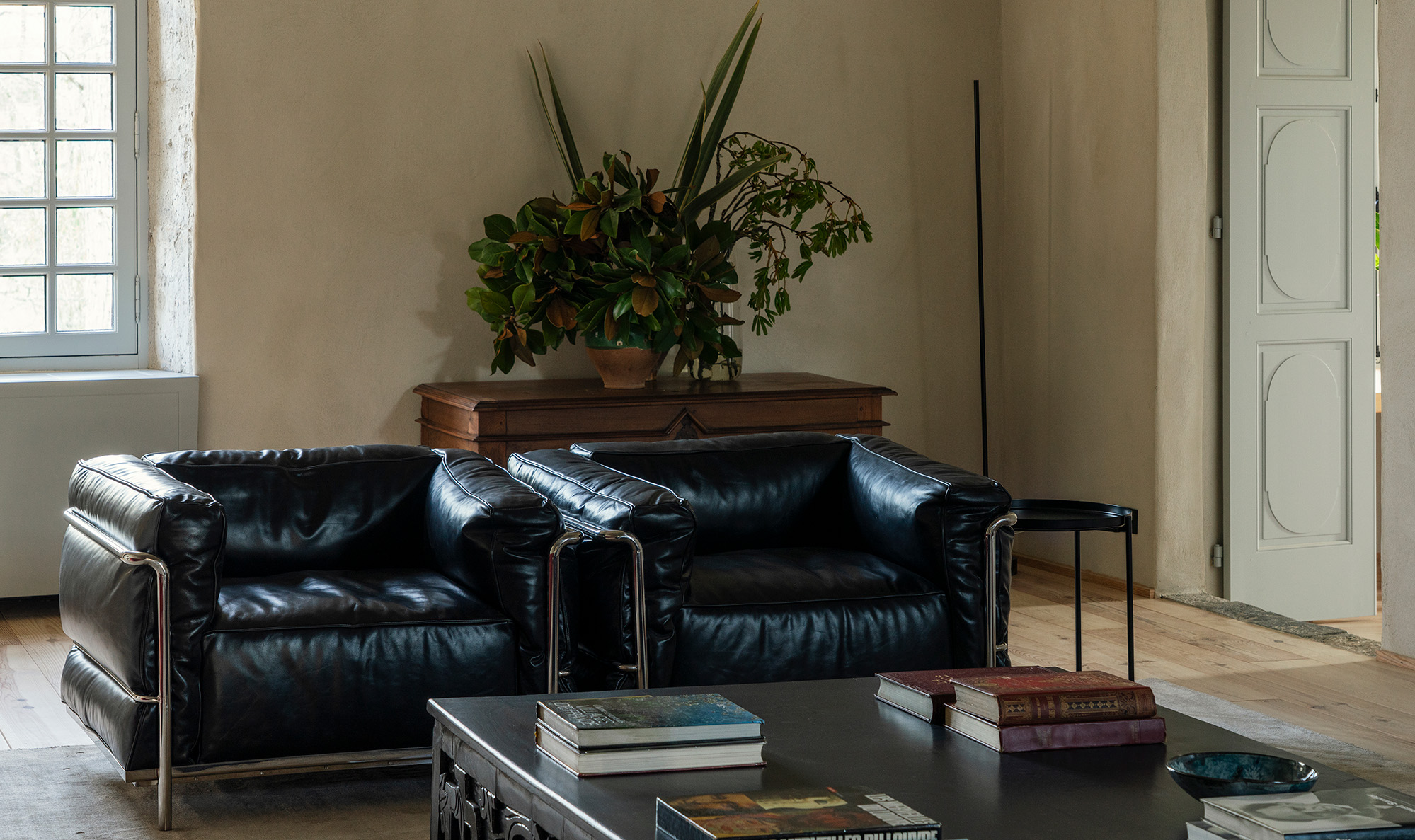
One of the living rooms on the first floor features Cassina Le Corbusier Grand Confort chairs and an 18th-century wooden chest from the property. Photo: Luca Rotondo
The look seems to balance comfort and restraint.
Exactly. The palette is very calm—beiges, grays, whites, and timber. We didn’t want it to feel overdecorated. The rooms are quiet, with cabinetry made by local carpenters. Wardrobes, tables, and shelves are all simple but substantial. The clients were keen to do everything properly, so even the linens and bedding were made by suppliers who work for top hotels like Four Seasons. Everything feels luxurious yet unpretentious, made to last, not to show off. It’s about quality and simplicity.
What about the choices for artwork around the château?
One of the couples consists of two animator-artists based in Paris. They’ve already started creating pieces for the château—a large painting for the kitchen, and she plans to fresco an entire room with her own drawings. Together with friends, they’re forming a small collective to use parts of the house as a creative workshop. It’s beautiful because it keeps the project alive, evolving with the next generation. There’s also a small museum on the top floor displaying Vietnamese porcelain from the 11th to 13th centuries. It’s another way of connecting past and present.
The conversation gallery in the center of the château connects its northeast and southwest wings and features Edra On the Rocks sofas. Photo: Luca Rotondo
You’ve described this project as truthful. What does that mean in your work?
Truth means no disguise. We didn’t use Sheetrock or veneers. I hate things that pretend to be something else. Solid pine, real stone, real plaster—if you scratch it, it’s still itself. My hope is that in a thousand years, it will be more beautiful. Architecture today often aims for instant perfection but not longevity. This project was about doing things properly, even if it’s slower or more expensive. The clients understood that perfectly. Vietnam and Italy share that mentality—you build to last. There has to be a dialogue between what was there—the old traditions—and the new. Imagine, last summer, there were 36 people running around the château, so the place also has to be practical but still luxurious. And I don’t want to say it’s low-maintenance because it’s not. But we made sure all the materials were strong.
Sustainability seems built into that approach.
Completely. We integrated solar panels and efficient wood-burning stoves that heat entire rooms. The family even bought the forest around the château to manage their own wood supply and to keep wild boars from destroying the garden. They wanted a kind of self-sufficiency—growing vegetables, hunting, living off the land. It’s like going back to the medieval roots of the château but with modern systems. They installed everything with autonomy in mind. If tomorrow there’s a crisis, they can heat with their own wood, live from their garden, and rely on solar energy. It’s romantic and realistic at the same time.
From left: The main entrance gate on the northwest side of the château connects to a garden courtyard; a view from the walk-in closet of the owners’ bedroom, looking out onto the back garden and fruit orchard. Photos: Luca Rotondo
How was it working in rural France with local craftsmen?
It was beautiful but not easy. The French take their time. They don’t work weekends, which drove me crazy at first, but in the end, I understood—it’s their way, and it produces quality. We had to adapt to their rhythm. The carpenters were wonderful; the stoneworkers, too. And when we finished, the clients gave me an envelope of money for my young team as a thank you. It was the first time in my life that a client did that. It meant so much—it showed they understood the effort and care behind the project.
When you finally stayed there after completion, what did it feel like?
Peaceful. My team and I slept there the first night after it was finished. We had dinner, breakfast. It was magical. Of course, there were little things to fix—the heating wasn’t yet on in my room, so it was freezing. I had to figure out the air-conditioning unit myself. The systems are complex: It’s a medieval building with 21st-century technology. We’re even making them a manual to operate everything, with a list of experts to call. But walking through it, hearing nothing but silence and seeing the light move through those ancient walls—it felt alive. It’s interesting because they haven’t moved a single object yet; they’ve kept it exactly as we designed it because they’re not so confident with their design choices. It’s the best compliment.
What does this project say about renovating old spaces?
That adaptation is essential. In Europe, we’re renovating more than we’re building new. We have to make these structures livable for the modern world. That means integrating technology, comfort, and sustainability without erasing history. It’s not nostalgia—it’s continuity. Renovation is the future. We can’t keep demolishing. These buildings already hold the energy of centuries; our job is to make them work for today without losing their memory.