An English Farm Hotel Brings Its Field-to-Fork Philosophy to the Catskills
Caitlin Owens, founder of Fowlescome Farm, speaks about the importance of knowing where your food comes from, how she pivoted from Deloitte to hospitality, and what visitors can expect from the farm’s residency at Piaule.
October 30, 2026By
HELENA MADDEN
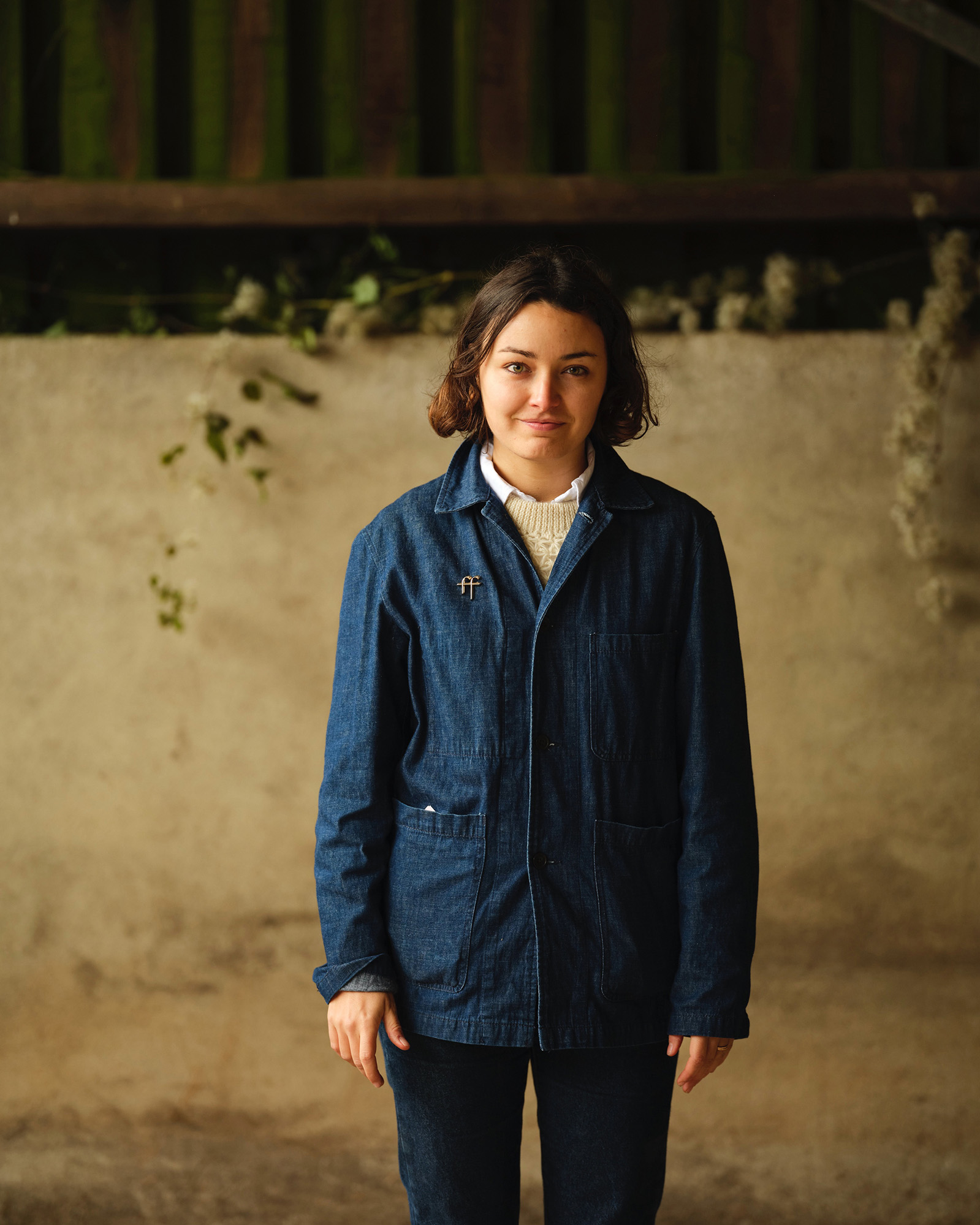
Caitlin Owens, the founder of Fowlescombe Farm. Photo: Courtesy of Fowlescombe
Set against the pastoral backdrop of southwest England, Fowlescombe Farm takes farm-to-table food seriously. Caitlin Owens inherited the hotel—at the time it was just a farm, and was in sore need of some modern updates—from her parents. She and her husband, architect Paul Eldwin Glade, quietly transformed it into a bucolic escape where the culinary experience is at the forefront. Guests can traverse the rolling hills of Devon, and either observe or help out with day-to-day tasks around the farm.
Everything that’s harvested goes into the dinner menu at The Refectory, Fowlescombe’s restaurant, which is run by chef Elly Wentworth. Since the dishes are so dependent on what is in season and what comes from the farm, the menu changes every single day. Dinner might include a starter of soft goat cheese and garden radishes, followed by crab linguine, and with caramelized milk tart paired with farm-fresh strawberries to finish. This specialized approach has net the property a Michelin key—the hotel equivalent of one Michelin star—as well as a three-star rating from the Sustainable Restaurant Association.
Staying at Fowlescombe is an intimate experience—there are just 10 suites in total. Owens and her husband transformed all of the original structures, imbuing the rooms with materials like oak and wool, as well as local stone from the property’s own quarry. The priority was a sense of comfort, as well as a sense of place.
Now, Owens and her team are taking the concept on the road, or rather, across the pond. Chef Wentworth will have a two-day residency at Piaule, a hotel in the Catskills known for its luxury cabins, beautiful natural surroundings, and its Design Within Reach furnishings. The menu will use local ingredients found in the Hudson Valley. Guests can find tickets on Resy for November 10 or 11, though seats are selling quickly.
We called Owens during an unseasonably warm day in the Fowlescombe garden, when the temperature was creeping up to 80 degrees Fahrenheit. She shared how her transition to the world of hospitality began in the business world, the inherent chaos of running her family’s local pub, and what visitors can expect from the Piaule menu.
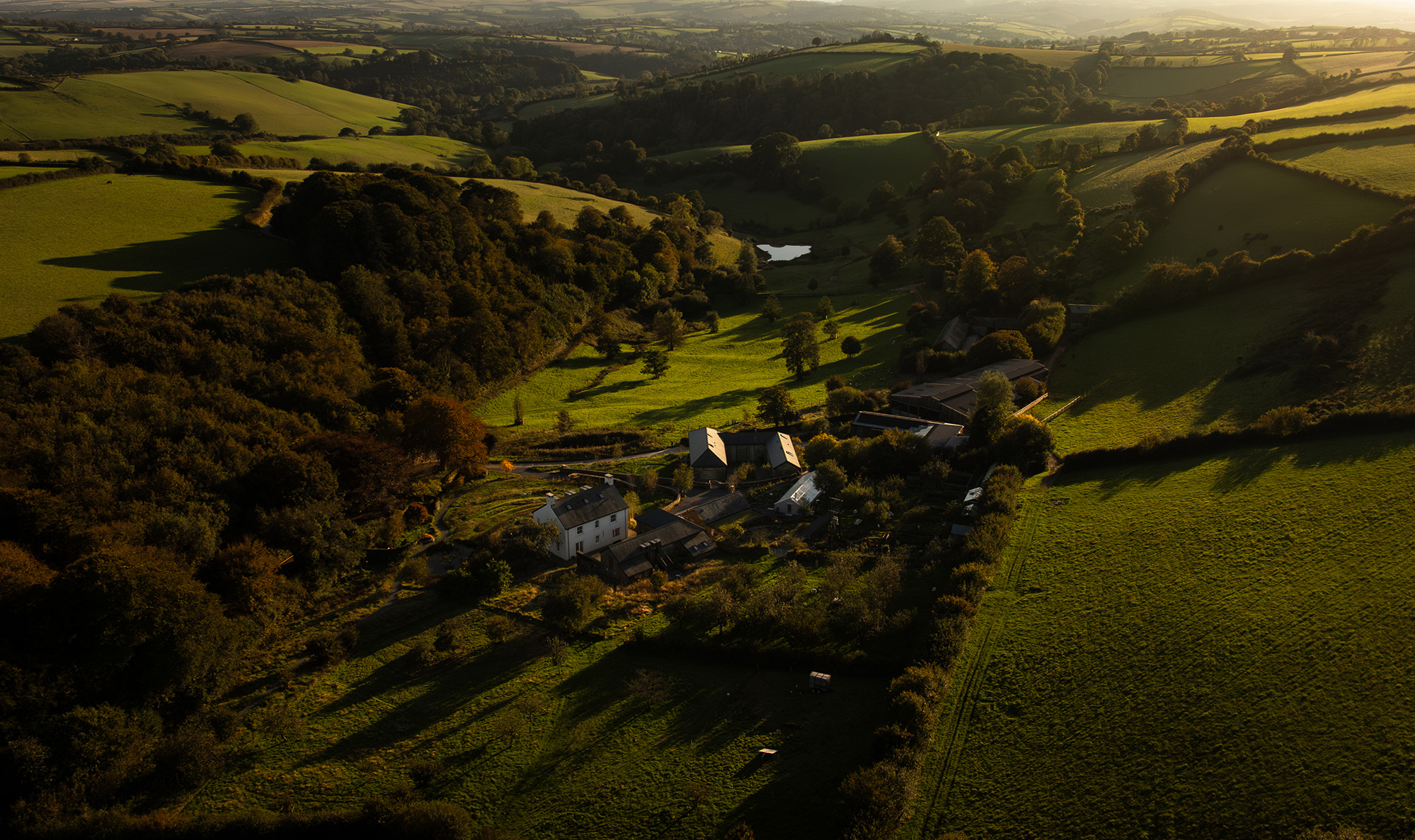
An aerial view of the Fowlescombe Farm property, which includes 10 suites for guests. Photo: Courtesy of Fowlescombe
When did your parents buy the farm, and how did you turn the property into Fowlescombe?
They bought the farm in 2018. I grew up in the area, about half an hour away. They took it on as a sustainable meat project. My father had been working in sustainable fuels and he was very tied up in the idea of soil health, and the soil health emergency. He strongly believes that modern farming has some huge issues, both from an environmental point of view and from a health point of view.
He wanted to use his platform within the oil industry to produce very premium meat that was good for human health, good from an animal welfare point of view, good from a soil point of view, and super good for eating. He was basically going to sell that as a premium to chefs in restaurants.
So that’s where they started and it was all going pretty well. I was in London doing something totally different, nothing to do with them. But I came home during lockdown with my then boyfriend, now husband. We spent this crazy three months on the farm helping out—doing a bit of stuff with the animals, and doing stuff in the garden. We were just really, really struck by how incredibly beautiful the land was, first and foremost, but also how engaging it was to have this idea of a place where you’re seeing the food produced, and then you’re eating it. We thought there was something there.
I had always harbored this childhood dream that I would have a hotel one day. I’ve got a very operational brain; I love to create systems out of chaos. And I think hotels are fantastic examples of that, because they shouldn’t really work, you know? It’s something that involves people sleeping, alcohol, suppliers, technology, and things that might break at any moment. It should be complete mayhem. And yet in most good hotels, it isn’t.
I’m really, really passionate about hotels as systems. And I knew that one day I wanted to run one. So I quit my job and moved back home and said, right, we’re going to have a hotel at Fowlescombe.
Where were you working before?
I was at Deloitte, working in business consulting. It wasn’t completely irrelevant. There were a lot of skills I learned at Deloitte that I use every day now, but it wasn’t the subject matter that I wanted to work in long-term.
So did you move to the farm full-time at that point?
I actually didn’t. My husband’s an architect, he’s the creative director of Fowlescombe, so he started working on the build and how we would do the place up, because it needed complete gutting. We didn’t actually build any new buildings, but we did have to rip them out to the core and build them back again—just to make them up to the modern standards that people would expect if they’re going to pay six, seven, eight, or nine hundred pounds a night.
But, first of all, we actually moved to Switzerland, where my husband is from. I needed a job in a hotel because I couldn’t afford to pay for one of those big hotel training courses that cost tens of thousands of dollars. So I just found a fairly basic job on reception in a Relais & Châteaux property in Switzerland. Switzerland was the only place in the world where hotels were open—this was the second half of 2020. But I loved it.
And then I came back home because my parents in the meantime had made the unique decision—unconsulted, by the way—to buy the village pub. It’s the pub that I’d worked behind the bar at when I was 18. But this was the beginning of 2021, which was the biggest summer for UK hospitality that there has ever been. It was all about staycations. Travel was a bit difficult, so everyone wanted to spend money in the southwest. The demand was huge. I just said, “Don’t worry guys, I’ll run the pub.”
Which was mad! I mean, the hubris, the audacity, the idea that I knew how to run a pub… I had an “I don’t think it will be that hard” mentality. It’s unbelievably hard. The pub as a concept is so complex. You have so many stakeholders to satisfy. You’ve got to satisfy your nice diners, your people who are coming to get pissed up in the summer, and your people who are coming every afternoon at four o’clock to have two pints of ale.
I did that for two years while Fowlescombe was getting moving. And then I really needed some training on how to actually run a hotel. So I managed to get myself on the management training scheme at Four Seasons. And I did that for a year until Fowlescombe was ready for me. So I’ve been working on Fowlescombe full-time since the beginning of 2024, and we’ve been open since May 2025.
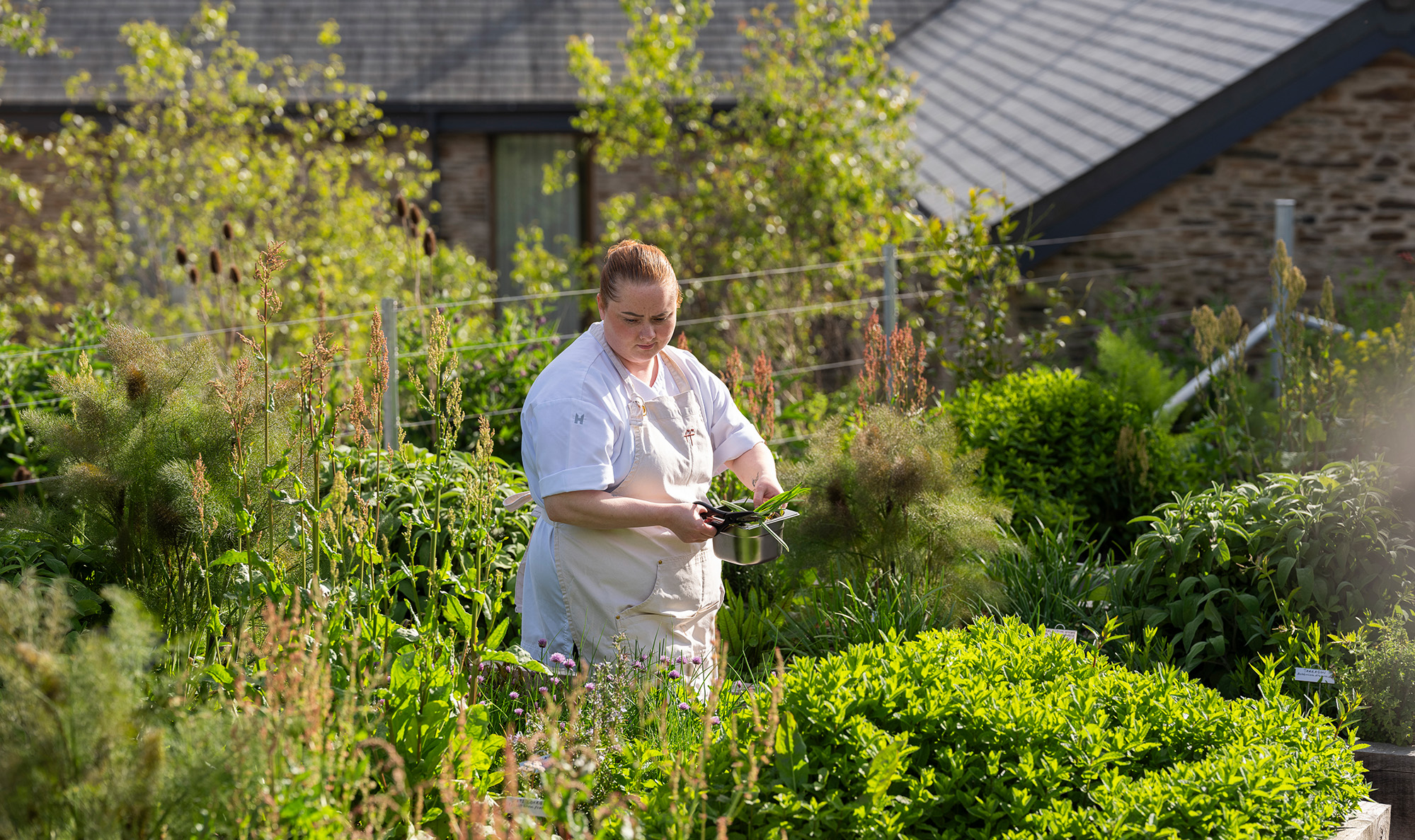
Chef Elly Wentworth harvests fresh greens from the Fowlescombe garden. Photo: Courtesy of Fowlescombe
I know you spoke earlier about why your parents bought the farm, but why did you want to take it over as a hotel?
There’s something about the connection between farming and food. I mean, farming as an industry is very tangible. It’s quite familiar as well. That makes it very engaging. You can look at what a farmer’s doing and know that he’s milking a cow or trimming a hedge. You can’t do that with somebody who’s designing data systems for insurance companies, which is what I was doing before.
I think people find work that involves the land very engaging. And I think the other thing that people find very engaging is chefs. And if you can kind of combine the two into an integrated food production system that people can understand, then that’s incredibly powerful with guests.
Right, I know the food program is a big cornerstone of Fowlescombe, and the work that chef Elly Wentworth does is a big part of that. How did you two develop those culinary offerings?
So all of our rates include dinner, breakfast, and tea in the afternoons. You can’t just come and stay, you’re here to experience the land and you’re here to eat. We have a restaurant with a set menu, and food is served very elegantly, but it’s very relaxed.
We change the menu every day, and the chefs will decide at 11 or 12 o’clock what it will be based on what’s coming out of the gardens. It’s an incredibly specific way of working for a restaurant. I thought when we started Fowlescombe that changing your menu every day was normal. But I’m assured by my chefs that it’s quite unique.
It’s a completely open kitchen, and the kitchen’s open all day. So even while the chefs are in there prepping, guests are welcome to come in and see what they’re doing, have a look, and even help out and get involved in a demonstration. It’s a community feeling. The chefs serve the food too—we have front of house who look after wine and run the service, but the chefs are bringing most of the food to the tables themselves.
So it’s this amazing way of connecting people into a food system. And most people are quite removed from their food system. If you go to the supermarket, the food is the same year round. You’re not connected to that natural rhythm. But if you go to Fowlescombe right now, you’re never going to get winter spinach. You’re never going to get courgettes. You’re going to get lots of apples and squash and beetroot. It’s something that we’re really going to try and lean into with our residency.
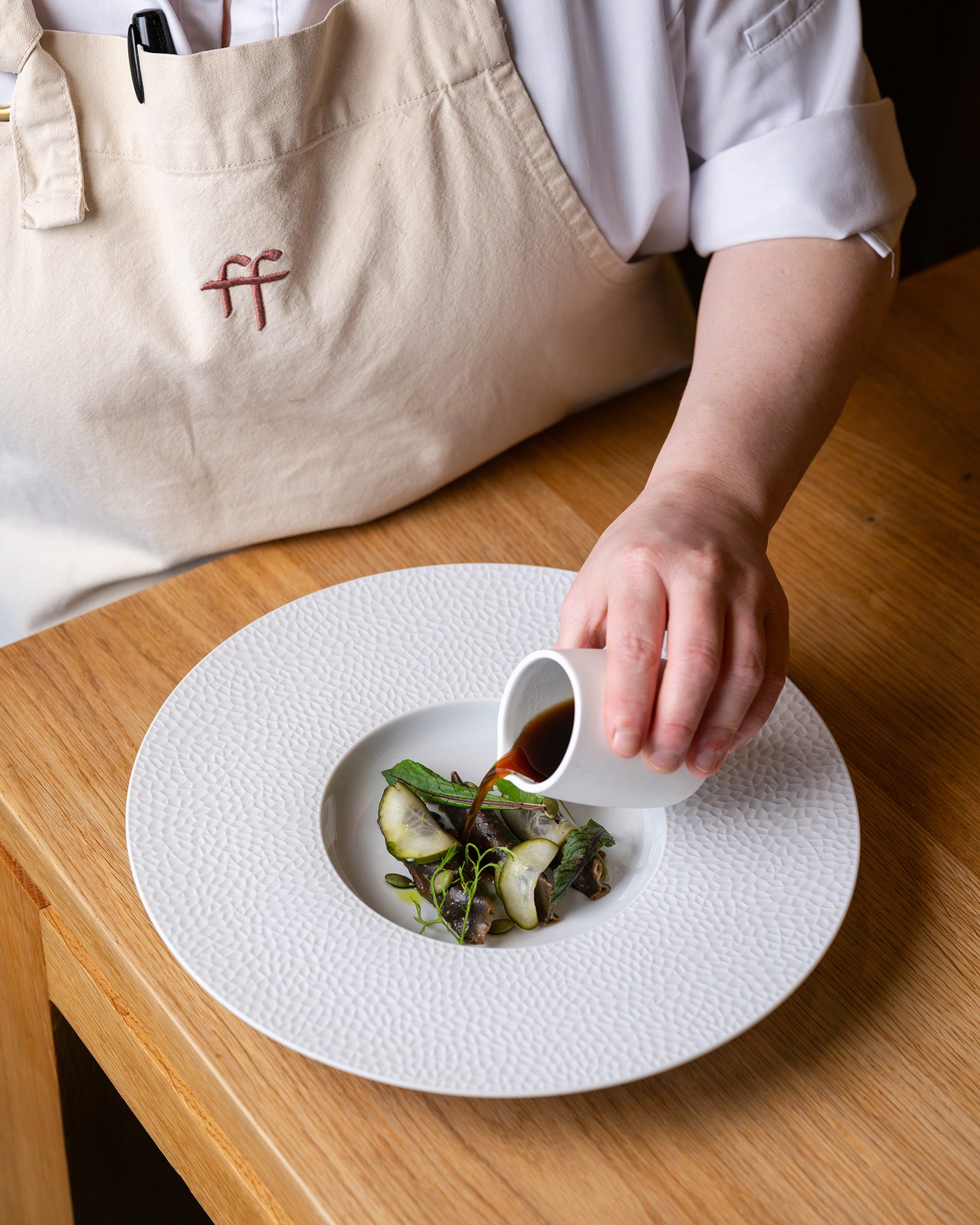
Wentworth prepares a dish using ingredients that were harvested from the garden. Photo: Courtesy of Fowlescombe
Yes, so you have a partnership with Piaule, a two-day residency that’s coming up. How are you bringing that Fowlescombe philosophy to a different property?
I really liked Piaule because of how connected it was to the landscape. Anyone can build a beautiful bedroom, but they built these cabins that are really connected to nature and the seasons. That’s something that we’ve tried to do with Fowlescombe as well.
So Elly’s got two nights at Piaule. She’s taking over the kitchen and she’s doing her own menu. It’ll be a version of what she would do at home in terms of the format. Obviously we’re very much bound by U.S. immigration requirements—Elly wanted to bring all her own ingredients. But I told her, no, no, no it’s not worth it.
There might be some issues with customs, sadly.
Sadly. But she’ll make a vegetable broth as the pre-starter. That’s something that we do every night at Fowlescombe and that basically uses all the offcuts from the vegetables. It changes all the time using what’s in season, but it always has this very grounding, very nurturing start. And then we usually do a vegetable starter, or it’s fish—but I think she’s going to do vegetables at Piaule.
And then for meat, I think she’s going to try and do an unusual cut. Obviously we’re producing our own meat at Fowlescombe, and we have to work in a very nose-to-tail way, and we can’t just be using the sirloins and the fillets.
So where are you sourcing all the food from?
We’re using Piaule suppliers, and Piaule is very good at working directly with farmers. But farmers aren’t always that digitally minded, so having a chef with a five-hour time difference digitally ordering caused a bit of chaos, but we got there. It’s been super fun. And I think the chefs at Piaule have really learned something from Elly as well. Because for her, this is really second nature.
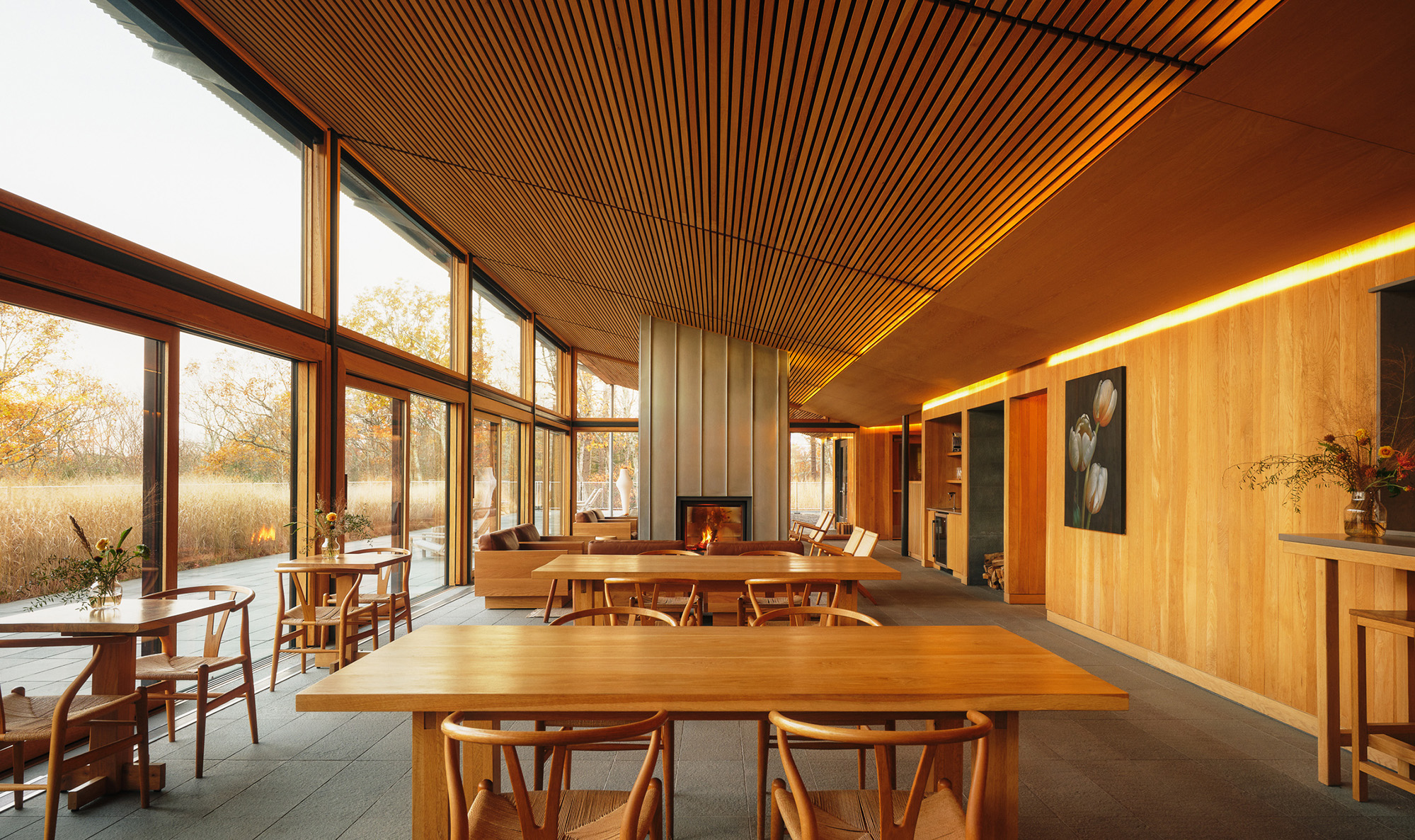
Inside Piaule, where Fowlescombe will host its two-day culinary residency. Photo: Courtesy of Piaule
How did you and Elly find each other? It seems like her perspective is such an important part of Fowlescombe.
She started working with me just on a consultancy basis. And that went on for about a month, and then we had this incredibly busy Easter at the pub, and she needed to help because somebody was ill. She came in for the weekend, and she was this absolute powerhouse. She was standing in the middle of the kitchen, and it was like she had a force field around her. I just thought she had a big personality and was incredibly engaging and fun. She has this really amazing energy that lights up a room.
But she wasn’t used to working in a farm-to-table way; I think if you asked her, she would say it was a bit of a learning curve. But she and Shelley, our head gardener, they’re really counterparts to each other.
Will you be going to the residency?
Elly is bringing my marketing director and a sous chef. I’m coming to New York, but I have a lot of meetings. I’m going to try to get up there for one night. It would be a real shame not to!