This French Chef Discovered Ramen Through Naruto. Now He Has a Michelin Star.
Mory Sacko’s unique blend of French, West African, and Japanese gastronomy has made him a star. His first cookbook divulges some of his beloved recipes.

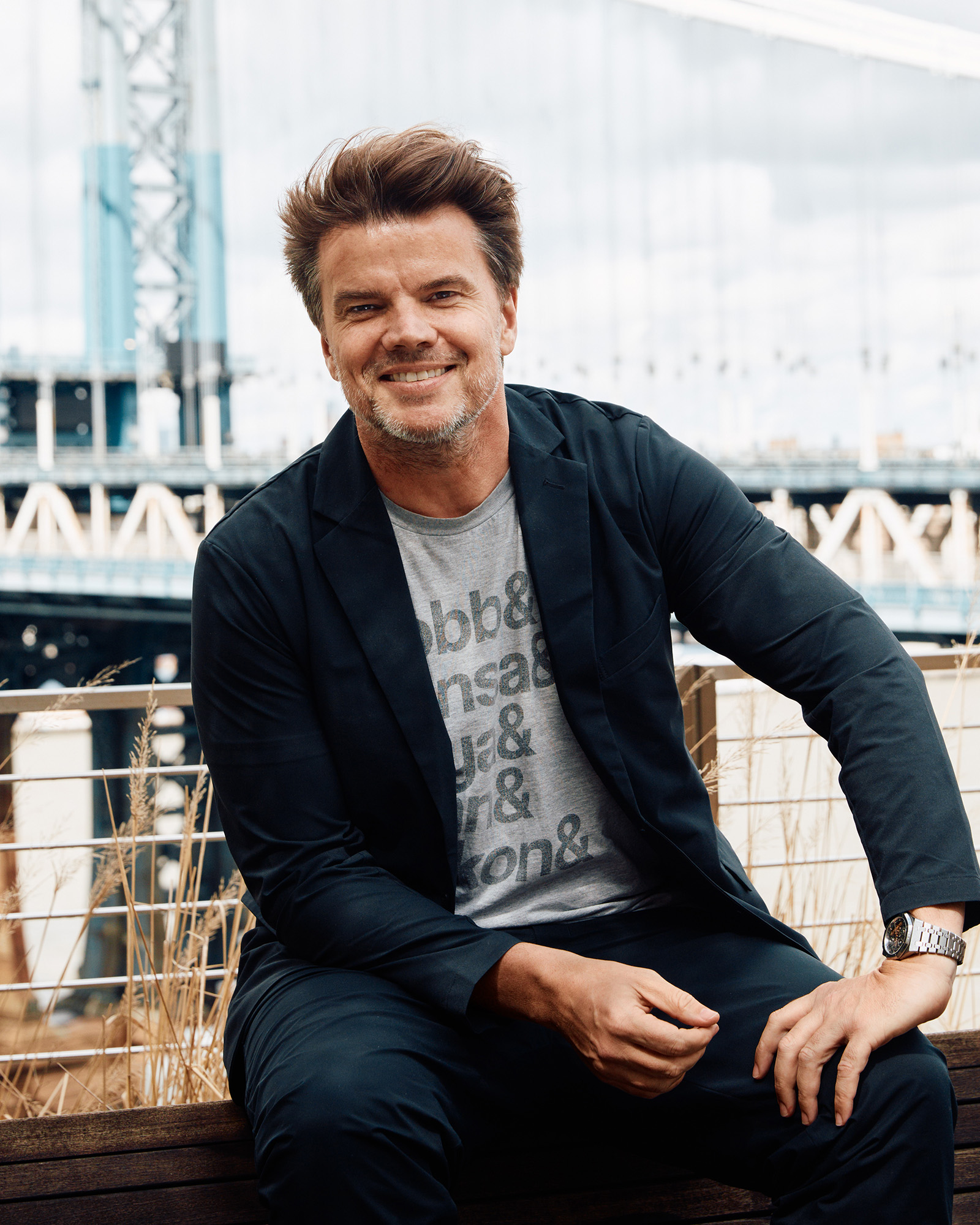
The New York Times once said Bjarke Ingels might be “the most important architect you have never heard of.” Today, he’s a household name. On this episode, Dan speaks with the Danish starchitect about how he got his first job working for Rem Koolhaas, how he created his legendary “archicomic” that changed the discourse on design, and how architecture can turn fiction into fact.
This interview originally aired in season three of The Grand Tourist podcast on February 23, 2022. Its transcript appears here for the first time as part of The Grand Tourist Classics, our ongoing series bringing conversations with tastemakers in fashion, design, food, and travel from our archive to the website.
TRANSCRIPT
Bjarke Ingels: So that’s really the power of architecture, that you take something that is pure fiction, a wild figment of your imagination and then a decade later, that’s simply how the world is. A city like Venice in Italy, it’s basically houses built in the marshes so nothing there is not manmade. Everything is created by someone. But now you take for granted that Venice is a city where people sail through the streets paved with water in gondolas. But that’s because someone created it. And so it really went from fiction to fact, it went from fantasy to reality and that’s the true power of architecture.
Hi, I’m Dan Rubinstein and this is The Grand Tourist. I’ve been a journalist for nearly 20 years, and this is my personalized guided tour through the worlds of fashion, art, architecture, food, and travel. All the elements of a well-lived life. And welcome to the first episode of season three. We have a great lineup planned and an entire year mapped out with a ton of surprises, collaborations, and events. So, make sure you visit us online and register for updates at thegrandtourist.net.
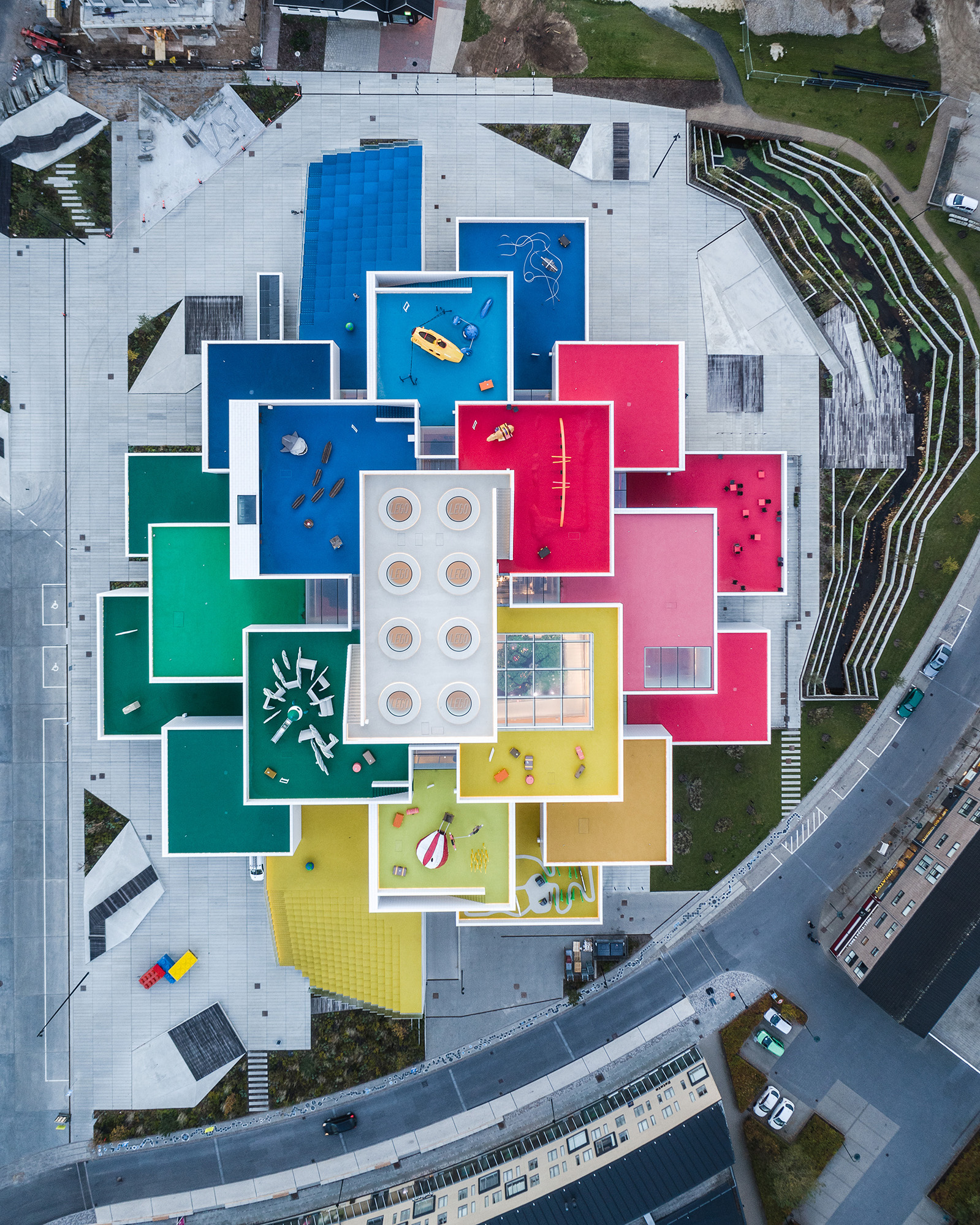
My guest today breaks the mold in so many ways and was once described by The New York Times in 2015 as the most important architect you’ve never heard of, Bjarke Ingels. But today for any observer of design, he’s a household name. While most architects can expect to build their first major project by the age of 50, Bjarke at 47 has already built dozens. Curvy museums, wildly shaped apartment blocks, avant-garde restaurants, visionary corporate headquarters, and more. But the success of the Danish architect who now shuttles between New York and Copenhagen is heavily tied to his sheer bravado and wild imagination. Who else, but Bjarke could build an award-winning experience center for LEGO, and make it look like it was actually made out of Legos, and win awards for it.
Who else could turn a power plant into a ski slope? Who else could build a triangular condo building on Manhattan’s waterfront and get away with it? Unsurprisingly before studying architecture, Bjarke thought he was going to be a cartoonist and it’s that knack for world-building that is crystal clear in his portfolio. But he’s not just a stylist. Together with his massive team of designers at his firm, Bjarke Ingels Group, also known as BIG, he’s tackling major projects the world over with a line of thinking called Bigamy, more on that later, where he turns, what if into why not.
Back in my days at a Surface magazine, I could remember his book called Yes is More hitting the architecture world in 2009, like a bolt of lightning. Instead of a boring treatise that no one would read, he created a chunky graphic novel that combined illustrations with photography to get his complex ideas across. And most surprisingly, he was respected for it. One of his many upcoming projects that are just as audacious, is Master Planet, where he attempts to reengineer the way we consume energy around the world to tackle climate change. Crazy? Maybe. Controversial? To some. Fascinating? Absolutely.
I caught up with Bjarke in New York to talk about how he got his first job working for Rem Koolhaas, how to best explain Bigamy to the layman, his upcoming hotel in Switzerland for luxury watchmaker, Audemars Piguet, the story genesis of Yes is More and what it all means.
In the late seventies in Europe there were no inexpensive flights, so I think my interest in drawing came very much from the three, four day drives to go from Denmark through Europe down to what was called Yugoslavia back then. And I was sitting in the back seat of this Morris Minor 1000 station car. If you remember the one with the wood siding.
Yes, of course.
Pretty epic vehicle. And essentially just drawing like mad. And I think as Europe passed by, and eventually, you had to cross the Alps as well and like castles and all kinds of things. I think it all just landed on paper and that made me realize that I was good at drawing things.
And then I think almost like in this kind of positive reaffirmation, everybody said, “Wow, you’re so good at drawing.” So, I eventually drew through my entire childhood things, but mostly stories and worlds and I thought I was going to become a cartoonist. Of course when I graduated from high school, I realized that there is no cartoon academy in Copenhagen and somehow had to find something that looked a little bit like it and at the time the architecture school was part of the art academy, and it was before computers and software had eaten up the entire world. So back then you had two years of basic education, which was all about giving you more technical tools to draw things. So, I thought, I’ve spent my entire life so far drawing humans, animals, and vehicles and all the action. And now maybe I can focus on the backdrop for a bit because education is free in Denmark. It doesn’t hurt to fool around in the wrong education for a while until you find your feet. And so, I was actually just thinking of taking the two years of more technical drawing skills and then taking it back into fiction.
So, after you studied architecture, your first job was at OMA for the legendary Rem Koolhaas. What was that like?
It was the only job I ever applied for in architecture and it was definitely a pilgrimage. I went there first as a student and then I returned as an architect. I had sent a portfolio maybe in October. In December, before Christmas I called and said, have you guys gone through the internship applications? And they said, we have a pile of a few hundred, and we’re going to look at it in January. And I was thinking like, there was no way in hell I was going to stand out in a pile of hundreds. So, I spent Christmas remaking my portfolio, and I think all architects or architect students will recognize this, that the problem of your portfolio from studies, I mean unless you’re like exceptionally gifted or the child of architects or whatever, the learning curve is quite steep which means that the first like 1, 2, 3, 4, 5 semesters are most likely going to suck. And you need the portfolio after, you know, semester seven or eight. So portfolio making is mostly a giant exercise of putting lipstick on a pig, right, because you somehow have the projects you did, but you have to somehow make them reflect what you can do now and not how useless you were three years ago.
You need to make small models out of foam look really enticing. Right.
Exactly. But then I took a bus to Amsterdam, and I’ve been reading El Croquis, the Spanish architectural magazine that has very detailed credits at the end. So, for every project, I could see which architects were attributed to which projects. So I had a few names that I could distill were important in the company. So I went in and asked for this person, luckily he wasn’t there, so then I said, okay, well, he told me to ask for this person, a guy called Gary Bates and Gary Bates showed up and he was a very tall guy. I think he’s only five years older than me, but back then, it felt like he was the tallest and most experienced person on planet earth.
He had a kind of cranky attitude. So, he was like, sort of I’m sorry, I don’t recall having ever spoken with you. And I was like, no I’m sorry we haven’t spoken actually, but this person said to talk to you. And then he took my portfolio out of my hand and said, you can’t just come in here without an appointment. But then he also started flicking through it. As he was flicking through it, I was feeding him a little bit of information. He asked a few questions, and then he said, okay, let’s sit down for five minutes, and maybe you don’t have to come back. And then he was then basically like, criticizing everything I’d done in my entire life, fiercely. And then he said, so when can you start?
Wow, I mean that’s ballsy. That’s really ballsy, but it worked, right.
It totally worked. It was definitely one of the greatest moments in my life at that time.
What was Rem like as a boss?
It’s funny when you’re a kid you don’t yet know or understand how the world works. And you also don’t understand how much work goes into making a project happen. You tend to think that the work you are doing is the most important. And so, in that sense, I remember that at the time I was surprised by how little he was sitting down and drawing with us. It was mostly that we would work like crazy and then he would come by very quickly and ask a lot of pointed questions and had no patience for long-winded explanations. And he would cut explanations short and go straight to the heart of the matter like, this is interesting. What is this? And so, in some way, I felt it was like superficial or like impatient or—
Or like aloof, like disconnected.
Exactly. But of course, 25 years later or actually 30 years there, I’m realizing that he was probably extremely involved, but there were so many battles to fight. And also, often the discussions and the little face time we had would digress from core architectural conversations into what I felt were more tactical or political, or strategic conversations. But again, it’s because politics and in a way, some form of power struggles around the decision-making that goes into reaching a situation where a project can actually happen and where a different project can happen, building the necessary support from the people that have to make votes or from the neighbors that can actually put down like roadblocks, et cetera. That entire game is such a fundamental part of the architecture.
Because I was unaware of it, me and the other guys who were like building the models, doing the drawings, it felt like we were doing all the work. But slowly I’ve realized that we had the space to do that work because of someone understanding the architectural part, but also understanding all the other aspects of the incredibly complex process that is what becomes, when it goes well, a building. So, I think in that sense it was incredibly educational. Ultimately architecture is a master-apprentice art form and the kind of tacit transmission of skills that you get of course from the head of the studio, but also from all the other characters. Like the most amazing thing about OMA, and I think it’s definitely also one of the strengths of BIG is you have this kind of migration of talent from all over the planet that all come with a different angle.
They all come very well versed in the body of work and the kind of mission and vision behind BIG, but they all have a different take on it. It’s not an army of clones. It’s an incredibly diverse environment where somehow people can be aligned around this one thing, even if they bring completely different things to the table. And I think that that was one of the things that really mesmerized me during the year spent at OMA, was the quality of the characters that I was working with and how different our perspectives were. And I was somehow assuming that everybody would know and understand OMA and call us the same way I did, but I realized that there was no single truth. It was like everybody had a completely different take on the meta-narrative.
(SPONSOR BREAK)
And when you had started your first firm PLOT with Julien de Smedt as a young firm—I mean, you’re still young today, right? If I named, in my opinion, some of the biggest architects today and you’d be on it, you’d definitely be the youngest at a certain level—I mean, doing your first ground-up commission at PLOT, how young were you at the time?
Yeah, so Smedt and I started in November 2000. And we built the Harbour Bath in Copenhagen. It’s a $1 million project. It’s a floating pontoon with a wooden deck, but it became a kind of manifestation. And, you know, we had six months to do it. The budget was ridiculous. The schedule was even more ridiculous, and we had to sort of downgrade our ambitions multiple times and each time we were sort of considering if we should throw in the towel and walk away from the commission because we were beginning to feel that there was nothing left to be proud of. And ultimately, we sort of dug in and opened the project. And it was definitely a dial-down version of our initial vision, but it was a built project.
And you were like 25, I guess, maybe.
At that point, we were probably 27. It was also an incredible lesson because of course the excruciating pain of compromise, and all these kinds of ultimate moments where you are like, considering are we compromising too much? Is it going to be a successful operation, but the patient died? And I think ultimately, we also realized the power of getting stuff done. And I think it also became a perfect manifestation of this idea of what we ended up identifying as hedonistic sustainability. This idea that a sustainable city or a sustainable building is not only good for the environment, it can be much more enjoyable for the people living in it.
And the Harbour Bath suddenly sort of made it so blatantly obvious that a clean port is not only nice for the fish, it’s amazing for the citizens. It extends the public realm into the water. It became the French student riot motto from 68, sous les paves la plage, underneath the pavement, there’s a beach. Inside the port, there is actually the ocean. So, despite all its sort of architectural compromises and technical shortcomings, it became a perfect manifestation of something very powerful. And in that sense it was definitely worth it. And I also realized that the purity of an unbuilt vision is of course unmatchable because it hasn’t been tainted by any of the kind of countless forces that you encounter in the process of realizing something, including gravity, economy, fire regulations, egress, and access and all kinds of things. But actually, that galvanization that happens when an idea is tested and tried and hardened by reality also provides surprises or unexpected moments.
And I think I also learned how, of course, you need an overarching arc actually, like a kind of overarching form of what is this project all about and what it’s going to be, but within that, you have to be incredibly agile and improvise. So in that sense it’s more like jazz than a classical composition that there’s going to be all these moments where if you’re not prepared to incorporate that counter-reaction or that opposition into your work, it’s going to be like a hard conflict and it’s going to break. But if you are more like Zeno or Aikido or martial arts, that if you learn how to turn the force of your opposition into your own strength, then you become so much stronger.
Can you tell me a little bit about Yes is More and the genesis of that? Because to me, when I think back to like early days of covering design, I remember it being kind of like something of a flashpoint of this sort of like mixture of youth culture and what was cool and coming from a young person, but also about really serious things and doing it in a way that was kind of radical for its time. Can you tell me a little bit about what that was and how that started?
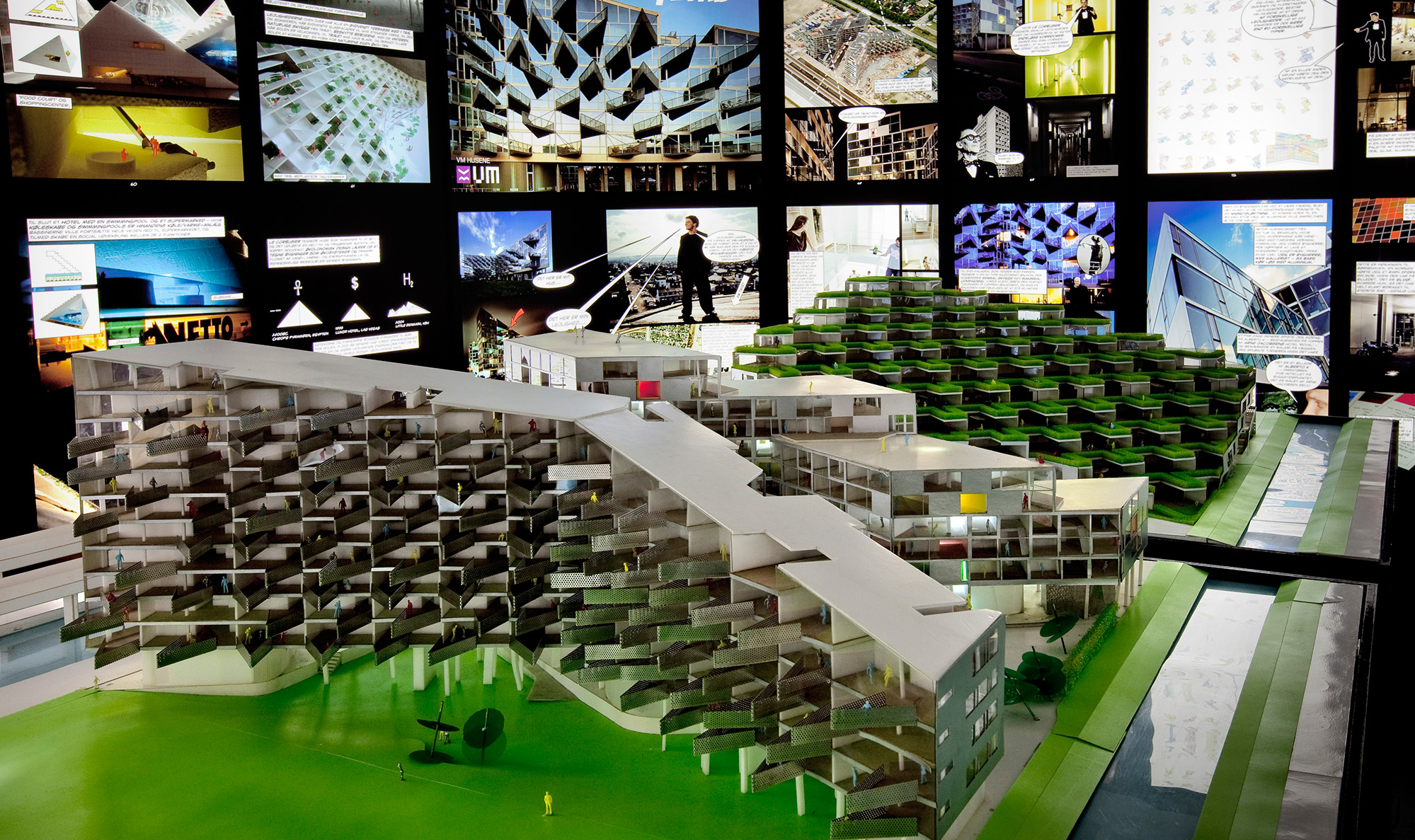
So Yes is More is, I think we call it an archicomic. It is essentially a book about architecture, essentially the work that we have been doing up until the end of 2008. And it’s told in the form of a graphic novel. Actually, it’s modeled over Frank Miller’s Sin City and the Dark Knight. It’s the American graphic novel format, which is more like a book compared to the European cartoons. And at the time we’d been working on the Danish contribution to the architecture in Venice, together with Bruce Mau. In that process, we had a kind of eureka moment because Bruce was in Copenhagen, and as part of it, we were kind of curating the Biennale. It ended up being called “Too Perfect: Seven New Denmarks.”
It was the idea of applying the power of design to all of Denmark within seven different economies. And one of them was the economy of logistics or shipping. And the whole idea was sparked when I took Bruce through the studio, and we were showing him some of the projects we were doing including this research we had done on the use of harbors. When you go to the studio with the architect, all of the work comes to life. And when you go to the building or the building site with the architect, again you know the project comes to life and you feel it, you sense it. And even when you go to the finished building, if it’s successful, the building itself now fully manifested will speak for itself.
But when you go to architectural exhibitions, it’s just like dead drawings and materials, so how can you capture the energy of walking around with the architect in an exhibition or a book. So, his answer for the Biennale was that we did a film with Julien and I explaining the Superharbour. So, walking around almost like a weather report through these maps and numbers.
So then when we did the exhibition for Yes is More, I was thinking let’s try to see if we can capture this idea of walking through an office with the architect telling the stories behind the scenes of the projects and how they turn into what they were. And my first idea was to take all the PowerPoint presentations that I had done in the last eight years and print them out and put post-it notes that would say verbatim what I would say while showing that slide. But it turned into this you know, like a two-foot-tall stack of slides infinitely slow-paced because of course when you click through things, you can sometimes click through things very fast. You can change the pace. And I was about to give up on the idea, and then we realized that actually a graphic novel uses scale.
So sometimes it takes a full page, and you can dwell on it. Sometimes it goes down to speed things up into very small frames after each other. And you have spoken word and we even thought, let’s put the architect narrator into the frames once in a while, so it became like really walking through the office and it starts with literally walking through our office and you see the people that I’m working with.
Did people think you were crazy?
I don’t know. The blessing was that we basically did it in the entire month of January 2009, and we had to submit it to the printers around February 1st. So there was actually no time to think. And we worked so intensely that I started smoking cigarettes again. I had quit like five years before. So, it actually cost me three months of smoking to do it. But because there was no time to think, when we submitted it to the printers, we were also thinking this is the cheesiest lamest thing ever done in architectural publication. And I was thinking well thank God the exhibition was basically all our models. And then the wall-mounted graphic novel wrapping around it, like a linear narrative in a way. And I thought thank God it’s only in Danish, so who cares. And we printed the catalog in English but 5,000 copies. We said we’ll sell them out and forget they ever existed. And once the dust has settled, we can sit down and carefully edit it and put it out as it’s supposed to be.
Then what happened was that the exhibition opened and then the first few thousand books sold out. The last thing I wanted to do was to revisit any of this, like death by editing. And also, I picked it up a few months later and I thought, well maybe it wasn’t so bad. And I thought maybe it should really just stay as a kind of freeze-frame of this one moment. And I think as an experiment it succeeded. I mean, of course, it was a little bit at the expense of the more classic aesthetics or beauty of making your work look as good as it can, but it came with a completely different level of storytelling that I think was worth it.
Then the funny thing was that Taschen opened a bookstore in Copenhagen and Benedikt Taschen came for the opening. So I came to the opening with the graphic novel and put it on his shelves and he saw it and he was laughing about it. And then we exchanged information. And then he actually wrote me a message the next day saying he was on the plane, he’d been reading the book and he liked it. And he said, we should have a conversation. So, then he ended up publishing it. And maybe one last thing to put into perspective and that explains the title, Yes is More, was that this was February 2009, basically a few months after August, September 2008, the biggest crash in the global economy I had experienced in my lifetime. And there was this kind of sense of negativity and depression and we thought it could be interesting, maybe even necessary with some kind of blatant statement of optimism.
And of course, Barack Obama had just been elected president of the United States, Yes We Can, so he also made it into the book. There was like this little evolution of ideological law, mostly architectural discourse from Less is More with Mies van der Rohe to Less is Bore with Robert Venturi to, I’m a Whore, Philip Johnson to Barack Obama Yes We Can.
So, we created this little kind of evolution of architectural discourse dealing with trying to distill the essence of the profession into a single sort of aphorism. And the idea of Yes is More is this kind of statement about—actually a lot of the things I talked about—saying yes to the world as it is. Accepting the incoming often contradictory requirements, demands, concerns, criticism, and requests, and rather than the traditional idea of the avantgarde. Or the idea of the revolutionary that is against something. A lot of the greatest leaps come from evolution. What you describe as a revolution is often just a series of evolutions that reach a moment where it feels like paradigm change, even if it is just gradual development.
The iPhone was not a technological revolution, it was an evolution. It was, but it was funneling all of the things that had already been invented into a new consumer-facing holistic design that made it feel like a revolution, the same with the Tesla. So often we tend to describe things as revolutions when they are actually evolutions. And in that sense, the idea of Yes is More is to think of the world, and the role of the avantgarde, not to necessarily be against everything, but actually to say, what if the art of accommodation, the radical art of accommodation is to try to say yes and accommodate everybody? And I think that is the ultimate urban experiment, or it’s even the ultimate experiment of society is how can you create a society that can accommodate the maximum amount of freedom for everybody, as long as the unfolding of their freedom, doesn’t happen at the expense of others, but like this incredible complex knitting of a kind of knot of different dreams and desires, concerns and demands into an architecture or a world that is informed by this complexity and contradiction.
So, in that sense, the art of saying yes, can actually be more radical and create seemingly more revolutionary results than being against something. And I think ultimately it allowed me to make the statement that, if you are always defined by who or what you are against, you are essentially a follower in reverse because you’re not setting the agenda. The others are setting the agenda, you’re just against them. That’s why it’s easier, also politically, to be in opposition. And you always see that politicians that are so successful in opposition, once they get the power, they suck at it because now they’re in the driver’s seat and their whole discourse is about who or what they are against.
If someone wanted to understand some of your more recognizable projects that have broken through to the general culture, like the LEGO house, you mentioned once in a video that you did that architecture is the fiction of the real world. And the sort of idea of Bigamy, a play on Bjarke Ingels Group. Can you describe what that means to someone who is not a follower of architecture, who isn’t really quiet as knee-deep in it as some of us might be?
First of all, I think architecture is maybe best described as the art of turning fiction into fact. And it’s because when you make a project, and one example is maybe CopenHill, this waste to energy power plant we’ve built in Copenhagen, it’s the cleanest waste treatment power plant in the world. And it’s so clean that we got the idea when we did the competition to turn its roof into a manmade alpine ski slope. So, essentially, it has 120 different species of plants. It has multiple trees, pine trees. It has ski lifts, and it has this all-year skiable surface. And it’s because there are no toxins coming out of the chimney.
To explain this idea. So, we were sitting during the competition and we were brainstorming like, what’s the real question here? What’s the real opportunity? And it’s the power of clean technology. That clean technology is not only better for the environment, it’s fundamentally different. It means that a power plant is not some eye sore that blocks the view, casts shadows on the neighbors, and pollutes the sky. It’s so clean that you can actually walk on the roof. And Copenhagen is flat, so, the one thing you can use a 300-foot-tall lump of power plant for is actually a manmade mountain. We have to go to the Alps or the Rockies or the north of Norway to ski otherwise, but now we can do it at home.
So, we dream up this wild idea of a society where technology is so clean that the power plants can turn into manmade mountains, where the citizens can climb the facades and ski the roofs, where a power plant that turns trash into energy can actually be the habitat for birds, frogs, mice, foxes, and whatever. And that sounds like a utopian fantasy, pure fiction or even science fiction. But then, you know, we do all the hard work. We submit a plausible and ultimately electable winning design for the competition. Then we have to go through all kinds of rounds where we have to come up with the idea that, you know, the power plant is not allowed to run ski slopes because that’s not their purpose as a company. So, we had to create a foundation that could then operate the roof park. And it took roughly a decade, but then on opening day, we were at a ski party in the month of September in the middle of Copenhagen, a city that is flat and mostly reclaimed from the sea. And we now had a hikable, skiable mountain in the middle of Copenhagen.
My son was not even a year old when it opened. So, he won’t know of a world where you did not ski on the power plant in Copenhagen. So, for him and his entire generation, that is simply how the world now is, that power plants are where you go skiing. And it has a 300-foot climbable façade. That’s the tallest manmade climbing wall in the world. So that’s really the power of architecture is that you take something that is pure fiction, a wild figment of your imagination, and then a decade later, that’s simply how the world is. And I think that’s the true power of Architecture.
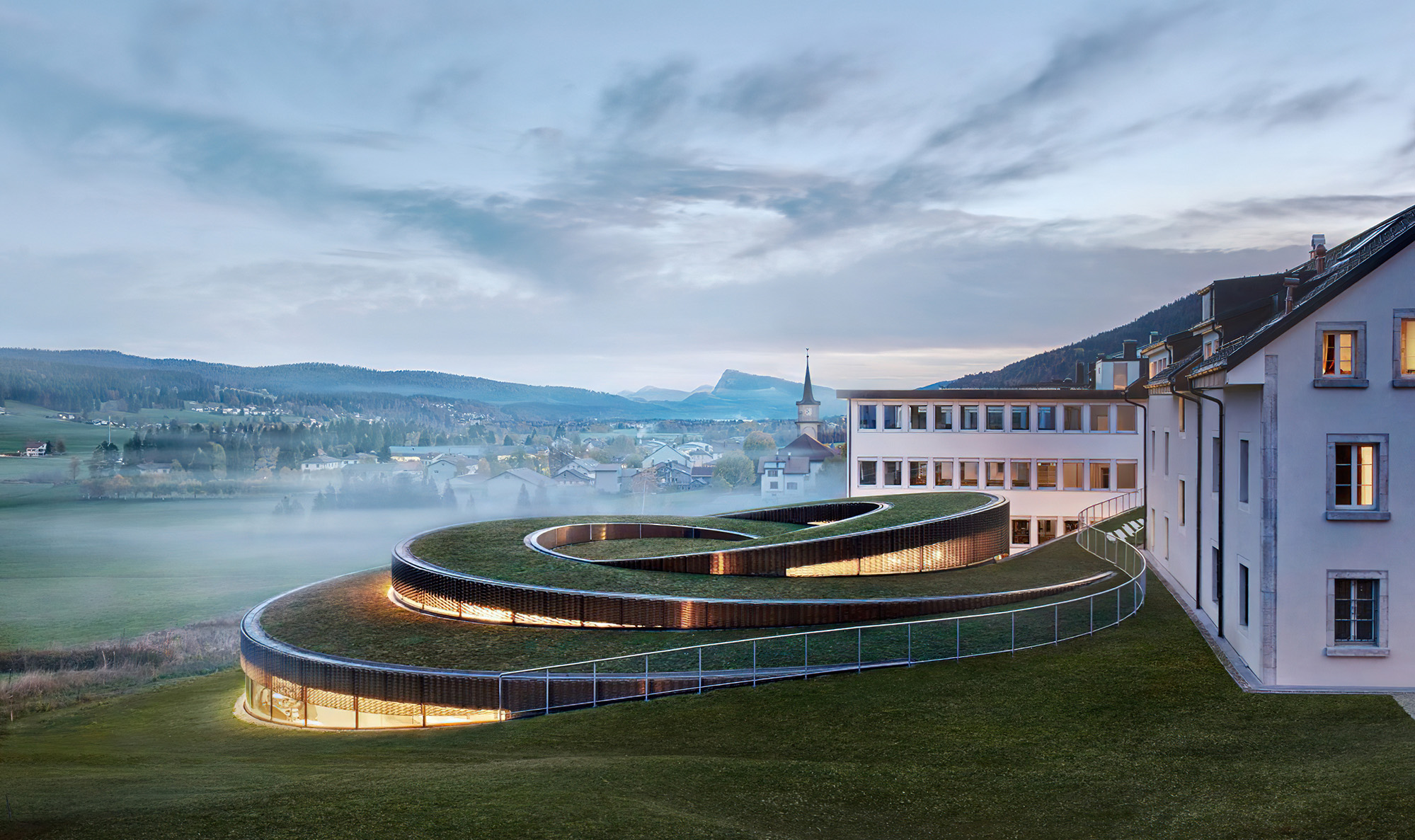
And speaking about resilience and new things and new ideas. One of your first hospitality projects with this hotel for Audemars Piguet in Switzerland. Can you tell me a little bit about, to the audience, what that is and how that was conceived for this legendary watchmaker. There’s a museum on the site that you’ve also designed, which is kind of a spiral and then next to it, is this kind of new structure acting as a hotel for their collectors and visitors.
So, the whole sort of partnership and friendship with Audemars Piguet started maybe half a decade ago. We got an invite to make their museum of watchmaking. And I was visiting some friends over Christmas and New Year in Switzerland for skiing. So, I drove across Switzerland to arrive at the Vallée de Joux, the cradle of watchmaking and it’s right after the New Year. So, the master watchmaker received me, and I think he was a Gallego from the north of Spain. So, the language we had in common was Spanish and I didn’t know much about watches. Like most people, I had converted to a phone, which is essentially a pocket watch.
Then he took me through the whole process of making a watch and this kind of almost alchemical process of, he was showing me how to make a bell and he was heating it up and he had a sheet of colors. And when the metal had a certain tone of purple, he dipped it in water and the molecules of the metal would then sort of freeze at that kind of structure. And then he would start sanding it to reach the perfect tone. And I was mesmerized. And what I realized is that we had become so used to this idea of hardware and software being two separate things. The hardware is essentially the empty container and the software is what animates it when you’re downloading an app on your iPhone.
But in watchmaking, the architecture or the form is the content. The hardware is the software, which actually is something that has in common with architecture. That architecture and watchmaking, it’s still the sequence of rooms, the location of the wall, the way that you move through the space is the experience. So, I was deeply fascinated and left really sort of animated with this idea. And we came up with the idea of making architecture for the museum as a sort of open work watch so that everything you see is exposed the way that an AP shows some of the open work, one that reveals the inner workings as part of the beauty of the mechanics. And so, it became this kind of chronological journey of double spirals around itself. And the curved glass is actually the only structure.
So there are no walls, no columns. Glass is actually stronger than steel. So, it’s similar to AP, using the materials to their greatest performance. So, you have this brass spring hovering above. Then as we were doing this project, and we were so lucky to win the competition, they realized that they needed a hotel in the valley because they really wanted people to sort of immerse themselves in the culture of the valley and they asked us to design a hotel. And actually the funny things maybe to insert here—
So then of course we had such a strong narrative that the kind of topology of the spiral was the museology of the museum, right? So, for the hotel, we could do a five-story building, but it’s a small village, so we didn’t want to dwarf the rest of the village. So we came up with this idea of stretching the five-story building to sort of smear over the sloping hill of the mountainside of the Jura Mountain. It’s really at the foot of the mountains. So, it becomes almost like a serpentine ski slope. You often talk about ski in and ski out, but it’s never really true. In this case, this kind of serpentine ski route means that every room, the restaurant, and the spa and the brasserie and the hotel bar has direct access to the slope. So, in the six months of winter, on your cross-country skis, you can literally ski in and ski out. And in the six months of summer, you can hike straight out into the meadow on this kind of roof landscape.
So in some ways, the two projects are very different, but they’re both shaped by the way that you move around them. In a way their hardware is their software.
I think that the truth is that almost no matter what you talk about, if you’re speaking with someone who has deep knowledge and is deeply passionate about the subject, it has the potential to unfold an entire world. And that’s what I experienced with this watchmaker. And I think I learned this incredible story about why Vallée de Joux outside Chaux-Neuve, is the cradle of watchmaking because I think it transcends watchmaking. It’s basically because John Calvin, the namesake of Calvinism, made a ban in Geneva against wearing jewelry. So suddenly all the jewelers and goldsmiths could not practice their craft, but watchmaking was a functional tool. So they basically directed all of their skills, all of the precision sort of ornament work and decoration, et cetera, and channeled it towards watchmaking, giving that field an incredible boost and really turning this part of Switzerland in the Euro mountains, into the kind of mecca for watchmaking.
And I love it as a story because often we see this idea of perseverance pounding through your obstacles as the hallmark of innovation, but it’s actually when you are forced, in this case a religious dogma, a ban against jewelry that you can’t pound through, so you have to sort of steer another route and that will force you to discover new territory and make new connections that you never made before. In this case, applying jewelry to watchmaking became the essence of the craft.
I think that’s true. It’s essentially a great example of Yes Is More, that by embracing reality as it is, by dealing with this new situation that you’re facing, you’re not actually compromising or giving in, you are allowing yourself to make new connections, discover new ground that you otherwise wouldn’t have.
And as my last question, speaking of this vision for the future, can you explain a little bit about Master Planet, and what that is and how do you explain it to a layman?
It’s a great short question with a ridiculously long answer to end on, but I’ll try to boil it down. So basically what happened before the pandemic, I think like everybody else, we were getting growing frustration about, our inability as a species to really act with resolve in the face of climate change. And also like a lot of my friends asking if we should be depressed or fear for the life of our children or whatever. And I think hopelessness is never good. You know, when you’re out hiking in the wild, if you give up, that’s when you fall asleep and die, right? So, hopelessness is not a good mindset if you want to survive or change the world.
Then secondly, we thought that one of the frustrating things is that we don’t really know. You can do good things. You can do the elite gold building or lead-silver, or like lead platinum, and clearly lead platinum would be better than lead gold. We can understand that ranking, but what does it mean in terms of climate change or addressing the issue? So, we thought, why don’t we actually see if it’s possible, because like we deal with projects and we deal with master plans. We deal with neighborhoods. We deal with cities. We even did like a kind of regional plan for the south of Sweden and east of Denmark.
We can deal with very large complex projects, and we can make plans for them. So, we thought, what if we actually see—let’s look at all of the Earth as a single, let’s call it a single piece of real estate, like a single site. It’s 500 million square kilometers of real estate and it’s 71% water and 29% land and 9% is like mountains and deserts, then the remaining part, half is nature and half is mostly agriculture, but also a little bit of city.
And then we sort of started sort of breaking it down, saying like if we were the master planners of the planet, could it be done? Could we reach carbon neutrality by 2050? Could you create and accommodate a sustainable human presence on earth? And could you do it not just for 7.8 billion people, but for 10 billion people? And could you do it for 10 billion people with the quality of life of Denmark? Not the kind of wide inequality that you experience today because that should somehow be the task. Right? And we thought to our knowledge, it hasn’t been done. You know, there are a lot of scientific reports, but they’re basically too long and too technical for most people to get a sense of them. There are speeches that are too general, aspirational, and lofty, but not really hard targets. I know that to build a building that’s going to be done in 10 years, requires us to start now. To make a master plan that’s going to be realized in 20 years requires us to start now. So we have 28 years until 2050. So, we should have pretty specific blueprints already. Not that they’re going to be final. They’re going to be like a framework upon which you can improve.
The way that master plans happen is that you digest the current information. You put out a proposal for a public hearing and then you receive feedback, political feedback you know, neighborhood feedback, all kinds of user feedback. So essentially the first blueprint exists with the purpose of attracting so much criticism that you can make a better one. And through that refinement process, you arrive at something that’s useful, but it’s certain that if you don’t start that process of planning, you’ll never get there. And I think maybe one last sort of call to arms—because of course when we started doing it and we called it a master plan for the planet or master planet in short, we also attracted all kinds of antagonism. The arrogance to think that you can make a master plan for the planet.
Obviously, it is a rather large undertaking. But the absence of a master plan actually has dire consequences. And maybe to close on this point. I spent a few months of the lockdown staying with some friends in a nature reserve in Sian Ka’an in Yucatán. And we were there for like two months after a year of the pandemic. And like no one had been to that nature reserve apart from a few inhabitants. But every day the beach would fill up with plastic coming in from the Caribbean, most likely from Cuba.
We have this idea that we should just let nature be nature, but our presence and the impact of our presence on the planet is so widely felt right now that in order for something to be untouched by humans, it has to be combed every morning by humans because the result of having no master plan for the planet is that we have a master plan in effect that is a shitty one and it says we don’t give a shit.
So I think the fact that the dire consequences of no master plan for the planet is felt worldwide means that we no longer have a choice. The absence of planning is having terrible consequences. So, the only way to make the world untouched by man is to plan for it. And that’s why we started the work and we’ve been doing it for the last two years. We’ve attracted some partnerships with various, mostly Danish, companies in the space of energy and the environment. And we hope to be able to make this planning framework and this way of looking at the world available in a greater sense over the next year.
But for now, just doing the work, adding up the math—because we are not coming up with any of this. We’re just in a way compiling everything that is out there and accessible into a kind of holistic framework. It has at least given me such a fundamental understanding of where we are and what it takes to do it. And I think the challenging news is that it’s like an insurmountable sort of insane amount of work. The good news is that it’s totally possible. We have all the techniques. We have all the knowledge. All we need to do is set some hard goals, start drawing up the blueprint and then keep criticizing it and sort of making it better until we’re there.
Thank you to Bjarke and his team at BIG for making this episode happen. The editor of The Grand Tourist is Stan Hall. To keep this going, please follow me on Instagram @danrubinstein to learn more. And don’t forget to follow The Grand Tourist on Apple Podcasts, Spotify, or wherever you like to listen and leave us a rating or comment. Every little bit helps. ’Til next time!
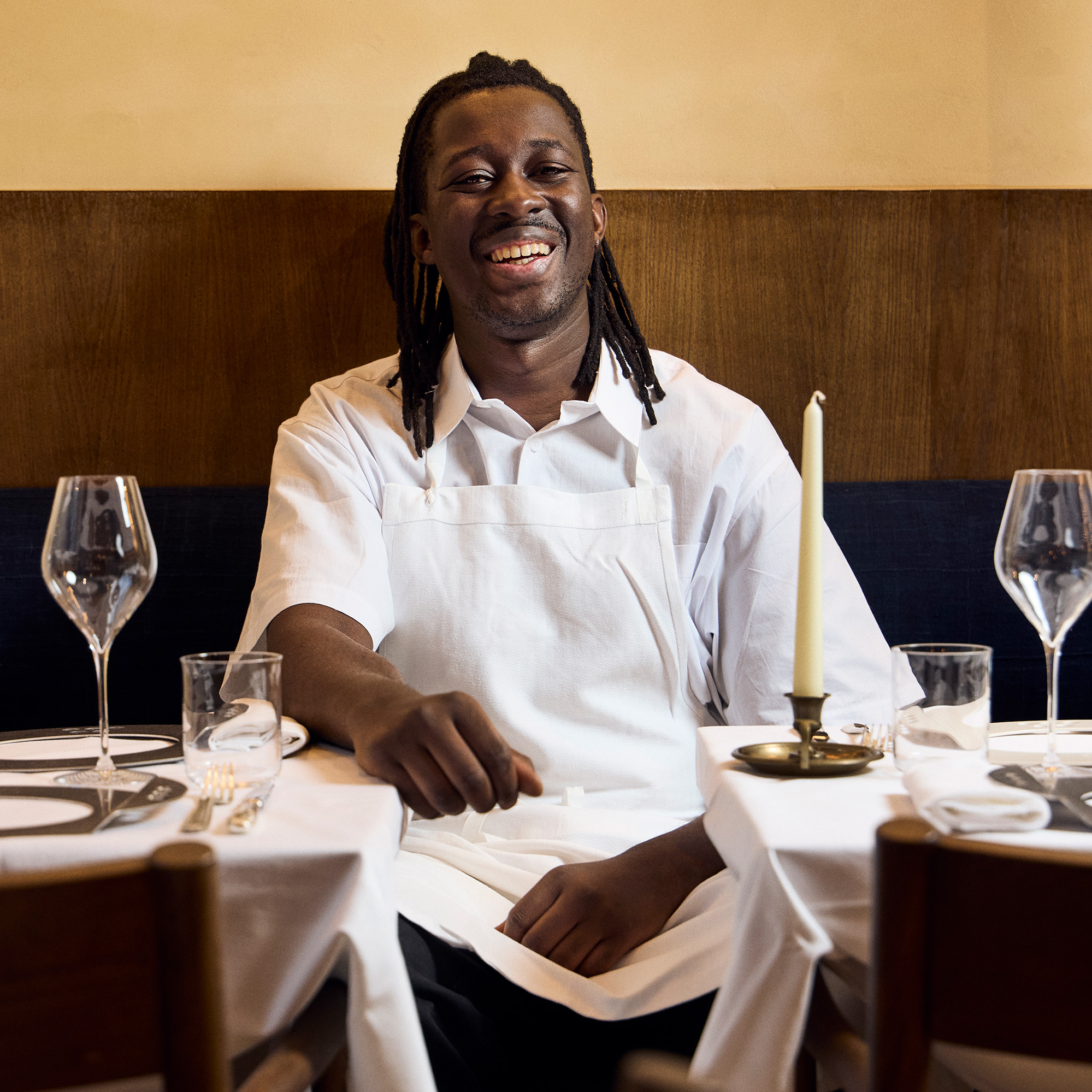
Mory Sacko’s unique blend of French, West African, and Japanese gastronomy has made him a star. His first cookbook divulges some of his beloved recipes.
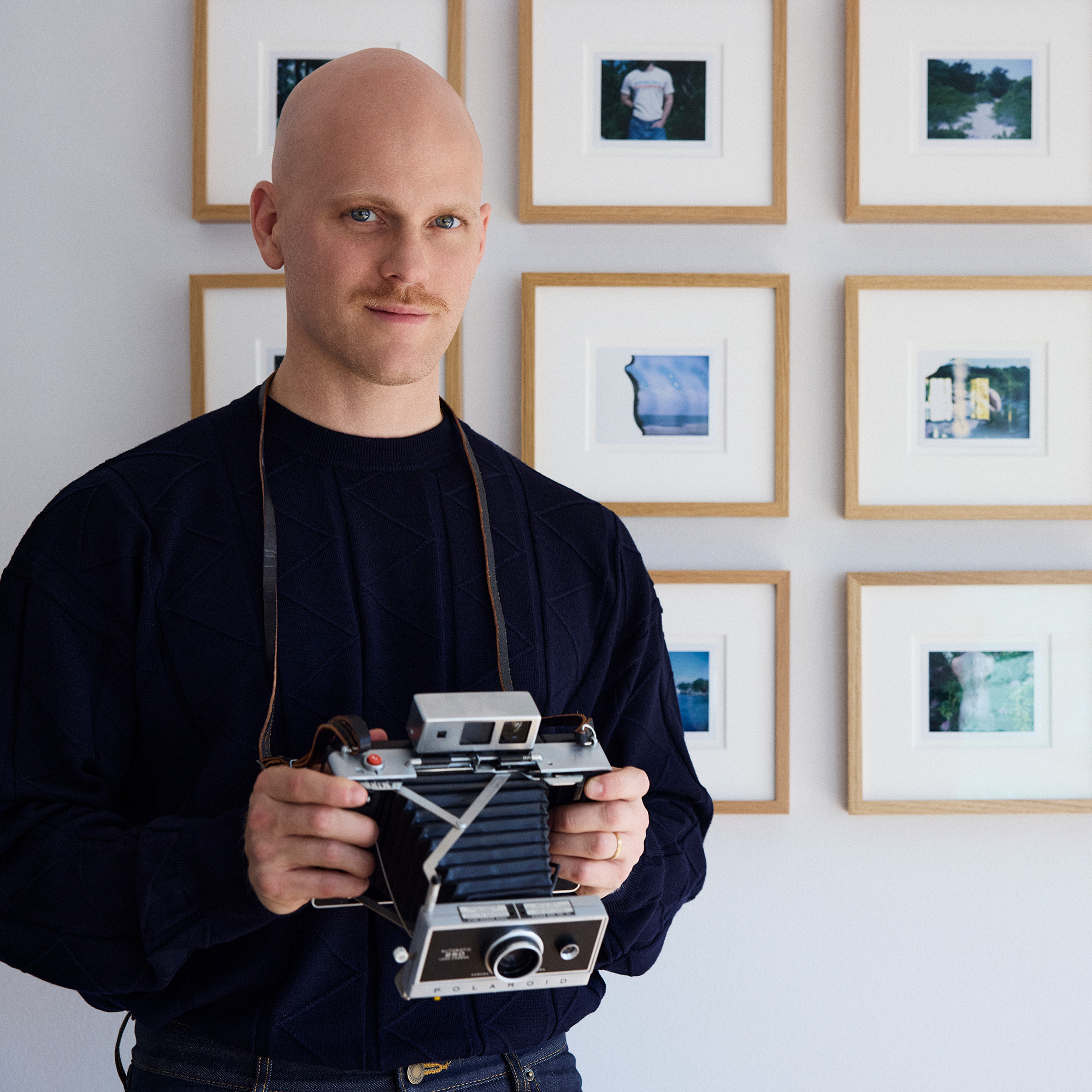
For the New York artist’s first solo show on the West Coast, Venturelli presents a series of paintings and photographs. Blue is the common thread—the disparate mediums explore how color can hold and evoke cherished memories.

Artist Bruno Aveillan brought his Alzer 75 with him throughout his travels, and photographed it in far-flung locales around the world. These images are the subject of a new book, as well as an exhibition in Paris.