Inside the Meditative Universe of Pierre Bonnefille
In the hands of this French artist and designer, the most elemental experimentations with watercolors and shapes give rise to the most elegant results.

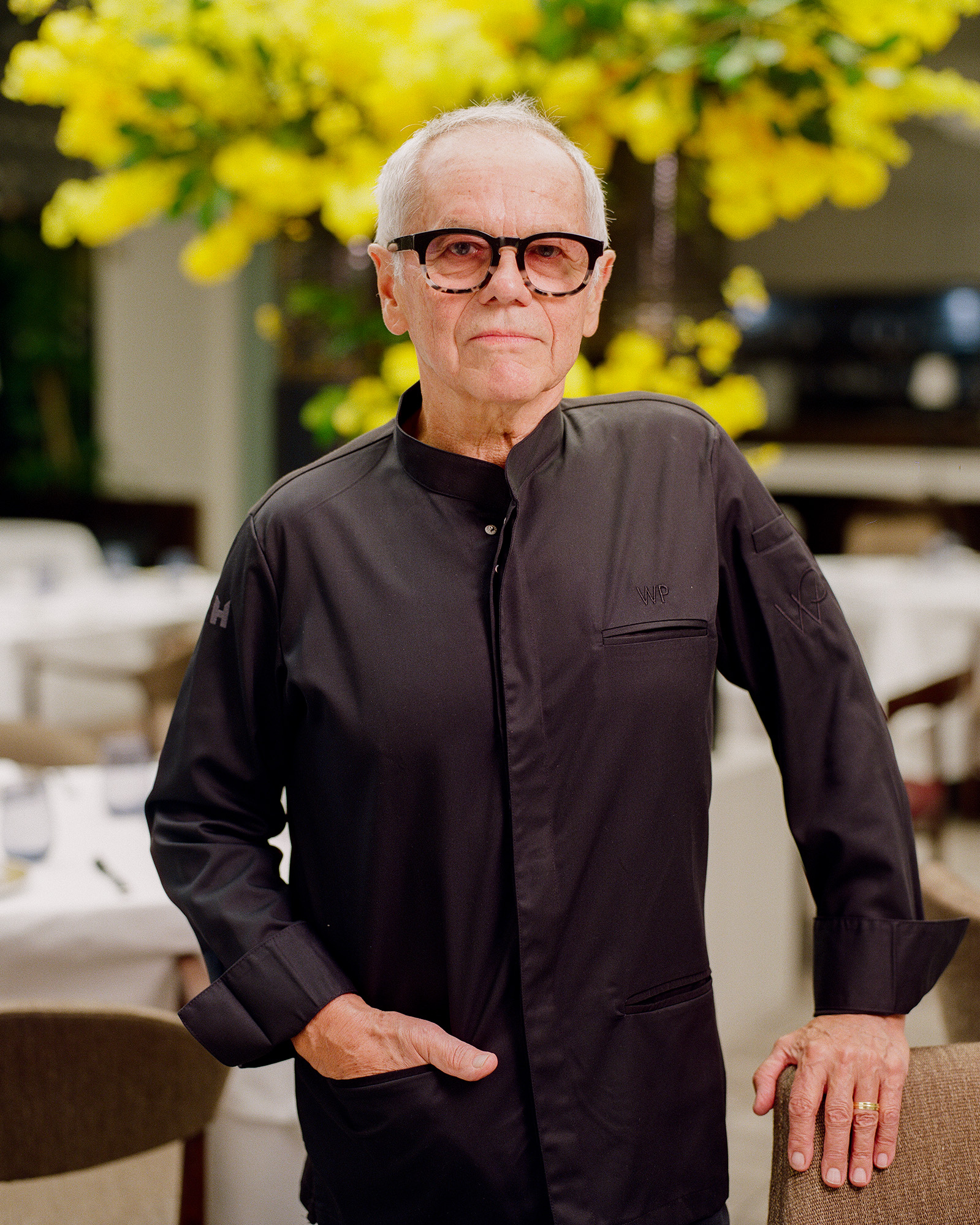
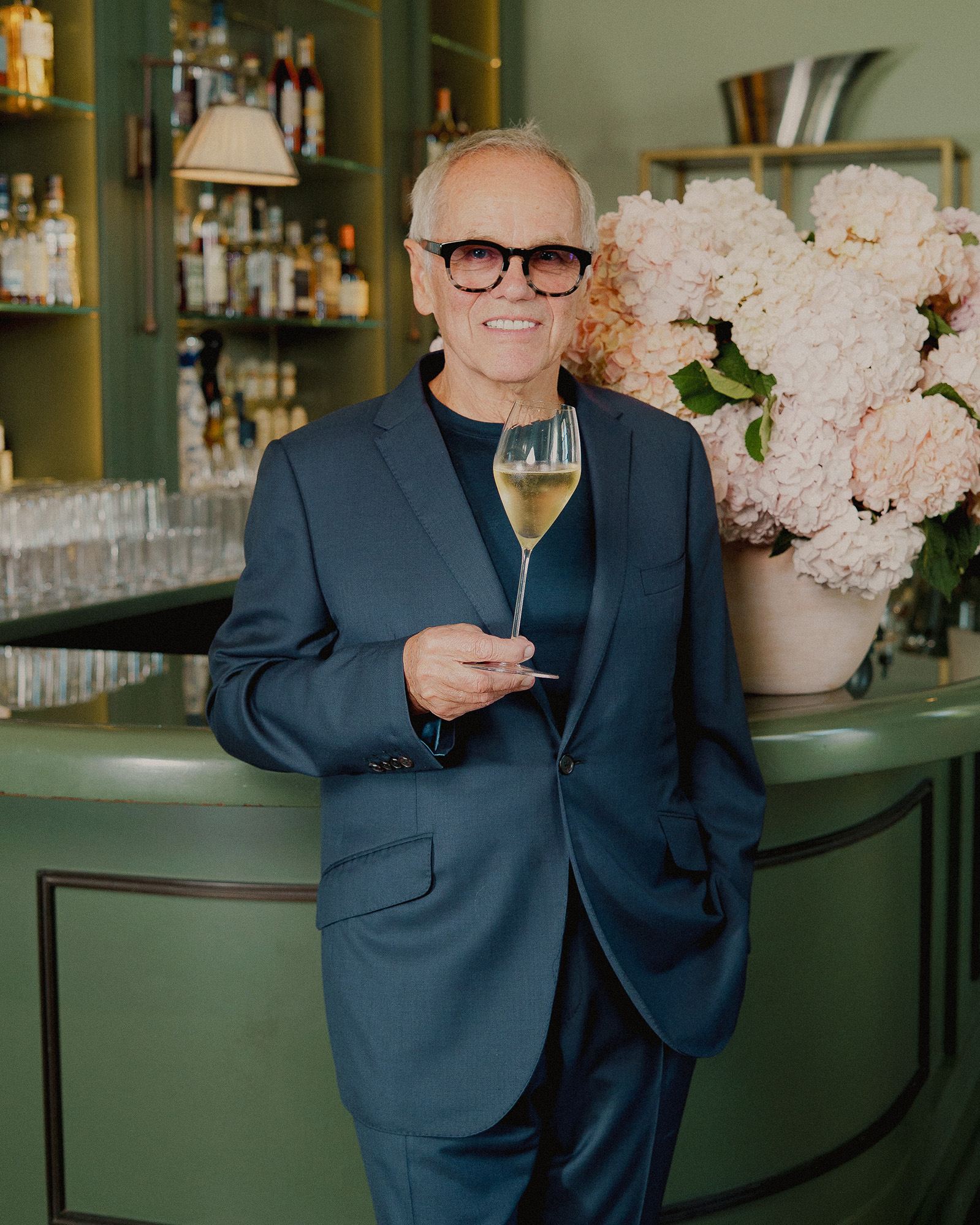
On the 15th season finale, Dan speaks with a household name in the world of food and dining: Wolfgang Puck. Through his restaurants, celebrity clientele, books, TV appearances, and fresh takes on various cuisine traditions, this chef has made an enormous impact on how we think about cooking and eating out. The pair speak about the chef’s challenging youth and start to the business, how he injected a new sense of style into the LA dining scene, his plans for the future, and much more.
This article is featured in our Spring 2026 print issue, available now.
After my interviews of more than 150 designers, artists, entrepreneurs, and architects for The Grand Tourist, I’m reminded that one quality many of them share is their drive: the drive not only for professional success, but to create, experiment, and swim against the tide. This is especially true for top-tier chefs, who spend most of their youth toiling away in a highly labor-intensive position with no guarantee of success, or even stability.
And no matter how much of a rock star someone might be today, it’s always great to be reminded how they got started and how they found their way. Chef Wolfgang Puck, a household name in the United States, is no exception. An Austrian native, he’s been a TV fixture to many Americans for decades, his renown further buoyed by his highly successful food empire based in California. His legendary spot for Hollywood’s elite, Spago—which opened in 1982 on the Sunset Strip—is still going strong today.
For many of us, his name is synonymous with success and fame, but as you’ll learn in this interview, his chosen life path of cooking was something he truly had to fight for in his youth. It’s the ultimate immigrant tale: An Austrian boy fights off the negativity of his family, then makes a name for himself in the U.S., completely adopting and transforming a cuisine foreign to him, then takes that culinary message not just to the global cultural elite, but to nearly every household coast-to-coast.
It’s afternoon there in Los Angeles, which is probably the farthest place from a small town in Austria that I can imagine. I read that when growing up, the food you had was all about what was grown or raised at home.
It’s true. We had a beautiful vegetable garden. We had a big forest where we picked mushrooms in the summer, strawberries, raspberries, blackberries, blueberries, and we had a great garden. My mother made her pickled vegetables and stuff like that. And later on, she even got a freezer, and she blanched them and froze them for vegetable soup in the winter, because in the winter we didn’t have much. It was interesting. And then obviously we had chickens, we had eggs, the farmer had pigs, and we raised two pigs. So whatever was left over, the chicken ate, or a dog, or the pigs.
Your mom was quite the cook, it sounds like.
Yeah. My mother was a professional chef, so she was very good in the kitchen and very resourceful. She could do amazing things with very little. She could probably produce a meal for $10 for the whole family.
And I read that your name, Puck, comes from your stepfather. That’s sort of your original birth name. I read that he was quite the strict father figure. Can you tell me a little bit about that?
It’s a very difficult memory for me because I think he really was bipolar. He drank a lot, and he punished us. He punished my sister and me, and he abused us verbally, physically, and so on. So it was not a good thing. My first years as a child were not my favorite. A lot of people will say, “Oh, I had such an amazing childhood. We did this, we did that.” We never went on vacation with our parents or anything like that. My vacation was when I went to this hotel on a lake where my mother was a chef, and I went there for a month. That was my vacation. I worked picking up tennis balls. Or when it was raining, I worked in the kitchen where my mother was working.
That’s quite young for someone today, right? I mean, no one would just send someone off at 14 to go work.
Yeah. Since I have four kids, too, I always look back and think, “What would I say, even if they wanted to go at 14 to another town?” At that time, we didn’t have a telephone, we didn’t have a car. I had to take the train and then walk for an hour if I wanted to go home. If I needed something, I had to write a letter. It’s different today.
Tell me about that first apprenticeship at the hotel. What led to it?
I started the apprenticeship as a little guy, like four foot eight or something like that. It was interesting because my stepfather always told me I was good for nothing. When I left with my little suitcase to go take the train to my apprenticeship in Villach, he told me, “Oh, you’re good for nothing.” And he didn’t want me to become a cook. He said, “Cooking is for women. It’s not a profession for men. You should be a carpenter or a mechanic or a mason or something like that.” But I went there, and the chef was just as crazy as my stepfather. After about two months, we ran out of potatoes. I was making mashed potatoes, buttered potatoes, things like that. And at the end, he was screaming and crazy. He used to drink a lot, too, on the job. He always ordered two bottles of wine. And I think by two in the afternoon he would’ve drunk them. His face was all red and blown up. And he screamed like crazy.
At that time, it was a little bit like that to be a chef. He probably wasn’t the only one: People were hitting people, and so forth. So he fired me after two months because we ran out of potatoes. He also told me I was good for nothing, that I was too young, too little, and everything. That night I said, “I don’t want to prove my stepfather right, that I’m good for nothing. I’m not going to go home.” So I stood on a bridge going over the river there. It was a big river in the city of Villach. And I said, “I’d rather jump in the river and finish my life.” But after about an hour standing and looking down, all of a sudden I said, “I’m going to go back tomorrow and see what happens.” Sure enough, I couldn’t sleep all night.
In the early morning, I went to the hotel—it was a small hotel with a big restaurant. And when the apprentice who was ahead of me saw me coming in, he was excited and said, “Oh, now I don’t have to peel potatoes anymore,” and that I could do all the cleanup or whatever. He hid me in the vegetable cellar, and I was peeling potatoes and onions and carrots down there. He brought me a little soup or something to eat. And then after about 10 days or so, the chef came down in the cellar, saw me, grabbed me, and said, “Ah, you go home, I fired you. And I basically yelled back at him because I had nothing to lose. I said, “I’m not leaving, I’m staying.” And he didn’t know what to do. He called the owner of the hotel, and the owner had another hotel, a small hotel in town.
They sent me there, and I got better. They had a lady who was the chef, and she was nicer, a bit calmer. She didn’t drink, so it was okay. I started there, and the rest is history. I did my three-year apprenticeship. When I was 17, I moved to France and spent seven years there. And then I came to the United States.
And why France?
Because at that hotel, we had a gastronomic week from a French restaurant in Dijon called Aux Trois Faisans. I was so intrigued by the way they cooked: They made coq au vin, boeuf bourguignon, pâtés, and escargots. I’d never seen a fish with a white-wine sauce. So I said, “Wow, I have to go and really learn how they cook.” It was more interesting than what we did in that hotel in Austria. So I wrote to them. They accepted me as a stagiaire, and I stayed there for a little over a year. The owner gave a party for the employees one afternoon, a glass of wine. But the Michelin Guide came out, and they gave us one star at the restaurant. I saw the way they were talking in Dijon: that this is the capital of gastronomy of France, it’s the best place, the best wines, the mustard, the cheese, cassis, and all these things.
And I looked through the book, and all of a sudden, I found out there were two-star and three-star restaurants. So I said, I’m not going back to Austria until I work in a two- or three-star restaurant. I started to write to all of the three-star restaurants, and maybe the 10th or 12th, L’Oustau de Baumanière by Mr. Thuilier, accepted me. I started to work there, and that really changed my life. For me, that was a revelation: learning the way they cook, the way they look after the ingredients and everything. I think it’s still in my head today, and I think it’s really changed the way I think about cooking. He became my mentor.
I read that you worked at a restaurant in Paris, Maxim’s.
Yeah, Maxim’s. It’s in the heart of the city. It’s still around today, on Rue Royale.
It’s such a famously eccentric place, with a lot of famous people known to have gone there. What was it like working there?
It was amazing. But for me, Baumanière was really the main place because we also had famous people, and Thuilier was really the first one. He was in the kitchen, and he was like 72, 73 years old at that time. He used to bring Elizabeth Taylor in the kitchen, Marcello Mastroianni, Catherine Deneuve, and Picasso.
He’d walk with them, show them the kitchen and everything. So I think for me, as a kid at the time, 20 or 21, I said, “I want to be like him one day. I want to be like him in my own restaurant.” So when I left there after two and a half years, I worked in Monaco at Hôtel de Paris Monte-Carlo, at La Réserve in Beaulieu, and then Maxim’s in Paris. And Maxim’s was an amazing restaurant, too, because they had music.
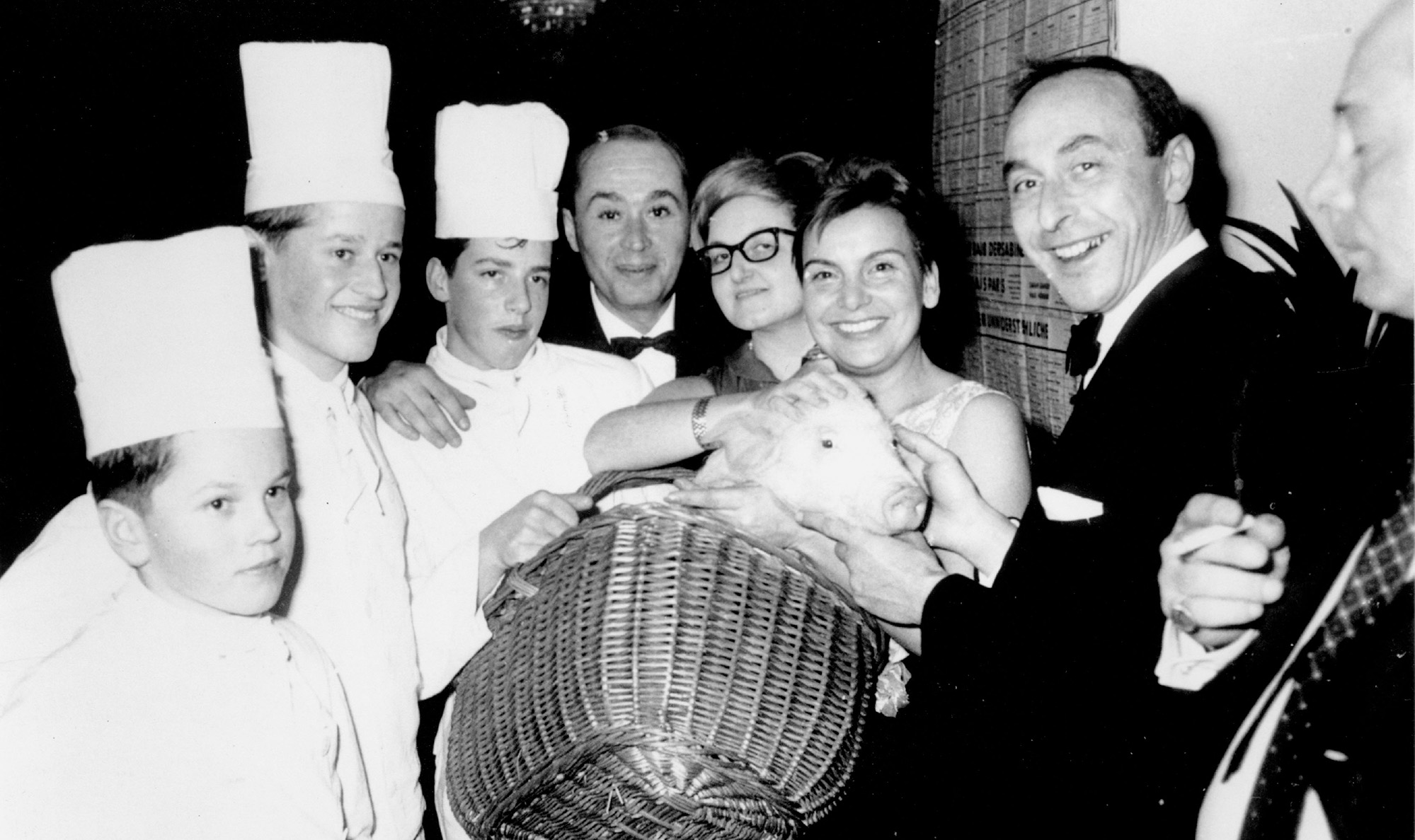
Friday night was black tie. Everybody who was anybody in Paris, in France, in the world, they’d go to Maxim’s. Maxim’s was the place to go. I saw almost everybody there, from famous movie people to politicians and artists. You name it, they were at Maxim’s. I remember Salvador Dalí used to come every day for lunch. Yul Brynner used to come all the time, and Serge Gainsbourg and Jane Birkin came really late at night, asking me to come out.
I was the night chef who’d come out for a drink with them at the end. So it was a great experience, a great restaurant—also a three-star restaurant—and a great learning experience.
But then one of the waiters told me, “I have a friend in New York opening a restaurant, and he’s looking for a chef. Maybe you want to go to New York because everybody makes so much more money in the U.S. than in France or Austria.” And I said, “I’ve always dreamt about going to America,” because at that time it was the time of the hippies. I said, “I want to go to San Francisco.” It was my dream. But I happened to go to New York, and I didn’t really like it.
But because I loved car racing (and still do), somebody offered me a job in Indianapolis. And I got all excited because of the Indy 500, the most famous race in the world. I lived in Monaco, which has the Rallye Monte-Carlo and Formula One races. So I said, “I want to go to Indianapolis. That’s the temple of racing: the most famous race in the world.” I took the Greyhound bus, went to Indianapolis, looked around, and said, “Oh my God, this is nothing like what I expected.”
I was going to say: From Paris all the way to Indiana must have been quite a shock, no?
It was quite a shock, but it was nice. The Midwestern people are very nice. The girls were really nice. And I got my green card there. They didn’t have a lot of people immigrating to Indiana. So I got my green card there and then moved to California.
And how did California happen?
The same company I worked for in Indianapolis was a restaurant management company. It’s called Aramark. And they had a luxury division called Davre’s. They lost their contract in Indianapolis, and the Aramark people didn’t want me to stay in Indianapolis. I didn’t want to stay there either. So they sent me to L.A., where they operated another restaurant downtown. So I became the chef in that French restaurant. About six months later, I met Patrick Terrail, who owned a restaurant called Ma Maison. He was bankrupt at that time, but he was the nephew of the owner of La Tour d’Argent. Already, I wanted to open my own restaurant. I said, “I’m going to look for a second job.” So I started at Ma Maison, working at lunch, then dinner downtown at Restaurant François, the French restaurant, to save some money.
I got into a fight with the manager at the restaurant downtown. Not a fight, but a disagreement. He wrote a menu, and then he questioned me if I knew this dish or that dish. You know, he put all these fancy names on it, like tournedos Henri IV and chicken Gismonda. I said, “No, but this is old style. You have to change.” Now we say, “Okay, it’s a tournedo with foie gras and black truffles.” We don’t say the name of a person who’s been dead for hundreds of years. And he said, “Well, that’s the way it is. You’re working for me. So that’s what I wrote on the menu.” Finally, I said—because I already had a job in the morning at Ma Maison—“You know what, if you write the menu, why don’t you just cook it, too?” And I took off my apron and gave it to him. “Now you can cook it.”
Working with Patrick Terrail at Ma Maison was this sort of breakout job for you, especially in the U.S. I read that you tried out recipes on some famous customers, like Orson Welles. Is that true?
Not totally. Orson Welles used to come—not right at the beginning, but after I was there for six months, and people started to talk. I remember my first paycheck bounced. So the restaurant was not in good financial shape. I remember I went to the bank to cash my check, and they said, “Sorry, there’s no money.” So I went back to Patrick, and I said, “What the heck is going on? Do you have no money in the bank or what? What’s going on?” He said, “Well, you know, we have some financial difficulty and everything.” And he said, “Why don’t I make you a partner in the restaurant?” So he gave me 5% or 8% of the restaurant. And little by little, the restaurant became successful because I cooked really good food.
The chef they had was terrible: this French guy, but his food was not good. When I got there, he was the chef at night. I said, “I don’t know how people come and eat what he’s cooking.” He made mashed potatoes and used the same thing for the soup, put some leeks and carrots and powdered potatoes in there, cooked the fish in advance, and just heated them up. I remember cooking the whole side of salmon, cutting it into pieces, and then warming it up before putting some sauce on top. So it was not a good sign, but after six, seven months, the restaurant started doing pretty well.
We basically almost doubled in business. There were fewer restaurants around at that time. So we became really successful. People like Orson Welles used to show up. Jack Lemon came, and Suzanne Pleshette used to come for dinner. All of a sudden, we had all these people coming, including Kirk Kerkorian and Greg Bautzer. And then we had movie people come: Billy Wilder brought a lot of famous actors.
Why do you think it caught on with the famous crowd?
Well, because it was informal. And the only thing that was really serious was the food. We still had plastic chairs and Astroturf on the floor. It was not a fancy restaurant. It was like a bistro with a big patio. Very minimal. But at that time, you didn’t have so many restaurants like now. And the restaurants were very formal. They had the waiters in black tie, like Jason’s, the Bistro Garden, and so forth. Ma Maison was relaxed. I remember Jack Nicholson and Roman Polanski used to come, I think when they were shooting Chinatown. And they’d come to the restaurant three, four times a week.
And then comes Spago. And how did that happen originally? What was your pitch?
Ma Maison was super successful by then, by 1979, 1980. But I was just a minority partner. And with Patrick, I couldn’t order what I wanted, food-wise. But I wanted nice plates. At that time, it was the first fashion with big plates. And like Villeroy & Boch was the first one who had beautiful big plates. I had these clunky plates, and I couldn’t order some nice plates. And then finally, when Patrick left on vacation, I ordered the plates. When he came back, the plates were there and he was red-faced and yelling: “Who spent my money?” I didn’t say a word. So I said, “Well, we needed new plates, so that’s what I bought.” And he was not very happy, but you know, I did what I thought I had to do. And then when I opened Spago, the kitchen became the focal point. The kitchen became the stage. And I did it that way because I wanted to make sure that I could oversee the dining room, what was going on, and also the kitchen.
I saw everything, who was coming in. The front door was across the room. And so it was really great. The VIP section was all next to the kitchen there. I think Spago then became what Ma Maison was. Everybody who used to go to Ma Maison all of a sudden started to come to Spago. And two or three years later, Ma Maison closed down.
Did you have to raise money to open Spago?
I told Patrick that I didn’t want to leave Ma Maison. It was successful, but I wanted to make it more elegant, more luxurious, a beautiful garden, not have plastic chairs or a structure from the floor. And so I told Patrick that I’d found this place up on Sunset Boulevard.
And I explained to him that I wanted to do this restaurant, a little bit like a place in Salon-de-Provence I know, where they make pizzas, grilled food, simple and not too complicated; maybe late night, maybe have music. And I said the only thing I want is to start a hotel or a restaurant company, a management company where he owns half and I own half. And he just looked at me and pointed the finger and said, “I’m always going to own 51%.”
I told him, “You know, me too.” And that was it. So I gave him three months. I said, “I’ll give you three months until you decide who the chef is going to be.” And then a few months or so into it, people started to talk already: I was leaving and this and that. And people were really upset. The guests were upset. “Why are you leaving? This is such a good place,” and this and that. So I said, “Well, things happen in life. We have to move on.”
When it comes to Spago, why move away from French cuisine?
Because when I decided what to do, I was still at Ma Maison, and Ma Maison was a French restaurant. So I didn’t want to do another French restaurant. It had to be different.
I didn’t want to do a cheaper French restaurant, like a pizza style or whatever. I wanted to do something different. So I left Ma Maison, and all of a sudden Spago became a white-tablecloth restaurant. Because at the beginning, it wasn’t supposed to be that upscale, you know. So I had to raise money, like $500,000. And with that, my girlfriend then built the restaurant. And then we got married later on and had two boys and everything.
So much of what you’re known for is also tied up with the concept of California cuisine. Can you describe in your own words what California cuisine is?
When I started Spago then, when I left Ma Maison, I didn’t want to do an Italian restaurant. I didn’t want to do pizza like they do in Italy. So I said, “I have to make it my way.”
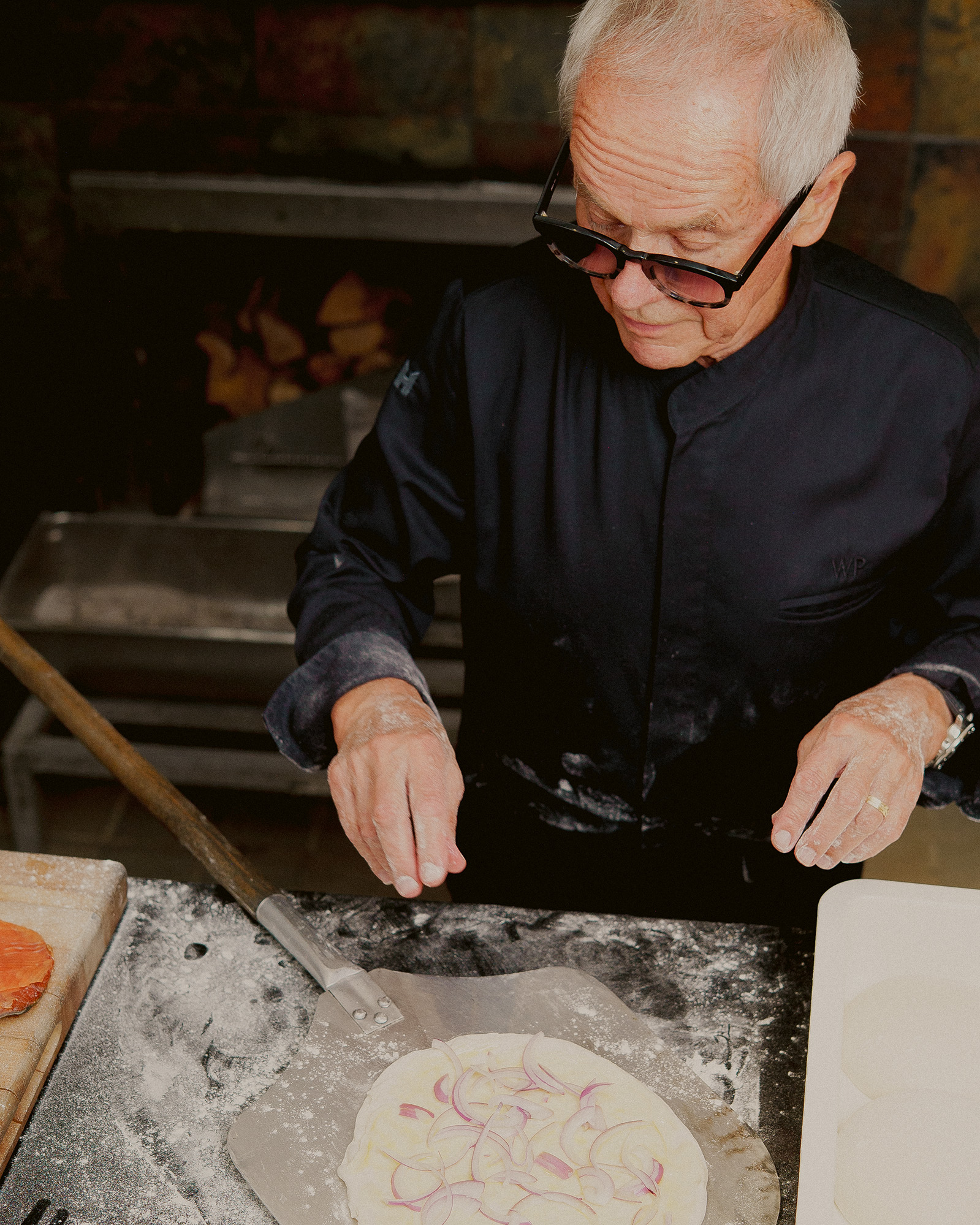
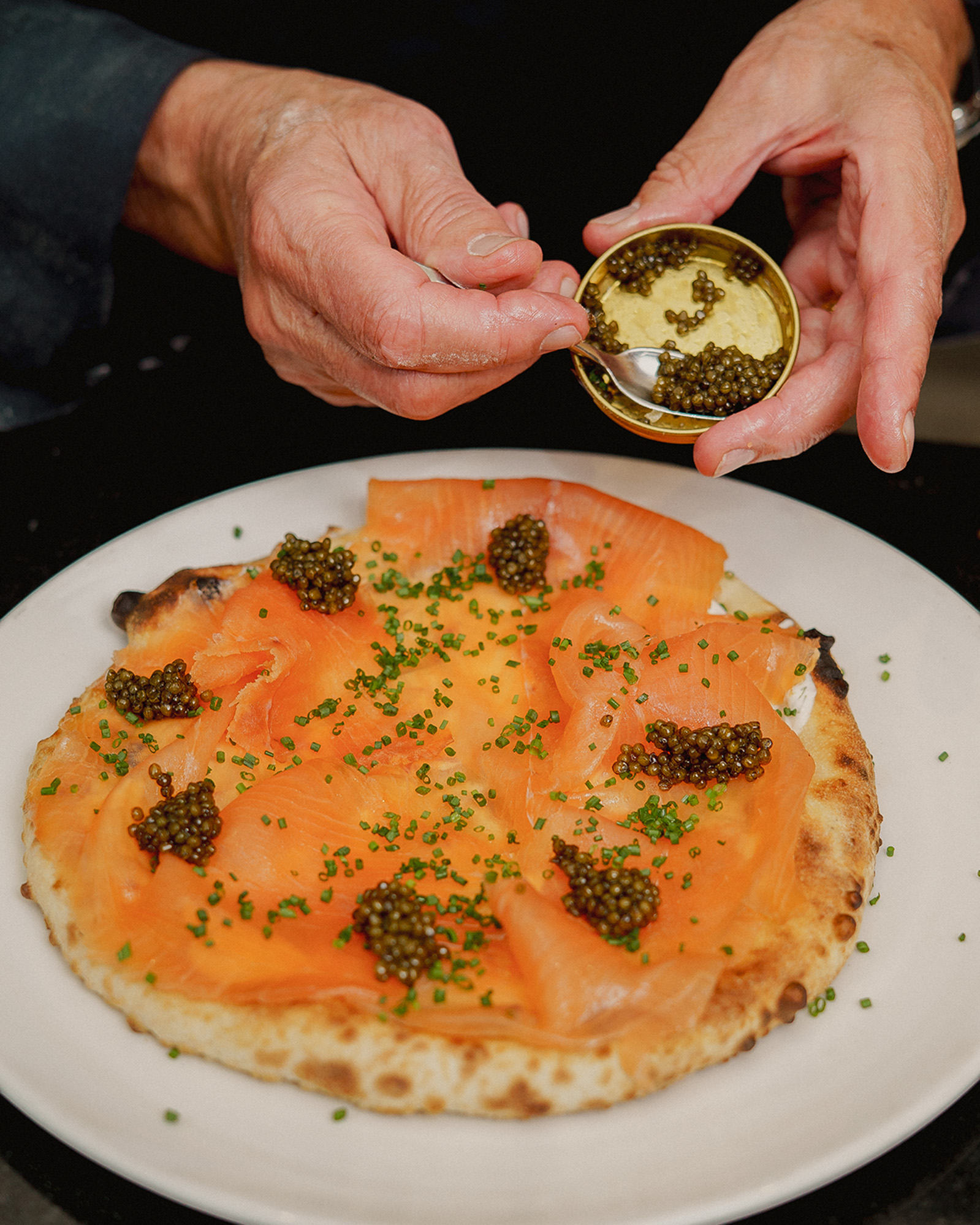
We made pizza, but the main thing I said was that I didn’t want tomato sauce on the pizza. You know, you already have so many places, all these fast food places like Pizza Hut, whatever, they have these pizzas with tomato sauce. I didn’t want to do that. So I used really good ingredients, like instead of using pepperoni, for example, I made duck sausage. I boned the duck legs and then filled them with a little pork and rolled them and roasted them really slowly and then sliced it in. And I had my duck sausage pizza. I remember Linda Evans and some of these movie stars always came. They had their duck sausage pizza and a glass of red wine, and that was their dinner, maybe a dessert afterward.
It was a restaurant where you felt comfortable just eating a pizza. And the pizzas were small, like you could eat a whole pizza by yourself. It was informal, but the quality of the food was formal. I went to the market, I went to the fish market, we went to the flower market, we went to Chino Farm. And most everything was grilled, all the fish, the meat, or cooked in a wood-burning oven. I had probably the first wood-burning oven in any upscale restaurant, anywhere in America, probably.
The food was really not complicated; you know, it wasn’t a lot of sauces. It was more lean, like I had a farmer in Sonoma who raised lamb for us. We had this baby lamb because we’d had that at Baumanière also. So that was really our specialty. We didn’t have steak, we didn’t have veal chops; we had chicken and lamb. Those were our two meat dishes. And also squab, because I know a farmer up in Santa Barbara who raised squab pigeons, so I used them, too. I used really simple things, and it became so popular, like way more than my expectations were; at the beginning, obviously I couldn’t sleep at night. And Patrick always fed the news media at that time, but he still talked about Ma Maison. They said, “Oh, Wolfgang left, and he will be back at Ma Maison. He doesn’t know how to run a restaurant, and he’s going to make pizzas and spaghetti and this and that.”
And you’ve also had, especially lately, an ongoing relationship with contemporary artists at your restaurants. Why is that important to you?
I’ve always loved art, and I was lucky at Ma Maison. Across the street was Gemini, and there’s a print shop. And all the famous artists used to come and do their prints there. I remember, for example, David Hockney. He came and made the prints there. Then I asked if he wanted to do a menu for the cover of my cookbook. He said, “Okay, we’ll make it.” And then Patrick interfered with it and everything, but he made it anyway. And then he told Patrick, “Okay, if you want a piece of art, it’s $5,000.” And Patrick said, “No, not $5,000—$3,000.” David said, basically, “Fuck you, it’s $5,000 or nothing.” And Patrick didn’t buy it.
But then I had other people like Andy Warhol do things for us. He did the menu cover. He wanted to paint me, but I didn’t want to. I said, “No, no, just make me a menu cover, a wine label, everything.” He did that. I went to see him at The Factory in New York. I had Robert Rauschenberg do a big painting for us for a restaurant in San Francisco. We had John Baldessari do the whole restaurant here in Beverly Hills. We had Ed Ruscha do some things for us. So we always had artists do things. In New York, we had Alex Israel do some things, some California artists. I’ve always loved contemporary art, and mainly because I knew the people.
So I think it made it more special. I used to go down to Captiva Island and hang out with Robert Rauschenberg and watch him do his sprints and make his stuff. I used to cook for him, and we used to drink and he’d get drunk.
You’ve got four kids, I believe, and you have a son who’s working in the business, Byron. Since you’re a boss but also a father, how much do you have to tell Byron about in terms of dining or food?
Well, you know what? Byron is a great observer, which is important. I still have one partner and some minority partners; he owns like 7%, but he’s been with me 40 years, since the opening, really. And I said to Byron, when we have a partner’s meeting and a manager’s meeting, you go, and you listen, and you open your mouth at the end. Don’t talk. Don’t try to tell them something. You just listen and see what they have to say. And I think one of the great things in life is to be able to listen.
Most of the people want to be heard. And I told Byron, if you listen, you might learn. If you talk, you talk about something you know already, so you don’t learn anything. So I think that’s really a great thing. But he is also passionate about it. So it’s very easy to teach somebody who is passionate about what they want to do.
When he was 13 years old, at his bar mitzvah, he announced in front of 500 guests at the temple, “Don’t worry, Dad; I will take over the restaurant.” So I said, “Okay, that sounds good to me.” Then when summer vacation came and school was out, I said, “Okay, you want to take over the restaurant? Come and work: Start at the dishwashing station.”
Did you cater your son’s bar mitzvah?
Sure, it was at Spago. It was a very nice bar mitzvah, too.
Of all the different foods and cultures that you’ve worked with—Chinese and Italian and steak houses and California cuisine—have you ever been tempted to go back to a more Austro-Hungarian kind of cuisine?
Because my childhood was really bad, I was really detached from Austro-Hungarian and Viennese cuisine, totally. I never did anything until maybe the early 2000s. The first time we remodeled Spago, I said, “You know, I’ve made Asian food, Italian food, French food, everything. Now I have to do something Austrian for a while.” I decided I’d do it for three months and then take it off. So we put Wiener schnitzel on the menu. We put Zwiebelrosbraten on the menu. We put Kaiserschmarrn on the menu. We put headcheese on the menu. We made goulash in the wintertime. So we had like six dishes between main courses and dessert, and they became so popular—except the headcheese, you know, that was not very popular. It’s only Wolfgang Petersen and Arnold Schwarzenegger who came and ate it, and the rest was us in the kitchen.
Is the concept of retirement something that you would ever consider?
You know, years ago already, my accountant passed away, but he always looked out for me. So he said, “Wolfgang, you have to save more money for your retirement.” And I said, “Marty, you know what? When I’m retired, I won’t need anything. I’m going to be in a wooden box, and I don’t want to have anything.”
Which means I’m never going to retire. I just turned 76. So hopefully I’m going to go on for another 25 years, and then we’ll see. We just signed a lease for 50 years on the beach, to do a restaurant.
Is that the next restaurant?
The one on the beach? Well, not the next one to open. The next one to open is going to be in Shanghai. Then we’re going to do one in the Maldives and one in Abu Dhabi. So there’s three in the next 12 months.
Oh, gosh. Okay. Well, you’ve got your hands full at least.
But you know, it’s like having kids: It’s okay to make new ones, but you have to keep the old ones, too. You have to take care of them. So it’s work. But if you love what you do, then it’s not really work. There’s nothing I would rather do. You know, I’m taking art classes now!

In the hands of this French artist and designer, the most elemental experimentations with watercolors and shapes give rise to the most elegant results.

Once a far-fetched destination, the Frozen Continent has seen tourism more than double over the last decade. The storied cruise line Ponant Explorations is leading the charge with new itineraries that feel out of this world.

Wearstler does it all: interior designer, product guru, hotel mastermind, book author. Now the L.A. maven adds curator to her résumé. For our spring issue, she shares some of her favorite independent talents in Amsterdam with us.