Boucheron Showcases Nearly 170 Years of High Jewelry at Christie’s
The renowned house looks back on its vibrant history and its incredible pieces that have pushed the boundaries of craftsmanship.

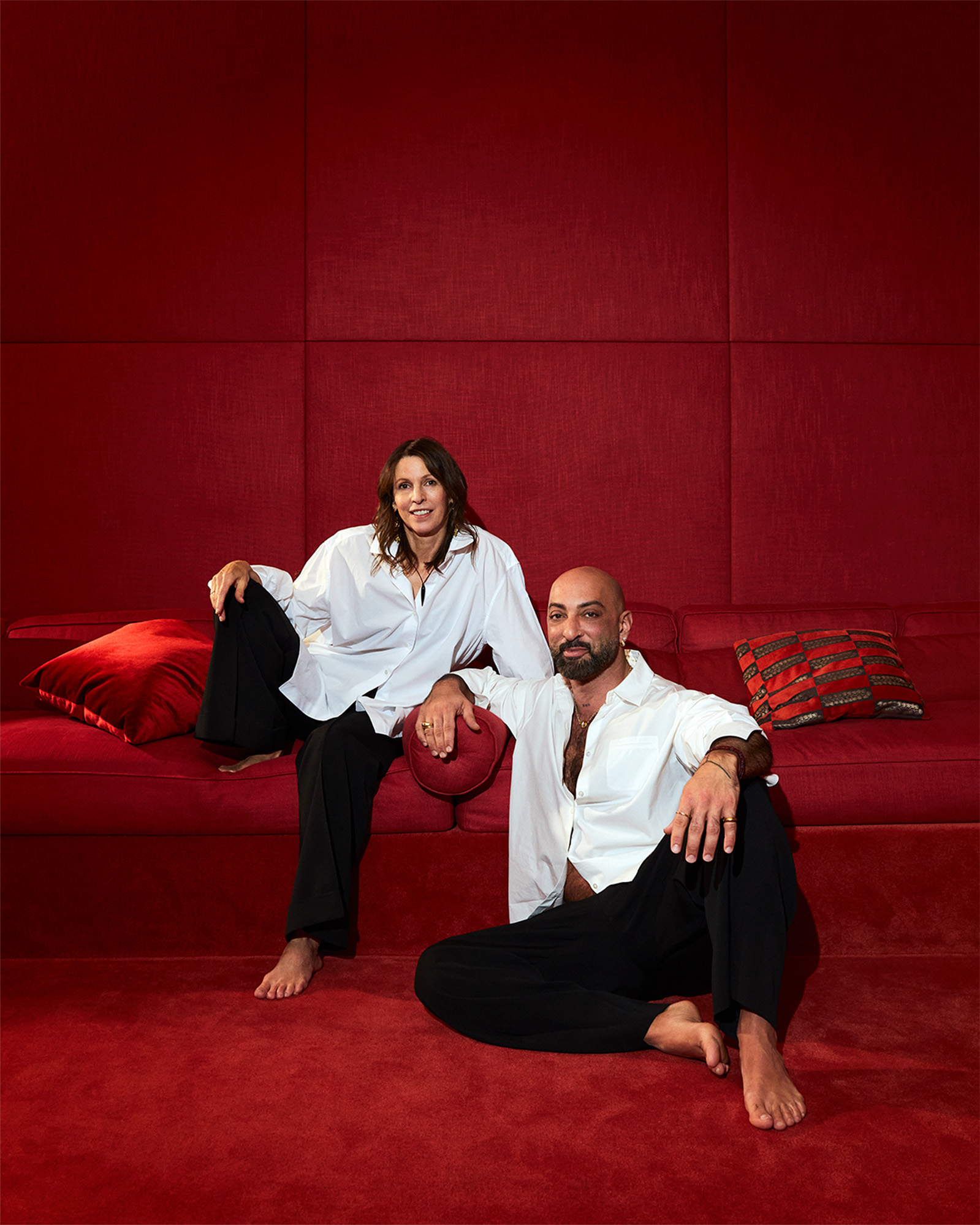
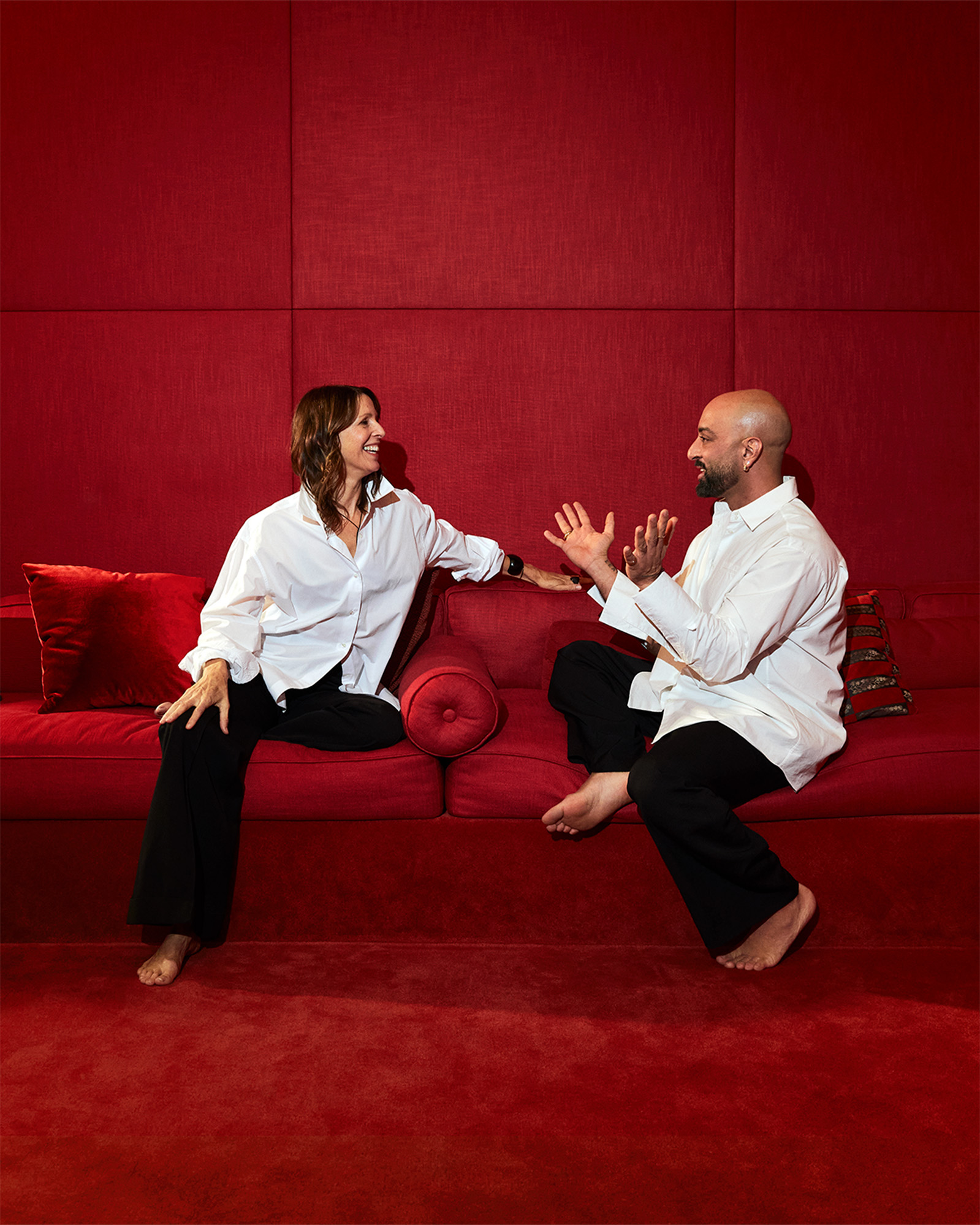
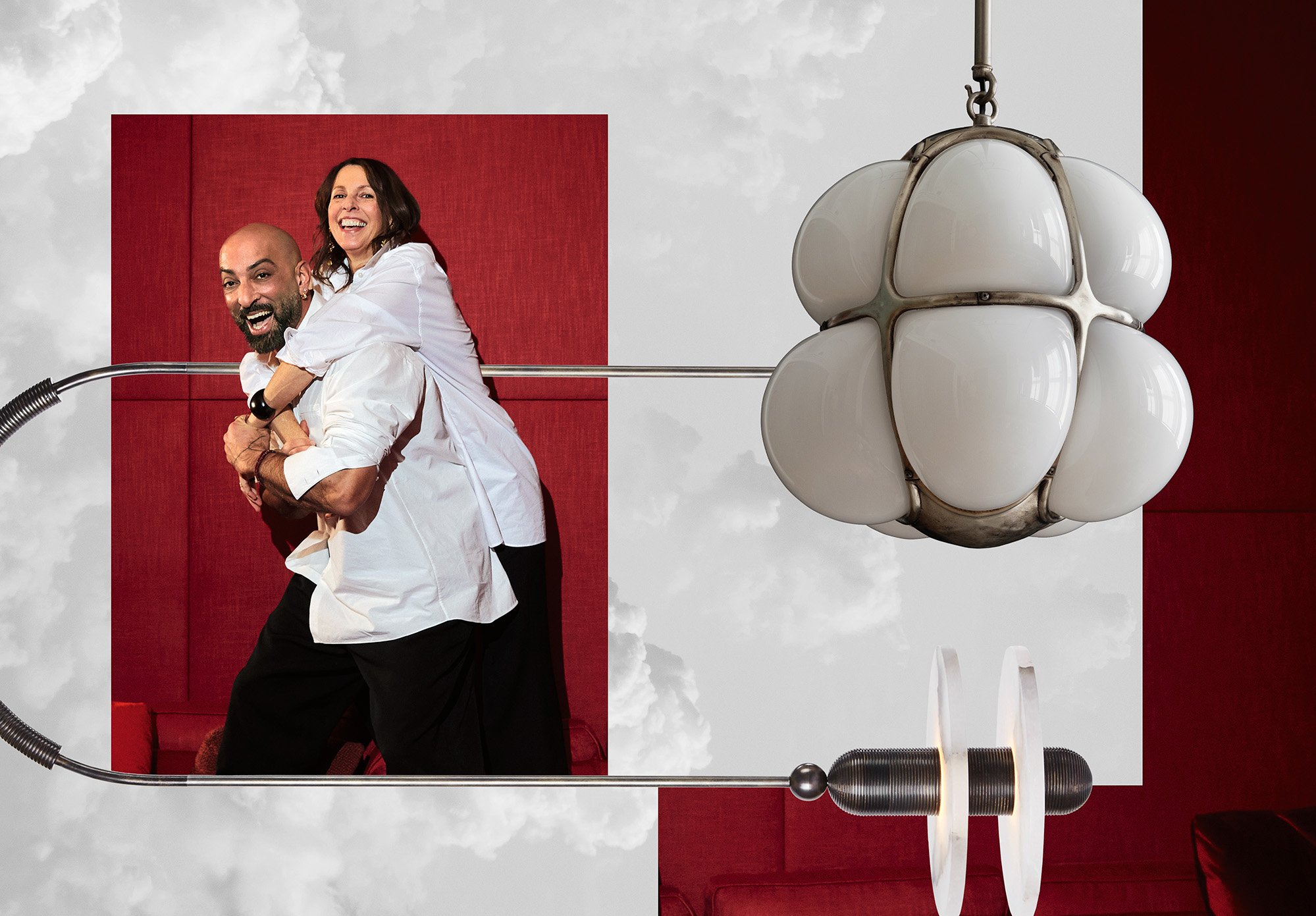
Designers Lindsey Adelman and Gabriel Hendifar may technically be competitors, but in many ways they’re kindred spirits. Adelman has revolutionized the world of lighting for the past 20 years, introducing a level of craft and artistry into an industry that was sorely lacking; and Hendifar created the brand Apparatus, an outfit known for its own lighting designs (among other objects) that positively glow with glamor and creativity. On this episode, the two impresarios sit down at the same table for a rare discussion on what being a designer means to them, how the careers of one another inspire them, and much more.
This article is featured in our Spring 2026 print issue, available now.
If there’s one thing New Yorkers do really, really well in the product design world, it’s lighting. Mixing tradition with their creative processes, rock star maker-entrepreneurs have arisen to create thriving, dynamic businesses around five-figure chandeliers that are closer to sculpture studios or fashion ateliers than, well, lighting showrooms. For the past 20-plus years in my career traversing this scene in the city, it’s been especially helpful that many of these bringers of light aren’t bitter rivals but, in many cases, fans of one another’s work that rarely get to cross paths and share stories.
For a recent podcast, transcribed for this print issue, we assembled two lighting geniuses in the same room to discuss this particular occupation that’s so vital to the world—and perhaps the closest in design to pure sculpture—but also intangible at the same time.
The idea started with a returning guest, Gabriel Hendifar, the artistic director and cofounder of Apparatus, who offered up his studio’s sprawling and ultra-chic Red Room space to have a conversation about the power of light and the levels of creativity and understanding that accompany it. Joining him is someone he’s long admired in the industry: Lindsey Adelman. Adelman, who is celebrating her 20th year in business, is no stranger to anyone who knows the American design scene. Through her sconces, lamps, and chandeliers, she nearly single-handedly transformed the business through her blend of industrial precision with naturalistic and sculptural elements like handblown glass and rope.
The pair had met a few times socially but never had a chance to really share their experiences with a peer in such an introspective fashion. The resulting conversation reminds us that while design can sometimes feel cold and limited to physical trappings, the journey that creates all these glittering objects can become a higher calling that can bind friendly competitors together.
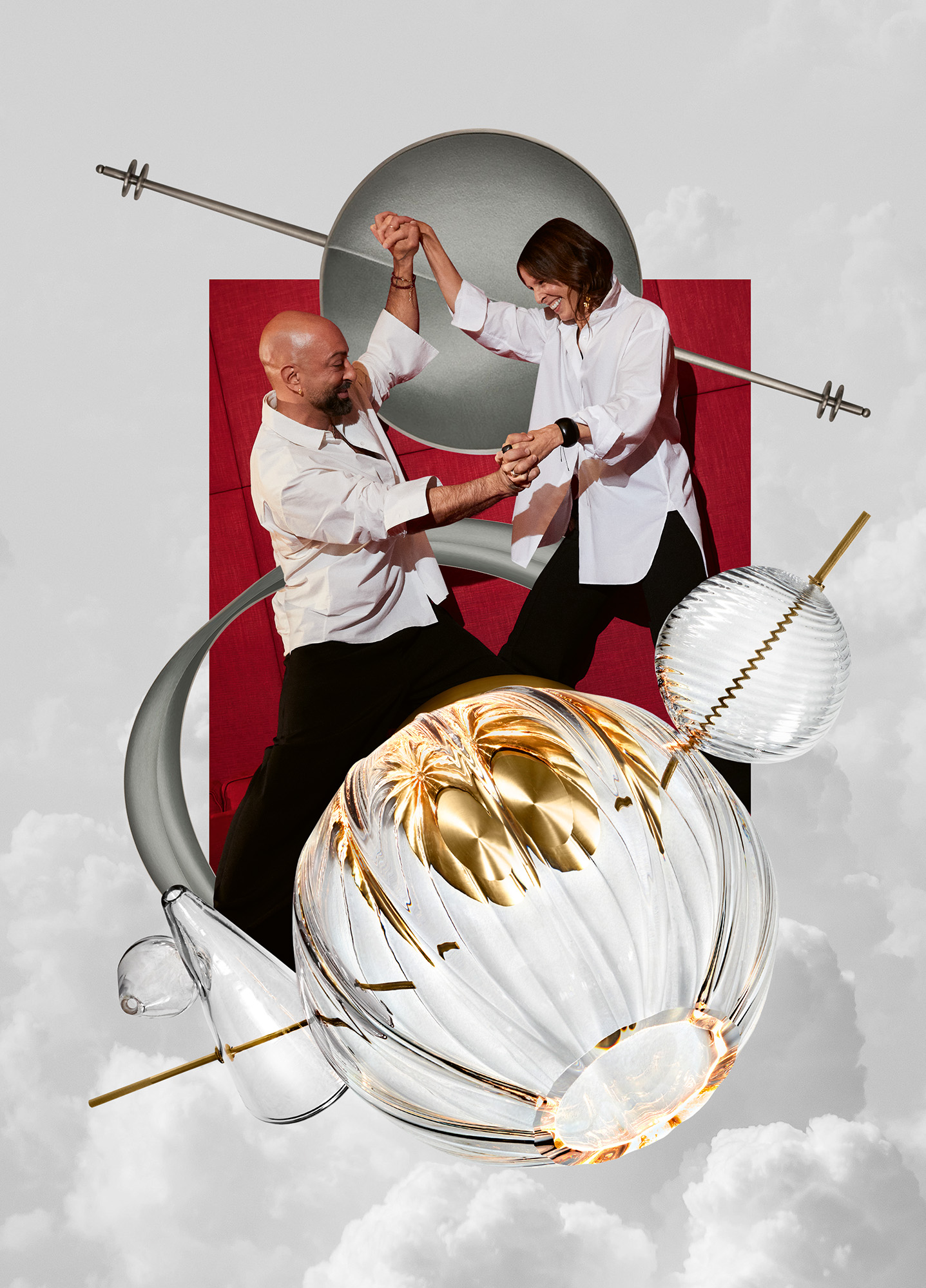
We’re here to talk about something that’s both vital and intangible, which is light. But before we get started, Lindsey, I’ve known you for quite some time from the New York design scene. Gabriel, obviously you’re a returning champion here. Lindsey, for those who don’t know you, tell us a little bit about you and your studio.
Lindsey Adelman: I founded it almost 20 years ago, and I’ve been doing lighting in other ways since about 1995, so it’s 30 years, which is wild to think about. My studio is based in Manhattan. There are about 20 people on the team, and I continue to make sculptural lighting.
I wrote an article about what was called the Brooklyn lighting phenomenon for Monocle many years ago, and I interviewed you. It was interesting to see how many of the amazing people in New York, especially in this kind of world—I think it was before Apparatus—had histories that intersected. Gabriel, give us a little bit of a penny tour of the Apparatus universe.
Gabriel Hendifar: Sure. Apparatus was founded in 2012, and over the course of the past 14 years, I’ve come to understand what I do as creating an envelope for human experience. I think about how to calibrate an environment in which I hope a certain kind of experience will happen.
And lighting found me—that was sort of my entrance into this world, this way of thinking about space. We make furniture, we make objects, and—I have to say and acknowledge—I’m here because of the people in New York who showed me that this was possible. Sitting with you right now feels like a full circle moment because I was a little gay boy in L.A. thinking, how do I make a thing for myself that I want to live with? And you really created such a beautiful way of expressing an idea through light—sort of through a whisper of form. And it’s just such an honor to be here with you and talk about making light.
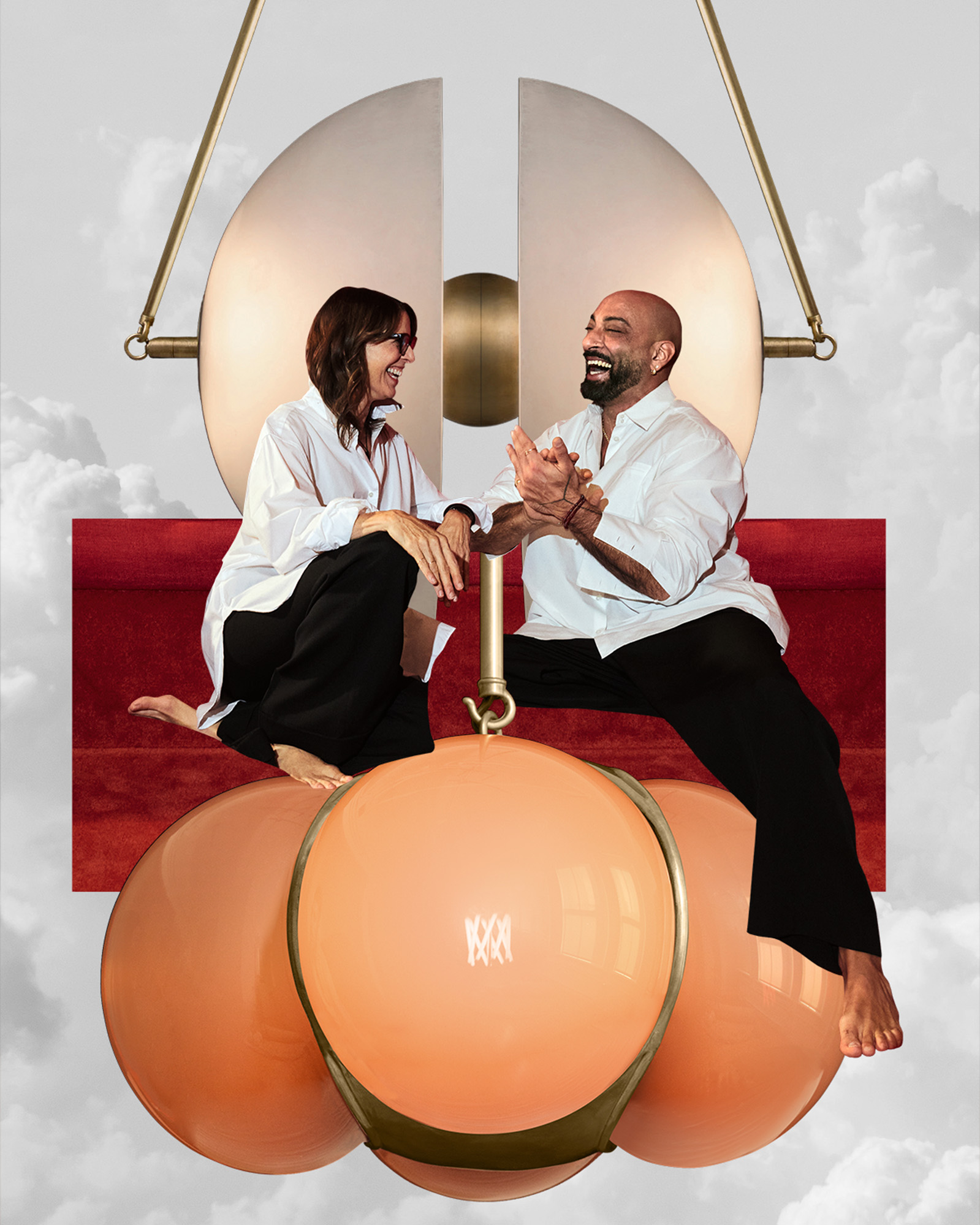
How long have you guys known each other?
GH: I remember meeting you at the BDDW Weenie Roast, up in that beautiful castle. Maybe that was 10 years ago. And at that point, I met you, but over the course of the years, as we’ve overlapped in each other’s spheres, even though we’re not in touch all the time, I feel this connection to the way you think about what you do. And that’s just become more apparent in the past two or three years.
LA: Yeah, there’s definitely a connection there without having to maintain it a lot. I feel like with you and me, while our work is specific, and the way we approach it is quite different, our sort of basic drivers are very in sync.
GH: I agree. And I guess maybe I’m curious to ask you how you define those basic drivers and how you came to understand them as your drivers.
And Lindsey, if you could explain to people who don’t know your work at all, how would you describe a lot of your work and your creative process?
LA: I could describe that and then kind of go back to that question, which is a really juicy one. Sometimes I design lighting systems that are intended mainly for interior designers to be able to order standard models. But also a lot of my intention with designing systems is to give people a kit of parts to play with. So designing for designers is a lot of my thinking and methodology, and working with really restrained components, trying to distill down a formula to then create something kind of unexpectedly organic. And then I’m also making more and more work intended for the design gallery market, so that’s a very different way of thinking.
I really love both, and I’m still doing both. And yeah, the Branching Bubble was our first collection, and today it’s still what we’re known for most. It continues to be the foundation of the studio in many ways.
I remember visiting your studio back in the day after Branching Bubble, around when it was super popular, and I was struck by your studio space and how little lighting inspiration or design inspiration was around us. It was more about a mood and a feeling that somehow got translated into glass and materials like that. So many people took your way of thinking about lighting and copied it, but it all comes from a very different place.
LA: It does come from a different place. I don’t even really understand my work sometimes. It’s self-expressive, but I feel like I’m capturing this mysterious essence that really moves me, and it’s like I don’t have a choice. When I envision something, I’m very compelled to realize it and see what happens in three dimensions. And it’s actually such a great privilege to operate this way, so I can’t really force things on a schedule, and I don’t. I treasure that. If there’s an urgency for the work to come out, I give it away.
GH: That’s so beautiful. I think my very deeply held personal impression of your work is that it feels like you are compelled to express distilled truth. Like there’s some essentialness, and then you cast it in brass and glass. It’s this ephemeral moment, spark, that you’ve frozen in these noble materials.
LA: I really appreciate that. There is something that I aim to do, which is to create work that’s not self-conscious. This is such a challenge because humans tend to be so self-conscious. And in doing that, yeah, I guess it’s sort of obvious to say something like, “I’m trying to get out of the way.”
I want to figure out another way of saying that. It’s more about the balance between being a really clear creative director while also leaving so much room for this power and force. That is scary sometimes and dark but also just achingly beautiful. It’s beyond us, and it’s ironic, but I think a lot of the inspiration for being a lighting designer and working with light is darkness.
GH: Yeah, I agree. The reason I was excited to have this conversation with you is this beautiful privilege of being able to make things in this way. It’s a thing that I always maybe imagined would be possible for myself, so it feels familiar. But it also felt like this thing that was so far away that I had to reach for, and I’m kind of arriving in this moment where I feel like I’ve been given the gift of the right life at the right time with all the right things.
I’m really thinking about what it means to make light in all of the ways, right? Where does my compulsion to create an object that provides illumination come from, and then how do I take that seed and actually amplify it? What does it mean to do that for the rest of my life, in my community, in the world at large? And I feel like that’s a thing that I feel deeply with you: that we’re responding to darkness, literally.
Take us a bit into this idea of darkness and creating something out of nothing. How does darkness come into play?
LA: I feel like we could both jump in. Well, one thing that intrigues me is the darkness within us. So, thinking about the darkness outside of us, it’s all a reflection.
We need to sort of own up to that. I think this endless journey or struggle with internal harmony is one of my drivers. It’s very psychological and emotional. But thinking about darkness: One way of approaching it is, like, if we’re all a house and we have 20 rooms inside of us, how many of those rooms have you never opened or found the key to?
If there’s a whole wing of the house that is not opened, consider that like some kind of internal darkness that might need some attention. It doesn’t need hate or rejection. With this kind of opening of the doors within you and letting the light in, you can expand the creative process. It can come out in your work once you aren’t afraid to go into those rejected corners. There are many ways of talking about it.
GH: Totally. That really resonates with me. I’ve been connecting with the idea of making light as a very basic, primal thing. Personally, I feel a deep connection with the sun and what it feels like. What you’re describing, to me, is what light does when you open the window and let the sun in on your skin. What is that warmth, that presence in your body, that connection to source and a feeling of rightness? It’s this divine rightness that you feel when you’re in the sun. I really try to connect with that to better understand what I do, which is to create these collages that hold light.
That’s how I think about my approach to fixtures. I understand this primal response to the beacon, to the fire in the cave, that idea that we’re attracted to this sense of warmth and illumination. I use that to actually illuminate an idea or tell a story. I use that warmth to shine on something, and in that way project into the darkness an idea that I hope will amplify joy and a higher vibration, an awareness.
I think for both of us, there’s this deep spiritual connection to these ideas. I’ve always tried to capture it somehow, and as an industrial designer, there’s something that happens when you see the light fixture for the first time. It’s about creating this feeling that has the power to shape emotion and consciousness.
LA: I would agree, that’s beautifully said. Even just how you started with the sun hitting one’s skin being so visceral, it’s amazing to think about light having a physical quality to it. We wouldn’t say, “Oh, here’s the moment where it’s hitting my skin.” It’s that space in there, and so there’s something that’s—like you’re saying—very joyous, something to celebrate, but also you can’t hide.
Have there been any aha moments either of you have had in your career, where you were designing something and using industrial parts, and things clicked about these abstract ideas of the sun, the mood, the light, the space? Is there any moment in your career where these ways of thinking about your work crystallized for you?
LA: I think it started with the woo-woo sun stuff. I think growing up, I hid my art making until around my twenties. When I was little, I would make costumes. I remember being a bunny, taping the teeth to my teeth, you know what I mean? You just feel like, I gotta get this done. Or I’d draw behind the chair—I remember drawing a monster on the wall of our house. That wasn’t a good idea. When you’re young, or you try to take art in high school, you can get very intimidated, right?
Other kids can do perfect portraits with a pencil, but that was never me. So in a way, I had this bottled up fantasy of what an artist might be doing, or what it might look like in a messy studio. And so it took, first, getting a degree in English from Kenyon and then working at the Smithsonian.
I really pushed this one question way down: What would it be like if I used my hands and my body to make the work that I feel inside of me? It took me a while. That kind of urgency or craving was there way before I started to learn the skills of how to make something. I remember when I first showed work at Javits, for example, in 2006.
And just to raise a slight parallel with Apparatus, you’ve also expanded into furniture outside of lighting and things like that. Does that change anything for you?
GH: I think it’s important for me—and I think you’d feel the same way—to separate the idea of expanding my consciousness about how and why I make things from having to make more or different things. The more collectible things are more emotional, but it’s really not about trying to create categories of work that are responsive to different levels of emotion. Lindsey has demonstrated so beautifully what it means to be both a merchant, an industrial designer, and an artist. I try to understand that all of these things are expressions of me, and what I can bring to each of those problems.
What does it mean to make something that’s highly producible that we’re going to sell like doughnuts? And I can bring the same awareness to that that I do to the super-bespoke 20,000-hour embroidery piece. They’re different expressions, but they come from the same root. So it’s less about how that expands what we offer and more about how we appropriately invest that energy into each of these ways that we hope people interact with what we make.
LA: And do you feel right now that your cravings are less about the object and more about creating the world in which people can connect deeply? Or do you feel like they’re in competition or feed one another?
GH: I think they’re one and the same. I think of my life’s work as creating the containers within which I hope there will be a certain vibration of connection. I hope to expand what that means over the course of my career.
I’m very deeply invested in every micromillimeter adjustment on every piece of hardware we make. I’m literally reviewing each of those things as though we’re crafting DNA. It’s that important. And I want to feel when I sit in this room with you that the energy is vibrating over here. I don’t have to pay attention to it, but it’s doing its thing. How does that energy in this room allow us to feel? What is the vibration of that? So I don’t see them as being in competition. I see them all as tools that create a universe.
Lindsey, my question for you is, has your connection to the idea of the object changed over the course of your career?
LA: I think it has. I still see the physical work of the objects as primarily what I am making. Even the difference in the way our studios look: When you walk into your studio here, it feels like it’s an entire immersive mood. I feel like I’m being hosted and kind of led into it. Yeah, it changes your whole nervous system coming in here in the best way. Everything is hushed. And my studio is much more about messy things around to make. You can just grab something from the floor, which is not nice because I paint on it and stuff like that. And there are a lot of industrial shelves with parts. There’s a ceramic studio. And it’s all open now. So it’s where clients go. They can get a peek into everything.
I think I’m less about creating this total vision or immersive container that one can be invited into. I like the idea of focusing on these objects that are unusual even to me at times, thinking about the bound glass things we’ve been doing recently.
And I can get so lost in that. I think I’m more comfortable with that, too, thinking about it as these parts that an interior designer uses in their total vision. I love that space. I even prefer my work to be shown by other people. I prefer to be shown at a design gallery rather than self-presenting. It’s a better fit for my personality.
GH: That’s really beautiful. It’s such a gift in that way. There’s so much trust in that. I think that’s such a great way of letting an idea fly and seeing where it lands.
LA: Yeah. And maybe I’m more introverted than you are. That could be it. I love the privacy. I love endless hours of just being in my own process without anybody looking. I don’t feel compelled to come out and share it.
GH: Not dissimilarly, we’re sitting on the fourth floor, which is our client-facing gallery. But I spend a lot of time on the third floor, which is where we actually are messy, where we make, and where there are papers everywhere with things to play with. And there is a part of me that understands there is my fourth-floor persona, which is the host. I learned that from the women in my family. I learned that from the way they greeted people in their spaces, from what it means to invite someone in and hope they feel like they want to stay. And then there’s the part of me that just wants to be by myself. I think both of those things are very present for me, and it sometimes can feel like you have to choose between the two. That can feel challenging.
LA: Yeah, it does. And when you’re on floor three, is it mostly sketching, or do you also work with one-to-one, actual-size mock-ups?
GH: Usually, the process for me is there’s a spark that comes from something I feel I want to say: something that I’m feeling, chasing, or that feels like a memory I’m trying to conjure from the ether. And it’s usually sketching for me, then communicating those sketches to a really wonderful team of people who help me develop those ideas. And then it’s iterating, iterating, iterating, iterating.
We do a lot of 3D modeling, 3D rendering, and 3D printing, so we’re looking at things in physical form. I love to work on paper. I love to see things printed full-size. I love to mark things up with a Sharpie on the wall. It’s physical in the way that I like to use my body to shape the thing on paper.
And then we do all the manufacturing, engineering, and prototypes, and then our factory in Red Hook is where we get to go play and finish things and put them together to see if they work. So I really hear and admire the immediacy with which you are connected to the hand and the form and the maker. That feels really critical to me in the way that I imagine you distill this whisper into something.
There’s a directness about that that I really love. For me, what I’m often doing is telling a story, so there’s a spark of an idea, then the process to get through the layers of information we’re weaving into this. And that becomes part of the process: calibrating something so that the cacophony of information I’m trying to get across falls in a way that feels elegant.
LA: I really get the cacophony so much. I think that’s actually a lot of what maybe we both do. It’s like there’s too much going on in the head. And so when you can pick one thing—I want to design a sconce—it is calming.
GH: Yeah, really, and having parameters. Your way of working in systems is something that certainly has been hugely inspiring to me and the industry at large. I mean, you know this, you see it. And there’s something about distilling the cacophony into a system that feels like—I don’t know—it makes you feel strong. Because you think, I just took this crazy jumble of thoughts, and I turned it into seven components.
LA: Totally agree.
GH: Yeah, it’s fucking great.
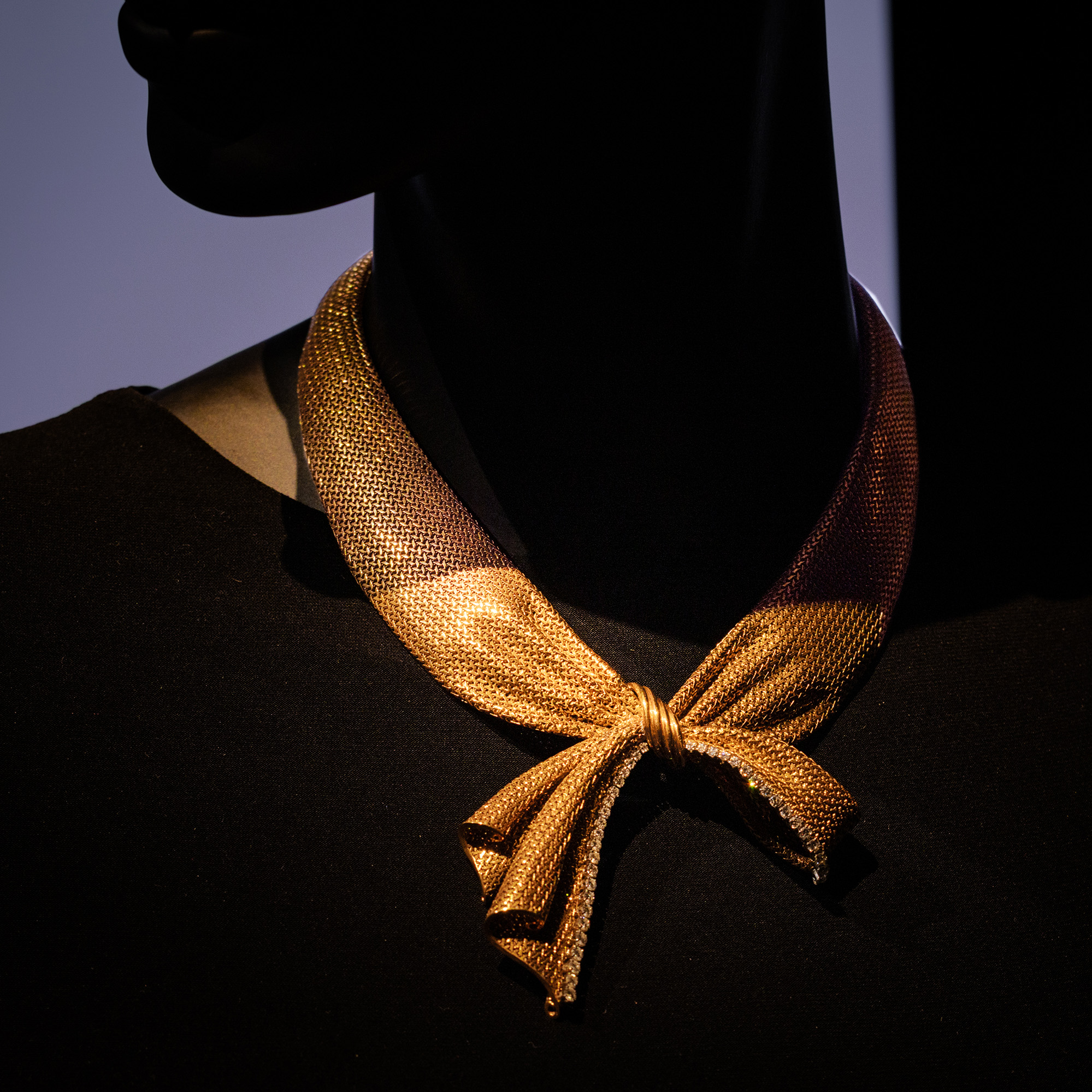
The renowned house looks back on its vibrant history and its incredible pieces that have pushed the boundaries of craftsmanship.
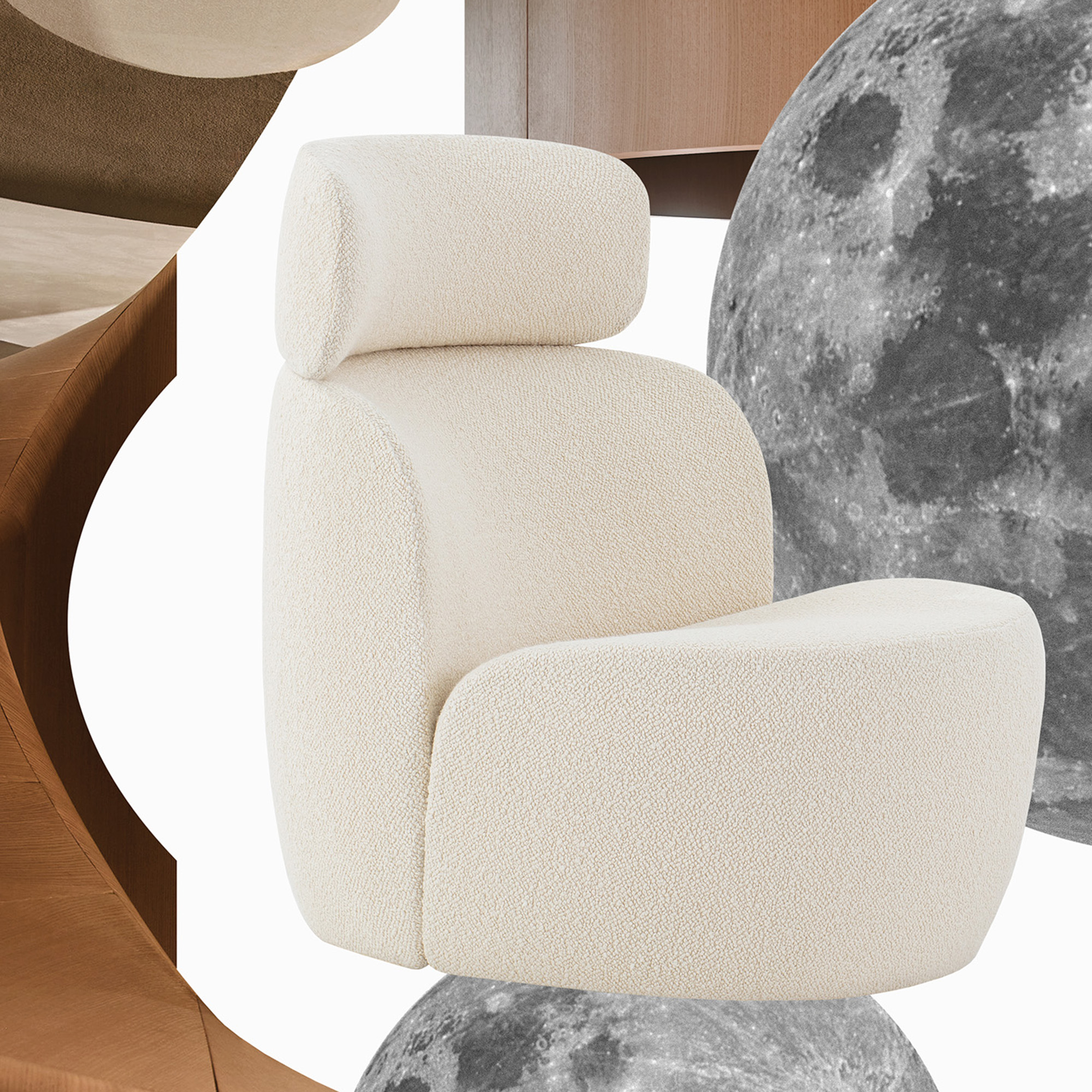
In Milan, we sat down with the brand's Laura Anzani to discuss the family business over coffee, and what it has planned for New York and beyond.
The Brazilian interior designer has quickly risen the ranks of New York design with a vision shaped by his father, the celebrated product designer Oswaldo Mellone, his first job with Robert A.M. Stern, and much more.