Inside the Meditative Universe of Pierre Bonnefille
In the hands of this French artist and designer, the most elemental experimentations with watercolors and shapes give rise to the most elegant results.

The name Donald Judd needs no introduction. On this episode, Dan speaks with the artist’s children, Rainer and Flavin Judd, to discuss the important work of the Judd Foundation. The trio discuss the siblings’s early life growing up in SoHo, how their understanding of their father’s art has shifted and deepened over time, how Judd’s moves in Marfa came into focus, and much more. Look for this cover feature in the upcoming spring 2026 print issue of The Grand Tourist, available this May.
This article is from our Spring 2026 print issue. Sign up to our newsletter for updates on how to purchase your own copy.
Like any child who grew up in the suburbs and outer environs of New York City, I have a lot of memories of museums. Nothing special, just all the classics: MoMA, the Met, the Guggenheim, the American Museum of Natural History. Burned into my mind are hours spent looking at stuffed animals in glass vitrines, resplendent 18th-century battle scenes with ornate gilded frames, and postwar art I would squint at and struggle to understand.
If there was one artist who constantly captured my imagination more than most, it would be Donald Judd (1928–1994). Why are those boxes on a wall? What is it for? Am I missing something? Is it a ladder to heaven? I was told his work was “minimalist.” I’d later find out the American artist considered his work to be anything but. He didn’t think of his work as sculpture, either.
Judd fascinated me for breaking all my suburban expectations of what art is, what it does, and what space means and how to interpret it. As I entered the design world, I learned that he didn’t just make art: He was an educator as well as a critic. Oh, and he produced furniture and other spaces, too, whose intrinsic elements would inspire generations of architects and designers throughout the scene of aficionados.
A major part of being The Grand Tourist is an inherent understanding that I don’t fully understand everything, and if I learn about the worlds of art and design, I can take others along for the ride, and maybe they’ll learn a thing or two as well. To that point, I was so happy to meet Donald Judd’s two children, Rainer and Flavin, who both look after the Judd Foundation, based in New York and Marfa, Texas, where the artist so famously built a practice and put down roots. As you’ll learn in this interview, they, too, have come to understand more and more about their father and how he helped transform the way we think about life, art, and, well, everything.
I know that you guys grew up mostly in New York, especially in places like SoHo, which is so synonymous now with the foundation. It was such a different place back then, so I wanted to ask both of you what your earliest memories of life growing up in SoHo were, something that I ask a lot of my guests. Rainer, why don’t we start with you?
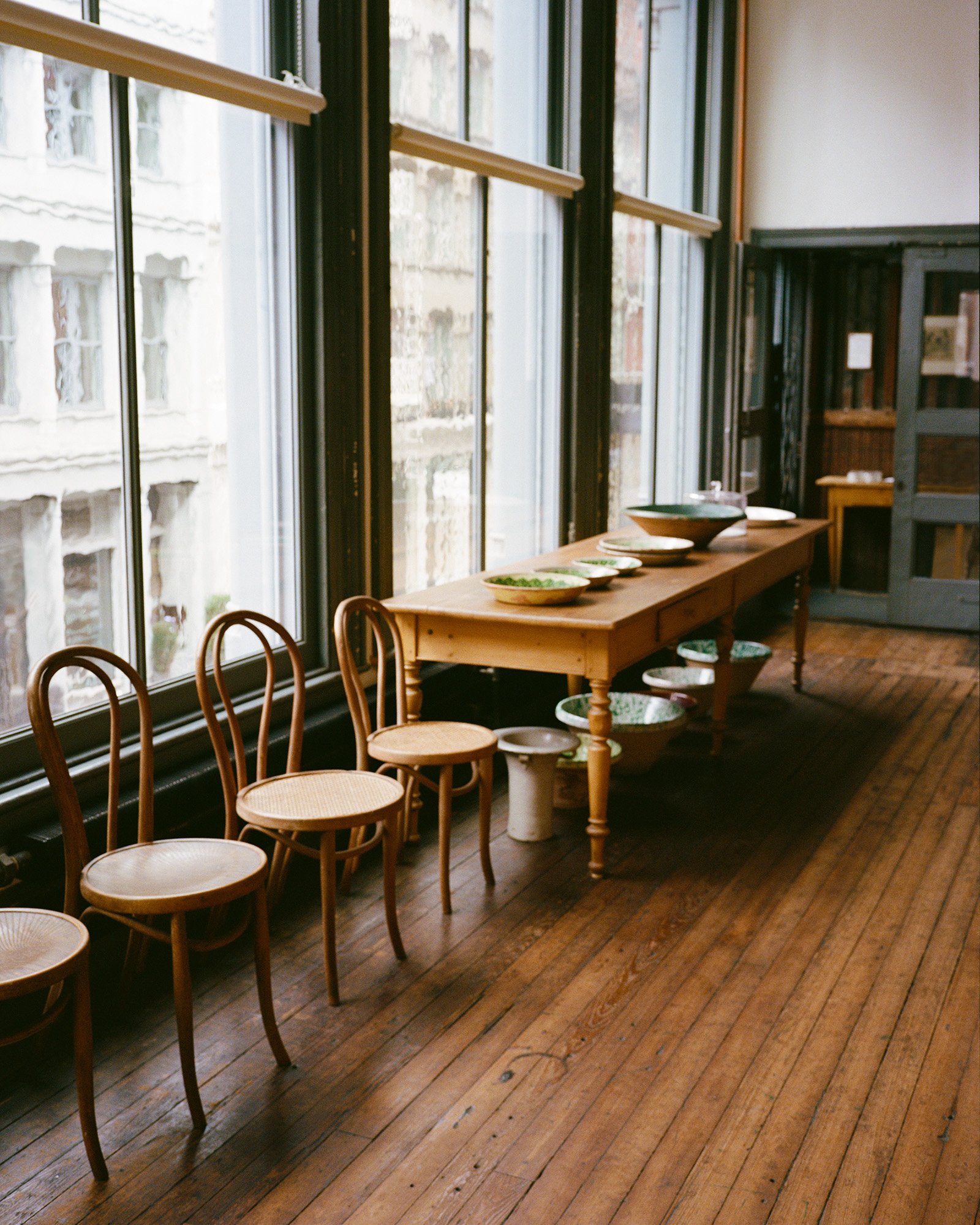
Rainer Judd: Well, actually, it wasn’t even called SoHo yet when we grew up here. It was Lower Manhattan, and I’m not sure when exactly it started being called SoHo. But it was very much like a small town, a little village with Dean & DeLuca, and this awesome store called Craft Caravan, which sold goods from Africa. Ford Wheeler and his partner ran this little store, and you couldn’t walk down the street without seeing friends, neighbors.
Probably before Dean & DeLuca, if you needed dill, you would have to go to 8th Street. So in many ways, it was like a small town, where you would have to go to the next town to get something. I think like many industrial places, the artists took it over because they were looking for inexpensive or free places to work, with high ceilings and a lot of natural light. And there’s a great history to that, including fighting the Lower Manhattan Expressway, which our parents were involved with. Actually the fight against that ended before our time, but we heard about it, and it was a great accomplishment, so that’s why we kept hearing about it. Jane Jacobs was also involved in that, and if anybody’s interested in that story, there’s a great documentary called Citizen Jane, which touches quite a bit on that. I guess we were the first generation of kids that were the kids of artists living in that area, and we’d run into fellow SoHo kids here and there. The Little Red School House was the place where a lot of them went to school, but we actually went to elementary school in West Texas, in Marfa, so we were not growing up all the time in New York City.
Flavin, what was that like, going back and forth between the two polar opposites of Lower Manhattan and Texas?
Flavin Judd: I mean, I liked them both. I admit I liked Texas better because you had freedom. I went there when I was really small, and by the time you’re, I don’t know, eight years old, you can walk around all over town. Everybody knows who you are, so you can’t get lost.
People will say, “Oh yeah, I saw him over at so-and-so’s house,” and that’s the end of it. You’re found immediately—that’s not happening in New York. I liked them both, but New York was very industrial. I mean, it was a textile area, and there were gangways going from elevated doors to the back of trucks, and I had to walk under them to go to school. So New York was almost as different from what it is now as it is different from Texas. It’s like a third place.
Rainer, would you say that it was that sort of dichotomy between those two places? How would you describe your childhood?
RJ: Well, I would say that both places had strong community and strong connection, and neighbors helping each other out in terms of resources, or where can you get this, do that. But the biggest difference is that whereas New York City was full of culture and all these people who had moved from different parts of the country looking for a freedom of life, freedom of expression, a way to remake their lives, but also to get rid of a lot of very suburban ideas, I would say that in West Texas, what maybe I didn’t grasp intellectually as a kid was the abundance of nature. And that you just feel very small as a human, but at the same time it makes you feel big.
So it was an empowering experience to be in nature and really to get fairly in sync with it, and what I’ve discovered more as an adult, but I think is grounded in my experience as a kid, is that actually it’s a relationship not just with a town, but with an actual place, and all the aspects of the natural world that you’re experiencing daily.
And obviously, growing up with your dad, you guys have a view of him that no one else really does. How would you describe him to someone who never met him?
RJ: He approached pretty much everybody with the expectation that they, too, were passionate about the world, and were wise, and had a very good brain, and could dialogue with him. I would say dignity is what he imparted on our friends who were little. Back when we were kids, they were so excited to talk to him, because they were treated like an adult, and you could see them get taller.
And in some ways, I think he enjoyed having kids, because they’re not yet hindered, or chopped up, or crunched down from society, so they have this ability to engage. He really liked to think and question and consider so many aspects of society: why things are the way they are, and what are good ideas. His respect for others was one of the warmest aspects of meeting him and engaging with him.
FJ: He was very democratic in that sense. Everybody was on the same level, whether they were little kids or heads of state or museum directors. Kids might have been better, actually, in his view. He was a voracious learner, and he just assumed that everybody else was, and should be.
Did he require you to do things growing up that maybe your friends didn’t have to do?
FJ: When Rainer was eight years old, he gave her a college-level book on symbolic logic. That doesn’t happen much.
Rainer, do you remember that?
RJ: No, but I did have an incredible number of books, like a full anthology of poetry, eight books or something, that I don’t know that I really ever opened. It felt very comprehensive on my shelf. It was quite a regular family outing to go to what I think was called Spring Street Books back then, and books were one of the things that were fairly common: Books, food, and train travel were all things that we were encouraged to spend money on.
Obviously, your dad had an interesting trajectory as an artist in his early years. How would you describe your father as an artist?
FJ: As an artist, he was interested in things that were true and factual, and had given himself the problem of how to make art that is true and factual. And that’s half of what he made, the other half being the aesthetic part, which is blended into it and is more arbitrary. But those were the restrictions he gave himself, and everything else comes out of that.
Rainer, would you agree with that sort of top-line description?
RJ: Yeah, and when Flavin was talking, I was realizing that I really don’t know where he got his drive and ambition from. He wasn’t intimidated like a lot of people at that time or that you meet today. And even he wasn’t coming from a family that had an empowered sense about them. They were fairly humble, and I think one of his favorite people ever, who I never met, was his grandmother.
And I don’t know, maybe she gave him a certain sense of go-get-’em-ness, but I wouldn’t say he had a ton of support coming from the people I did meet, who were his parents and our grandparents. And so he did have quite a self-motivating drive. He was a guy from the Midwest that came into New York City at a time when there was a lot of conservative power. As downtown people, we felt quite a class division. You’d have to have something quite provocative to get somebody from uptown to come downtown.
And yet we were quite happy, as I guess a lot of kids are taught to be happy with where they are. We were quite happy being, you know, the downtown kids.
But back to what he was coming into, which was this combination of a lot of very progressive people, or more and more progressive when you go from the 50s to the 60s to the 70s. It’s increasingly more radical and progressive in New York City. And he was immersing himself in philosophy and art and really taking art very, very seriously, which more and more seems to be a rare thing. He dedicated himself to the value of art, the role of the artist in society. And that was all very self-motivated. It’s not like I see any background in his family. You know how some people build on what happened in their family?
There were farmers and carpenters—his grandfather was building wooden houses. And anyway, there’s a fairly humble background, and he was very driven and took himself very seriously. The artists and writers and thinkers that he liked, and teachers that he connected with, he took them very seriously. So he took life very seriously.
And Flavin, you mentioned in an interview once that your father had, “a mix of a Midwest farmer’s common sense and empirical Enlightenment philosophy, with a heavy dose of skepticism.” Tell me about that mix.
FJ: I mean, they go together. They’re all very related. So if you have Descartes who’s saying, “I want to investigate everything I might have believed and prove it wrong,” and you have the Greek skeptic saying, “Well, everything we think is wrong,” and you have a farmer in Missouri saying, “You know what? I don’t believe anything you’re saying at all. Show me,” it’s basically the same thing.
And Don was very much an empiricist and not interested in long narratives and histories that are made by winners, for instance. His attitude toward art was that representational painting, for instance, had gone on a very long time, but for him was not interesting because he felt that real objects were more interesting than paintings of objects. The whole narrative that went along with that art had to go away, too. And that includes things as diverse as Plato’s forms, and Christianity, and a lot of art history that was no longer interesting to him. And this is strictly what he’s talking about.
He’s not saying other people should do this. He’s just talking about what he’s interested in because it’s not believable. I mean, it’s all on the same level. If you believe in one god, then you have to believe in all of them because they’re all on the same level of validity. So for him, he wants to get rid of these histories and narratives that are no longer valid because art has to be, to him, as powerful as it can be.
When it comes to his holistic view of life and art, since the foundation is really about bringing a person’s legacy to a broad audience and keeping it alive, what do you want the average everyday person to really understand about your father’s work and what it means in the history of art?
FJ: Well, it depends on what they’re looking for. So there’s not one narrative that we want everybody to go away with. It’s that somebody devoted their life to color and space, and actually built something that explains and that demonstrates what they thought.
And hopefully whatever people are thinking about or whatever they’re working on, it can be useful to them. It’s not like a paragraph we want to disseminate to everybody. It’s simply a toolbox we’re opening up and saying, “Take what you want because somebody’s already gone to a lot of work to build something, and maybe it’s useful.”
Rainer, is there part of that toolbox that you have pulled from in your own life?
RJ: I just used the word empower a few minutes ago: to empower people to look at their own rich heritage, their cultural and unique abilities, and to take their own thoughts seriously and realize that each person has the potential to contribute to society. In fact, the future of humans probably depends on everybody really contributing their own unique combination of heritage and their innate gifts. They need to take the time to synthesize who they are. And I think Don asking us to save his work as the Judd Foundation was just us saving one human’s example of what can be done in a lifetime. And I think it’s actually a call to other people to work as hard and work passionately and to be quite determined to make a difference—to care as much as this one person did about the world and about art. I think it’s exciting.
The Judd Foundation published a book called Donald Judd Interviews. And there’s a quote in it that gives us some insight into his art: “Generally, expensive art is in expensive, chic circumstances; it’s a falsification. The society is basically not interested in art. And most people who are artists do that because they like the work. They like to do that. Art has an integrity of its own and a purpose of its own. And it’s not to serve the society.” What do you think that says about him and his view of the world?
FJ: Well, as you can hear in that quote, for Don, art has a purpose that is itself. Art is the purpose. And he was against the use of art for other things. For instance, you know, art is used as a trophy. Art is used to address insecurities. Art is used as decoration. Art is used as investment. And all of these things are, to Don, contrary to what art actually is.
He’s very much a person who’s interested in the art just for its own sake. And having seen his art mistreated, destroyed, and used for other purposes, by the time he’s writing these things, he’s very tired of seeing it happen. And it happens, if you’re an artist; it happens over and over and over again. People are constantly trying to exploit you, trying to exploit the work, trying to basically exploit culture for other purposes. And that’s everything from a bank, to museum trustees, to museums themselves, to art dealers, to collectors, to writers, to art magazines, the whole thing. And he just has no patience for it.
When it comes to design, its inherent function, and the borders between art and design—which many say is the addition of the client—how would you say he saw his art intersect with notions of design?
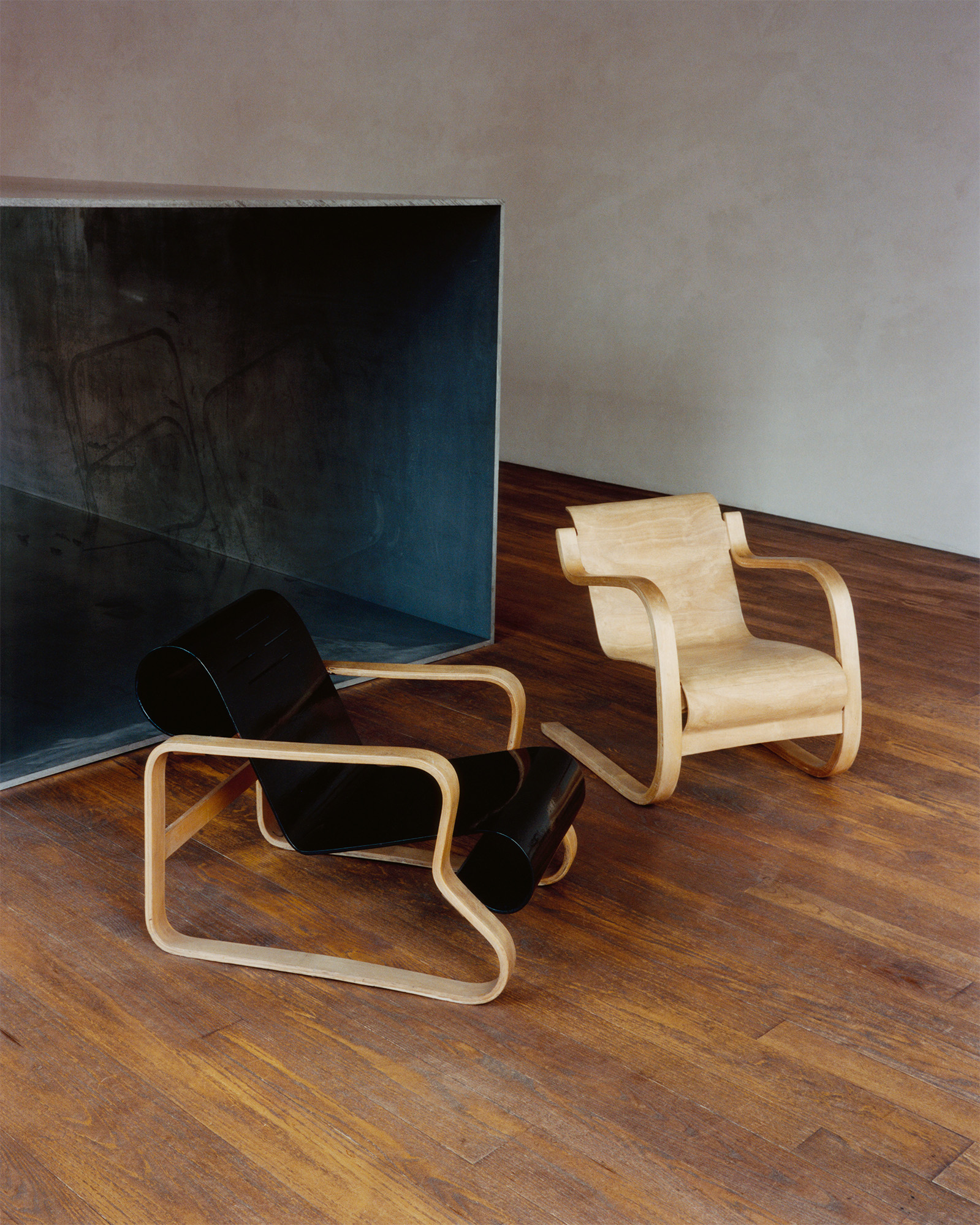
FJ: Well, he’s interested in visual things, including the way things are designed. So to him, it’s very similar. And architecture is part of that, the visual world. But the activity of art is different because there’s no use involved. And that does make a difference. If you’re designing a chair, you have to consider how tall people are, how heavy they are.
If you’re designing art, you really don’t have to do that. So they are different. But while they are different, they exist within the same spatial environment. And that is exactly what Don is very, very interested in. And he was actually quite mystified as to why other people weren’t as interested in it as he was. Because as far as he was concerned, that’s what we had. There’s no heaven, there’s no hell. This is the life we have. And this is it. So if you’re not paying attention, that’s really your loss. And he’s really, really, really paying attention. And that includes design, includes furniture, includes writing, music, and architecture.
How did Marfa first come to your father’s mind? Why there?
FJ: We had been driving to Baja California in Mexico for four or five months at a time. Don really loved Baja, and wanted to build a house and wanted to make art. But it turns out Americans at that time could not buy property there.
And bringing art across the border was impossible. So he realized he needed something north of the border. And while we drove through Los Angeles to get to Baja, he didn’t feel California was open enough. And he felt New Mexico and Arizona were too cold or too populated. So that’s why we wound up in Texas, which he went through on a bus during his military training. And he liked the mountains south of Marfa.
Because Marfa’s cattle industry had gone downhill, it basically skipped the 50s, 60s, and 70s. And it looked like a 1930s town, which meant it looked like a nice town. And so that was very attractive to Don. So that’s why we wind up in Marfa.
In the beginning, did he buy one bit of land and buildings and then build from there? Or was it more all at once?
FJ: We first rented a small house in town for a summer. And then we rented another house that Rainer now lives in on the edge of town. And we stayed there for about six years until Don fixed up what is now the block within town.
Then, much later, he bought the rest of the buildings. So it’s basically in two chunks, moving into town around 1971, and then really moving into town and buying a ranch house in 1976.
Were the locals welcoming at any point in time? Or was it hard to get them to warm up?
RJ: It depended on who you were talking to. I don’t think our parents were that welcomed. Don had a ponytail, and our mom was tall and beautiful, so not much to complain about there, but he didn’t look like a conservative Anglo person.
And Marfa, though it’s not very old, founded in 1883, has historically been segregated. And there’s a great new national historic site, which is Blackwell School, which tells the story of the segregated school and the segregated town. But we were always living in the Mexican-American community, and therefore our friends were in the Mexican-American community. I would say what opened us up a little bit to the wider community—though it is a small town, so how wide can you get—was going to school. Also by Don employing people in town; that opened things up a bit. And we became friends with ranching families and border patrol families. But I guess it’s helpful to just tell the truth and explain that it was pretty segregated.
What did his family and friends think about spending so much time and energy in a place like Marfa?
FJ: Nobody was excited because Don moved to Marfa. No. They were like, what the hell are you doing down here? And that’s the people who would visit, which was pretty rare until later, like say the early 80s. At the beginning nobody’s excited at all.
I believe that the Judd Foundation was his idea first. What were his wishes and how did it come together in the end?
FJ: Well, it’s related to the idea of installing art within spaces permanently, which started in Spring Street, which was a reaction to having temporary shows in museums or galleries where you spend an incredible amount of time and energy putting up the show, and then it disappears six weeks later. Almost half the time the art gets damaged in the process. So he wanted an alternative to that.
And Spring Street was that, but Spring Street’s rather small when you think about it. And so Marfa came out of the requirement for something bigger. But of course, if you’re going to put all that effort into doing something, it should stick around. And so very early, in the late 70s, he decided that it had to stick around past his lifetime. So that’s what we’re doing.
RJ: Just to add a little bit to the chronology. So the essay that’s in the Donald Judd Writings book, “In Defense of My Work,” is written at the same time as his last will and testament that mentions his intentions for when he’s gone. And we have to credit his best friend from his early twenties that remained his best friend throughout his whole life, John Jerome.
A lot of artists don’t have a lawyer who works at a great firm who’s a great strategist and a brilliant mind. John Jerome really was the architect of how Don’s will would go to an estate, and then the beneficiary of the estate would be the Judd Foundation.
I think now there are a lot more tools for artists to create foundations, but back then, it was this lawyer friend of his that defined the structure. And though they missed a few basic things, they really got a lot right in structuring it legally.
And Flavin, how would you describe the vision for the foundation in the future?
FJ: I don’t use the word vision.
RJ: Or legacy.
FJ: The job of the foundation is to simply preserve what Don made. So, it’s very static. That’s unusual because if you’re a museum, for instance, you’re having shows all the time because you need to bring people in the door, and that’s how you measure success. We don’t measure success in that way. As long as things are being taken care of, that’s what we’re supposed to do. We have projects in the works for the future that are different, and we have lots to do. Our main role is to preserve what Don built.
As his children, has your understanding of your father shifted over time?
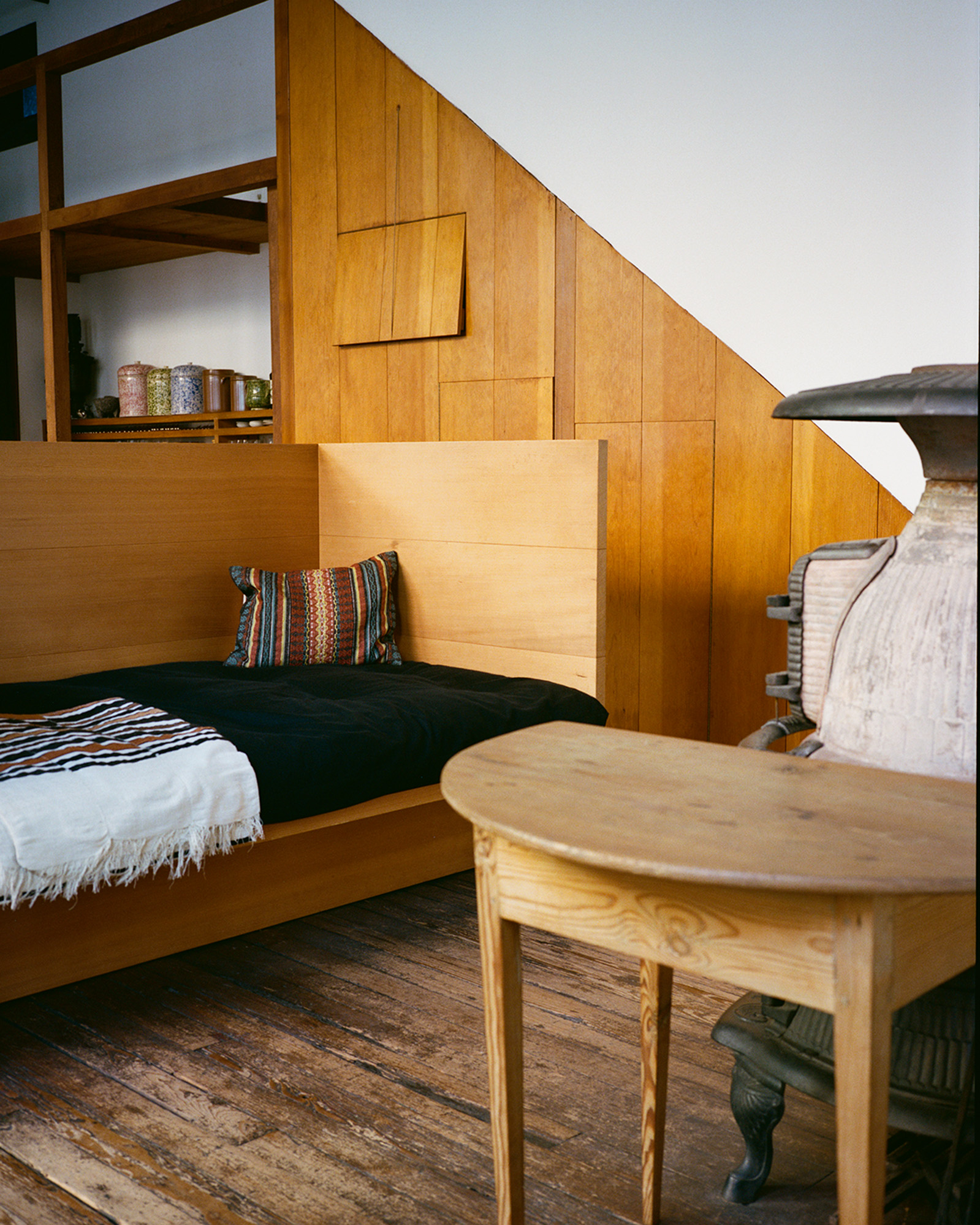
RJ: I think I’m able to see more aspects of him and his interests as part of his work. I think as a kid, I saw his artwork as his work. And because other than that, he was my dad. Now I’m able to see, to use one of your words from one of your questions, how holistic it all was. I definitely keep learning more about him. Flavin and I made the choice when we were in our early twenties to do the Judd estate and the foundation. I’m so glad we did; you know, not all children of artists do.
FJ: That’s one of the better decisions of our twenties.
RJ: Mr. Judd, would you like to tell us about some of the not-better decisions you made during your twenties?
FJ: No, let’s not get into that!
RJ: So, you didn’t ask me this question, but I think one of the things that has been rewarding has been the synthesis of my own journey with learning more about my dad and his work. And I feel so lucky to have been able to be in this area of focus and proximity to his work because it has enriched my life. In my twenties, I wasn’t aware that that potential existed because I was 23 and could only see so far and really thought it was…dualistic? My philosophy is not that good, but I didn’t realize that there was a path of synthesis that was possible.
In many ways, I get stronger the more I learn about him. And at the same time, again, something you didn’t ask, but I think is worth saying: There are certain areas of his thinking, particularly in the areas of land restoration and caring for land, where I have now gone past what I learned from him and am now building beyond what he knew was possible or am facing challenges that he never knew would exist. I feel like he gave us very good tools for facing things, almost like a good constitution or something like that, like a good country’s constitution that we can take other scenarios or other situations and be determined and rigorous and inventive and resourceful—to do as much as we can, both for the communities and the public, but also for land. There are not a lot of entities or people speaking on behalf of land.
FJ: My understanding has deepened because I know a lot more about him now than I did when he died, when I was 25. You get to put together a lot of things. I remember being with him in the Soviet Union, and he’s reading a poem that he thinks is really good. And recently my daughter said, “Oh, I need a poem.” And I was like, “Oh, I know a Russian poem that you can use.” And I found it just by chance and gave it to her. So you never know how these things are going to interconnect. And that’s true also for his work and meaning, all of it: the architecture, the design, the furniture, the writing, the way of thinking about the world. I have a much better understanding of all of that. I saw the results of it then, but now I see where it came from, and that’s a big difference.
RJ: Yeah. I think it’s beautiful what Flavin just said. I have a deeper understanding now. I was reflecting recently that not only were we taking in ideas and thinking and participating in dialogue, but we were living amid structures, outdoor and indoor structures that were being built and that were a manifestation of this thinking. And so even though he was never stopping and pointing it out, and nobody was pointing it out to us, I was reflecting on how, as the Judd Foundation, we’re able to supply some of what we experienced as kids, which was thinking and also these physical structures that reflect so much of the thinking.
What’s next for the Judd Foundation in 2026?
FJ: We have to stop buildings from falling down. That’s our job. So our next big project is restoring our adobe wall. If you want to come down to Marfa and learn how to make adobe bricks and put them together, we’ve got a job for you.

In the hands of this French artist and designer, the most elemental experimentations with watercolors and shapes give rise to the most elegant results.

Once a far-fetched destination, the Frozen Continent has seen tourism more than double over the last decade. The storied cruise line Ponant Explorations is leading the charge with new itineraries that feel out of this world.

Wearstler does it all: interior designer, product guru, hotel mastermind, book author. Now the L.A. maven adds curator to her résumé. For our spring issue, she shares some of her favorite independent talents in Amsterdam with us.