Inside the Meditative Universe of Pierre Bonnefille
In the hands of this French artist and designer, the most elemental experimentations with watercolors and shapes give rise to the most elegant results.

This article is from our Spring 2026 print issue. Sign up to our newsletter for updates on how to purchase your own copy.
During an extended stay in Milan last fall, I had some spare time on my hands. Since I’m hardly a newcomer to the city—I travel yearly for Milan Design Week, at the very least—eating out in new places seemed like as good a pastime as any. To my surprise, the city was teeming with fresh options, run by restaurateurs who trained with all the top-rated chefs.
Meal after meal, I was constantly reminded of the restaurant scene in the 2009 film I Am Love, where Tilda Swinton’s conservative Milanese character is absolutely enthralled by some experimental dishes, which ultimately drives her into the arms of a handsome, experimental chef. But today, I found a city where it’s not uncommon to find dishes like lumpiang sariwa, chawanmushi di zucca, and bulot nitsuke on menus across the city.
Many of the young cooks in these venues trained under lauded innovators of yesteryear, like Massimo Bottura and Pietro Leemann. Many attribute the genesis of this new scene to the World Expo Milano in 2015, after which a new generation of internationally minded concepts started popping up.
After Covid, local chefs shifted focus, cooking with an emphasis on something not so Milanese: informality. Casual meals with lighter, brighter dishes are everywhere now, and sustainability has become a frequent topic. Pasta is no longer expected. “While Italians are very close-minded about gastronomy and cooking, they are now embracing a change in flavors,” says chef Ray Ibarra of the newly opened wine bar Balay.
New eateries, including Sandì, co-owned by Denny Mollica and Laura Santosuosso, tapped local design firms, including Parasite 2.0, to create a cohesive interior that emphasizes the food, with a vintage spirit. “For us it was super important that the furniture and materials were something reminiscent of the restaurants we knew in the 1990s,” says Mollica about the space, a former 1960s bakery located in Porta Venezia. “It’s also important to enjoy the moment,” Mollica added, emphasizing the value in creating a dining experience that also delivers a cozy atmosphere. (What could be more Italian than that?) The rooms are a modern interpretation of a traditional Milanese trattoria the pair grew up with, incorporating green granite, marble, terrazzo, a steel and smoked polycarbonate wall, and 1965 Giancarlo Piretti desk chairs.
The couple, partners in life and work, first met at Erba Brusca, a farm-to-table restaurant in Milan’s Navigli neighborhood, where they worked for French-born American chef Alice Delcourt, learning the essentials of owning and running a restaurant. Mollica developed a nose for business and wine while Santosuosso cooked under Delcourt, eventually moving on to Milan hot spot Ratanà, after apprenticeships at trendy Parisian joints Clamato and Septime. Sandì’s menu reflects a Milanese attitude, with hyper-local produce and unique preparations taking center stage. “We never replicate our grandmothers’ recipes,” says Santosuosso about what she serves, which includes lettuce cooked on the grill, served with parsley, caper butter, and candied lemon. “It’s solid and reliable, rooted in Italian heritage and classic techniques,” she says, “but not obvious.”
Nearby, Balay was rocking when I visited on a Saturday night. Groups of young people sipped wine and smoked outdoors, while couples snacked on small bites inside.
In a space that previously hosted a vegan restaurant, the bar includes a turntable that spins an eclectic mix of music. Of Filipino heritage but born in Milan, Ibarra pivoted to the night shift after multiple stints at Milan restaurants and cafés with his mentor, chef Yoji Tokuyoshi. The spot’s interior, created by emerging design firm Studio Mille, is their iteration of minimalism that references Filipino architecture while highlighting industrial materials. The designers kept the original tile floors, adding distressed plaster walls while constructing a walnut, galvanized steel, and concrete counter, where the main action takes place each night.
Balay means “home” in Filipino, which hints at the backstory of the food Ibarra and his father liked to cook and eat. The wine list’s bottles, along with the menu, emphasize provisions sourced from all over the map. Small dishes include paratha, a griddled Indian flatbread slathered with whipped herbed butter from France and topped with Spanish mussels. There’s also his take on Chinese shrimp toast, using house-made shokupan—Japanese milk bread—topped with shrimp, parsley, spinach, cilantro, and sesame. “It’s technically Chinese street food,” Ibarra says. In the Sant’Agostino neighborhood is Yoji Tokuyoshi’s Bentoteca, a mash-up of Japanese cuisine created with seasonal Italian ingredients that he originally opened in 2020.
Born in Tottori, Japan, Tokuyoshi moved to Italy at age 27. “I was obsessed with pasta and pizza, so I looked for experience in Italian restaurants,” he says about his early days in Tokyo. “I felt I had reached the limit of what I could learn there, so I decided it was time to go to Italy, to get to know the culture and see the real thing up close,” he says. The transplant landed as sous-chef at the esteemed Osteria Francescana—Massimo Bottura’s Michelin three-starred spot in Modena—eventually launching his own restaurant, Tokuyoshi, in Milan in 2015, which earned its own star. “That’s how I discovered that every region in Italy has its own culinary world,” he says about his time in Tuscany.
More recently, with Alice Yamada, Tokuyoshi opened casual outposts like Katsusanderia that features Japanese street food, followed by Pan, serving sweet and savory Asian-inspired treats like matcha croissants and curry buns along with sandwiches on signature milk bread. The all-day kitchen and café has a distinct wabi-sabi vibe, with a fiberglass display counter, gray walls, industrial surfaces, and mint-green fabric panels hanging above, all conceived by Studio Wok. “What I’m working on—and what I want to keep improving—is producing Japanese ingredients here in Italy, like soy sauce, miso, and sansho pepper. Whenever possible, we prefer to produce the ingredients ourselves,” Tokuyoshi says.
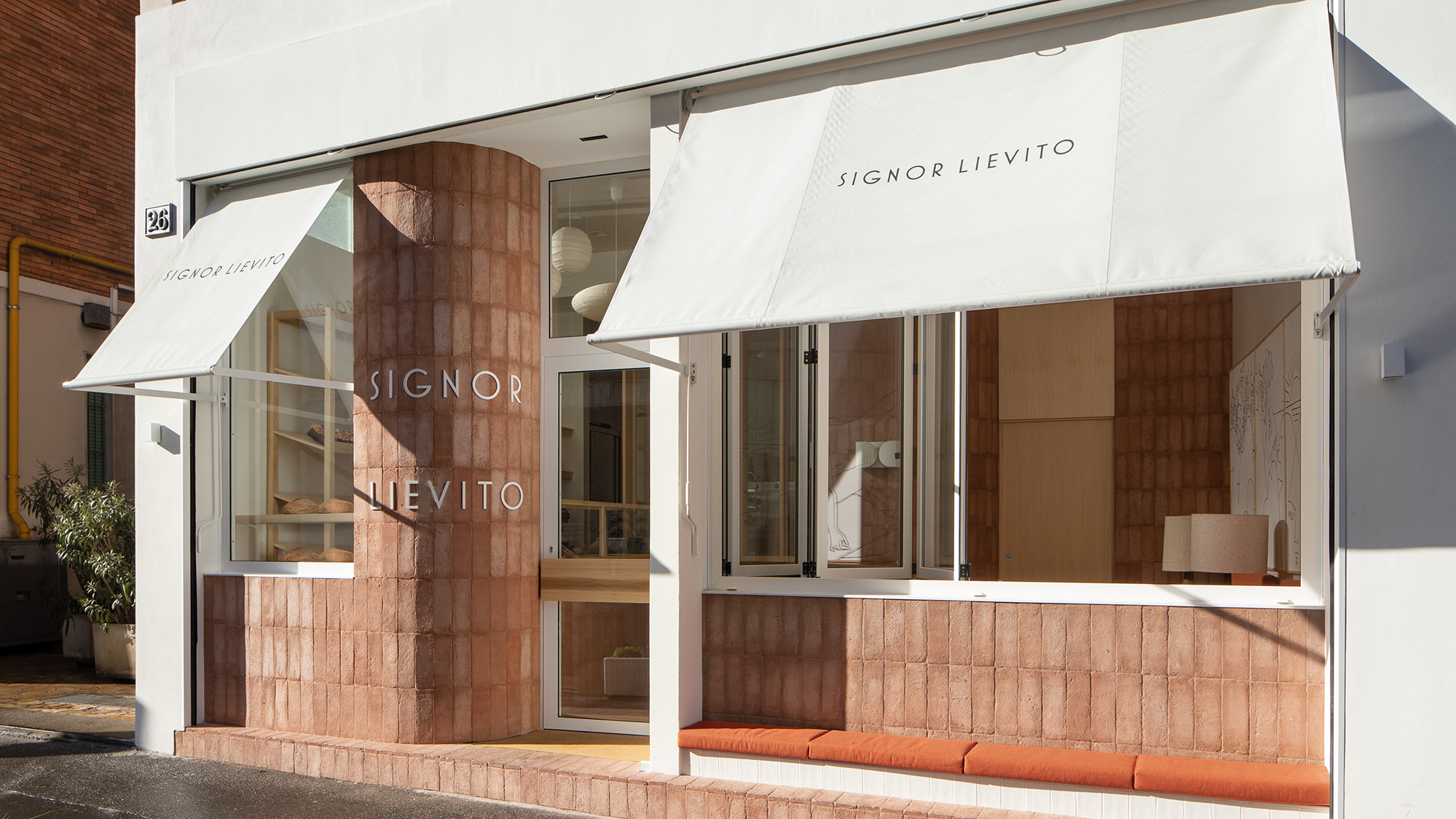
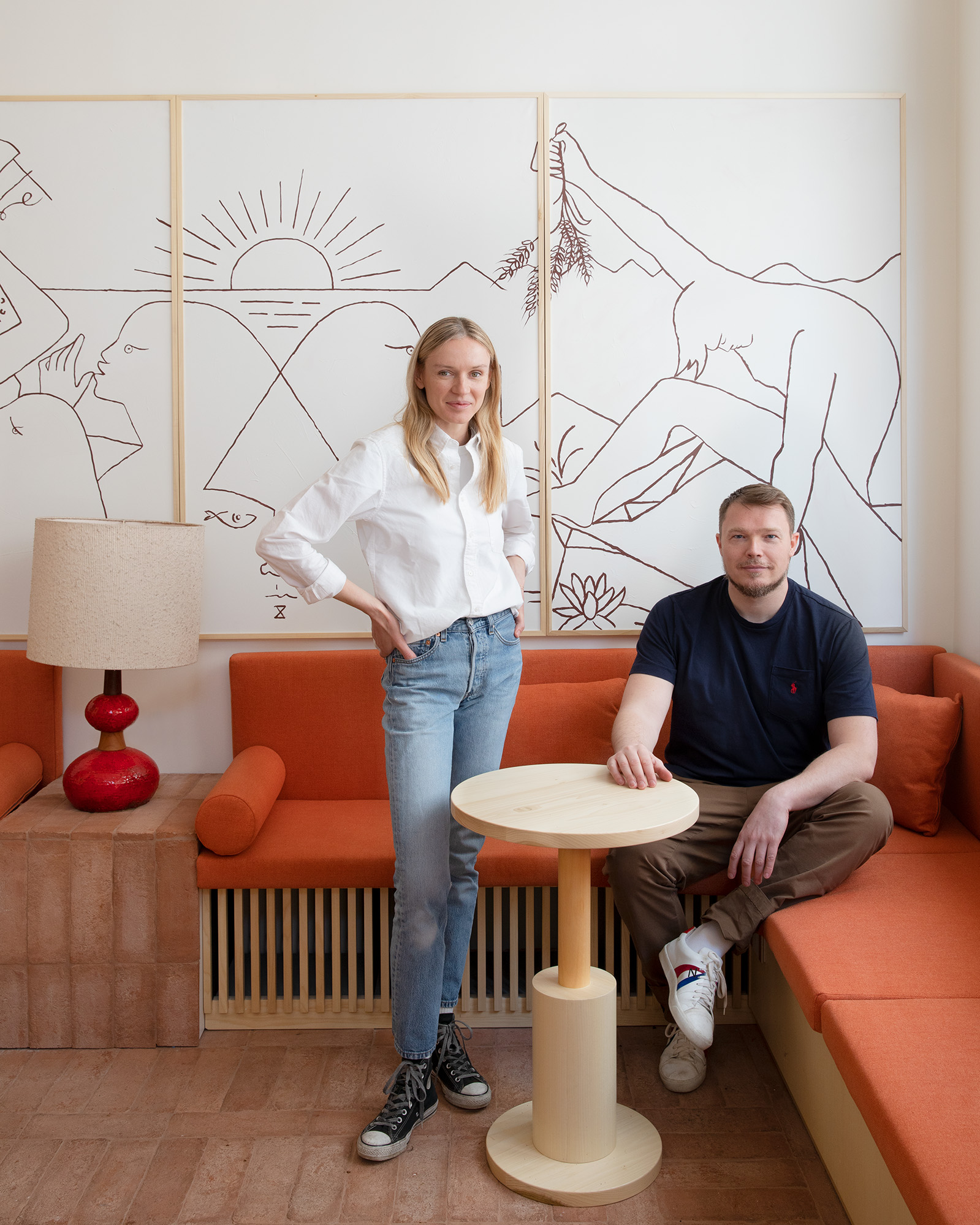
Experimental bakeries, normally something you’d see in Paris, are appearing everywhere. Pastry chef Natalia Nikitina honed her skills during Covid before opening the Nordic-inspired Signor Lievito in the Porta Romana neighborhood in 2022. The 645-square-foot terra-cotta, birch, and white plaster space was carefully crafted by friend and designer Hannes Peer to accommodate a small bar, on-site bakery, and café. Nikitina’s offerings include sandwiches on her signature grain breads and sweets like cinnamon morning buns, as well as laminated croissants and pastries filled with pumpkin, white chocolate, almond frangipane, or—my personal favorite—caramelized apples and salted-caramel cream.
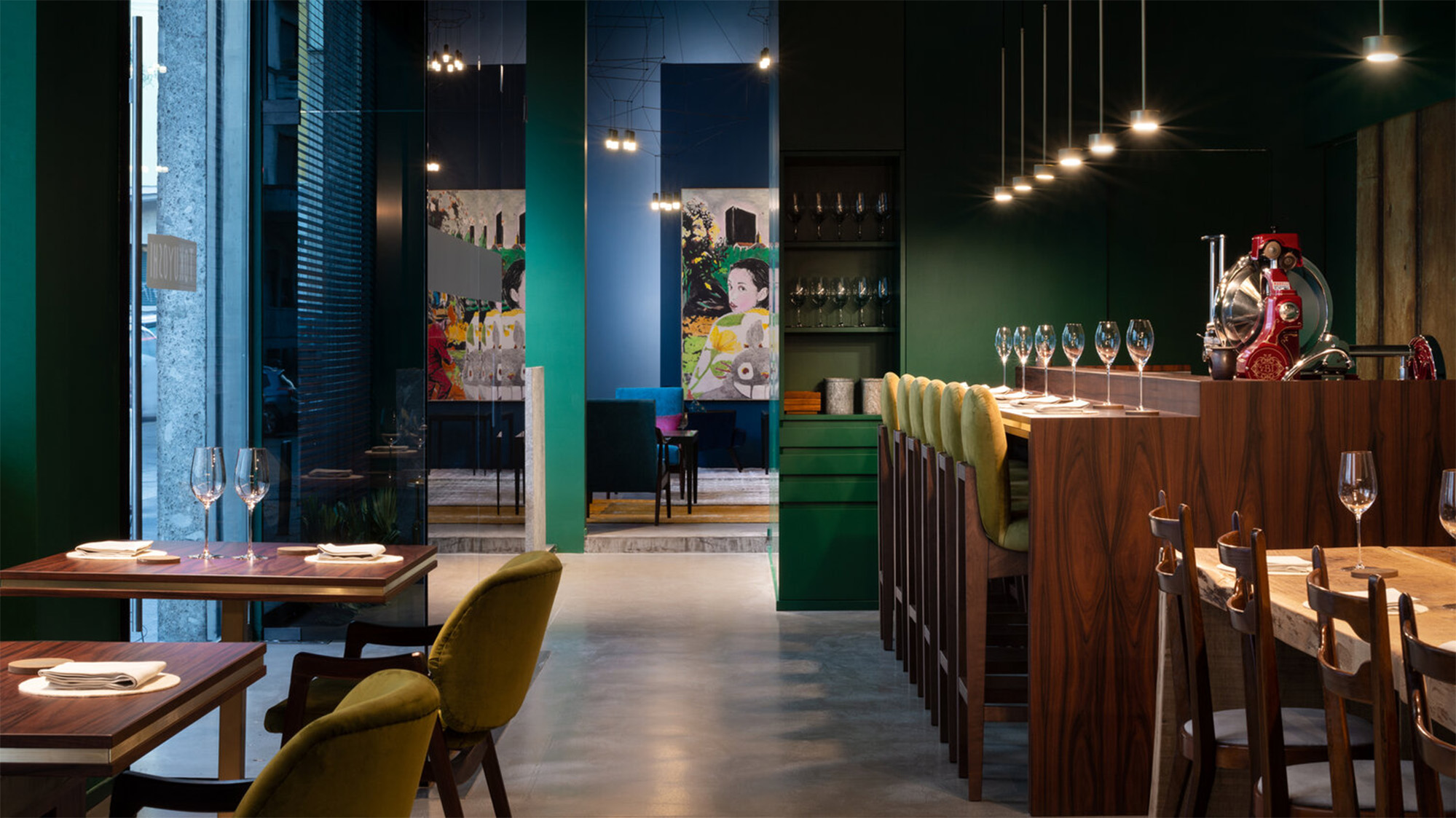
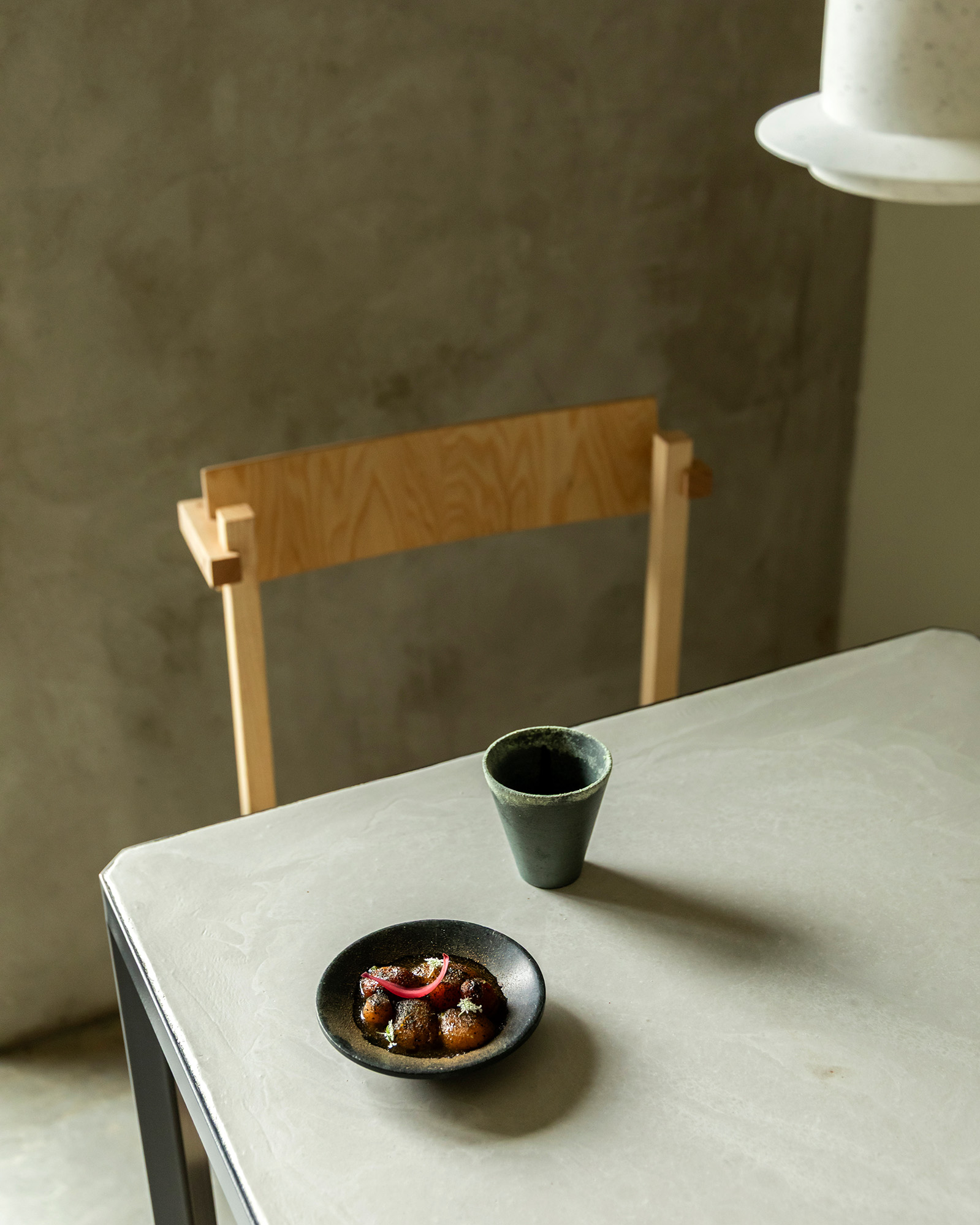
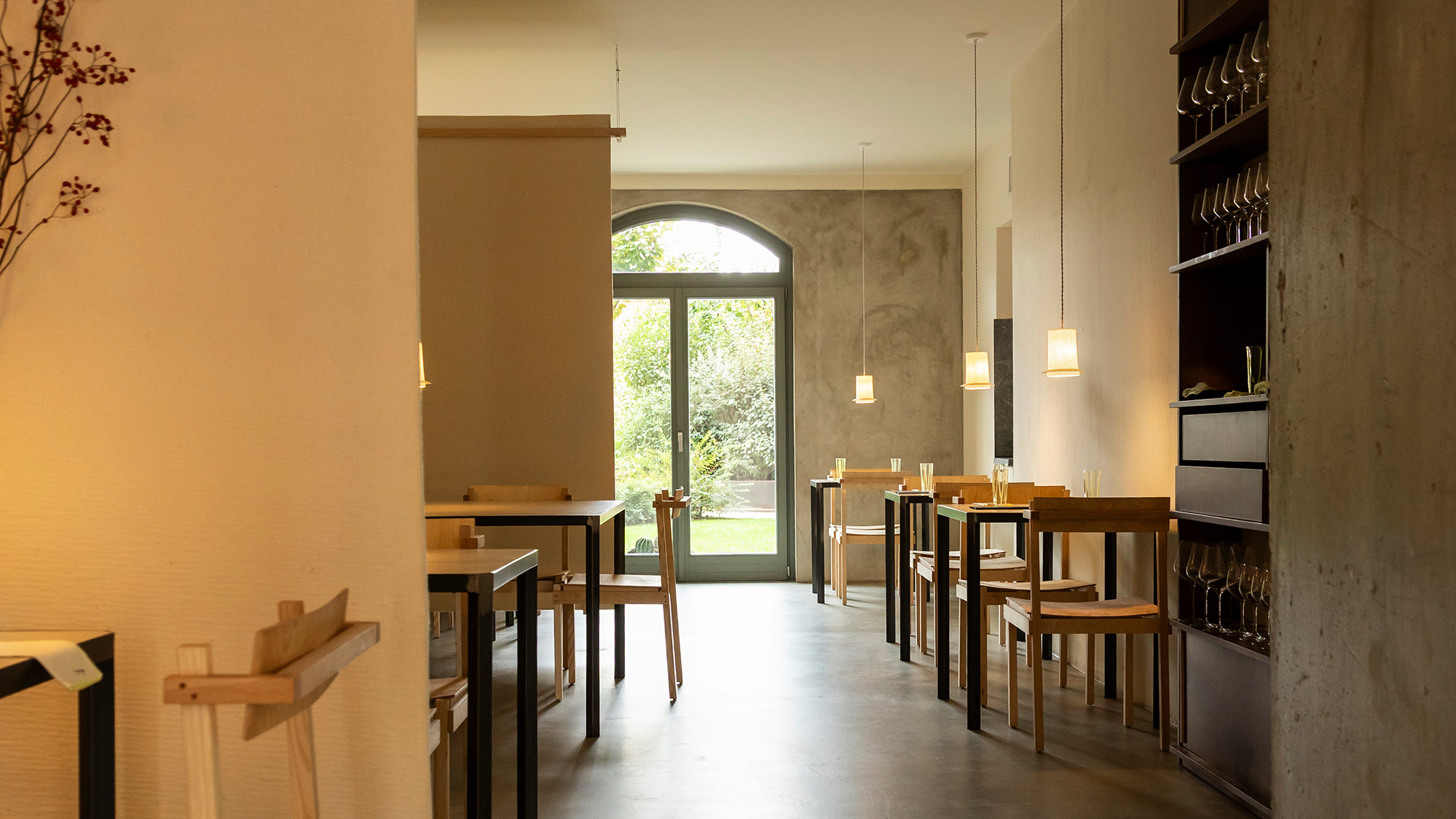
Across town, aspiring chefs Cinzia De Lauri and Sara Nicolosi launched a reprise of Altatto, their beloved 10-year-old bistro that they moved to a renovated building in the up-and-coming Barona neighborhood last fall. The space features bespoke furnishings and artisan décor mirroring ideas that support a slow-food philosophy. “The menus are inspired by micro-seasonality and a daily dialogue with our local suppliers. The ingredients guide the dish, and the relationship with those who produce it becomes an integral part of the creation,” De Lauri says, describing the four-course set menu that always includes a twist, like roasted mushrooms rolled in a pancake or goat-milk gelato.
In order to accommodate Altatto’s expanding catering business and choreographed dining experience, the women commissioned artist/designer Nicola Lorini, founder of the interdisciplinary practice the Present Tense, along with architect Cristina Raimondi to rethink the interiors. The pair created an open kitchen plan and dining rooms containing custom pieces focused on natural materials, including a wood chair developed with Work in Design and Venetian glassware by studio 6:AM, reinforcing a locally made spirit.
Altatto’s seasonal menu offered pumpkin tempura coated in chestnut flour, cocoa, and sage along with a version of risotto milanese topped with a vegetarian jus that mimicked the taste of veal. “I love carnaroli because it’s versatile and it allows many experimentations and reinterpretations,” says Nicolosi about the rice she used for the risotto. “People come here even if they’re not vegetarian, just because they heard it’s a place where you can have a great experience,” adds De Lauri about their evolving menu, which they feel is highlighted by the interplay between architecture and cuisine. “After years of experimenting, the new restaurant inspires me to focus on the perfection of the gesture, to slow down, delve deeper,” says Nicolosi. “We refine the techniques to reach complete harmony.”

In the hands of this French artist and designer, the most elemental experimentations with watercolors and shapes give rise to the most elegant results.

Once a far-fetched destination, the Frozen Continent has seen tourism more than double over the last decade. The storied cruise line Ponant Explorations is leading the charge with new itineraries that feel out of this world.

Wearstler does it all: interior designer, product guru, hotel mastermind, book author. Now the L.A. maven adds curator to her résumé. For our spring issue, she shares some of her favorite independent talents in Amsterdam with us.