Siena’s Bronze Treasures Land in New York for a First-of-Its-Kind Exhibition
The show brings together about 40 Renaissance masterworks, many of which have never been presented outside of Tuscany.

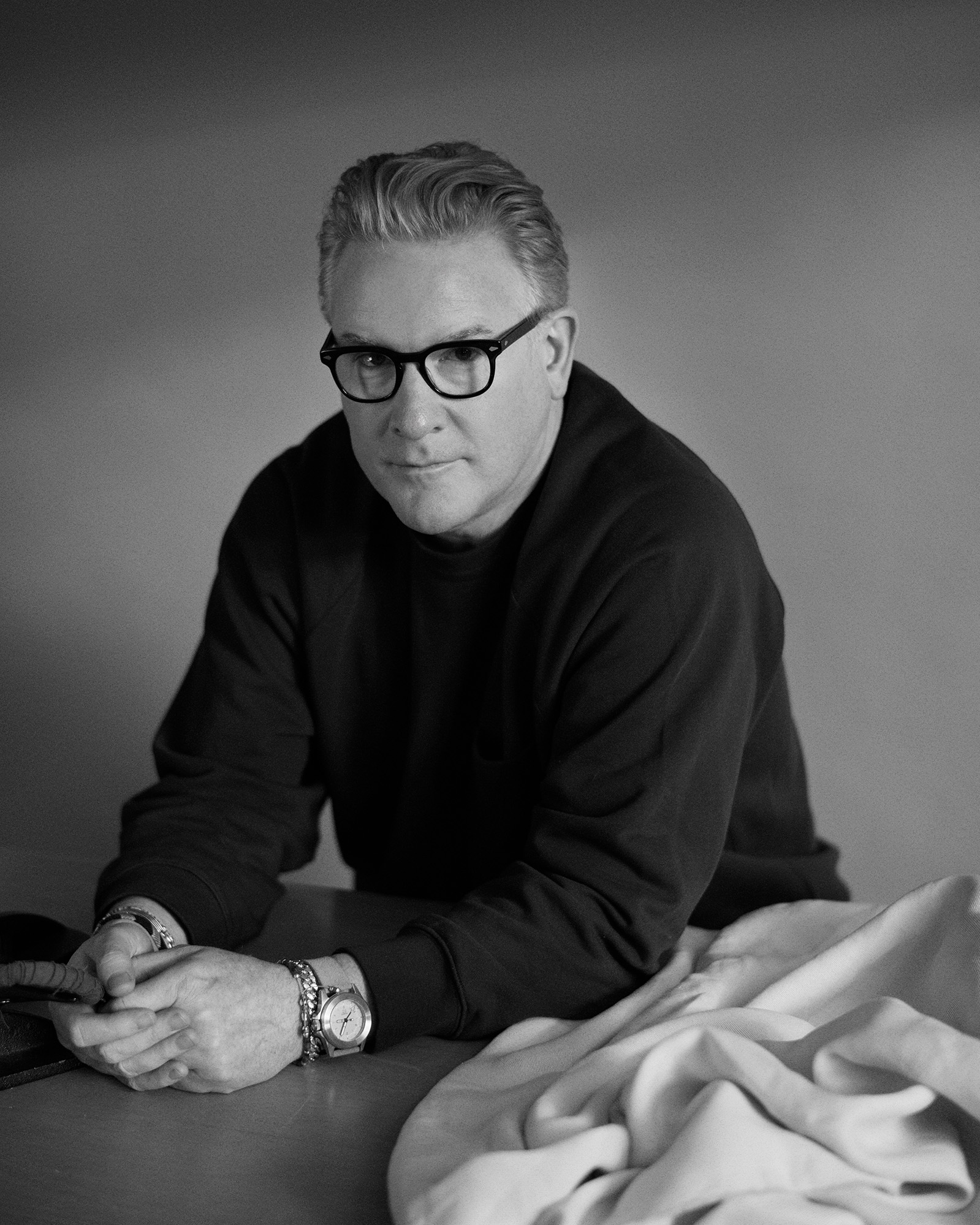
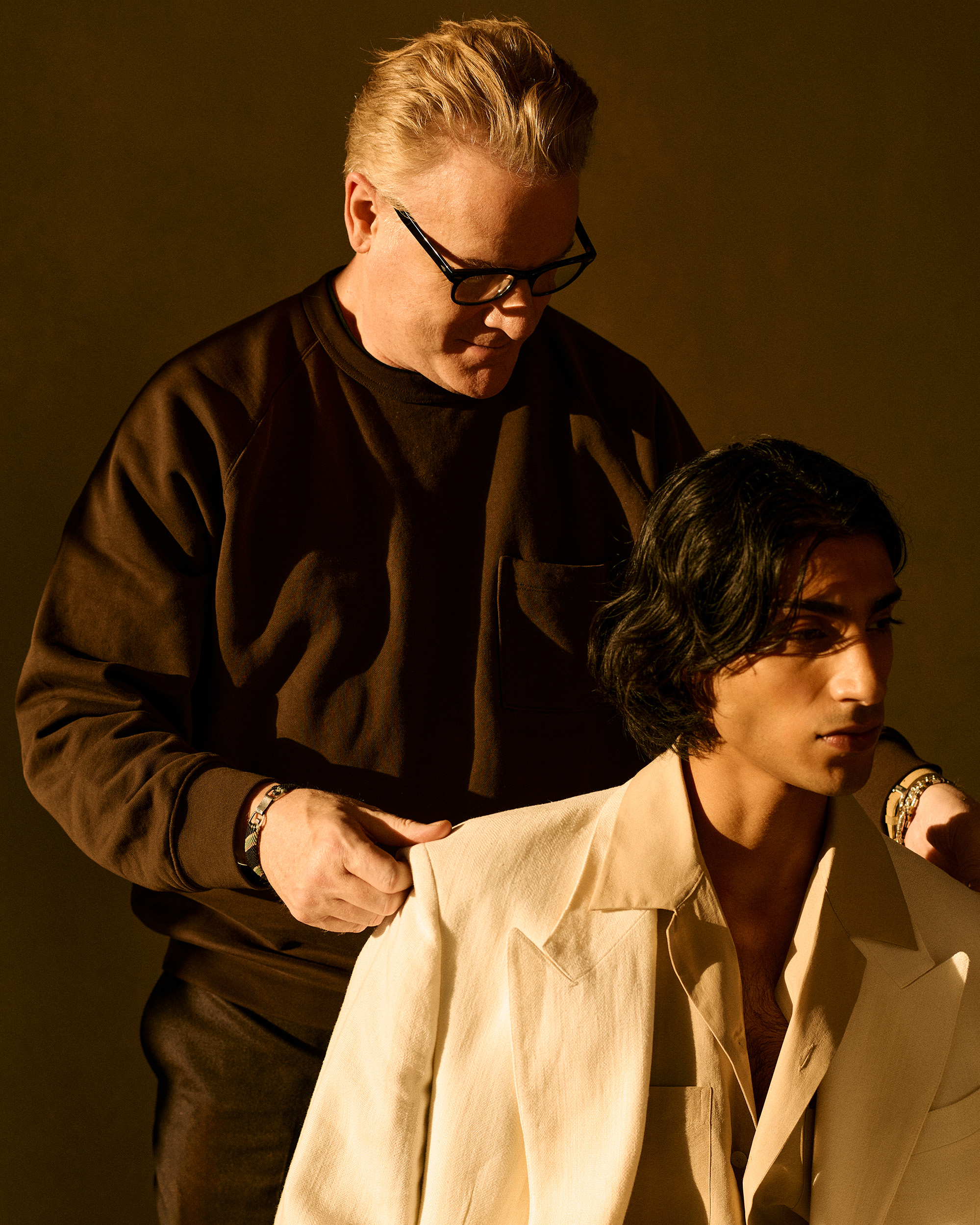
Few designers have influenced the way American men dress in the 21st century as much as Todd Snyder has. On this episode, the designer tells Dan about how he grew up as a fashion-obsessed young athlete before chasing his dreams in New York, his formative years at Ralph Lauren and J.Crew, cutting loose to start his eponymous brand, his latest collection that recalls the 50s and 60s, his advice for young designers, and much more.
TRANSCRIPT
Todd Snyder: The reason why I’m successful is because I’ve surrounded myself with the best people. In everything from merchandising to design to finance, you name it. I have always surrounded myself with amazing people. And that’s what makes me better. I couldn’t do this on my own and I think it’s really important for people if they’re thinking about doing their own thing, to think about that.
Dan Rubinstein: Hi, I’m Dan Rubinstein and this is The Grand Tourist. I’ve been a design journalist for more than 20 years, and this is my personalized guided tour through the worlds of fashion, art, architecture, food, and travel. All the elements of a well-lived life.
Back in September of last year, I received an invitation to a handful of runway shows for fashion week and one of them shot right to the top of the pile, Todd Snyder. I’m not the typical attendee for most fashion events, I’m the first to admit. I’m usually more of an art and design person, as you know, but there’s something so alluring, pure, and enlightening about a runway presentation. Even today in the age of social media.
It only happens once, it’s a perfect synthesis of design, art direction, music, and inspiration. A one-shot chance for a designer to present his or her vision to their biggest clients, the media, and the vast number of fans watching from afar. Seeing Todd Snyder’s runway from the front row made me want to speak with this unassuming, and quite tall by the way, American designer myself and include him in our upcoming spring print issue of The Grand Tourist.
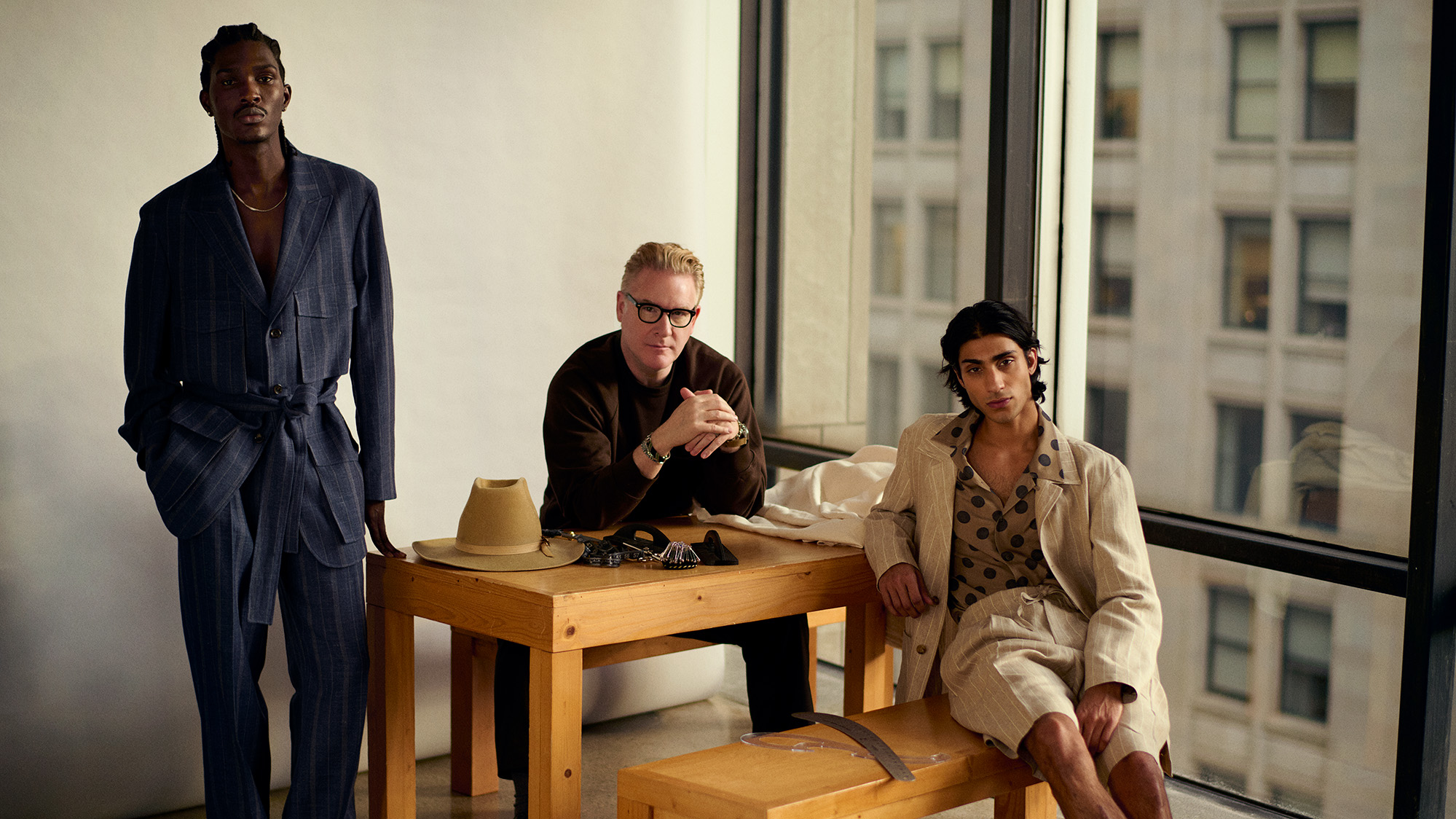
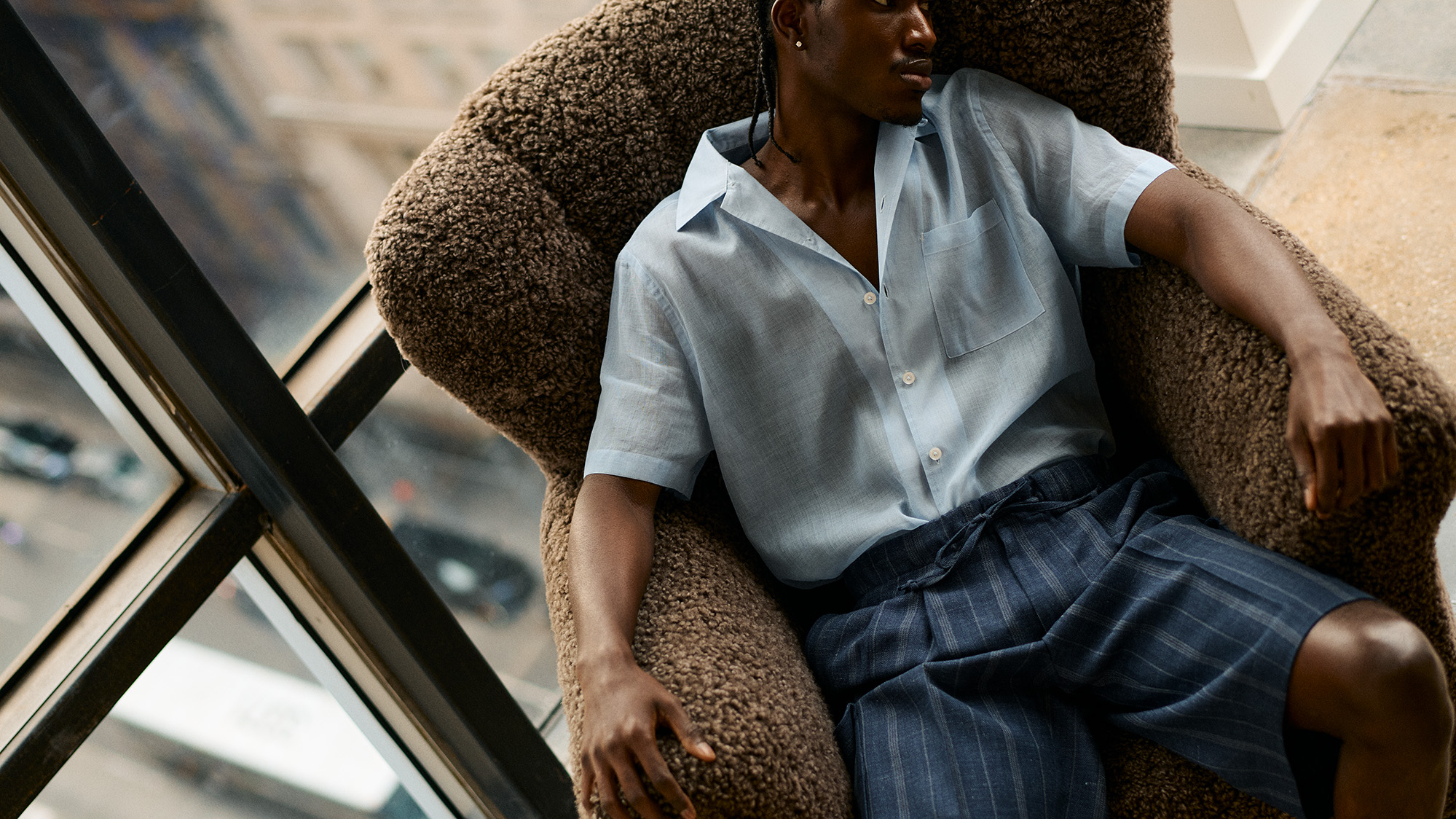
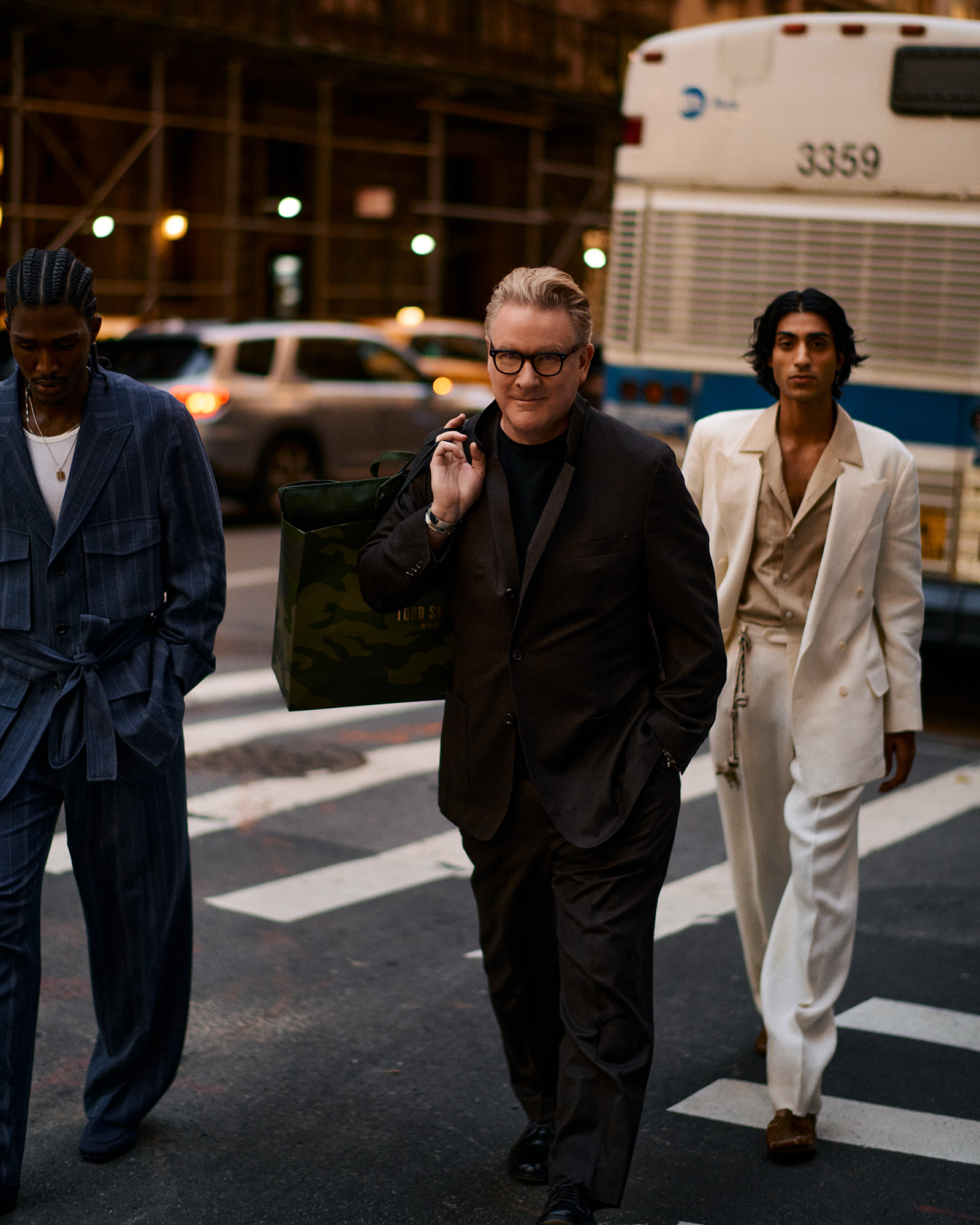
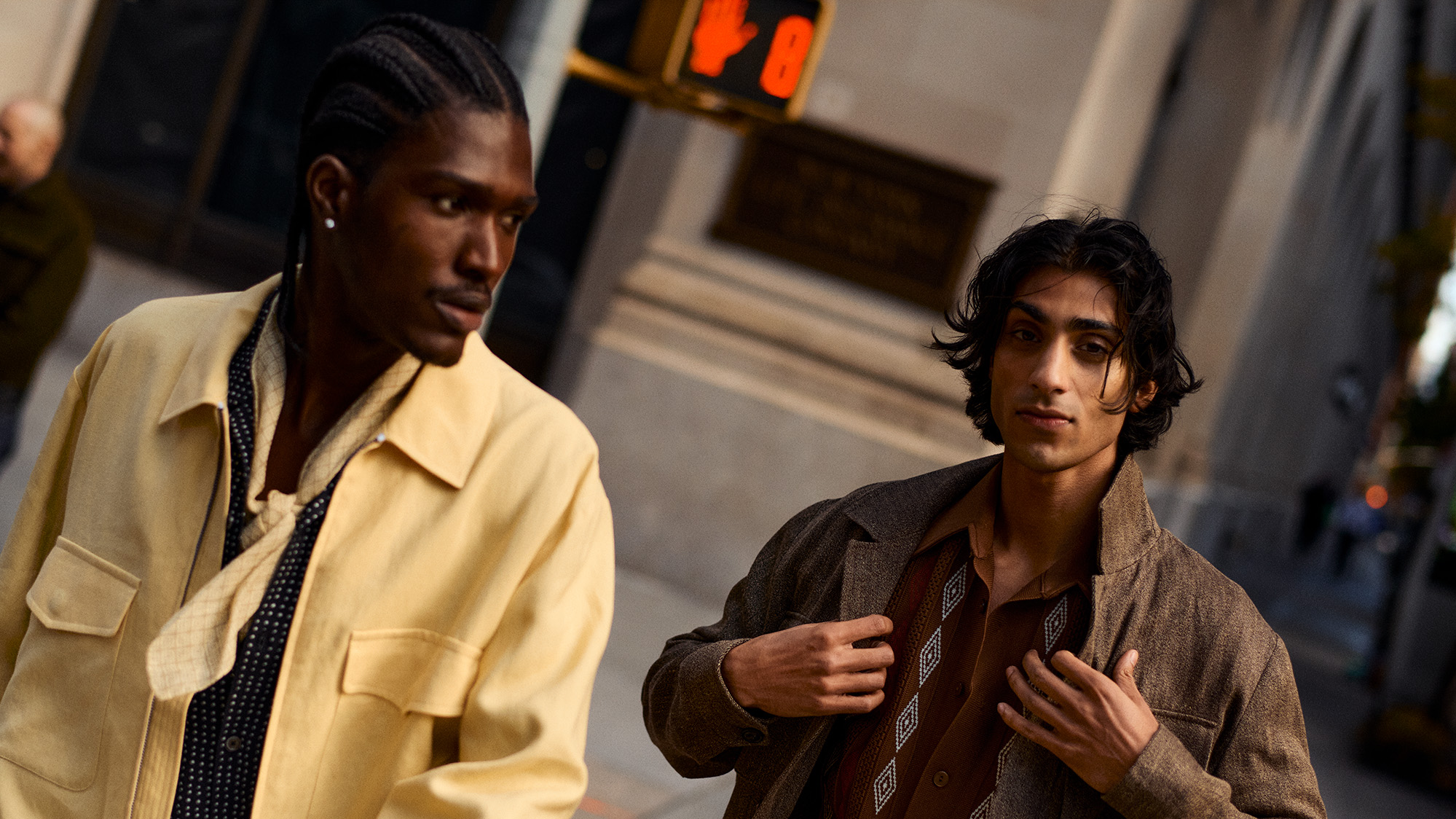
His collection, titled La Buena Vida tells a story of a south of the border mid-century wanderlust with relaxed but sophisticated silhouettes using neutral tones and elegant materials. When I spoke with Todd, I found him to be a quintessential American tastemaker. He has a midwestern work ethic, a designer’s mind, as well as a retailer’s common sense.
Snyder was born in Iowa and studied other things before turning fully to design. After a highly influential era at brands such as Ralph Lauren and especially J.Crew, he opened his own eponymous brand in 2011. Guy Trebay at The New York Times said it best about Snyder when reporting from his Pitti Uomo show in Florence: “As much stylist as designer, he’s the reliable friend who will tell you the truth when you ask if those pants make your butt look too big. He will guide you when wavering about whether to wear your gumboots outside your jeans, try a semi-tuck in your sweater or not a contrasting belt over a trapper’s coat resembling a prop from McCabe & Mrs. Miller and fasten it with a carabiner. He comes from the place where the tall corn grows and he is honestly there to help.”
I caught up with Todd from his headquarters in New York to discuss his unlikely trajectory into the heart of American fashion when he decided to quit his lucrative gig to start his own brand, his philosophy on dressing the American man and much more.
I read that you grew up in the middle of Iowa. What’s your earliest memory growing up there?
My earliest memory in Iowa, I just remember so much from my childhood, you know, playing sports when I was younger and always hanging out with family and friends and cousins. And I always wanted to be something in sports. So that was always kind of what I remember.
And what was your family like?
I mean, I thought my family was great. I grew up in a pretty customary, you know, both my mom and father grew up on farms and they were the first to kind of leave the farm and go to college. And so I think probably my earliest memory was actually when they were in college at Iowa State and I was born and we were living on campus.
And that’s the thing I remember the most. We used to live across the street from a golf course. It was really awesome there, my dad would go and collect golf balls and I used to go with him. So that was like a really awesome time. I was probably like three or four.
If I could go back in time and find you as a 13 year old Todd Snyder, what would he be doing?
13. I was playing sports most of the time when I was 13, I pretty much played basketball every single day. And I grew quite rapidly when I got into, I guess, junior high at the time, but it’s a middle school.
And I was as tall as I am now back then. So when I was, I think, in eighth grade, all of a sudden I was six foot two. And of course the basketball coach was like, whoa, I was like his best friend.
I stopped growing, which was kind of a bummer. Cause I did have dreams of playing basketball at some level. I mean, I played through high school and played a little in college, not on a team. I went to Iowa State and they have had quite a good team, still have a really good team.
If you were one of the high school jocks and playing lots of sports, where did this love of fashion come from, or did you even develop it at that time? Because I read that you were voted best dressed and all that, those superlatives and stuff. Were your parents people that instilled this in you or did it just—how did that happen?
It just happened. I remember at a young age when I was in sixth grade, um, I didn’t have a lot of clothes. My parents, like I said, grew up on a farm. So clothing wasn’t something that they really had a lot of access to. You know, they buy all my clothes and stuff. So I had like one pair of jeans and had a few shirts. And I just remember we were going to go to, we had a performance that we were going to be putting on in sixth grade. And all my friends were talking about all the cool stuff that they were going to wear. Like, oh, I’m going to wear corduroy, this and that. And I’m like, I only have jeans and they have holes in them, in my head. And I actually ended up not going to the performance because I was so embarrassed. I didn’t, and I just still remember that. I still have nightmares sometimes about it. And it was just one of those moments.
And then when I started making a little bit of money, uh, working on the summers and whatnot, I used that to buy my own clothes. Because my parents wouldn’t buy me clothes. We only got a certain amount and that wasn’t enough for me. So I figured out a way to make some money and, you know, I wanted to dress well and I really kind of fell in love with clothes and just, you know, how they made me feel, but also just, I liked the style of it. It was, it was kind of like in the 80s when you know, Calvin Klein was really big and the whole Calvin Klein, Brooke Shields commercials were out and I was like, “Oh my gosh, this is so cool” And then, you know, I discovered Armani in like ’84 and like Holy cow. And then Ralph, of course, was somebody that I followed and I just, the more I got into it, the more I loved it.
But yeah, it really, I think came from the lack of having it and feeling like I wasn’t good enough. And I felt like I needed clothes to kind of make me feel better early on. I was very much like clothes kind of were, uh, if I went to therapy, they’d probably tell me that was my vice. And there was definitely a piece of that and then I kind of made a new career. So I think all the clothes and stuff I bought as a younger kid and the debt I used to bring up, I think my, I always laughed to my mom now is like, well, at least all that research went to good use.
And do you remember a big purchase as a kid—an amazing pair of jeans or something—that you bought that was like, your first big purchase?
Yeah. The first big purchase was the Calvin Klein jeans. I remember like, I got to get a pair of those. I remember the commercial. I remember when they came out, I thought they were the coolest thing. So Calvin Klein jeans. And I want to say they were, Oh gosh, at the time it might’ve been like 90 bucks, a hundred bucks. There were a lot. And that was a lot of money for me at the time.
I worked on the weekends and worked in the summers. So, and it just kind of dominated my whole life in the summers. It just got me to work in the summer. It got me to make money. And then I would go buy my own school clothes. And I remember my mom even said, you know, if you want nice things, you got to pay for it. And it taught me how to work and to go after what I, what I wanted. So it really kind of set me up at the time. It was painful because I thought, gosh, my parents won’t even buy me clothes. And I remember I always wanted Levi’s and they would get me, you know, something from Wrangler. Yeah. I don’t even know if I got Wrangler.
I was probably getting stuff from Walmart. Or actually Walmart wasn’t around. It was Kmart. My parents were very much and still are this way. They’re, um, you know, my dad’s no longer here, but my mom, I mean, they grew up on farms. They were very much like tinfoil, if you had tinfoil and you used it, they would recycle it. They would use it over and over again until it was not usable. So that was just the mentality in the Midwest and, and living on a farm, you kind of live off the land for the most part and clothes are just something that keeps you warm or what have you.
And when it came time to go to school, I read that you studied other things like architecture and business and stuff like that before you kind of switched over to design. What did you want to do or what’d you think you wanted to do in the beginning? And how did that switch happen?
Well, I always knew I liked clothes and, you know, I worked in menswear shops, uh, early on as soon as I could. I think it was in college. I started working in it, um, because mainly I wanted a discount. I pretty much lost more money than I made, which I know is not the right thing, but it was, again, it was a means to an end and trying to dress well. And I, I like certain things and working at a store, you, of course you get a discount. And I thought, gosh, this would be a really cool career. I would love to maybe open a, have a, own a store someday. That was my dream. And I used to go to the store called Badowers which is in Haberdasher in Des Moines. And, you know, for me, everything was super expensive at the time. I couldn’t afford any of it. And working there was kind of at least closer to that idea.
And my dad is an engineer. So my college career was long without a master’s or a doctorate, but I was probably in college for six, six and a half years. Um, because you changed tracks and things like that. Yeah. I started off in freshman engineering, which was, you know, because of my dad, I worked for him every summer and worked for his survey crew and we’re work on bridges and roads. And it’s what really made me the most money. I remember we’d work overtime and like, this is awesome. You know, I, I’d have more money, um, to buy clothes and, um, and then when I wanted a car, so my parents, you know, weren’t gonna buy me a car. So I had to work to get a car. And it was just one of those things. I just, my parents kind of always instilled in me, like, you know, work hard and, you know, to get the things you want. And obviously they would always encourage me to save money, which I was never good at. And it was just, you know, chasing, you know, after this idea. And, and so I always thought it’d be cool to do that, but I didn’t ever do it because I didn’t know how you do that. Like, where do you go to school to be, you know, a store manager or what have you?
I, so I thought, okay, well, at least I’ll do this. This kind of makes sense. And then I did freshman engineering. It was very, very boring. Um, uh, there were no girls in the school, in the class. So it was very, very boring. And then I thought, you know what? I like design. And when I used to work for my dad’s engineering firm, I would work as a drafts person. And so I would do a lot of drawing and stuff. And back then it was all by hand. And so I knew I was good at that. And I, so I thought, well, maybe I go into architecture and that, that at least, cause I, when I was working for my dad, I would go on a lot of errands and would be dropping off plans and blueprints to architecture firms. And I’m like, they always were awesome. You know, I’d walk in and they were well-dressed and they had like, you know, great spaces obviously. And I was like, this is cool. I wanted to be an architect. I thought this could be kind of interesting.
But in the back of my mind, I always thought, you know, I was still working at apparel, you know, clothing store. And it was, you know, until I switched from architecture into business and thought, you know, I’ll just get a finance degree that will at least get me closer to being a store owner or something, or understand the business. And then I was about ready to graduate interviewing for jobs. And I was like, I do not want to be a banker. And, and it just dawned on me. And I remember at the time I was dating a girl and we got into a fight about it. She was like, just go after what you want. And to be honest, you know, thinking back to it, there’s, there was huge stigma around fashion and design for men. And it was just never something. I remember even telling friends and family, my parents, like, what are you studying? I’m studying design. I never told him I was studying fashion design.
And it wasn’t until I was getting ready to graduate and move to New York. I kind of knew, they kind of knew at that point that he’s doing fashion design and all that, because obviously I like clothes and, and I finally just got the guts to do it. And I remember, which was awesome. I remember my grandmother telling me, she goes, Oh, that makes a lot of sense. You know, Snyder in Dutch means Taylor. And I’m like, God damn it, grandma, in my head. Like you would have told me this 10 years ago, I tortured myself. Like, this is not something somebody from Iowa does. Like all my family was, my parents were the first kind of professional careers. All the other families were farmers. So to go and all them were the same way about apparel and clothing. And it just wasn’t something that they prioritize unless they were going to church or what have you. They always dress very well, but that was, you know, once a week, most of the time it was very kind of utilitarian kind of basic stuff. So that’s what got me into it.
It was really, you know, when I heard that too, it just made all the sense in the world. It clicked and it just made me feel not ashamed. And I embraced it. And I was like, you know what the heck with everybody. And I moved to New York and I never looked back. I mean, New York to me, I moved, been here 30 years now, and it’s just awesome.
In Yiddish, shnayder is tailor. So you’re, you’re not that far off.
I mean, yeah, well, yeah, my, my, my wife’s Jewish. And she’s told me that too. So it’s kind of, it all made sense. It just was one of those things. And, you know, in Dutch, it means cutter. But I mean, a cutter is basically the first step. I mean, the cutter is actually more important than tailor. The tailor just sews where the cutter actually is making the pattern.
And, you know, so I learned, I switched degrees and I finished at Iowa State with a degree in textile and clothing is what it was. And I didn’t even know they had this program. And a friend of mine, Steve King was in the program. We both worked at a store together. And he’s, I said, aren’t you studying fashion or something? And then lo and behold, I get into the department. That’s where all the girls are. And I was like, this is, I should have done this five years ago. But I had a lot of fun, meaning like, you know, designing and just, I couldn’t graduate fast enough at that point.
I knew this is what I wanted to do. And I read Ralph’s book back in the 80s. It was his first book. And I’m like, I want to do that. I really, and I put everything I could towards it, moved here and, you know, worked at Ralph. You know, I was always very persistent and I was always wanting to get into this. I just love doing what I do. But even back then, I remember I was just running errands or getting people coffee or cleaning things up. And I just was like, more, more, more.
And like with Ralph Lauren, I know you read that book, or maybe he, I guess it was his first book that you mentioned. What was it about Ralph Lauren that kind of enchanted you?
I remember early on, I remember when I was working at the stores at Badawer’s, I remember the rep would come in from Chicago. And I just remember like, oh my God, I want to know everything that you are saying. Because she would talk about Ralph and talk about, he would do these concepts and they would call them rig walls. I mean, they’re so-called rig walls and they were basically a big presentation. And Ralph’s whole lifestyle is about this mystique. It’s about, you know, almost like creating a movie, creating a lifestyle and creating this moment. And I was so entranced by that. I read the book and I was like, oh my gosh. And it was, Ralph, it was very inspirational. You know, Ralph grew up in the Bronx, obviously, and we had a different last name and changed his name. And he really kind of just created this world. And, you know, everything from the city to East Hampton to Colorado, he kind of had the whole lifestyle of this person and this persona.
And I was just so intrigued by that. I just thought this is so great because nobody has ever done anything, you know, that transformation, meaning like a customer walking into a store, being inspired and being like, I want to be a part of this. And I still, to this day, I reflect on all that and think about that’s what got me into Ralph. And I remember when I was younger, I would drive. I didn’t, I didn’t actually get out of Iowa a lot when I was younger. I never was on a plane. And I remember when I started traveling and again in college and I went to Colorado and I was like, I’m going to check out the Ralph Lawrence store here. And I went and drove and checked it out. And I started doing that. I would drive to Kansas City, had a Ralph’s store there and I’d check it out. And each one was different because back then it was all licensed or a franchised, it was franchised. And I just wanted to check it all out.
I wanted to see everything and I wanted to understand everything. And then when I got the chance to work there as an intern, it just was, just blew me away. And seeing how he and his brother, Jerry, think about the brand and think about designing and all that, that’s where it all, the magic started. And it’s true, truly was magical. And having that, that ability to be there at my beginning was really kind of formed everything. And then from there I went to J.Crew and I went back to Ralph later on and worked at Gap for a bit. And then ultimately went back to J.Crew before I did my own thing. But it was always a very, very much inspired by, by Ralph and Armani. Armani for me was, was that I still have magazines, tear sheets that I had collected from back in the 80s. I just was everything I could learn about design. I wanted to know as much as I could.
And GQ wrote that in your four years running menswear at J.Crew, Snyder fundamentally changed the way American men dress as well as the way they shop. Can you explain a little bit about the time that you were there at J.Crew and how that sort of shifted?
Yeah, it really, I was there for about five years and Mickey Drexler, Mickey hired me. I was at Old Navy at the time and then he hired me to be at J.Crew, be at a mens. Dream come true. I, I honestly, I actually was probably never going to do my own collection. I was working for some of these amazing brands and I thought, you know what, this is great. They pay me well. I travel well. I bought my first home from stock from, from gap and thought this is pretty awesome. I’ll just continue doing this. And then when Mickey called me to their head up mens and another gentleman, Jeff Pfeifle, who was the head of Old Navy brought me over as well. And that really kind of gave me the baseline of, of what I ultimately ended up doing. Meaning like I, I knew from there I could go launch and do my own thing.
And so J.Crew at the time when I started, it was very preppy. It was very kind of basic. It wasn’t a big, big volume brand. I mean, I remember when I was there, I think we were $400 million total as a, as a, um, as a company as J.Crew with men’s and women’s. And then when I left, it was about a $1.2 billion. And now I think it’s like probably $3 billion brand. And I remember being there and, and Mickey really pushing me on men’s. He would always say, you got to buzz it up, Todd, buzz it up. You got to make men’s cool. And, and I mean to him, buzz it up, make it cool. Like buzz it up, Todd, come on. Like, we’re not, we’re not, it’s a dandy company.
We, and so probably his second, my second year in, he, he kind of really kind of got on men’s cause he’d fixed women’s and then men’s was then his next thing. And so he kind of set his target on me and started pushing me to like really design what it was. So we came up with this whole kind of concept that was this very New York, well-educated, uh, gentlemen with it, you know, has roots to, you know, the city, but also goes to the country, but also like is, has a very kind of downtown Bohemian kind of style. And that was kind of our guy and, you know, thinking about who he was, he was an architect, he was an artist. He was somebody who was always trying to, um, you know, blur the lines really. And I mean, from a stylistically like thinking about more of the traditional kind of Ivy league, but then how does that look in more of a kind of a rug, rough and rugged downtown style. And that was kind of the guy. And so I started creating that, uh, I would say in around 96, I started or 96, sorry, 2006. I started creating that vibe.
And then when the liquor store opened, that was when we kind of put the flag in the ground and said, this is who the guy is. And that’s when the Ludlow Suit was birthed there. It was actually the first suit that actually really started selling well. I remember Mickey saying to me, he said, look, this is our store. He goes, you and me, he goes, I don’t want any other merchants in here. Like we would go into this room. We had this little studio that we set up to be kind of our incubator for what the liquor store was going to be. And Mickey was Mickey is still great friends with Andy Spade. So he’s like, Hey, what if we bring Andy Spade in here?
I’m like, I love the idea. I was a huge fan of Jack Spade and we kind of all got in a room. We started putting all this stuff together and, um, started designing what the beginnings of what J.Crew was ultimately. Um, and it all started the liquor store. So I said, okay, we’re going to make, we’re going to throw, we basically threw everything out the window as far as like what we were doing for the main line of J.Crew. And we made, and it sounds like kind of textbook now because everybody has done it, but we started the Ludlow suit there. So we did kind of this, what our version of was like at the shrunken suit, the more form fitting suit. This is again, 2008. And then we also in, in brought in Alden shoes. So all, so we started doing these collaborations.
I was a big fan of collaborations. I had learned that from my trips to Japan and like seeing kind of, you know, Yohji Yamamoto and Comme des Garçons and all these amazing Japanese designers doing these collaborations. I’m like, this is a really cool idea. I should go do this in America because no one was doing it in America. And I thought this could be really clever. And the Red Wing boot was actually birthed from my, those trips because Red Wing would only sell the cool boots to their international retailers. And I’m like, why don’t you, why don’t you let us sell those? And then that took them a year or two to say, yes, we’ll do it. Cause they’re like, why does J.Crew want to sell Red Wing boots?
I said, because I can’t replicate what you do. I’d rather just do it authentically from you guys. And then, then the Timex came along and then all that kind of like snowballed. And we really showcased a lot of that at the liquor store. So I made our salvaged jeans made in the USA, the slimmer fit. I had the shrunken suit. It wasn’t called the Ludlow when we launched, launched it. It was just our slim fit suit. And then it took off. And Mickey was like, he knew he had a tiger by the tail on the, the Ludlow birthed into this giant thing. I had no idea. I owned one.
I remember it. And to people that don’t know, or might not be from New York, can you explain what the liquor store was?
Oh yeah. So the liquor store was this awesome place that actually Andy Spade came to the table with like, so when Mickey wanted to make a big impact with men’s, like I said, he had fixed women’s and he was ready to kind of put his sights on men’s. And that’s when he brought in Andy and we, he, Andy came in and saw the collection. He said, you really need a store. And Andy said, you know, I got the space. There’s this old bar in Tribeca. It’s called the liquor store. It used to be a liquor store back in like the 50s, still has a sign out front, still has the bar. And I, I was like, oh my God, let’s take it.
Let’s jump on it. And so we jumped on that. And so the liquor store is this old, it’s one of the oldest freestanding homes, essentially, that is still, is still up. And, and, you know, we, we took it over back in 2009, 2008, 2008, and it became the beacon for menswear. And we had people from Japan flying in to check it out. We, like, I remember going to Japan afterwards and I would tell people, you know, I’m Todd Snyder. And they’re like, oh, you did the liquor store. And it was just like this. And I’m like, how’d you know?
But it just really became kind of the beacon for menswear at the time. And, you know, then, sorry. And then the continuous lean came about and they really kind of helped showcase. And we were already doing all these cool collaborations with, you know, Red Wing and Timex and all these American heritage brands. And then, and then it, you know, it took a, took a kind of zeitgeist way of, of menswear in a way. And that was such a great moment. And then I knew I should go do my own thing. I knew like, okay, I figured it out. I turned 40 and then I was ready to do my own thing.
(SPONSOR BREAK)
Was it because it was just something you, something inside you, you wanted to get out that you couldn’t do it in a corporate setting, basically?
Yeah. I mean, it was interesting when I left, Mickey had offered to back me, which I was like, that’s cool. But also Mickey, Mickey’s really, he’s a lot like he’s, a driver and I was really stressed out. He was, you know, he never, he never, I, we’re still very good friends today. Like we call each other all the time and, but it really stressed me out. I was like 39 and you know, you have Mickey Drexler coming in telling you to buzz it up. Like, what are, okay. And then the thought of like starting a business with him, I was a little scared just because, you know, I didn’t know what I was going to do. I knew I was going to do something.
And so we’ve always kept in touch. So it was one of those things I wanted to do my own thing. And then I had turned 40 that year, year before and thought, you know, if I’m going to do this, I better do it now. And, and I went off and did it. I left J crew. I left a really good job. I left a lot of money on the table. And I, but I had a dream. I did have a dream. That dream kind of came back front of my brain now and thinking, you know what, if I’m going to do this, at least go do it now. You’re 40. If it doesn’t work, you know, 45, you can get a job anywhere.
And so I did it and it just, you know, it took off and it was really, it was really fortunate. But at the same time, I knew a lot of people at that point. I knew, you know, the head of GQ. I knew buyers. I knew I got a phone call immediately when I resigned. I was in the Women’s Wear Daily and the head buyer, uh, Tommy Fazio from Bergdorf’s called me immediately and said, I want to carry your collection. And I’m like, well, I haven’t designed it. He’s like, show me when you’re ready. I want to carry it.
And I was like, wow. And so I was very, you know, because I had been in the business for a long time and because of the liquor store and because of all the things we were doing, um, you know, I w I was very fortunate to know a lot of people and I always kind of use my Midwest nice and I it’s genuine. I’m, I’m always just a nice person. And, and that kind of gets me through a lot of doors and I use it today in a lot of different ways. Um, but yeah, that’s kind of how it all started.
And so tell me about that first collection when you sat down for the first time with pen and paper and you’re about to design something like what, what was your, in your head, like, what did you want to add to the industry that you thought was needed?
Well, at the time I was very, I felt like there was a huge white space in the industry. There wasn’t, there was, there was, you know, you had Thom Browne, you had luxury and I was scratching my head of like, you know, who’s going to spend the time. It was $400 shirts, you know, Tom Brown, his Oxford was 400. I think they’re like 900, a thousand now. But I thought, this is crazy. Who’s going to pay for that? Like, I felt like there was always an opportunity to, um, have something that was accessible and have something that was well designed, crafted, uh, at a reasonable price. So I really looked in my closet. I looked in my kind of dad’s closet and what I, you know, would think my grandfather would wear and thought about how do I reinvent those classic menswear items?
How do I inject luxury into it? And it’s still kind of, uh, a thing that we do now. It’s, it’s really what the cornerstone of the brand is really like taking these iconic pieces that every guy should have in their closet, whether it’s a suede trucker jacket, which we call the Dylan, whether it’s a selvedge jean that uses Japanese, uh, selvedge, we have a selvedge Oxford, you know, we have cashmere chore coat that is made in Italy, you know, thinking about what are those items that every guy can wear and elevating them and elevating basics. And, you know, that’s really the building blocks of the brand. And I use a lot of architecture references because I do think there’s a lot to, you know, a foundation of your wardrobe. Like what are those 10 essential pieces that every guy needs in his closet? And I start there.
And then from there I start to build, I, I, I think about every category, like our t-shirts are all made in Portugal. Our cashmere uses Italian, um, yarn, our tailoring is all made in Italy and Portugal. So it’s all premium. We use, you know, all Italian fabric. It’s always like, I’m trying to put as much as I can into it and making it something that is going to be in your wardrobe for your whole life. And, you know, whether it’s a pair of shoes, whether it’s a jean, whether it’s a, an Oxford shirt, whether it’s a, you know, cashmere chore coat, whether, you know, it’s a beautiful kind of, so I started off with these basics, you know, I had, how do I reinvent cashmere? I’m like, Oh, why don’t I do a garment dye? And why don’t I make it look like a sweatshirt and like taking things that guys know, but then adding that little bit of, of flavor to it and a little bit of luxe to it is really, is really kind of my trick. And my, my favorite word has always been juxtaposition.
And it’s really kind of, to me, truly defines design. It’s like, you think about architecture, you think about even cooking, the ingredients are known. It’s how you put them together that make them new. And that’s how I design. I go about design. I think about creating something as I’m always thinking about how to, how to juxtapose sport and luxe. And that’s where the, the cashmere sweatshirt came around. And how do you do an old school trench coat? Well, let’s make it in a double-faced cashmere and, and have it be something that you’re just coveting.
And, you know, it’s like our chore coat, a chore coat is like a typical workwear style, but doing it in a hundred percent cashmere, and then we do it, it’s actually splittable. So it’s, you don’t see any seams in it per se, like any stitching. And so it’s a very clean make. It’s a very, I would say high level quality because there’s a lot of handwork that’s done in it. And, you know, that retails for like 1500, but it’s one of our best selling styles. And we do have things that are less expensive, but I look at very similar to how Mickey Drexler, he’s the one who taught me. This is like, you go to Mercedes and all their stuff’s amazing. You aspire to drive the G-wagon or what have you, or the S-Class or the Maybach, but you end up probably buying the C-Class or what have you. Like you’re, we’re all thinking about like the good, better, best philosophy.
And I got that from Mickey is having those things that are reach that the customer aspires to. Whether it is our date, sorry, whether it is our suede Dylan jacket, which retails for like a thousand dollars, you know, I have one, I know a lot of people, they save up for it and they buy it. And, but it’s the one thing that kind of, you can wear anywhere. You can wear on a date, you can wear it to a red carpet event. Like we have a lot of people, a lot of celebrities that that’s kind of the go-to for red carpet, or you can just wear it with jeans or what have you, wear it with dress pants. There’s, it’s so versatile. It kind of really is the, the, the piece that kind of tops off the, the look.
And, you know, you’re coming up in your, I think 15th year in business. Is that right? Yes.
Yeah. It’s our 15. Yeah. Okay. And you know, you’re someone obviously who knows tailoring as well as merchandising and the whole ins and outs of the business. How would you compare how people dress or how men dress in 2011 when you started to today in 2025?
What’s been the biggest shift in your mind?
I think the biggest shift is the younger generation is definitely more, they’re not afraid as, as much as when I was younger. They’re definitely having an easier go of, of dressing well. I think the new generations that have been coming out in the last 10 or so years have been embracing menswear and fashion. And it’s, it’s not kind of taboo anymore. It’s, it used to be, you know, very much a four letter word as they would say, but now it’s very kind of, you know, there’s still men, men definitely don’t like shopping. I can say that unequivocally.
And it’s, it’s definitely not something that is all across the board, but we, we figured out a way to attract a guy. And really the whole goal of the brand is to make it easier for guys to understand and dress better. And that’s kind of our purpose. Our purpose is really to help guys look their best. And you know, you come into any of our stores, I’ve met every GM of every store and I kind of use the same speech that I did when I was at Bedour is like, you got to get to know every customer by their last name, like Mr. so-and-so. And until they tell you, call me Jim, that’s really important.
And that was always my biggest pet peeve when I came to New York city. And even today, if you go into luxury stores, you got to, Oh, there’s a velvet rope. You got to wait, you got to make an appointment. And then you go in and you feel like you’re not welcome. And that to me is not a great way. You know, that to me is not customer service. That’s a, you know, people are coming to buy something from you. They’re taking time out of their day. You know, you need to be friendly and you need, and it sounds simple, but you’d be surprised at how many stores you walk into. You don’t feel like you belong. You feel like, you know, you’re kind of interrupting them in something. And we’re the exact opposite.
We need to make them feel as they’re not our neighbors. They’re the ones that, you know, we want to be a part of the neighborhood. We want to be a part of the community. And our purpose is really almost to be the current concierge of that person’s experience in the store and even beyond the store. And if you think about going into a store, wouldn’t it be great if you got not just style advice, but you got like, you know, you’re in town, where are you going to dinner? Oh, here’s some cool places you should go. Or you should check out this cool bar. Or have you been to this? Like we’re really there to kind of help entertain them in some ways.
But more so just kind of being cool and giving, you know, guys style advice and making them feel as if, you know, it’s not a hurdle and it’s not hard to do this, but showing guys small little tricks to, you know, whether it’s, you know, matching your shoe to your belt, or whether it’s like, how do I wear a baggy jean? What should I do with, you know, am I tucking them in now? Am I not?
Like it’s silly little things like that, that you would, believe it or not, guys are confused by. And it’s consistent, but, you know, definitely guys have evolved. I mean, our customer today, our average is about 35 to 40, but we get the extremes. We get the 18 year old to 80. My favorite is when you get a dad coming in and buying his son his first suit. It always brings a tear to my eye and it just chokes me up every time I’m in a store.
And I see that happening. And it just, to me, that actually means more than any fashion award, any fashion show is like seeing a father handing this, you know, his kind of knowledge down to his son. It reminds me of my dad. I still remember my dad showing me how to put a sweater on and, you know, making sure the sleeves didn’t stick and all that. And all those little things are important and not every guy has that and has that muscle. I mean, I think girls do more so, but that’s really the reason why we’re here is to help guys dress better and give them great quality.
That’s really, at the end of the day, it’s, you know, one customer came in, which I really appreciated his point of view, which I still remember. He said, look, Todd, I know New Balance sneakers are cool, but I get confused when I go on their site and I see like 200 styles. I don’t know which one to buy, but I come into your store and you have three. And I know if I pick one of them, I’ll be cool. And that’s really what every guy, they don’t want to be embarrassed. They just want to be like, I’m cool. I don’t need to be cutting edge, but I also don’t need to be, you know, my dad.
Is that this like weird push-pull we have nowadays in culture where we’ve got a younger generation that is so exposed to things like social media and e-commerce and they can pull from anywhere and dress any way they want, literally. And then you’ve got a different psychographic or generation that is thinking of things in a very kind of menswear, menswear kind of way of, you know, limited options, three options suit, you know, matching the belt with the shoes and like the more traditional side of things. And you’re not just, the market is now serving both of them in a sense.
I would say our brand probably serves both. It’s really interesting. I have three younger daughters, two of which are 24 and 22, actually 25. She just turned 25. Gabby just turned 25 a couple of days ago. And she always tells me, it’s like, dad, no, my God, like all my guy friends love your brand. When I’m at events or whatever, I tell them my dad’s Todd Snyder. They’re just like, oh my God, I love that brand. So there’s definitely a change. There’s definitely a shift, but we kind of have all different spectrum. We call them archetypes, you know, kind of the textbook way of describing them is like thinking about each customer in a different way. You know, we have a guy that’s classic, but updated.
We’ve got a guy who’s kind of trend driven and kind of wants the newest and latest. And we really try to think about, you know, our store being the one-stop shop for the guy. I mean, we’re not going to have guys lining up for sneakers outside of our store. That’s not what we’re intending, but we will have the cool Nike or we’ll have the cool New Balance or what have you. Just like all those stores, we’re called tier zero, which is the highest you can be as far as sneaker distribution. So we get all the new ones coming out. We get the, you know, the latest and greatest. And it’s kind of neat that, you know, you can come and get that. I probably shouldn’t talk about it too much because I’ll probably start getting lines out the door.
But it is something, and then you can always get like a vintage watch in there. So like we sell these amazing, you know, rare pieces. You know, I bought a few from ourselves. I got my first Omega Speedmaster from us, which I always wanted. So we have something for everybody. And it’s really, you know, if you want to discover kind of great things, and that’s what the store is really about, is discovering cool things that, you know, mean something to you or mean something for a present.
It’s really, you know, you can get everything from a tuxedo all the way down to a t-shirt. It’s really kind of meant to be that one-stop shop for a guy who wants to have something cool and look the part. And we get a lot of guys coming in for their wedding parties or themselves getting their first tux. It’s just kind of neat. Like we’ve definitely become a destination for the guy who wants better but doesn’t want to pay a million dollars for things.
And the spring-summer collection, which recently debuted, is called La Buena Vida. Tell me a little about this collection and where that it’s got this sort of south of the border vibe, very mid-century. Remind me a little bit of the fashions of the movie Queer that came out about a year ago.
You know, tell me about that.
Well, I mean, that was such a great movie. Jonathan Anderson did the costume in it, but I’m curious to know what piece kind of tipped my cards a bit. But it really kind of was inspired by this mid-century point of view. I’ve been inspired by the 50s forever. And it’s interesting because I know the history of fashion now. I’ve been through everything and, you know, seeing things kind of repeat themselves is really interesting. So like the 50s was very much inspired by, or sorry, 80s. Sorry, I should say this again. The 80s were very much inspired by the 50s. So if you look at the tailoring from the 50s, early 50s, you know, wider lapel, off-the-shoulder jackets, Ricky jackets, which were a cool kind of thing that Ricky Ricardo popularized, ties a little bit wider. A lot of that you would see, you know, in the 50s and you would see kind of progressing in the 80s. And Armani kind of really used that as kind of his baseline and how he kind of reinvented tailoring and thinking about like sweater jackets and all that.
So for me, I was very much inspired by the 80s and kind of the colors of like Miami Vice and kind of those kind of little bit more Miami inspired colors that are somewhat Caribbean in feel. Like if you see houses in Bermuda and The Bahamas, they’re always kind of brightly colored and you see, you know, even in Miami, you have all these beautiful houses that are on the water. They’re always bright colors and color was always kind of a great way to express things. And so my thought was like, let’s do something. So vintage Havana was kind of the vibe. And so it has like a very, you know, 50s Havana kind of mixed with this very 80s kind of Miami. And it really kind of embodied kind of the feeling that I had. And then I discovered the movie Queer and I was like, oh, this is amazing. And a lot of those were vintage garments.
A lot of those things that was in the costume were vintage. Those weren’t made. And the Ricky jacket was prominently shown there. And I was like, oh, that’s it kind of just reaffirmed my already, I had already started the design process and I watched the movie. And then the one shirt I loved was, I can’t remember the character’s name, but he was wearing the see-through. It’s a cotton foil. So it’s great for when you’re in the South and it’s hot as heck and it breathes like you’re wearing nothing. But it was like a really cool style. So a lot of that stuff came straight from the 50s, came from like the 40s and 50s.
I’ve always been a big fan of the Guaybara shirts and kind of these, my wife, my first wife is Cuban and both my daughters are half Cuban and then had been to Cuba before. And her father obviously was Cuban and his style was just so cool. He would always wear these shirts kind of untucked but still dressed up. And it was just kind of a neat style. And I always kind of remembered that growing up. And so I thought it was a cool way to kind of express, plus I felt like there’s a Latin feel that really kind of needs to be expressed at this time from stylistically, everything from that I’m seeing out there, from tailoring to oversized shirts to even tank tops and things like that. I wanted to have this a little bit more flavor, a little more sex appeal to the collection. And that’s really kind of what came out of La Buena Vida.
And when you take these sort of vintage ideas, what would you say in this collection makes it a Todd Snyder collection? How did you put your stamp on it?
Well, vintage for me, and that’s what I discovered in working at Ralph, it’s amazing how much he looks backwards to go forwards. They have a warehouse in New Jersey that’s just full of vintage that he and the team have collected over the years. Just probably the best vintage collection I’ve ever seen in my life. And I kind of got that idea, meaning looking back. And so I really became a connoisseur, I would say, of vintage. And I’ve collected so many things in my career, everything from Champion, which I’ve done for a decade, over a decade, to old.
There’s a brand that I remember, of course no one else does, it was called Barry Bircken from the 80s. It’s a cool menswear brand that was just awesome. And we bought a couple pieces on eBay and what have you, and just great pieces. And of course, nobody knows it. And I pull them in and they’re like, whoa, that’s cool. Where’d you get that? And I’m like, well, it’s Barry Brickin. And I actually was trying to intern there before Ralph hired me. And there was a lot of cool menswear brands back then. There was Barry Brickin, Bill Blass. There was Perry Ellis, obviously. Joseph Abboud was another one.
And there’s just a lot of really cool brands back then, I remember, because that’s what I was just getting into. And I used to sell Barry Brickin when I was at Badawer’s. And anyway, having that reference and knowing the stages of what fashion goes through and having a history of that stuff, for me, is super important. So I’ve been collecting things forever. And so as I think about design, I’m always looking backwards. And a lot of designers do that. That’s why you always hear, oh, the 90s are in or the 80s are in. And there’s no written script like, oh, you need to do 80s this year. But you’re seeing the revisit of prep.
You’re seeing this new age. And it’s looking fresh again. It looks new.
And my daughters are reinterpreting what I was growing up on. And it’s kind of fun to see it. And that’s really what fashion is about, is evolving and taking things that were old and making them new and reimagining them in new fabrics or even new silhouettes or shapes. Again, it goes back to the juxtaposition and taking something that is old and making it new by tweaking things ever so slightly.
And speaking of Champion and these collaborations, you have a vintage collection of Champion? Oh, yeah, I do. How large of a collection are we talking here?
I haven’t counted recently, but it’s definitely over 1,000. Well, Champion and a lot of these brands I work with, the reason why I work with them is because they are the originator. Champion’s been around longer than any brand out there in the sporting goods area, longer than Nike, longer than Adidas, Lululemon, you name it. Why not do something authentic and do it with the inventor? They invented the sweatshirt. They have a patent on the sweatshirt, which is like, is that real? The same thing when I worked with L.L.Bean. I wanted to do something that was outdoorsman and something that was rugged and thinking about hiking. And L.L.Bean is classic.
Is there some kind of vintage bit of a Champion that you have that you feel like is like your prized possession?
Oh, God.
I don’t know if I have one.
I have a lot. Probably the best thing I have from Champion is, and it seems small, but I have this really cool polo shirt from them that’s like a coach’s polo that I have never seen it before and I haven’t seen one since. I used to get all this stuff in Japan. I literally, a buddy of mine that I work with named Steve King, we used to go to Japan all the time and we would buy these old vintage sweatshirts and hoodies and we’d just be like, oh my God, look at this. And we were just like finding the coolest thing. It was like finding gold, really. And we’d pay a couple hundred bucks for a sweatshirt. So I kept all those. And as I just started doing more and more with them, if I see something I haven’t seen before, I must have it.
I have a bunch, I have a collection of, probably the coolest thing I have, I would say now that I’m thinking more about it is I have a collection of rowing shirts, meaning like the old kind of like there’d be like a ringer T with a little tab on it and they’d have like, or almost like a sash on it, like a diagonal line in the front because all the teams would have their own uniforms or the rowing, you could tell one team from the other. So I have a pretty good collection of those. I probably have like five or six of those, which I really love, but they’re very cool. Cause they’re, they’re almost like jockey uniforms, meaning like, you know, kind of how, when you see the horse races and stuff, each one has their own vibe, but they’re very kind of, you know, think of Minecraft in a way.
I mean, that’s how they’re designed. They’re very kind of blocky and like either have like a weird stripe down the center or diagonal across the chest. So that’s probably one of my more favorite things, but you know, I, I’ve been collecting a lot of tailored. I have a ton of Armani that I’ve been collecting over the year. I could never afford Armani when I was growing up just cause it was so expensive. But now I’ve been collecting it. Of course, now it’s in fashion and, you know, God bless. He was such an amazing person. And I just think what he did was incredible.
So now, you know, when I got into tailoring, I started studying what he was making and I would literally dissect and tear apart old jackets. And that’s kind of where I kind of fell in love with tailoring is understanding how something’s put together. You start to think about what does the chest piece look like? What does the shoulder look like? Well, how do they do that sleeve head? And you think about, you kind of study it and you get to understand it more because it helps you become a better designer and understanding drape and understanding how fabric, you know, sits on the body is really important. So I’ve always used kind of the history to help educate me so that I can make something different for the future.
And, you know, there’s a lot of chatter about fashion being an industry in flux, especially on the luxury end and designers going from brand to brand and people kind of struggling for things to make sense and people kind of pushing back against the so-called system. And you’ve kind of forged your own path in a sense to young designers out there that might be listening that want to start their own brand. Maybe it’s a fashion brand, maybe it’s something else or some design brand.
What kind of bit of advice would you give them?
Well, my advice, I do do a lot of work with schools. I’m on the board of LIM College, which is a small college here in the city. It’s really awesome. We’ve actually hired some interns from there. And I always say the same thing. I’ve talked to FIT, I’ve talked to Iowa State, I’ve talked to Parsons, I’ve talked to a lot of students and it’s all the same. My dad told me this when I was young, if you want to be the best, work for the best. And the key part is work for the best and learn as much as you can. I was in the industry for 20 years before I did my own thing.
And you might be able to do your own thing on your own, but then when you need people to come with you and you want to get the best, you got to have some experience and they have to believe in what you’re doing. If you come out of the gate and you’re doing your own thing, good luck because there’s not going to be a lot of experts that are going to say, yeah, I believe in that. I’m going to go do that with you. You’re going to be out there on your own. So it’s really important to kind of learn and get to know people and really understand and surround yourself with amazing people. The reason why I’m successful is because I’ve surrounded myself with the best people and everything from merchandising to design to finance, you name it.
I’ve always surrounded myself with amazing people and that’s what makes me better. I couldn’t do this on my own. And I think it’s really important for people, if they’re thinking about doing their own thing, to think about that and who’s going to be side by side with you in the trenches as you start to think about, hmm, how do I pay my bills? How do I get financing for this? How do I ship this? Like there’s no playbook out there and even if you have a playbook, there’s so many nuances to the business and a lot of potholes that you have to really be mindful of. When I started my brand, I would probably get stiffed every year with a hundred grand from two or three different stores. I would just be like, what the heck? We ship them goods, they sell it and then they don’t pay you and then they use that as their cash flow.
And it’s not fair, but there’s no laws against it. If someone goes to bankruptcy or they don’t pay you, it’s really hard to get paid. You can sue them, but especially if they go bankrupt, you got to get in line and usually it’s the landlords that get paid first. It’s like what happened to Barney’s basically. Yeah, and then Barney screws up. It’s like you can’t get money from them. We got screwed by Barney’s, there’s a lot. Thankfully, we don’t sell wholesale anymore. I do think there’s a lot of things that are broken in the industry, especially in the States.
I think in Europe and in Japan, you can only go on sale at certain times. I think retail is really tough because there’s just so much disruption and it’s much easier just to go directly to a brand sometimes than go to a retailer. Until things work its way out, it’s going to take some time, but you see this all the time. SSense files for Chapter 11 and it’s just over and over again, I’ve seen the same story and it’s challenging. Thankfully, all these luxury designers, that’s the other thing. I’ve been in the industry for a long time and I remember the 80s and I remember there was a big boom in the 80s. Everyone was making money and luxury was it and Gucci was hot and everybody wanted big brand names on their chest and it was like bling bling and then it died and then it went into grunge. Everybody said to heck with this, we’re not wearing it anymore. It took a long time to build up backups, but I think we’re in that phase right now. I think people are kind of over the hype and overpaying. It’s ridiculous what some of these brands are charging for things. I make my stuff in the same factory as Loewe and Céline and what have you and I know what their markups are. I’m not going to tell you, but it’s a lot more than mine.
That I believe. As your Mr. Menswearer, what is the number one mistake you see most guys that you just sort of meet almost casually in terms of the way they dress?
I think you’re trying too hard. I think it’s probably the biggest mistake that most men do. My advice is always start with one thing. Don’t try to do it all. All of a sudden, if something is in that you buy the whole kit, as I call it, meaning if a Cabana shirt’s in, don’t buy the Cabana. If you’ve never worn it before, just buy the shirt. Don’t buy the short that goes with the shirt and then the shoe that goes with it and kind of do the whole thing. Just buy the one thing. I’ve always said this.
I think I can hear your finance person in the background being like, what are you doing?
Yeah, just buy one. But no, you buy the basics. That’s reason why I start with foundations. I do genuinely mean this. You build your wardrobe. You think of it as investments. You think about building a great foundation. If you have all these great basics, then you layer in one fashion piece. Then all of a sudden, you start to look hip and cool and relevant, but you’re not completely changing your wardrobe. There’s definitely customers that want the whole thing, and God bless them. But I think for the guy who’s a little bit new to it, just start with one thing. I think that’s the one thing most guys freak out over. It’s like, what am I supposed to do? They don’t want to look stupid. I think every person comes into a store thinking, I want to look cool.
They don’t want to be cutting edge, but they also don’t want to be boring and dumb. They want to be themselves, and they want to dress well. Whether it’s for a wedding, whether it’s for a first date, what have you, they want to look their best. That’s why we’re here. That’s why I think it is hard for guys and why we’ve been so successful is because guys come to us and they think, oh my God, this is easy. You made it easy for me. I’ve been in the store a few times. I’ve done a few tailoring appointments with people, and my favorite reaction of guys comes in. He’s kind of like, yeah, I’m here. I have to go to this event. Then by the end of the appointment, you start throwing things on him, and you start to see him perk up a little bit and stand up a little straighter. You start seeing a smile on his face, and you start to think, I got this. That, to me, is everything.
And now that you’re in your 15th year, what’s next for you? What are you thinking of the next 15 years? We’ll see.
In the year 2040.
If I interview you again in the year 2040 for my 1000th episode, where would you want to be? Have you ever thought about that?
I don’t normally think about that stuff. I love what we’re doing. I never thought I’d have 20 stores. I was happy with one, and I’m really fortunate because I have an amazing company behind me and Jay Schottenstein and American Eagle that believe in me. They’ve invested in me, and they’ve helped me grow this thing. I never thought I would be 20 stores. I listen to Jay a lot. Jay said to me, I think this could be a 40 to 50 store brand and be doing $200-300 million. I think that’s our goal. Financially, it definitely is. A great example is we opened up a store in Easton Town Center in Columbus, Ohio. At the time, Jay was the one who said, you should do this. I think it’ll do well. And sure enough, it’s doing well. It’s doing really well because there’s not a lot for a guy to wear there. I know it sounds silly, but we are the place that guys go to get their suit, to whatever. There’s not a lot of places you can go and get all that stuff. We really have a great assortment for guys that want to dress better. And it’s really, knock on wood, it’s been a dream come true for me. I feel so fortunate. So yeah, sorry not to give you an awesome answer, but that’s essentially my best answer.
And I guess my last question is, how does one get their hands on a Timex, Todd Snyder collaboration watch? Because I feel like all of your best collaborations, they sell out pretty quickly.
Yeah, the last one did really well. We call it our Dylan, which was kind of inspired by our Dylan suede trucker jacket. And it blew out. We don’t always intend them to blow out, but this one did really, really well for us. And it’s just classic. It’s like a classic Marlin Timex from the 50s. It seems like I always pull a lot from the 50s, but it’s a 50s watch. Design was great in the 50s. And I’m sure you know that from architecture to furniture to everything.
I mean, we all covet mid-century, anything, right? And it’s definitely a time that there were just amazing things happening in design. And this watch really kind of epitomizes, it’s simple, it’s clean, it’s modern at the same time, which always sounds, you know, what do you mean modern? But it’s modern, and that’s what I love about modern design in general, whether it’s architecture or interiors or what have you, there’s a timelessness to it that, that kind of, you know, 1950s to 2020, it’s really not to get corny, but stood the test of time. You know, it’s pretty amazing.
Thank you to my guest, Todd Snyder, as well as to everyone at KCD Worldwide for making this episode happen. The editor of The Grand Tourist is Stan Hall. To keep this going, don’t forget to visit our website and sign up for our newsletter, The Grand Tourist Curator at thegrandtourist.net and follow me on Instagram @danrubinstein. And follow The Grand Tourist on Apple Podcasts, Spotify, or wherever you like to listen, and leave us a rating or comment. Every little bit helps. Til next time!
(END OF TRANSCRIPT)
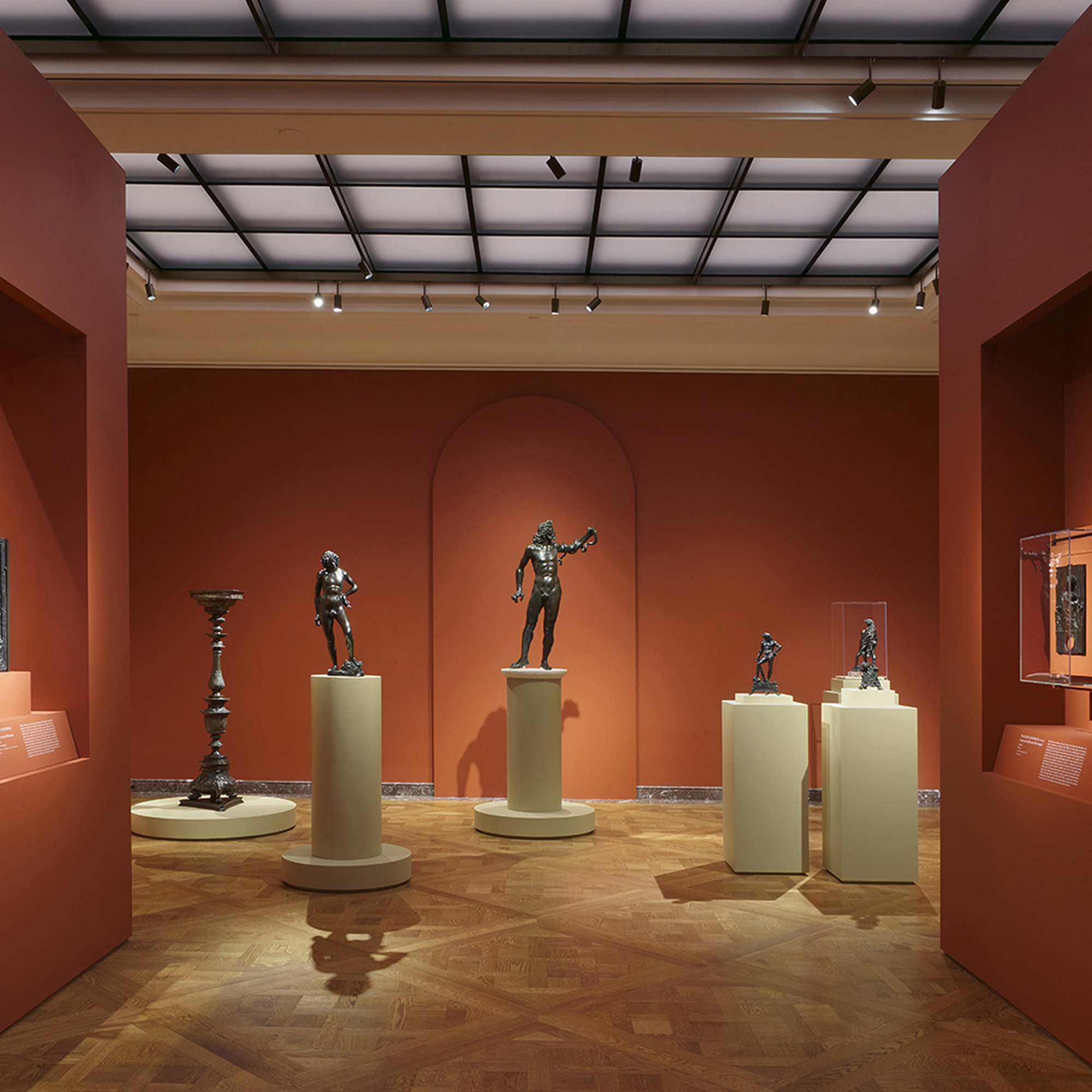
The show brings together about 40 Renaissance masterworks, many of which have never been presented outside of Tuscany.

Ludovica Serafini and Roberto Palomba breathe new life into a long-forgotten apartment, wrapping its walls in a rich green and filling it with 17th-century paintings from the owners’ collection.
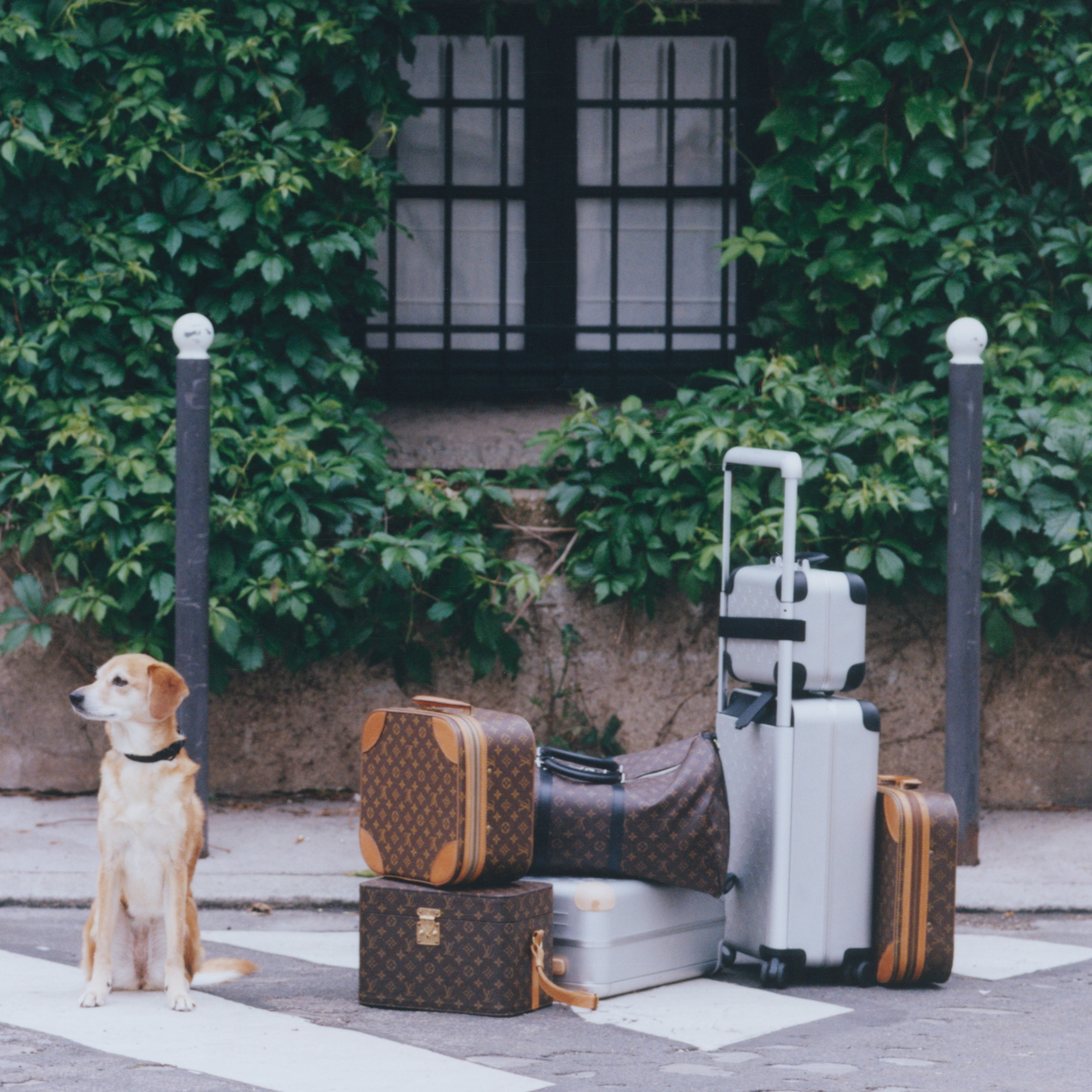
As the Horizon suitcase returns in aluminum, the Louis Vuitton founder’s descendant reflects on its legacy, the mystery of the Monogram, and how he packs for a trip.