Inside the Meditative Universe of Pierre Bonnefille
In the hands of this French artist and designer, the most elemental experimentations with watercolors and shapes give rise to the most elegant results.

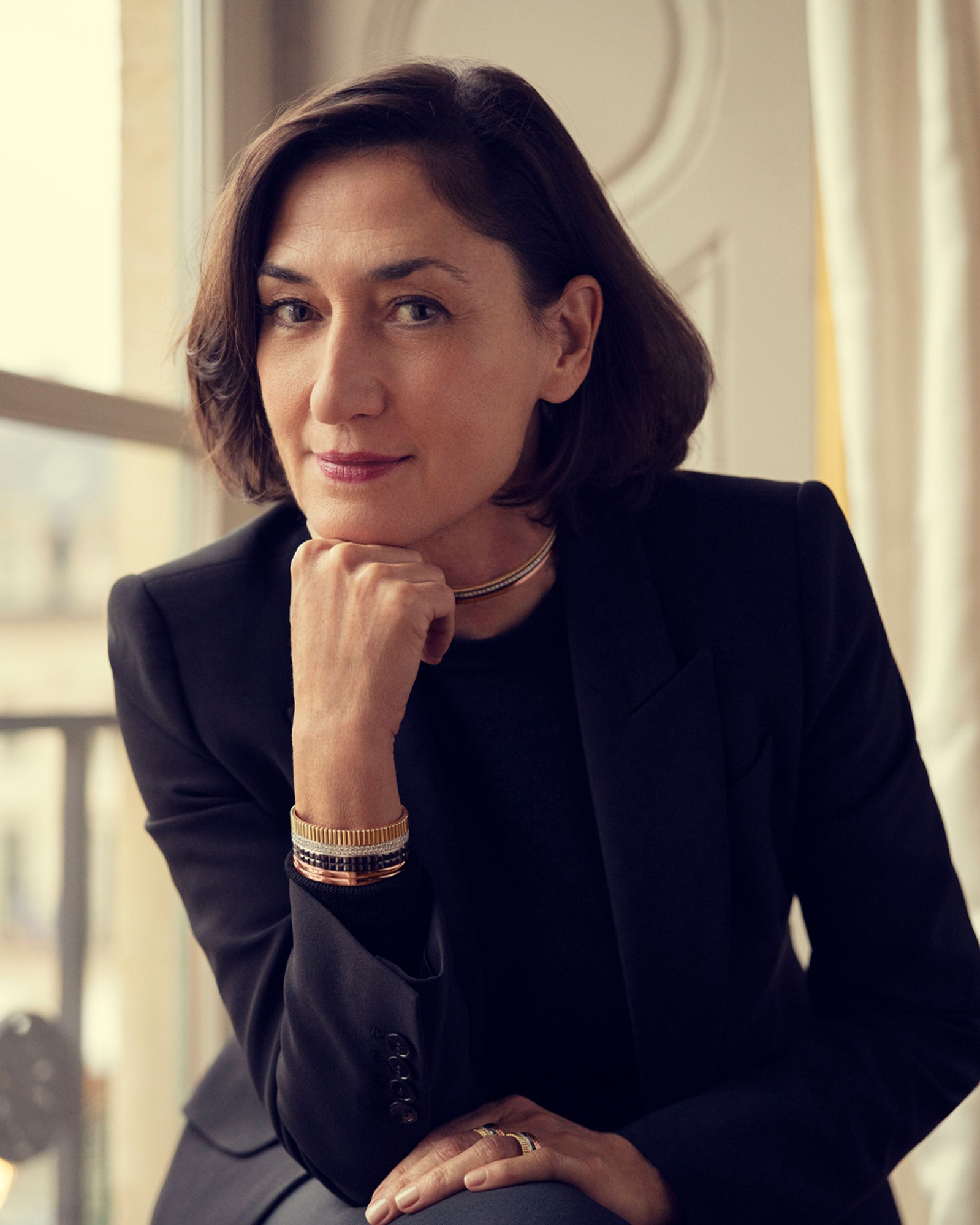
On the 15th season premiere, Dan speaks with Hélène Poulit-Duquesne, the fearless CEO of the legendary French jewelry house, Boucheron. After more than 10 years at the helm, Poulit-Duquesne has guided her team to create brave and bold collections—especially with their renowned high jewelry—defy concepts of gender in the industry, and expand globally to new markets. On this episode, the two speak about her first job at LVMH at the tender age of 22, how she collaborates with her creative director on inventive new pieces, her future plans for a house that was the very first jeweler to move to Paris’ Place Vendôme, and much more.
TRANSCRIPT
Hélène Poulit-Duquesne: I always thought it was a pity because men full of diamonds and pearls, it’s awesome. It’s not because it’s a trend and we created that trend. I want again to go back to gender because if we design a Boucheron collection for men only, then if you’re a woman, you don’t have the right to wear it. I mean, it’s against what we are trying to do. So I don’t want to go back to creation for gender. We are genderless. We’re above gender.
Dan Rubinstein: Hi, I’m Dan Rubinstein, and this is The Grand Tourist. I’ve been a design journalist for more than 20 years, and this is my personalized guided tour through the worlds of fashion, art, architecture, food, and travel, all the elements of a well-lived life. And welcome to the first episode of Season 15. This time, our lineup will bring us all the way up to summer with both classic episodes where I meet legendary figures in the worlds of art and design, but also incredible guests pulled right from the pages of our print magazine. As we speak, we’re working on our spring issue that will be released later this year, and we’re also introducing a fall issue in October as well. Our first edition of the magazine that came out last spring totally sold out, so we can’t wait to bring you hundreds of pages of original reporting and photography. So stay up to date and sign up for our newsletter at thegrandtourist.net to snag your own copy.
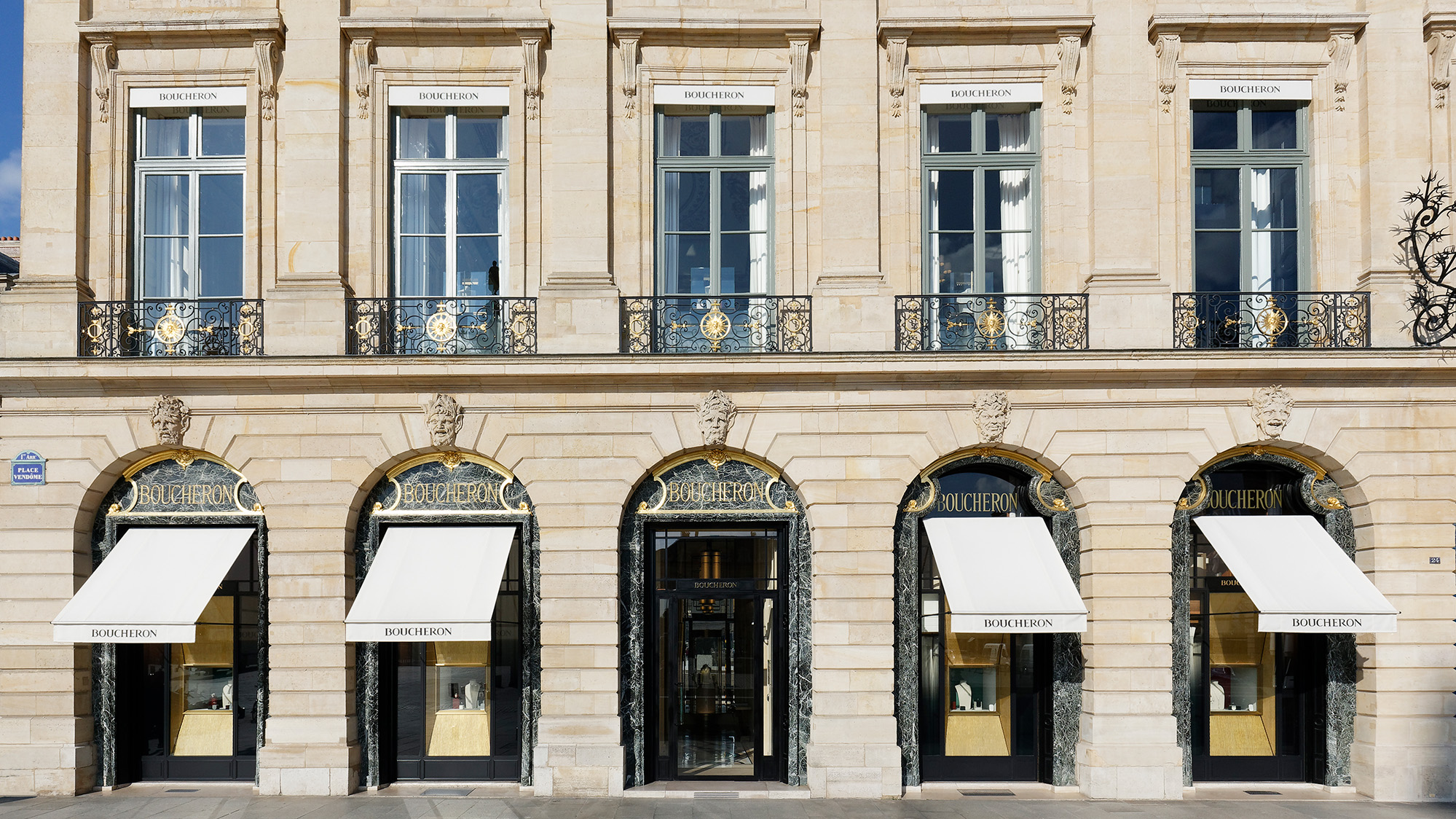
And for our spring issue, we’re putting the finishing touches on one incredible feature on the soon to be introduced high jewelry collection from the legendary house of Boucheron. But first, I made a little trip this fall to the Madison Avenue Boutique to meet the woman at the head of this historic maison, who has been responsible for guiding the brand into the 21st century, since taking the reigns as CEO about a decade ago, Hélène Poulit-Duquesne, a native Parisian and a passionate equestrian, and dressage no less. She arrived at a brand that had been in business since 1858, founded by Frédéric Boucheron, a man known for many technical innovations, which we’ll get into, but also for his knack for business. Most famously, he was the first jeweler to move shop to the Place Vendome in Paris where the flagship still is today.
While Boucheron may not be as well known in the United States, to those in the know, it’s a name that reaches the pinnacle of quality, style, and a certain creative flair that’s made them a personal favorite of critics and collectors for decades. In her role, Hélène has pulled the ultimate hat trick in luxury. She’s managed to preserve Boucheron’s reputation for quality, create new and inventive collections that consistently surprise and delight while also expanding the house globally in both the east and west, especially here in the United States. I spoke with Hélène about her first job at LVMH when she was just 22. How and why Frédéric Boucheron transformed the world of jewelry forever, a peak behind her maison’s creative process, and much more.
So before we dive into all of the many wonders of this fantastic house, and thank you so much for having me, I know very little of your life before your career, so I was wondering where in France you’re from originally, and tell me the origins of you.
Okay. I was born in Rouen, but in fact, I came to Paris, I was like five months old. So finally I’m a pure Parisian. My father used to be an engineer. My mother was a doctor. So I think that I come from a background of people who love having nice diplomas, typical French kind of aristocracy, but on the, I would say, diploma line. And I had a childhood which was full of love, a very loving family, two sisters. I was a little one.
And as a young girl, what is your earliest memory of, say, jewelry?
When I was very young, I was obsessed by stones, but I mean, I was working in the mountain and trying to find treasures. So I was collecting little stones that I was finding in the mountains. And so I think it happened quite early, but it was not big stones, but I was fascinated by gemology already when I was young.
Oh, okay. What was your favorite stone as a child? Do you remember?
I think it was quartz because it was the easiest to find for me. So when I was finding a little piece of quartz, I was very excited. They were a little bit rose or pinky.
And yeah, I read that you had a dream of working in luxury from an early age, but also one of your passions as a child was horse riding, that maybe your parents weren’t so keen on it. I mean, it can be a little dangerous, horseback riding. So tell me about that. How did that begin?
In fact, horse riding was a dream of mine since I was really a little child, and my parents did not accept that because it was too dangerous for them. So what I did is that I just waited until I went into my business school, ESSEC. And then with the first money that I had, I spent that money on having courses on horseback riding. So I began when I was age like 20. I didn’t do any horse riding before, but it was really a passion that I still have in my life. I have four horses, so I’m riding every weekend and it’s part of my life now, but my parents were reluctant when I was a kid.
And your first position in the industry was chief of staff at LVMH to the general manager, and that was right out of school, right? That must have been quite the responsibility almost for, was it your first job?
Yeah, and I was 22. So I began working when I was 22 and I was very surprised to have that kind of job so young. And what I felt, that I have the chance to be a kind of little mouse in the world of big stars, but I was looking at them the way they were interacting. And I had the chance to have no pressure on my shoulder, just have to look and to learn everything about the industry, everything about the managerial behaviors of the big bosses, of the big brands at LVMH. So it was fascinating for me. I was like, it was kind of the best course I could ever have in a business school, just watching these people work. I had the chance, for example, to participate in all the budget meeting of all the different brands of LVMH. Can you believe that I was 22? I was sitting next to the senior of the brand explaining what he’s going to do for his next budget. And so I learned a lot just by watching.
How would you describe the industry at that time when you were 22 or just starting there and learning about everything around you?
Well, it was in fact in the ’90s, so the luxury was in a booming period, but it was kind of the beginning. It was all about new geographies, the first steps in China, then it became a bit big thing in the 2000s. And I think that at that time, the main difference is that luxury was all about products and people were just queuing out of the boutiques to get a product. And it’s really different from now, because now it’s all about the relationship with the brand that you can get online with two clicks a product. So the boutique is not the place where you get the product. The boutique is a place where you’re going to interact with the brand, and it’s more about having an experience.
At that time, there was no much of an experience. You just wanted to get that product and it was a rush into the boutique. So I think it was very product-centric, a lot less in terms of storytelling, a lot less in terms of service and experience. So I think that in the last 20 years with the coming of digital, new experiences, the luxury industry really improved in the way they serve their clients.
How would you say that that position shaped you or prepared you for the future?
I think it was my best job probably and the kind of booster for all my career, because I learned everything on a macro perspective and I had the chance to learn through an economic point of view. For example, when you go out of the school and you begin in marketing, which was what I was supposed to do, you just enter a team and you’re product assistant, product manager. You see a very little part of what is going on inside the company. With the job I had, the first one, I stayed four years. And in fact, I learned with a very strategic and economic vision of the key issues, the positioning of the brand, the reality of where you’re doing margin. So I think that it was a booster for the rest of my career because in any of the job I got after, people were telling me that I have a very strategic vision, and I think it came from that first job.
And afterwards, you spent time working in fragrance and also at Cartier for a considerable amount of time. During your rise there, could you describe where did you see things going? What was part of the strategic vision over not just about the companies that you’re in, but maybe about the industry as a whole? Did it go from where it was, where we just described from back then, from the ’90s to today, in one curve? Or was there a lot of twists and turns? Because for someone like me, I might think, oh, yes, digital culture is new now, but there were so many times where we thought this new invention was going to be very big, and then it became something else, and then it became something else. Or China was important, then not important, then important again. And has it been a straight line?
I think that depending on the crisis period, because we had to face some of them, globally, the big trends in the industry were kind of steady. The coming of digital, I remember some discussion when I joined Cartier of the people from the legal department, they were fighting against the arrival of internet. I remember discussion saying that it’s a sense of history, cannot fight against the arrival of internet, of eCommerce. We have to adapt to this. It’s part of the business. But at that time, the pure luxury brands like Cartier, very high positioning, were reluctant to all of this. And then what we saw is a big shift towards China, the new El Dorado. And I learned a lot because my boss at that time shared a lot on that. I remember we were spending, once a year, we were going to China, the full COMEX of Cartier, and we were spending 10 days in 20 cities.
So we were sleeping in a city, going for lunch, and another one. They were doing a big tour just to open boutiques. It was a kind of race with Louis Vuitton, Cartier, the big brand, the big names, coming, get information on the new big malls that were coming out of the earth in weeks and putting bets on where we’re going to go. And so it was super exciting. It was like a kind of far west invasion and it was really impressive. It was very quick. In fact, Cartier got 30 boutiques in a very short period of time, so super interesting because a new El Dorado coming. So I think the two big things were really shift in terms of digital, and the second one, the second being thing that shifted totally the industry was China, because on top of that, Chinese became buyers outside of their home country. So in fact, all the industry organized itself around how we are going to accommodate the Chinese clients. It shifted everything. In every country, you had some boutiques. We were supposed to have Chinese clients, so we had to organize ourself, to accommodate them, et cetera. And then suddenly we had COVID and the business shifted in weeks towards local consumption, Chinese buying in China. So everybody was totally surprised by this shift. I think the big, big trends are very long term. And then sometimes you have a big crisis like COVID that shifts in weeks. Totally is a business model and everybody has to adapt.
And you touched on upon it just now, but the company’s founding in the mid 1800s came at a great time of expansion of the world of Paris that we know today was winning medals at world fairs and so on. And it was the first jewelry house to move to the Place Vendome. Totally uninitiated, to someone who doesn’t know the brand at all, how would you describe this sort of spirit of the company or the DNA?
I think that the DNA of the brand is really about pioneering and innovation. Frédéric Boucheron, our founder, used to be super innovative. He was not coming from jewelry. His parents were drapers, so working in fabrics. And he jumped to this new method that he learned and that he wanted. So he opened his company and his reputation was incredible. If you read newspaper from this time, which I did, you really have articles on how Boucheron is innovative, how Frédéric Boucheron is someone impressive, in the way he’s doing business, in the way he’s creating, the way he’s innovating technically, that the reason why he was winning all the prizes during the universal exhibition in Paris, in the USA. So he was very famous for his innovation spirit. And part of it is the fact that at that time, all the jewelry brands were having boutiques in a part of Paris and he expanded.
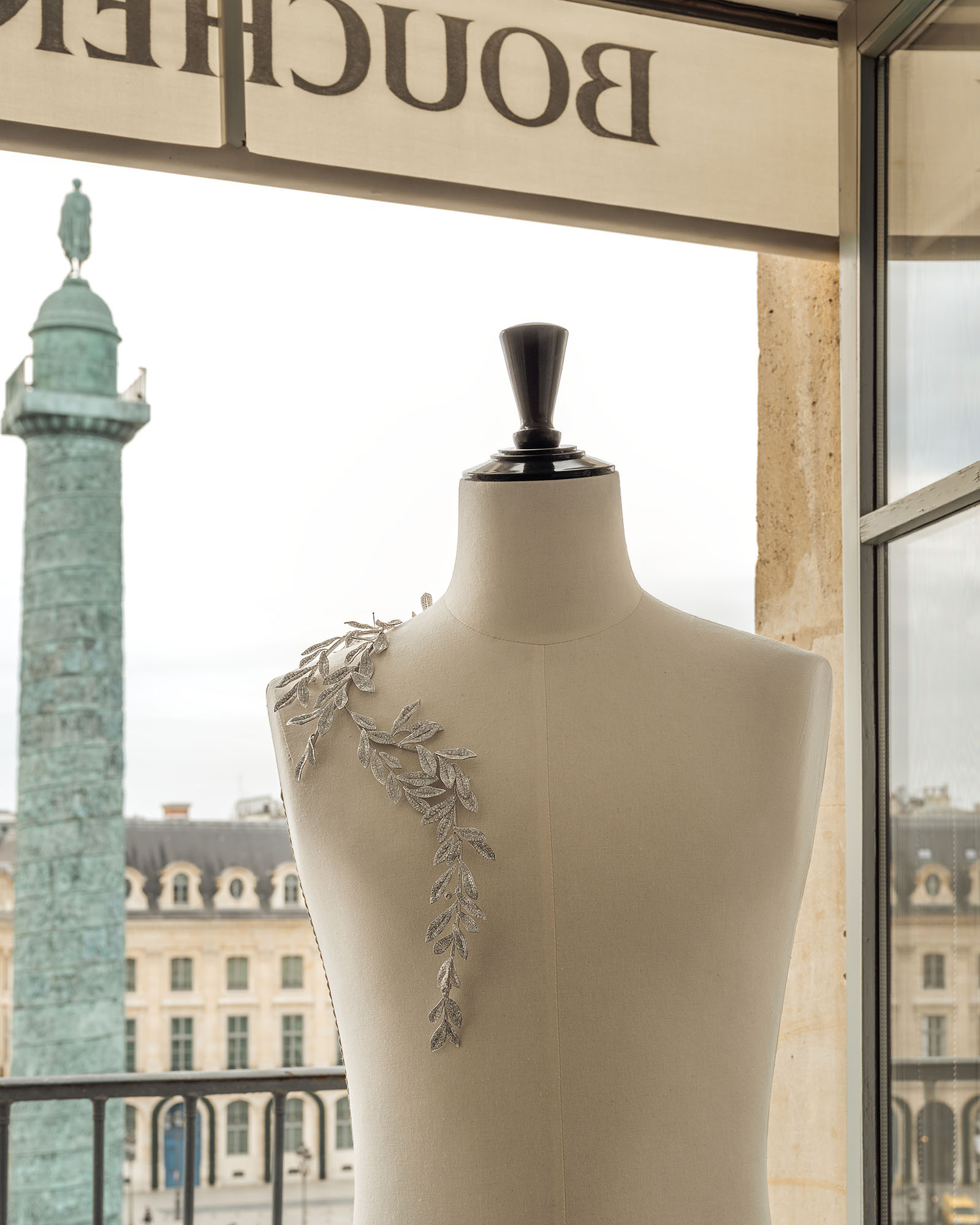
First, he had a small boutique. He doubled the size of his boutique and then suddenly decided to go on Place Vendome, which at that time was very surprising. So he was the first to open a booting in Place Vendome, which became afterwards the epicenter, the center of French high jewelry. So it was also very visionary in the way he was doing business. Set up your first boutique, selecting Hotel de Nocé, which is a big building because you have the sun from 8:00 in the morning until night. So the sunniest part of Place Vendome, the most visible, and we’re still here today. So what he did was really visionary at that time. So I think it’s really the most important thing about Boucheron.
And from a design and jewelry perspective, what were the kinds of things that he was pushing boundaries on that made him so… That people loved so much?
The best example is the necklace he created in 1879, question mark necklace, which is a necklace that you can… Which has no clasp. So you just can put it on yourself very easily. But at that time, it was not only technically very innovative because we are still using the same technique and we still have the Question Mark necklace in our collections, but so it was super innovative. But as always with Frédéric Boucheron, there was a kind of message in terms of society because designing a necklace that you can put on yourself by yourself is something at that time very innovative in terms of society because it frees. It was giving freedom to women because at that time the woman needed the ladies made to put on the high tree, the necklace. And at that time, finally he decided to free the woman so that they can put on their pieces by themselves.
Anyone who watches the Gilded Age on HBO would know a little bit about needing help to get dressed or from that gilded era. And then so when you joined the company in 2015, how would you describe the state of Boucheron at the time? When you walked in the door, what were the past five years like there and where was the company at?
The chance I had and I knew that is that the image of the brand was totally untamed. So not untamed, perfect. It was not damaged. So it was great. But the negative side is that it had no investment. So the company was still running like I was always saying, similar to a company from the ’70s. So I mean, the pace was very slow. People have been in the company for years and everybody was a little bit sleepy. So I had really to shake the company and give energy to people, also to give them pride of being part of Boucheron, asking for something and having ambition again, I would say, which was having pride and ambition again. And it was quite easy to waken up the teams as soon as we got investment from Kering Group, which really followed my plan. So I joined the company and I did a five-year plan explaining my vision, what I wanted to do, where we were going, how we are going to position the brand, the storytelling.
And it was really a big plan and very detailed. And inside, I negotiated investment on a five-year basis. And as soon as the team understood that I was getting the investment for the brand, then everybody was running in the same direction. So it was really a matter of having that vision, sticking to that vision and embarking the full team in this kind of adventure that we are still living in fact, because it’s been only 10 years and we’re still in the pace of developing the brand new geographies. And it’s a kind of adventure. You can ask people in the company working today, they all feel they’re part of something bigger than them and a kind of adventure. And they all tell me in 20 years, I would say I was at Boucheron at that time.
Was your five-year plan, we would say, did it bear out? Did it follow the path that you thought it would?
Yeah. In fact, what happened is that we lost one year at the beginning because 2018 was a key milestone. It was the year where we were celebrating the 160 years anniversary of Boucheron. So we were investing a lot in terms of communication. And finally, the takeoff of the brand took place in 2019, a year later. So in fact, we were late by a year, but then we got back that year and were exactly on the plan by the end of 22.
And obviously high jewelry is a major part of the brand and the house, of course. And so can you describe the sort of carte blanche collections and their approach and how they are labeled as such and when that began and where we are today with it?
When I joined the company, we used to have only one collection a year, which was launched in July. And Claire Choisne, creative director, is super innovative, super creative. She’s really an artist and I was pushing her because we have exactly the same vision for the brand, which is great. Exactly. So we discussed since the beginning, and I was pushing her on a creative part, saying to her, “It’s really what we bring to the market. We’re the most creative, the most innovative brand in jewelry.” So it is a statement in terms of image you have to go towards that. So we were clear on that. The point is that there were fights inside the company between commercial people and the creative people because commercial people, the salespeople were saying it’s too creative, it’s very difficult to sell, it’s difficult to explain to clients. Some clients, they want only big stone investment.
So at some point I was so fed up of this kind of fight inside during the meetings and that during a weekend, I decided all by myself that I would do two collections a year, one in January where we speak about our legacy, the patrimony of the brand, the history of the brand, and we launched a more classical collection with Big Stone for clients who want investment and want more classic pieces. And July collection, total freedom to Claire Choisne, over positioning in terms of image, in terms of statement, of innovation, of creativity. And I came back on the Monday morning and I asked all the teams to come to my office and I had a small Excel sheet and I explained to the commercial director that they had to sold every single piece of the one of January. And I explained to the communication directors that she had no KPI for the collection of January.
If we have no article, no press release, I don’t care. But for July, I want the maximum the KPI is communication. So what we get in terms of price coverage, and I said to the commercial director, “If you don’t sell any of the pieces of July, I don’t care.”
You split the baby as we would say, yes. Okay.
Exactly. I really decided to split because I was so fed up. I said, “Okay, you want something more commercial? We go for January, we want something for the positioning it’s going to be July.” And two years after, the commercial director discovered that he was selling the full collection of July. And we discovered with the communication director that we were having a lot of press release and press coverage for January. So in fact, everybody was happy and we’re still having this two collection and I think it’s a good recipe for us because we have two legs. We are really about tradition and innovation at the same time. So telling the story of the history, the patrimony of the brand and telling our true positioning about innovation is great. So now we are telling the two stories. We have two kind of different clients. So really some clients are buying only in July, some are buying in January. So in fact, it’s perfect.
And for that first sort of carte blanche collection, can you describe that creatively and what the reaction was like?
The first carte blanche collection with that name was Contemplation. It was in the middle of COVID. And in fact, Claire was a little bit desperate about being stuck into that COVID, the lockdown. So she created a collection that was about the sky and kind of evasion. And it’s funny because it fitted perfectly with the time of COVID because people just wanted to fly away. And so it gave a little bit of poetry and escape to our clients. And she used at that time, it was incredible material. She wanted to encapsulate a piece of sky that a client could wear on herself on a piece of high jewelry. So she worked with a guy which used to work with NASA with a material called Aerogel. Aerogel is the lightest materials that you can find on earth. It’s 99.8% of air, the rest 0.2 is silicium. And NASA is using that material to take dust of stars in the sky. And so the material is so light that if you have it in your hand, it’s like you have nothing. Yeah, it’s like it’s nothing. It’s air in fact, but it has a blue light inside. It’s very similar to sky. And so she decided to encapsulate it to protect it into rock crystal, which is really materials that we’ve been using for years since Frédéric Boucheron at Boucheron, and she created this piece of sky inside a high jewelry necklace, which was incredible. So it was the first high jewelry collection named Carte Blanche in July ’20.
And so I’m also curious about the Jack de Boucheron, which is sort of inspired by audio cables, of course, not too dissimilar to what we’re speaking on today. This sort of inventive, little bit more playful approach, do you think that that is something that’s connected obviously with the client really well? What kind of feedback were you getting from them about this? Or is this Claire doing… This all coming from her, or was it, you have to give her a license to say it’s okay to do something that’s more playful?
In fact, the brief that I had to Claire, because our icon is Quatre. Quatre is mainly a ring. So the majority of the sales that we are doing, we’re selling rings. And I wanted new ergonomics to be part of our portfolio and to rebalance the sales of rings. So I said to Claire… Because for Claire, it’s easier to design rings and I wanted to take her out of her zone of comfort. So I said to her, “You have to design a new icon, a new jewelry line, but you don’t have the right to do any ring. It can be a necklace. It can be a bracelet, but I don’t want a ring.” And what she decided to do is to do a piece which is nor a necklace nor a bracelet, which is a mix of everything and which is very clever because she decided…
In fact, when I push Claire out of her zone of comfort, the answers that she gets are always surprising and always very intelligent. And she created Jack with that idea that she cannot do a ring and Jack is everything but a ring. But you can wear it, you can plug them, you can have 10 of them, you can put them around you because it’s a cable. So you can put it pretty much everywhere. We even did a contest internally and some were putting as a belt, some as a chain for having a bag or… I mean, you can put it everywhere except on your finger. So it’s really the way she answered to my brief.
And in terms of a creative process, once these sketches are created, what is the typical process from idea on paper from Claire to it being shown here in a boutique?
Alors. We have a process which is very classical, I would say. I have created a governance, and in that governance, you have a creation committee that meets every month or every two months, depends. And during this creative committee, I sign the drawings that can be manufactured, that I would say that I validate in terms of aesthetic or Boucheron enough to be manufactured. If you don’t have my signature, it cannot go under production. But the reality of the way we are working with Claire is that we are talking about the concept way before. We are discussing a lot together. And she has a process, which I love, which is, again, not classical. She’s not designing by drawing. She’s designing on the body of a woman or men directly. So she has silhouettes and she’s putting the jewels on the silhouette. And for some of them, she’s even going directly to volume.
For example, in 2018, we created eternal flowers, which was one of my favorite projects, and I really was involved in that project. And to create the rings with flowers, with real flowers, we took real flowers and we were putting them in our fingers. For example, when she’s designing about ivy, ivy is really a pattern of Boucheron. It’s an icon at Boucheron. We are taking real ivy branches, putting them around our neck, trying to fix how it’s going to fit. So she’s directly designing in volume. And then when we agree on the concept, then people in our team are drawing sketches of the real jewel that we are going to launch, and then I sign the drawing. But the reality is that she’s first going on the body.
And then once you sign off on it, how long does that process take to make it a reality?
It depends really on the product. I would say that if it’s an animation, very easy from a line that we have already, for example, a Quatre ring in a different color, in the smaller size, it can be a year. But for real novelties, depending on the level of innovation, it is two to three years. For example, in high jewelry, we are discussing about the seam of the hydro collection now of beginning of ’29. So we are working three years in advance on all the concepts, the seam of the collections. So we are working basically in high jewelry on three collections at the same time, multiplied by two because we have two collection a year. So we have six collection in mind. Sometimes we are totally confused. And some are at the beginning of the process, meaning that we are selecting the seam and we are still on the pace of what she calls having posted where it’s a concept tool. So we’re going to have that kind of [foreign language 00:33:21].
And then we have a second collection where we’re in the process of drawing and developing the collection. And then we have a third year where in the launching process, manufacturing and launching process. So in parallel, we are working in a lot of different collections.
And for our story in the second print issue of The Grand Tourist, we have this incredible shoot, but of course I’m speaking to you now before this photograph has taken place. Tell us about this collection and what is it called? And tell us a little bit about it.
We still don’t have the name. So we’re in the base of deciding which name. We have a fight between two different names. And the collection is about, I would say, simply going to the roots, telling the story of Boucheron, the fundamentals, the icons of Boucheron. So it’s going to be a great collection because it’s full of storytelling, very simple to explain our stylistic patrimony, the essentials at Boucheron.
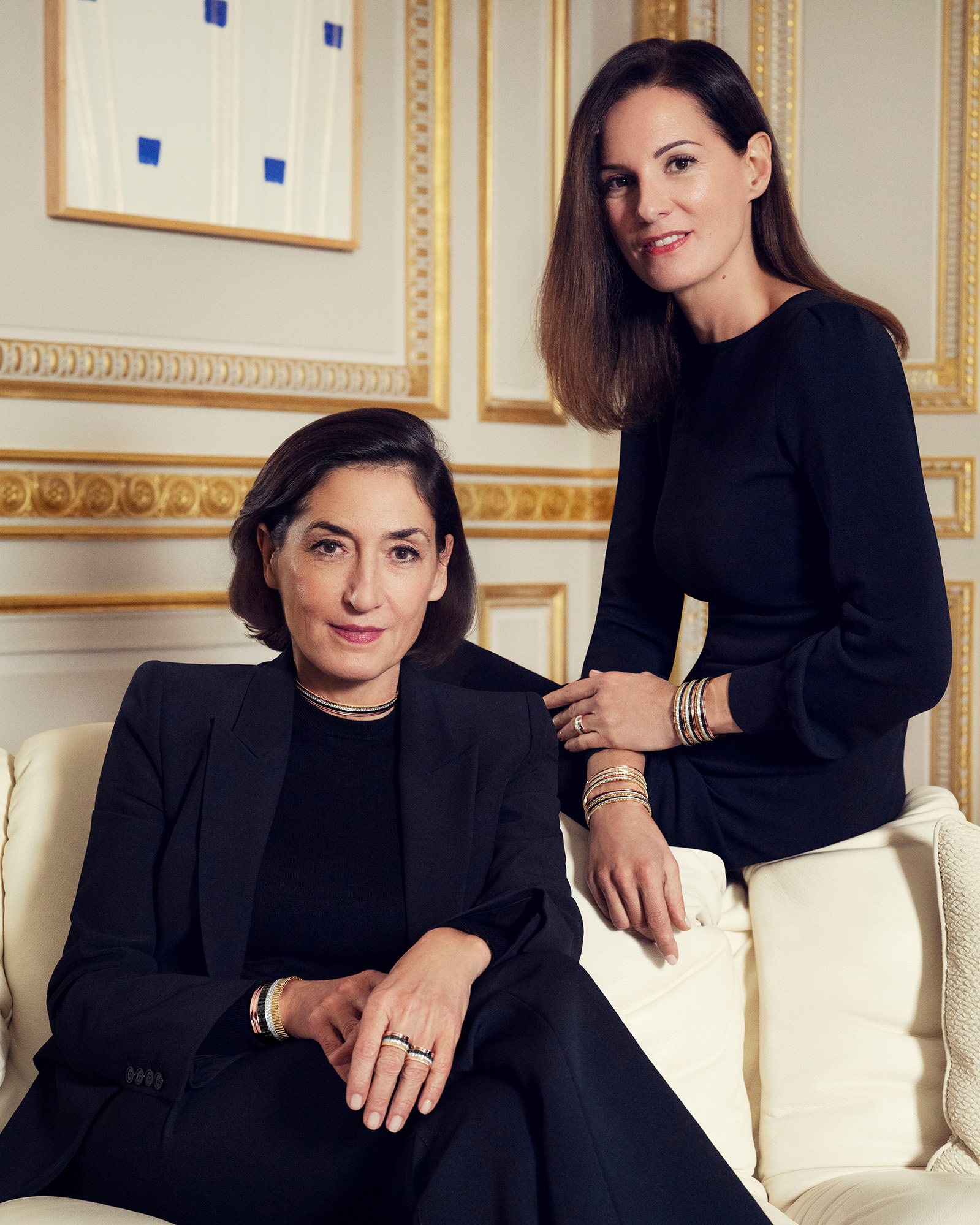
You said in interviews before that there isn’t one Boucheron woman per se. Can you explain your thoughts on that and who is the client? Who is the client for you ideally?
At Boucheron there’s a quote which is supposed to come from Frédéric Boucheron. It’s a legend, but saying that at Boucheron we never impose, we always propose. And I think it’s really important because at Boucheron, we are not only innovative, but also very client-centric. And as I was explaining, Claire is always coming from… She’s starting with the client, with on the body of the client. So in fact, in the way we design for our clients, we have an offer, which is very large and what is… We are happy when the clients are coming and selecting by themselves the pieces that must suit them and express who they are, that it’s exactly we’re not imposing. We’re not a brand where you have to have that because it’s the icon and it shows your power, it shows you have money, we’re the opposite. Come to Boucheron, enter our world, enter our family, understand who we are, and we want to help you to express who you are.
And I have a good example, which is we have a lot of animals in our collection, and I’m always saying that we have the best. I truly believe it because we have so many different animals and some clients are collecting our animals, but they’re always selecting the animals for emotional reasons because the animal is resonating to who they are or their spirit at that time or what they want to express about who they are. So I think that this emotional link, kind of even psychological link between our jewelry and the people is really important. That the reason why I say we don’t have one type of client. We have clients that are coming to Boucheron, I think that they know what they want and they know who they are and they kind of express themselves through jewelry. And that the reason also at Boucheron, we believe that jewelry is part of the styling.
Of course, jewelry is an art. Of course, you can find jewelry in all the museums. Of course, jewelry is part of our decorative, but we don’t see the jewels only like product or artistic pieces. We see them as being part of the outfit of someone, so it’s part of the style of someone. So it’s telling something about you when you wear it. It’s like when you choose in the morning the pair of shoes, your dress you’re going to wear, it gives you a different energy depending on what you’re selecting. It’s the same for jewelry. And we really want a Boucheron… I always say, take out the jewels out of the safe, out of the vault, because they have to be in the real life, on the body of the woman and the men, they have to be in life. I mean, going out, go shopping in a pair of jeans with basket, but having a 10 carat diamond on… It’s something cool, in fact.
So I really push the clients to wear their jewels. Not only think about it like an investment, I put it in the safe, I will give it to the next generation. Yes, of course, it will be an investment. Yes, of course, it will still get value, but of course, use it when you’re alive. Don’t wait for your death to give it to the next generation.
And the house is often experimented with male models for their high jewelry, which means you’re also kind of showing the possibility of men wearing high jewelry as well. And so for this decade that you’ve been with Boucheron, how has that evolved? How has this kind of idea of men and women and this world of jewelry for men, which has so evolved and grown over the past decade?
In fact, it was very genuine because it happened in 2020, same collection, [foreign language 00:38:53]. And Claire came to me and said to me, “Is that okay for you if we put high jewelry on men?” At that time, nobody did that on the market. And I said, “Of course, yes.” But the reason why I said yes to Claire, she came to me for aesthetic reasons because some of the pieces she had designed in that collection, Contemplation, were better on a man than on a woman as an outfit for aesthetic reasons.
But the reality of my thinking, which led to the same conclusion as Claire, and that the reason why I said, of course, yes, it’s that I was obsessed for the last 20 years about pushing men to wear, again, high jewelry. So it was a little bit coming in Asia, but not at all in Europe, not at all. Because, in fact, since the French Revolution, we had killed the kings and all that was expressing the power of the kings, the maharajas, had disappeared.
But before the czars, the maharajas, the kings, they were full of pearls, full of diamonds, full of emeralds, a lot more than their wives. A lot more. So they were showing power through that. After French Revolution, men didn’t have the right to wear anything showing their power, so the maximum they can have is a wedding ring and a watch, and that’s it. And I always thought it was a pity because men full of diamonds and pearls, it’s awesome. It’s incredible. So I said, “Of course, Claire, we can go for it.”
And then we realized, but it was not planned at all, that the journalists were very excited about the fact that we did that. And so we had lots of press release about the fact that Boucheron dared to put high jewelry on men. And then we decided to do it pretty much in all of our collection. And now it’s a pattern because majority of the brand are now showing high jewelry in men. Now you can see in the red carpets, many men, celebrities, actors, et cetera, wearing, again, high jewelry. Which, for me, it’s great.
And then my team came to me saying, “But we have so many press articles about the fact that we have high jewelry for men, so now we are going to launch collections for men.” And I said, “No.” And I said, “No.” It’s not because it’s a trend, and we created that trend, that I want, again, to go back to gender. Because if we design a Boucheron collection for men only, then if you are a woman, you don’t have the right to wear it. I mean, it’s against what we are trying to do. Because, for example, in the Quatre Collection, we have the Black Edition. The Black Edition is mostly worn by men, but I love the Black Edition. I want to have the right to wear the Black edition. I love to wear men clothes. I love to.
So I think that we have to keep being above gender. It’s not about being men, being a woman. We are designing, we are creating for clients, for unique people. And so I don’t want to go back to creation for gender. We are genderless. We’re above gender at Boucheron.
And you opened a flagship in New York last year, which we are in right now, which has done quite well in the business in the States. Tell me a bit about the challenge and coming here and bringing this brand that is so synonymous with what is known in France as the history of jewelry and bringing it here to the U.S. with a bigger presence. What are your biggest challenges here in the States?
I think the challenge in the States will be that it will take time. Because, in fact, we know that we are late because the majority of the big brand have been in the U.S. for the last 40 years, so we are really late. But when I joined Boucheron, I had to do some tough choices.
And the first one I did was we go in Asia first, in China, and then we’ll go to the U.S. But if we do China and the U.S. at the same time, both for our teams and for the investment, we’re going to spread the investment and we’re going to mess everything. So we stick to the plan going in China. Now we have 17 boutiques in China, that the reason why we’re coming only now in the U.S. And we know that in the U.S., it takes a lot of time.
What I know for sure is that the U.S. clients have a love for Boucheron. Because in our portfolio, we have great, great clients which are American. And for a long time, we know that we have big collectors of historical pieces of Boucheron that are Americans. So we know that, in fact, the people in the know Boucheron and they love Boucheron.
And we have a history of very big families, the Astor families, the Mackey family, et cetera. They were buying Boucheron in Paris. So I would say that the historical part, we are sure that we have a link with the Americas. So we are sure that at some point Boucheron fits with the value of the Americans. And the history of both America and our brands are really intriguingly going together.
But the point is that now we have to open retail. We have to spend communication just to get awareness because we are known by the happy few, but we need to be known by the majority of the American, and it’s going to take…
And I’m curious for those American collectors that already knew you, do they come here now to the Upper East Side or they still like to visit you in Paris?
Both. Some of our clients still go to Paris, and we see them doing couture weeks in January and in July. And the majority of them are coming to Paris because they love that building. They have, in general, an apartment in Paris, so then they have their habits in Paris.
But for example, recently we opened a few weeks ago our first boutique in Los Angeles, and a client came to us saying, finally Boucheron is in L.A. because she does not travel. She doesn’t want to go out of the U.S. She’s living in L.A., and she was waiting for Boucheron to come in L.A. And she wanted to try a necklace she had seen in a magazine, and she was very excited about us coming to L.A. So I think that we have some clients that are waiting for us in the U.S. So it’s a nice story showing that we have a link.
And speaking about this sort of generalist approach, timepieces are also… This fits into that as well for you. And a lot of brands are now reapproaching the watch business or how they want to be seen in the greater context of the world of luxury watches and then the association that is involved with that. And so as someone who worked at Cartier, how do you see timepieces fitting into the legacy of Boucheron?
It’s a second tough choice that I had to do when I joined. I thought exactly the same, if I push watchmaking and jewelry at the same time, it’s going to be very difficult because watchmaking needs a lot of investment, as much as jewelry. So if I split my investment, no one of the category will perform. So I said, we stick to high jewelry and jewelry, and we’ll go for watchmaking afterwards.
I have a big past of being in the watchmaking field because at Cartier I’ve been in the watchmaking marketing department for 10 years. So everybody thought that when I was coming to Boucheron, I would push watchmaking, which was not the case. So it surprises everybody. But I’m a big lover of watches, and I think that we have, totally, the legitimacy.
When we are one of the few brands in the jewelry world, totally legitimate on watches. 1947 we created Reflet, which is one of the icon of the market, and we had a patent with the interchangeable strap of Reflet. So I think we’re totally legitimate. And in our next plan, we’re going to push on watchmaking, but I did not want to split the investment. But I will push on Reflet. We’ll push. We have a full legitimacy also on jewelry watches, so we have a huge potential on watches, I think.
And what’s next for Boucheron beyond the six collections you work at, at the same time?
So we have that new collection. We’re opening our first flagship in Shanghai in November in a few weeks. So we’re going to-
In the French Quarter or in the-
Yeah, Xintiandi.
Okay.
It’s really a historical building, which is very famous in Shanghai, so we are really happy to open that flagship. Of course, we are celebrating the opening of L.A. So in October, we’re going to inaugurate the inauguration of our Rodeo Drive boutique, which is super exciting. And then we have plenty of exciting projects coming on next year, beginning of January, with the High Jewelry Collection.
And if you had to describe Boucheron in three separate words, which words would you choose?
I would say innovative. I would say innovative, inclusive, and optimistic.
Thank you to my guest, Hélène Poulit-Duquesne, as well as to everyone at Boucheron for making this episode happen. The editor of The Grand Tourist is Stan Hall. To keep this going, don’t forget to visit our website and sign up for our newsletter, The Grand Tourist Curator at thegrandtourist.net, and follow me on Instagram @danrubinstein. And follow The Grand Tourist on Apple Podcasts, Spotify, or wherever you like to listen and leave us a rating or comment. Every little bit helps. Til next time!
(END OF TRANSCRIPT)

In the hands of this French artist and designer, the most elemental experimentations with watercolors and shapes give rise to the most elegant results.
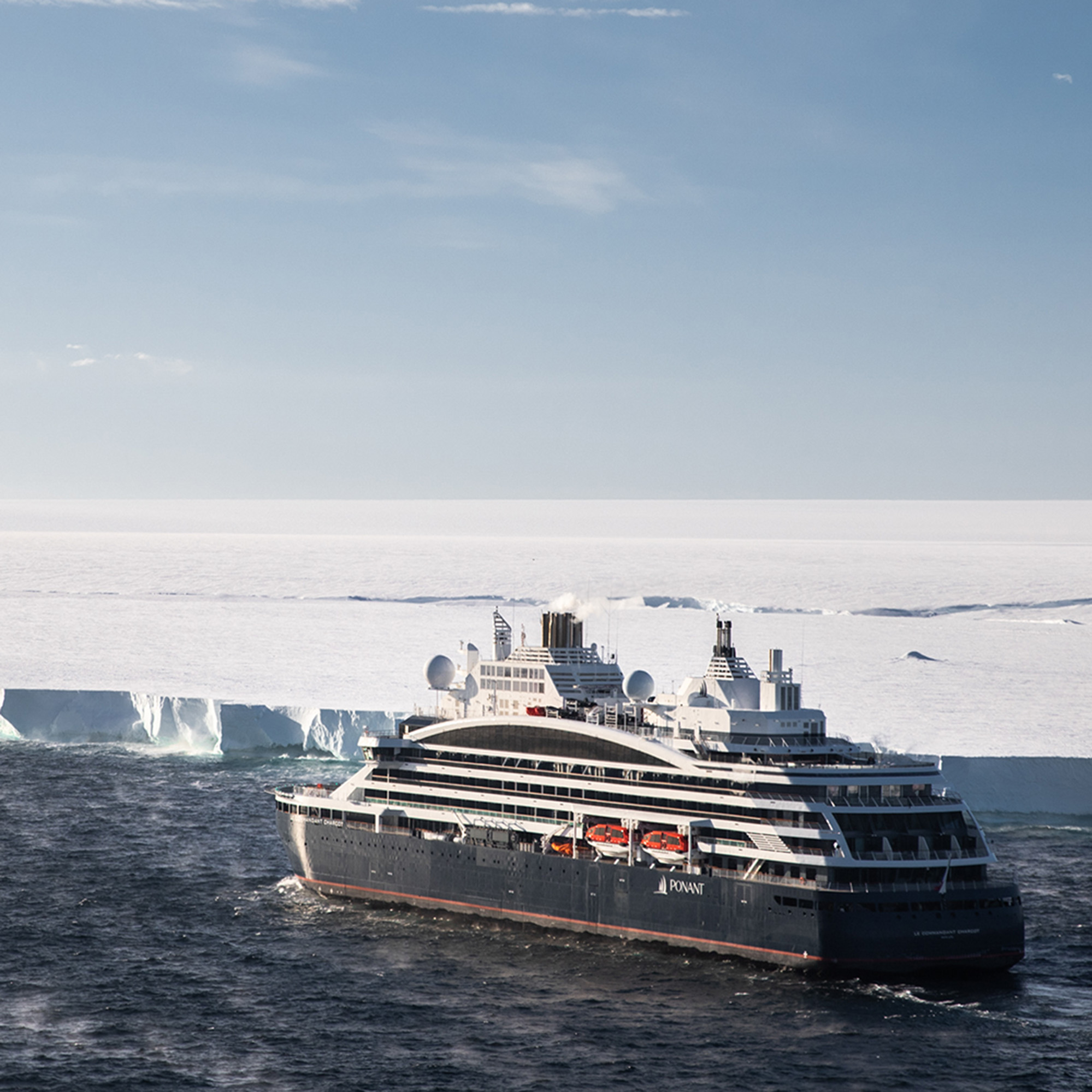
Once a far-fetched destination, the Frozen Continent has seen tourism more than double over the last decade. The storied cruise line Ponant Explorations is leading the charge with new itineraries that feel out of this world.

Wearstler does it all: interior designer, product guru, hotel mastermind, book author. Now the L.A. maven adds curator to her résumé. For our spring issue, she shares some of her favorite independent talents in Amsterdam with us.