Brussels Finally Gets the Contemporary Art Museum It Deserves
Long overlooked by the art world, the capital of Belgium is emerging as a design-driven mecca for art and culture, thanks in part to the latest outpost of the Centre Pompidou.

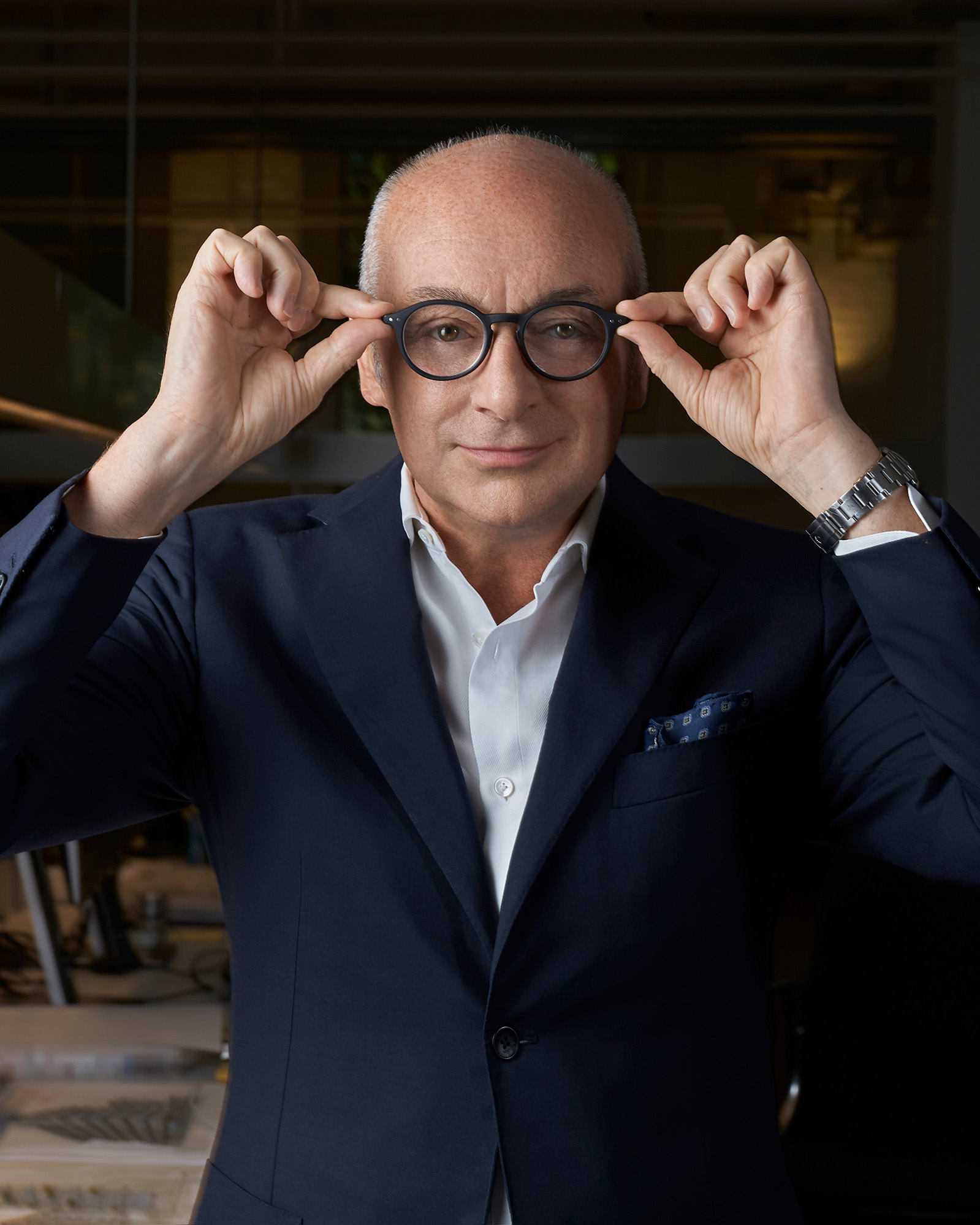
How do you define Italian design today? You’d start with this episode’s guest, architect Piero Lissoni. His signature can be found everywhere, from chairs and tables to hotels and watches. As the artistic director of B&B Italia, he’s guiding the fan-favorite brand into a new era of innovation and boundary-pushing style.
This interview originally aired in season one of The Grand Tourist podcast on July 21, 2021. Its transcript appears here for the first time as part of The Grand Tourist Classics, our ongoing series bringing conversations with tastemakers in fashion, design, food, and travel from our archive to the website.
TRANSCRIPT
Piero Lissoni: Well when I started to be an architect by myself and started to design my own house, I decided to be simple and use small touches and some antique pieces. But because I’m not a collector, I tell you, I don’t like to live inside a museum. It doesn’t matter if it’s a modernist museum or an antique pieces museum. I like to live in a contemporary house with a level of simplicity, but don’t forget the simplicity is the public face of complexity.
Hi, I’m Dan Rubinstein, and this is The Grand Tourist. I’ve been a journalist for nearly 20 years, most recently as the Home and Design Director at Departures Magazine. This is my personalized guided tour through the worlds of fashion, art, architecture, food and travel, all the elements of a well-lived life.
How do you define contemporary Italian design today? How do you put into words the perfect synthesis of craftsmanship, technology, bravado, and a kind of unassuming low profile look that seems to be so obvious today? It can be difficult but you’d be hard-pressed to come up with an answer that doesn’t include our guest today, Piero Lissoni. The Milan-based architect put his stamp on every corner of the design world, from kitchens and sofas to watches and even tissue box holders. His firm Lissoni & Partners has offices around the world. Piero himself is the artistic director of a litany of top-shelf brands, including, full disclosure, our sponsor, B&B Italia starting last year. I like to think of Piero as a senior statesman for Italian design as a whole.
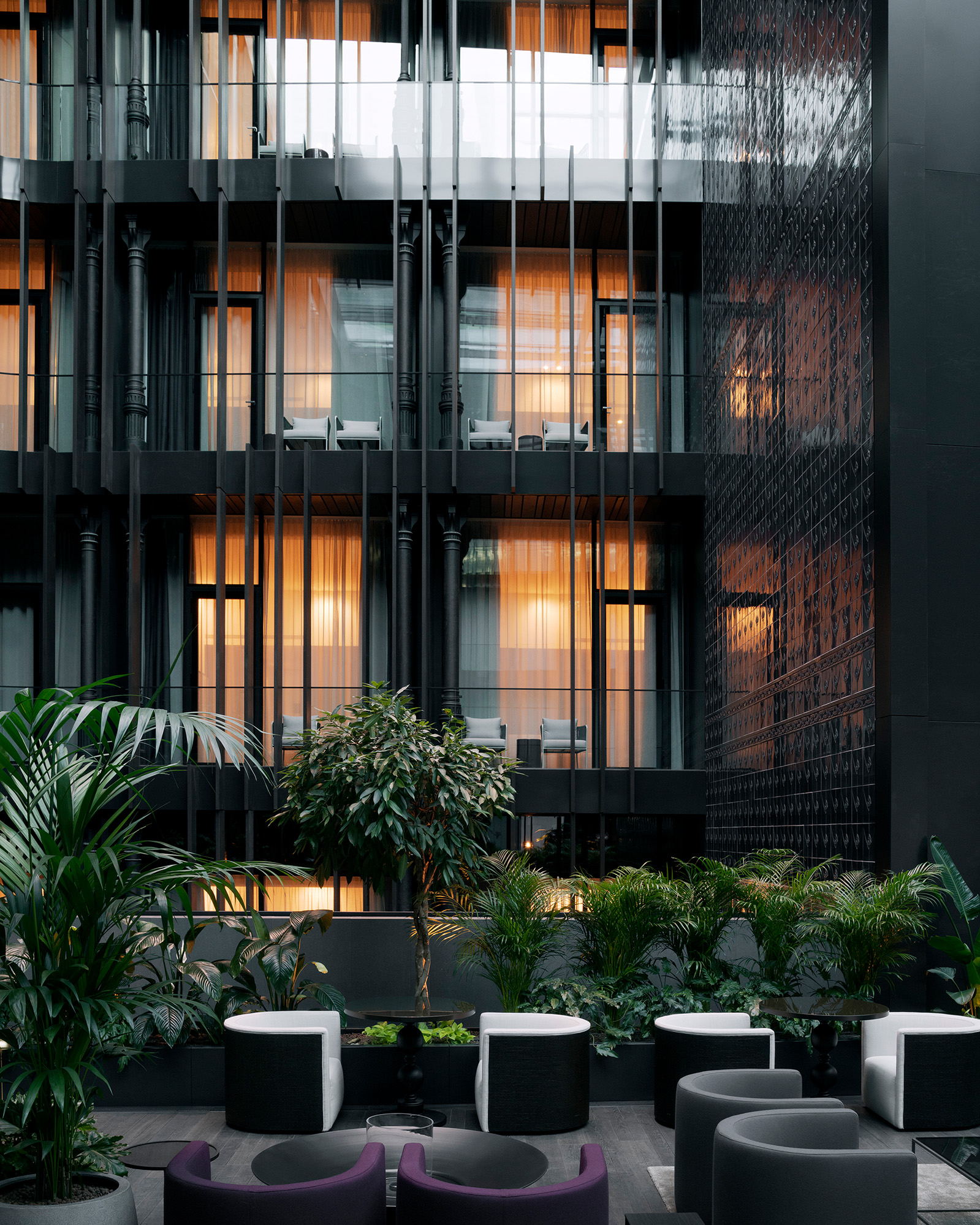
When you talk to Piero, you’re always learning something with someone who has so much influence over an entire industry. He’s refreshingly honest, blunt and courageous about how he speaks about his work and his day today. For that reason alone it’s always a masterclass in design when you interview him as I have many times over the years. For Piero, he’s not only a product designer, he guards his identity as an architect very well. His hotels, corporate headquarters, office buildings and other projects can be found from Jerusalem to New York to Beijing.
Oh, and his firm does graphic design too. Like many of his generation, Lissoni studied under some of the best post-war masters of design in Milan in the 1970s, which we’ll talk about, and founded his studio in the mid-80s. You’re not going to learn what a chair should look like from Pierro Lissoni or how to decorate, instead you’re going to learn how his brain works and in turn how all of design should work today, too. I spoke with the softly outspoken maestro from his headquarters in Milan.
What I have to tell you: I decided when I was so young to become an architect, I don’t know the reason why. I started to do something by my hands, small models, drawing sketches but very basic and simple. I grew up before Milano and before primary school, I moved out of Milano. My family decided to live outside of Milano and for me it was a great adventure because I was outside our family house from my grand, grand, grand, somebody else. And when you’re growing in a situation like this it’s a completely different approach to life.
Where was this house?
It’s outside of Milano, in Brianza. It’s in the northern part of Brianza, it’s in between two small towns—villages—because town is a big word. One is named Albiate and the second is named Triuggio.
Piero, as a student at the Polytechnic in Milan in the 1970s, what was it like? What was the city like?
It was like an adventure in the jungle. The town, Milano, was not as open as it is now. It was a bit grayer. It was not as sophisticated as it is now and it was not international, but at the same time for me, it was like Disneyland. Can you imagine our life as a student’s life? I remember it to be Disneyland for many reasons. And don’t forget our university, the Polytechnic, was divided into two sides. One was the architectural side and one was like the dark side of the moon, full of engineers. Our side was beautiful, full of life, full of light, and beautiful people.
At university you studied with people like Marco Zanuso and Achille Castiglioni and these masters of the era. What did you learn from them now looking back? Other than technical things, what did they instill in you or what values did they teach you as a young architect?
Listen I was a student in the same moment with some incredible teachers, Castiglioni was one of them, Zanuso was another one, Aldo Rossi, he was a temporary professor in Polytechnic for a few months, Álvaro Siza Vieira was one of my teachers. I learned something totally incredible, and it was a human touch. The human touch, the curiosity, the culture. Because in the end if you took away the technical aspect and you forgot for one moment this kind of technical teaching atmosphere. The real touch was the culture. With them we discussed movies, photography, new materials, food, the qualities of life in Milano or somewhere else, the great opportunity to be in touch with those people, the level of curiosity and the parallel methodical point of teaching. Because teaching something so precise like design or proportion, something like this is absolutely normal to think about, but they teach us to be curious. Curiosity was their focal point. At the same time, we learn with them and they teach us to be different and to think in a different way.
Who is the most beautiful person from the Polytechnic, beautiful on the inside, who do you remember as being a beautiful person you interacted with?
Listen, after one week I was completely lost inside in different areas and classes and buildings. I didn’t understand what was possible to do or not. I was really lost. Like I was lost in translation and one day I saw this unbelievable, incredible. It’s not like a dream after 30 years, but it was this beautiful girl. And I follow her. I saw this girl in the middle of the Polytechnic and I decided I needed to talk with this girl. She was so beautiful. Blue eyes, blonde short hair. I discovered that she was a student in the first year, like me, and she started to follow the old scientific studies, mathematical, physics, and other things. I started to become a student only because I followed her. She was a very good student. She understood I was lost like her, but she was more precise than me.
So, she inspired you?
Absolutely. Because she was, strategically speaking, so precise. And I was totally and completely imprecise. Like always.
(SPONSOR BREAK)
Piero, today you run a large firm with your fingers in so many pots with offices all over the world, but what was your studio like in the early days when you first got started?
Listen when I started with the first office, it was with two different topics inside. First it was my kitchen table. On my kitchen table every day I dismantled and put it together, and I did the special parallelogram. During the evening, I’d dismantle everything again to be a kitchen table. The second most important topic was this special electronic for that time, secretaries with the faxing side. For me it was impressive for this incredible level of technology. Well, two topics. The kitchen table with the parallelogram, and the fax.
So, you had a drafting table essentially and a fax machine.
Yeah but the drafting table, it was a kitchen table. I like to be precise because sometimes a lot of people forget the simple details when you start. In which way I start with the first step.
Can you describe the people listening, your business as you described it today? To show the change, because how many people do you have working for you now?
Listen, now we are in Milan about 80, 79, 81, I’m not completely sure of the number. In New York, we are another 50 people and some other temporary, not official architects, not from the studio who work around the world in China and Japan or Russia because we move there and build small offices for different construction sites. Anyway, officially we are near 100. More or less.
And how do you like to work today? What is a typical day at work for Piero Lissoni? Do you still sit at your kitchen table and draw and design or is it more management and this kind of thing now? How do you get to work?
Good question. It’s a bit of a poisonous question with a lot of poison inside but I’ll try to answer it. Listen, every day is something in between and I like to use this word in between. For example, every morning from 9:00am to 10:00am, it’s my coffee time.
A whole hour?
One hour. In one hour, I like to read newspapers with some information, and you know in one hour I read some mail and other things but nobody, nobody from the studio, nobody from my clients, are free to disturb me.
Your sacred hour?
It’s a super protected hour.
And what kind of coffee? I have to know.
Of course, espresso.
One or two?
One. Sometimes one is good, sometimes one cappuccino. It depends on the situation. Anyway, this is my personal private hour. Nobody is able to disturb me. And after that I start in the studio or with team meetings and discussion and we work inside in a team. I’m not alone. Normally I spend a lot of time doing teamwork. Some days it’s crafting work and sometimes it’s management. Some days I need to control an economic situation or a contract and the different qualities of work. In the end, I stayed in a safe, protected area.
A safe zone.
Yes. In the late afternoon I like to work alone. I start to read books and I start to study images, or I draw on paper or iPad. I draw but I like to draw alone. I don’t discuss it with anybody.
What do you draw? Do you just draw for work?
I draw for work, I’m not an artist. I’m quite scientific in that. I like to use my time exactly working in the way I like to do something. And I draw because when you draw, you fix in your mind some details. It doesn’t matter if you design something or draw something well or sketches are rough. Ideally, it’s like glue, you fix the idea inside and this space in your brain. And that’s it. Don’t forget I do all different projects and designs everything from graphics to building.
That’s something I wanted to ask you because that’s something I think is very unique to your studio because you do you really do everything. The graphics and branding for the companies that you are the artistic director for, the furniture, interiors, architecture, smaller objects for Alessi or anything like that. Why is that? Why do you do that? I’m sure that at some point you have an accountant who probably came to you from saying, “well architecture, big architecture projects make more money.” Why not just do that or why have a studio that is so varied with such diversity?
Listen, this kind of diversity is inside nature. And the second one, don’t forget, I said before it’s humanistic. At the same time scientific we are humanistic. In one of the most important architectural books written in the 15th century, Mr. Vitruvius says, “to be an architect you need to be … engineer, scientific mind, worker, sculptor, painter, poet, mathematician, you need to look to the stars and understand why they are there and not somewhere else.” The humanistic approach means I don’t like to follow the classical Anglo-Saxon idea to be specialized. I like to be open-minded and I like to constantly change the qualities and the dimensions of the scale. I like to design small objects and I like to design big architectural pieces.
And what is the smallest thing you’ve ever designed, speaking of scale?
A few years ago I designed a watch collection for Alessi. Can you imagine? I’m well-known all around the world for my classical precise approach to time. It means I’m always late, and they asked me to design watches. And when you design watches, you completely change the idea of proportion. First, the proportion for the time, and the second one the proportion becomes the mathematical part of the millimeter. It means it’s a gut proportion. It’s not human. That one was one of the most difficult projects of my life.
And what was the biggest project you’ve ever designed or you’re going to design?
Oh, listen we just finished one project, for one tower. Its nearly 400 meters tall, one of the bigger projects we’ve ever done in the history of our studio.
And where is this?
This one is a secret.
Ah ok. Is it a residential tower?
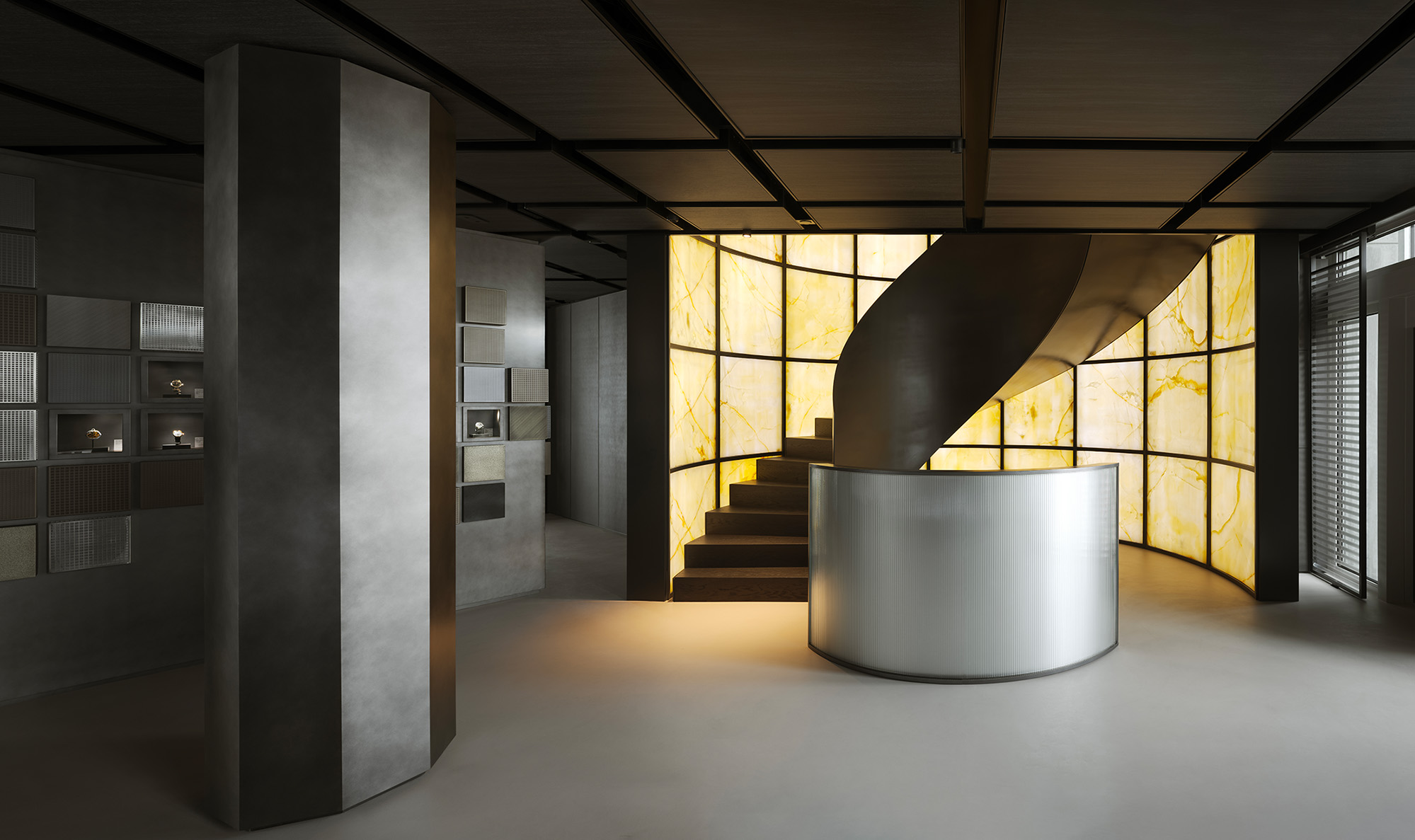
It is not. It’s a multi-use tower. We put many different functions inside. We put inside a school, one hotel, we put inside offices, we put inside a specialized hospital, we put inside some suspended gardens and we put inside residential parts.
(SPONSOR BREAK)
To Piero Lissoni, design is a way of thinking where ego is nowhere to be found. There’s only a kind of natural approach that’s super obvious to him and captivating to everyone else. To be blunt, you’re never going to hear him say a chair was inspired by a flower or a sofa was inspired by sunset. Whatever he designed simply couldn’t have come out in any other way, and it’s hard to argue with his assessments.
Is there a project that you’ve completed recently that you’re very proud of for whatever particular aspect?
Listen, I like to be very honest. I hate all of my projects.
You hate them.
Yeah, I hate them.
Why do you hate them?
Because they are, for me, imperfect. All the time I try to postpone the moment where I show the end of a project. It doesn’t matter if it’s architecture or a piece of design. I try to convince the client to allow me a little bit more time to fine -tune details again and again. And luckily clients sometimes say, “ok Piero, basta.” Game over. I never use a project like a weapon. I never use a project for showing myself or showing the Piero Lissoni ego because this one I think is not inside of my nature. And I’m very proud of that because when I start to be a designer, when I start to be an architect, and when I have to be a graphic designer I try to use correctly the old material I never use material in in a wrong way. I never use material wrong because I try to follow one idea of style. Now everybody is talking about responsibility and green attitude. I was green 30 years ago, not now and I continue to be green. But I never talk about it.
How so? How were you green 30 years ago or how are you sustainable?
Think about it. It was possible 30 years ago to use only special wood, not from the forest. I hate to use wood from the forest like teak or mahogany or something like that, you know. I never used it because it was, for me, totally inhumane to destroy the forest, cut trees to use them for a stupid chair. It was possible to use the correct quantities and qualities of wood. Wood for the reforestations or replantations. That one was a simple detail. If you think, 30 years ago, we started to change the quantity of chemical material for finishing surfaces. More or less 30 years ago for finishing surfaces, technologically speaking, industries were able to cover more than 300 grams per square meter. Now after 30 years and after fighting with factories, we are able to do that with 40-45 grams to double qualities for protection and durability in time. That one was a very good battle; it was a war. I’m very proud of that. We pushed the technologies to be very different and at the same time, responsible before we had to be responsible.
(SPONSOR BREAK)
When Piero Lissoni took the creative reins at B&B Italia it was something of an earthquake for the industry. While many Italian brands have a history of innovation and excellence, which has helped them to thrive for decades, B&B holds a special place in the hearts of those in design. He was always a bit radical and willing to take risks. My favorite bit of B&B Italia history is an early 1970s magazine advertisement for a puffy sofa called Le Bombole. In the ad, a shirtless female model in skin-tight pants and black high heels poses erotically on the piece. It’s this ability to capture a moment while also pushing the industry forward in various ways both technically and culturally that make it a design fan favorite. As a journalist I know when I would visit a preview during design week in Milan every April I would always be wowed about what I saw in their showroom but I figured I’d leave it up to Piero to explain the brand’s position in design himself.
How do you describe B&B Italia to someone who doesn’t know anything about the brand? You meet someone totally new.
Listen, if you don’t know B&B Italia, I will try to describe B&B Italia. Think about the most important contemporary of design. Think about the most important actor on stage of design and revolutionary technologies and modernized. Now after more than 50 years of history, a lot of pieces from B&B have become modern. They move out of the contemporary moment and they become modern. If you discuss modernist design in Italy you need to think about European modern design, you need to put inside B&B. B&B is the most important actor, or actors depending on your point of view, on the stage of design worldwide. It’s a combination of research, technologies, taste, elegancies, and sometimes a little bit it’s such a brave company. They do something very courageous.
Tell me a little bit about this bravery. Is there something that B&B Italia has done that you think was very brave for its time?
Think about the communication. They choose the best photographer in the world. They choose some incredible level of communication. The graphic attitude, in which way they present themselves during different fairs. In which way they prepare catalogs. In which way they talk. Last but not least, in which way they design pieces. All of the different parts of B&B, they put inside something completely and totally new. When they start to design new wardrobes, they put inside a totally different approach. Not to design another classical wardrobe. When they designed Sity, with Antonio Citterio, when they designed Domus, a collection of bookshelves, they put in an enormous quantity of research, technologies, and last but not least, style. An incredible level of control and style.
When you first joined the company, what ran through your mind when you first started to, in this new era of being the director there, what was your first thought? What goes through your mind when you think about this brand?
Listen, first I started as a designer for B&B, more than four years ago. I started to design a few pieces for them. Three years later, they ask me what you think about starting to work more integrated inside this B&B brain and creator. Because for me B&B is quite a complex creator. It’s quite natural to discuss some different aspects, but it was more intellectual and not economical. Don’t forget, B&B is like Apple inside the furniture system. It’s been such a successful company for many years. And to try to jump inside and design something as an art director is not easy. Just because you need to be very gentle sometimes, and sometimes you need to be stronger. You need to choose and you need to decide. In the end, I become not completely the public face of the whole operation, but I need to use my face. This is my first approach. When I start, I start with a very good espresso.
Years ago, before you started working with B&B, was there one piece of B&B that you said, that’s a really amazing piece? I’m jealous of this. I wish I had designed this piece. Is there one that you particularly admired from the history of the company?
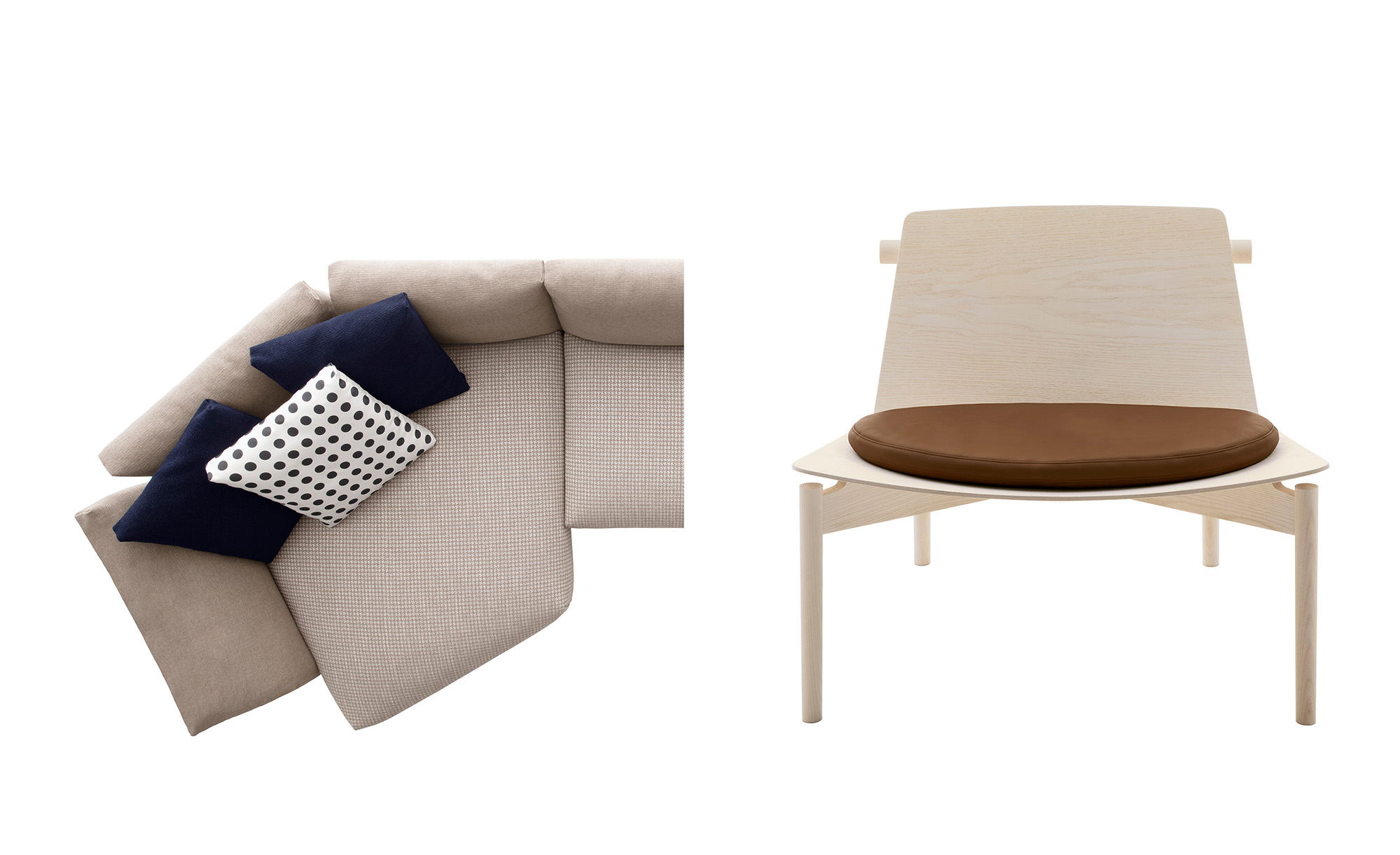
More or less, all of them. But if I like the Diesis sofa, after many years, more than 30 years I’m very envious again because the Diesis sofa is such an incredible piece. More or less, all of them. All of the pieces. They are well done, well thought out. They put inside a lot of thought thinking about one piece or collection, like a city. When they designed Sity, they completely changed their whole atmosphere and they completely redesigned their whole attitude to be sitting on a sofa.
We talked a lot about research and innovation with B&B. Is there something that the company has pioneered?
Yes, if you think about the whole material inside the production of sofas, it’s a polyurethane foam. During B&B day, they are the inventors of that. They changed the word because they understand the possibility and the potential qualities of the form. And now, we design and we build thousands and thousands of pieces every year with the new generation of foam, new generation of polyurethane. For example, we have put inside now, for many years, a capacity to use the recycling circle of material for polyurethane too. We put inside new reserves to take away every kind of animal material inside in our prices. We try to save the quality but at the same time use and minimize qualities of material and fabrics. The talk about B&B is not enough to be a queen of design, but you need to think about being a queen of industrialization and research.
If you bought a new home and you had to purchase one piece of B&B Italia, what would you purchase?
For sure Diesis.
Why?
One Diesis. Because I tell you, it’s a great combination. It’s super thin, it’s super pure. At the same time, it’s super gentle. It disappears in the space and at the same time it’s like a protagonist, it is always like a main actor.
Piero, if you were to give a piece of advice to a young designer today who wanted to design something for B&B Italia, what would you tell them?
Try to stay in contact with factories like B&B. To be open minded and very elastic. For many people when they design something, they are totally convinced one drawing becomes a project and after that it becomes a product, it’s not true. You need to pass it through many different trials, many different prototypes, many changes, because in time you need to put some detached idea around prototypes. In between prototypes industrialization has a lot of technicality. You need to be curious for one reason and very elastic for another one. Unfortunately, a lot of people from the new generation grow up with the idea that we design something perfect and you need to make this perfection in a product. It’s completely untrue. This one is a completely wrong approach.
It’s a process.
It’s a process. If you don’t understand the real qualities of the process, it’s impossible to do anything.
And if there’s one thing you want someone who is going to go and buy something for their own home to know, what would be the selling point? Why should they purchase a piece or multiple pieces from B&B Italia for their home?
You know, without me, but it’s a collection of masterpieces. That’s it. Took away the Piero Lissoni pieces, but the rest are a masterpiece in this collection. That’s why people need to move inside the B&B showroom or if they like, in the B&B internet showroom, but at the same time because B&B is one of the most important catalogs in the world with the best content for design.
My last question for you, in such uncertain times with so much change in the world, as a designer who is interacting with so many parts of the world, are you an optimistic person about the future or pessimistic?
Listen, making something like a director for one company like B&B or other companies and making work like an art director for myself, I need to be optimistic. The best idea in my mind is fantastic Piero, what happened tomorrow morning. That’s it. Not we were or I was at a moment yesterday. But today. In my mind, every morning it’s “Hello Piero, welcome. It’s a new day.”
Thank you to Piero Lissoni and to the entire team at B&B Italia for making this happen. Piero let’s have an espresso next time I’m in Milan, but not at 9:00am. The editor of this episode is Stan Hall, transcriptions are by Kara Johnson. I hope you’ve enjoyed this episode of The Grand Tourist. To keep this going, please follow me on Instagram @danrubinstein or @grandtouristpodcast to learn more. Don’t forget to follow The Grand Tourist on Apple podcasts or wherever you like to listen and leave us a rating or comment. Every little bit helps. Til next time!
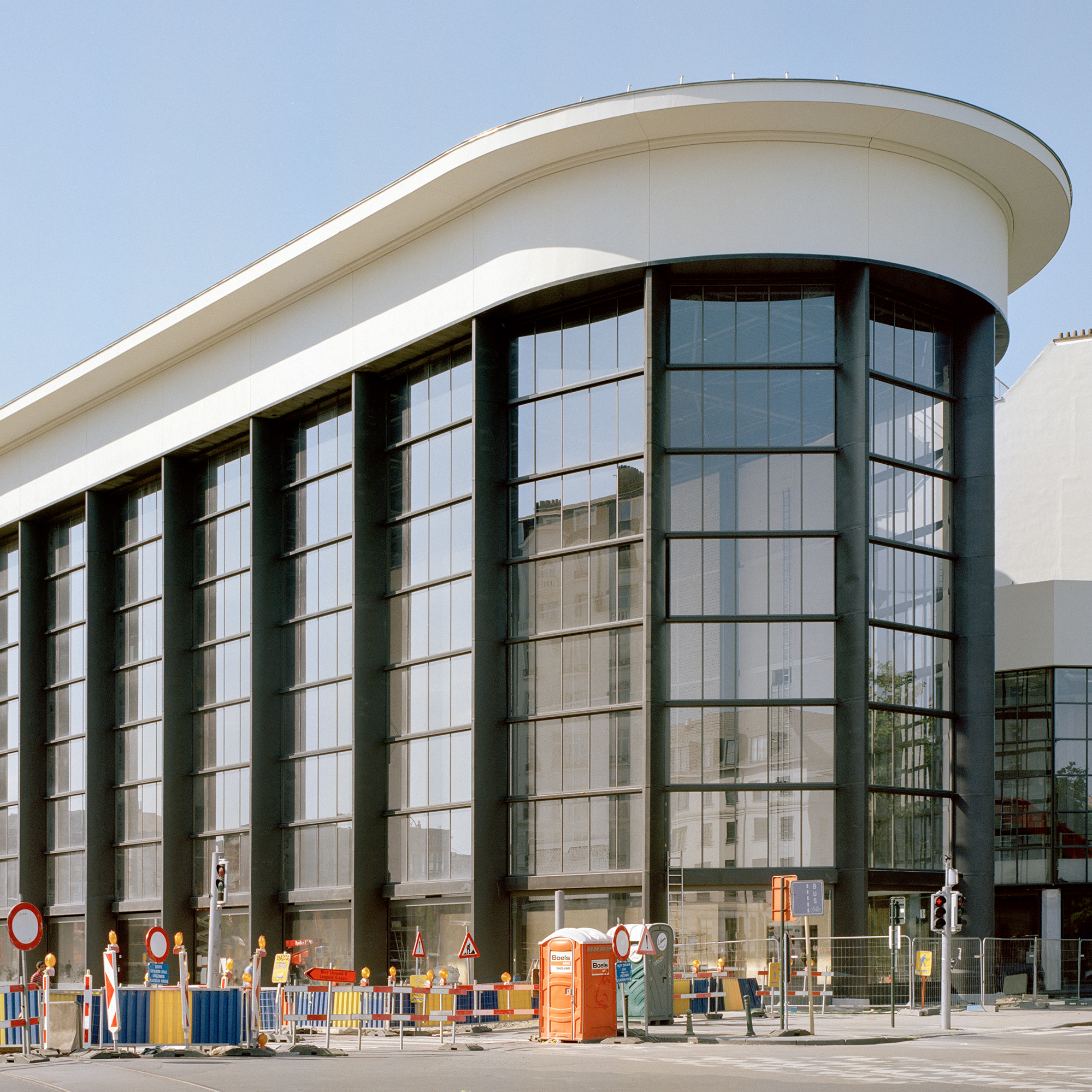
Long overlooked by the art world, the capital of Belgium is emerging as a design-driven mecca for art and culture, thanks in part to the latest outpost of the Centre Pompidou.
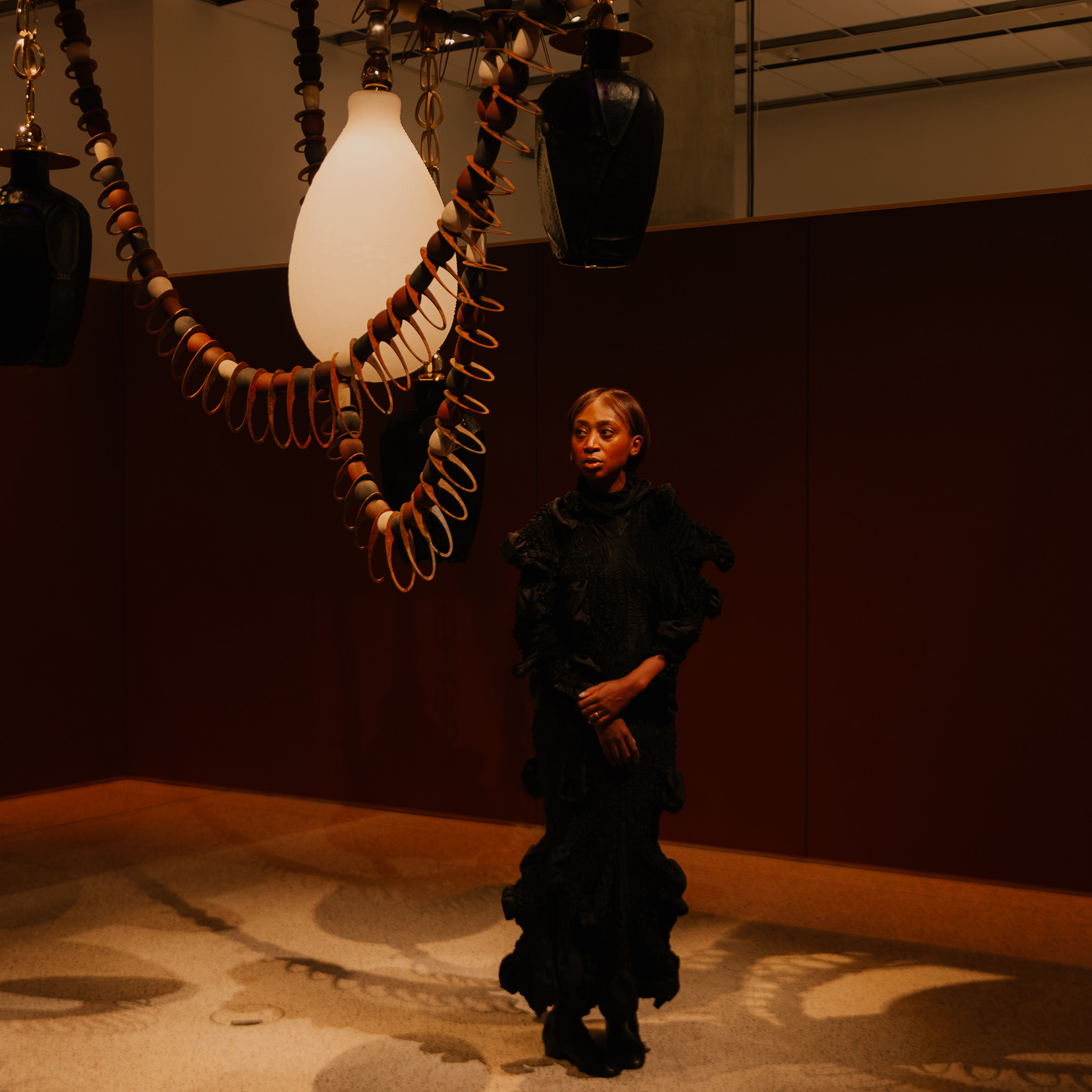
With more than 100 objects spanning architecture, fashion, and furniture, Charlene Prempeh’s exhibition maps a global, nuanced picture of Black design—and invites others to keep the story going.
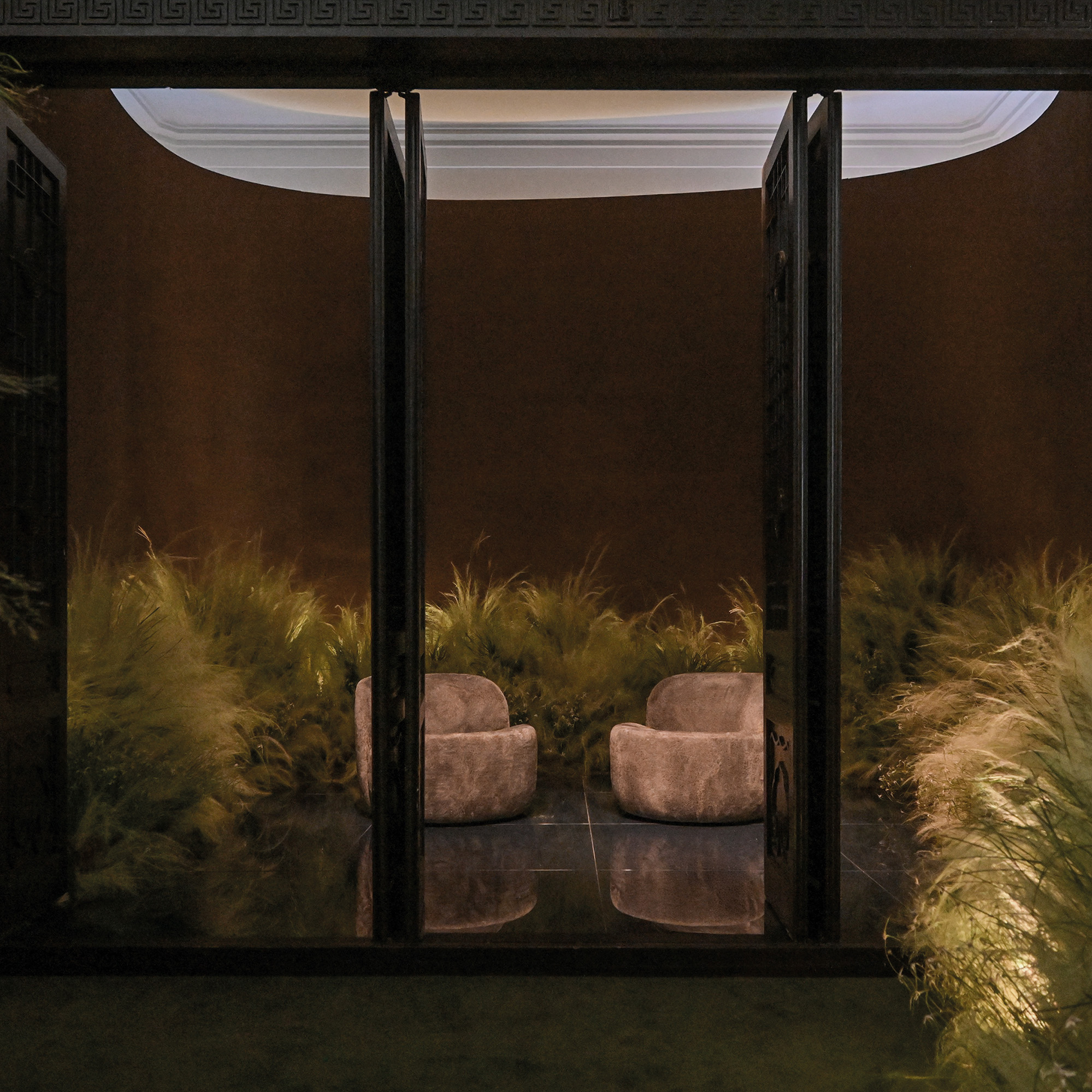
The two powerhouse names in design continue their collaboration with an immersive exhibition, where visitors will explore new collections through the lens of nature, with different installations for spring, summer, autumn, and winter.