Go Inside the Collection From Poliform That Heralds Design’s Future
In Milan, we sat down with the brand's Laura Anzani to discuss the family business over coffee, and what it has planned for New York and beyond.

This article is from our Spring 2026 print issue. Sign up to our newsletter for updates on how to purchase your own copy.
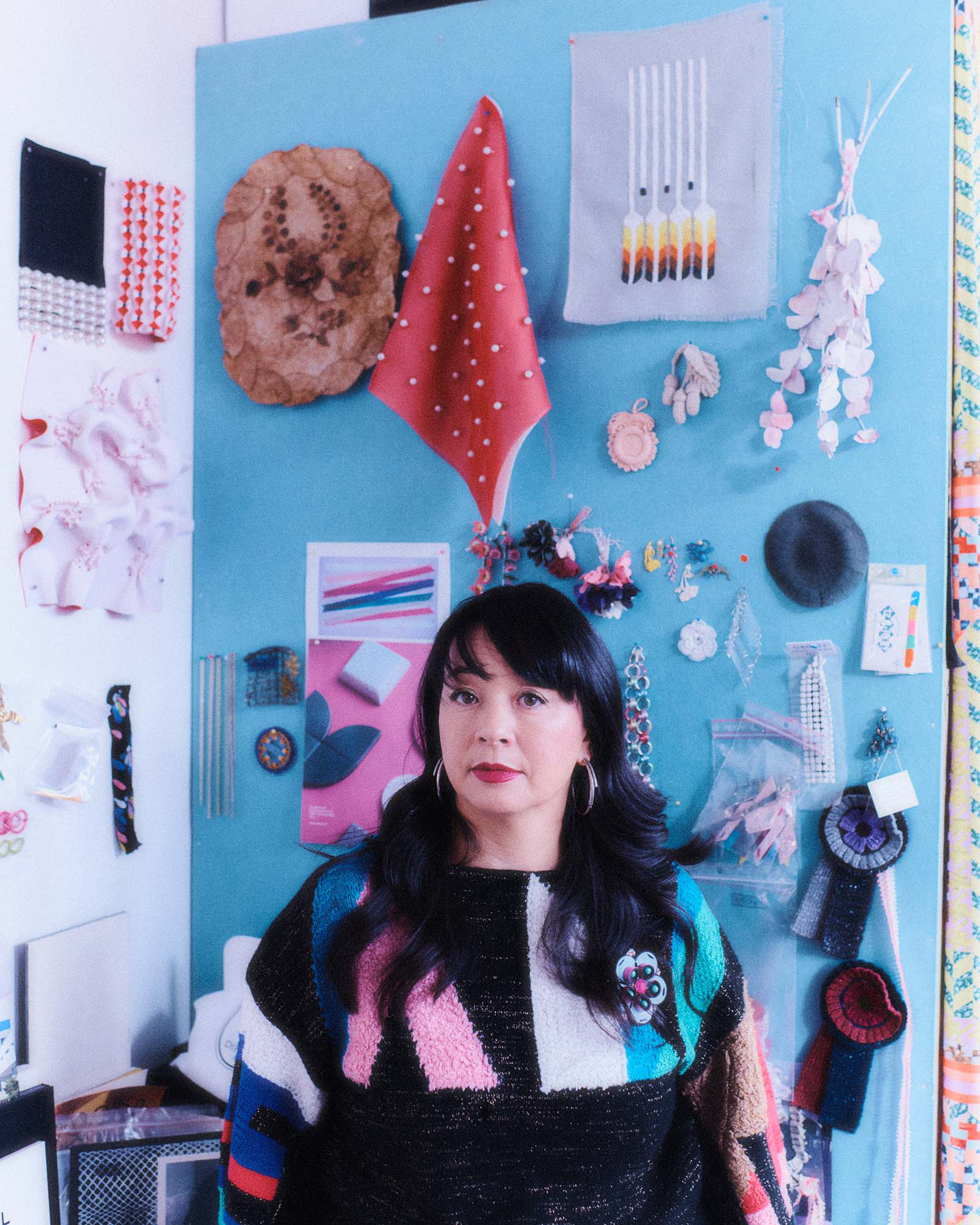
As a member of Le19M, Chanel’s coalition of artistic craftspeople, Atelier Montex is part of a small group of specialized studios operating at the highest echelon of French savoir faire. It is one of the métiers d’art ateliers bought by Chanel in the past 15 years, which specialize in goldsmithing, featherwork, millinery, and pleating, for example. Fine embroidery makes up the focus of Atelier Montex, with projects ranging widely in scope, scale, and function, from clothing and headwear to curtains and sculptures. At its head, as artistic director, is Aska Yamashita. The French-Japanese artist joined the embroidery atelier at just 19 years old. “I had an aunt who worked at Atelier Montex, and she knew I liked fashion,” Yamashita says. “They called me in to do a test.” Fresh from nearly two years studying publicity in art school—a subject that never captured Yamashita’s imagination—the opportunity gave her an excuse to leave school.
Her first task for Atelier Montex was to transpose a trompe l’oeil of ancient Greek wall paintings onto a Chloé dress. It was the early 1990s, and Karl Lagerfeld was at the helm of the brand. From developing prototypes like that dress she went on to work in production, moving on to the design department, where she later became director. Her responsibilities expanded to include coordinating each collection, and she became artistic director in 2017. Yamashita’s primary concern today is client relations, guiding each project as closely to the client’s vision as possible. “It’s quite a specific rhythm when you work in fashion,” she says. “When I started there were very intense periods, but also moments when everything was quite calm. We don’t have that anymore, but I’ve always worked a lot. It’s normal for me.”
Normal perhaps because Yamashita’s mother espoused the same philosophy. A children’s book illustrator, her mother worked tirelessly, often in her children’s company. These are Yamashita’s earliest memories of art—seeing her mother make it. “I grew up in an artistic family,” she says. “My stepfather was a graphic designer and a professor of Art Deco in Paris. My mother was very attached to beautiful things.” A love of art and an unshakable curiosity bound them together.

Atelier Montex functions similarly. Staff come from a wide range of economic and social backgrounds, but they all speak the same creative language. Some spend hours on reading, visiting museums, and doing research, while others are technical geniuses, with an interest solely in the work of the hand. Their shared passion contributes to the synergy and warmth of the office. “With many of my colleagues I don’t even need to finish my sentences,” Yamashita says. They just get it.
Now, Montex directs the bulk of their work toward embroidery for Chanel’s haute couture collections. They embroidered birds and flowers onto tweed jackets and knitwear for the brand in 2025 using Lunéville needlework, a technique that employs tiny hooks to create precise chain stitching, sometimes incorporating sequins and beading. Between 2021 and 2022, they embroidered abstract silver designs onto a Chanel coat that boasted over 20,000 sequins.
But their work goes well beyond couture. “For me it’s quite essential to work for several clients,” Yamashita says, going on to explain how the work from one project often flows into the inspiration for another. In 2011, Atelier Montex produced wigs with the imaginative hair stylist and artist Tomihiro Kono. They’ve embroidered maps in Dakar after a design by Senegalese artist Benjamin Monteil and embroidered curtains for the Kabukiza theater in Tokyo, which took 800 hours to complete. As over 30 yards of curtains closed at the end of the Dankiku Festival in 2023, soft, silk organza disks fluttered with movement. Up close, they’re huge and light as air, but from afar they act as pixels, together depicting a large composition by the artist Xavier Veilhan.

If this is sounding unlike any embroidery you’ve heard of, you wouldn’t be alone. Atelier Montex exists where ancient craft meets wildly free innovation, using centuries-old techniques as well as 3D printing and laser cutting. Their work hones a craft that has global roots and wide-ranging social associations, taking what is time-tested and twisting it to a new tune. The company was founded in 1949 by the late Jacques Lemonier, who was advanced in age when Yamashita met him. “He wasn’t at Atelier Montex anymore by the time I arrived, but he was a very classy, very chic man,” she says. The earliest life of Atelier Montex was as a supplier of embroidered textiles. The designs and work were executed entirely in-house and then sold to couturiers, finished, by the yard. Now the studio operates in a more collaborative fashion, working with brands and institutions to develop and execute ideas in tandem.
Annie Trussart, Yamashita’s predecessor and primary mentor, broached this new method of working. As artistic director through the 1980s and 1990s, she brought a more expansive visual language to the firm along with a radical embrace of untraditional materials and techniques. Heritage brands across Europe took notice, and many of them swiftly became collaborators. “They come to us to execute their craziest ideas,” Yamashita says.

During Yamashita’s tenure, Montex has found a way to bridge French savoir faire with global and notably non-Western crafts of a similar level. In the exhibition “Beyond Our Horizons,” which was previously in Tokyo and will run from January 29 to April 26, 2026, at the Galerie du 19M Paris, Yamashita and her cocurators explored the boundaries and binaries of traditional applied arts. In the show, they argue for craft’s unique ability to encapsulate and reveal cultural priorities, aptitudes, and aspirations. “What I love about embroidery is that it’s a universal language,” Yamashita says. “You have it in all countries, everywhere, for many, many years.” Yamashita’s leadership at Montex is forwardthinking not only in her embrace of crosscultural exchange, but in her ability to collapse tradition and innovation into one exciting, productive pool. As she says: “There are no rules.”
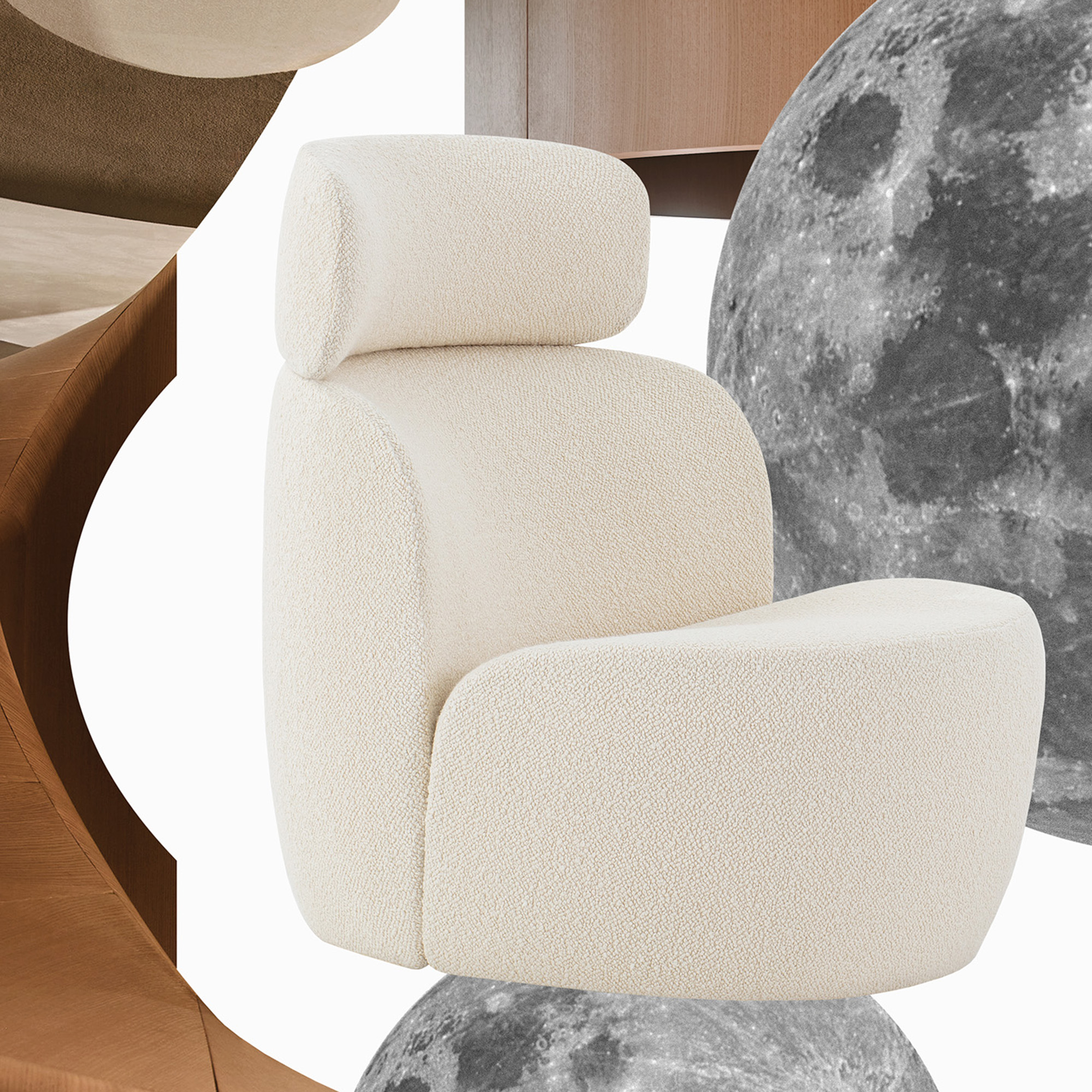
In Milan, we sat down with the brand's Laura Anzani to discuss the family business over coffee, and what it has planned for New York and beyond.
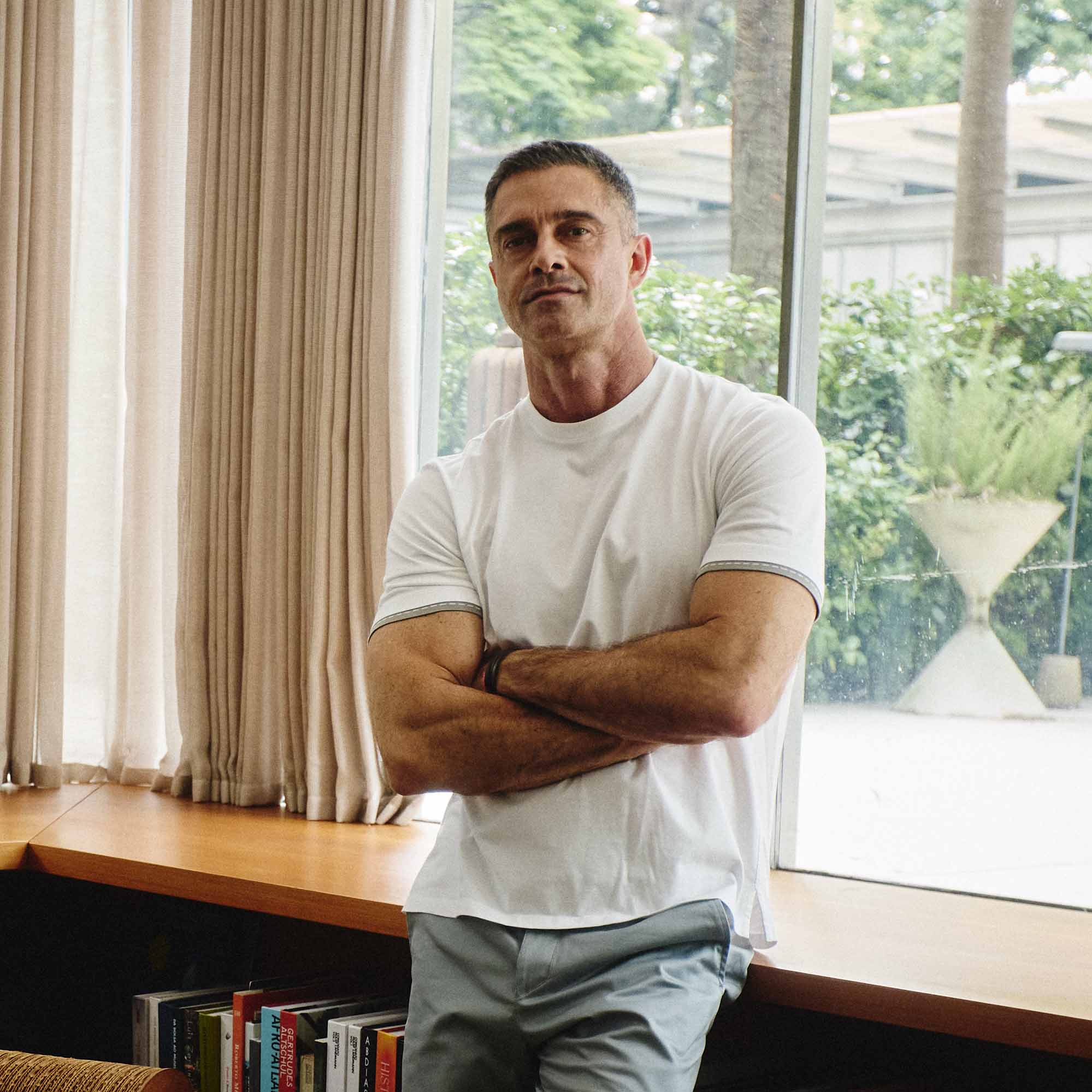
The Brazilian interior designer has quickly risen the ranks of New York design with a vision shaped by his father, the celebrated product designer Oswaldo Mellone, his first job with Robert A.M. Stern, and much more.

This lavishly photographed tome gives readers a closer look at the colorful and lively destinations and resplendent interiors across the Indian region.