This Refreshed, Legendary Hotel Was Built on Ancient Roman Ruins
One of the crown jewels of Pellicano Hotels, La Posta Vecchia is a picture-perfect retreat by the sea. The woman behind it all reveals why it's Pellicano's "mischievous child," and why the greatest luxury of all is time.
November 9, 2026By
THE GRAND TOURIST
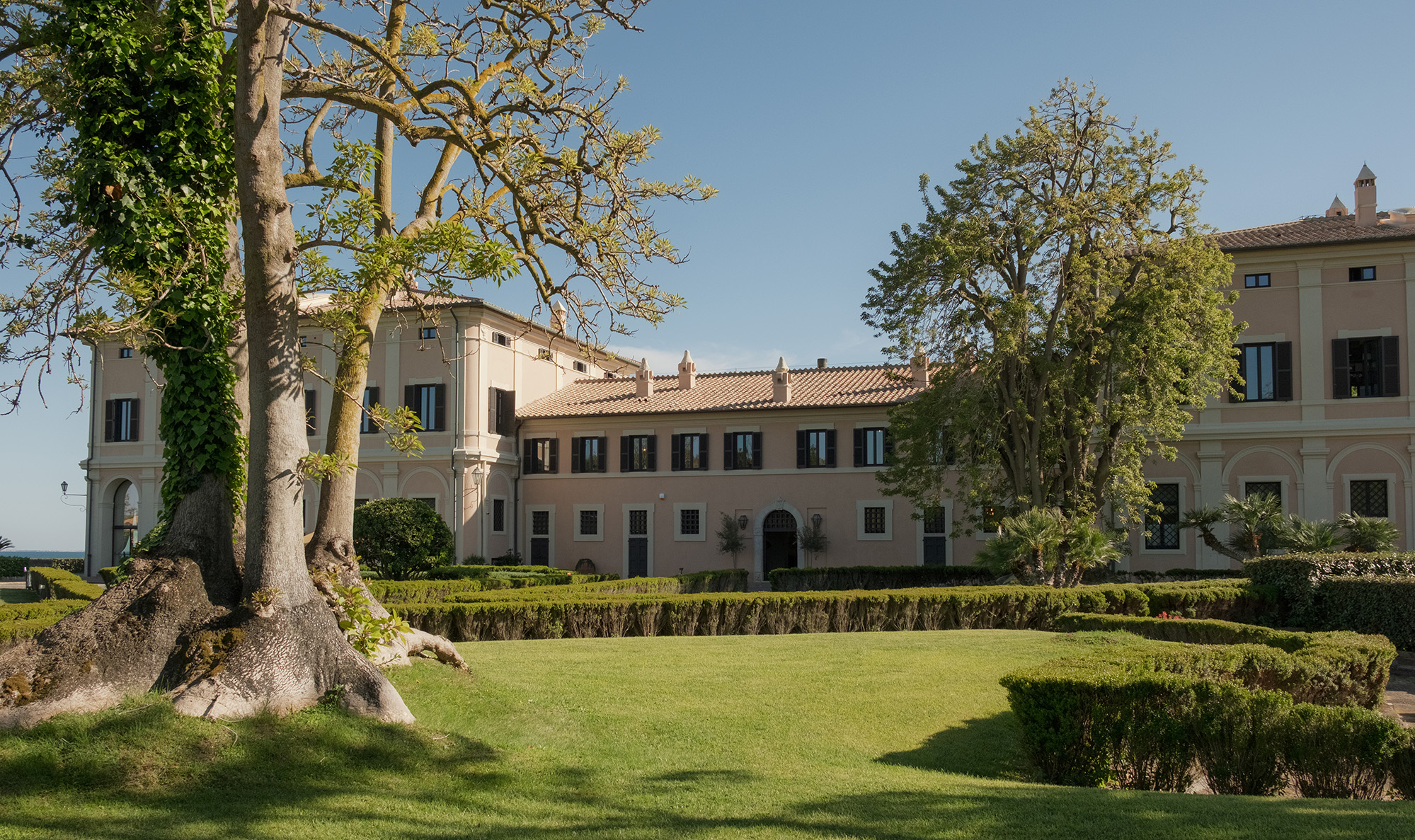
La Posta Vecchia, a 17th-century villa outside Rome restored by J. Paul Getty. Photo: The Grand Tourist
This article is featured in our Fall 2026 print issue, available now.
I can remember, when I was younger, being petrified of getting bored on vacation. The idea of doing nothing was a worst-case scenario. In 2026, not so much. This spring, after enduring the weeklong marathon of exhibitions, cocktail events, showroom visits, and coffee dates that is Milan Design Week, I couldn’t wait to take part in the time-honored practice of dolce far niente.
After arriving by train at the Ladispoli-Cerveteri station, less than an hour west of Rome, I was picked up by a taxi and taken to a nearby seaside hotel that exemplifies the most mature form of holiday possible: La Posta Vecchia.
One of the crown jewels of the Pellicano Hotels group, this 17th-century villa was built atop the remains of an ancient Roman settlement and was once home to industrialist J. Paul Getty, who meticulously restored the property in the 1960s. It was transformed into the hotel it is today by the father of the group’s current CEO and creative director, Marie-Louise Sciò, who spent her own summers bored in the ancient halls of the peach-colored estate.
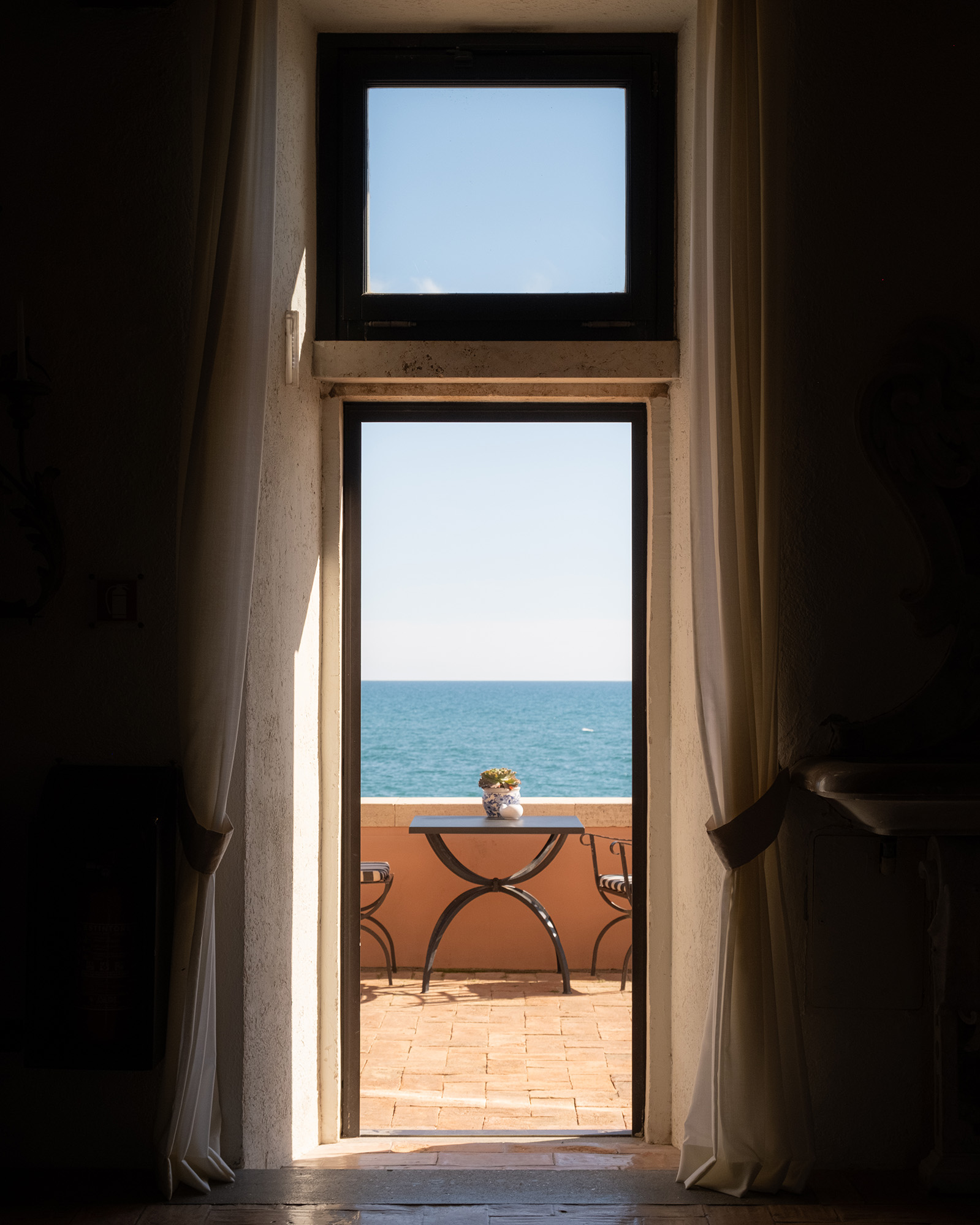
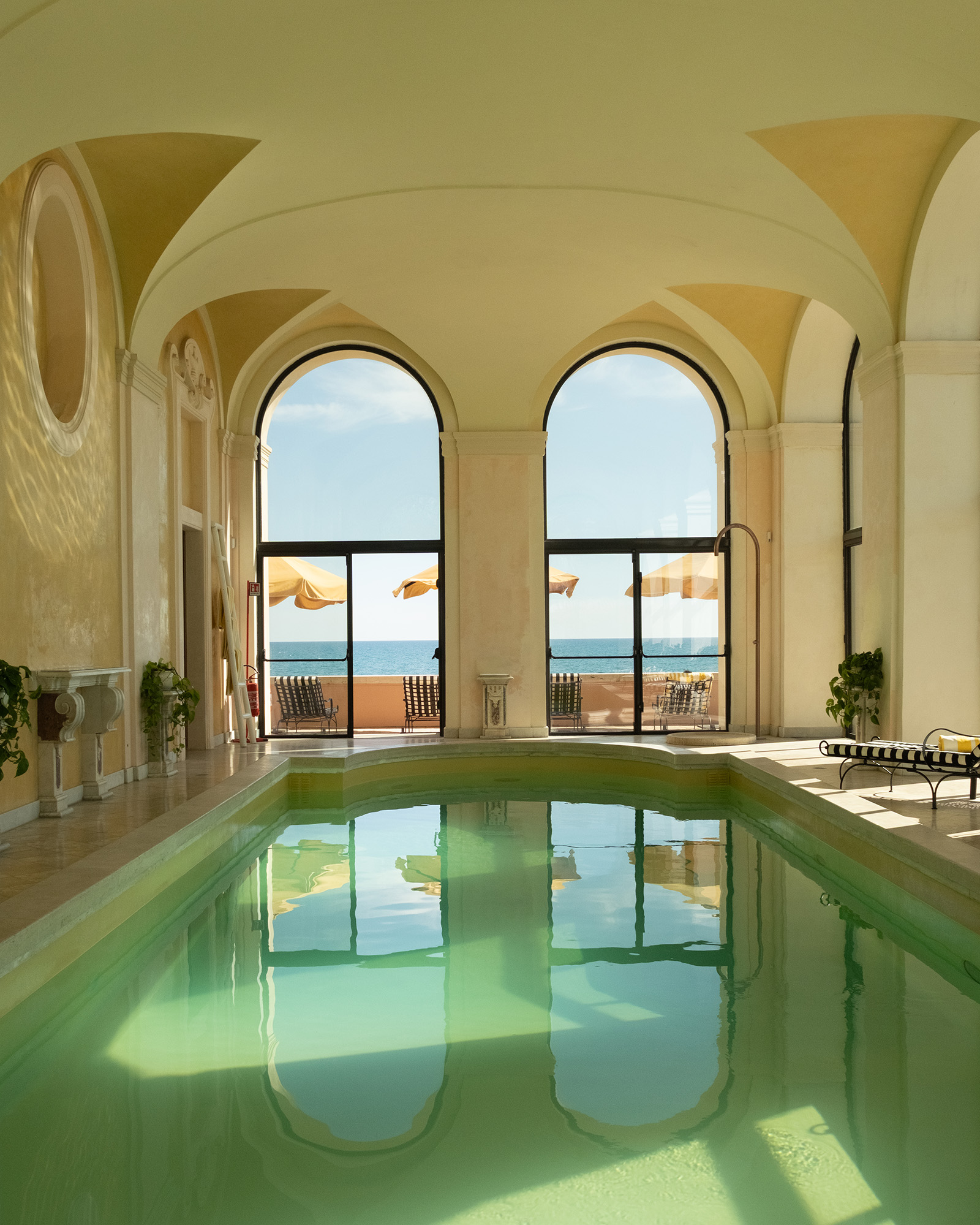
Here, for the adult, there are so many ways to engage in near-total idleness: a brand-new pool, a series of serene and recently refurbished suites, and top-notch Italian cuisine served mostly on the hotel’s best feature: a patio overlooking the Tyrrhenian Sea. After my visit, I spoke with Sciò about this storied site, its constant evolutions, and the future of her company’s soulful coterie of well-designed Italian getaways that excel at the art of doing absolutely nothing.
Can you tell me about your background and how Pellicano Hotels were a part of your life from the beginning?
I was born in London, but my dad used to go to Il Pellicano on holiday from 1965 through the late 1970s. The founders wanted to sell the place, and he loved it so much that he was terrified someone would come and ruin it, so he bought it bit by bit. The property was made up of various cottages and a main building, and he gradually bought out all the houses. We grew up spending every summer there. We never traveled during the summer; we were always there. I’m part of the furniture, you might say. The same goes for La Posta Vecchia, because that was the other place we went all the time. The last thing I ever thought I’d do was work in hospitality.
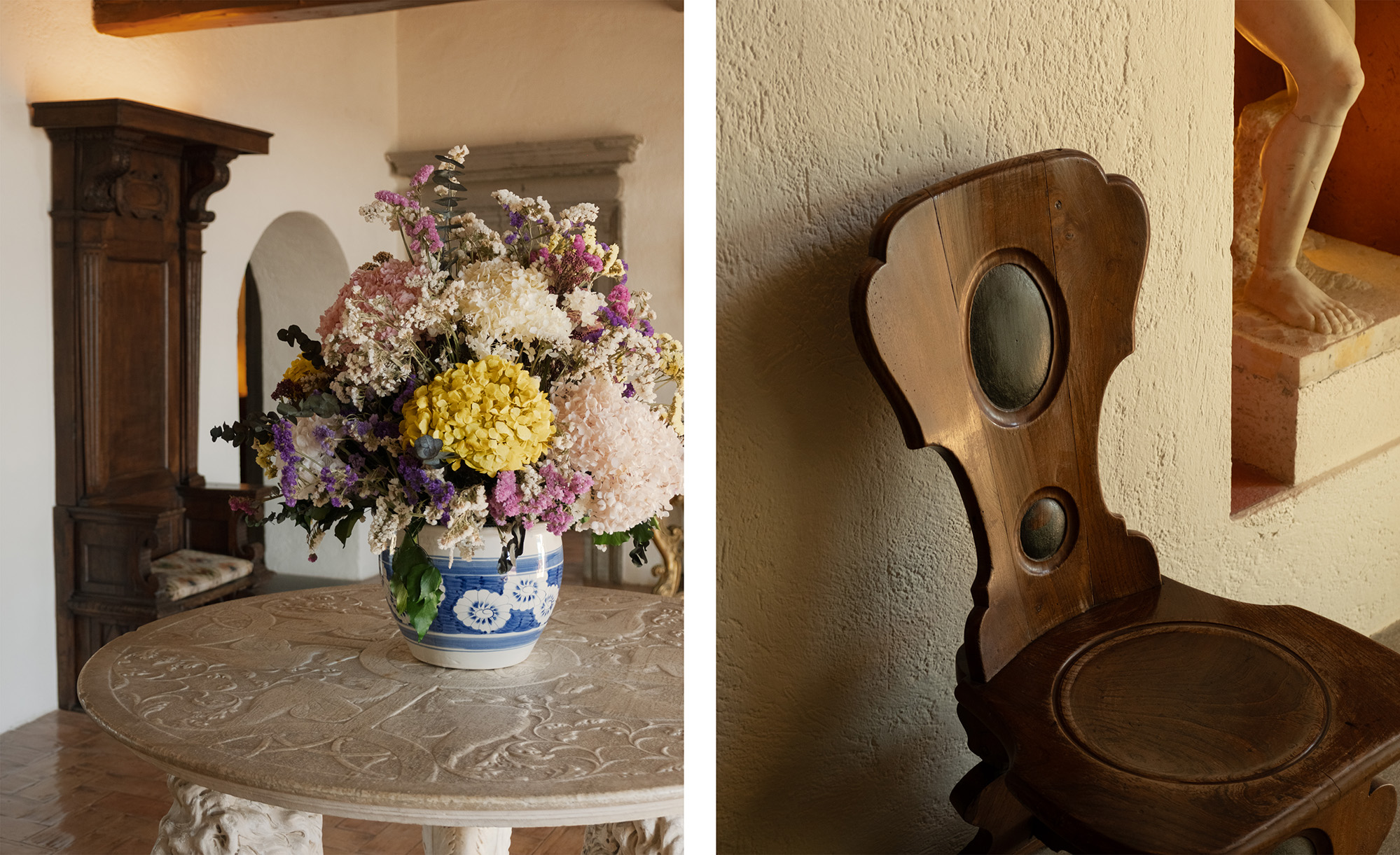
From left: The hotel is filled with Getty’s collections of furniture and works of art, including this 16th-century choir stall and 19th-century marble table in the lobby; an 18th-century English chair and 17th- or 18th-century marble statue. Photo: The Grand Tourist
You studied at the Rhode Island School of Design. How did you find yourself there?
The only things I was good at in school were art and art history, so I wanted to go to art school. The only places I applied to were Central Saint Martins and RISD. My mother’s American, and when I got into RISD she said, “That’s the best school. You have to go.” I didn’t know what I wanted to study, but my roommate studied architecture and told me it was a great foundation because it opens many doors. I studied architecture and loved it. After graduation I worked in New York for a real estate developer doing skyscrapers where all the apartments were essentially the same. I realized very quickly what I didn’t want to do: create things automatically without thought or individuality.
I then met my ex-husband and moved to Rome, where I worked for an interior designer who had worked with Lorenzo Mongiardino. That was the opposite education—very detailed, very Italian, learning everything from laying tiles to the nuances of interior design. My father eventually wanted to see a return on his RISD investment and asked me to redo a bathroom at Il Pellicano. I knocked down a room and made two bathrooms out of it. In fact, Room 5 is missing because of that project. I also told him he needed to attract a younger crowd, because the hotel was becoming a little dusty.
How did the group evolve from there?
My father bought La Posta Vecchia in the 1980s. It was a family home before becoming a small hotel with 21 rooms. For years we only had those two properties. When I became involved, I realized hospitality was my calling. I wanted to continue what my father had started and preserve this particular way of doing hospitality, which is slightly off the beaten track. We then acquired Mezzatorre, in Ischia, which my brother discovered. The idea became to build a small collection of hotels in Italy, each with a unique location and personality. That’s really when we became what we are today. We’ve since acquired two additional properties and are continuing to grow.
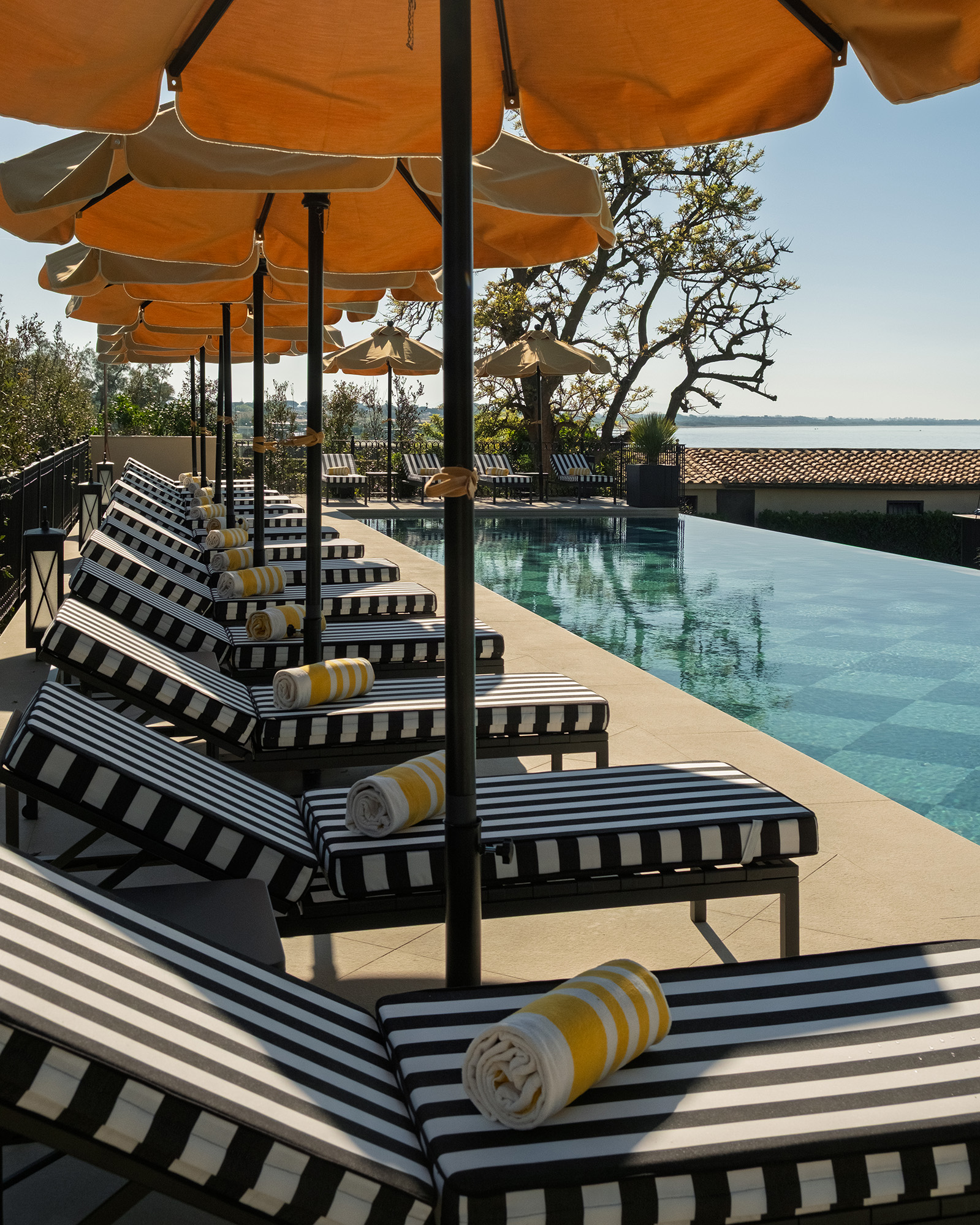
La Posta Vecchia’s new outdoor swimming pool. Photo: The Grand Tourist
What connects all of your properties?
They all have souls. I always treat hotels as if they were people. They each have different personalities. La Posta Vecchia, Il Pellicano, and Mezzatorre are all different, but you can tell they’re related. They’re like brothers and sisters. What I look for is soulfulness and the opportunity to bring that soul back to life.
If La Posta Vecchia were a member of a family, how would you describe it?
La Posta Vecchia is the mischievous child. On the surface it appears very proper and adult. It’s a 17th-century villa built on Roman ruins, filled with Renaissance furniture, and it was once owned by J. Paul Getty. It feels masculine and sophisticated.
But there’s also something playful about it. The area outside Rome where it’s located was where Romans used to go to party, and the property has retained some of that energy. Every year when I throw a party there, something unexpected happens. It’s not obvious at first, but once you get to know the place, you feel it.
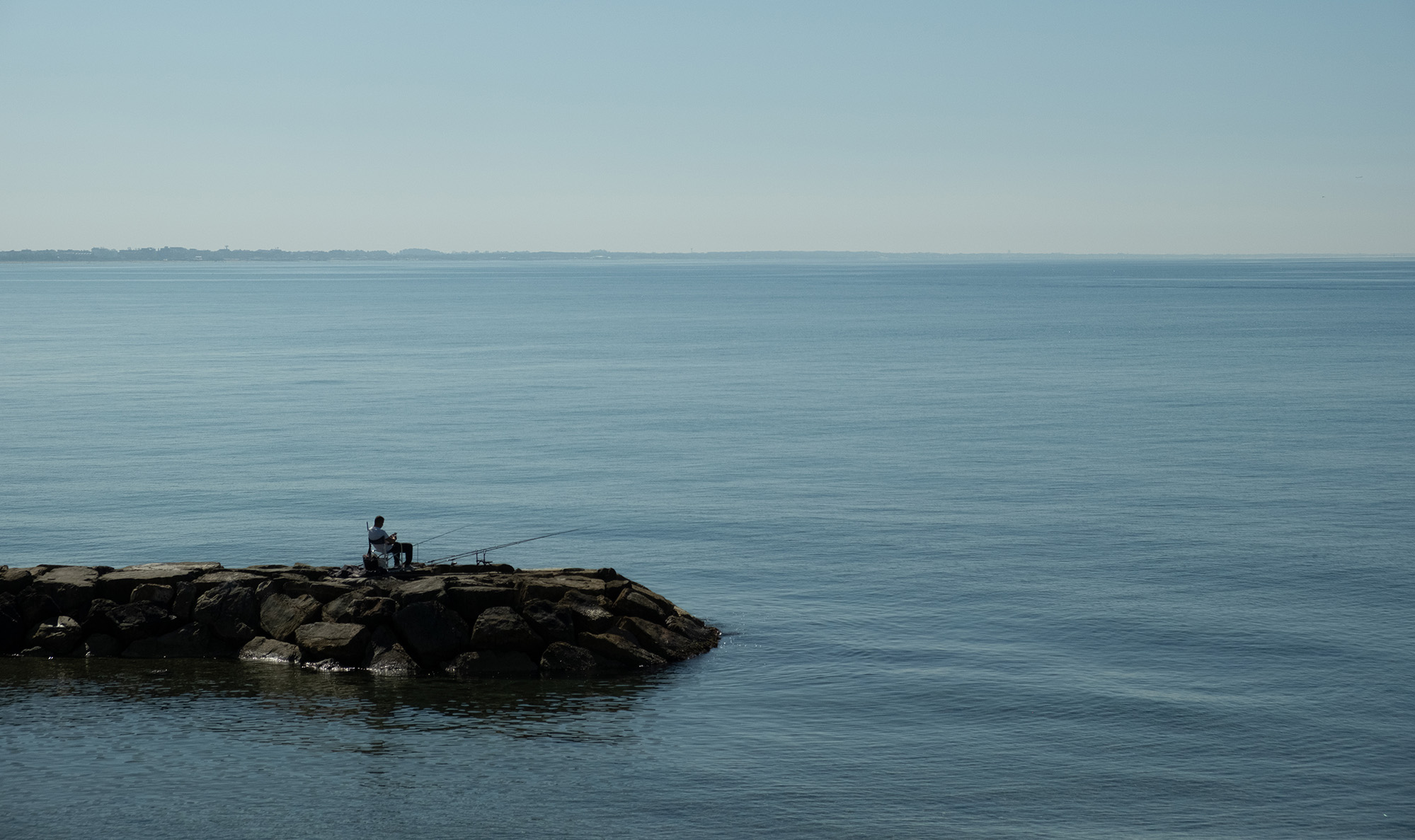
A fisherman looks out on the serene Tyrrhenian Sea. Photo: The Grand Tourist
And Il Pellicano?
Il Pellicano is the fabulous mother—elegant, charming, charismatic, timeless.
You spent a great deal of time at La Posta Vecchia as a child. What was it like when it was still a family home?
It’s remarkably similar to what you see today. The restaurant only had two dining tables and the pool had about eight sunbeds. The towers upstairs that are now guest rooms were children’s bedrooms. We’ve updated some bathrooms over the years, but fundamentally it’s the same house. Maybe that’s why I call it mischievous. I certainly got into enough trouble there.
The peach-colored hotel is surrounded by about 12 acres of garden. Photo: The Grand Tourist
What kind of trouble?
One day my brother and I decided to throw white paint across the entire façade. We wheeled a cart full of paint outside and literally threw it at the building. When my father came home from work, he couldn’t believe it. He just thought his children were idiots.
What was the Roman villa on the property like when you were growing up?
Very much as it is today. We’ve maintained it carefully, and we’re required to preserve it as well. The large section you see outside the restaurant was where I roller-skated as a child. I know it sounds absurd, but it’s true. La Posta Vecchia’s Medici Suite was our television room. The Castello Room was my parents’ bedroom. Every room had a different purpose back then from what it has now. It was wonderful and formative, but also strange because it was such a large house. There were periods when I spent a lot of time alone. I used to sit in the upstairs corridor between two wooden lions making slippers out of sticky paper and trying to sell them to whoever walked by. Usually someone from the household staff would stop because they knew I was waiting there.
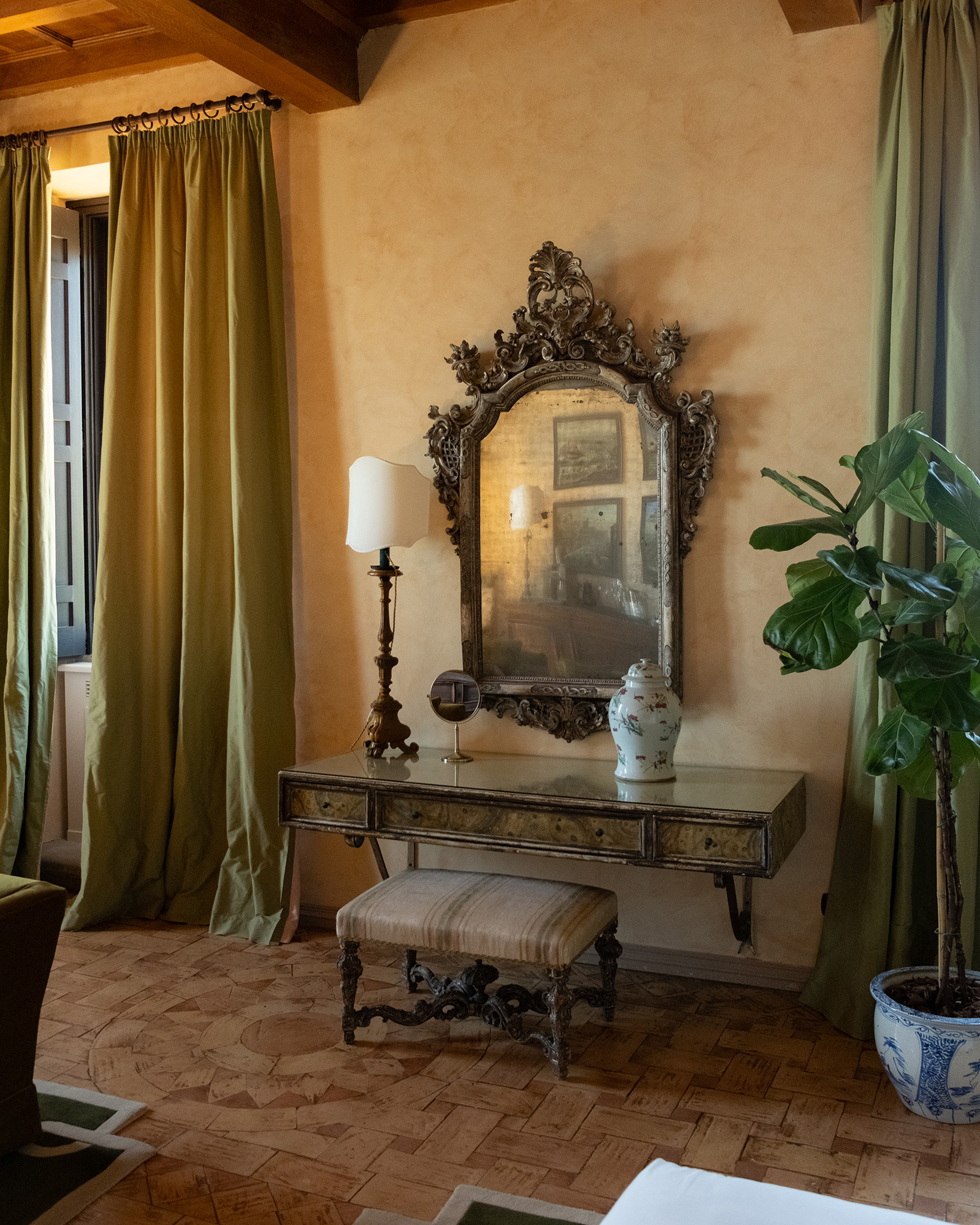
An 18th-century Venetian-style mirror in the Castello Suite. Photo: The Grand Tourist
Tell me about the castle next door.
It was originally part of the same estate. Behind the castle there’s a row of fishermen’s houses that are remarkable. La Posta Vecchia itself originally functioned almost like an inn. Travelers would stop there with their horses. The horses would drink where the restaurant and pool are now, and the travelers would spend the night before continuing on their journey. When Getty bought the property in the 1960s, it was a complete ruin. What he accomplished there was amazing.
La Posta Vecchia only has 21 rooms. Is that intimacy part of the appeal?
Absolutely. There’s a beautiful gym, a wonderful pool, and plenty to do, but there is also a simplicity to the experience. We have many repeat guests, including an unusual number of architects. What people love is that the property continually surprises them.
With Il Pellicano or Mezzatorre, you can get the feeling of it with a photograph. La Posta Vecchia is harder to understand until you’re there. Guests may know it’s on the sea, but they don’t realize quite how close. You open a gate and three steps later you’re at the water. People come to relax and enjoy an extraordinary property. You’re also only 40 minutes from Rome. You can spend the day shopping, eating, or visiting museums in the city and then return to the sea. You wake up to the sound of the water. You can take long walks on the beach, eat well, swim, and work out. It has everything you expect from a hotel, but you don’t feel dependent on any of it. It feels like staying in someone’s home.
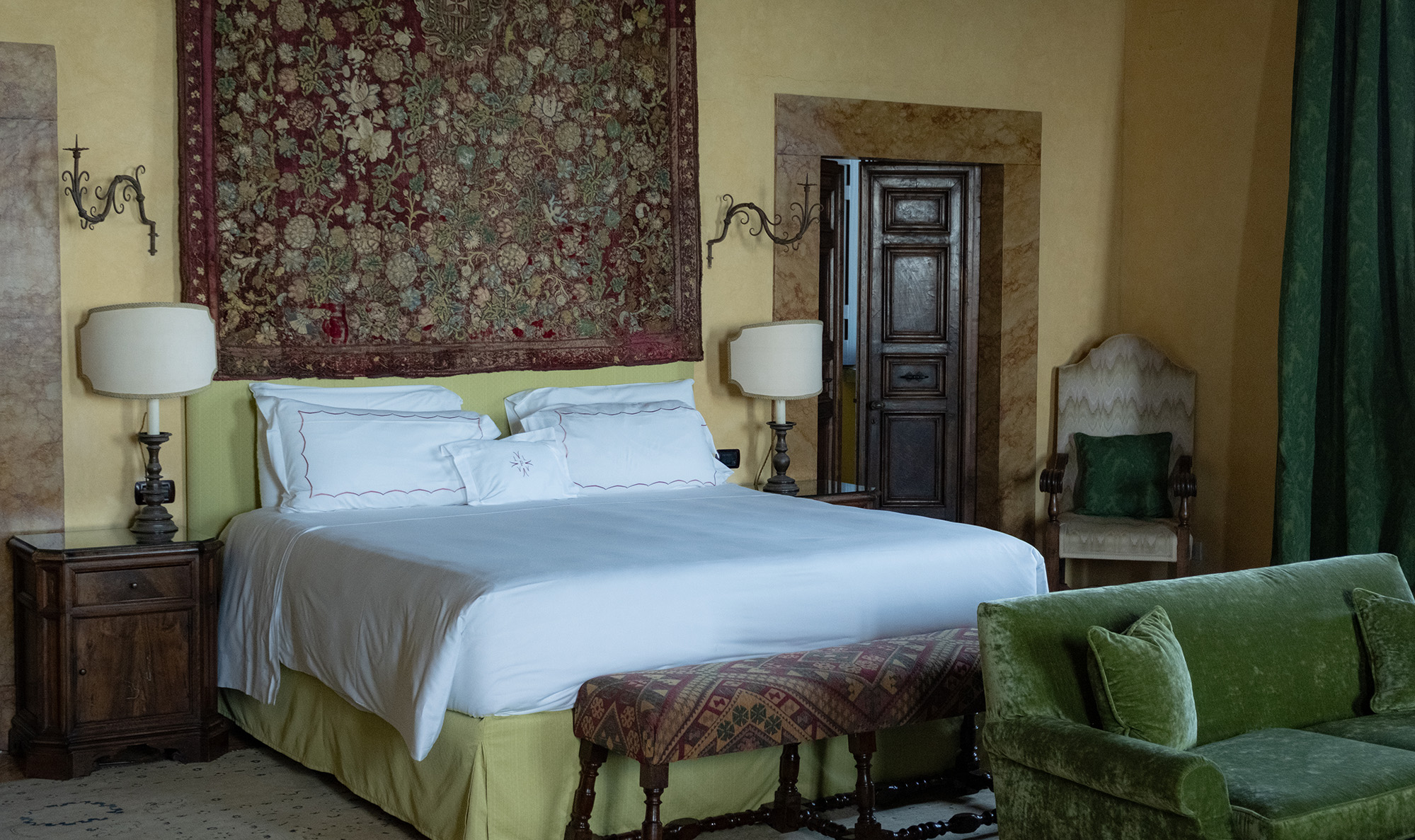
The Getty Suite, the largest of the rooms, was once Getty’s private wing. Photo: The Grand Tourist
I noticed the family portraits in the dining room. Tell me about them.
Those are portraits of my parents. They had a very bad divorce and never liked each other afterward, so I hung the portraits facing away from one another.
Do you think that luxury travel today increasingly means disconnecting?
I think luxury is time. It’s the most precious thing we have, along with our health, and it’s what we’re missing most. I recently heard an advertisement for an app that can instantly write things for you, and I found myself wondering why we’re trying to make everything so fast.
There’s value in sitting, thinking, reasoning, and being present. That’s always been part of our philosophy. People come to Il Pellicano not to leave it. They don’t come to check off activities. They come to stop time. Years ago we didn’t allow phones in public areas. There was even a Motorola sign with a red cross through it. I think people want to disconnect and be in the moment more and more, and I believe that desire will only grow.
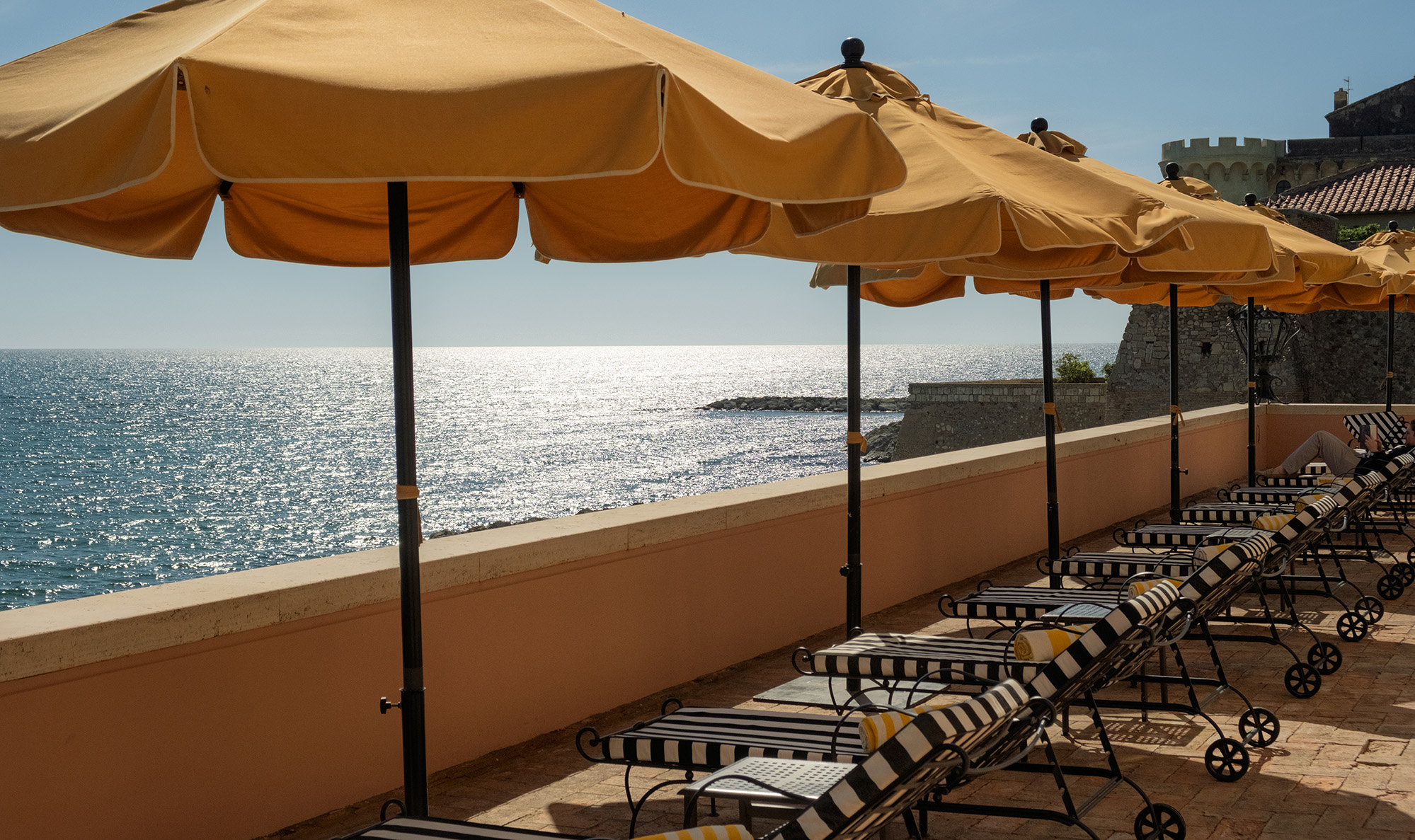
A view of the Tyrrhenian Sea and neighboring Castello Odescalchi di Palo, a 15th-century medieval fortress, from the patio sunbeds. Photo: The Grand Tourist
What recent changes have been made to La Posta Vecchia?
The biggest achievement was the outdoor pool. It took 14 years to get the permits. In Italy, whenever you dig, you find something, often a Roman ruin. It took Rome decades to build its subway system and it took us 14 years to build a pool, so we’re incredibly proud of it. We’ve also added tennis courts and a gym. Every year we reinvest in all of our properties. We refresh rooms the way you’d update a family home. We don’t gut everything and start over. We preserve what exists and make gradual improvements. Maybe it’s a lampshade one year and a headboard another year, but we always keep the soul of the place intact.
The company continues to grow. What’s next?
We’ve acquired two incredibly unique properties. One is outside Siena. It was one of Tuscany’s earliest boutique hotels, a 16th-century house designed by Baldassare Peruzzi. We purchased it partially furnished and are bringing it back to life. The second is a 12th-century monastery outside Orvieto. What excites me most is finding places with history and soul, brushing off the dust, and making them live again. I also love places that are slightly off the beaten track.
The 41-foot indoor pool, one of the hotel’s amenities. Photo: The Grand Tourist
Is that part of the company’s DNA?
One hundred percent. When my father bought Il Pellicano, people asked why he wasn’t buying in Capri. When we expanded to Ischia, people again asked why we weren’t opening in Capri. We’ve always preferred places that are a little unexpected. It’s true geographically, but it’s also true of the hotel experience itself. Our hotels are all different. They have different personalities, styles, and identities. The property outside Orvieto is a perfect example. There are no luxury hotels in that area, and the building had been on the market for years because nobody wanted it. I’m thrilled we were able to acquire it.
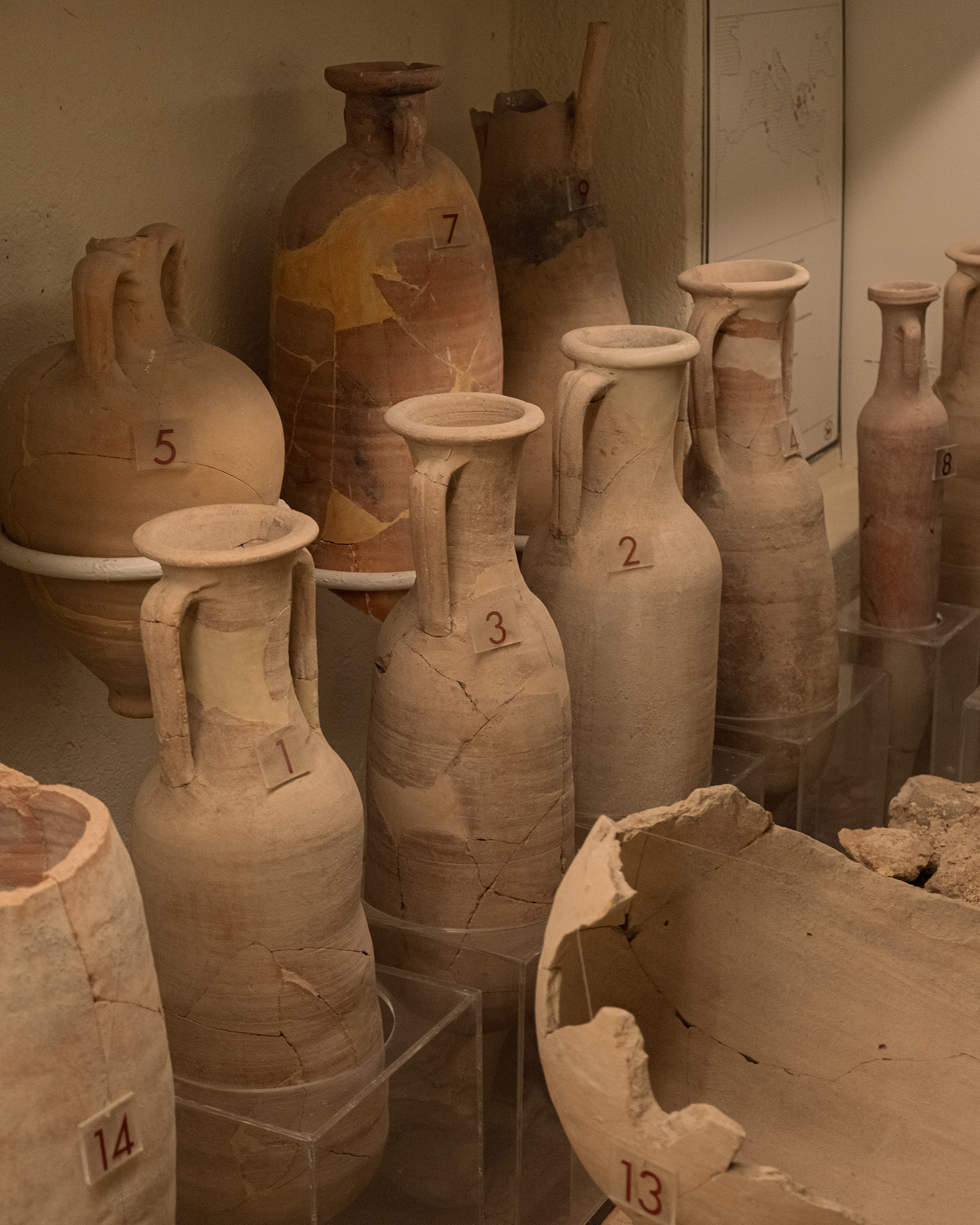
Vases, mosaics, and other artifacts excavated from the site were restored and are exhibited in a museum in the hotel’s basement. Photo: The Grand Tourist
What is your greatest challenge today?
Construction and permitting have been more complicated than I ever imagined. Everything in Italy is protected, and navigating that process can be challenging.
The other challenge is growth. We’ve grown from roughly 100 employees to 400 over the past decade. Every growing company experiences growing pains. The key is making sure we never lose our DNA. When companies scale, it’s easy to lose sight of what made them special. Maintaining that balance—creating systems while protecting our North Star—is probably the most important challenge.
If you unexpectedly found yourself at La Posta Vecchia for 48 hours with no obligations, how would you spend the time?
I’d immediately book a massage with Vula. She’s just the best. I’d have tagliolini with butter and anchovies in the restaurant, followed by a sauna and an aperitivo while watching the sunset. I’d probably order a margarita or one of the organic wines that only I seem to like. We have a natural wine list, and they’re definitely an acquired taste. Then I’d have an early dinner and an early night. I’d wake up for sunrise, walk along the beach, read a book on the terrace or in the garden, and explore the Roman villa. Although if I’m being completely honest, I’d probably also want to stay in bed all day and just…read.