“I Prefer to Optimize”: Pierre-Louis Vuitton on Luggage, Legacy, and Packing Light
As the Horizon suitcase returns in aluminum, the Louis Vuitton founder’s descendant reflects on its legacy, the mystery of the Monogram, and how he packs for a trip.
This article is featured in our Fall 2026 print issue, available now.
Wherever the future of travel takes us, there’s one thing that will remain the same: the prosaic drudgery of the journey that is packing. The same was true over a century ago, when one man’s foresight transformed it into an art. When 33-year-old Louis Vuitton opened his workshop in Paris in 1854, the city was modernizing and miles of new railroads were replacing the use of horse-drawn carriages. He was one of the first to keep up. The typical curved-lid trunks of the time, designed to shed rain on carriages, were bulky and impractical on trains. Vuitton’s solution—flat-lidded trunks crafted from lightweight poplar wood made with his experienced touch—soon outdid his rivals and launched an empire.
In the early 2000s, when transportation advanced once again—people were flying more frequently—the maison called on industrial designer Marc Newson to reimagine the rolling suitcase. “Drawing on the history of skilled craftsmanship ingrained at Louis Vuitton, highly considered design meeting the evolving demands of the traveler,” says Newson, who, having spent the better half of his career maximizing inches in plane interiors, knew what had to change. The resulting Horizon suitcase was spacious enough—without those pesky handlebar furrows—for overpackers, light enough to lug through airports, and made to last a lifetime. “This is another story of longevity,” he explains.
Earlier this year, Newson re-released the Horizon in aluminum alongside a smaller handheld companion. We spoke with Pierre-Louis Vuitton, the founder’s great-great-great-grandson and steward of the brand’s heritage as its head of Savoir-Faire, from the family home in Asnières. He told us how the maison began with one man’s dream to make the best trunk in the world, what it’s like in a Louis Vuitton workshop, and how he himself packs.
You grew up outside of Paris in Asnières, in the family home and workshop Louis Vuittonestablished in 1859. What is your earliestmemory of the workshop?
Yes, I was born in the family home in Asnières and spent the first 10 years of my life there, when Louis Vuitton was a family company. The workshop was very important to me when I was young. I remember spending time there to watch the artisans work with wood and leather and seeing my father and grandfather make luggage. The workshop is quite magical. It was a forbidden place, imagine, for a kid.
A vintage Louis Vuitton train case and Louis Vuitton Men’s chic summery collarless jacket on a bench in Paris. Photo: Clémentine Passet
Growing up there, when was the first timeyou realized the scope and the legacy of thefamily name?
Louis Vuitton is not, nowadays, as I knew it when I was young. When I was young, it was a family company. There wasn’t a single moment when I realized it was a famous company, but I rapidly understood that we were a great company that made nice luggage. I understood how to make luggage from a young age, because I saw my father make it.
I was young when my father partnered with the America’s Cup on the Louis Vuitton Cup, for example. He knew we were the best company to transport and protect the trophies, so we created trunks designed especially for them. I remember it well. Seeing that, I understood how Louis Vuitton protects an item; the fabrication of a trunk. Nowadays, my job is to share this savoir faire—to protect and hand down what I learned when I was young.
Who was Louis Vuitton as a person?
Louis Vuitton was very passionate about his work. I think that’s why he made a nice trunk. He took care of the details. He wanted to be different. The first version he created was not the same as today’s. In its evolution, you can see he was searching for the detail or the shape that would make it the best. And he wanted to adapt his creations to the client.
Louis Vuitton’s first trunk was wrapped in gray canvas. He quickly understood that he needed to differentiate himself from his competitors and so began using a striped canvas, and after that, the Damier canvas. Then his son Georges invented the Monogram canvas. Louis Vuitton wanted to make the best trunk in the world, that’s the man he was.
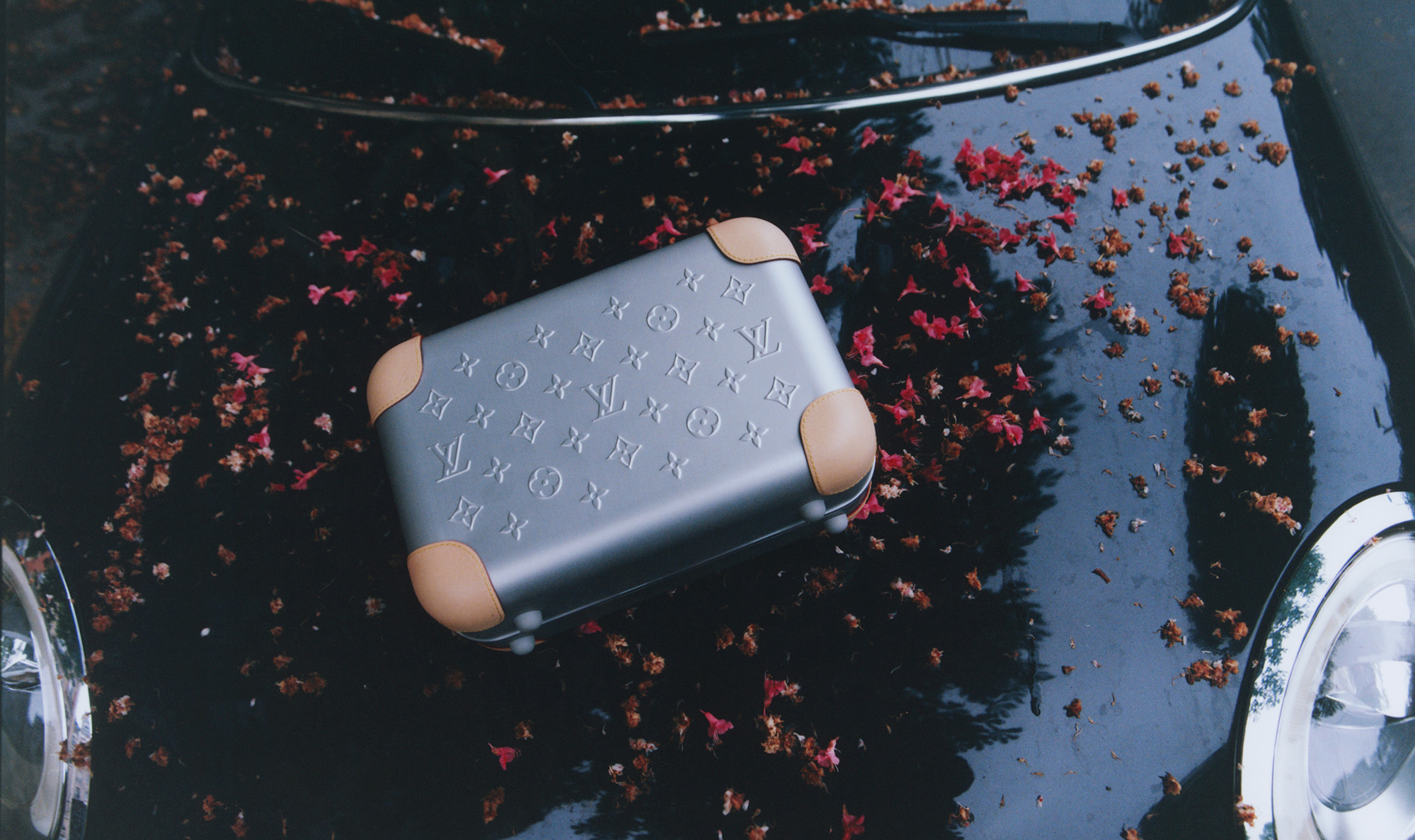
The Louis Vuitton Horizon Aluminum vanity case. Photo: Clémentine Passet
After returning to the family business in 2004, do you remember your first day on the job?
My first day at the maison was in the Ducey workshop, in the west of France, near Mont-St.-Michel. My father said to me, “If you want to come to Louis Vuitton, come. But it’s better to start in the workshop. Your mission in the first month is to learn how to make a piece of luggage and how to make a bag.” It takes a long time to learn, because each item takes a long time to make. I spent one or two months on the machines, with artisans, to understand how a piece of luggage is crafted. I was proud to make one in maybe two or three weeks.
It’s important for me to know the process. I still remember all the smells and sounds from that first time I entered the workshop. It’s quite a nice memory for me. The smell of leather and the other materials. And all the noise. In Asnières, there is a specific noise made by hammers on nails. It’s a sort of music and feels very familiar to me.
Can you walk us through the steps it takes to make a piece of Louis Vuitton luggage?
There are six major steps, and with these steps you can make anything. First there is the carpentry, to construct the basic wooden structure. Then the ribbing, where that skeleton is reinforced with cotton canvas. I love the next step, the loziner, where you put corners on the luggage with nails. It’s quite impressive, and I enjoy using the hammer and hearing the noise of this operation.
Then the exterior is clad with all its metal components, like locks, corners, buckles, and handles, and the interior is detailed with fabric or leather. And finally there is the malletage, the crisscrossing of ribbons on the inside.
I think the most complicated operation is to design the luggage and to make its interior, because you need to adapt the interior to the needs of the clients. The interior has to be the perfect size for the object.
The Louis Vuitton Horizon 55 Aluminum suitcase. Photo: Clémentine Passet
How does the trunk and its heritage influence the house today?
Every creation of Louis Vuitton is always inspired by the trunks. For example, Nicolas Ghesquière, Louis Vuitton’s artistic director of women’s collections, took inspiration from it by reimagining a smaller version for the Monogram’s anniversary. Or we use different details from the trunk’s design, like the riveting or the lock. It inspires a lot of our creations.
This year, we’re excited to mark the 130th anniversary of the Monogram with a yearlong celebration honoring our iconic Monogram bags as true heritage masterpieces and new special-edition collections. Whenever there’s an anniversary, we love to celebrate it. For instance, when we marked the 100th anniversary of the Monogram, it inspired extraordinary creations from designers like Azzedine Alaïa and Manolo Blahnik, who contributed remarkable pieces that paid tribute to its legacy.
The use of aluminum in luggage was a verynew invention when the house introduced it in 1891. How did that come to be, and why then?
Imagine at the end of the 19th century, Louis Vuitton was making canvas trunks, and there was a demand from explorers and different adventurers for more durable luggage. He imagined one that could cross the world while protecting the items inside. They made it in copper, zinc, and aluminum. Zinc and copper were more resistant, but aluminum was lighter and helped protect from extreme conditions like heat and shock. The objective was to be very light.
Clients often tell me that the Vuitton trunk is very hard, very resistant. “It must be made out of oak,” they say. But we can’t use oak. We use poplar, because it’s light and at the same time resistant. Each time we design a piece of luggage, whether a trunk or a rolling suitcase, it’s very important to us that it’s both. Over 100 years later, we’re using aluminum to make modern rolling luggage: the new Horizon Aluminum.
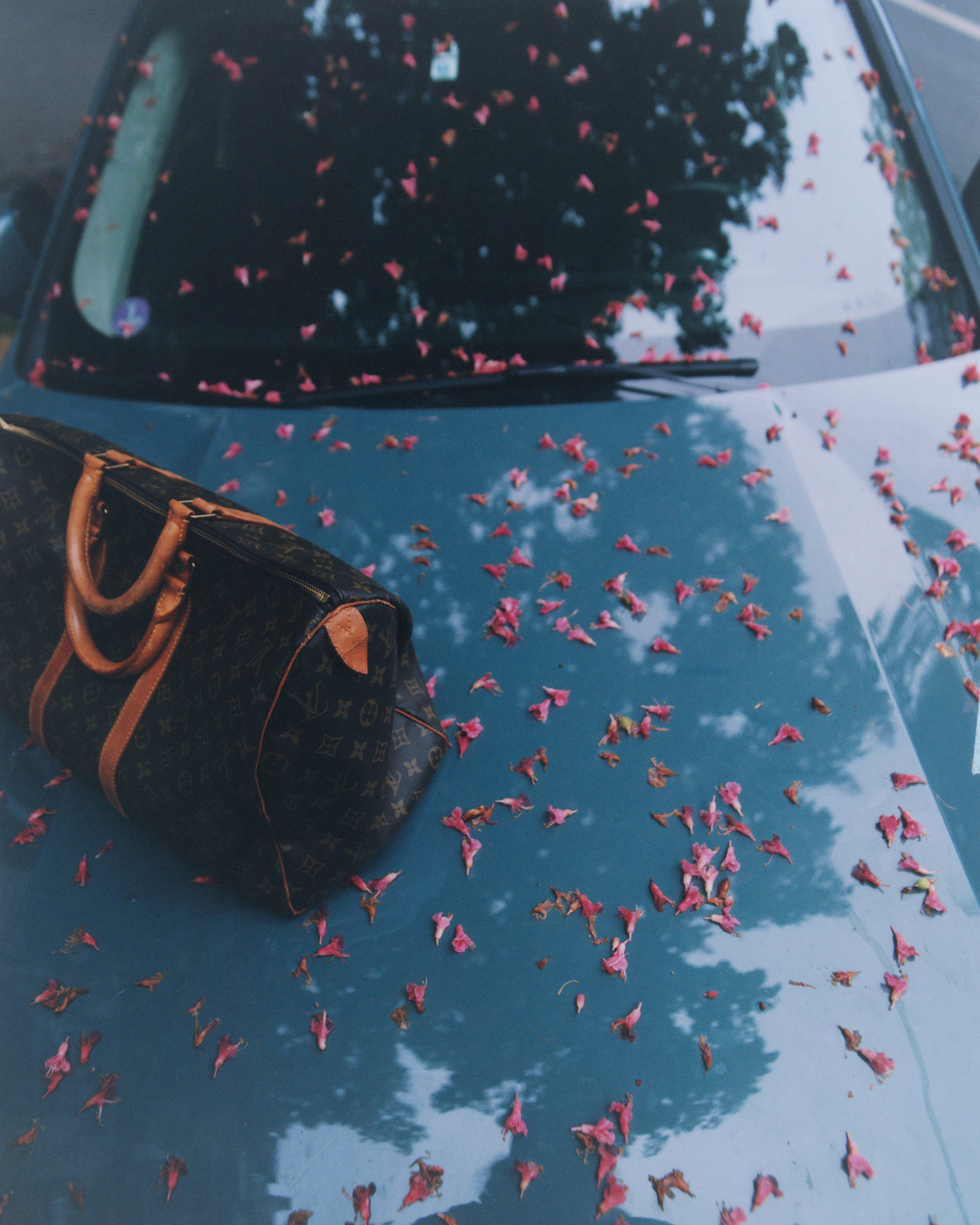
The Louis Vuitton Keepall 45. Photo: Clémentine Passet
His wish to create such an enduringobject is quite romantic.
When you see an old trunk with hotel stamps you can imagine all the travel it’s done. It’s nice to picture that maybe 100 years earlier, a client purchased the case and traveled the world carrying it. It’s a very personal object. I enjoy the stories a trunk can tell.
What inspired Georges to design the Monogram in 1896?
While we don’t have an official record of the exact source of the Monogram, Georges was deeply interested in Gothic cathedral architecture, particularly rose windows and chests. When we look at historical chests, we find motifs that are similar, suggesting that this influence was strong. At the same time, I imagine that Georges was exposed to Japanese culture, as it was prevalent in France during the 1880s, and this could also help explain the enduring popularity of the Monogram line in Japan.
The design also looks like the tiles in the kitchen in Asnières, where I grew up. I can easily imagine Georges, before heading to his workshop and store, drinking his morning coffee while sitting in front of those tiles with that motif. Perhaps, in that quiet moment, the inspiration for the Monogram took shape.
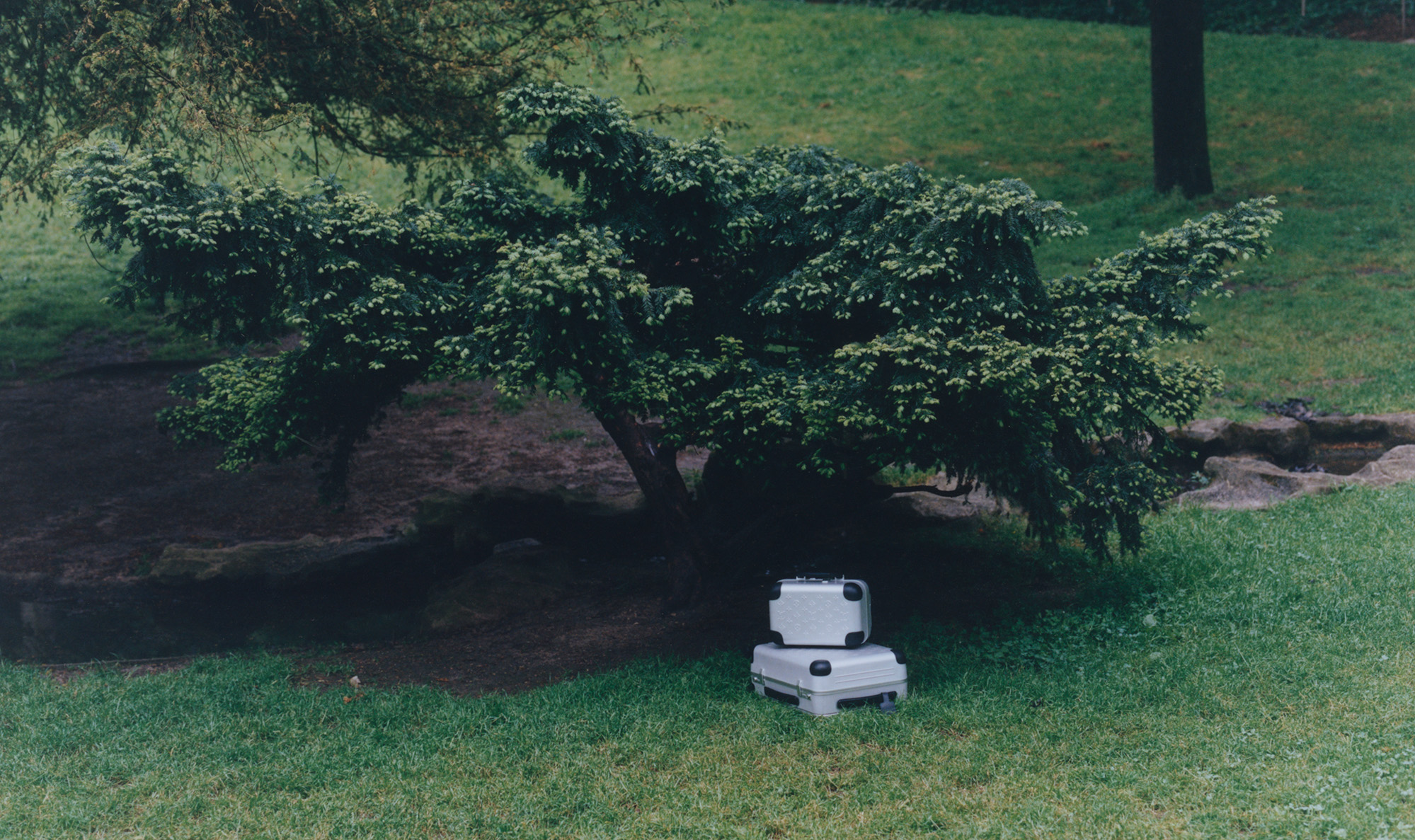
The Louis Vuitton Horizon 55 Aluminum suitcase and matching vanity case. Photo: Clémentine Passet
We’re coming up on the 10th anniversary ofthe Horizon collection. What makes it theright travel companion today?
Ever since Louis Vuitton’s early days as a packer and trunk maker, the maison has designed luggage that adapts to the travel of the times. His trunks revolutionized travel because for the first time, they were made to be stackable to save space. We’ve perfected this piece of luggage and other travel pieces over the course of our history, and then in 2016, we introduced the Horizon suitcase for the era of modern air travel. This is the perfect object to carry. We made it as lightweight as possible and spacious on the inside, and adapted its size for air travel. There’s a lot of technology inside. We developed a special one-piece shell without riveting and a special hinge you can’t see from the outside, and we’ve stamped the Monogram on the shell.
When it comes to the art of packing, is thissomething you’re very good at when youtravel? Are you a good packer, or do youthrow everything in the suitcase like I do?
I try to do my best. I enjoy packing my luggage. For example, I like using an Alzer, the traditional Louis Vuitton trunk, because you can always organize your belongings as you want. I like to have different luggage for different travels. For two or three days, I like to take my Horizon, and if I need to take a car, I use an Alzer. My favorite is the Keepall.