The trailblazing chef has been a creative force in food for decades. As she launches a new venture with Belmond, we stepped inside her renowned San Francisco kitchen.
October 21, 2026By
THE GRAND TOURIST
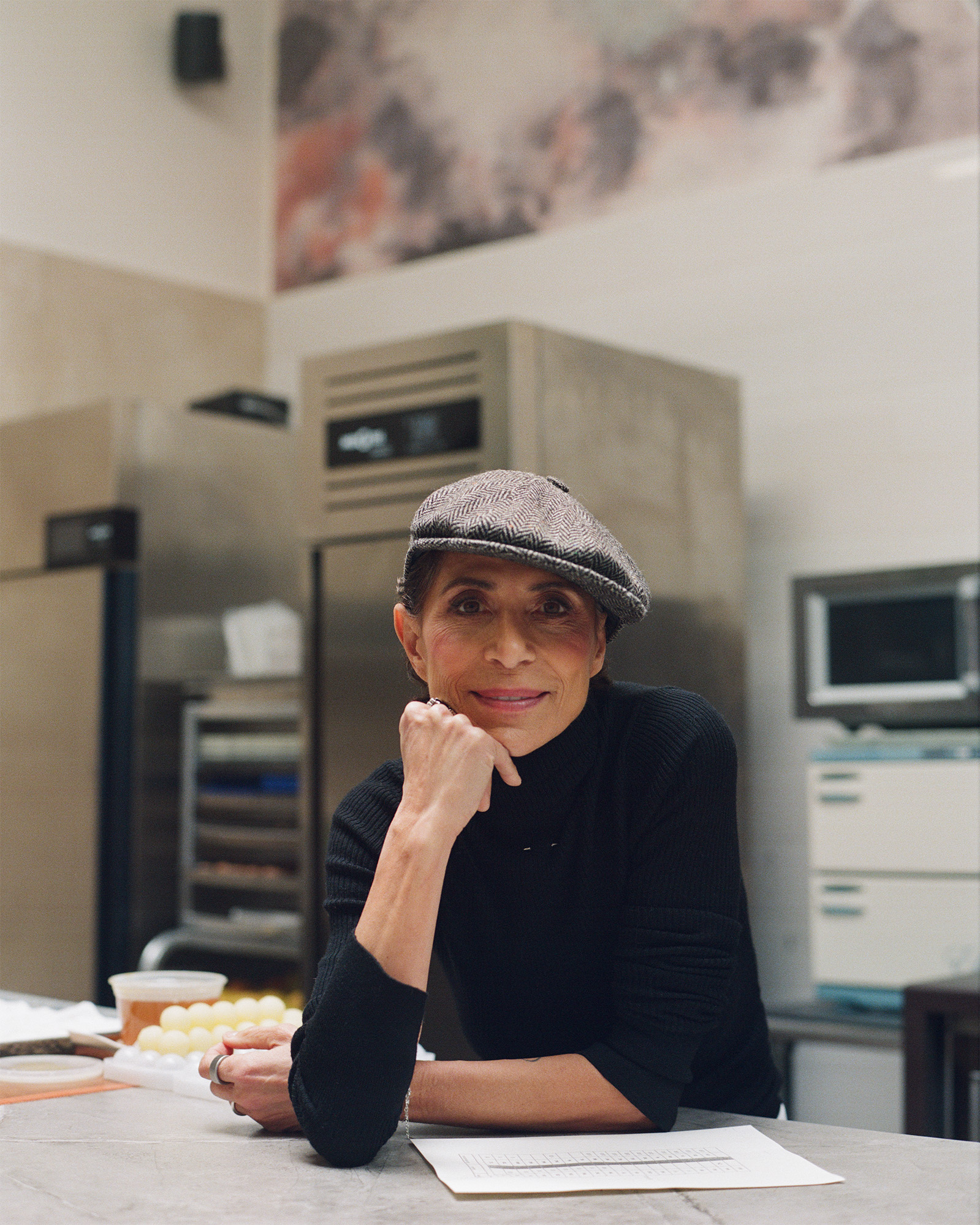
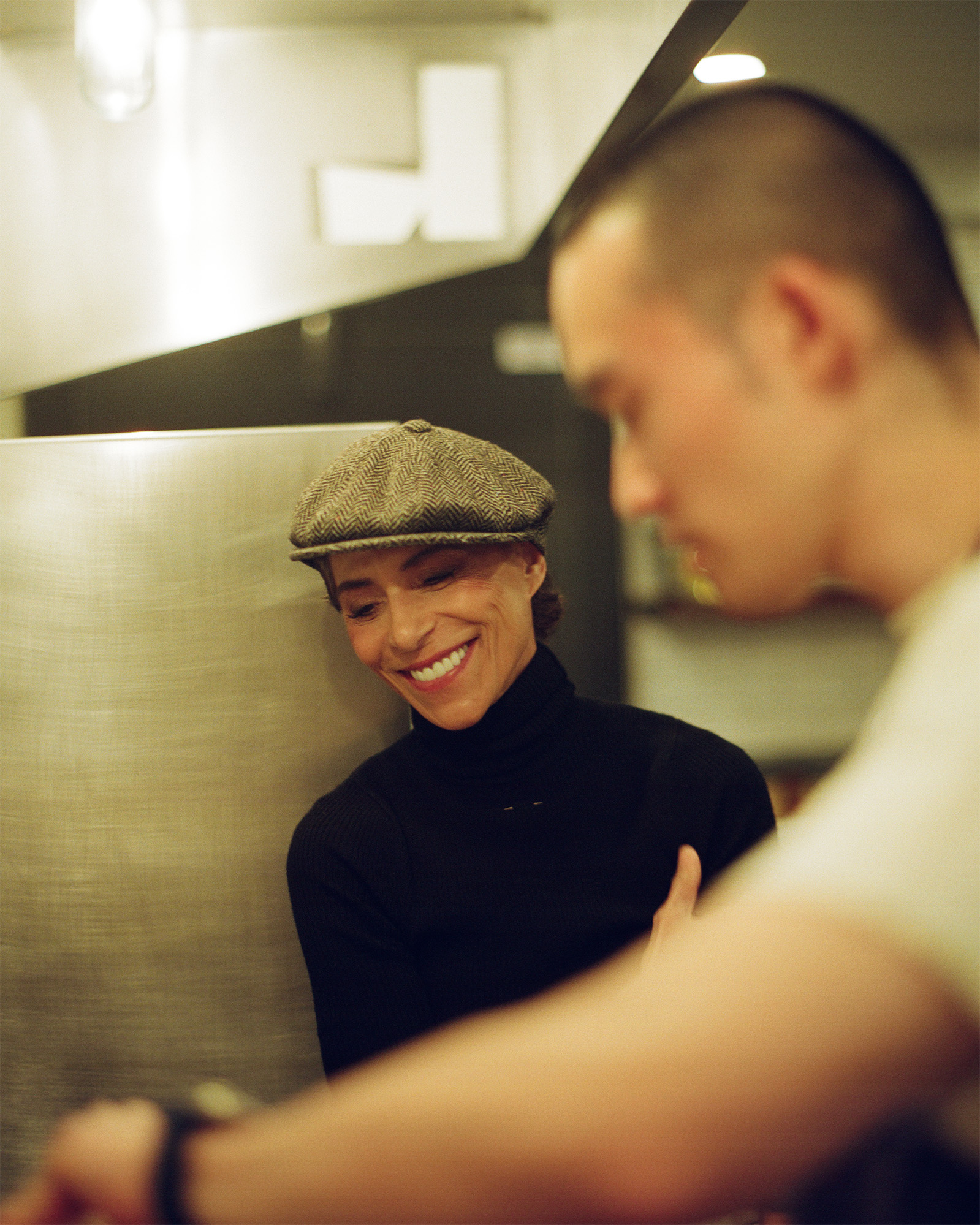
Crenn in the Atelier Crenn kitchen in San Francisco as it prepares for service. Photo: Balazs Gardi
SHOW NOTES
One of the most daring chefs of today, Dominique Crenn is a force in the world of food who has pushed the boundaries of innovative cuisine and challenged the industry’s conventions. On this episode, Chef Crenn tells Dan about her upbringing in France, what she learned from chef Jeremiah Tower, breaking the glass ceiling in food, what she looks for in ambitious young chefs, her latest culinary adventure with Les Bateaux Belmond, and much more.
Few chefs have reshaped the landscape of fine dining as profoundly as Dominique Crenn. Over the past two decades, the French-born chef has built a career defined not by convention, but by conviction—transforming food into a deeply personal language of memory, identity, and storytelling. From her childhood among the farms and fishing villages of Brittany to becoming the first woman in the United States to earn three Michelin stars, Crenn has consistently challenged expectations while remaining fiercely committed to her vision.
Today, the chef stands at a remarkable moment in her career. Having emerged from some of life’s greatest challenges, which we speak about, Crenn, 61, speaks with clarity and a kind of ambition you’d expect from a sky’s-the-limit immigrant mindset. At Atelier Crenn in San Francisco, the celebrated flagship she opened in 2011, the menu remains a poetic expression of place and experience, rooted in sustainability, community, and a profound respect for the people who grow, harvest, and prepare food.
Crenn’s latest chapter takes her beyond the dining room and onto the waterways of France through a partnership with Belmond. Beginning with the luxurious river vessels Coquelicot and Lilas, and continuing with the newly launched Marguerite, Crenn is helping redefine what culinary travel can be, creating market-driven menus inspired by the regions through which the boats pass. For a chef whose philosophy has always centered on the relationship between food and place, it may be her most natural evolution yet.
I read that you were raised near Versailles. Iwas wondering what some of your earliestmemories are.
The first four years of my life we lived in Garches, which is right outside of Versailles, about 15 minutes from Paris. We lived in this incredible big house, it almost looked like a castle. I remember my father painted the house. And I remember the park.
I also read that your dad introduced you to good food and French cuisine quite seriously early on. Is that right?
I grew up in a family of farmers and my grandmother and mother were cooking, and my father’s best friend was a very famous food critic for Le Télégramme in Brittany. Because of my dad’s love for food and good cooking, we used to go to good restaurants with his friend, which introduced me to the joie de vivre and how to enjoy good food at a very young age. And, every Sunday, my mom always had a lot of people at the house, so I cooked with her for hours from the day before to Sunday. So yes, it’s a part of it.
And I think in France, you grow up with the understanding that food is culture and in Brittany, food really was culture; it’s a story of generations, taught to my grandmother, to my mother, and to myself. So, it’s always been a part of my DNA.
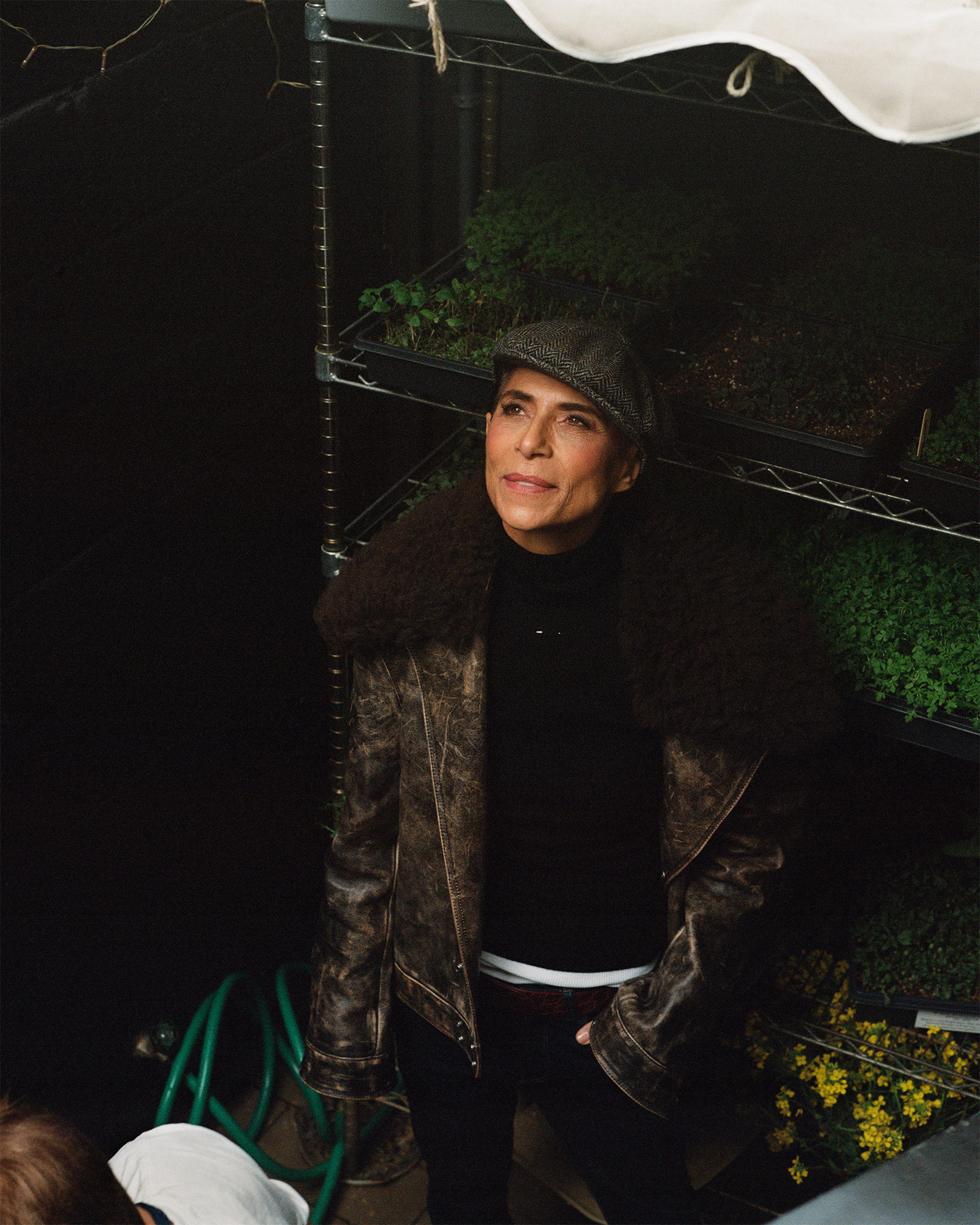
Crenn in the restaurant’s courtyard, where the team tends to microgreens and flowers from Bleu Belle Farm. Photo: Balazs Gardi
Did Brittany’s culture of food make an impact on you, in terms of ingredients?
What made the biggest impact on me was definitely working on the farm during the summertimes and understanding the work of the farmers—my grandmother had a potato farm and raised chickens, and we had beautiful vegetables. And being by the sea, going at 3 o’clock in the morning with my father to the fish market in Douarnenez and buying some fresh langoustines, oysters, sea urchins, and clams to bring back to the house for my mother to cook. That understanding of how humans commune with nature and how we feed ourselves was something I grew up with.
We’ve forgotten to commune back with nature and we take so much from nature to feed ourselves. We have to learn to give back. That’s why about 15 years ago, I bought a farm with my ex-partner. We have two kids together and she financed the farm to grow our own vegetables and to understand that not only are we the stewards of today, but also for the next generation. That made a big impact on me, as well as trying to understand what we are taking from the ocean, from the earth. How can we manage and feed ourselves without killing this earth?
I read that you studied things like economics and business before turning to food.
Actually, I wanted to become a photographer or get into the École Nationale Supérieure Louis-Lumière school in Paris, but my credential was a bachelor’s in economics and it was not good enough for them. You needed to have a mathematical credential to be a photographer!
I’m an entrepreneur, so I love business, but I’m artistic, too. The cooking came later on, when I came to San Francisco. I just fell in love with it and I started to research the city and what I could do here. I was like, “Well, maybe I should be a cook because I’m French”—and I love cooking too. And that’s how I started under chef Jeremiah Tower.
What year did you come to San Francisco?
I came here in late 1989, right before the earthquake happened.
What was San Francisco like in the 90s?
Oh, amazing. It was love and peace. It was definitely community-driven, a lot of artists were in San Francisco. I didn’t speak English so I was very lucky to make friends right away. I got into the French community a little bit. There were a lot of French restaurants in the city, so there was a large community.
I got into the art community from music, and then DJ, cinema, painting, photography, writing. It was just incredible, from North Beach, which at the time was like an Italian Chinatown, to the Castro, which was very gay. There were a lot of political things happening here, but a lot of freedom in the way of thinking and doing things. People would just welcome you into a community with open arms. It allowed me to become who I wanted to become.
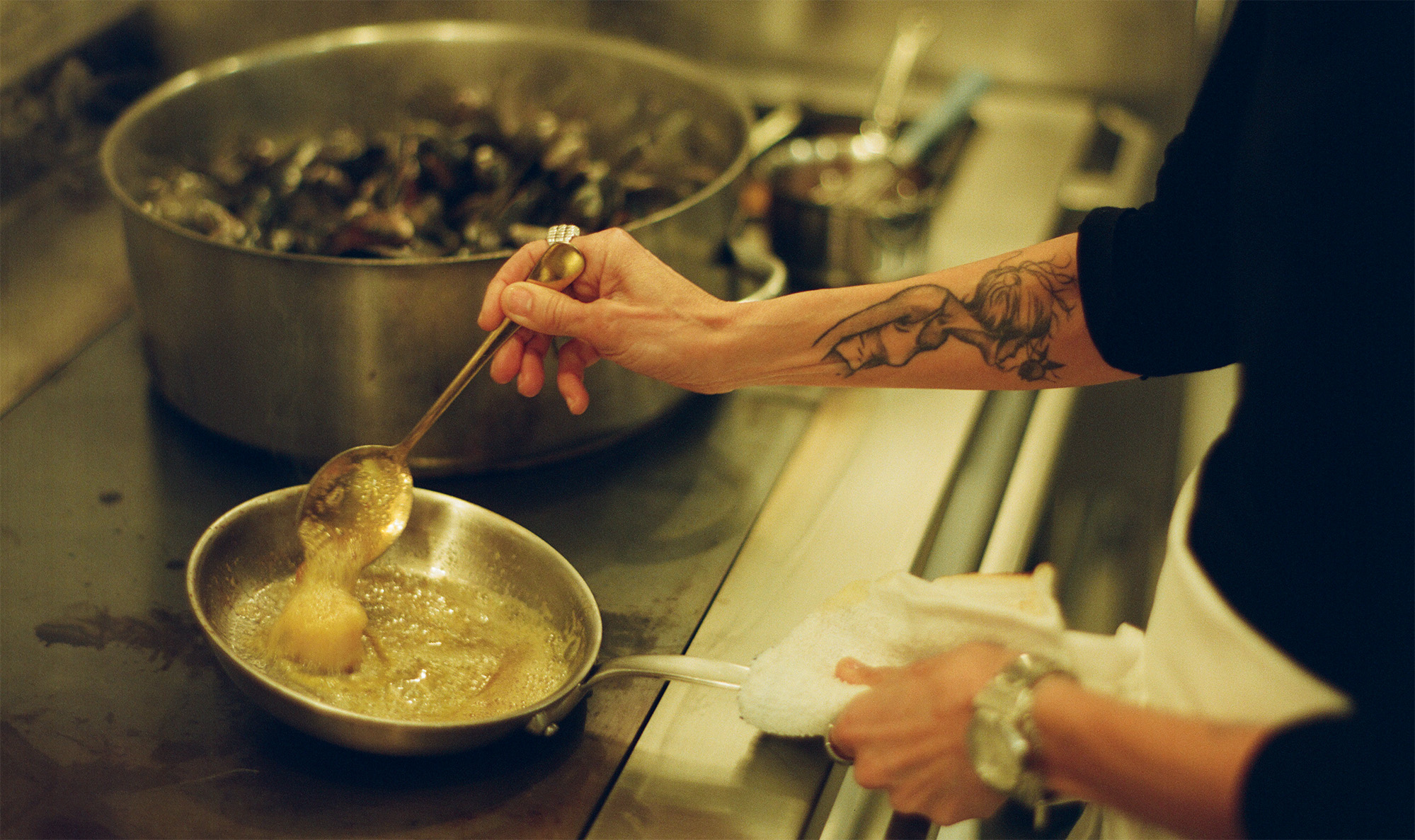
The chef prepares scallops. Photo: Balazs Gardi
What was that first job like with the legendary restaurateur Jeremiah Tower?
It was pretty amazing. I went there without a meeting because I knew his story—he worked at Chez Panisse with Alice Waters and is also someone who never went to cooking school. He studied architecture and became obsessed with restaurants and fine dining because he came from a very well-off family who used to travel all over the world. His parents would leave him in the hotel room while they were going out and having fun and he would order room service in those luxury hotels and he became obsessed with it.
I thought, if he didn’t go to cooking school and he’s doing what he’s doing, maybe I should work under him and he could guide me. I worked with Jeremiah for about three years. We’re still very good friends. I am who I am today because of him.
What did you learn from him?
The first thing I learned was that he didn’t take us as numbers. He took us as people that had identities and he wanted to know who we were, as humans. The rules of the restaurant enabled our creativity and responsibility. He introduced us to a different way of thinking about cooking; cooking is not about following the rules of a book, it’s about, “Okay, we’re in San Francisco, there are a thousand farmers around us. What season is it? What are they growing? Can we work with them?” He taught me that if someone brings you a beautiful case of tomatoes in the summer, you have to learn about where they come from, who grew those tomatoes and what they taste like.
For me, it goes back to my grandmother’s farm where I knew exactly what she was growing and selling, and the work that went into that and the sweat of the farmers. It allowed me to respect the product and to make the product shine on the plate, hopefully for the guests to enjoy and understand.
A big part of your career trajectory in the late90s up until the early 2000s was movingaround and international jobs, as far as East Asia. What was that period of your life like, looking back?
It was a decision to put my ego down. I remember the words of my father, who told me at a young age that you have to travel and learn about other cultures in order to become a better human. I’d never been to Asia before—going there was a totally different world. To learn something else, develop myself, and to become a better human was one of the most incredible experiences in my life.
In Indonesia, my job was to build a kitchen at the InterContinental hotel in Jakarta with just female staff and cooks, which had never been done before. That was in 1996, 97. To this day, I get emails from the young cooks I worked with who have also built their own empires. It’s pretty amazing. One of the cooks, she now has like five restaurants and serves Italian food in Jakarta. Unfortunately, I couldn’t stay in Indonesia because in 1998, the violent riots and regime change happened. For my safety, I had to return to America, and then I studied in Los Angeles.
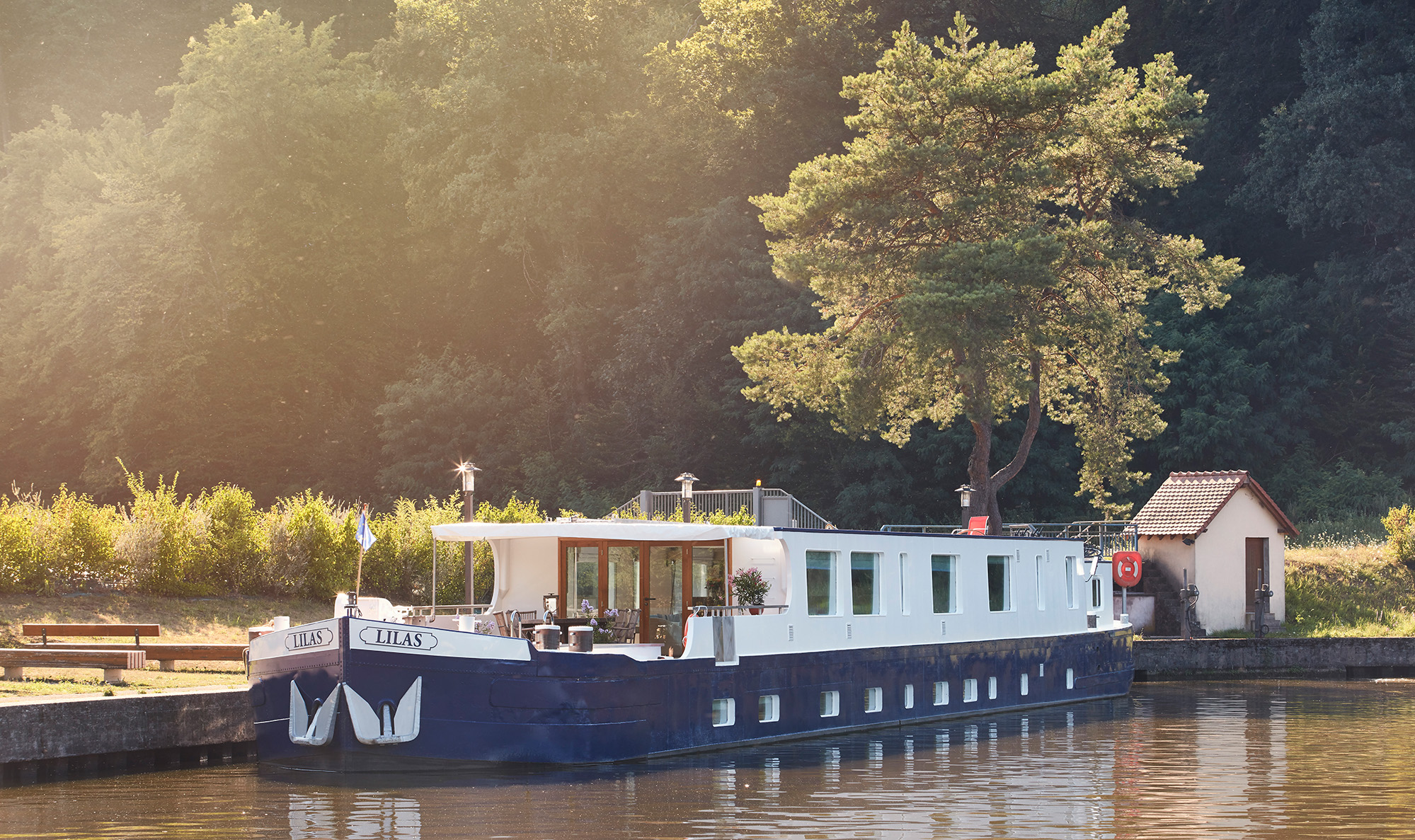
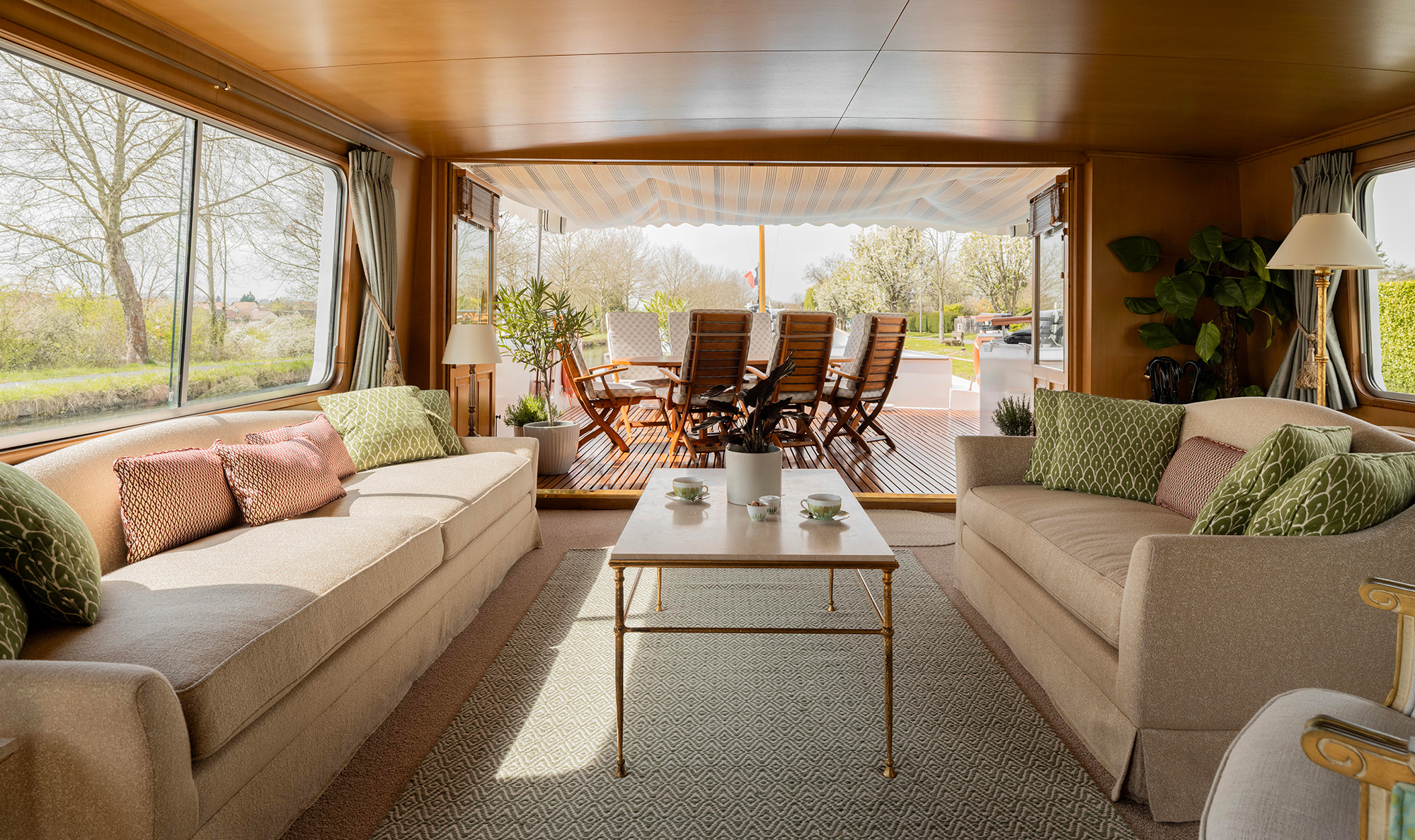
Lilas, one of the seven riverboats that make up the fleet Les Bateaux Belmond. Photo: courtesy Belmond
And in 2008, you came back to San Francisco to lead a restaurant at the InterContinental, Luce. Can you tell me about it?
Luce was a partnership with Robert Mondavi Winery. It was farm to table, and an opportunity for me, even while working in a corporate setting, not to do corporate things. I made a deal with the owner of the hotel that I wouldn’t work with big companies that come in with their big trucks and sell you everything—I needed to be a part of the community. I started to develop a program to work with small farmers’ markets here in San Francisco, which was incredible. It’s kind of nice because we got a Michelin star for the first time, so it was sweet.
When you returned in the mid aughts, thecity must’ve changed tremendously since you left.
It was the dot-com boom, it was crazy. There were a lot of new buildings. I understood that I needed to adapt to a different way of looking at things. It was no longer love and peace, and let’s go rave and do the things we want to do. As a professional I had to adapt to what was going on in San Francisco, the dot-com, and the clientele, which was totally different than before. It was kind of cool to learn about the corporate world, but it also helped me decide that I needed to be on my own.
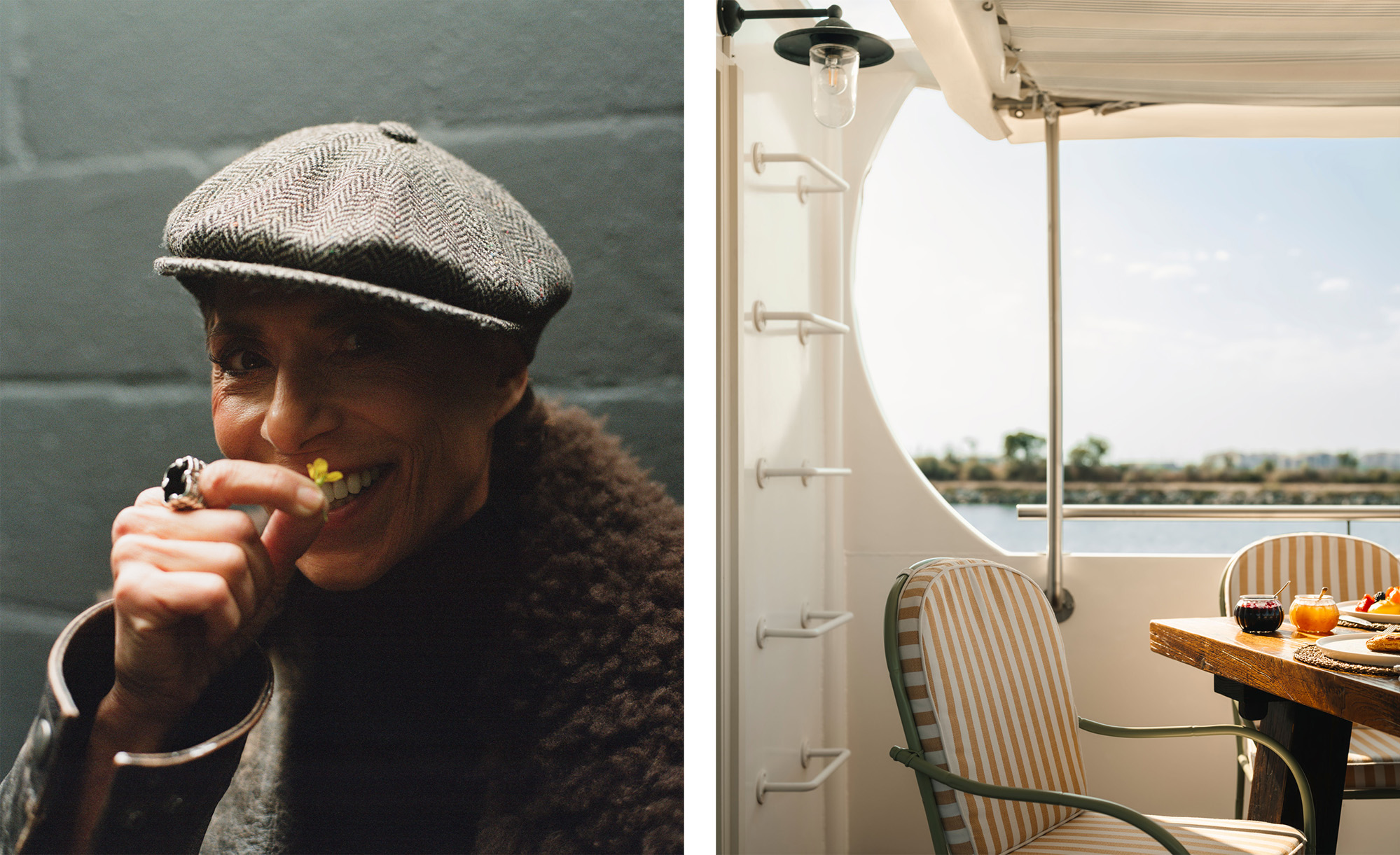
From left: Photo: Balazs Gardi; Crenn designed the menus for Les Bateaux using seasonal ingredients, sourced from farmers’ markets along the route. Photo: courtesy Belmond
And that’s when, in 2011, you started Atelier Crenn, right?
I had an accident in 2009 where I almost lost my life. And I had been working a hundred hours a week, nonstop, since opening the hotel in 2008. I realized what I was doing, giving myself to a company that maybe didn’t appreciate the work that my team and I were doing. That accident woke me up, too.
This is when I decided I wanted to create a space where people felt seen as workers, where there’s no tolerance for abuse or discrimination, and to do something that’s purpose-driven and hopefully makes an impact in the community. And that’s how Atelier Crenn was born.
What was your ambition for the menu when you started?
My ambition was “less is more” and to create a, not à la carte, but a clear vision that the menu can change with the season and the story. I wanted this to be storytelling. From the starter to the dessert it’s almost like writing a poem, which I did actually, there was no menu. It was like a poem.
Belmond’s riverboats explore France via its waterways. Photo: courtesy Belmond.
How did the first few years of Atelier Crenn go?
Well, it was an amazing experience. The food critics in San Francisco were like, “What is she going to do, is she going to put the Golden Gate Bridge on the plate?” It was also an interesting way to understand the person that I was and the person that I wanted to become, and not to listen to what people wanted us to be. How to keep your vision alive without losing yourself in what other people want.
The vision that I had when I opened Atelier is still here today. Obviously, there’s a lot of evolution and adaptation with the market and all that, but I’ve never given in to what people wanted. I was giving the vision what it wanted with the hope that one day someone would listen to it and love it. I didn’t want to cook like other people; I didn’t want to open a restaurant just to open a restaurant. I wanted to tell a story and food was the vehicle, using it as a language. It was important to me to tell the story of my dad, of my mom, of where I grew up, about the farmers. After my mom passed away, that was the story of a life and who I am today. The story of what I feel after my cancer, who I became as a person. The story of my kids, of my team, of my travel.
We’ve had the farm for 15 years. And we try to work with the community and teach people that work with us, every member of Atelier Crenn, why they’re cooking this, why they’re doing this. It’s a continuous cycle of us learning about who we are while also teaching the next generation. That’s what makes me happy.
If you had to compare Atelier Crenn in 2012 versus 2026, what has changed?
I was my young self and still learning and burning myself in a way that allowed me to reflect. Today, I continue to work with the lessons that I learned and I’m sure that I will still make a lot of mistakes, but I’m wiser.
You mentioned your battle with cancer ended around 2020, and then came the pandemicand shutdowns. That must’ve been a toughtime to climb out from. When the pandemic lifted, did you feel like it was time to rethinkthings, or were you trying to recreate whatyou had before? How did you treat the end of the pandemic?
It was very clear in my mind that the period of my cancer made me a different person. I needed that person to go away. Because of the cancer, you have all those layers that you’re peeling.
And with the pandemic—I don’t have money from an investor. The business was working because we were opening the doors every day. That’s it. But if you close the door, then where’s the money coming from? We had to let go of people who were dependent on us, and those people have families.
So I came back to a space that needed to be peaceful, and realized that I needed to rebuild and redo the foundation. That foundation was to go back to a place of work where you could navigate it, a smaller team. I decided to put myself in a position where I work with the community around me, and it was not about money. It was about giving back to the community, learning about the people surrounding us, and building the business back from that.
I think the reason we are still open is because we’ve worked with the community around us. I think San Francisco appreciated that we worked with Glide, a center taking care of homeless people that have a hard time in life. For two years we cooked 500 meals a day, every day, for them.
We worked with UC San Francisco during the pandemic, with kids who didn’t have food on the table. So we tried to rebuild within the community without wanting something back. Somehow, when San Francisco reopened, I think that people rallied around restaurants that were very much involved in the community in the city. And we were one of them. So I feel very grateful actually, that this is where I am today and to have been able to rebuild an incredible team.
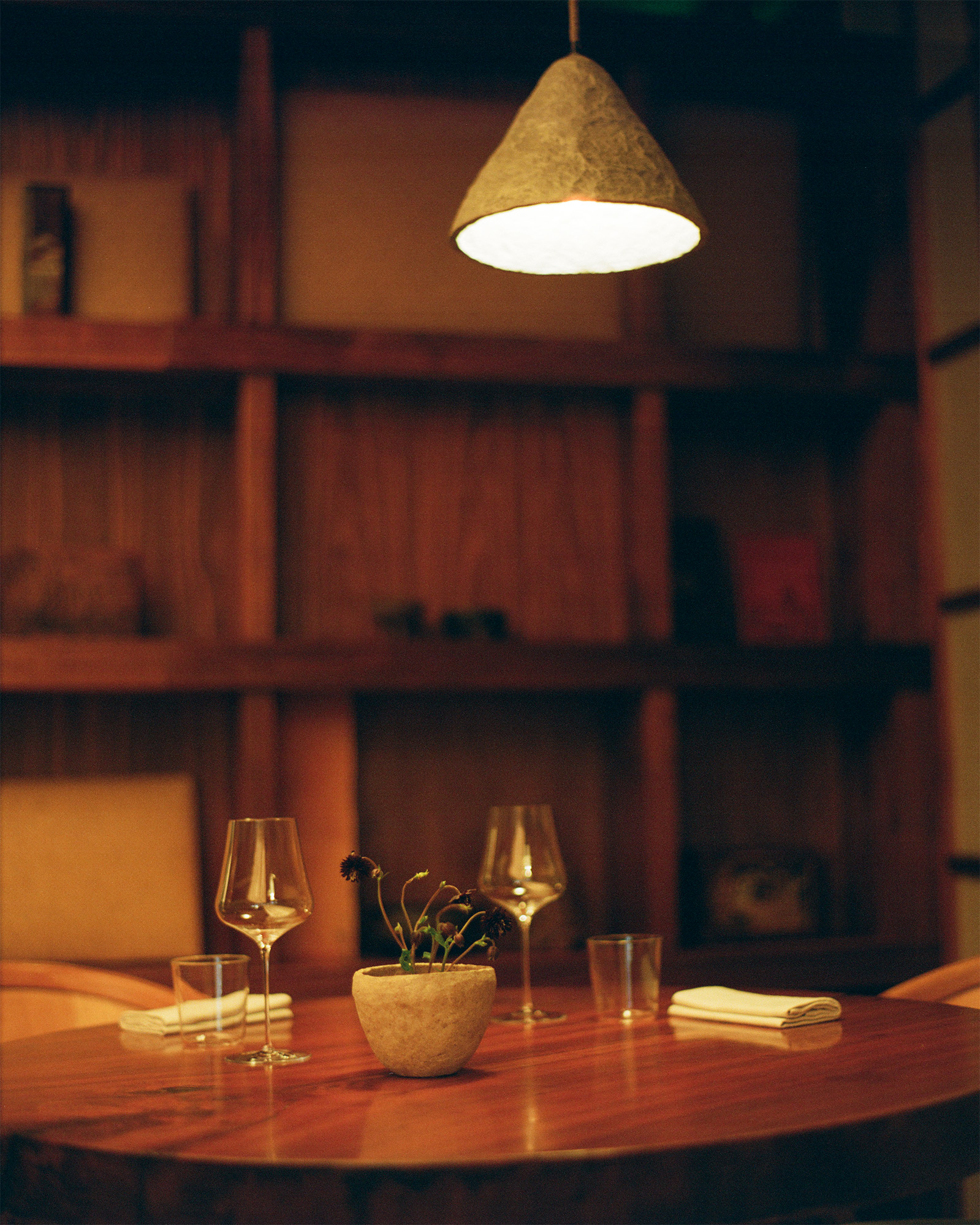
Atelier Crenn holds just nine tables. Photo: Balazs Gardi
Can you tell me what Bleu Belle Farm does today?
Bleu Belle Farm is named after my two daughters, Charlotte Alexandre Bleu and Olivia Bell Parker. It’s a regenerative farm. Everything is regenerative, organic, biodynamic. It took us a long time, but luckily I’m working with incredible farmers, Johnny and Emily, and they approach farming in the way that Indigenous people do, which is incredible. It grows produce for the restaurant, but you can also go there and learn about farming.
We bring the team from Atelier Crenn once a month for a gathering to understand what’s going on with the ecosystem and the land that changes every day, especially with the fire—it’s in Sonoma.
Actually, my kids lived on the farm during Covid. Every morning the farmer was taking them through the farm and teaching them about a leaf, maybe a strawberry, how to eat, and where things come from. Today that’s why they are so aware about nature and what they put in their body.
And your latest project is with Belmond, theMarguerite.
The Marguerite is amazing!
It’s a restaurant and hotel on a super-chic river barge, in a sense, but completely new and luxurious. What attracted you to this project and how did it come about?
The Belmond vision is pretty amazing. It’s luxurious, obviously. Beautiful boats—I stayed on a couple of them. But I love the vision of cooking fresh, seasonal food from the market and creating the story of the boat and where it’s located. It’s also very family-oriented. I also spent a lot of time with people who worked on the boat, the cook and the captain.
It’s not just farm to table—but like, river to table. I love it. This is genius. And I was very lucky that they asked me to be a part of it.
A cruise ship has to bring everything on board before it leaves. And then only in ports of call can it get new things on board. But a riverboat can be in a new city every day—
And go to the farmers’ market, because that’s what you have all over France. This is incredible, right? I went to the market with them in the Champagne area—I think it was the season for white asparagus. You go there in the morning and then you cook those vegetables that day for the guests. The experience that the guest has is incredible, because nothing is frozen. The kitchen is tiny and there is a little fridge—that’s what interests me too, the guests’ experience is as if they were coming to someone’s house to have dinner.
What’s it like training chefs for this today, because essentially you’re training them to be ready for the unknown; you don’t know what they’re going to find and source.
What’s been beautiful about this experience is that the people who work with the Belmond cruises, all those chefs are so excited to be able to cook like this. We were blown away by how excited they were.
I always say, I can give you a recipe but if the cook doesn’t care about the recipe, the food’s not going to be good. So they also bring something beautiful to the food. When we go out there and we train them, there’s this energy that flows between us and them. The result is quite lovely.
There’s excitement. Cooking is not an easy thing and you have to make sure that you also excite the cook following the recipe. And they can bring a touch to it. They can say, “Chef, I went to the market today and they had this herb that was just beautiful. Do you want to try it and instead of using tarragon, we can use this herb?” And I’m open to that. And that’s the beauty of it.
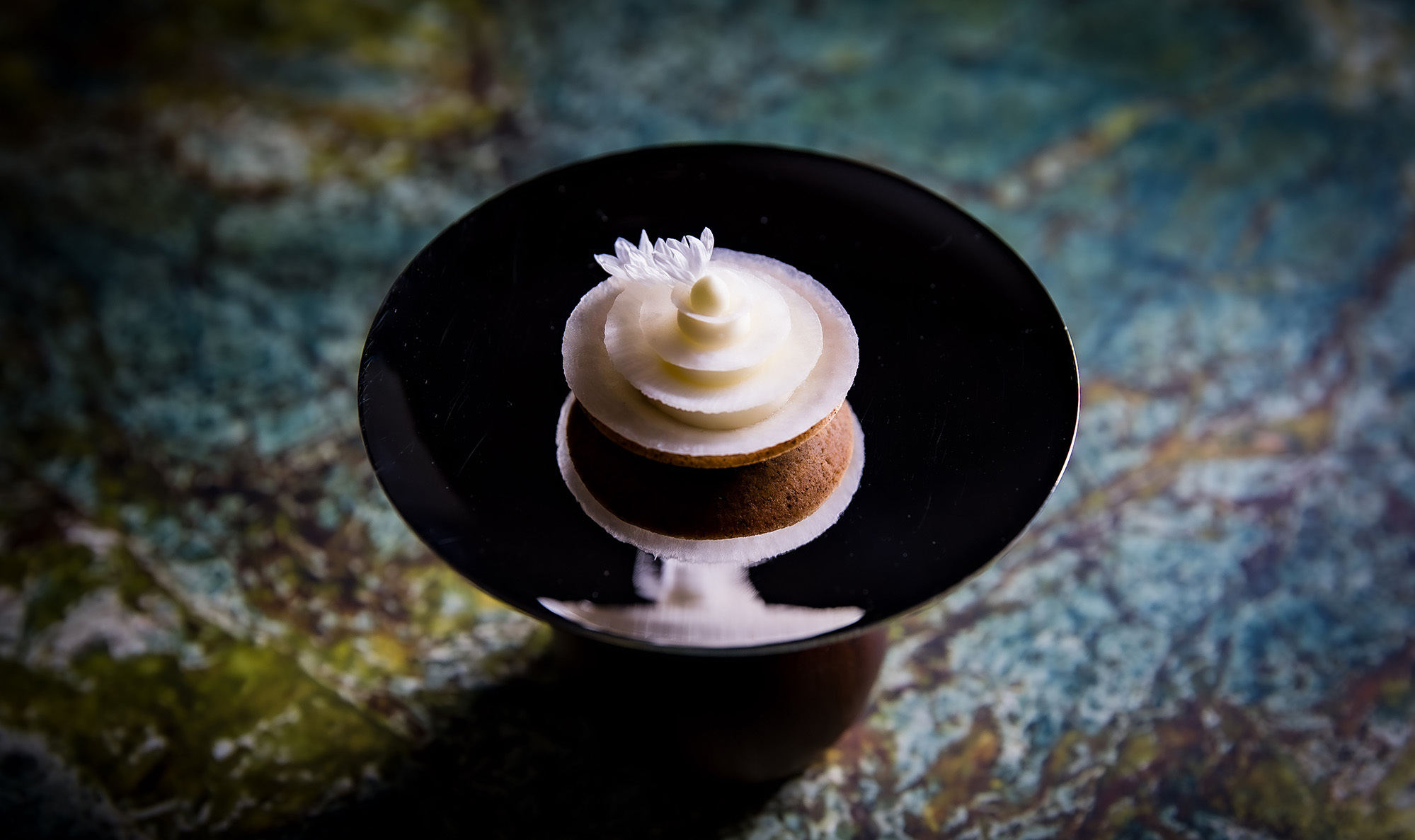
A turnip tart layered with brown butter, one of the dishes on the rotating 17-course menu at Atelier Crenn. Photo: John Troxell.
What are some other dishes you might find on the Marguerite?
I have the menu here and I can read it to you right now. This menu is a very Breton menu, actually. It’s everything I grew up with. Obviously, the artichoke, lobster from Brittany, my grandmother used to make ravioles, which is a tiny ravioli. It’s interesting because you think this is Italian, but it’s not. These tiny raviolis—dumplings, actually—are everywhere in the world, but in different ways. Obviously we’re going to use some cheese, but the mushroom season is amazing right now, so it’s going to be filled with mushrooms. So, you have artichoke for the lobster, mushroom for the ravioli, which is beautiful. And I’m using this incredible olive oil that is made with black olives. Amazing. One of a kind, that we find at the market. And then obviously there is chicken cooked with cider gastrique, which is also very Breton, with beautiful carrots. So carrot, artichoke, mushroom, and then when cherries come into season we’re going to do a dessert with the cherries. So it’s a little bit different, but it’s delicious.
I’ve interviewed a lot of chefs onthe podcast and some of them are fromFrance, came to the US, and also trainedabroad, but thatworld and culture here in the US is still defined by men.
And everywhere.
Do you think it’s still that way even today?
Well, I think Covid was traumatic for a lot of young women who wanted to become chefs. I don’t know what’s happening with those men, but if you look at the beginning of time, who was cooking in the kitchen? The grandmother, the mother. We have to keep coming together and talking about it.
It’s exhausting, actually, when I walk into a kitchen, and I don’t see any women in the kitchen, I’m just like, okay, whatever. But it’s changing. In San Francisco, you have a lot of female chefs here—I hate the word female—I know a lot of chefs that are women here. It’s changing.
I also think the media needs to give opportunities to these young women, because it’s not just about my industry and that men hire men. It’s also the media talking mostly about men. So it’s work we have to do together—media, school. I went to talk to the dean at one of the cooking schools in Napa Valley, and he was telling me that around 60% of the students were women. So it’s coming back, but it’s also that people have to hire and trust those young women who know how to kick ass and know how to treat people right. It’s been coming out for a long time, the way that people treated others. It’s very sad but I think it’s changing.
I think we are in a different time and we need to come together. It could be in the cooking industry, the writing industry, anywhere. We have to stop putting men and women in a different basket. I think we have skill and we have to learn from each other. Jeremiah Tower knew this. And then obviously you need to learn also about your weaknesses, to be able to balance yourself. When you have diversity in a place of work, you can create anything you want. When you start to narrow down what you need, and everybody needs to look the same and be the same, that’s not going to work. We all know that.
You must have a lot of young chefs coming to work for you, as you’ve done for most of your career. I’m curious, if someone came to you and said, “Oh, I trained at the CIA and then I went to the best restaurants in Paris, and now I’m coming to work for you, and I’m 20, 22 years old.” What is the first thing that you need to teach them, like the Chef Crenn way of doing things?
I don’t give a shit. I don’t care about the résumé. I don’t care about credentials. What I care about is how good of a person they are and what their vision is about the others they want to work with, who they are, and how they want to develop themselves. That is the best thing for me. If you come with some egotistical things about where you worked, I don’t care. That doesn’t tell me anything. A résumé doesn’t tell me anything.
It’s about the way they carry themselves and the way they speak about the world and others. I can know right away what kind of person they are. We are here to learn from each other, and if they are okay with that—because I want to learn from them also—and if we have that understanding, then they can come and work with us.
I remember there was this guy who came and he did exactly what you said: “Oh, I went to school and then I worked with all the 50 best chefs. And I did this, I did that.” And you look at his résumé, and it was like maybe one month, two months. “And they kick my ass and I want my ass to be kicked every day.” It was just weird, very toxic. And I’m like, I don’t want you in my kitchen. When I wanted to work with Jeremiah Tower, I knew that I didn’t know anything, but I knew that I was willing to learn and I was willing to put my head down and be taught and to use that knowledge to continue my career. That’s what I want from somebody who comes here. I mean, this guy literally came to an interview one time and he didn’t have any appointment and came dressed beautifully. And when I asked him, “I’m sorry, I don’t see your name in the appointments,” he said, “No Chef. I walked in because I wanted to talk to you.” And I remember he said, “Listen, I didn’t go to school. I’m homeless.”
Oh gosh.
“And I learned from my grandmother, and I’m homeless because I got into drugs years ago and I’m starting to clean up and don’t do drugs anymore, but I’m still homeless. And I would like to work with you if you’ll allow me to work.” And he worked with us for three years. It was beautiful. I asked him, “Tell me about something that made you smile with your grandmother.” And he told me about a pancake recipe that his grandmother would make, with the jam and preserves that she made a week before. And that was everything for me, the way that he told the story and the love. I’m going to cry because it was so beautiful.
Crenn in the Atelier Crenn kitchen. Photo: Balazs Gardi
Did he ever make those pancakes for you?
No, he didn’t, but the story was just beautiful.
How would you describe the American landscape in terms of “fine dining?” Where are we today in the year 2026?
First of all, sometimes it’s a little bit dangerous. We can access everything too easily. To learn about food and a culture is not just staying in your community and ordering from Uber Eats. Accessibility is great but I think I have always said to people, “You have to keep traveling, you can’t be a prisoner of apps and accessibility around you.” That’s too easy. Sometimes it’s difficult. The way you learn about the world is by traveling around the world. Where are you from?
I’m from New York.
You’re from New York. Okay. So you like to travel, right?
I love to travel. Of course.
And then, when you travel and you go to a place and you eat the food of the time and place, it teaches you so much, so many other things than if you go—I mean, there’s a lot of amazing food in New York and Brooklyn and there’s a lot of different community, which is incredible—but it’s also nice to travel and to learn outside of your comfort zone.
Do you think that the customer who walks in the door at Atelier Crenn is harder to please than an average diner, because they think they’ve seen everything and they’ve been to so many different types of places?
Obviously, they have a lot of expectations because getting into that level of cooking, people are going to have expectations. But I just want to make sure that I’m very clear. We are very clear with our vision. I want them to surrender to our story. They come here like they would open a book and read the story. So we are not trying to be other people. If they want to get to know us, they have to be open and surround themselves.
We’re not going to please everyone and that’s okay, but we want to be as authentic as we can to the vision that we have. When I go to those places, I have expectations. I try not to, but I also know when someone is playing with me.
What’s next for you, after theMarguerite?
I think there’s other things coming up with Belmond, which I’m very excited about. I’m writing a book about Brittany to bring the culture of the Celtic, the food, and the story to the forefront. It’s not about me. It’s about where my parents are from, the beauty, and what makes me who I am today. We have a couple of things happening. I’m also working on a movie, I’m going to be their culinary person and create the menu, which I’ve already done. And just keep continuing to learn and hopefully to continue the concept that we have built from Atelier Crenn, Bar Crenn, and Petit Crenn, to continue to develop them maybe all over the world. I would love to bring Petit Crenn—it celebrates my grandmother’s cooking and my French background—but to also bring it to a time and place where I can also work with different cultures. Not trying to create something that I don’t know how to do, but continuing the story through food.
And I’ll be happy to see my two girls turning 12 on May 1st, and see where they’re going to go with life, and I’ll hopefully be able to be the steward of the next generation and help them to become better and to learn from what we do here and to be happy. Like just to continue and to not be a prisoner of the craziness of technology and AI and all of this. I just want people to know that connection and eating together and cooking together are the most beautiful things. As humans, we can’t lose that.
What three words would you describe your life with?