The Grand Tourist Celebrates Its Third Issue With a Glamorous Party in New York
Designers and tastemakers gathered to toast our most ambitious issue yet at The Fifth Avenue Hotel.

I’ve just gotten off the Morgan Avenue L stop in Brooklyn. It’s 2:17 on a particularly sweltering afternoon in April, and I’m wondering if I shouldn’t have given up on the suit and tie and opted for something altogether more… douillet.
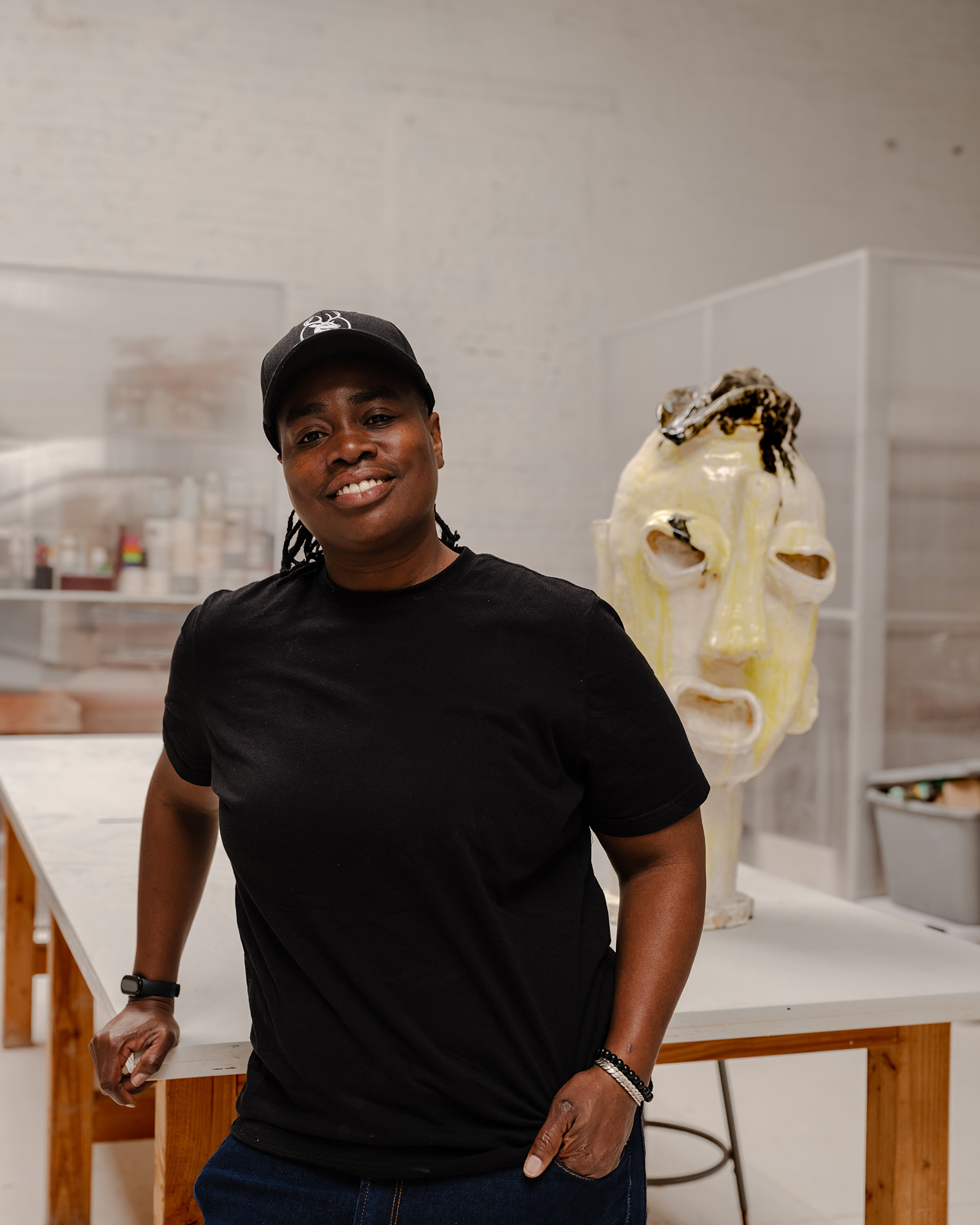
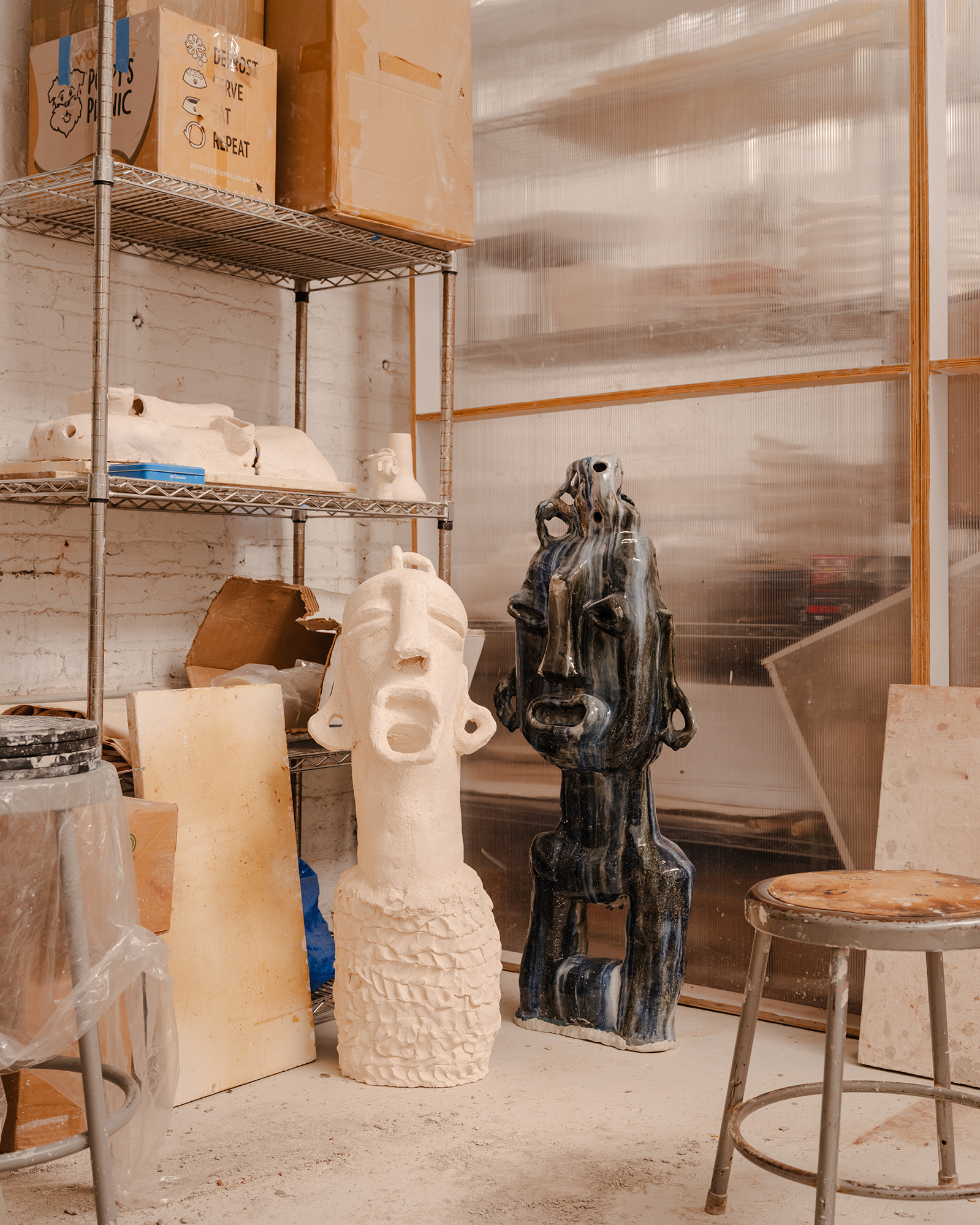
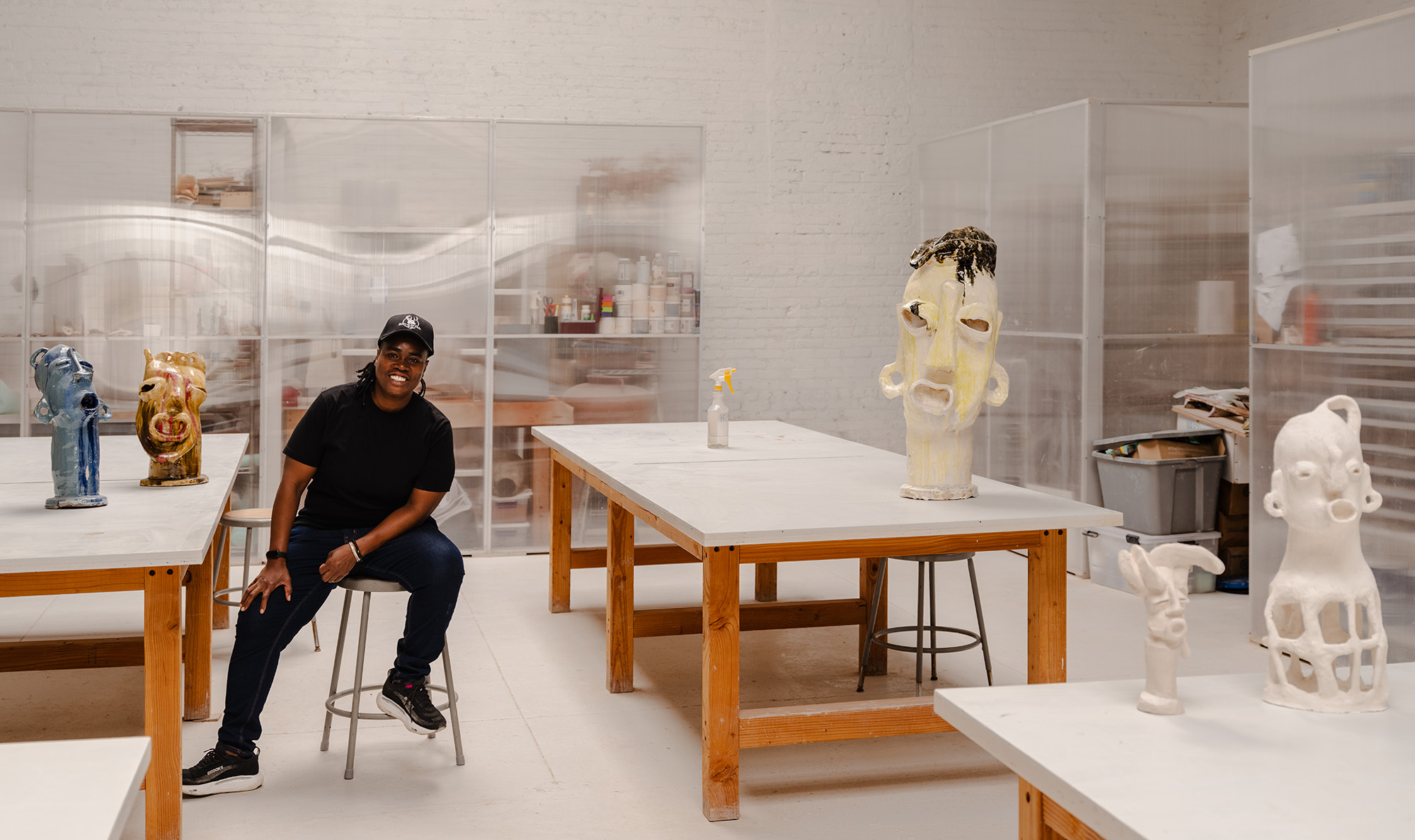
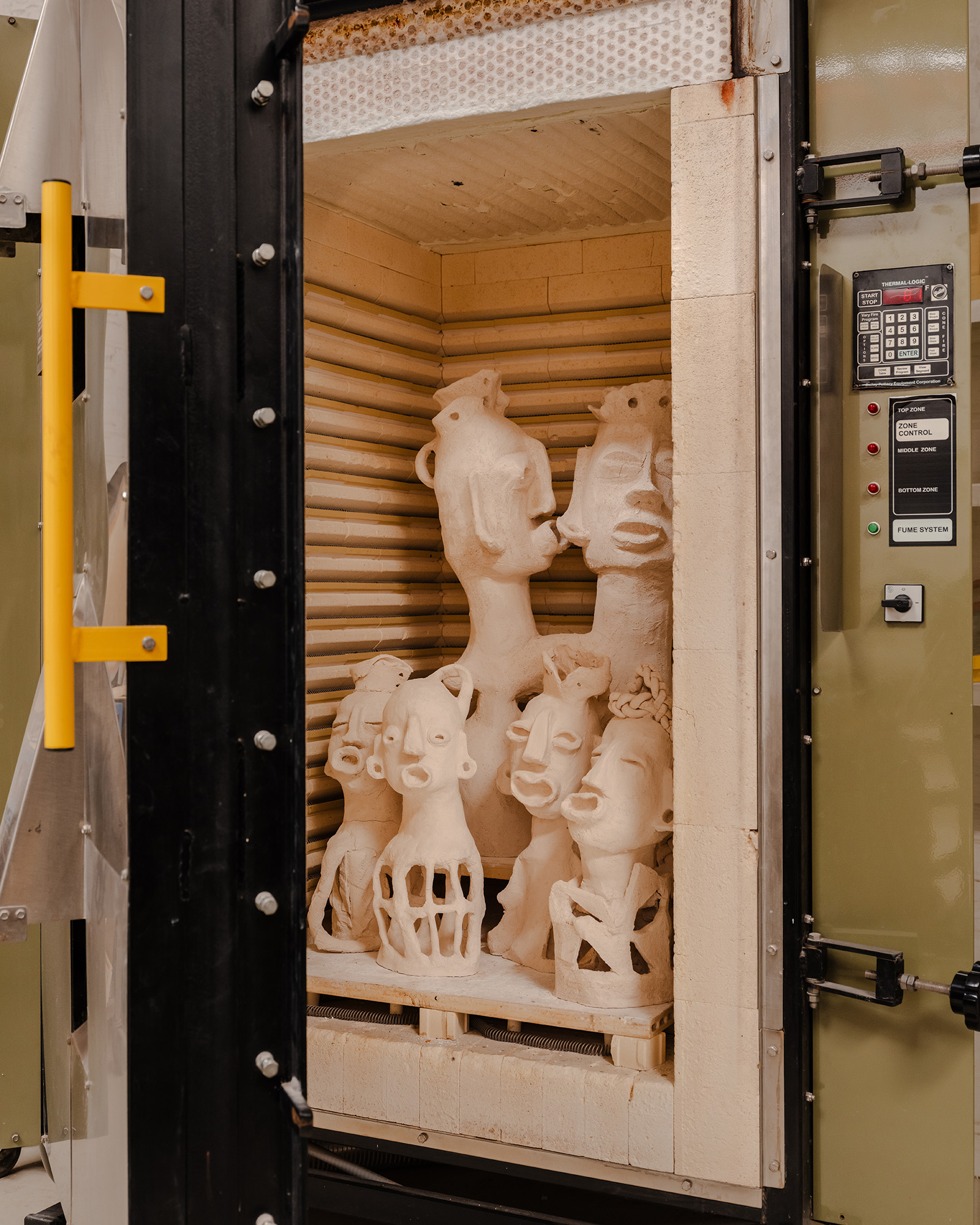
As I step inside artist Leilah Babirye’s studio, however, the city feels worlds away. Wood shavings collect on the floor like remnants of some ecstatic ritual. Chains, bicycle tires, nails, ceramic shards—raw matter destined for rebirth through Babirye’s unmistakable visual language. Her sculptures possess the spiritual gravity of sacred objects while remaining unmistakably contemporary: portraits of resilience forged from exile, memory, and defiant celebration.
Born in Kampala, Uganda, Babirye was forced to flee her home country after being publicly outed as gay. Since moving to New York City in 2015, she has emerged as one of the most compelling sculptural voices of her generation, creating richly textured works that honor Uganda’s queer community through references to clan systems, royal histories, and the broader visual traditions of African sculpture. Discarded materials are imbued with a regal presence in her hands, an intentional nod toward the language of rejection so often directed at LGBTQ people in the African Diaspora.
For those of us engaged with African art—I’m a specialist focused on classical works from West and Central Africa—Babirye’s work occupies a fascinating and necessary space. Her sculptures are not ethnographic or nostalgic gestures; rather, they participate in an evolving continuum of African artistic expression, one capable of carrying ancestral memory while confronting the urgencies of the present moment.
Represented by Galerie Max Hetzler and Gordon Robichaux Gallery, Babirye’s work has been the subject of several solo gallery presentations in New York, Berlin, and London, as well as exhibitions at the de Young Museum in San Francisco; the Yorkshire Sculpture Park in Wakefield, England; and the 2024 Venice Biennale. Her latest exhibition, “Leilah Babirye: Embaga ya Naki ne Naki (Wedding of Naki and Naki),” is on view at the Institute for Contemporary Art in Boston until January. I spoke with Babirye about materiality, queerness, exile, and the enduring power of sculpture to give voice where history has too often imposed silence.
For those who aren’t yet familiar with your practice, tell them a bit about yourself. Where are you from?
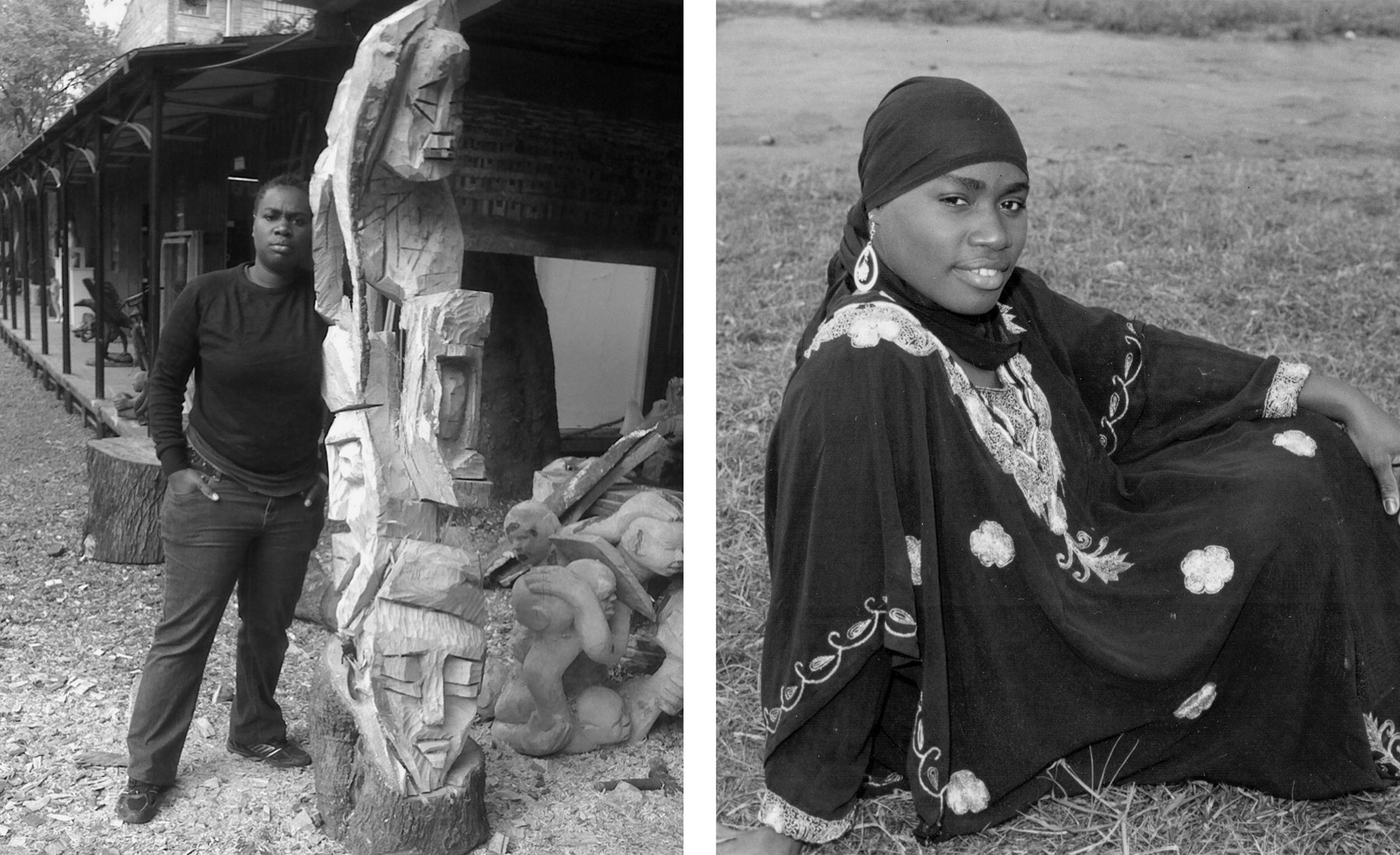
I was born in Uganda in 1985, and I went to Makerere University in Kampala for my undergrad. I started creating art right away, and I chose sculpture as one of my majors. I came to the US through the Fire Island Artist Residency in 2015. And then I decided to stay. So I’ve been here since then, and I just applied for my citizenship. Fingers crossed! I have two studios, a sculpture studio and a ceramic studio. I’m just creating art. Maybe we can start from there. Was that a good introduction?
That was a fantastic introduction.
I’m not going to be very serious, because I don’t want to be serious.
Don’t worry, we can keep this very chill. I’d love to learn a bit more about how you situate your biography in your own work. Did your upbringing in Uganda influence your practice?
I majored in sculpture at school, so of course, I know how to carve. On the side, I did ceramics. My work has really been influenced by my school days. That is why I am always doing this back-and-forth. When I was in school, I always talked about history. I always brought back history and the past in my work, which has also evolved along the way.
My work is basically influenced by African masks, which I learned about in school. I read as much as I could about West African masks. But, during my thesis, I looked at women’s hairstyles and I worked around that idea. I did so much research on how African women were doing their hair, and that part of history.
After my undergrad—this is when I became serious in life—around 2009, an Anti-Homosexuality Act was introduced. When they passed the law, different activists sued the government. And when they sued, people had to show up in court, but for those that showed up in court, most of them wore masks because they feared being identified.
As an artist who knew so much about history, how was I looking at these masks? To me, it wasn’t about hiding our identity. Instead, I started using masks first and foremost for the protection of our people. So most of my works are derived from what I started calling my Babirye Leilah masks, because I was looking at the West African mask and reproducing them using the techniques that I’d used in school to create my own. Everything basically started from there.
And then from the masks, my work evolved by looking at the language of the Anti-Homosexuality Act, and understanding it, thinking about how I could interpret it to our colleagues who have not gone to school, who don’t even know about the law and what’s in it. That’s when I started looking at rubbish and collecting it, because at that time we were called abasiyazi, which means sugarcane husk, which is considered one of the worst kinds of trash. That’s what they call LGBTQ people. At that time, I was just assembling wood, things that are speaking from the streets and making metaphors of prisons and calling them like we are.
And then there was a time as an artist where I started getting frustrated and started burning my work. I did a few pieces that I burned completely. And whatever survived is what I would show as an artwork. There is a book that I did in 2009 with AtWork. It was like an organized group show where all artists were given small notebooks and you just wrote whatever you wanted to use this book for. And in that book I wrote about the anti-homosexuality law. So that is when I started burning my work completely and keeping the remains of whatever I had.
So my work has been evolving from day one, to where I am right now, from oppression and depression to figuring out how we can fight as LGBTQ people and finally to celebrating us. My work right now is about celebrating who we are. And that is something that I got when I came to the US in 2015.
What was it about the US that changed the course of your work, specifically?
The first time I went to Fire Island—coming from Uganda, straight to Fire Island!—I’d never been to a place like that. I felt I was really in the US: “Okay, this is how the entirety of America looks.” So when I was there for one month on Fire Island, I reflected on love because everybody there was really loving. I had come with a lot of frustration, so many things to complain about. But coming to Fire Island and meeting people there, the seniors there who have been going there all their life. They’ve been in the gay community, participated in all these liberations of the gay community.
So this comfort changed how I looked at things back home and how I could then look at the gay community in a positive way. My work shifted from the anger, the pain, to what I saw when I came here. Because when I go to Fire Island, people are just celebrating who they are. People are just walking naked. I tell my friends: everything there is gay. I’d never seen something like that. It changed how I look at issues in the LGBTQ community. I started celebrating who we are. So, since then, I’ve started creating art just to celebrate us.
I used all of my gay friends and activists as a starting point, especially people who have done so much for our community. I started just making art and giving the pieces their names. That’s when I started thinking critically. I started to create our own family. Something I’m working on now is simply an imaginary gay wedding. I’ve never been to one. So, as an artist, what do you do? You imagine one.
What was your early life like?
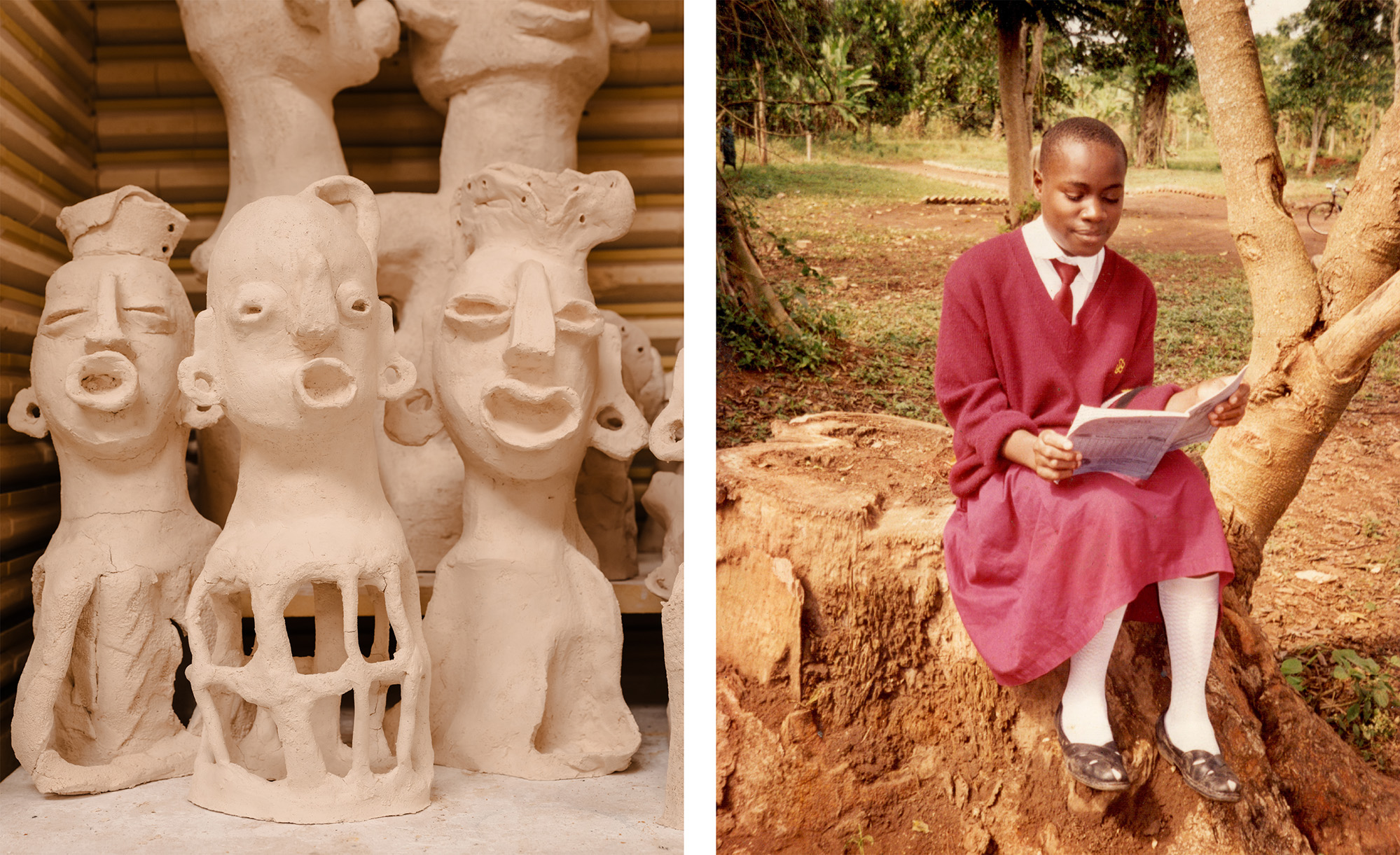
I was born and raised in Kampala, which is the capital. I don’t remember going outside of Kampala because my grandfather was also born there. Both on my father’s and my mother’s side. Then I went to school. There are some good schools there. I ended up going to Makerere University, which is one of the best in the country.
What did your parents do?
They were small business owners. My father, till today, is still in the hardware store business. My mother passed away when I was 14, but she was in the hardware business, too.
When did you first decide to study art, and why?
I decided on it in high school because I didn’t want to read. My elder brother is a lawyer, and my parents always wanted me to be one, too. I hated how much he read in the house. He read so much! So when they wanted me to do law, thank God I just switched to art. When I first went to university to pick up my forms from the law school, I passed by the art school. I’m like, you know what? I think this is what I’ll do. At first it was because I didn’t want to read, but at the end of the day, I just loved it.
Do you remember the moment when you first discovered sculpture?
I went to art school and met a professor, who I still talk to today, and she was just carving. I’d never seen somebody who carved things. I didn’t know how sculptures were made. After watching her, I jumped into that course. It was basically like escaping from reading. It was my escape that became a success. Because at home, nobody believes in you if you tell them you’re an artist. My father was always worried.
He said, “What are you going to do in life? What even is this? What are you guys doing at school?” I would pick up tree trunks, and take them home to work on them. Then, one day at home, I sold my first piece for $500 right in front of my father. My father called the entire village.
Making $500 in Uganda might take you a month or two. I made it in a blink of an eye, right in front of him. And what am I selling? One of the trunks that I’d picked up with his help. It was just a piece of wood that I took home, cleaned up and polished, varnished. I think I put a light in there. I was making lights. My father then told all of my young siblings, who were still in school, “You’re all going to be artists!”
I’d love to hear more about how you view your queer identity, and about reclaiming it. What do you think is the artist’s role in that reclamation? What power do you think artists, especially African ones, have in that dialogue?
I think as an artist in the struggle of the LGBTQ community, the power we have as artists is that we can say whatever we want, without even saying anything. Literally, we just wake up and we can say anything, as artists.
You can’t talk directly to Donald Trump. But when you walk around the city in Bushwick where we are right now, you’ll find people who use spray cans to say whatever they want to say. As artists, we can play a big role, because what we create cannot be questioned, in a way. Our works can’t be questioned because they can’t speak, however much they carry the message. That is the power we have.
Speaking of Bushwick, I want to shift us back to your studio. What’s a typical day like?
I wake up at eight. Go to the gym at nine. I normally get to the studio at 11 or 12. On my normal days, it depends on
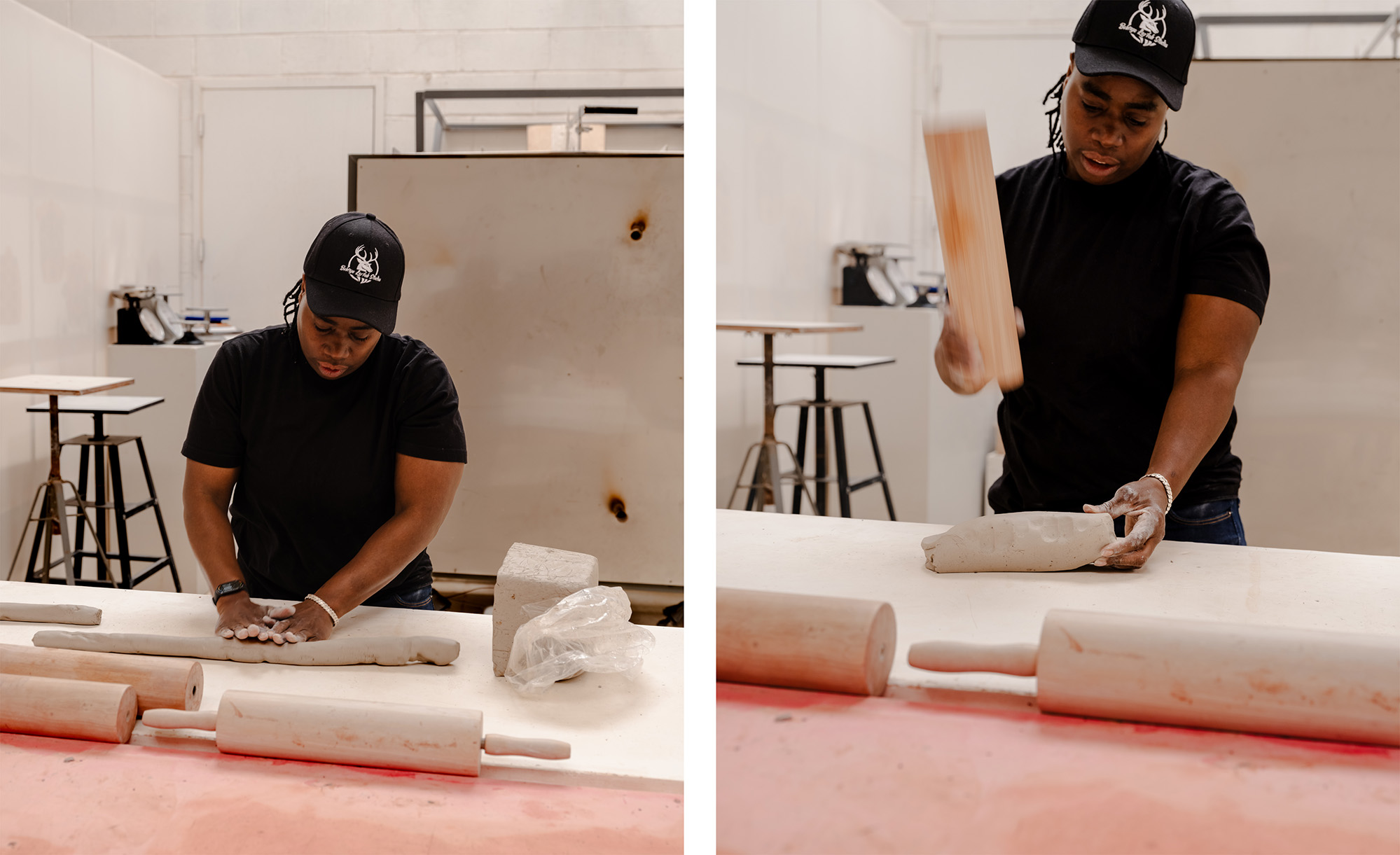
how I feel. Most of the time I pass by my sculpture studio. It shifts. I walk to the studio, work on a sculpture piece, a wooden sculpture. At around 2, if it’s wintertime, I head to the ceramic studio. It’s a shared space. There are people over there. In the winter it gets cold and dark very early. That is where I spend most of my time. Then, in summertime, I make sure by 6 I’m home. I don’t go out. I’m not a night person. I just want to be in the house. I don’t work on Saturdays and Sundays. I’m home and resting.
I really respect that you have a lot of discipline with your schedule and that fitness is important to you, and that you don’t work on the weekends.
Yes, it’s important. And I love my sleep. If I don’t sleep, I’m cranky. That’s when you know I didn’t sleep well.
In your 2024 show at the de Young, “We Have a History,” your work was directly in dialogue with classical African works. Tell me about the proximity there.
I was already familiar with most of the works in the African collection. Even if I hadn’t seen them physically, I’d seen them in books. The curatorial purpose changed along the way, through discussions with Natasha Becker, the curator. That’s how it shifted from her original idea to “We Have a History.” Most of the works in that show were loans from the West Coast, from different collectors. We had a piece from the Hammer Museum that is named after my late grandfather. I decided to just do three new works for that show, because at the time I was also preparing for the Venice Biennale and the exhibition at Yorkshire Sculpture Park.
One of my favorite works of yours is the installation The Gorgeous Grotesque. Why is the idea of the grotesque a common theme for you?
Still to this day, my family members who don’t believe in me, they call me rubbish. My uncle tells his daughter, “that one in the US, she’s crazy,” and that I need to go to rehab—I don’t know what the exact translation is from the Luganda word. But my cousin tells me, “you have really inspired a lot of people out there. You don’t look like you’re crazy anyways.” As an artist, I had to make a statement. That’s how the show came into existence. It was about bringing out the lunatic, showing what a lunatic can do, what a homosexual can do, since we’re garbage.
Another work I really liked was your Brooklyn waterfront piece, Togetherness. Can you say more about placing queer bodies together in a public space at that scale? It seems like it might have been a protest for you.
That show was curated by Hugh Hayden and he was actually given the chance to exhibit in the entire park. But as an artist who is established, he chose five other artists who he believed in, and I was among them. “Black Atlantic” was the title of the show. I’m not from here. I don’t know what it means to be Black.
Recently, I went to pick up my laundry and my bag had “negro” written on it. Maybe that’s what they call us, I don’t know. I took it personally because I don’t know what that means. Where I come from, we are all Black people. We see five white people, you know, once in a while. I don’t know anything about racism. So, I learned about what “Black Atlantic” means. As an artist who was given an opportunity, I chose to show the strength and the togetherness that African Americans had to be able to work together and free themselves. That is where the togetherness comes from.
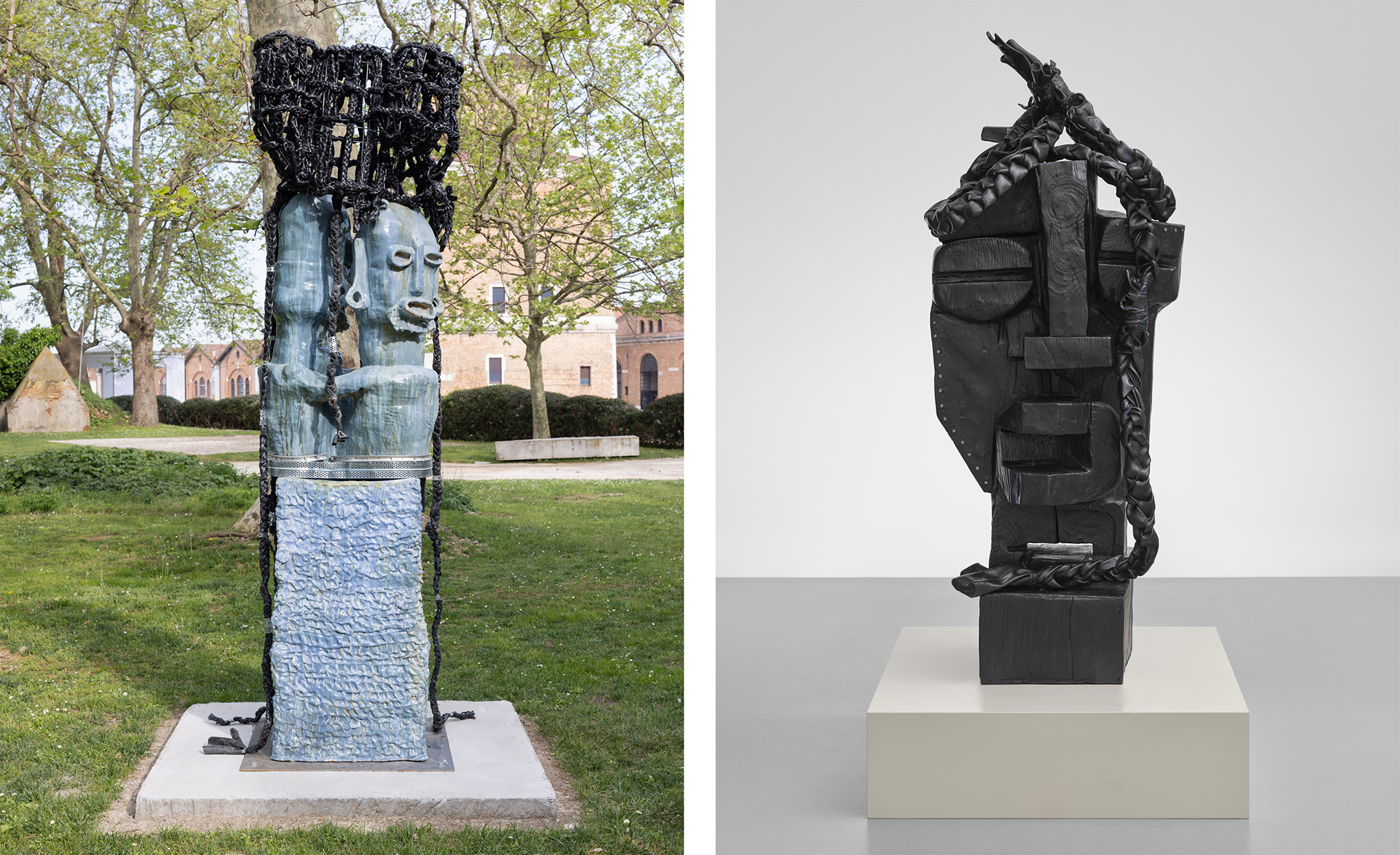
I love the use of your native Luganda language in the titles of your works. They’re not really labels, but extensions of the works themselves. How does your use of language help you communicate your ideas?
The Luganda names come from my origins. I come from a big kingdom, one of the biggest kingdoms in the country. We have 52 clans, and I come from the Antelope clan, my father’s clan. My mother comes from the Lungfish clan. The system is made so that we cannot intermarry each other and everybody has a chance to have a king.
After using the names of activists and my friends for my work, I started using clan names. My father denounced me, but he didn’t take away my clan name. Everybody I know in Uganda has a clan name, an origin, a king they believe in. Everybody is attached to their clan and every clan has a role in the kingdom. For my first show with Gordon Robichaux, I called it “Amatwaale Ga Ssekabaka Mwanga II,” which means the empire of King Mwanga II, who was bisexual. In this particular body of work, I decided to name all the works girls’ names. Some of those works had beards, some looked like boys, some looked how they wanted to look. Once people start asking questions, I feel like I’m really communicating. Now there are people who also want their clan names to be somewhere in my work.
What has surprised you about how Western audiences perceive your work versus how diasporic African audiences respond to it?
Since I started giving my works Luganda names, I’ve noticed other artists in the country doing it too, which means that there’s at least something that people have picked up. People respond to my work back home, how it’s giving the vibe of who we are and shows we are really Africans.
My collectors love that I’m celebrating the queer community and giving a platform to people without one. I’ve named most of my works after trans people and activists who I know, so people who see them all over the world see that as celebrating and honoring them.
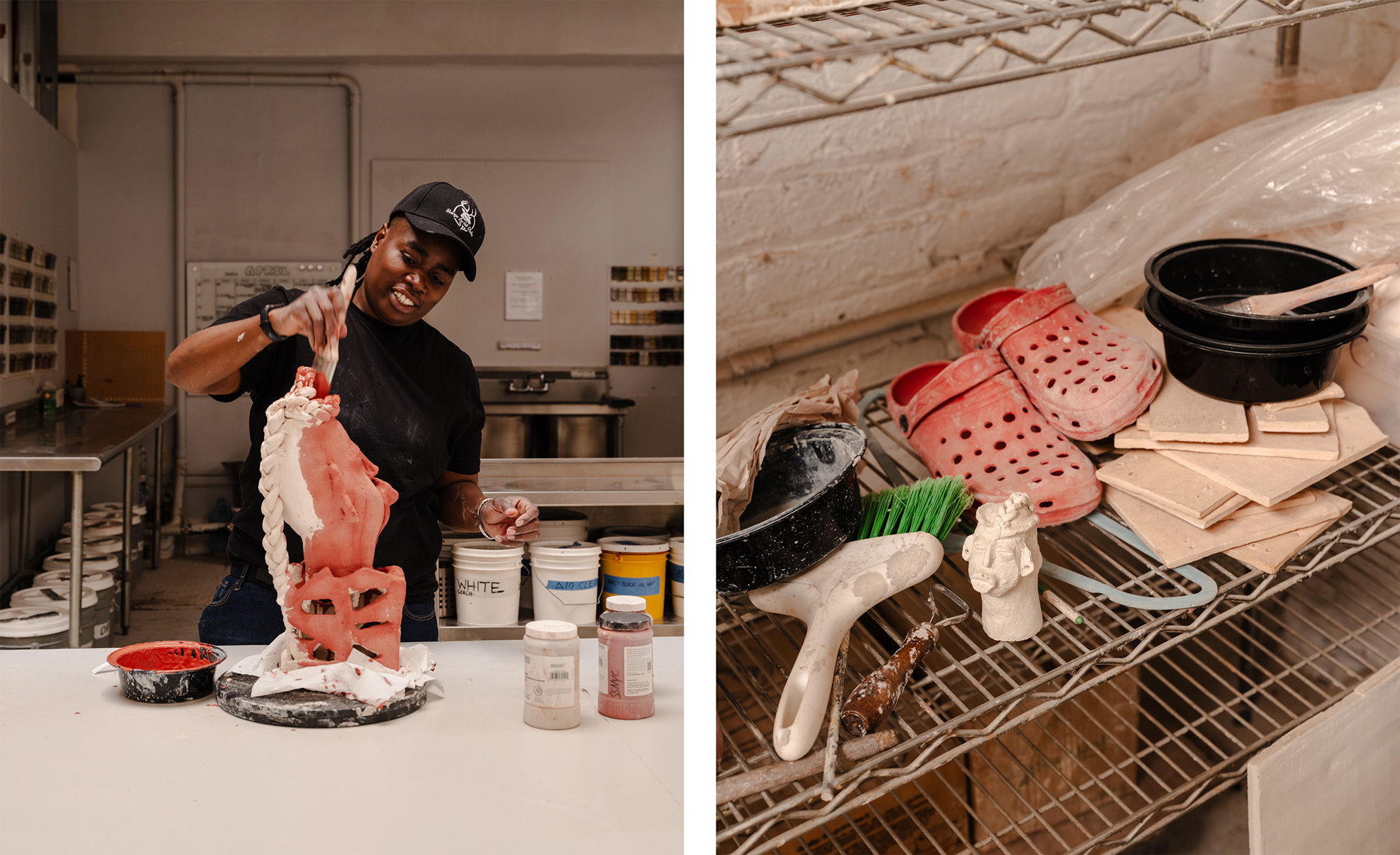
Tell us about your upcoming exhibition at ICA Boston, “Wedding of Naki and Naki,” and what you’re exploring there.
I went to a queer wedding in Uganda about 12 years ago and we were undercover. We didn’t take any photos of the wedded ones, the boys marrying each other. It was a beautiful wedding. But I remember they were walking down the aisle and somebody said the police were coming, so the wedding ended there.
So, I’ve never been to a proper gay wedding. For this show, I’m imagining brides and brides, grooms and grooms, and guests. The most exciting part is that I’m not working on any large sculptures—they’re all 17 inches tall—very little brides and guests. I’m bringing in some drama, I want all the girls to come in with a lot of drama. And, I’m excited about painting the pieces. I’ve always wanted to paint, but always failed until I figured out that I can just sculpt and then paint over whatever I’m constructing. I’m telling guests to come with love, and dress up as if they’re going to a wedding. Just be bitchy, be stupid, be silly.
I feel like the opening is going to be quite the party. You’re best known for your 3D sculptures, but can you tell us about your 2D works in this show?
I started drawing imaginary identification cards around 2016, when our government decided that everyone should have them. We never had them before that. As an artist and an activist, I was thinking about how queer and trans people were going to show up to take their photo and get their card. What names would they want to be called?
My identification cards imagine, What if we just showed up how we want to show up? What if your passport photo was the way you wanted it, instead of having to look ahead and all these things you have to do? These cards are against all that.
What advice do you give to young artists beginning their careers?
I always tell them to just keep working. Go to your studio if you can, just keep working, and just keep creating art. You never know who might be interested. Just keep working.
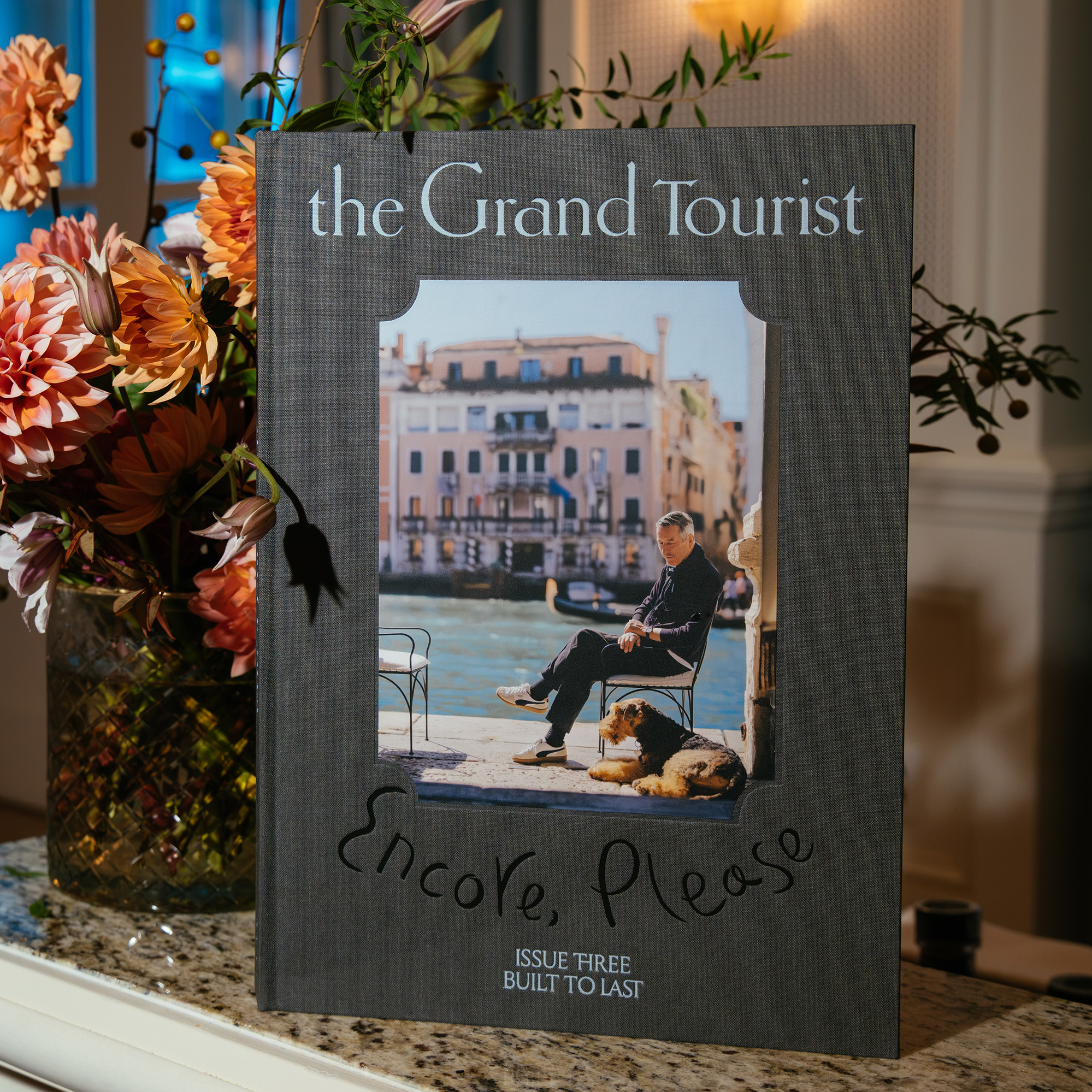
Designers and tastemakers gathered to toast our most ambitious issue yet at The Fifth Avenue Hotel.
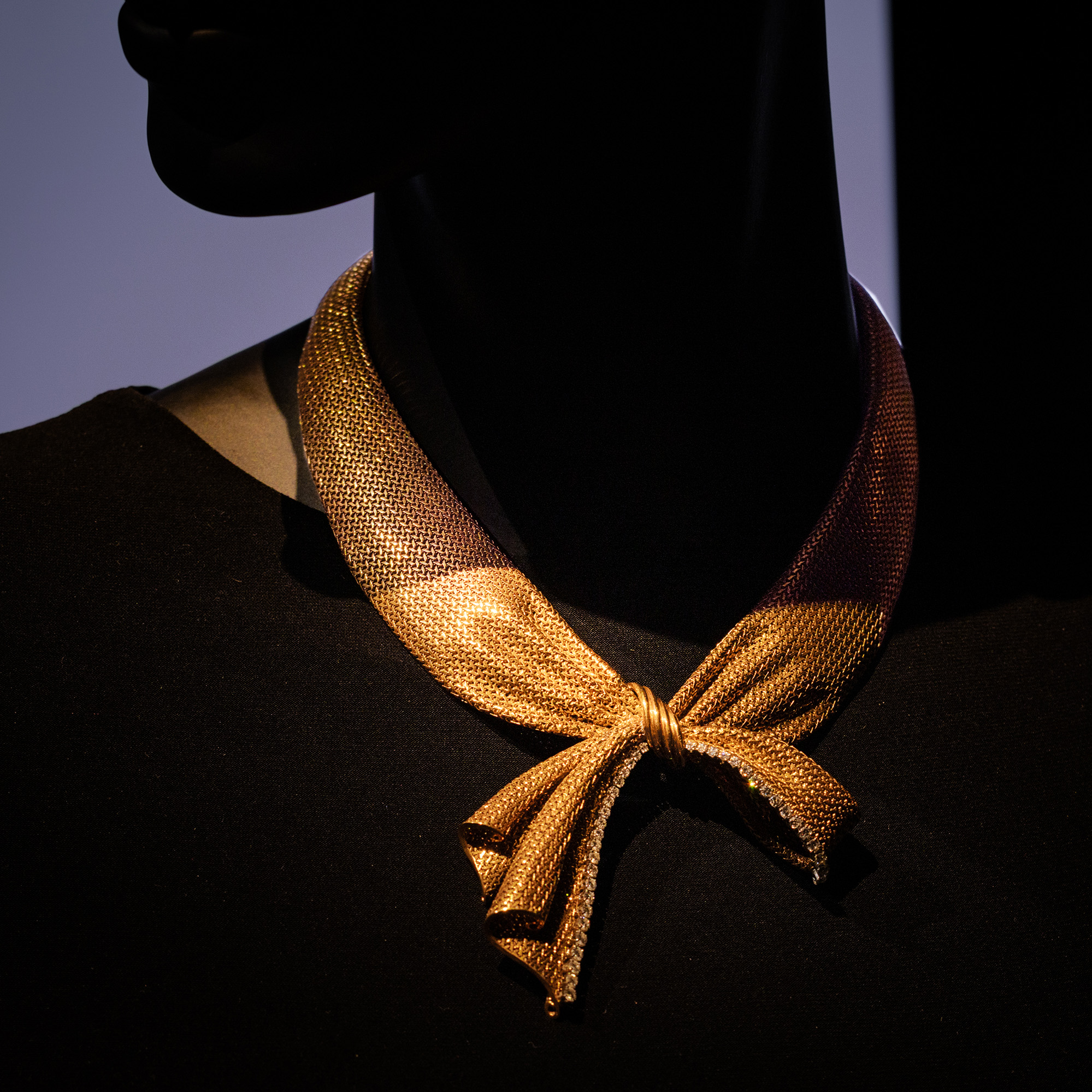
The renowned house looks back on its vibrant history and its incredible pieces that have pushed the boundaries of craftsmanship.
In Milan, we sat down with the brand's Laura Anzani to discuss the family business over coffee, and what it has planned for New York and beyond.