Boucheron Showcases Nearly 170 Years of High Jewelry at Christie’s
The renowned house looks back on its vibrant history and its incredible pieces that have pushed the boundaries of craftsmanship.

This article is from our Spring 2026 print issue, available online now.
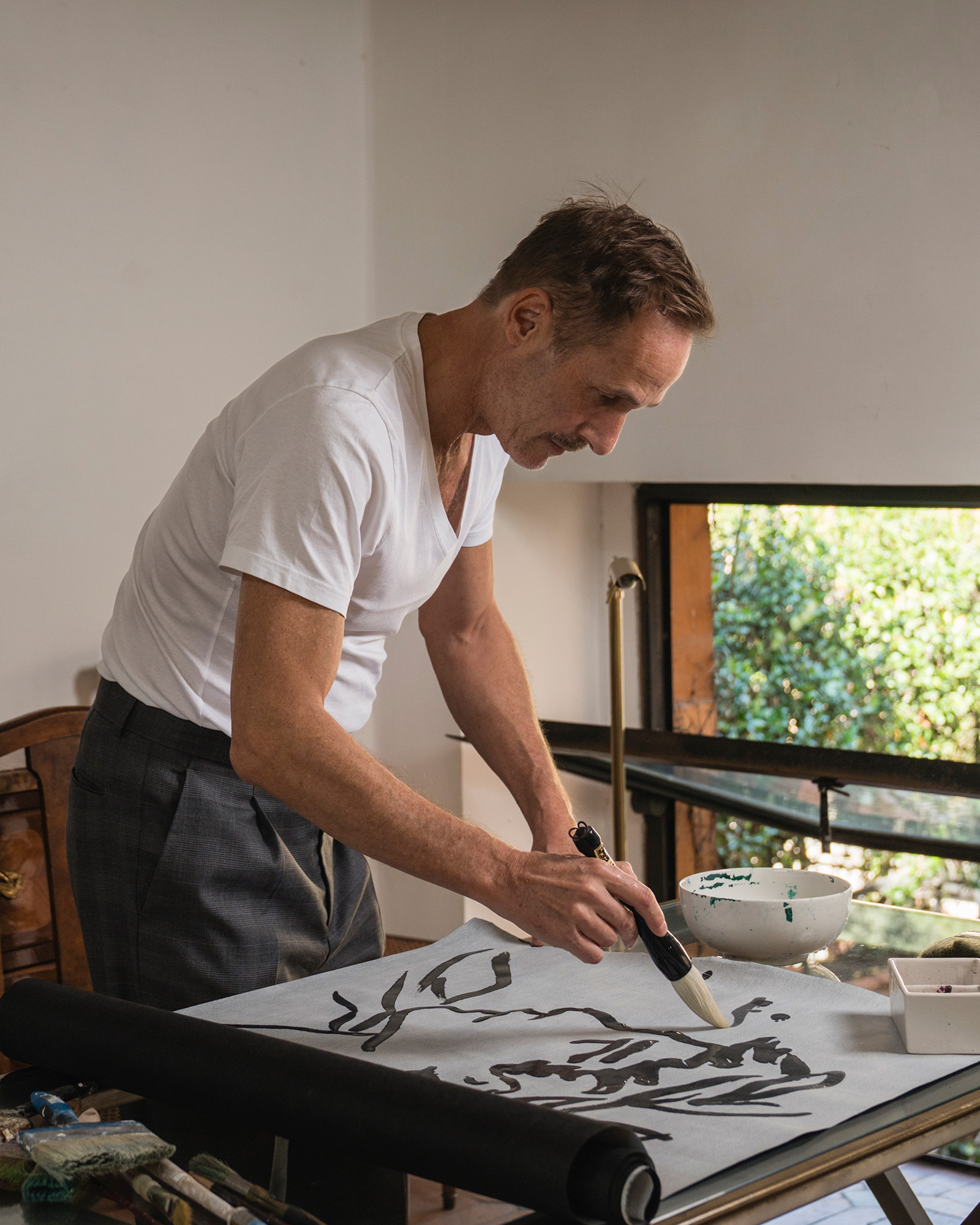
Ask Roberto Ruspoli where home is, and he will tell you his suitcase. When we meet, the Swiss-Italian artist has his life packed in a trolley bag as he moves between projects across Europe. He’s painting frescoes for Studiopepe in a villa in Florence, preparing artworks for spring exhibitions in Lisbon and Zurich, and has recently completed a series of drawings on leather—inspired by the ancient engraved figures he discovered on Etruscan bronze mirrors at Rome’s National Etruscan Museum of Villa Giulia—as part of a furniture collection with the designer Francis Sultana for London’s David Gill Gallery. And then there are the canvases for American decorator Michael Smith, bound for a Los Angeles yacht, also in the works.
Ever since he was invited to paint a ceiling fresco as part of an installation by the designer Fabrizio Casiraghi for the 2018 AD Intérieurs exhibition Paris, Ruspoli has become one of the most sought-after artists working at the intersection of fine art and spatial design. His prolific output spans wall drawings, paintings, and collaborations with architects and designers. The elegant lines that flow from his brush grace the walls of private homes, luxury hotels like Hotel La Palma in Capri, restaurants such as the Drouant and the Madonna osteria in Paris, and spaces for design houses such as Molteni&C and Lalique. Working primarily in monochromatic palettes with occasional washes of Pompeian red or classical blue, the Rome-born, Paris-based artist has developed a distinctive practice that bridges ancient Mediterranean artistic traditions and contemporary Expressionism.
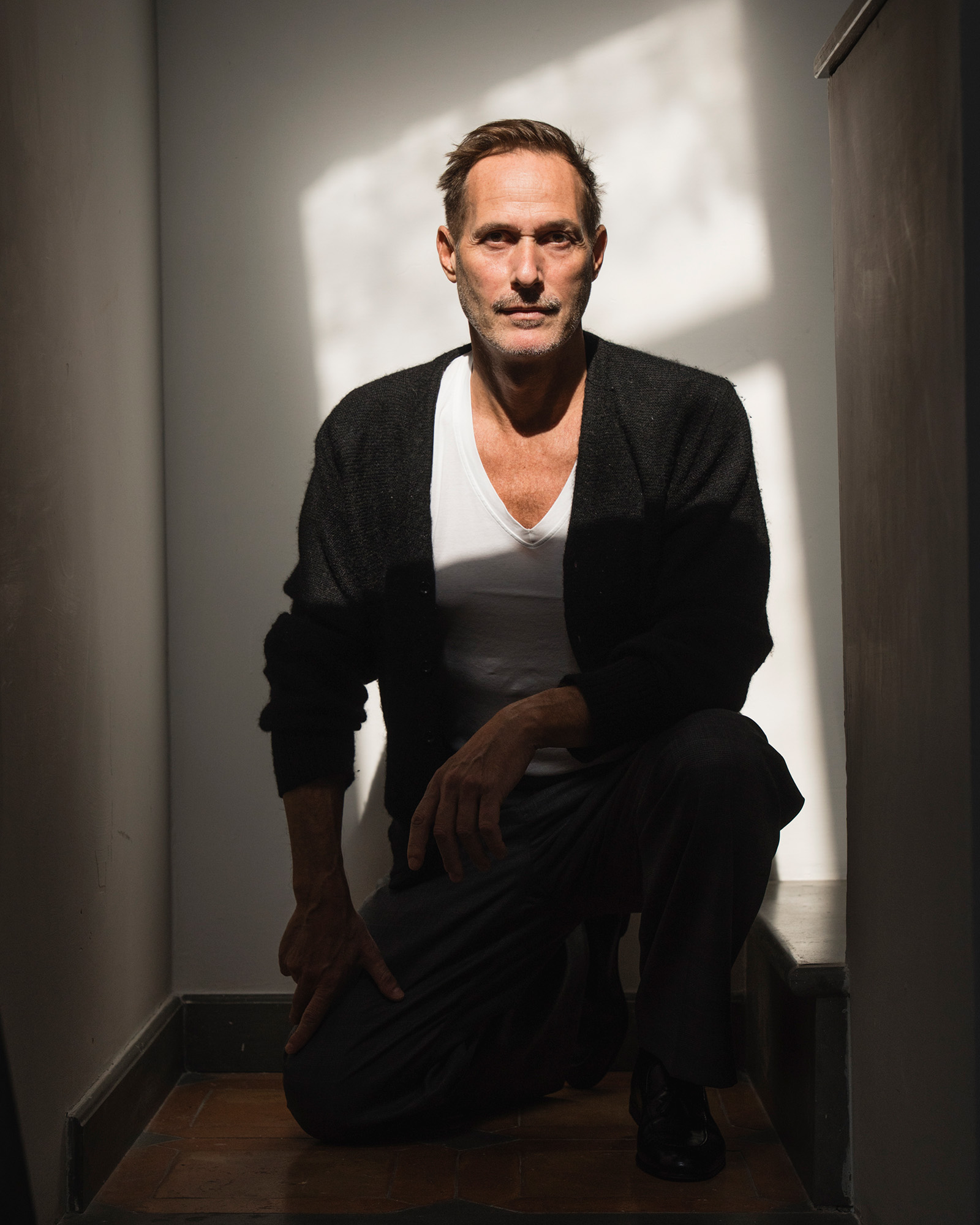
Catching him in the attic atelier of his family’s home in Rome, whose walls have long been the canvas for his mural explorations, we speak about his childhood surrounded by horses in the Roman countryside, his studies in classical history, his formative years in New York, and the delicate balance between spontaneity and discipline that defines his practice.
Can you paint a picture of your childhood and your artistic awakening?
My childhood was very special. We lived in the countryside near Rome, not far from the Odescalchi Castle in Bracciano. My parents were passionate about horses—they had seven. My mother used to take me to school with what we call a calesse here; it’s like a little carriage with two wheels drawn by the horse through the countryside. It was a very Dickensian kind of atmosphere.
I spent a lot of time by myself. Our house was in the middle of the country on top of this hill, and I had long afternoons by myself. I was always crying, and my mother once was so desperate, she didn’t know what to do with me anymore. So she had some paper next to her and a pencil, and she gave it to me and realized that when she did that, I became silent and started to draw. So every time I was making a fuss, she would cover me with paper and pencils, and I would be immersed in my own world. That was the very beginning—I was about four. But I have to say, it has always been something that I did quite by myself. I was self-taught.
What early influences helped you find your style?
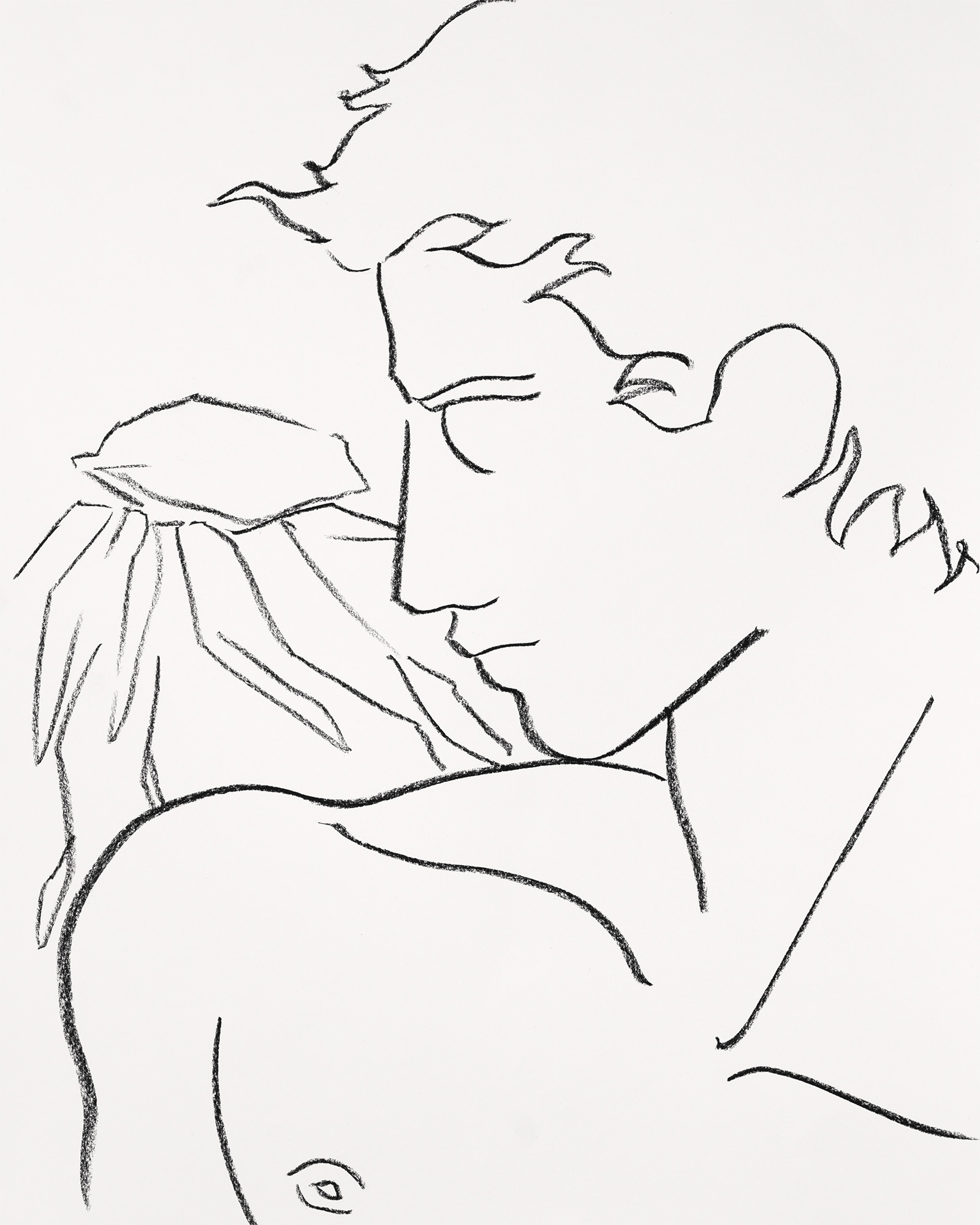
When I was a little older, a friend of my parents said, “Oh, this reminds me of Jean Cocteau,” because I was already drawing with the line. I didn’t even know who Cocteau was, but I searched it out and was surprised—I was happy because yes, that was something that I truly related to as an art form. I felt at home looking at his work.
So you developed your linear style quite instinctively?
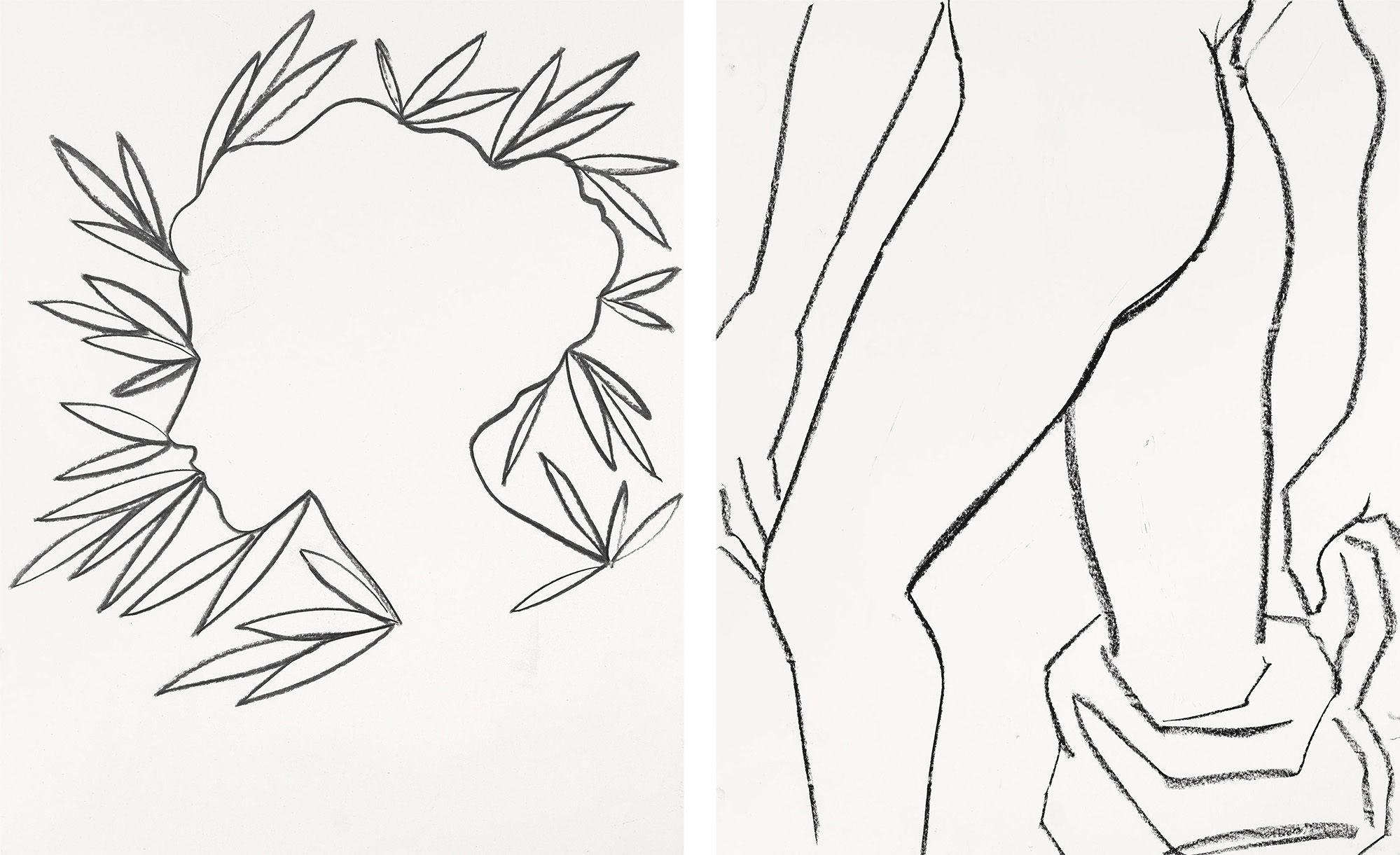
Yes, I have to say that, in the beginning, my line was much more Expressionist. My work has not always been so pure and so formally concerned. It is something that I arrived at as an intention throughout the years, as an exercise of taking away excess and trying to go to the essence of what I wanted to communicate.
You’ve described your process as similar to jazz improvisation. Can you explain?
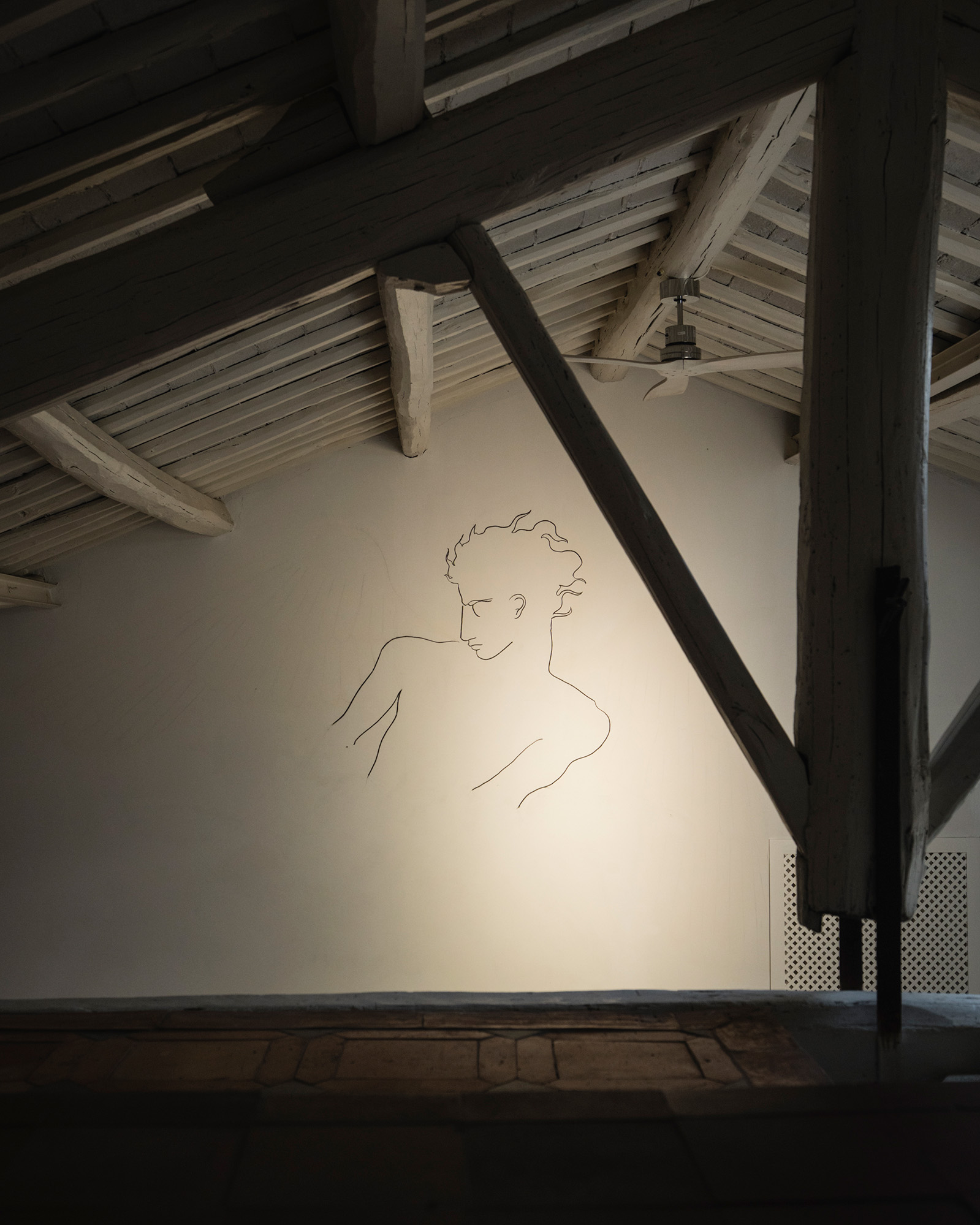
When I can, I always draw directly on the wall spontaneously. I’ll look at the wall before. I get a feeling for the space. It’s not just like I go there and do it. I look at the space. I contemplate a lot. I look at the forms. And then at some point, there is this relationship between the space and my sensibility, where the drawing in a way suggests itself. I just need to be there to let it be. It’s like when you are an actor or a musician; You are being in the moment. When I do these drawings, I am in the moment. That’s why, for me, sometimes it’s difficult to deal with certain clients who prefer to have a little sketch before. I always say that I do not reproduce something that I did elsewhere on a small scale, like a decorator might do, because this does not interest me. It bores me, and also it’s not the way I work.
How do you balance your spontaneous approach with client requirements?
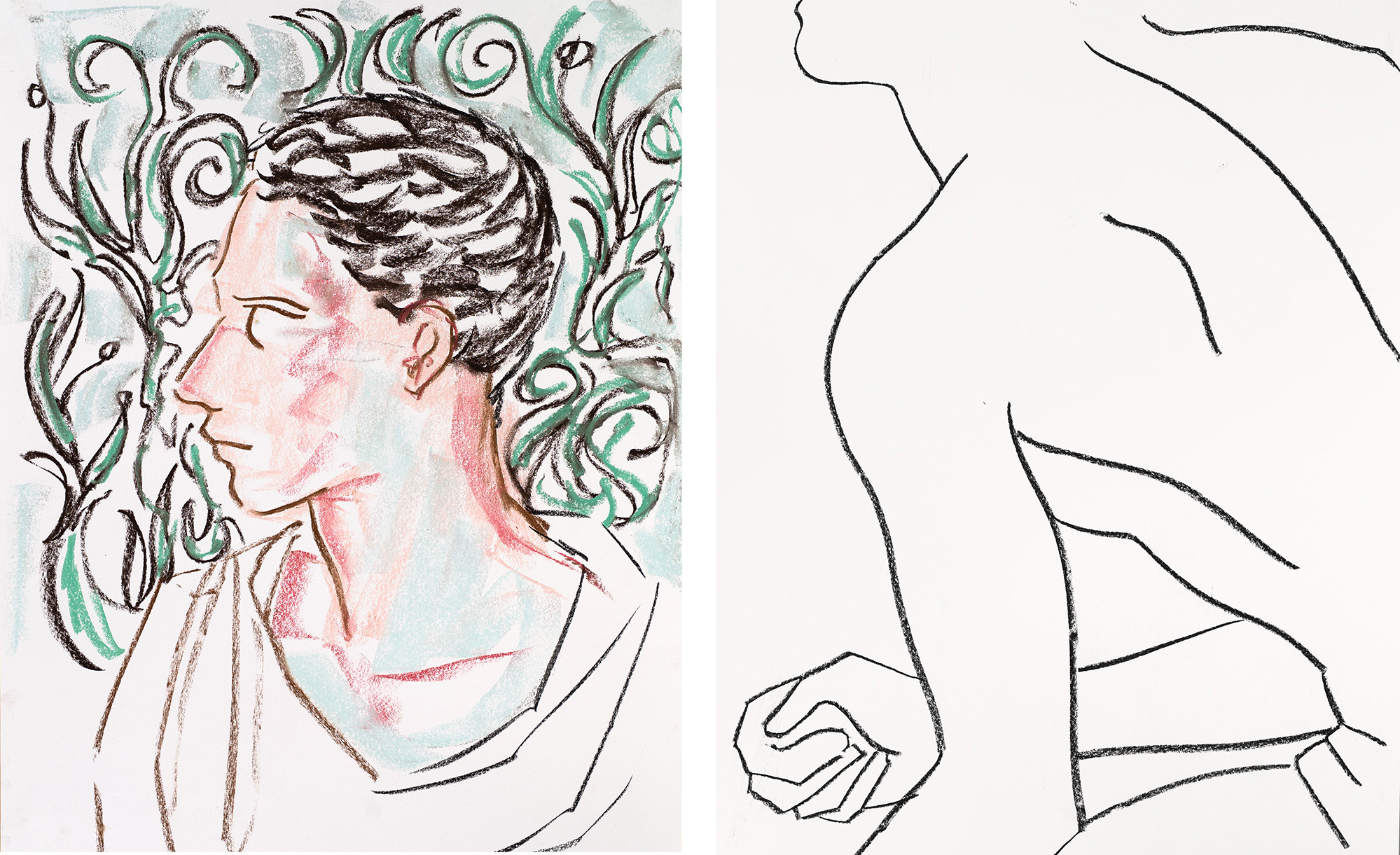
Sometimes you have to find some compromise to align with the needs of a certain client, of the architect, of the space itself, of the objects present in the space. So it’s not only a solo piece of work, but you have to relate to the life of the people living in this space. This is something that I like because it puts me in a relationship with others. For clients, usually I ask them if they have some symbols or some elements that are important to them, that are meaningful to them, or even a story that they would like to tell. Though I try not to be too narrative, because my work is about the line. It’s not a narrative illustration.
What’s essential to me is the freshness of the immediacy of the drawing. Just like Matisse used to draw, or like Picasso or Cocteau. Not that I’m putting myself on their level, but it’s the same approach. It has a spontaneous part to it. But this spontaneous part is, as Michelangelo used to say, always the hand obeying the brain. That means that it’s not about improvisation only; it’s a mixture of the two.
Is there a meditative aspect to your work?
It is a sort of meditative process. While I do it, I’m in the moment. There’s a rhythm to the drawing. And this rhythm flows perfectly when the act of drawing is not disturbed by the mind, by the thinking. The thinking comes before, in the sense that I need the thinking to be aware of where I want to start, what I want to put there, how I want to place the elements. But once I start, it just starts. There’s no thinking behind it. When you start to rationalize and be afraid and say “maybe this or maybe that,” it isn’t the same. Because it is really something like a platonic form that drops from another dimension, and you shouldn’t disturb the process.
How did your time in New York shape your practice?
When I arrived in New York, I was 19 years old, coming from Rome. I grew up surrounded by classical art, which influenced me on a subconscious level—most of all, the Etruscan ancient artifacts and the paintings on the old Greek vases that are composed with lines. I also did ancient Greek and Latin studies at school in Rome. This humanistic education has had a big influence on my work. So I arrived in New York with this background and as a student, I was confronted with many other ways of doing art and also an American approach to art, which was, for me, completely new. I started to really use those years to experiment. I explored many different kinds of expressions. Then eventually, I started this process of getting rid of the superfluous and trying to go to the essence. And having a dialogue between the contemporary sensibility and the classical sensibility.
So the town had quite a profound impact on you?
In New York, I found freedom. I discovered my own sexuality. I could express it. And I had the chance of meeting incredible people: not only artists, but also all the scenes that survived the Andy Warhol Factory era. In Europe, we have a very academic approach to art, which in a way is good because you learn a lot about the basics. But in a way, you become a prisoner of this sort of reverence toward the past. In New York, I was taught not to be afraid in front of a work of art, but to be free to have an opinion on it. We would paint, and every day certain artists—real artists, like Michael Goldberg—would come, and we would talk for hours. This helped me become aware of what I do, why I do it, and to be freer. It’s how I learned to combine my academic past with a less academic approach, which was essential for me. I couldn’t be doing what I do now if I didn’t have the New York part.
Nevertheless, your work retains a strong classical feel.
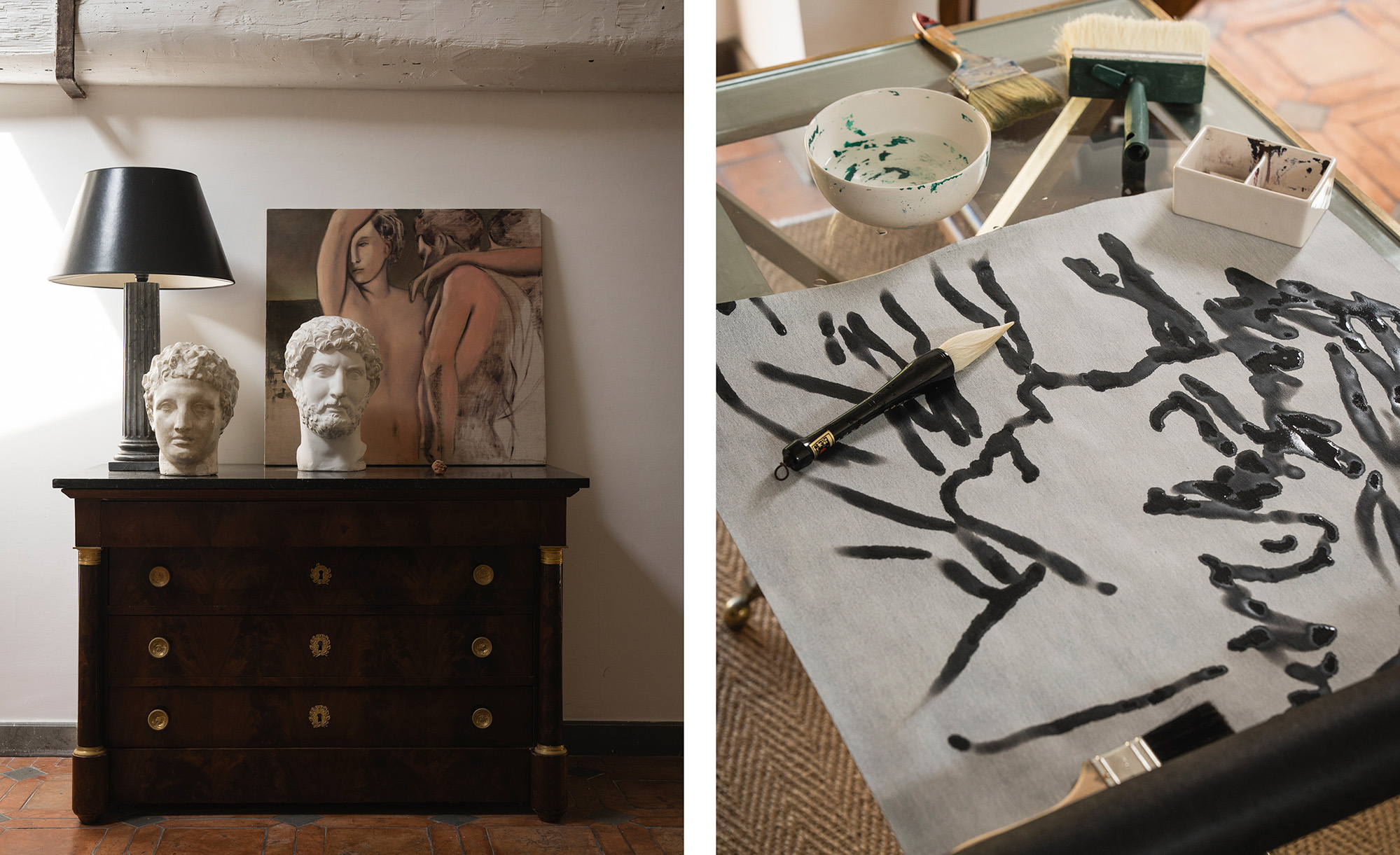
I like the fact that the classic in a way goes beyond time. If you go to look at these Greek vases at Villa Giulia—the Etruscan museum here in Rome—they still are incredibly modern. And they speak like Egyptian art—it’s incredibly contemporary. When you go to the roots of it all, it’s not about the fashion of the moment anymore, but about the quality of what comes out of what you do.
You also worked with the neo-Expressionist dancer Pina Bausch. How did that experience influence you?
That was incredible. I had this friend of mine, Ninni Romeo, who was working with Pina Bausch. They were doing Orfeo ed Euridice in Rome and were looking for extras. It was an incredible experience to work with such an artist and to understand the value of the art happening in the moment. There is a deep relationship between my way of working and music and sound. Even though I’m not necessarily listening to music while I draw—I prefer to draw in silence—there’s a rhythm, a visual harmony that plays similarly to the way music plays in me when I draw. Literally, it is like a dance for me.
When did you transition from canvas to working on walls?
I started with canvases very early—when I was already 11 or 12, I was given a box of oils and some little canvases. But then, at some point, my parents wanted to redo my bedroom. I was in this bedroom that was all empty with empty walls, and I was feeling kind of off because of that. So I just started to draw on the walls one day. Then later on in Paris, I had the opportunity to work with some architects who proposed to do this again. And so there it became professional.
What’s the difference between painting on canvas and drawing on walls?
When you’re painting a painting, it’s still an object. Wall drawing is an act of freedom because it transcends the object. It becomes part of the space. It becomes part of the lives of these people. In classical times, in ancient Rome, and in the Renaissance, they would paint the walls—it is a continuation of a very old tradition. When it surrounds you on the walls, it’s like you are literally immersed in it, like you are part of the painting yourself. When it’s an object, you can look at it, and it’s still separate from you.
Where do you see the line between art and decoration?
The line is very thin. When you think about it, even Raphael and Michelangelo were decorators. There’s nothing wrong with decoration. I wouldn’t call Jean Cocteau’s work, however, decorative. It’s when the drawing is independent of the function of the room.
You work primarily with monochromatic lines. When do you introduce color?
I’m feeling the need for color a lot right now because I have been drawing so much with lines only. Color can be used in many different ways—it can be decorative, or it can be symbolic. My monochromatic fields of color were very much inspired by these big Pompeian layers of monochromatic yellow or Pompeian red. For me, it was an exercise of choosing a palette that was warm and classical at the same time.
But also, I have been very much inspired by Rothko. One day I said to myself, “I wonder what it would be like if on these shapes there would be some lines,” you know? And I started to work like that. But it will not necessarily stay like this. It will evolve. I’m also feeling that I want to be less minimal in a way. I want to superimpose these fields of color with my lines in a different way than what I did until now.
Why are figures so dominant in your work?
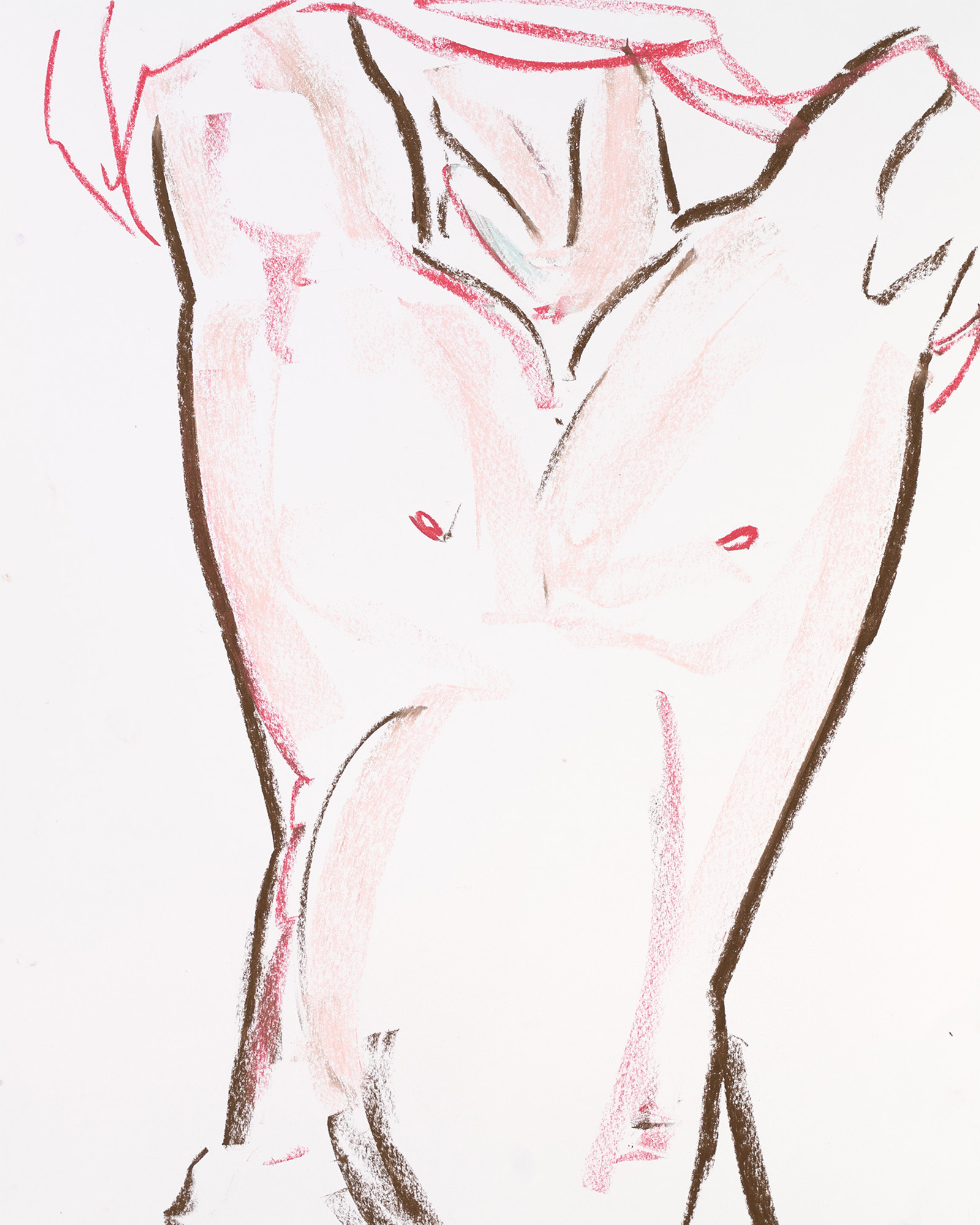
First of all, because it links me to the classical, which I want to be a continuation of. And also because it allows me to represent a certain sensuality of the human body. But for me, it becomes a sensuality of lines. Like Morandi—he was painting bottles, but at the end of the day, it’s not about the bottles. The bottles are just an excuse for the light and the color to play together. For me, the shapes are just an excuse for this line to play.
Though I’m going toward a more abstract dimension now. For example, I started to take out certain details like the eyes and the mouth and leave only the contours when I could. There is an artist that I love: Munch. What I like about his work is the economy that he has. Not only in terms of shapes and the way he uses colors and lines, but there is this incredible economy. And with that economy, he tells you all that is essential to know.
You’ve collaborated with other creatives to work in different mediums: stained glass, leather. Does your work easily translate to different materials?
I’m very interested in this kind of formal research. For example, I did drawings for windows for a client in Luxembourg—an architect asked me to do this. I did the drawings knowing that they would be for glass, so that influenced the kind of drawing. For leather, I did the drawing on the other side of the leather using pastel—the pastel gets really absorbed into the leather. For the collaboration with Francis Sultana, I did drawings on a material that is a kind of leather, and these drawings are inserted in his furniture. I would love to do many other things. I would love, at some point, to do a collaboration on jewelry. I believe that the less we intervene, the more things find a way to reach you. The less you do, the more they happen.
What would be an absolute dream project for you?
To do a church. And I probably will. I like the fact that art in the past served the purpose of elevating humans to a higher awareness. I like the fact that it was a bridge between the earthly world and the divine world. For example, I love the church that Matisse did, the beautiful windows. I love this relationship between the spiritual and the arts. I truly believe that art should serve the purpose of elevating us rather than representing the horror of the world. I think the world screams its horror quite well already by itself. If I have a piece of art, I want to escape the ugliness. I want to be closer to the beauty of life.
It’s not very much in the spirit of American art because for American artists, it has to be ugly, and if it’s ugly, then it has value. There’s almost this fear of beauty. It’s considered something easy, but it’s not easy at all. It’s much easier to do something ugly.
You seem very connected to your Mediterranean roots.
For me, it was important to carry on a certain tradition that I belong to—the Mediterranean tradition of ancient art. Because today we behave like the past doesn’t count anymore. It’s so narcissistic. It’s all about the present. The present doesn’t relate to anything before.
But I don’t believe that. I think there is a continuation. There should be a continuation of dialogue between what happened in the past and what will happen in the future. But if you notice, today it’s all about now. It’s all ephemeral. People don’t even think of doing something that will last because it’s about consuming it now. It’s monstrous. You go to these art shows today, and it’s almost like they are recreational gardens for adult kids. It’s like going to a theme park. It’s all a carnival of aestheticism. It’s about immediate gratification, immediate sensationalism.
You live between several cities. Where is home, beyond your suitcase?
It’s very complicated. After all these years in Paris, there is a part of me that is at home in Paris. There is a part of me that is at home in Rome. There is a part of me that soon will be at home in Naples, because I bought a house there. I like the dimension of the south of Italy. I like this chaos. It’s a nice equilibrium to go from the efficiency of the north to the inefficiency of the south. At the same time, you find a bit of spontaneity and humanity. It’s about where people understand your language. And when I say language, I’m not talking about Italian or French.
Thank you, Roberto, for giving us such insight into your life and work.
In fact, it’s very difficult for me to put into words all the aspects of a creative process. As Edward Hopper said, if I could explain it, then why should I paint it? There is a secret element that’s the mystery of life, which, thank God, we cannot explain.
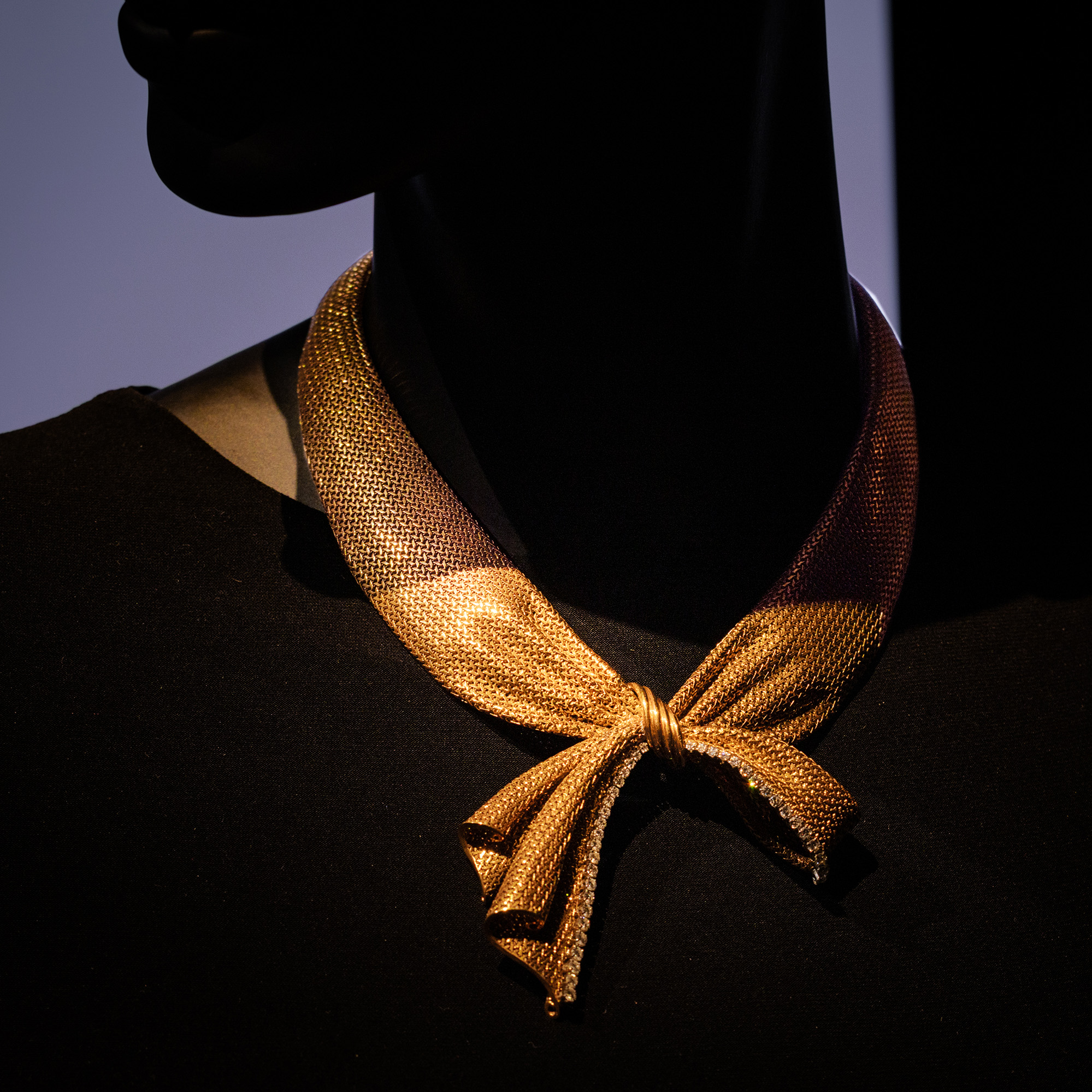
The renowned house looks back on its vibrant history and its incredible pieces that have pushed the boundaries of craftsmanship.
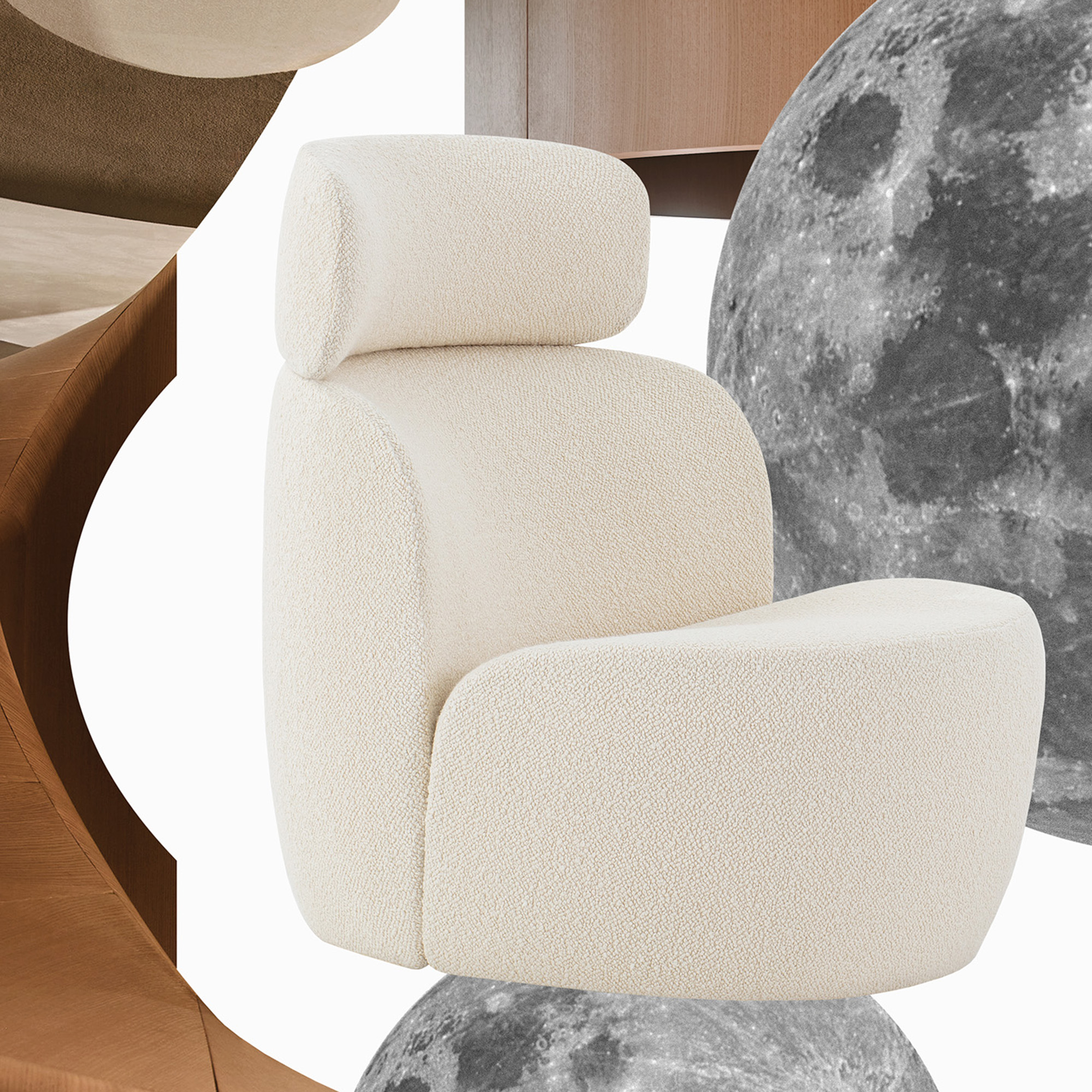
In Milan, we sat down with the brand's Laura Anzani to discuss the family business over coffee, and what it has planned for New York and beyond.
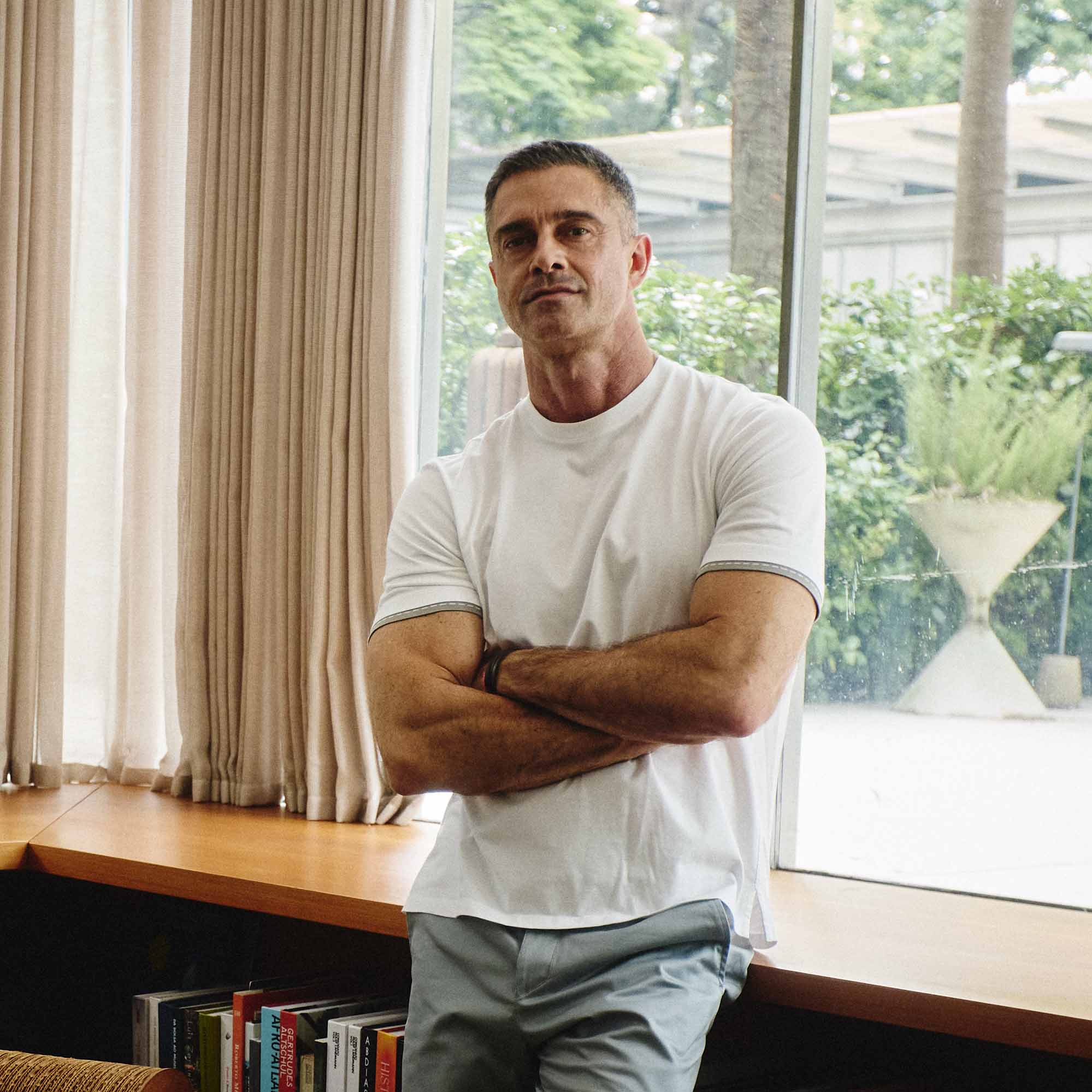
The Brazilian interior designer has quickly risen the ranks of New York design with a vision shaped by his father, the celebrated product designer Oswaldo Mellone, his first job with Robert A.M. Stern, and much more.