Inside the Meditative Universe of Pierre Bonnefille
In the hands of this French artist and designer, the most elemental experimentations with watercolors and shapes give rise to the most elegant results.

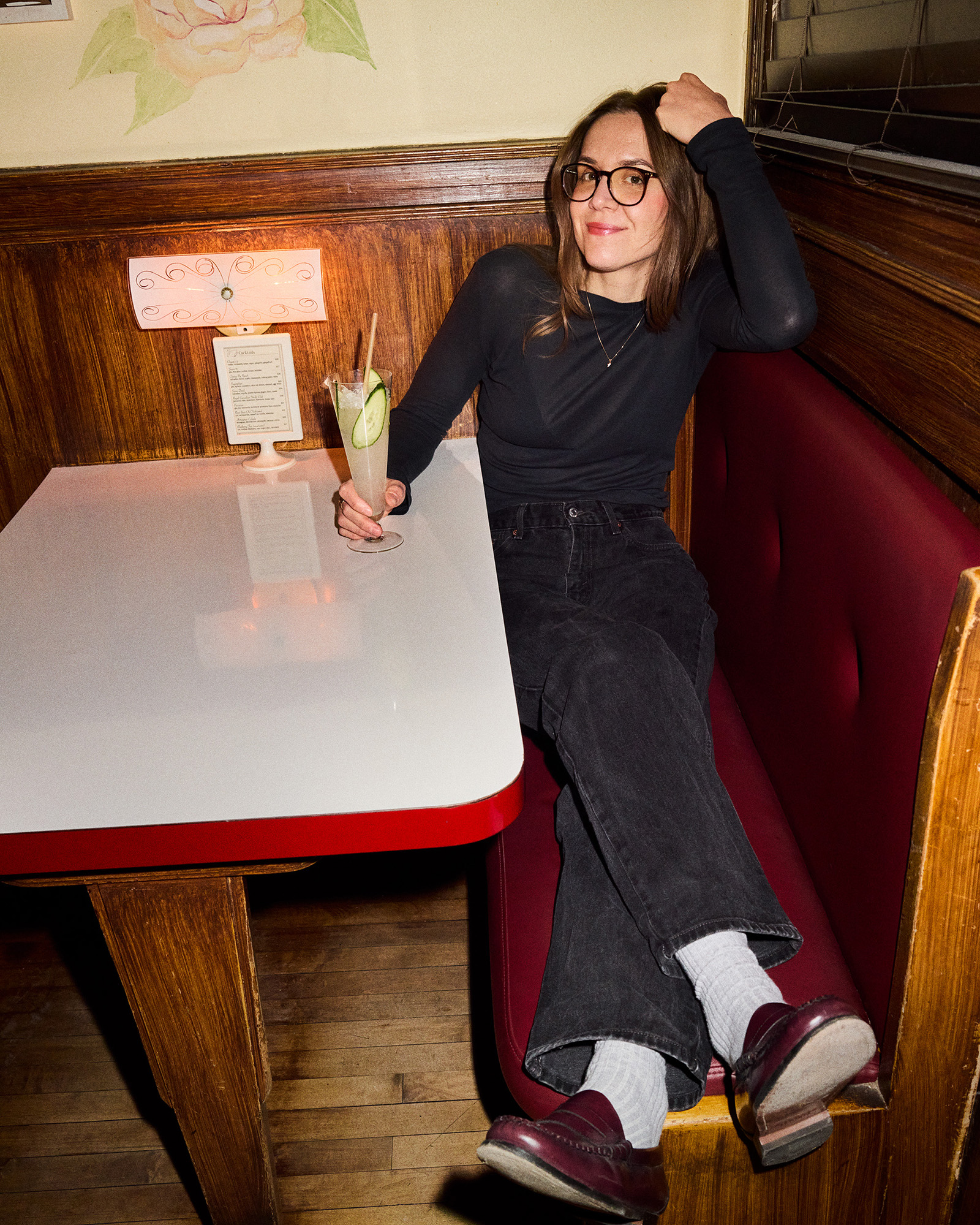
Canadian sketch maestra Laura Ramoso has become our, and the Internet’s, favorite culturally astute comedian. With a German mother and Italian father, Ramoso is best known for her host of viral characters, from Chiara, the acerbic Italian check-in agent at the airport, to clever caricatures of her parents. Ahead of her American Calm Down Tour, Dan speaks with Ramoso about her multicultural upbringing, cutting her teeth at Second City, how her comedy translates into Italian, and much more.
This article is from our Spring 2026 print issue. Sign up to our newsletter for updates on how to purchase your own copy.
TRANSCRIPT
Laura Ramoso: My mom would say, “You know, it’s really surprising, I think, for some people to know that Laura is actually like a really like obsessive cleaner in the house. Like she’s always cleaning with the vacuum cleaner or something. I’m like, take a break from this cleaning. The house is clean. But you come over to her house, she lifts your legs up to get the carpet. It’s like, yeah, completely rude, actually.”
Dan Rubinstein: Hi, I’m Dan Rubinstein and this is The Grand Tourist. I’ve been a design journalist for more than 20 years, and this is my personalized guided tour through the worlds of fashion, art, architecture, food, and travel. All the elements of a well-lived life. I’m recording this in early May. And I’m just back from a two week trip to Italy, where I survived my umpteenth Milan design week, a brief visit to see family in Florence and a visit to a hotel outside of Rome that you’ll see in the fall issue of The Grand Tourist.
And while I was there, one amazing publicist based in Rome was absolutely giddy and quite impressed I had my particular guest on the show today. The publicist is a huge fan and even had tickets to see this rising star in Milan later this month: Comedian Laura Ramoso. While The Grand Tourist is always looking to celebrate our cultural differences, sometimes it’s good to laugh at them too. So many of you might know Laura from her many characters she’s created for Instagram and TikTok, where she now has millions of combined followers. My personal favorite must be Chiara, the Italian bombshell at an airport check-in counter.
Laura is based in Toronto and has a German mother and Italian father, both of whom have become recurring characters of hers online. Since first going viral during the COVID era, she’s had tours across the world, opened for the likes of Matteo Lane, as well as Tina Fey and Amy Poehler on their Restless Leg Tour. This fall, she’s embarking on a massive American and Canadian tour, so I decided to include this clever cultural observer on the podcast today, as well as in our new spring print issue. I caught up with Laura from her home in Toronto to chat about her upbringing via two incredible and incredibly hilarious parents, how the famous improv group Second City changed her life, how her comedy translates into Italian, and much more.
I’ve read that you consider yourself a Toronto girl through and through, and as I went to school in Buffalo, New York, Toronto was always this shining city on a hill, our little trip to Europe practically back in the day for us when I was there in the 90s. But I read that you weren’t born in Toronto, so tell me a little bit about your life before coming to Canada.
Yeah, I was born in a small town outside of Verona in the north of Italy called Legnago. Antonio Salieri was born there, Mozart’s rival, and who was my rival? I don’t know. Because my mother worked for the World Health Organization, we moved around a lot, so her work took us to Douala, Cameroon for six years, and then Baku, Azerbaijan for three years, and then Hanoi, Vietnam, oh no, sorry, Beijing, China for five years, and then Hanoi, Vietnam, and that’s where I graduated high school, and then decided I wanted to have one of those North American-type college experiences that I witnessed in the movies, and I did. Then I decided to move to Canada on the west coast.
Were you doing like international school with, you know, taught in English and things like that?
That’s right, yes. I did international school the whole time.
And like just going to all of, you know, speaking English at school, but obviously being multilingual at home, right, you, I guess you were raised sort of hearing Italian and German from your parents, right?
That’s right, yes.
Do you think it kind of made you a little bit more, slightly more aware of these kinds of differences that maybe like, if you had just been raised in Canada the whole time, that you maybe have tuned it out a little bit differently?
Yeah, for sure. Definitely. I think it was informative and really made me who I am the way that my parents mainly spoke to me, my mom in German, my dad in Italian, all of us together in Italian, because there’s no way my dad would have learned German.
And then when coming to Canada, was there any kind of like culture shock in that sense? Or like, what was your first impressions of life there?
I feel like I was really looking for the Canadian / North American experience. So yes, it was incredibly different, but I was super into it. You know, going to parties and seeing that famous Red Solo Cup. That was mind blowing. Yeah, I was, I was ready for it. And the university I went to, I did theatre. So I was immersed in that world almost immediately. I actually really enjoyed it.
And like, obviously, we’ll speak a bit about your parents, who are obviously a big part of your work. But how did the two of them meet? The sort of German mom and Italian dad?
Yes, it’s a great story. I mean, they were both living separate lives, obviously, he in Italy, and she in Germany. They met later in life, because I think when my father in his early 40s, or even in his 30s, had a bit of a something needs to change in my life moment. And he was just working in Italy, he was a builder, he saw a call out from an NGO to, they needed help, an Italian NGO out in Burundi down in Central Africa, and they needed help building a hospital. And so he kind of dropped everything and said, “That’s what I want to do. I’m going to go out and start my life abroad.” My mom in Germany, on the other hand, was working as a surgeon. And she too, kind of later in life, this is like late 30s, felt like she needed a change and kind of answered that same call. And they met in Burundi, at this hospital, he was helping build and she was working as a doctor.
Oh, wow. Okay. That sounds like it sounds, it does sound a little bit like a movie, like an out of Africa kind of movie. When you graduated from school, you studied theatre, right? And then you decided that you kind of wanted to try acting and then acting led to comedy. But like, tell me a little about your acting journey.
Yeah. So yes, at university, I always thought I’d be more of a classical actor, although I enjoyed the comedies a lot. Especially our university did what was called a spoof, which meant that the crew working on a show in the main stage season would kind of do a parody of the show just for the cast and crew at the end of a run for just for fun. And I loved the spoofs. I just was my first foray into kind of parody and satire of something everyone knew about. But here we were kind of twisting it every which way.
But yeah, still, I thought I’d be a classical actor. And I thought I’d audition for The Juilliard School after my bachelor’s to go to my master’s and did it twice. The second time I went to Chicago to do it, completely bombed the audition. I mean, stratospherically. Yeah, yeah, yeah. But to cheer myself up, I kind of read about this comedy theatre called The Second City. And I’d never heard about it and went to see a show on that trip. And I had one of those epiphany moments in that theatre. It’s just, they absolutely blew my mind. I didn’t even know this kind of performance existed, this kind of sketch performance.
And explain The Second City to people who might not know, especially if they’re not from the US or Canada. It has such a kind of a special place in comedy and acting. And it turned out so many amazing people.
Yes, yes. So The Second City, I would say is the sketch comedy mecca, at least for North America. Essentially, Second City shows are a series of sketches that usually a cast of six perform. And they’re usually developed out of improv and improvised scenes. And they kind of mirror society in many ways. I mean, yes, lots of politics and current events.
But also, and my favorite kind of sketch is the small observations of daily life of how people conduct themselves. So yes, they would be just a series of sketches kind of tied together with a bigger theme. And yeah, lots, especially back in, you know, like even now, but mainly back in the 90s, 2000s. Second City was just the birthing place of many Saturday Night Live (SNL) cast members, because the style just translated almost exactly to SNL. So yeah, I didn’t know about it. But so many people are out of Second City. I mean, Tina Fey, John Candy, Jason Sudeikis, everybody, you know, of that time.
And did you have to audition for it? And how does that work?
For Second City?
Yeah.
Oh, yeah. I mean, you do audition for it. And there’s various companies, our main stage company, touring company. And then I know the States has more companies than the Second City here in Toronto, which is why I moved to Toronto. Because after that Juilliard bomb, I was like, oh, I gotta go to Toronto, because they have a Second City. So I’m gonna try to try my hand at going there.
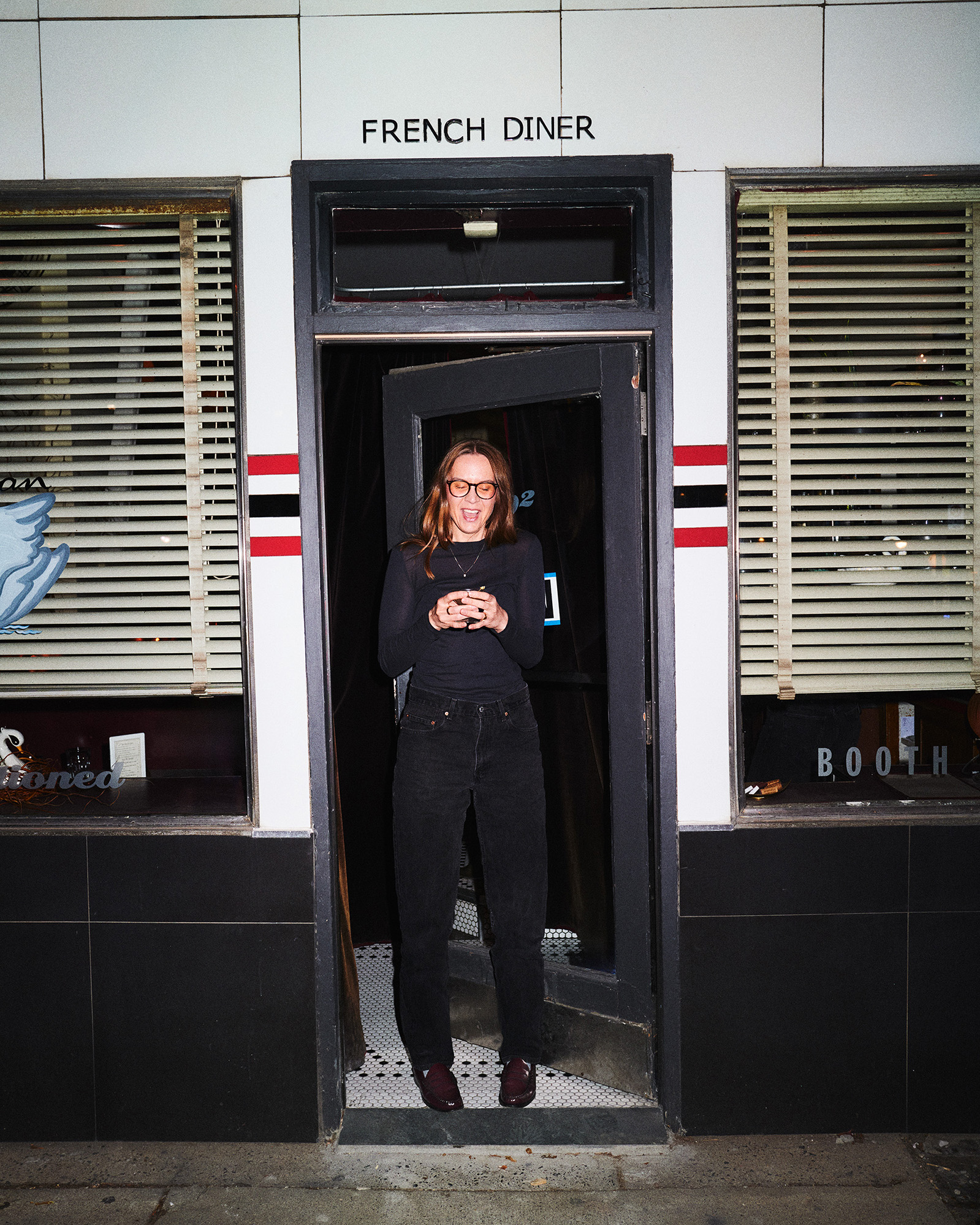
And was there like an epiphany moment, like once you were there that kind of like, you were like, wow, this really works for me. This is like where I’m supposed to be.
100%. Yeah, yeah. I started as soon as I saw that show in Chicago, I decided I’m moving. I started reading about improv and sketch. And then I moved and took every class under the sun and just started doing all the circuits, you know, all the comedy theatres here or, you know, anywhere, really, they have all these, you know, improv 101, 102, 103. And I did everything, sketch, improv, writing, and then I started performing.
And I’ve read that while you don’t do stand up, that doing sketch comedy, but like, often opening up for comics, you’ve done, you know, the Edinburgh Festival Fringe, you’ve opened for people like Matteo Lane and stuff like that. Like, and I think with the Matteo Lane bit, like you kind of go, “I’m so sorry, but you’re about to see some sketch comedy.” Like, “I know you’re probably expecting stand up. But here I am, one woman theatre,” essentially. Do you find that you get like a weird kind of people who are like, sketch? Or do you have to kind of like mentally prepare people?
Okay, that’s an incredible question, because it’s exactly how I start an opening set. For someone who’s doing stand up, I’ll say, you might be thinking, am I really gonna see someone do sketch comedy right now? And I’m so sorry, the answer to that question is yes.
But no, I find that, you know, you call it out, you tell people what to expect, and then people are pretty open minded about it. Especially at a Matteo Lane show, he kind of primes his audience for all sorts of things, because his show is also incredibly physical and act outy. And yeah, they’re up for it. And I do a lot of Italian comedy, and his audience is very Italian. So it really, really works out.
That helped your audition.
It did.
You’re quite fluent.
Yes.
Okay, good. And you’re quite physical, too. I mean, like, I know that I read an interview where you kind of like, you know, that you are like, kind of clowning around, like, there’s a lot of clowning, for lack of a better word, like, how would you describe that kind of like, brand of physical comedy? Do you think it was something that like, you really enjoy? Because maybe clowning around wasn’t something that like, maybe your parents were kind of, were they kind of clowny people themselves? Or no?
My father is an incredible clown. He actually went to clowning school.
Oh, did he?
He did, yes.
Does he ever give you pointers?
Always. I have no show that he watches that doesn’t result in a note at least, but that’s okay. I take it in stride. Yes, I love physical comedy. I think it’s just another plane to play in that can add so much.
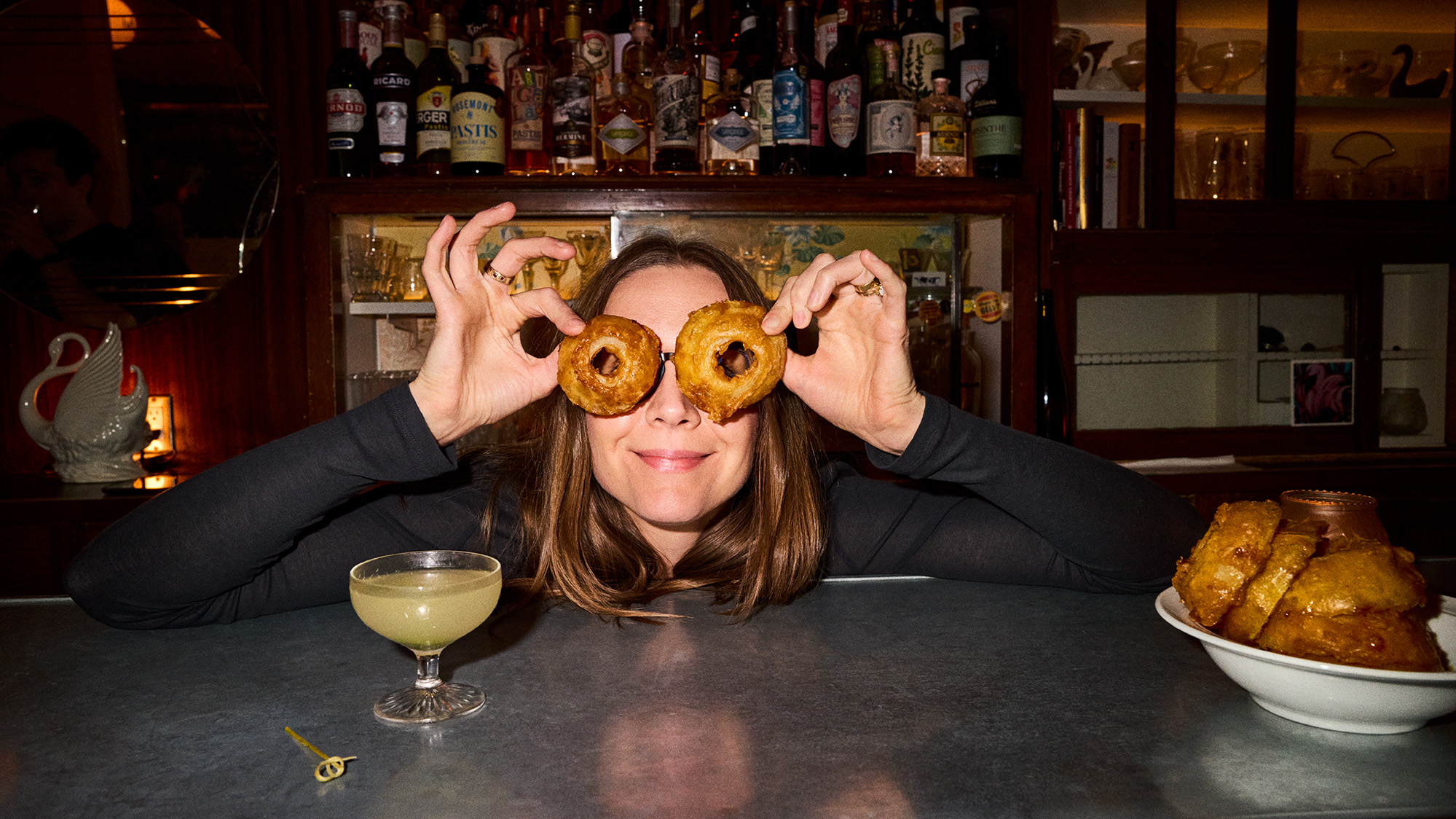
And like, what does your mom think about all of this, especially when you said, you know, hey, I’m gonna not do classical theater, and I’m just gonna, I’m gonna do physical improv and Second City. And what was her reaction to that?
Her reaction was like, great. Keep doing the hobby, but get a master’s degree. Yeah, so she made me, I will say that I wasn’t super keen on continuing schooling at that time. Obviously, I look back now, and I’m like, very thankful that I did. But yeah, she kind of said, yeah, great, keep doing it, but you’re not gonna not go to school, which is very privileged and incredibly lucky that she pushed me to do that. I think it wasn’t until I was able to sustain myself on comedy alone, or that it really started to become a job that I think she clued into, oh, this is might be a thing.
And then at some point, you start doing things online on like TikTok and Instagram and stuff like that. How did that start for you? Because that seems to be when things really kind of clicked with people.
Yeah, that started in 2020, like it did for a lot of people. Yeah, I went from, you know, performing all the time to everything being closed down. And I think for a lot of people, there was nowhere else to turn but the internet.
So yeah, I thought, why don’t I just do the characters that I’ve been doing on stage? Why don’t I just try and figure it out for the internet? And it honestly was a way to just pass the time and it was a new creative outlet. But yeah, that kind of then took its own. I had no idea that I just couldn’t even believe that this is my life. Because I, if I’ll be honest, if I were, if I wasn’t forced to make online content, I don’t think that I would have.
And like, did you find that like, what was connecting online was different than what connected on stage? Or was it like a different, you know, kind of way of approaching it?
It’s a different, completely different medium, almost to make because it’s so, so different. I’ll say that prior to the internet stuff, I was doing a lot of, I would say more alt clowny sketch content. And I then started to really make like, characters and videos based on my life, and you know, my parents, and that really resonated with people. But that wasn’t stuff I was doing before. I was really still, I think, getting excited about doing crazy stuff on stage.
And like, you know, about these impressions of your parents, sort of your German mom and your Italian dad.
[AUDIO CLIP]
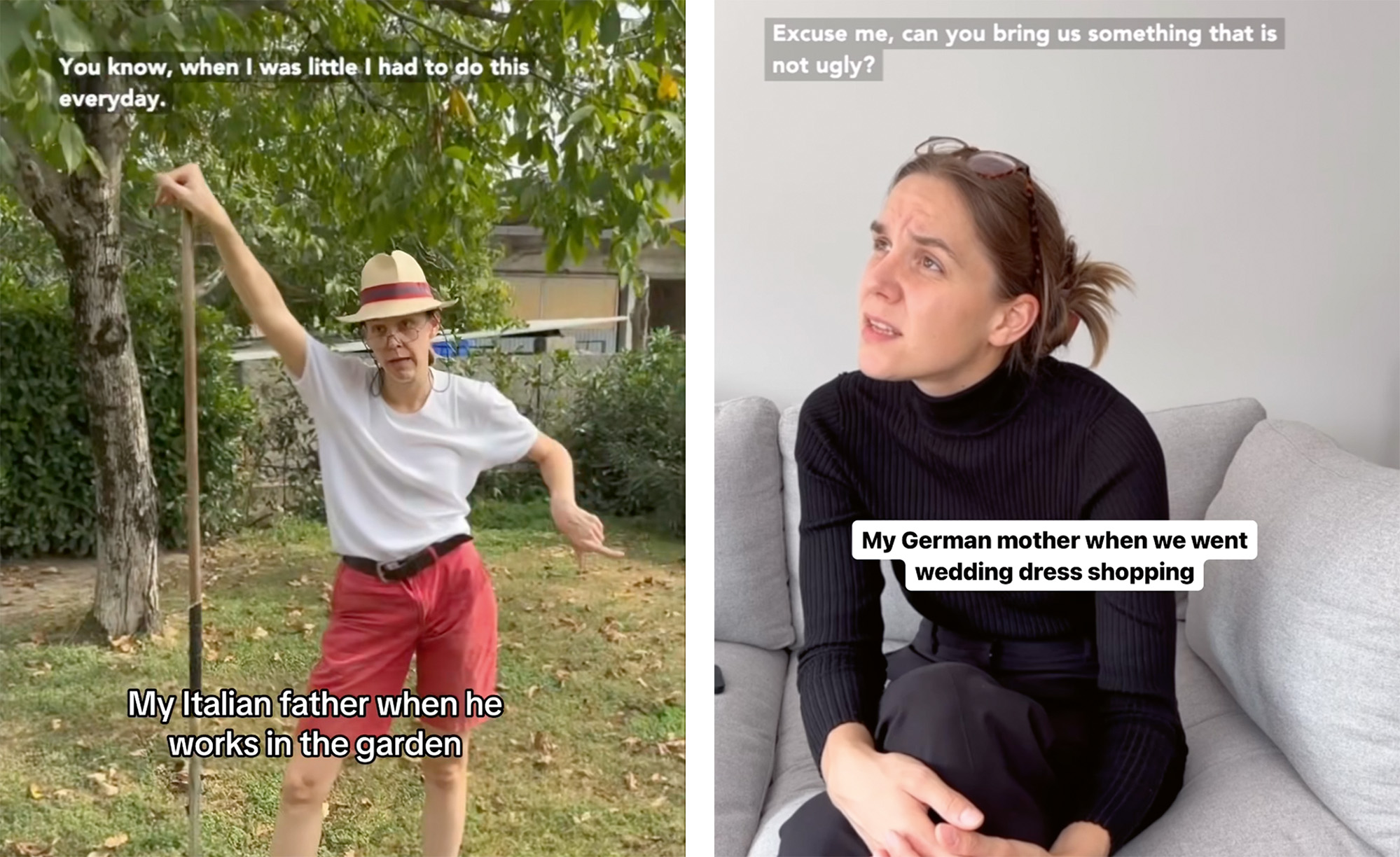
Like, obviously, they’re a little bit over the top now. But I think there’s definitely something that rings true for a lot of people. How did that kind of start? And then how did it sort of evolve into something that’s more, something that is really kind of true to your parents specifically, or just sort of German mom in general? Like, it’s kind of a new character.
Yeah, I remember I did the German mom, the first German mom video just one random afternoon. And I remember thinking, oh my gosh, this is so my mom specifically. Like, yes, it’s a German mom, but it’s my mom.
And I wonder who’s even gonna relate. But it was kind of a lesson in the the importance of specificity in comedy, which I knew theoretically, but it was then that I realized I’m literally saying direct quotes from this one person. But they are somehow relatable.
So yeah, once I started, I was like, oh, wow, I was really surprised by the reaction. And yeah, I was like, oh my gosh, well, I gotta keep going. She’s really fun to do.
Obviously, it’s as you say, incredibly exaggerated now and a two dimensional character who’s kind of taken a life on its own. Like sometimes my mom will do something and we’ll be like, that was kind of German mom of you. As if it’s like she dips into that, that facet of her personality.
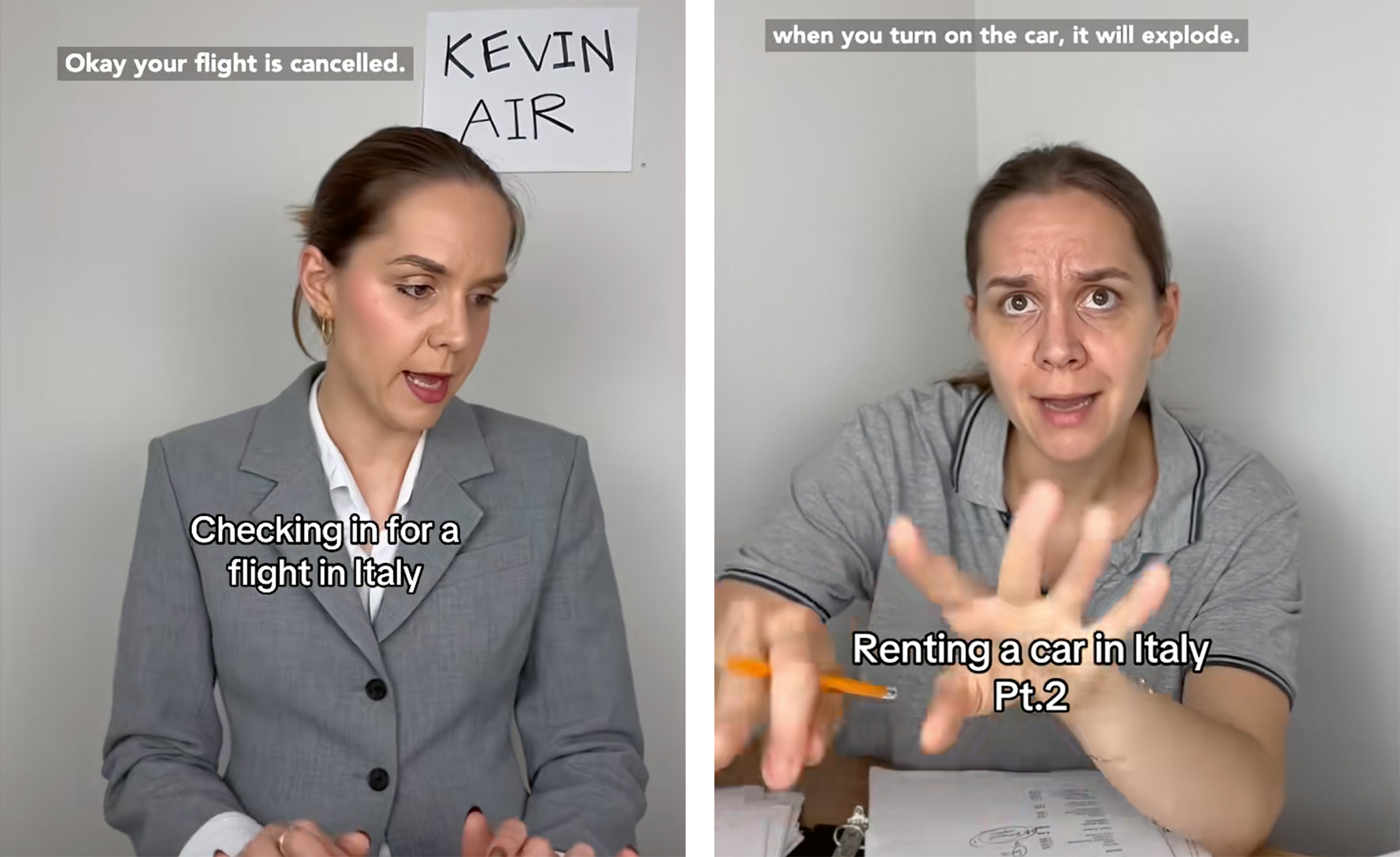
And obviously, like, then at some point, I think it’s maybe, maybe it’s almost two years ago now sort of the Italian check-in character. Which seems to really kind of connect with just about anybody who’s ever been to Italy, or been to an airport. How did that start? Was it a trip to Italy that kind of made you go, yeah, this has legs?
Yeah, I think the first kind of sprinkling of it I did a year ago, with the Italian, renting a car in Italy, after a horrifying personal experience in a car rental at an airport in Southern Italy. And I remember being in that environment, hating my life. But then as often, these things come out of that feeling of, oh my god, this sucks.
Wait, is this a sketch? And then all of a sudden, I’m like, super excited to be in that horrible place. So then, yeah, of course, that I’ve traveling a lot to Italy, encountering this, this specific person at a check-in, I thought this is probably something I don’t know, I’m going to try.
She didn’t have a name though, or anything until I posted that, that first one. And yeah, people…
Did she reach out? Like, “that was me?”
She’s like, please, cease and desist immediately.
Now, are you sort of attempted to record people on your iPhone when you check in at an airport or try to get a car, just to be like, I need notes?
I’ll definitely have my notes app open.
Oh, you do? Okay.
I do. Yes, yes. I’ll write down stuff, quotes, feelings.
What was your horrible experience?
Oh, well, we were in Southern Italy, and we rented a car, and we got a flat tire. And we called the assistance number, and they came in to tow it, which was a surprise. But we were like, okay. And they were like, just go to the airport, and we’ll get another car. And I was like, with what method of… How are we supposed to get to the airport? Like, it’s your problem. I’m like, okay, great. Get a taxi, which the machine on the taxi didn’t work. They’re like, go to the airport, get cash. I’m like, great. ATMs didn’t work in the airport. But the beauty of it is, the guy was like, I know your Airbnb host. You pay him, he’ll pay me. I’m like, it’s all getting finangled somehow. Yes, get to the rental, and we get a new car, but they say we have to pay for the flat tire and the towing. But we’re like, the towing, they just came and towed it. They didn’t tell us that they were going to do this. They’re like, well, that’s the towing company. That’s not our problem. You need to pay the towing company.
It’s just a whole series of events of being like, that’s not our problem. You need to call this number, they’ll help you. The number doesn’t work. You need to go to this person, they’ll help you. They’re not there. It was just a drilling down of, please just let us have this car. They’re like, fine, fine, fine.
If you think you could channel either your mother or your dad to tell us something about you that you don’t get to come across in some of your work, what do you think they would say? To channel them to be like, hey, and you know what? This is what she’s like. How would kind of, how would your mom do an impression of you?
Oh, my mom would say, “You know, it’s really surprising, I think, for some people to know that Laura is actually a really obsessive cleaner in the house. She’s always cleaning with the vacuum cleaner or something. I’m like, take a break from this cleaning. The house is clean, but you come over to her house, she lifts your legs up to get the carpet. It’s like, yeah, completely rude, actually.” That’s what she would say. And then my dad, anytime I’m like, what would you do if you did an impression of me? He just references this one thing I said when I was, I think, four years old, when I got a piece of cake and my friend got a piece of cake and her cake was bigger. And I said, “it’s small.” So that’s who I am to him still.
(SPONSOR BREAK)
Do you do it, you know, at home in Toronto before you go out on the road and stuff like that?
Yeah, so yes, this is my fourth or fifth show, but the second big international tour. I did the Sit Up Straight Tour two years ago, or in 2024, and this will be the second one. I’m very excited about it. It’s an hour of new, brand new material. And yes, I’m work shopping it now. So I like to do a lot of, we call them work in progress shows here in Toronto, at my local comedy theatre, to, yeah, test out new material and slowly, slowly put together a new hour.
And so tell me about the new hour, like, what’s the gist of it?
So it’s getting figured out right now. But we typically start with pure, the sketches that are going to, that are going to go in. And it’s, I work with a director, his name is Alistair Forbes. We start with premise generation, just interesting things that I’ve been thinking about, premises, thoughts, characters that I know I obviously want in the show. Like I’ll say, we definitely have need to have Chiara, the airport lady in the show and German Mom has to be in the show. So those are needs.
And then and then the other things we play around with sort of themes that I’m feeling. And then yeah, once we’ve got some pure sketch going on, then we’ll start to put together ideally the connective tissue, the story on top, or what kind of links all of these sketches together. We’re trying to figure that out now. But what’s coming up so far is, I just turned 30. So this idea of, of being in your thirties, and then what does that mean? And how does that feel?
And also this other idea of parents, obviously, I do my parents on as characters, but more, how Laura, me, I feel about, about parents, about these pillars in my life. And that kind of links into the 30 of it. So we’re kind of, talking about those themes. Although if this comes out after the tour starts, I might, maybe the show has nothing to do with those things. I don’t know. I don’t know yet. That’s just what’s coming up right now.
I will say that I did buy a t-shirt. I did. Yes, of course I did. I should have worn it actually for this interview now. And I feel stupid that I didn’t. But you do spell calm down in a very Italian English kind of way. Did anyone ever tell you to calm down?
Well, I mean, the, check-in attendant who, was, the biggest inspiration for, for the Chiara character did say, to me and my husband that we had to calm down. After she wouldn’t let us bring a suitcase onto the plane. And, I, I just did it in the first Chiara video. And then I realized, the more and more I said it, the more garbled the word became. And I mean, I didn’t know, again, I didn’t know that, that, that people would like that phrase. So it just kind of happened. And then, and then I’m seeing the comments or people are messaging me like Carlton song. I’m like, Oh, this is a, maybe it’s something. I don’t know.
Have you ever gotten any feedback to the sketches when you’re at an airport?
Not yet. And I’m deeply scared, to be, banned or, to hate me. Cause I’m making fun of them. No, not yet. Not yet.
And of course they need to have a little bit of a fangirl moment. You opened for Tina Fey and Amy Poehler on their, restless leg tour, which I just, the name of it makes me laugh. How did that go? And I’m sure that kind of pressure must be sort of insurmountable. I mean, like, I mean, God, my God, like opening sketch do how doing sketch comedy for those two must be just, I mean, alone, it’s like soul breaking pressure. I don’t know how you do it.
Yeah. Yeah. It was, when I got the gig I think I did like five flips, mentally and physically. I mean, to be honest, I was really nervous for them to see, my stuff. But I was mainly, really nervous about meeting them and about, like how would, what, what would, what are the backstage vibes? Like what, what’s it going to be like from person to person, you know? Cause I also didn’t know if they would watch my set yet. I don’t know if they were doing their own thing.
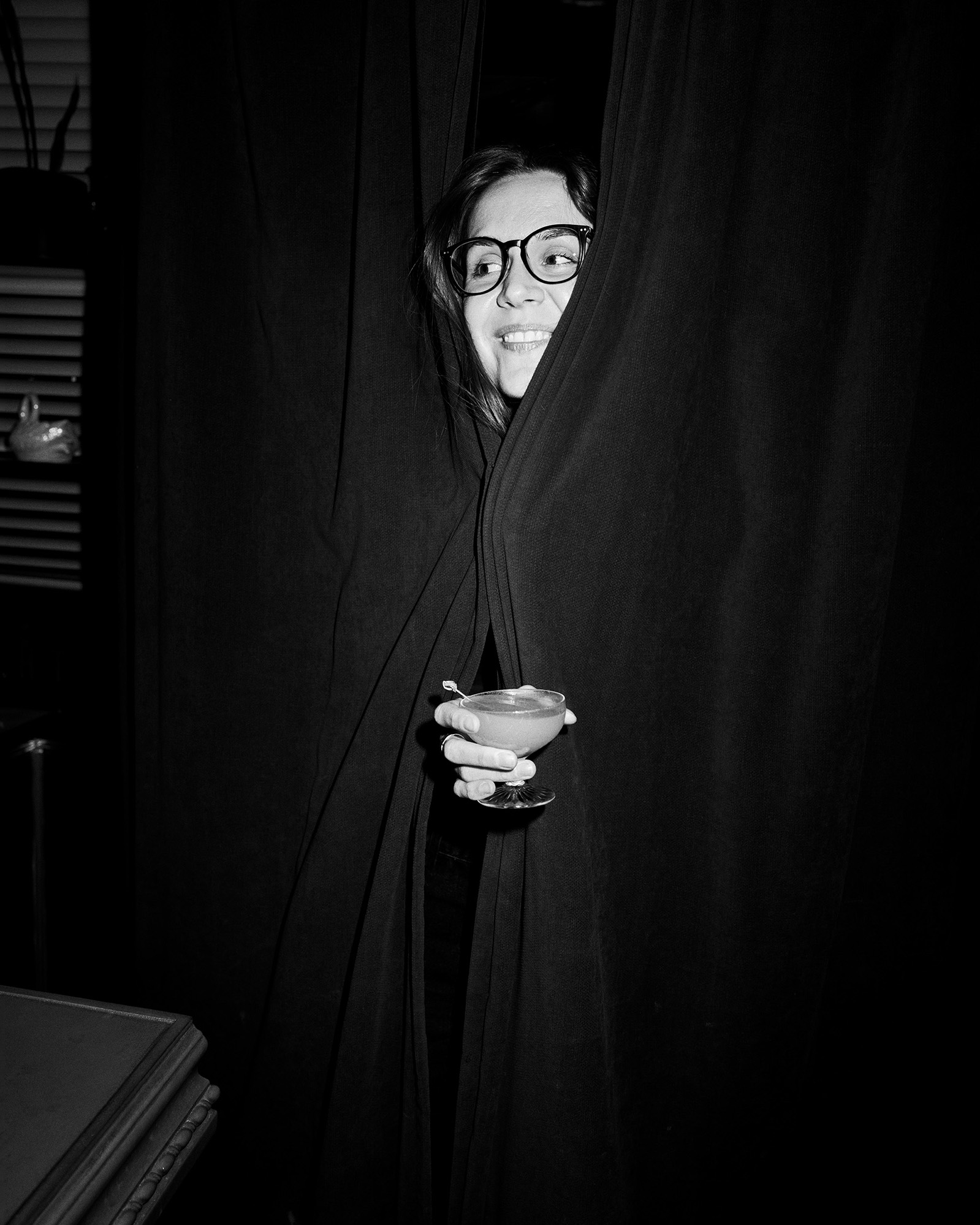
Did you have to audition for them in person?
No.
Okay. Okay.
No. They knew I had my show. And I think they knew me from online and they love to highlight female sketch comedians or comedians in general. But I think if it’s sketch comedians, it’s a plus, cause that’s who they are. And yeah, the call just came in and, it was amazing. I learned so much by, it was almost, can I just say that it was, cause I did my, I knew that I had to put up kind of what I had the, my best of the best of what I had at the time, of, of sketches that I’d been running at during my previous tours.
So there was a part of me that, that, that was like, okay, I know the sketches back to front. I’ve done this billions of times. It’s like, they’ll, I, they’ve been workshopped. I, I can trust these, I can trust these, these sketches. It was, so that part was kind of like, you know, me, audience, that was kind of not the most anxiety inducing part. I think the anxiety inducing part was hanging out or just, them watching or yeah, it was, What were the backstage vibes like? Oh, great. I mean, they’re exactly who you think they are. They’re incredibly kind, supportive, and hilarious.
They fostered such a wonderful work environment and team. You can tell that they’re like, they just are loved and, and as they should be. They’re amazing. And the backstage vibes are work, which I was like, of course, of course I watch them, you know, work on new jokes for each night and, write new material and, and, yeah, we’re coming off the, the, the show being like, here are the notes. Here’s what didn’t, here’s what felt, maybe here’s what we’re going to do differently next time. And I was like, oh, wow, it never ends.
Like, I don’t think if you’re, you know, obviously they’re who they are because of this, but at that level, I think they, at that level, I think they could just come on stage, do whatever. And people would scream their heads off, but they, they don’t, they, they work so, so hard and keep finessing their material even during the show. And it was such a, I was so lucky to witness that.
And obviously, you know, you’ve done comedy abroad and, and all this stuff. Have you ever done it in Italy or Germany?
Yes.
Okay. How does that go down? Especially in Italy. Do they have like, their culture must be, it’s different, right? I’ve seen Matteo Lane has done some videos about doing his bit in, doing his standup in Italy, but like you’re doing an impression, you’re doing a character, not really an impression of where the funny part is how Italian they are.
Yes. Yeah, I went to Italy and Germany on the last tour and, I will say it was like, it, it, it was like coming home. Like it was, they were so open and receptive to the show.
And to even the parts of the show that weren’t about cultural satire, in Italy, I was a little bit worried, because I had the only messages that I got from people when I announced a tour that asked me if the show was going to be in Italian were from Italians. So I was kind of like, is there going to be, a sort of a different reaction to, to the jokes and the rhythms of the show? Because, I honestly wasn’t sure how much English, they were, there was kind of English, under, English, how do I say, you know, English, understand. What’s the word? Like English comprehension. Comprehension.
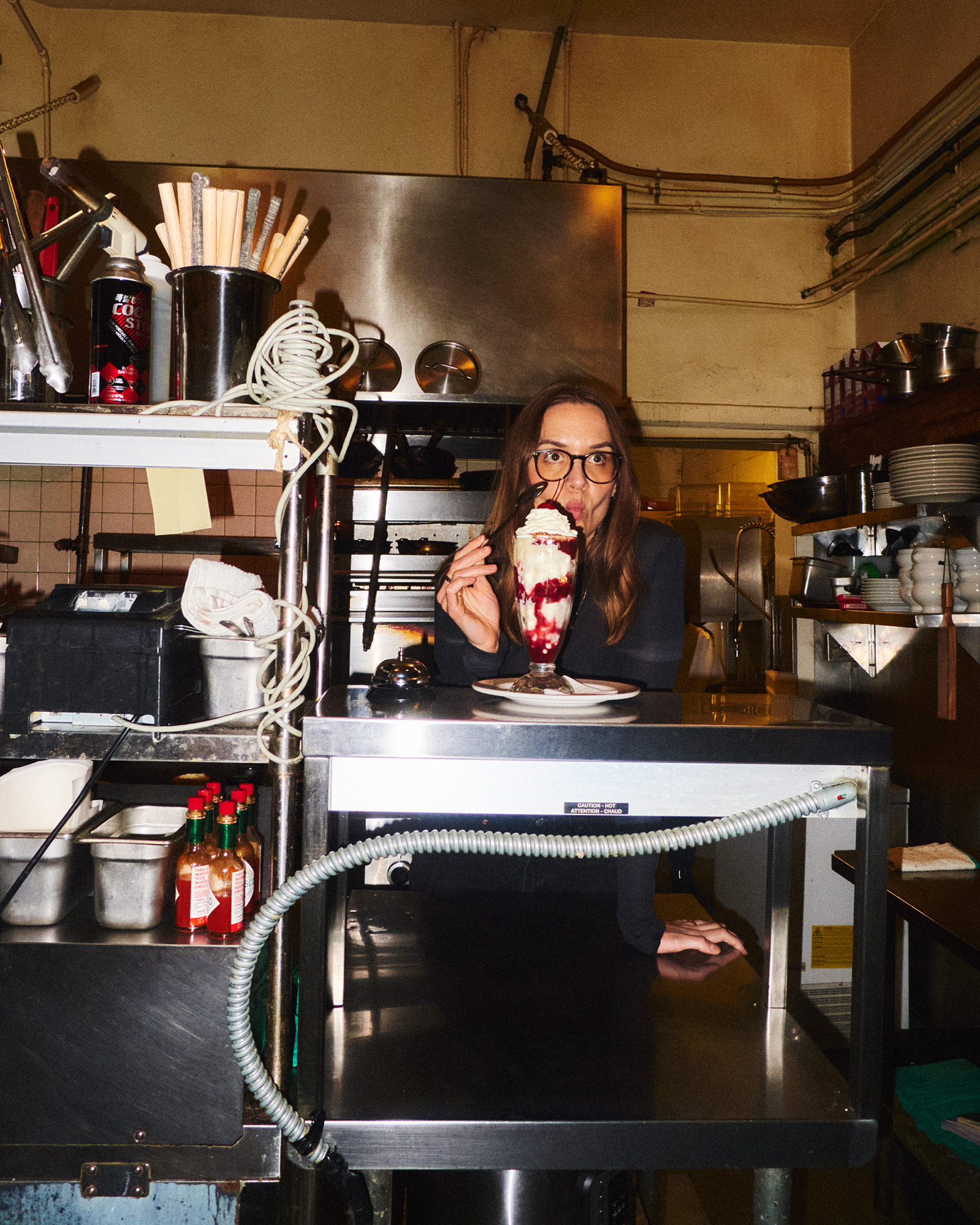
Did you do it in Italian?
No. I mean, I have a to the audience and I sprinkled some Italian in, but no, they all, they all understood it. They all got it. And one thing that I will say that’s very different about an Italian audience, compared to anywhere else is they do a lot of clapping. Like a joke will be like a big joke lands real hard and they’re clapping in the middle. Yeah. They’re clapping. So lots of like applause breaks. But not because it’s like blowing the roof off the place. It’s just the reaction is an applause. Yeah.
Kind of nice and formal, but also probably a little bit, might break the rhythm a little bit.
Yeah. It was definitely a rhythm shift. But I mean, it was, it was so much fun. And then Germany was amazing too. They were so fun. Yeah.
As soon as I asked people on the, on the show to describe themselves in three words, but I was wondering if you could describe, Chiara in three words, how would you describe Chiara? How would Chiara describe herself?
Oh, well Chiara would describe herself as, as differently than I would, but, Chiara would say, “okay, I’m beautiful. I’m hardworking and I’m compelling.” And I would describe her as rude, snarky and, so beyond confident.
Thank you to my guest, Laura Ramoso, and to everyone at Three Arts for making this episode happen. The editor of The Grand Tourist is Stan Hall. To keep this going, don’t forget to visit our website and sign up for our newsletter, The Grand Tourist Curator at thegrandtourist.net. And follow me on Instagram @danrubinstein. And follow The Grand Tourist on Apple Podcasts, Spotify, or wherever you like to listen and leave us a rating or comment. Every little bit helps. Til next time!
(END OF TRANSCRIPT)
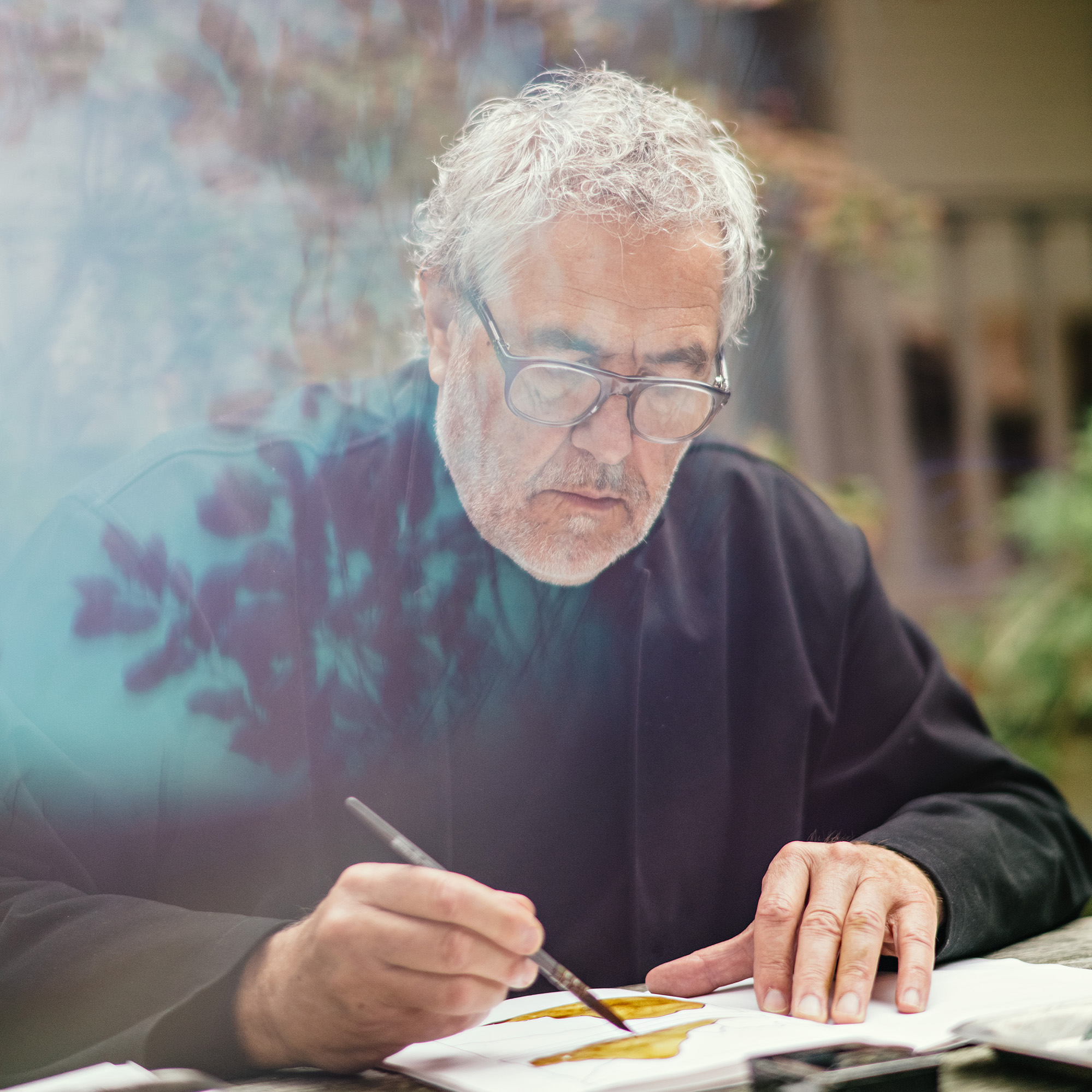
In the hands of this French artist and designer, the most elemental experimentations with watercolors and shapes give rise to the most elegant results.

Once a far-fetched destination, the Frozen Continent has seen tourism more than double over the last decade. The storied cruise line Ponant Explorations is leading the charge with new itineraries that feel out of this world.

Wearstler does it all: interior designer, product guru, hotel mastermind, book author. Now the L.A. maven adds curator to her résumé. For our spring issue, she shares some of her favorite independent talents in Amsterdam with us.