This Beloved Fashion Designer’s First Rug Collection Is Gloriously Imperfect
Christopher John Rogers worked with The Rug Company to create pieces that celebrate the creative process, taking inspiration from chalk lines, marker tests, and more.

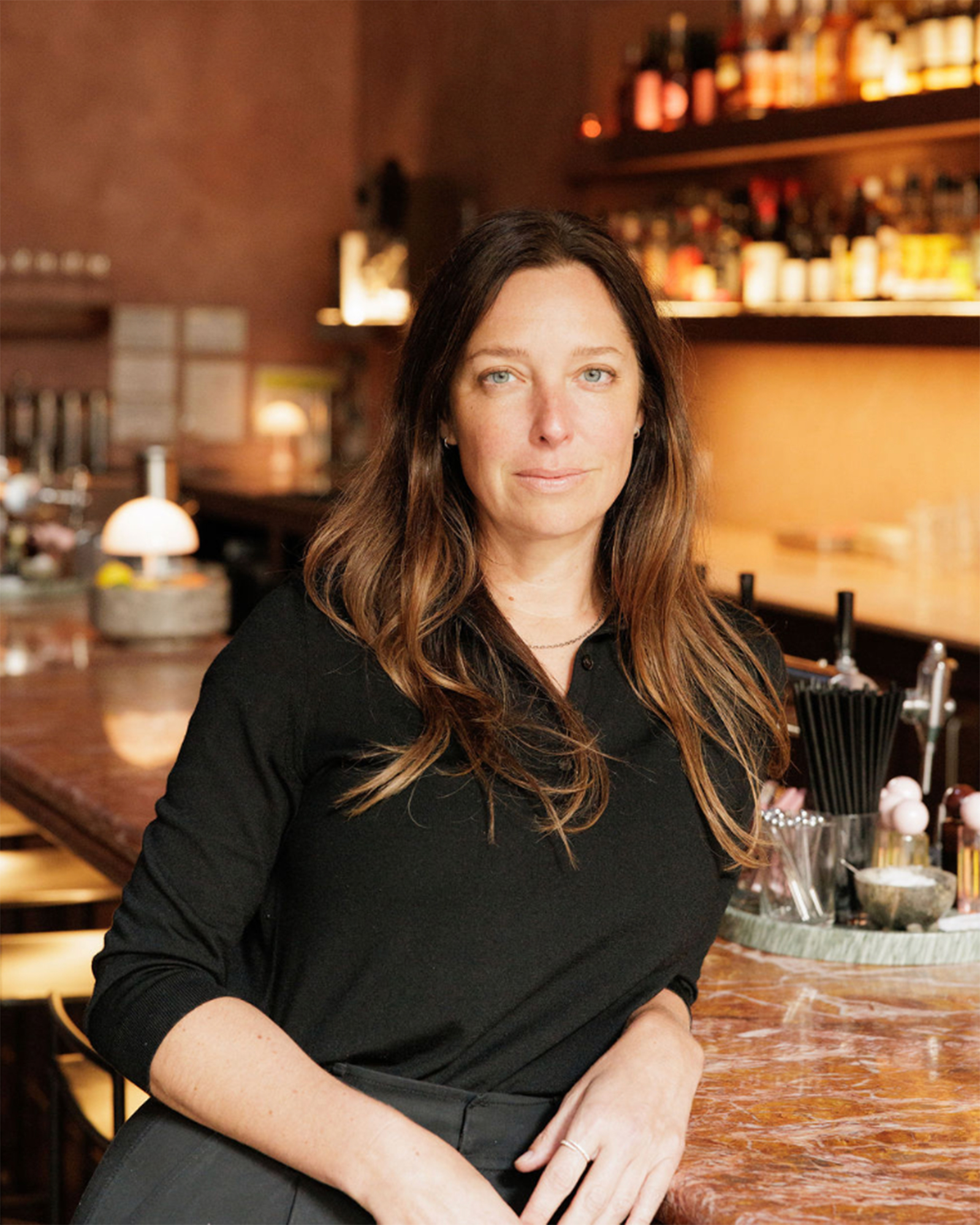
New York has one of the buzziest food scenes in the world—one that chef Julia Jaksic immersed herself in for over 15 years. After attending Le Cordon Bleu College of Culinary Arts in Chicago, the American-Croatian chef promptly relocated to the city that never sleeps. She landed a gig as the opening sous chef at Employees Only, a now-revered West Village cocktail bar beloved for its elevated, speakeasy-style setting. Jaksic worked her way up to executive chef, curating a menu that blended American and European-inspired fare, from Amish chicken and steak tartar to tuna crudo and bone marrow poppers.
Jaksic and her husband moved to Nashville in 2015, where he was originally from, and where his parents planned to retire. It was a time of immense growth for the city, with a population that’s ballooned by about 20 percent in the years since Jaksic’s relocation. That sense of momentum inspired new culinary outposts from the seasoned chef. She started with Cafe Roze in 2017, her take on an all-day cafe, and expanded to Roze Pony, a similar-but-different restaurant on the opposite side of town. Her most recent endeavor, which opened its doors this year, is Bar Roza, an Italian-inspired cocktail bar nestled in a historic downtown shopping arcade. The vision is as different from traditional Nashville bar culture as you can possibly get: instead of beer and shots, Roza serves up saffron-infused cocktails, mortadella focaccia, and expertly-crafted aperitifs.
Jaksic’s movements in the Tennessee capital are in part inspired by the New York institutions that she worked at, but also by her Croatian heritage. Food was central to family gatherings at home in her native Milwaukee—her Nashville restaurants, similarly, have brought together her now-closest friends. “I didn’t know anyone here at the time, and an all-day cafe is a great way to meet people,” she says. “Two of my best friends were at my first table on the very first day that we opened at Cafe Roze.”
You were born and raised in Milwaukee, and your father worked in a butcher shop. What was that like growing up?
My father’s from Croatia. During deer season, he would butcher all the deer that everyone had killed, and during the summer we would have roasted pigs, chickens, lamb, and things like that. It was a very eastern European, meat-oriented childhood. We had pig heads in the refrigerator—definitely not great for popularity contests when you’re in high school.
I’m curious when cooking came into your life. Did your parents teach you family recipes?
Ever since I was super tiny, we would spend our afternoons into nights as well as weekends going over to other Croatian families’ houses and having six or seven hour dinners. I think as immigrants you bring your cultures and traditions with you, so I was raised with a lot of typical foods from Croatia, like sausages and sarma. I was just on vacation with my friends and we were talking about sauerkraut—growing up there were these huge wine barrels of sauerkraut in my grandmother’s basement. My grandmother was an insanely excellent cook, and she would make everything. So food was always the main event, and it was a big part of my childhood.
Before you pursued a career in cooking, you moved to Chicago and worked in the tech industry. What was that like?
It was weird. It was when we still had ISPs and when there was dial-up. I knew when I was really young I wanted to leave Milwaukee ASAP, so I did a year of general undergrad there and then moved to Chicago. I got this tech job—I needed a job in the big city. But I realized when I left home how important the food piece of everything was to me. I remember watching Food Network, and Emeril [Lagasse] had just started his show. There was just this aha moment where I realized that food could also be a career. I never thought about it that way, because food was just a part of life growing up. So I enrolled in culinary school in Chicago and my dad was like, “What? What are you talking about?” But I worked there, and I came to New York City pretty immediately after that.
What brought you to New York?
It was always the dream. I knew from a very young age that I wanted to move to the city, but going to culinary school in Chicago was a bit more practical. I arrived in New York and I had a bunch of interviews set up at fine dining-leaning places; a mutual friend suggested that I interview at the Soho Grand Hotel. So I went, and I really got along with Missy Robbins—she was the chef de cuisine there at the time. At the time it was super busy, but there were no awards, stars, nothing. But it was a great experience.
I ended up leaving Soho Grand and I ended up at Employees Only by chance. Some of the owners there are Serbian and Bosnian and Greek, so there was this whole Balkan vibe, and it felt really familiar to me. I just loved those guys. It’s really interesting, because it’s a cocktail bar, but we also had this full food program. On the late night menu, I got to do a lot of Balkan-focused dishes. The whole ideology was they wanted food that would stand up to drinking a lot of cocktails. It was very meat focused. So I was in New York all-in for about 15 years.
Then I was ready to leave. I opened Employees Only in Singapore, so I was there, and I was also the original consulting chef at Jack’s Wife Freda, and I wrote their cookbook. But I really loved Nashville. I liked that it was a small city, but there was a lot of creativity here. It’s a city built on music; East Nashville, which is where I opened my first restaurant, felt very much like Williamsburg when I moved there in 2001—everyone’s an artist. Now I’ve been in Nashville for 10 years. Which is crazy, but it’s changed a lot here.
What is the culinary scene like in Nashville now versus when you first moved there?
When I got here there were a handful of independent restaurants that I would frequent. I thought I was late to the party, but it was still an up-and-coming city. Now, post 2020, the dining scene is a lot of corporate restaurants coming in from other cities. There’s still a great, thriving independent restaurant scene here too, but each piece of that struggles in some way with rents rising and the cost of living rising. The price per square foot rent prices are insane over the last 10 years. People want independent restaurants, but it’s hard sometimes… We have a Pastis here now, you know? And a Soho House.
So it’s changed in a lot of ways that you would expect a growing city to change. The music industry has always been here, so there’s always been money—that’s not what I think has changed. I think there are a lot of opportunities, and a lot of tech is moving here: Oracle is building a huge facility. I just think it’s a growing city. The population has grown a ton, and with that comes all this other stuff.
So when you moved from New York to Nashville, you opened your first restaurant, Cafe Roze. Why did this particular restaurant make sense for Nashville?
I thought I was going to come here and open something more like Employees Only—something that was bar-focused with a late-night vibe. Then I arrived and I realized that there wasn’t an all-day cafe. Coming from New York, that was a bit of a culture shock. A lot of the restaurants I wanted to eat at in Nashville only did lunch for a two or three hour window—then they closed and reopened for dinner. There wasn’t something that was all day and all night. We take that for granted in bigger cities. In terms of the menu, I wanted something that had healthier options—you can get a burger, but you can also get a great salad.
I was in Nashville for a year before I started digging into what I was going to do here. Cafe Roze just felt right, and it was the concept that made the most sense. I ended up finding this really cute corner space for it in an old building in East Nashville. Also, I hadn’t really thought about this recently, but I didn’t know anyone here at the time, and an all-day cafe is a great way to meet new friends. Two of my now best friends were at my first table on the first day that we opened.
It felt like New York, and it felt like home to me. We decided to do breakfast, lunch, and dinner seven days a week, not stopping service. It was kind of insane, because no one was running hours like that here, except Waffle House, but they never close, they’re 24 hours. But it’s a different pace than New York, and I was used to New York numbers and sales, so I definitely questioned myself in the beginning.
I imagine it was quite a jump coming from Employees Only too.
It was also just that there wasn’t a concept like Cafe Roze open here yet. I think people saw the word cafe and thought we were a coffee shop. Dinner took a long time to take off—but now we’re turning 10 next year.
How did you decide on the menu? Is it similar to what you have at Roze Pony now?
There are so many great farms in proximity to Nashville—you can just drive out there in the morning and be there in 15 or 20 minutes. So it was great to meet the producers and farmers and to work with them. I wanted to have a really great burger, and I wanted great salads. I wanted you to be able to come in and have a simple breakfast with great sourdough and farm eggs. We have this amazing guy that makes bacon down the street. I also wanted an egg bowl, which is lighter and more of a Mediterranean vibe. There’s sort of something for everyone on our all-day menu.
The roots of Cafe Roze are really about being a great neighborhood place. You can bring a book, come in at three o’clock or four o’clock, and have a glass of wine and some French fries. I had never done a happy hour in my life, but we started doing a happy hour here the way I would want to do one, which is with oysters and crudite. And I was at Cafe Roze all the time in the beginning. I think I worked almost every service.
Then Roze Pony opened three years later. I had so many people driving across town to come to Cafe Roze, and everyone was asking when we were opening on the west side. So it made a lot of sense to open on the other side of the town, in Belle Meade, in a neighborhood where there was a really strong sense of community. The menu is a similar concept, but I didn’t want to cut and paste—I don’t find that inspiring. The space, also, is in a strip mall; there was a Subway sandwich shop here for 24 years.
But it really makes sense for the neighborhood, and the menu is so different. We have a pastry chef, and there are a lot of families here and a lot of schools.
And then you have Bar Roza, which opened this year. Is that your Employees Only dream coming to life in Nashville?
Yeah, it’s going back to the cocktail side of things. So the beverage director, Owen Gibler, is an incredible bartender. He and his wife, Rachel, had moved to Singapore to help us run the Singapore location of Employees Only. They were ready to move back to the states, and they moved to Nashville. He did the program at Roze Pony, and it’s amazing. We wanted to do a cocktail bar together for a while, and after doing two restaurants here I was ready for a change of concept.
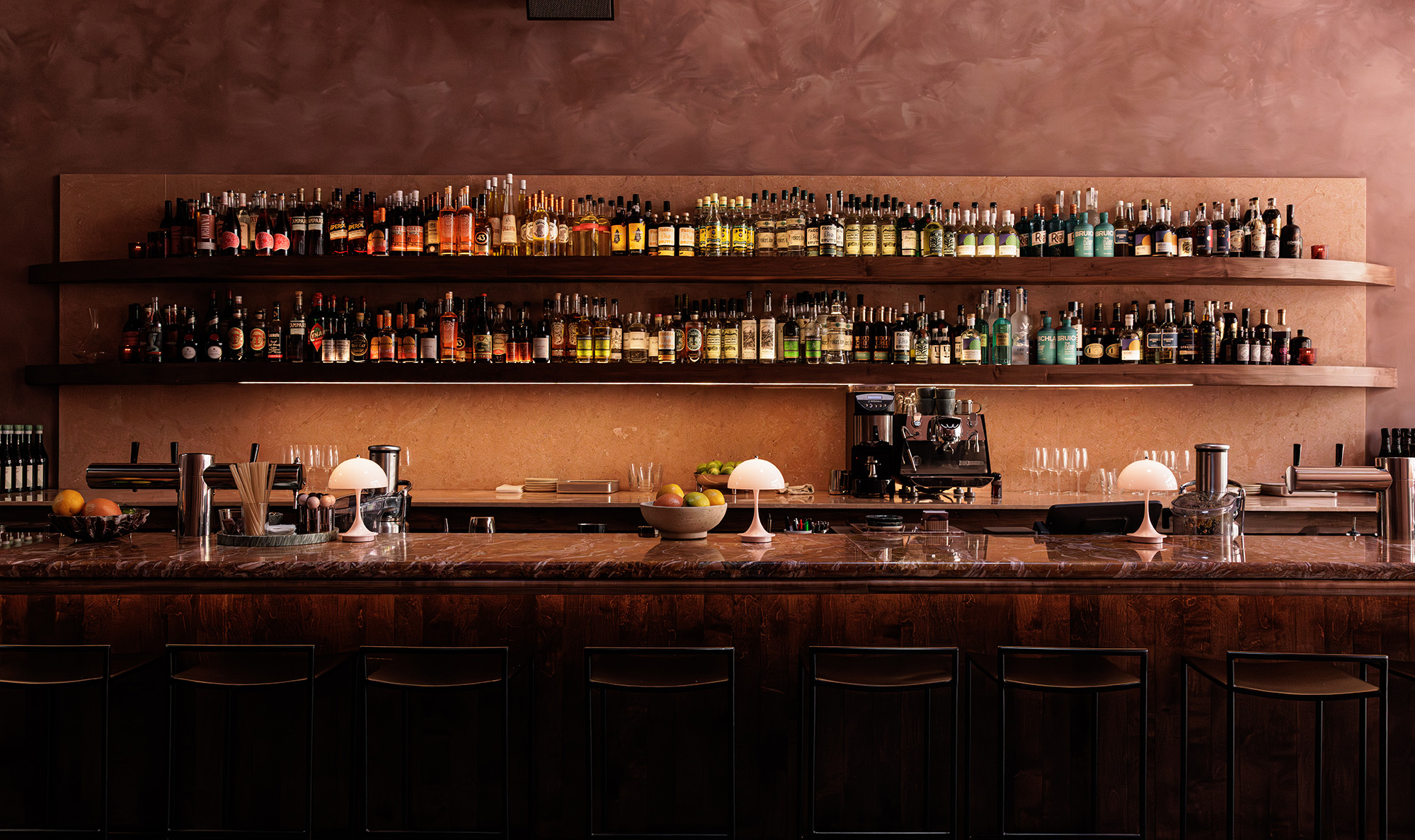
I really love historic spaces. We found the Arcade, an enclosed shopping center that was built in 1902, and cuts through two avenues. The guy that built it went to the Vittorio Emmanuele II shopping arcade in Milan and was inspired by that. He moved back to Nashville, and built this place. Apparently, back in the day, it was really fashionable to go there. A lot of people who are from here would go when they were kids. So it really has a beautiful history, and in Nashville, because it’s changed so much, a lot of the old buildings have come down for new ones. So I just loved the story of it. And we’re off an alley in this little building. It’s special, and it’s a discovery. You kind of have to find us, which just felt right for a cocktail bar.
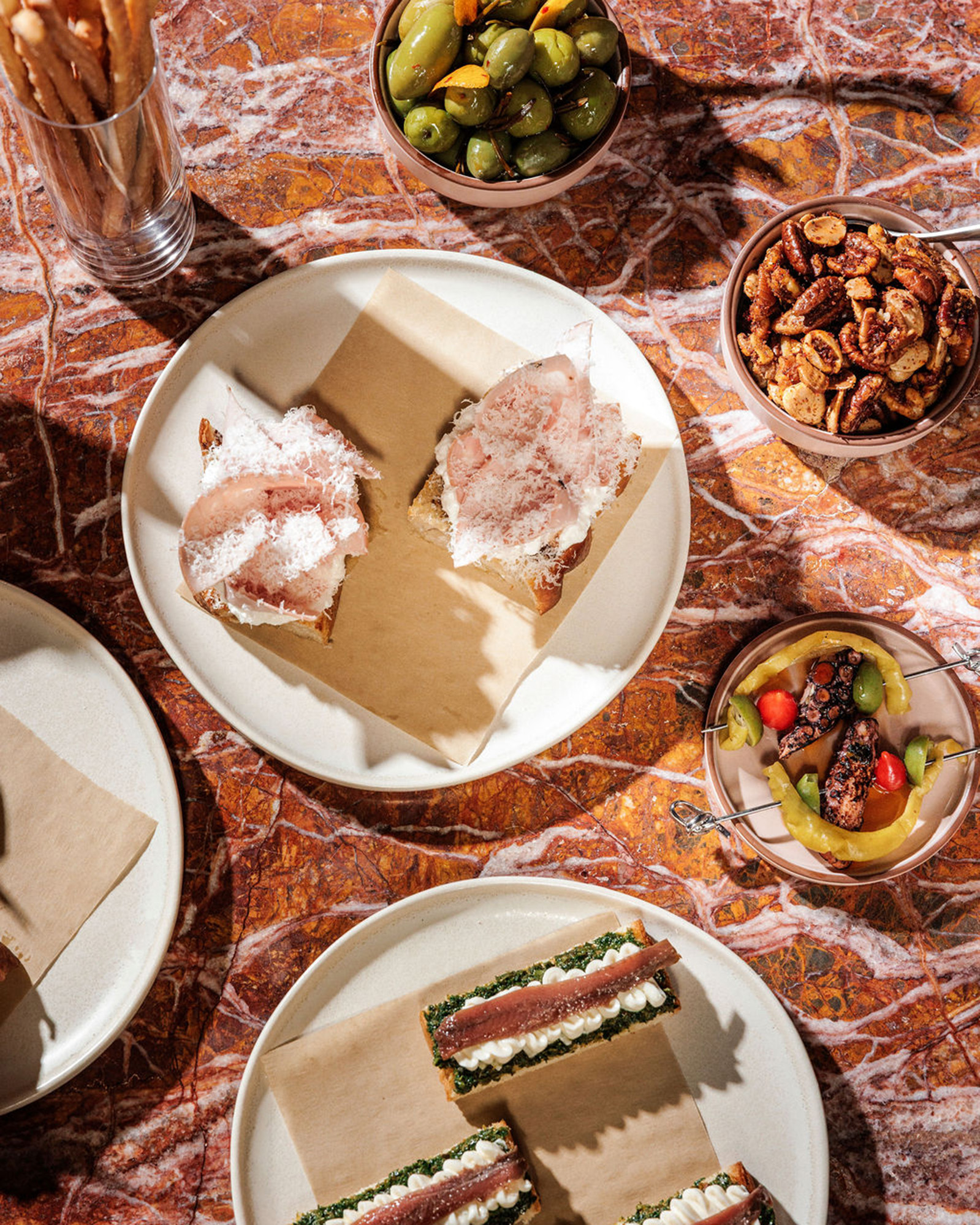
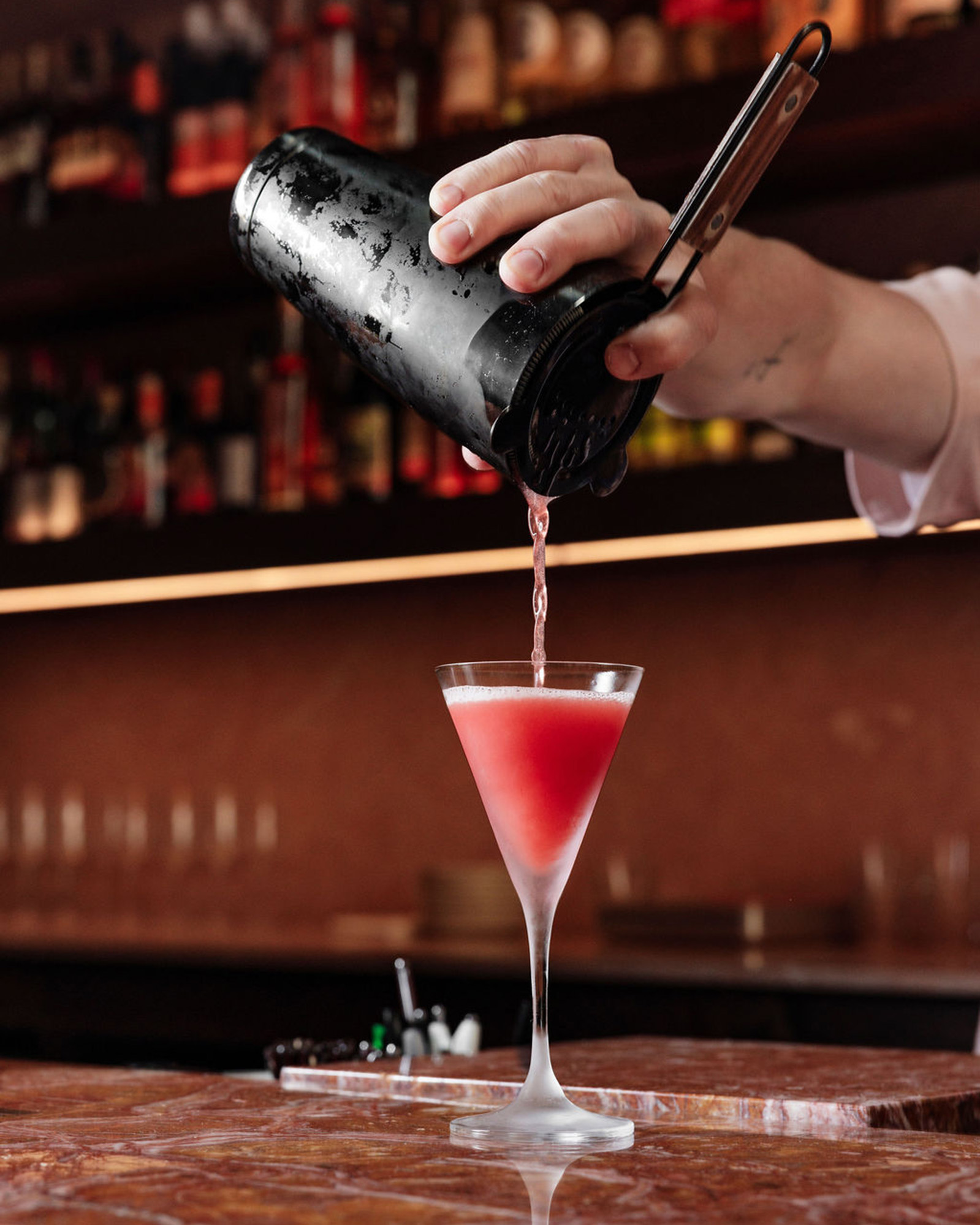
For the program here, we loosely took the Italian heritage of the Arcade and put it through our lens. I’ve designed all our spaces as well, so I bought 19 slabs of Italian marble for the project. Owen has a style of cocktail that we’ve come up with called Astors, and they’re based on Amaros, so they’re digestifs and aperitifs mixed with salt and phosphate. They’re low-volume cocktails that are about three ounces, easy to drink, and all about flavor. The food program is aperitivo-style finger foods instead of full service; very much based on an Italian happy hour. We’re doing our own focaccia and crostini.
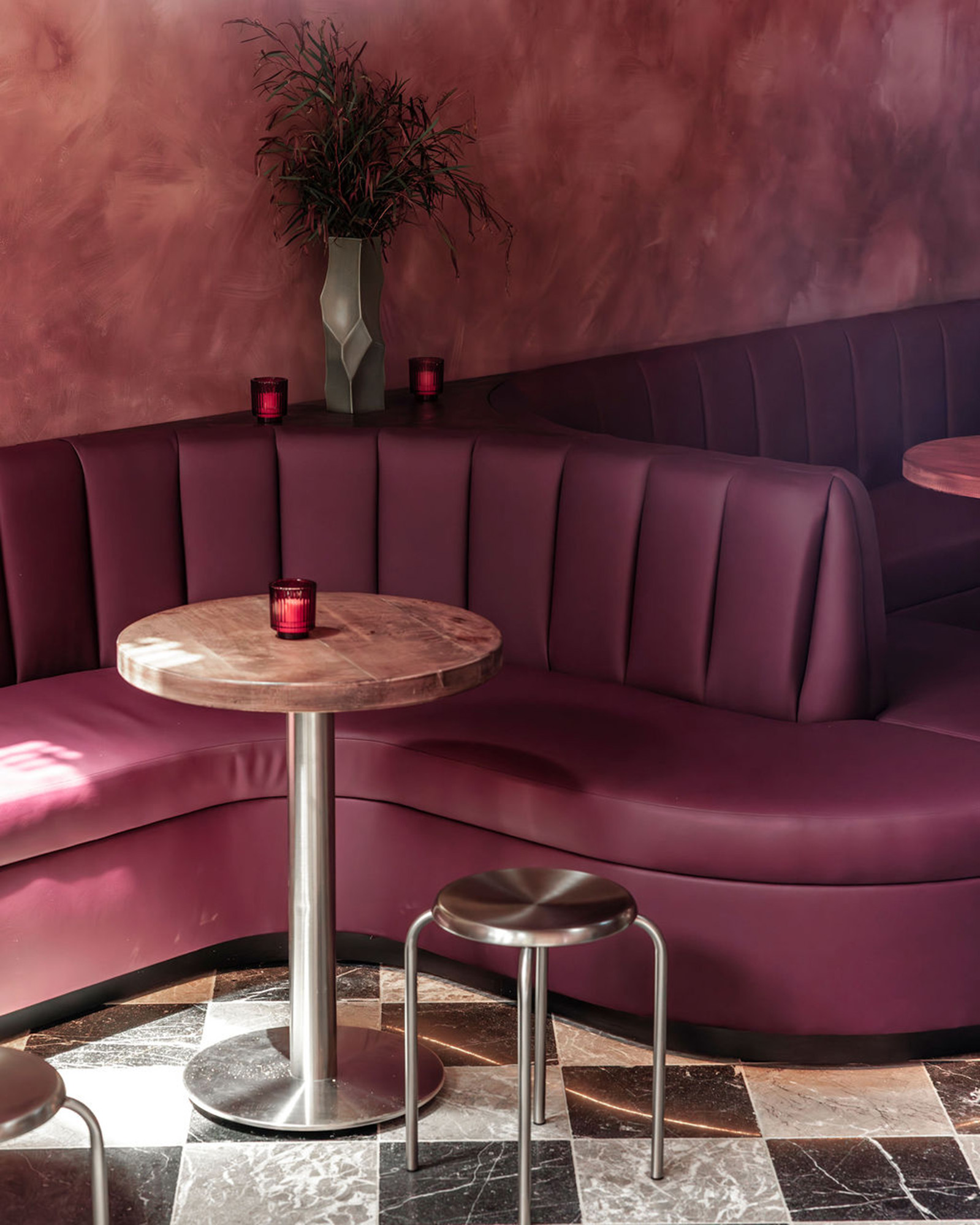
What is the cocktail bar scene like in Nashville? I know you mentioned Cafe Roze was very different from other local restaurants when you opened it—was the same true for Bar Roza?
Nashville is known for honky tonks. I would say the majority of what’s here is that. But about a month after we opened Cafe Roze, Attaboy opened here. Then there’s a great cocktail bar in East Nashville called the Fox. Probably the longest standing cocktail bar here is Patterson House, which is great, and has Prohibition-style cocktails. But yeah, it’s not a huge cocktail city. Nashville is definitely more the beer-and-shots bar scene.
What are you working on next? Or is there anything in the Nashville culinary scene that you’re excited about?
Bar Roza is just six months old, so we’re in it with that. I like to give projects their time. It’s like a child—you have to live with it for a bit. It’s in downtown Nashville, which is a very tourist-heavy area, so we’re still finding our footing. There’s a level of education that comes with it—and to be fair, so many people are moving to Nashville from cities like New York, LA, and Chicago, and they get it. But there are a lot of midwesterners who come here for vacation that might not have experiences like this. So we just really want to welcome them and create a level of hospitality that makes a cocktail bar fun and interesting. That’s really our purpose and mission.
But there’s some really, really great stuff happening in Nashville. It’s cool to be a part of the city now. The Michelin Awards were just here. I feel really fortunate to have moved when I did, and to live through this transformation.
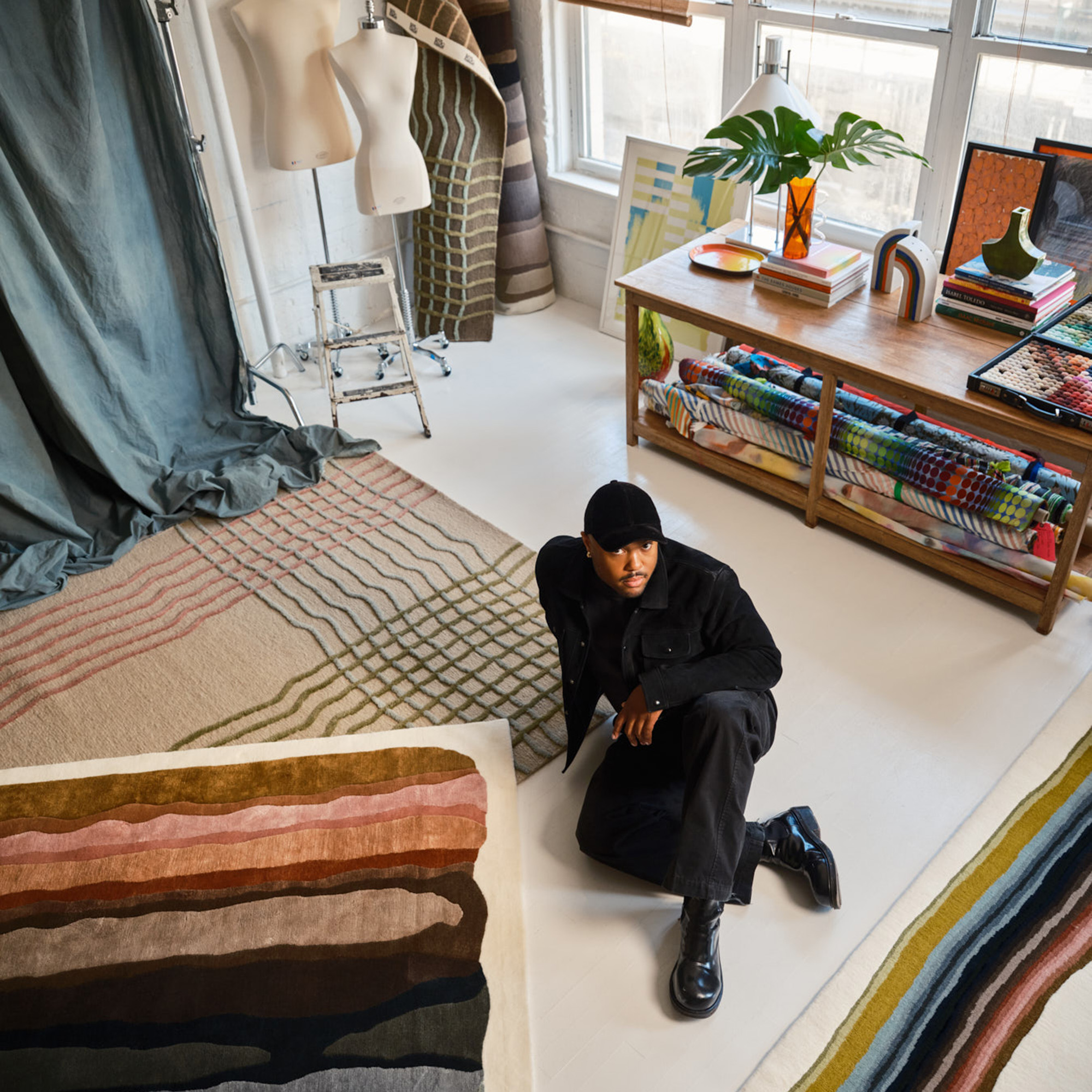
Christopher John Rogers worked with The Rug Company to create pieces that celebrate the creative process, taking inspiration from chalk lines, marker tests, and more.

Almost a decade after his death, the exhibition celebrates the enduring relevance of the couturier's sculptural clothes, and provides a rare glimpse into his personal collection.
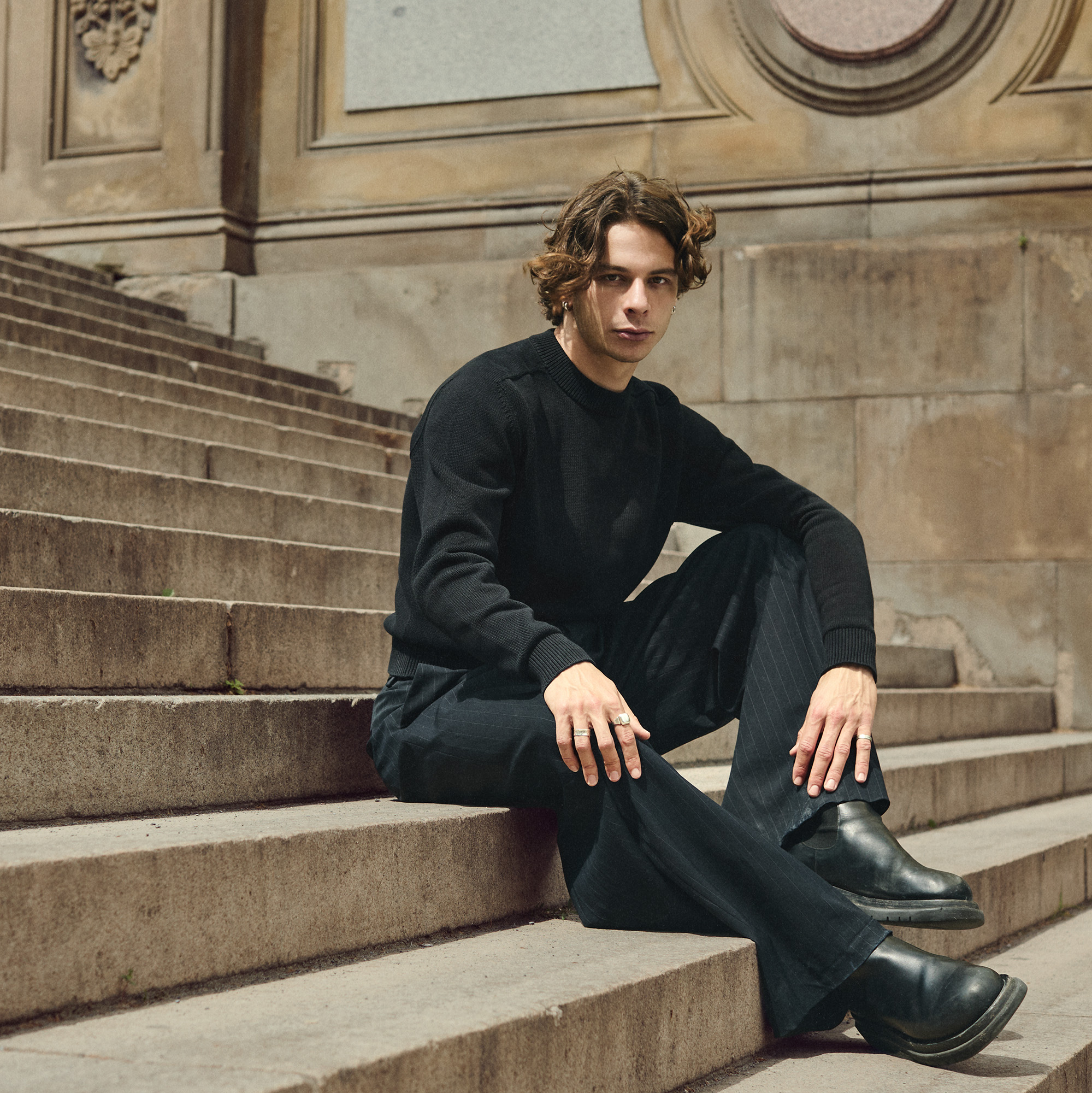
With their own unique blend of alluring glances and melancholic scenes, Sands' paintings pour forth from the artist's everyday struggles.