Simon Upton: The Photographer of Our Interior Lives
If your home has been featured in a notable magazine, there’s a pretty good chance it was shot by Upton. We spoke with the photographer about his first big assignment, his new book, and day-to-day life in his verdant country home in Devon.
November 4, 2026By
THE GRAND TOURIST
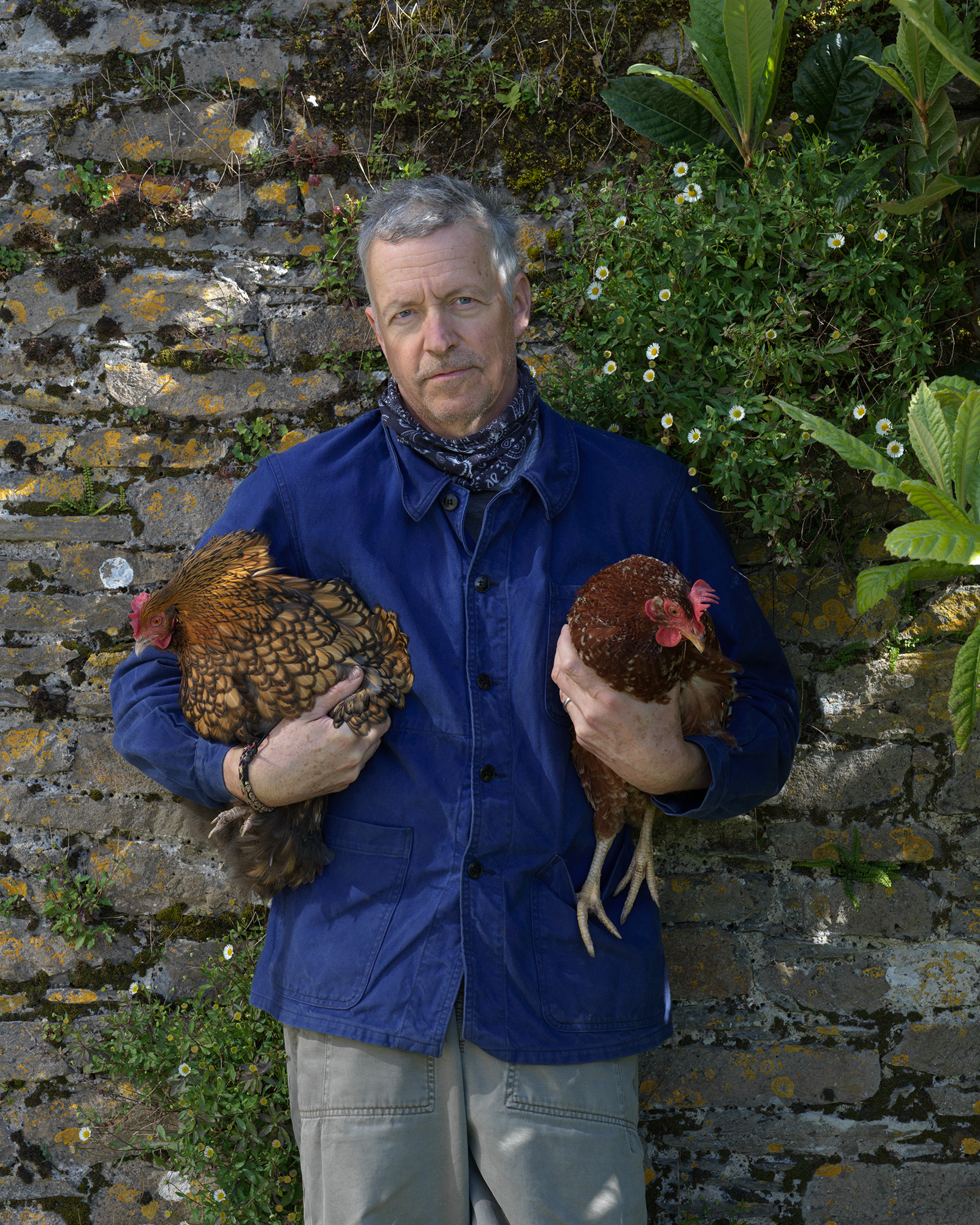
Photographer Simon Upton holding two of the chickens he keeps on his farm in Devon.
SHOW NOTES
For decades, photographer Simon Upton has documented just about every home you can imagine, from the ultra-gilded manors of Britain to the contemporary homes in California, for magazines such as Vogue and Architectural Digest. What connects them are his portraits, which capture figures like the Duchess of Devonshire or Jane Fonda, all while they’re perfectly at ease—perhaps signaling something about the rooms and gardens that surround them. On this episode, Dan speaks with Upton about his first big assignment in The World of Interiors, what day-to-day life is like on his farm in Devon, England, his new book, Simon Upton: A-Z Interiors (Rizzoli), and much more.
I first heard the name Simon Upton around the time I worked at the original American edition of House & Garden in the mid-aughts. Even then, and in the decades since, his expertise is singular in the world of interior design: he can capture just about any home and the people in it, showing us the beauty of anything, from the ultra-gilded and privileged manors of Britain to a casual and contemporary house in California. What connects them all are his portraits, where the world’s most elusive and often most talented people seem completely at ease, and however they are captured in photographs seems to signal something about the rooms, gardens, and architecture that surround them.
As he explains in his introduction to his latest book, Simon Upton:A–Z Interiors, a best-of alphabetical survey of his career thus far, while his portraits of designers and homeowners are plentiful, he sees every shot of every room as something more than just a documentation of space. “As a photographer, however much I may love and appreciate so many of the interiors I have been fortunate enough to document,” he writes, “my job is to record honestly what I see, without opinion.”
While he might not bring his opinions to these spaces, he does bring a journalist’s empathy to his sittings. You can see it plain as day in his portrait of the Duke of Beaufort lounging on a sofa, or in the introspective look of Jane Fonda on her colorful ranch in New Mexico. Seeing the shared humanity in so many people in the book, it’s not surprising to see Upton live his own earthbound life in Devon, England, with his wife Anne, which he photographed for us in these pages.
I wanted to start at the beginning. I read that you grew up in Surrey. Is that correct?
I did. Yes, I grew up in a sort of academic environment, a private school where both of my parents at one point were teachers. I think it’s right to call it the Connecticut of England, in the way that it’s a relatively affluent county that’s fairly close to London and has lots of commuters. But where we lived within this sort of compound of a school, it was like a sanctuary. And so I had a very rural upbringing, but only an hour from London. I loved being there. I think it did model a bit of how I looked at life because growing up in a school, my grandfather founded the school, and he really believed in people growing up in an environment where they would be surrounded by art and good architecture. And he tried to offer that to all the students that came to that school, to be surrounded by objects that they could learn to value and learn from, so that became part of their education. Indirectly, just by growing up there, I guess it became part of mine.
Was it rural, similar to parts of Connecticut?
Yes, it was rural. There was a farm associated with the place I grew up, it was called Pierrepont. It was done by the architect Richard Norman Shaw, who also was involved with some of London’s landmarks, and many other great houses of Britain. I loved that the farm was part of this estate, and there was a large woodland and a river.
It was a very escapist childhood. I guess I spent a fair bit of time alone, but I got immersed in nature. And it definitely had an influence on the idea of becoming an artist, as I always assumed I would be. The photography side came a little later, but I just assumed I’d be something to do with the arts. My father was an art teacher, and there were a lot of artists in the family. He’s a painter. And indeed, the painting that you’re referring to behind me, of a nearly life-size horse—it’s not quite life-size, actually—is one of his. So yeah, he paints many things but he became best known for painting horses, particularly Arabians.
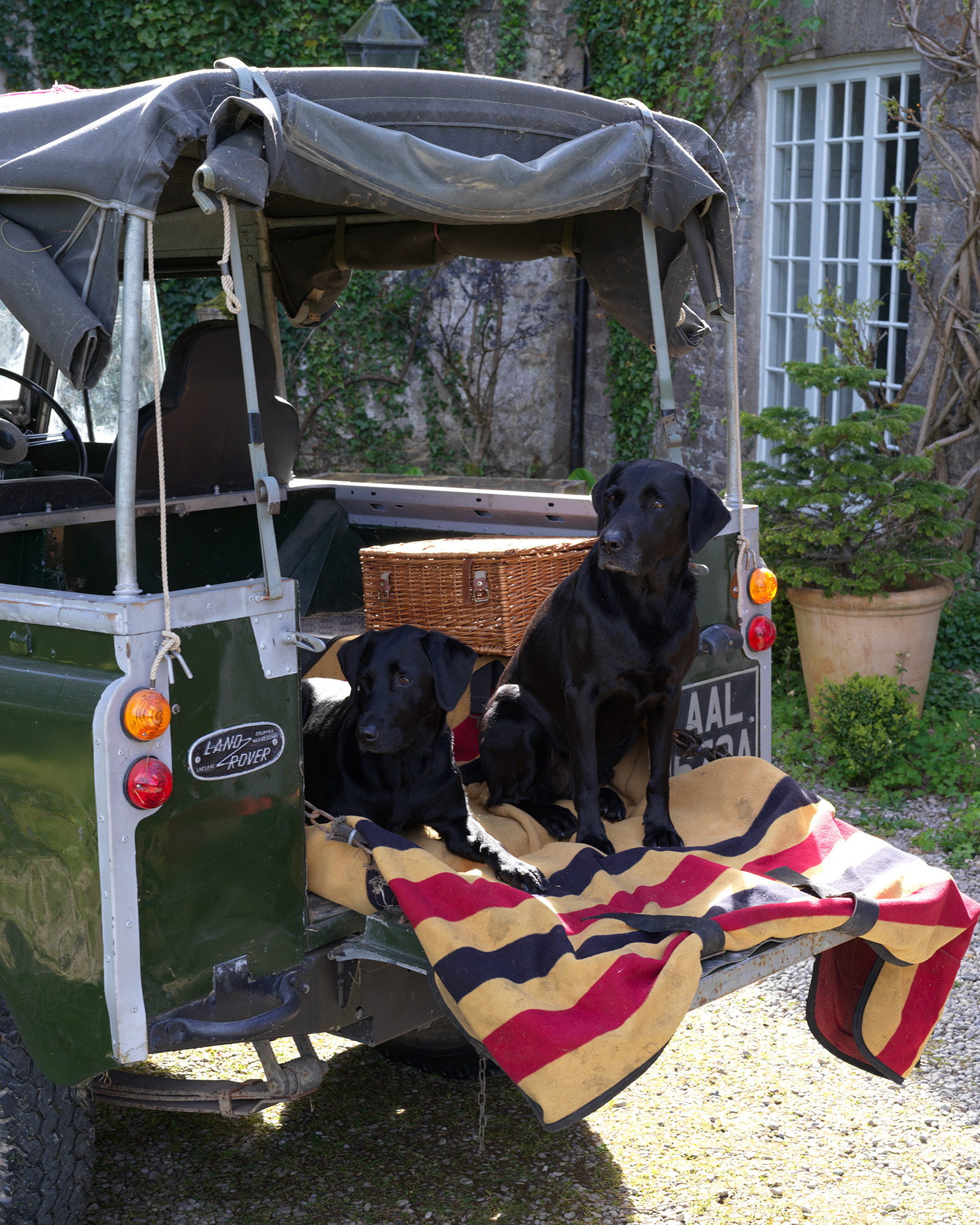
Labradors Inca and Lily in the back of Upton’s 1960 Land Rover Series II.
Your grandmother, and others in your family,were also painters. It was running in yourblood.
Yes, I think it was in the blood. And it definitely had the influence that I mentioned. But where it really kicked into gear for me was in reaction, rather than action—in that I had assumed all the way to art school that I would be a painter. But there, as maybe many felt—certainly I did—I suddenly felt somewhat judged in my ability that there were so many artists around me.
That, combined with sitting in front of a blank canvas and thinking, “I don’t know what I want to do.” Across the corridor was photography. And what I instantly loved was, one, there wasn’t a photographer in my family. And maybe far more importantly, definitely more importantly, I feel that photography is a very outward thing. You go look at things, and you’re rewarded by looking. A lot of people could say that’s exactly the same for painting, but I don’t have the blank canvas thing in my mind with photography. It’s a funny word to use, but you’re sort of being fed by everything you look at. And I think that the outwardness of photography has always been very attractive.
Were you taking photos as a young person casually? Do you remember your first photographic encounter?
I did enjoy photography from early on. I had—I’m forgetting the name of the camera, but it was the cheaper version of a Rolleiflex with that looking down into a camera and constructing via a mirror that I absolutely loved. I don’t really remember taking pictures prior to that. We had a very simple Kodak, whatever. But this was the camera that changed things, and very sadly, I lost it out in the field somewhere while just wandering around taking pictures. And I remember that being a devastating thing.
But I loved that camera and that sense that you were looking at the world through a mirror, through a lens. It took me one step away from things and I could look at the world in a slightly different way. I think being aware of that concept of being a viewer of life probably didn’t really become that apparent until working a bit more with it and maybe getting to art school. But I think that was going on. I just may not have been able to put it into words—that life around me was either almost a thing of, Are you a viewer? Are you a participant? I think we were all both. But being aware that you are enjoying being a viewer and that that otherliness is what interests you—what’s going on out there in front of you, more than maybe what’s going on in your head, which can maybe be quieted a little by photography. I think it can.
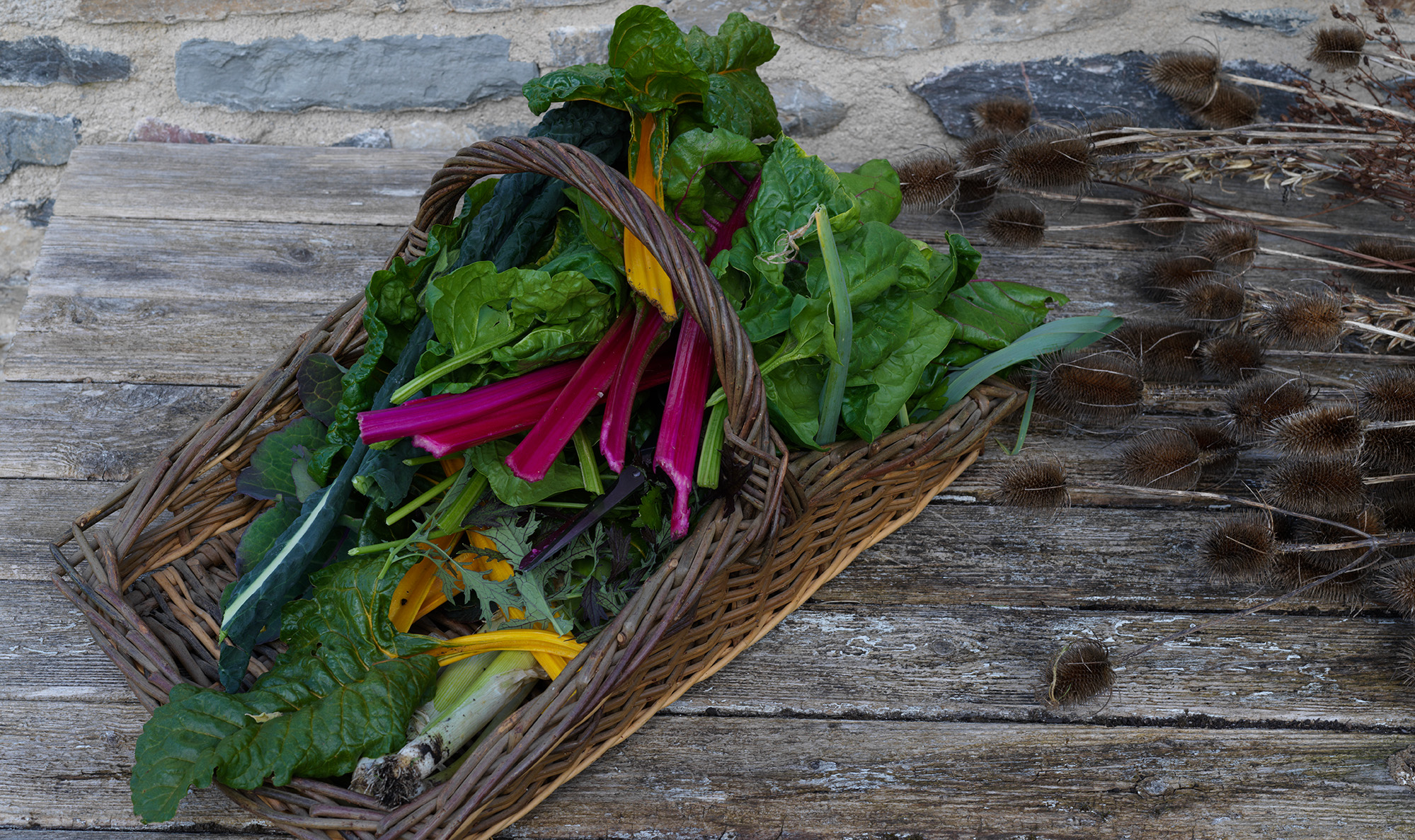
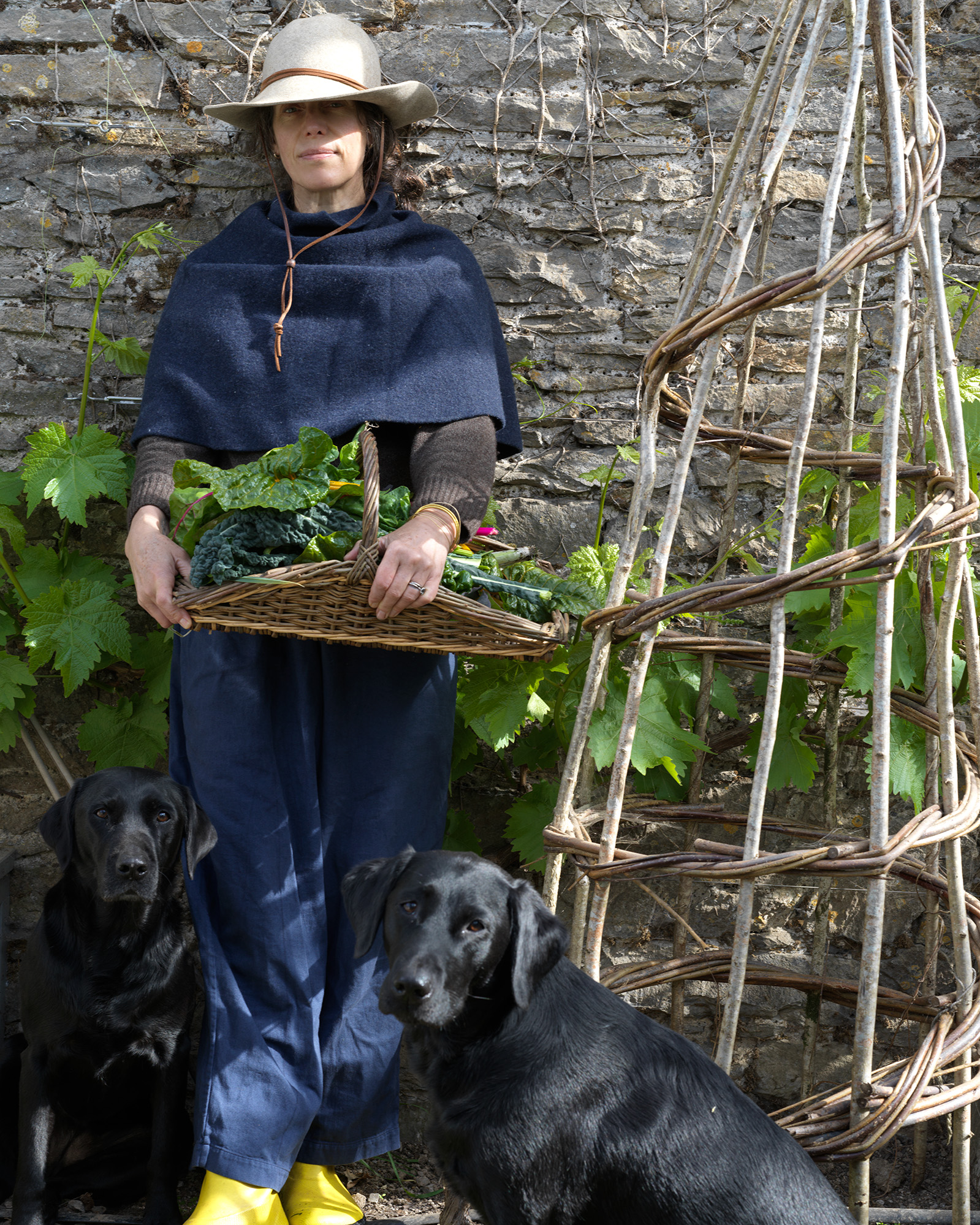
Chard, kale, spinach, arugula, and scallions straight from the garden.
How did you make the decision to study photography formally?
I wasn’t a good student—which I regret actually, because I wish I’d used every moment for learning that I could and I’ve spent a lot of the rest of my life trying to catch up, reading, being fascinated by historical things, by most things, actually. So I certainly am not proud of the fact that I was not a good student.
But the reason I had in mind, is that I didn’t have to learn all these other things if I was going to be a painter. When I turned to photography, I chose a course, which was at West Surrey College of Art & Design, also the Farnham School of Art, and the photography course there, there was a lot of visual psychology in it with a lot of art history relating to the course too.
That was wonderful. So the choice to go to do photography, rather than paint, was for all those reasons I said, of just feeling like I wanted to have something that was more outward and less like staring at the blank canvas.
And then the extraordinary thing happened, that there was a sort of revolution in the year above us and they ousted the resident lecturers. And for the years that I was there, and I think several more afterwards, the course was run by Martin Parr and Paul Graham.
When you were in school, did you thinkabout what type of photographer you were going to become? You can be a fashion photographer, a fine art photographer, or a wedding photographer. There’s many different ways that photography is more of a tool than a specific discipline in and of itself. Is there somethingthat you thought about at the time? And I’m curious how those original thoughts eventually translated into interiors.
It’s a good question because I wouldn’t have answered it a few years ago in the same way as I would today. All of the key people involved in the course were social-documentary photographers. Reportage was absolute king and put to us as the highest place within photography.
And during the course, I can remember thinking on many occasions, I can see these photographers, these lectures are brilliant. We also had Chris Killip, among others, come in as a visiting lecturer. I thought they were brilliant—am I in the right place? Because I want to do more constructed photography. I was already interested in doing things for magazines and having a commercial wing.
I wasn’t, in my mind, as hardcore as these social documentary photographers who were, in effect, all of our lecturers and teachers. But as I look back, I realize the reportage side of what I do is fundamental. In fact, I think it’s increasingly important that as you build up a body of work, as you keep going, the most important side of the work is just that you’ve done it. Hopefully you’ve done it honestly. Hopefully you’ve done it well. Hopefully you’ve been competent with the kit that you’ve got, with the framing that you’ve chosen, with the sort of visual intelligence that you’ve brought to it, with your observation skills of what you’re trying to record. But fundamentally, it is reportage. I think that magazines have gone through all sorts of journeys, but typically the magazines that I’ve spent so much of my life working for have tried to make essentially honest documents of what we are recording. And because we’re going so often to very beautiful places, you can sometimes lose sight of that. I think that’s from the photographer, or the writer, or the reader, or the viewer of the magazine.
It is a celebration—very often, of a thing that’s beautiful. But at the end of the day, as you keep going, you realize the overall record of what you’ve witnessed is so much more important than whether you liked it or didn’t like it, or whether you thought it was beautiful or not. The record part is the bit that endures, but also is the value.
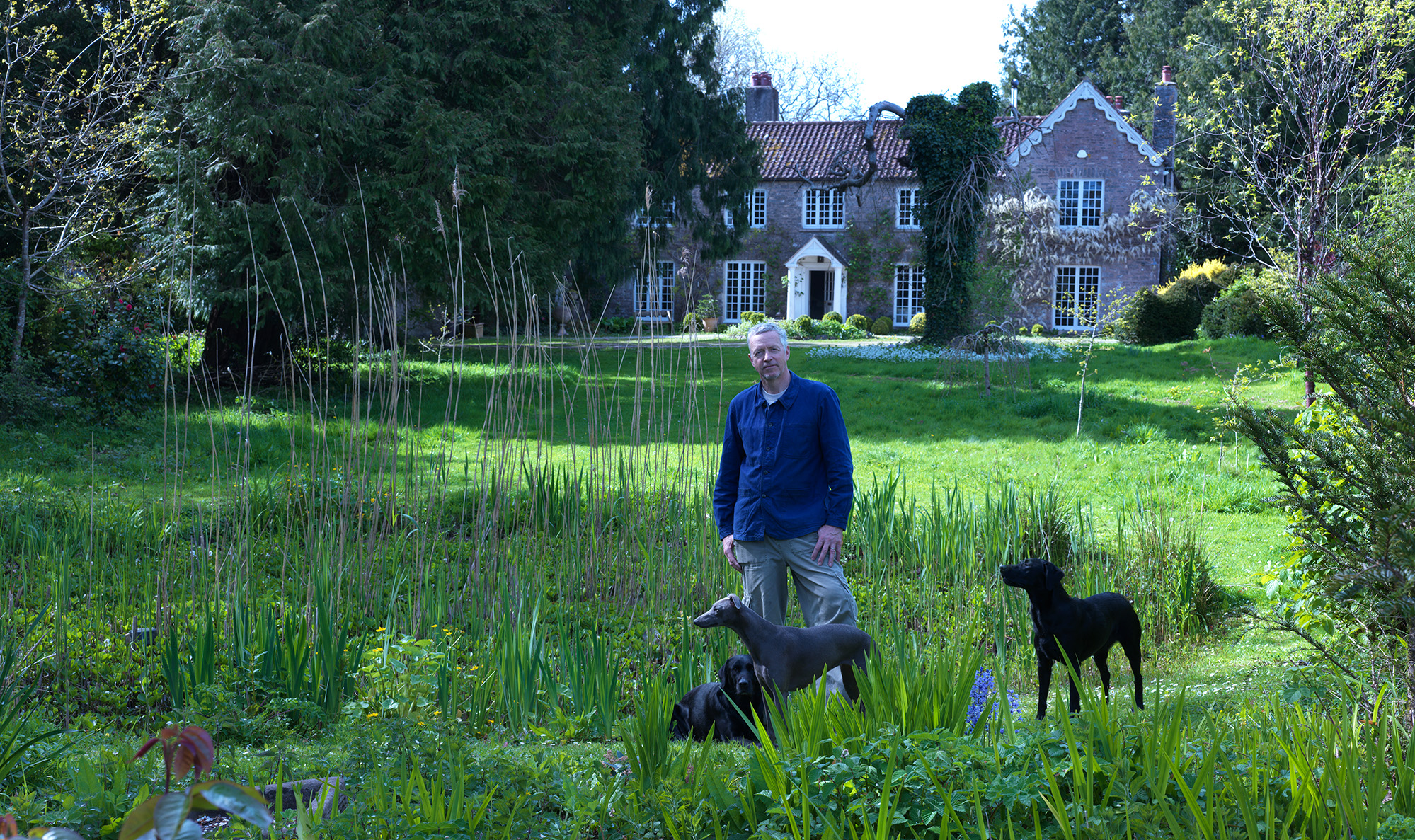
Upton’s home was previously a farmhouse and vicarage.
I read that after school, your first big commission was for The World of Interiors, like two stories in the same issue right out of the gate. Is that right?
It’s a tiny bit more drawn-out there. I had done a final exhibition for my course, which was about people who had been travelers and explorers and what they chose to bring home. And I realized I had this, slightly by accident, body of work, a group of pictures that were in effect interiors. So I started taking that to magazines to try and get jobs. I got small jobs. And I was trying to move it toward World of Interiors.
And I persisted going in and visiting and showing them other things that I had shot. In a relatively short period—I wanted to actually nip back into that for a second, because I think one of the things that was extraordinary when I was lucky enough to be going to these magazines, at the end of the 80s, early 90s, was that it was an expansive era of magazines. People in magazines had a lot of time. A big part of art directors’ lives, photo editors’ lives, was just seeing new photographers with new work. And I was so lucky to be afforded that time.
Specifically, when I think back to World of Interiors, I’d go and see either Min Hogg, who was the editor in chief, or one of the art directors at the time, a member of the art department. But typically, the whole office, within reason, would come and look at what you were doing, what you were bringing in to show. And that was obviously the same for me as for many other people that came in. That time afforded to new talent—of course, lucky me, but lucky everyone else that was in that time. I think that is getting rarer as people have less time. It’s just less time.
What year was that?
I think I finished art school around, I’m very bad with years, but around 1988. I think I moved to London maybe 88, 89. And I had a proper struggle going around touting my portfolio, probably about a year. I think around 1990, I suddenly got these two shoots. I’d been in and out of the magazine many times pestering them and more importantly getting really good advice, their time, and their very qualified opinions.
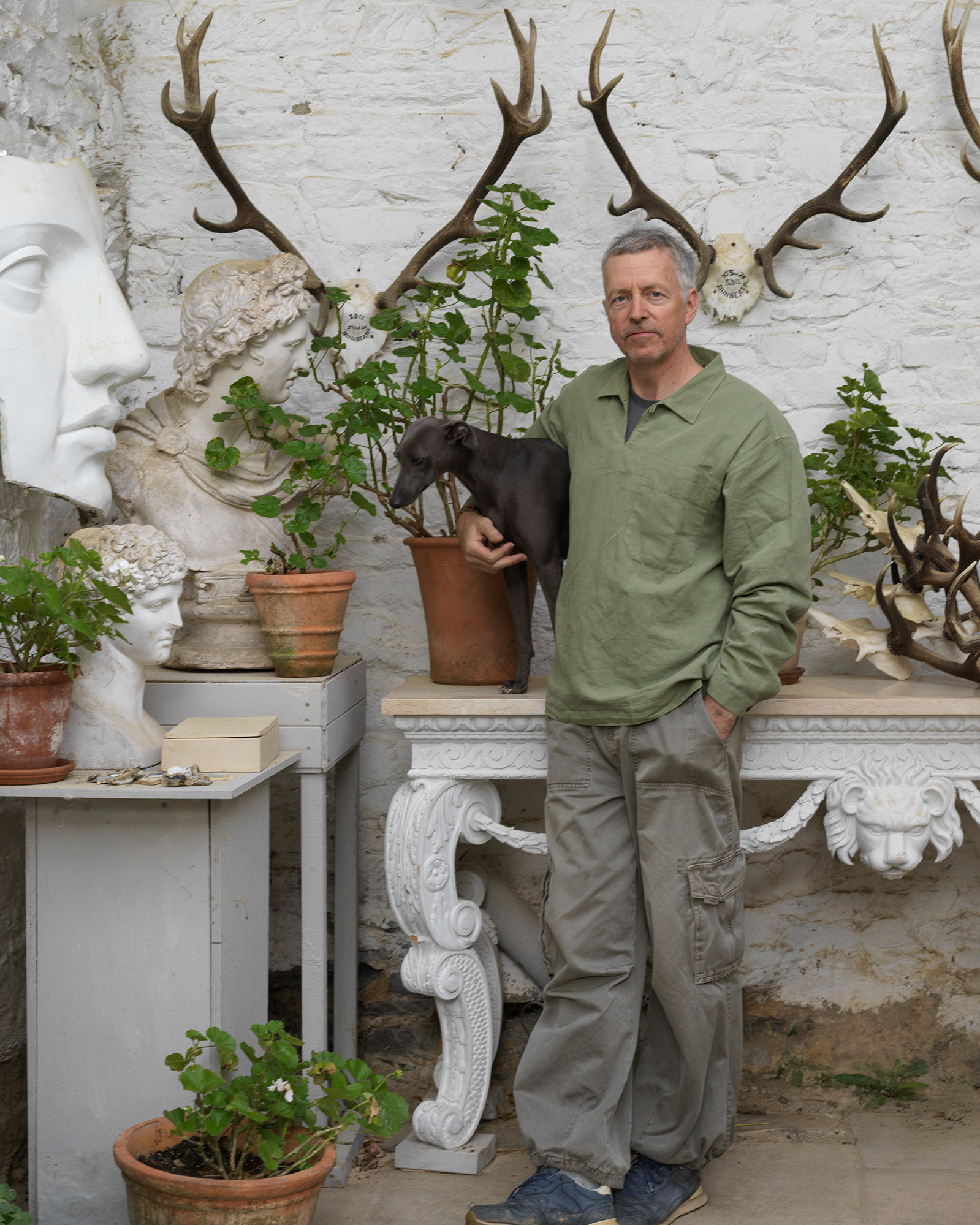
Upton with his whippet, Pixie.
Do you remember the advice they gave you?
There were many elements to the advice, but the most important thing was the encouragement to keep on going; listen to what people are saying, see what their observations are.
One of the key bits of advice was: you’re there to tell a story. People aren’t lucky enough to come and actually see the interiors that you go and shoot. So one of your jobs is to try and, not literally, but you’re trying to visually take somebody through and show them what it’s like being in this person’s house, or this person’s castle, or whatever it is.
That seemed incredibly important. I think you can show an awful lot through details, of course, and details are important. Objects are important, of course. But actually, if you don’t get a sense of where you are, that’s what you might miss. You might think, “Oh, this is a fantastic vignette. This is an amazing wall.” But if you don’t know where you are, how are you letting your viewer join you there? I think that was a key bit of advice.
When you started there, Min Hogg was the editor, right? She was the founding editor of the magazine. Tell me a little bit about her because I never met her. What was she like?
Formidable character. Very strong opinions on what was right and wrong. She was brilliant as an editor. She changed, in my view, how magazines did things in the world and interiors-related magazines. She wanted pure daylight. Around that time, if you look at Architectural Digest, in much of the imagery of that time—which I love—all the lights are on and it’s filled with artificial light. That was the standard. That’s what happened at the time.
And then Min wanted daylight. She put that across as, not only do you get a pure and better color and thereby a better record—back to my point of things being a reportage—but also the light coming in through windows, often made by rather brilliant architects, is unlikely to be outdone by a bit of light that we randomly throw in there to try and brighten things up. And I couldn’t agree more. I’ve been a fan of daylight on every level ever since.
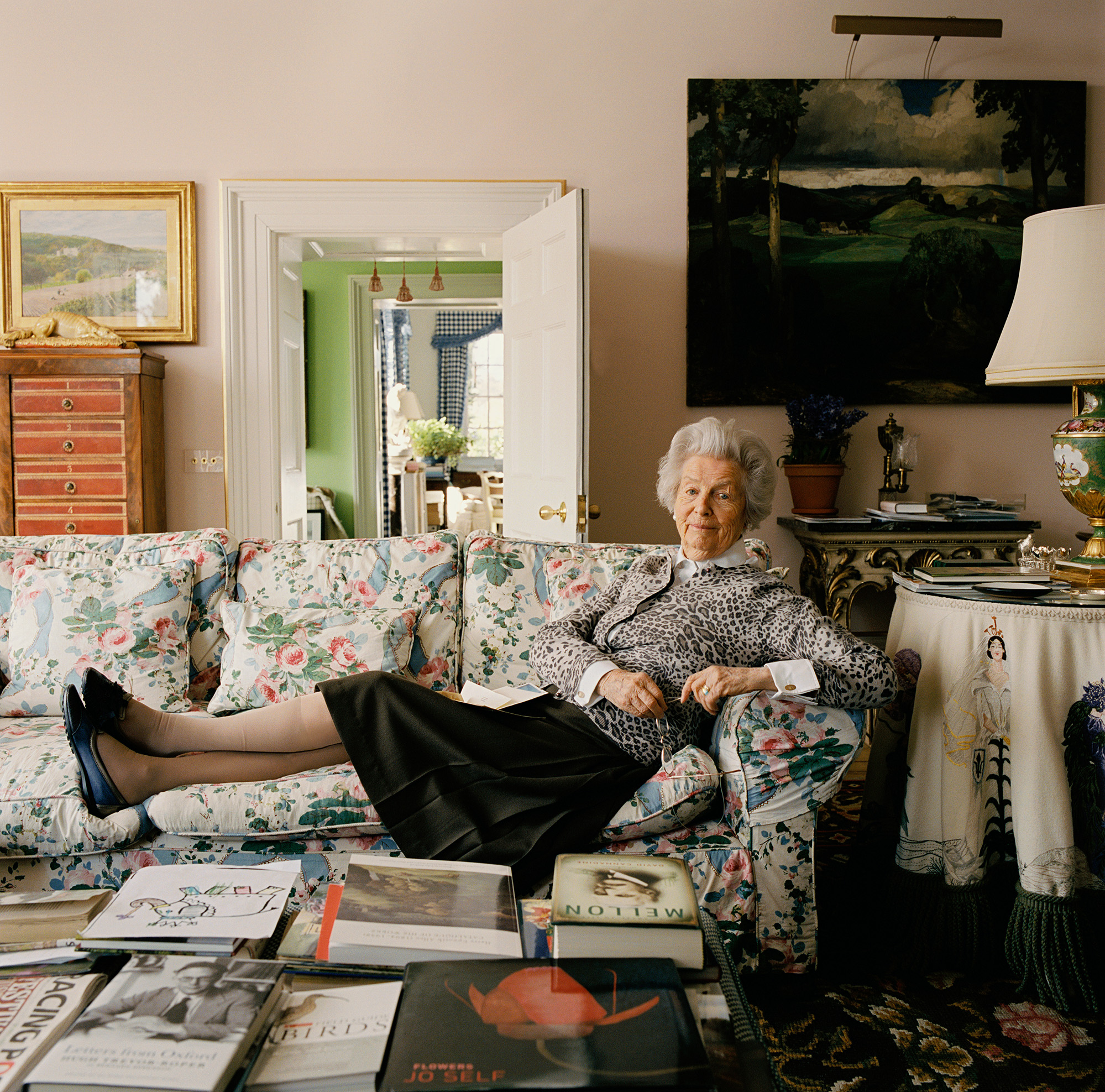
The late Duchess of Devonshire in the Old Vicarage, her home as a dowager. Photo: Simon Upton.
Your latest book—you’ve done many—A–Z Interiors,is out from Rizzoli soon. How didthis book come about? It’s a whopping 600pages, which is quite large. You could murder somebody with this book, I’m sure, which is the way it should be, honestly.
Only as I finished the book and handed it over did I realize it was going to be happening in my 60th year. And that had nothing to do with it in the front brain. But weirdly, it had a lot to do with it quietly in the background.
So, I certainly hope that my career isn’t done. But what happened earlier, about a year ago, is that in a digital world, I started facing the idea that a lot of these images, a lot of this record—one day I’m going to open up one of these drives and it’s just not going to open. We’ve still got a massive film file; I say “we” because my agent and I have copies of film and digital files. But these digital files are going to go. And I suddenly felt sad, as somebody vaguely my age maybe starts to think, that this body of work has built up over time. And I thought, I would love to put something together.
I started putting, in effect, backing up in an extra place, a lot of images. And I started thinking, well, those images are looking quite good. So then I started playing with a most basic layout, and followed up doing a slightly harsher edit that involved the wonderful art director Mark Lazenby who I’d worked with for years and years at World of Interiors. And he put together a dummy layout for me. And suddenly it was 600 or 700 pages. I had a chat with Charles Rizzoli and he said, “Well, we want to try and look at 300 pages, but you know, put together what you want. And then we’ll go from there.” I went and had the meeting and we went through 600 pages. And at the end, which I didn’t see coming at all, he said, “Well, what can we cut?” I said, “Well, I guess there’s one or two.” And he said, “Well, why don’t we try and make a 600-page book?”
Once you saw it all together, from a bird’s-eye view in a sense, did anything in your career come into focus?
Yes, I think I’ve learned a lot. Obviously, there was a lot of exchanging and editing to try and make a natural flow. What it brought up as well is just how rich so many of our lives are.
It is a real struggle to edit to 600 pages, and a massive one. And I feel like there are swaths of life that haven’t been touched upon in those pages. There are countries that I love and have spent quite a lot of time in that are not represented at all. But we tried to put together a balanced flow of things. And there are so many important moments for me in there. I feel so fortunate to have some of those moments in there, in those 600 pages. It brings up endless memories. What is extraordinary is that we did decide to lay it out A to Z, initially, almost for want of a better way of doing it. And then A to Z made more and more sense. Extraordinarily, which I’m still trying to get my head around, we put each image in its alphabetical place, and the flow is actually quite good. You would think that something would jar really obviously if you just did it that way, rather than house by house, person by person, color, room, all the different ways that you can edit something. We did it purely alphabetically. There are a few shocks, but good little shocks—contrasts is more appropriate. They’re not shocks, it’s a contrasting thing to go from something that is very bright to something very somber. Or from very traditional to something really modern and more obviously visually challenging. Overall, it’s such a treat to be able to put together. I hope it’s for everyone. I know there’s a little bit of selfishness in there. It’s such a treat to be able to put together a big book of images. It’s extraordinary.
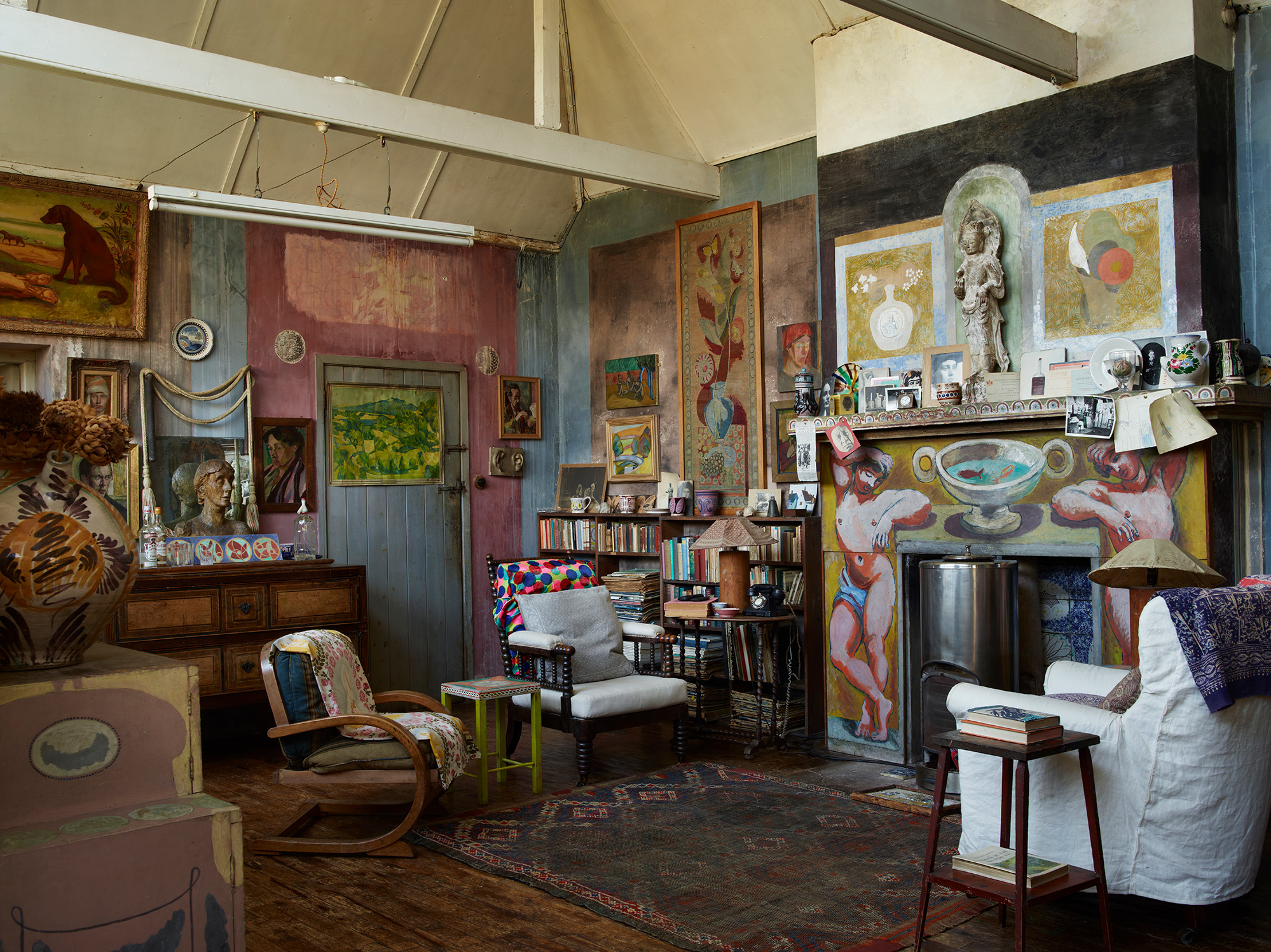
The painted interior of the historic Charleston Farmhouse in Sussex. Photo: Simon Upton
What is the Simon Upton secret to interior portraits? If someone says, “Okay, Simon, here I am. I’m the lady of the house and I’m ready to take my portrait. What do we do?”
There is a solid answer to that in my mind’s eye. If you’re already in somebody’s space, in their home—there’s a couple of shots in people’s favorite restaurants or in a theater because they’re an actor—but essentially we are in somebody’s home. You’re already having a portrait of them before they even come into a room—particularly if it’s a more personal home and also if it’s somebody that’s in a more creative field, because it’s likely to be a really interesting reflection of that person—feeding you with so much information about what they like, how they are. So I feel that if we’re doing portraits within interiors, we’re starting at such a huge advantage because we’ve got so much material that is personal to them.
And then to add to that, I think that it’s very revealing. From the sitter’s side, I think that revealing nature is similar, but in a totally different genre to somebody who is using the camera slightly more brutally in a studio to reveal something else, potentially to reveal the beauty that is in somebody that they may want to cover up; they may not like their profile, so they shoot their profile.
I feel that we can play with those sorts of things within what we do in shooting portraits and interiors, but we’re revealing something because it’s already something very personal. One of the things I hope is in the pictures in the book—and there are, as you point out, quite a lot of people with interiors within the book. But I think some people could say, “Oh, I like the picture you did of” whoever it may be. And I go, “Oh, they’re not in the book. Their room is in the book.” And I feel that that can happen, that you feel like you’ve seen the person because you’ve seen very personal pictures that reveal so much about them. So the portraits, to me, are just one step more, where you’ve got a really interesting, honest view of a room and you happen to put the person within it.
And really, if you stick with that—of course one’s trying to get nice light, fundamentally, an interesting framing. But if somebody is worried about how they’re going to look, which we all can do, goodness knows I know I can be very weird on the other side of the camera, but we are actually doing a picture of a room with a person in it rather than a sort of analytical portrait. And I think that that also makes it very freeing. And it’s amazing how people can be so giving in that relatively short interaction you have sometimes when you’re doing a portrait. They can just give so much of themselves to that moment.
Tell me a little bit about your home, where you are and your life at the moment when you’re not running around the world shooting.
What seems like a really lovely contrast to me, that I’ve sort of fallen upon is, returning to it as a sort of childhood. I loved being in London, and spent a lot of time with London as my principal base, and then spent a fair bit of time with New York as a principal base—much less time than London, but they both felt at different times like home.
And then about 14 years ago my wife and I thought we should move out and get to the country. And our daughter was born. That was the real impetus to move back to the country. Rightly or wrongly, I loved my country childhood. My wife had a relatively country-type childhood too. I think we both wanted for our daughter to have that experience, to have a childhood a bit more in nature.
We, in effect, have a small farm with a lovely garden. It has a walled garden that we’ve restored and a few acres where we planted quite a lot of woodland. We’ve got a forest garden, which is slowly producing more and more food. We’ve got our ducks and chickens. So when I’m not traveling around working, I come home and play small-time farmer, which is a lovely contrast. Even if it’s just chopping some wood. We’re trying to be relatively off-grid, and it just feels like a very nice contrast to the travel. They’re all great ways of living. I love the city. I love going back to London. I love going back to New York. We were just in Paris and just thought, “Oh, lucky us going to see these beautiful places.” But I also love coming back to the country and looking at the trees that we’ve planted that are rapidly becoming trees and marveling at that and hearing more and more songbirds around where we’ve put in little extra bits of water. We’ve tried to encourage all insect life and bees and there’s such reward in that. And I’m learning a lot but know so little. Thank God we have people that help us planting, getting seedlings going, and deciding what herbs should go in the herb garden. I’m more of the chopping, mowing, and clearing-up sort. I’d love to tell you I was the propagator but it’s not true. I do the clearing-up after the specialists do the important things and get things growing.
I have realized though, that I can plant things. We now plant in a lot of hedgerows, and the desire, it seems, of nature to live is a marvelous thing. Pulling up a little tree whip or seedling and just sticking it where you want it, and so many of them grow. I know a gardener would laugh at me, but to me, it’s like a miracle that the loss rate is so low and things are taking. Every now and then something doesn’t want to grow where you put it. Fair enough. We’ll try something else.
But that’s what I think we as a family are getting out of it. So I’m trying to do a few pictures relating to that, which is lovely to record it a bit as we go, because of course, like everyone else, you do something—you have a garden or if you’re lucky space outside or you change things in your home—and if you’re not careful and you don’t record it, you don’t witness how remarkable change is.
Every now and then I end up professionally encouraging somebody to let us record their place, in the same way as I’m now trying to record our home a bit and our garden specifically. When do you ever regret having a record of it? Doesn’t mean it has to go in a magazine or anything else. Maybe later it will, but I tell you what—if you sell it or it moves on or something changes in it, it’s very nice to have that record somewhere of a beautiful part of your life. That’s a gift.
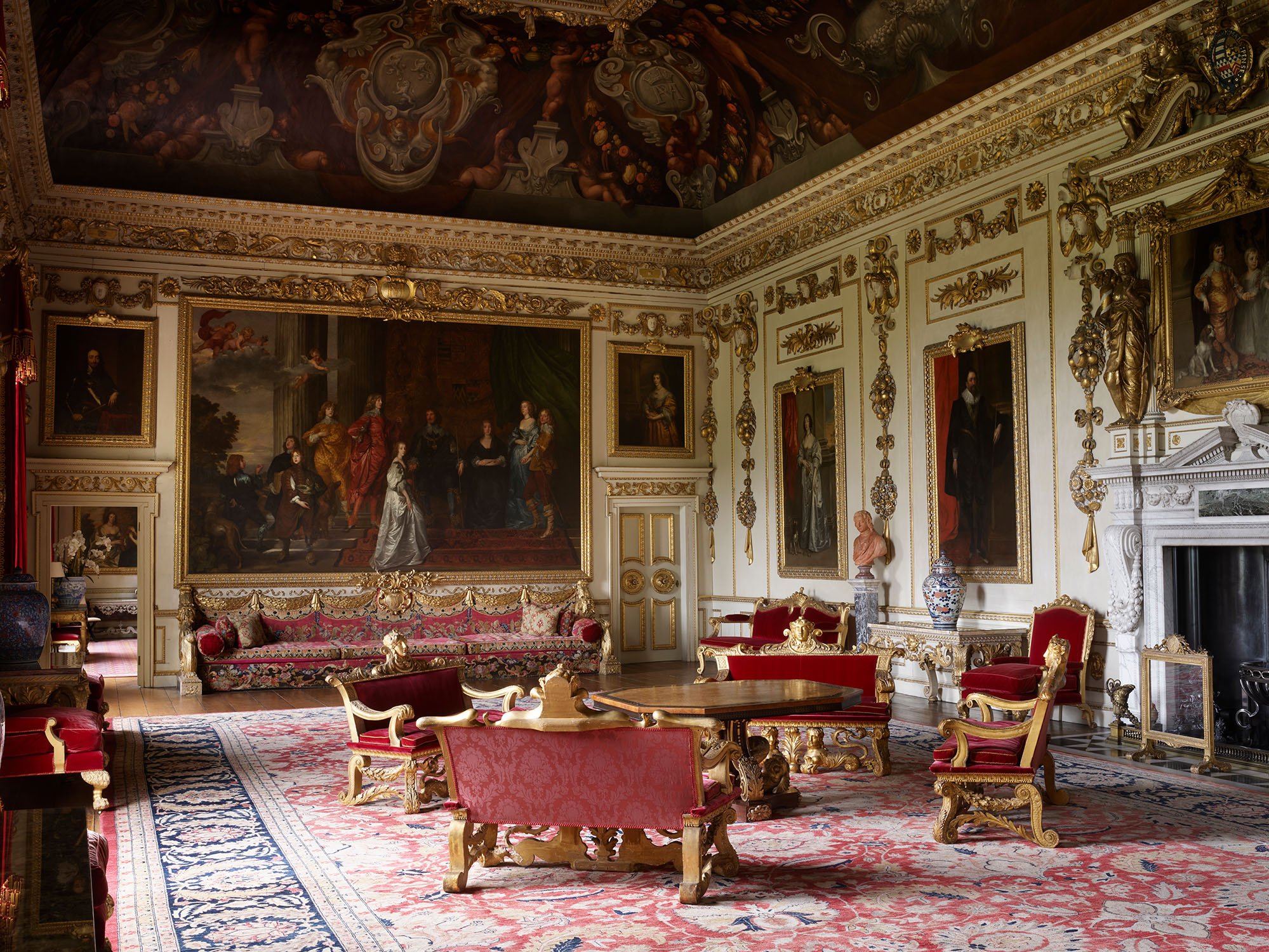
The gilded Double Cube room at the Wilton House, Wiltshire, a famed example of Palladian style. Photo: Simon Upton
After seeing and experiencing so many different spaces and people and how they live and interact—whether it’s Jane Fonda wanting to go fishing or how the Duchess of Devonshire interacts with her art—has it changed your sense of design and lifestyle? Or has it made you more relaxed because you’re not going to compete with a duchess so hey, let’s just feed some chickens.
I think you’ve nailed it both ways. In the years that I’ve been doing this, I’ve seen things that I’ve wanted a little part of this or that of. I spent a fair bit of time in Italy and lived there for a couple of years. And I still think of that classical journey, going into a Roman palazzo somewhere and thinking, “Oh my God, I want to live like this.” I want to live like a Roman for God’s sake.
So, there was a time where I was far more acquisitional, even if I knew how remote that possibility was—I was never going to have a palazzo. And then I’d go and photograph a Renzo Mongiardino interior. I was never going to be able to have a Renzo Mongiardino interior. Even now I’d love to get the Peregallis to do something for me, but that’s abstract.
I could take a little bit of something home and I love the gathered objects, particularly those that aren’t necessarily of monetary value, but they remind you of something. So I’m a terrible hoarder really. The nicest way to put it would be to say I’m a collector.
Upton’s wife, Anne, an artist.
If you only had a few weeks left on this earth and were able to go back and reshoot one of the projects in the book, which house would you want to be able to visit one more time?
I really could answer that question and it’s a good one, but I find it really hard because certain places in Italy howl at me, a couple of places in Japan—I just so long to get back to Japan and I hope I will do before long—some of the great houses of England, and some of the small houses.
But I’m going to give you my answer because it is a very honest answer. The thing I’m most excited to record is what I’m going to go and do tomorrow. Actually, I’m not shooting tomorrow, I might be shooting some pictures for you then. But that is really the answer. If it’s about a house, it’s the next house I go to. And I think that it is honest to say that because the best bit of the job is the ongoing, is that you just keep going. It’s honestly the best, the most exciting thing that tomorrow’s adventure could surpass all of the ones of the past. Or it’s just learning something. It doesn’t have to be the most extraordinary house in the world. It might just be that within it, you see something that makes you think every day you can learn something new without a doubt. And that does happen on a shoot. So I’m sorry, in a way, that’s a cop-out answer.
Do you think you’ll ever retire?
I hope not, because this work of trying to create—it’s not really a garden, just a lovely environment—is an ongoing work. It would really help me accept it if I had to retire. It would ease the difficulty of not carrying on being a photographer of spaces. But I hope I won’t retire because the reward it gives me is just enormous. And it’s the people, of course, at the end of the day. I mean, the places are reflections of the people and you go and meet amazing people, whether they’re the craftsmen, designers, homeowners, artists. It is that, isn’t it? I think that’s true for all of us in whichever way we see it, it’s the people. And that, I’d miss enormously, I’d feel like I was missing out on meeting all these wonderful characters out there.